


1207 Results
Form:
books
books
Actions:
Price:
$60.00
(available to order)
Summary:
Many people are not familiar with Kumbh Mela, and yet it is the largest celebration on earth: depending on the positions of Jupiter, the sun and the moon, Hindus travel to certain places along holy rivers, the Ganges for example, to bathe and cleanse themselves of sin. With a 2013 attendance of approximately 34 million, the triennial pilgrimage requires that the(...)
Title:
Kumbh Mela: mapping the ephemeral Megacity
Actions:
Price:
$60.00
(available to order)
Summary:
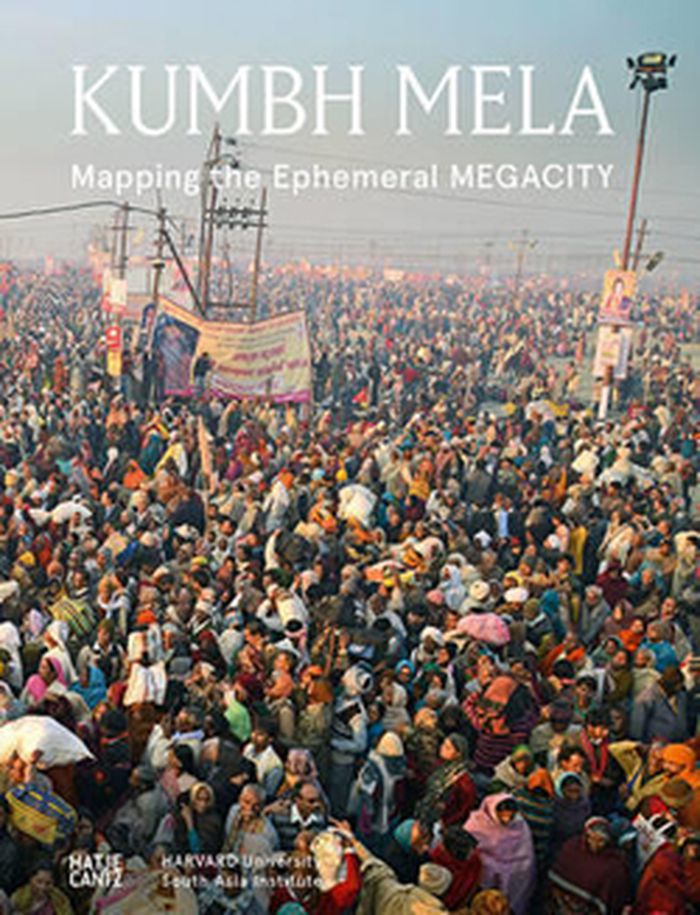
Many people are not familiar with Kumbh Mela, and yet it is the largest celebration on earth: depending on the positions of Jupiter, the sun and the moon, Hindus travel to certain places along holy rivers, the Ganges for example, to bathe and cleanse themselves of sin. With a 2013 attendance of approximately 34 million, the triennial pilgrimage requires that the communities hosting the gatherings create functioning temporary structures to transport, house and feed enormous crowds of people. In 2013, a team from Harvard University monitored the large-scale event from its preparation through to the actual celebration, investigating and documenting the prototypes for flexible urban planning and offering organizers advice on issues around environmental protection. This substantial hardcover presents their comprehensive research findings along with city maps, aerial images and photographs of this most fascinating feat of urban planning.
Form:
books
books
Publication:
August 2015
August 2015
Subject:
Architectural Theory
Architectural Theory
Form:
books
books
Price:
$38.95
(available to order)
Summary:
The architecture biennal Beijing 2004 -ABB2004- is an historic event in the history of Chinese architecture. It is the first ever architecture biennal to be held in China, and it occurs at a very special moment in history. For not only is China opening up to the influence of world architecture as never before, but the city of Beijing is preparing itself to become a(...)
Subject:
Contemporary Asian Architecture
Contemporary Asian Architecture
Publication:
March 2005, New York
March 2005, New York
Title:
Fast forward, hot spots, brain cells : architecture biennal Beijing, 2004
Actions:
Price:
$38.95
(available to order)
Summary:
The architecture biennal Beijing 2004 -ABB2004- is an historic event in the history of Chinese architecture. It is the first ever architecture biennal to be held in China, and it occurs at a very special moment in history. For not only is China opening up to the influence of world architecture as never before, but the city of Beijing is preparing itself to become a world stage for the 2008 Olympics, an event which will endow the city with a rich array of new buildings, designed by some of the leading architects in the world.
Form:
books
books
Publication:
March 2005, New York
March 2005, New York
Subject:
Contemporary Asian Architecture
Contemporary Asian Architecture
Form:
books
books

Price:
$19.50
(available to order)
Summary:
The most pivotal and yet least understood event of Frank Lloyd Wright’s celebrated life involves the brutal murders in 1914 of seven adults and children dear to the architect and the destruction by fire of Taliesin, his landmark residence, near Spring Green, Wisconsin. Supplying both a gripping mystery story and a portrait of the artist in his prime, William Drennan wades(...)
Title:
Death in a prairie house: Frank Lloyd Wright and the Taliesin murders
Actions:
Price:
$19.50
(available to order)
Summary:
The most pivotal and yet least understood event of Frank Lloyd Wright’s celebrated life involves the brutal murders in 1914 of seven adults and children dear to the architect and the destruction by fire of Taliesin, his landmark residence, near Spring Green, Wisconsin. Supplying both a gripping mystery story and a portrait of the artist in his prime, William Drennan wades through the myths surrounding Wright and the massacre, casting fresh light on the formulation of Wright’s architectural ideology and the cataclysmic effects that the Taliesin murders exerted on the fabled architect and on his subsequent designs.
Form:
books
books
Publication:
November 2008, Madison
November 2008, Madison
Subject:
Architecture Monographs
Architecture Monographs
Form:
books
books

Actions:
Price:
$34.00
(available to order)
Summary:
For six months in 1967, from late April until the end of October, Canada and its world’s fair, Expo 67, became the focus of national and international attention in a way the country and its people had rarely experienced. Expo 67 crystallized the buoyant mood and newfound sense of confidence many felt during Canada’s centennial. It becomes clearer, though, as its(...)
Title:
The best place to be: Expo 67 and its time
Actions:
Price:
$34.00
(available to order)
Summary:
For six months in 1967, from late April until the end of October, Canada and its world’s fair, Expo 67, became the focus of national and international attention in a way the country and its people had rarely experienced. Expo 67 crystallized the buoyant mood and newfound sense of confidence many felt during Canada’s centennial. It becomes clearer, though, as its forty-fifth anniversary approaches in spring 2012, that Expo was something more than just a great world’s fair. For many Canadians, it became a touchstone, a popular event that penetrated the collective psyche. The Best Place to Be takes at the social and political contexts in which it occurred.
Form:
books
books
Publication:
June 2012
June 2012
Subject:
Architecture de Montréal
Architecture de Montréal
Form:
books
books
Actions:
Price:
$39.95
(available to order)
Summary:
'History Through Our Eyes' is a day-at-a-time look back at the 20th century through the lenses of Montreal’s news photographers. The photographs are drawn from the archives of the Montreal Gazette, one of North America’s longest-publishing daily newspapers. They include iconic images from the Gazette as well as some photographs from the Montreal Herald, the Montreal Star(...)
Title:
History through our eyes: Photos of people and events that shaped 20th century Montreal
Actions:
Price:
$39.95
(available to order)
Summary:
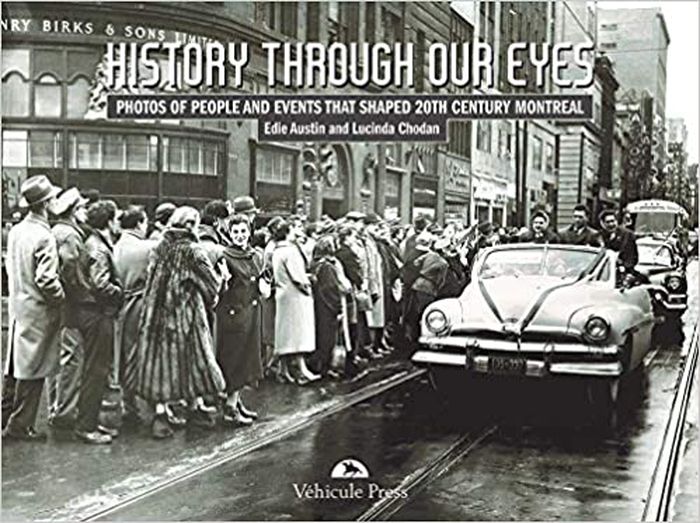
'History Through Our Eyes' is a day-at-a-time look back at the 20th century through the lenses of Montreal’s news photographers. The photographs are drawn from the archives of the Montreal Gazette, one of North America’s longest-publishing daily newspapers. They include iconic images from the Gazette as well as some photographs from the Montreal Herald, the Montreal Star and the Standard. While the photographs are the focus of this volume, the texts that accompany them tell the story of one of North America’s most fascinating cities.
Form:
books
books
Publication:
October 2020
October 2020
Subject:
Architecture de Montréal
Architecture de Montréal
Form:
books
books
Actions:
Price:
$90.00
(available to order)
Summary:
Architecture Drawing Topology presents an extensive body of drawings and texts and their complex relationalities, ranging from ontology to history. These relationalities have been developed in response to the natural topography of the Greek island of Hydra, and tested in the urban landscape of Berlin, Paris and Tokyo. Through constellations that are both real and(...)
Title:
Architecture drawing topology
Actions:
Price:
$90.00
(available to order)
Summary:
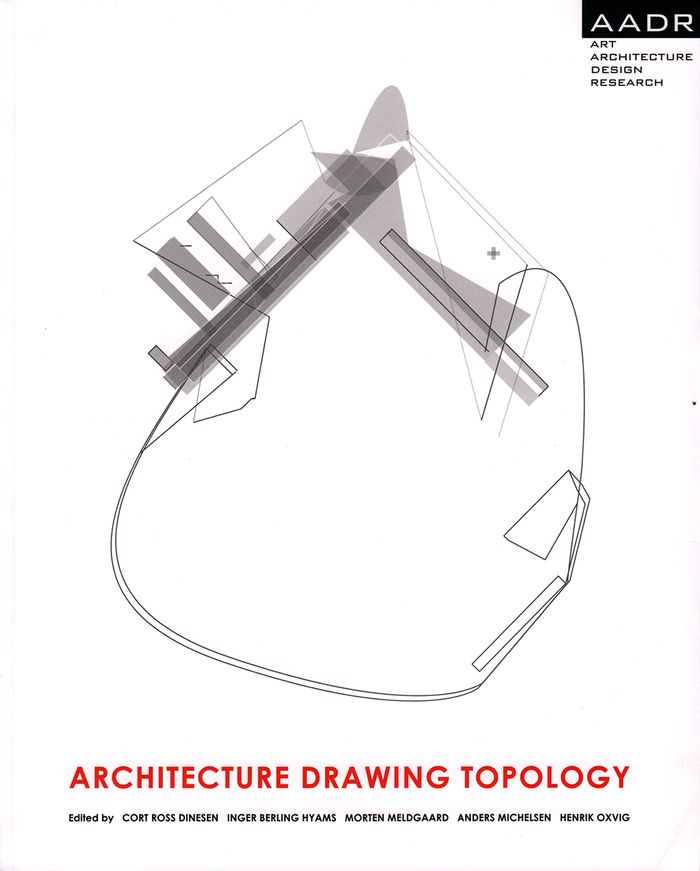
Architecture Drawing Topology presents an extensive body of drawings and texts and their complex relationalities, ranging from ontology to history. These relationalities have been developed in response to the natural topography of the Greek island of Hydra, and tested in the urban landscape of Berlin, Paris and Tokyo. Through constellations that are both real and virtual, the collection is composed of numerous highly detailed drawings. The diverse drawings express a complex and ambiguous field of significations, instrumentalizing an open production of meaning. Positions, relations, orders, levels, dimensions, energies, and processes are discovered as a new field of possibilities, creating an architecture of the event.
Form:
books
books
Publication:
January 2018
January 2018
Subject:
Architectural Theory
Architectural Theory
Form:
books
books
Price:
$38.95
(available to order)
Summary:
Conceived and directed by Emilio Ambasz. With essays by Jean Baudrillard, Manuel Castells, Gillo Dorfles, Ronald Dworkin, Umberto Eco, Erich Jantsch, Suzanne Keller, Gyorgy Kepes, Richard L. Meier, Martin Pawley, Octavio Paz, Anatol Rapoport, Meyer Schapiro, Carl Schorske and Jivan Tabibian, among others. With foreword by Terrance Riley. In January of 1972, The Museum(...)
Title:
The universitas project : solutions for a post-technological society
Actions:
Price:
$38.95
(available to order)
Summary:
Conceived and directed by Emilio Ambasz. With essays by Jean Baudrillard, Manuel Castells, Gillo Dorfles, Ronald Dworkin, Umberto Eco, Erich Jantsch, Suzanne Keller, Gyorgy Kepes, Richard L. Meier, Martin Pawley, Octavio Paz, Anatol Rapoport, Meyer Schapiro, Carl Schorske and Jivan Tabibian, among others. With foreword by Terrance Riley. In January of 1972, The Museum of Modern Art hosted "The universitas project," a two-day conference sponsored by the Museum’s International Council and the Institute for Architecture and Urban Studies. The participants, from a wide range of scholarly and artistic disciplines, engaged in a multidisciplinary debate on the future of design and design institutions in the postindustrial era. The project was originally described as "a critical and prospective inquiry into the relation of man to the natural and the sociocultural environment...specifically planned to explore the possibility of establishing in the United States a new type of institution centered around the task of evaluating and designing the man-made milieu." This volume publishes in their entirety the various components of the conference : the working papers that set the terms of the debate; the essays submitted by the invitees; the proceedings of the symposia responding to the papers; and the postscripts provided by the participants after the event.
Form:
books
books
Publication:
August 2006, New York
August 2006, New York
Subject:
Architectural Theory
Architectural Theory
Form:
books
books
Title:
Architecture : more for less
Architecture : more for less
Actions:
Price:
$29.50
(available in store)
Summary:
In 2010, the international congress ‘Architecture: More for Less’ was held in Pamplona. Its aim was to take stock of the changing mood in architecture, which today faces huge ecological and economic challenges. This publication is a record of the event through the interviews conducted by five prominent critics – Richard Ingersoll, Antón García-Abril, Estrella de Diego,(...)
Title:
Architecture : more for less
Actions:
Price:
$29.50
(available in store)
Summary:
In 2010, the international congress ‘Architecture: More for Less’ was held in Pamplona. Its aim was to take stock of the changing mood in architecture, which today faces huge ecological and economic challenges. This publication is a record of the event through the interviews conducted by five prominent critics – Richard Ingersoll, Antón García-Abril, Estrella de Diego, Vicente Verdú and Llàtzer Moix – with the participants, among them Renzo Piano, Anne Lacaton, Carlos Jiménez, Mark Wigley, Slavoj Žižek and Glenn Murcutt, who themselves cover a broad generational and geographic spectrum. Through the lens of architecture, it offers a kaleidoscopic portrait of our time.
Form:
books
books
Publication:
February 2013
February 2013
Subject:
Architectural Theory
Architectural Theory
Form:
books
books
Actions:
Price:
$60.00
(available to order)
Summary:
The 1931 international colonial exposition in Paris was a demonstration of French colonial policy, colonial architecture and urban planning, and the scientific and philosophical theories that justified colonialism. The exposition displayed the people, material(...)
Subject:
Museums and Universal Exhibitions
Museums and Universal Exhibitions
Publication:
April 2000, Cambridge
April 2000, Cambridge
Title:
Hybrid modernities : architecture and representation at the 1931 colonial exposition, Paris
Actions:
Price:
$60.00
(available to order)
Summary:
The 1931 international colonial exposition in Paris was a demonstration of French colonial policy, colonial architecture and urban planning, and the scientific and philosophical theories that justified colonialism. The exposition displayed the people, material culture, raw materials, manufactured goods, and arts of the global colonial empires. Yet the event gave a contradictory message of the colonies as the "Orient"--the site of rampant sensuality, decadence, and irrationality--and as the laboratory of Western rationality. In "Hybrid modernities", Patricia Morton shows how the exposition failed to keep colonialism's two spheres separate, instead creating hybrids of French and native culture. At the exposition, French pavilions demonstrated Europe's sophistication in art deco style, while the colonial pavilions were "authentic" native environments for displaying indigenous peoples and artifacts from the colonies. The authenticity of these pavilions' exteriors was contradicted by vaguely exotic interiors filled with didactic exhibition stands and dioramas. Intended to maintain a segregation of colonized and colonizer, the colonial pavilions instead were mixtures of European and native architecture. Anticolonial resistance erupted around the Exposition in the form of protests, anticolonial tracts, and a countercolonial exposition produced by the Surrealists. Thus the Exposition occupied a "middle region" of experience where the norms, rules, and systems of French colonialism both emerged and broke down, unsustainable because of their internal contradictions. As Morton shows, the effort to segregate France and her colonies failed, both at the colonial exposition and in greater France, because it was constantly undermined by the hybrids that modern colonialism itself produced.
Form:
books
books
Publication:
April 2000, Cambridge
April 2000, Cambridge
Subject:
Museums and Universal Exhibitions
Museums and Universal Exhibitions
Form:
books
books
Actions:
Price:
$39.95
(available to order)
Summary:
The 1931 international colonial exposition in Paris was a demonstration of French colonial policy, colonial architecture and urban planning, and the scientific and philosophical theories that justified colonialism. The exposition displayed the people, material culture, raw materials,(...)
Subject:
Museums and Universal Exhibitions
Museums and Universal Exhibitions
Publication:
April 2003, Cambridge / London
April 2003, Cambridge / London
Title:
Hybrid modernities : architecture and representation at the 1931 colonial exposition, Paris
Actions:
Price:
$39.95
(available to order)
Summary:
The 1931 international colonial exposition in Paris was a demonstration of French colonial policy, colonial architecture and urban planning, and the scientific and philosophical theories that justified colonialism. The exposition displayed the people, material culture, raw materials, manufactured goods, and arts of the global colonial empires. Yet the event gave a contradictory message of the colonies as the "Orient"--the site of rampant sensuality, decadence, and irrationality--and as the laboratory of Western rationality. In "Hybrid modernities", Patricia Morton shows how the exposition failed to keep colonialism's two spheres separate, instead creating hybrids of French and native culture. At the exposition, French pavilions demonstrated Europe's sophistication in art deco style, while the colonial pavilions were "authentic" native environments for displaying indigenous peoples and artifacts from the colonies. The authenticity of these pavilions' exteriors was contradicted by vaguely exotic interiors filled with didactic exhibition stands and dioramas. Intended to maintain a segregation of colonized and colonizer, the colonial pavilions instead were mixtures of European and native architecture. Anticolonial resistance erupted around the Exposition in the form of protests, anticolonial tracts, and a countercolonial exposition produced by the Surrealists. Thus the Exposition occupied a "middle region" of experience where the norms, rules, and systems of French colonialism both emerged and broke down, unsustainable because of their internal contradictions. As Morton shows, the effort to segregate France and her colonies failed, both at the colonial exposition and in greater France, because it was constantly undermined by the hybrids that modern colonialism itself produced.
Form:
books
books
Publication:
April 2003, Cambridge / London
April 2003, Cambridge / London
Subject:
Museums and Universal Exhibitions
Museums and Universal Exhibitions


