


406758 Results
Form:
events
events
Date:
29 August 2019, 6:30pm
29 August 2019, 6:30pm
Form:
events
events
Date:
29 August 2019
6:30pm
29 August 2019
6:30pm
Form:
exhibitions
exhibitions
Actions:
Description:
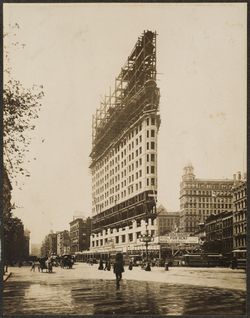
Architects of the Image: Photography in the Heroic Age of Construction explores the relationships between camera images and the making of large-scale architectural and engineering structures that stirred public imagination in the first hundred years of photography. The exhibition is predicated on the notion of the photographer as architect, an analogy that suggests(...)
Architects of the Image: Photography in the Heroic Age of Construction explores the relationships between camera images and the making of large-scale architectural and engineering structures that stirred public imagination in the first hundred years of photography. The exhibition is predicated on the notion of the photographer as architect, an analogy that suggests(...)
Date:
11 October 1995 to 4 February 1996
11 October 1995 to 4 February 1996
Title:
Architects of the Image: Photography in the Heroic Age of Construction
Actions:
Description:
Architects of the Image: Photography in the Heroic Age of Construction explores the relationships between camera images and the making of large-scale architectural and engineering structures that stirred public imagination in the first hundred years of photography. The exhibition is predicated on the notion of the photographer as architect, an analogy that suggests(...)
Architects of the Image: Photography in the Heroic Age of Construction
Actions:
Description:
Architects of the Image: Photography in the Heroic Age of Construction explores the relationships between camera images and the making of large-scale architectural and engineering structures that stirred public imagination in the first hundred years of photography. The exhibition is predicated on the notion of the photographer as architect, an analogy that suggests(...)
Form:
exhibitions
exhibitions
Date:
11 October 1995 to
4 February 1996
11 October 1995 to
4 February 1996
Form:
exhibitions
exhibitions
Actions:
Description:
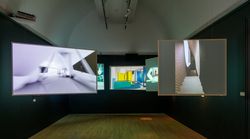
Archaeology of the Digital: Complexity and Convention is the third exhibition related to the development of a strategy for collecting and preserving digital archives at the CCA. The Archaeology of the Digital program comprises twenty-five projects for which digital materials are integral to an understanding of the design process. For projects included in the first two(...)
Archaeology of the Digital: Complexity and Convention is the third exhibition related to the development of a strategy for collecting and preserving digital archives at the CCA. The Archaeology of the Digital program comprises twenty-five projects for which digital materials are integral to an understanding of the design process. For projects included in the first two(...)
Date:
11 May 2016 to 16 October 2016
11 May 2016 to 16 October 2016
Title:
Archaeology of the Digital: Complexity and Convention
Actions:
Description:
Archaeology of the Digital: Complexity and Convention is the third exhibition related to the development of a strategy for collecting and preserving digital archives at the CCA. The Archaeology of the Digital program comprises twenty-five projects for which digital materials are integral to an understanding of the design process. For projects included in the first two(...)
Archaeology of the Digital: Complexity and Convention
Actions:
Description:
Archaeology of the Digital: Complexity and Convention is the third exhibition related to the development of a strategy for collecting and preserving digital archives at the CCA. The Archaeology of the Digital program comprises twenty-five projects for which digital materials are integral to an understanding of the design process. For projects included in the first two(...)
Form:
exhibitions
exhibitions
Date:
11 May 2016 to
16 October 2016
11 May 2016 to
16 October 2016
Form:
exhibitions
exhibitions
Actions:
Description:
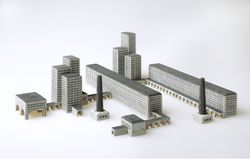
Technological advances as well as the general social, political, and economic climate have always been of great interest to architects. Toys and the Modernist Tradition examines at how toy manufacturers responded to the exciting and rapidly changing ideas of modern architects. Many of the exhibited toys were designed by leading architects of the modern movement, including(...)
Technological advances as well as the general social, political, and economic climate have always been of great interest to architects. Toys and the Modernist Tradition examines at how toy manufacturers responded to the exciting and rapidly changing ideas of modern architects. Many of the exhibited toys were designed by leading architects of the modern movement, including(...)
Title:
Toys and the Modernist Tradition
Actions:
Description:
Technological advances as well as the general social, political, and economic climate have always been of great interest to architects. Toys and the Modernist Tradition examines at how toy manufacturers responded to the exciting and rapidly changing ideas of modern architects. Many of the exhibited toys were designed by leading architects of the modern movement, including(...)
Toys and the Modernist Tradition
Actions:
Description:
Technological advances as well as the general social, political, and economic climate have always been of great interest to architects. Toys and the Modernist Tradition examines at how toy manufacturers responded to the exciting and rapidly changing ideas of modern architects. Many of the exhibited toys were designed by leading architects of the modern movement, including(...)
Form:
exhibitions
exhibitions
Date:
16 December 1993 to
1 May 1994
16 December 1993 to
1 May 1994
Form:
exhibitions
exhibitions
Actions:
Description:
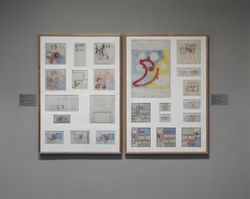
Paul Nelson (1895–1979), American architect, film set designer, painter, critic, and educator, taught and practised architecture in the United States and France for over fifty years. Nelson was a central figure in the development of functionalism in the 1930s and 1940s, which rejected the Beaux-Arts language in favour of technological and functional expression. The Filter(...)
Paul Nelson (1895–1979), American architect, film set designer, painter, critic, and educator, taught and practised architecture in the United States and France for over fifty years. Nelson was a central figure in the development of functionalism in the 1930s and 1940s, which rejected the Beaux-Arts language in favour of technological and functional expression. The Filter(...)
Location:
Main galleries
Main galleries
Date:
27 March 1991 to 26 May 1991
27 March 1991 to 26 May 1991
Title:
The Filter of Reason: The Work of Paul Nelson
Actions:
Description:
Paul Nelson (1895–1979), American architect, film set designer, painter, critic, and educator, taught and practised architecture in the United States and France for over fifty years. Nelson was a central figure in the development of functionalism in the 1930s and 1940s, which rejected the Beaux-Arts language in favour of technological and functional expression. The Filter(...)
The Filter of Reason: The Work of Paul Nelson
Actions:
Description:
Paul Nelson (1895–1979), American architect, film set designer, painter, critic, and educator, taught and practised architecture in the United States and France for over fifty years. Nelson was a central figure in the development of functionalism in the 1930s and 1940s, which rejected the Beaux-Arts language in favour of technological and functional expression. The Filter(...)
Form:
exhibitions
exhibitions
Date:
27 March 1991 to
26 May 1991
27 March 1991 to
26 May 1991
Location:
Main galleries
Main galleries
Form:
exhibitions
exhibitions
Actions:
Description:
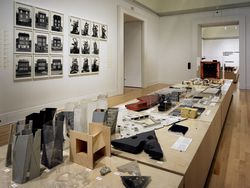
Herzog de Meuron: Archaeology of the Mind presents an exhaustive display of materials from the architects’ archive and from related collections. Referencing a natural history, the exhibition includes study models, books, photographs, toys, fossils, Chinese scholars’ rocks, and significant works of contemporary art, all of which have informed the thinking of the Swiss(...)
Herzog de Meuron: Archaeology of the Mind presents an exhaustive display of materials from the architects’ archive and from related collections. Referencing a natural history, the exhibition includes study models, books, photographs, toys, fossils, Chinese scholars’ rocks, and significant works of contemporary art, all of which have informed the thinking of the Swiss(...)
Location:
Main galleries
Main galleries
Date:
23 October 2002 to 6 April 2003
23 October 2002 to 6 April 2003
Title:
Herzog & de Meuron: Archaeology of the Mind
Actions:
Description:
Herzog de Meuron: Archaeology of the Mind presents an exhaustive display of materials from the architects’ archive and from related collections. Referencing a natural history, the exhibition includes study models, books, photographs, toys, fossils, Chinese scholars’ rocks, and significant works of contemporary art, all of which have informed the thinking of the Swiss(...)
Herzog & de Meuron: Archaeology of the Mind
Actions:
Description:
Herzog de Meuron: Archaeology of the Mind presents an exhaustive display of materials from the architects’ archive and from related collections. Referencing a natural history, the exhibition includes study models, books, photographs, toys, fossils, Chinese scholars’ rocks, and significant works of contemporary art, all of which have informed the thinking of the Swiss(...)
Form:
exhibitions
exhibitions
Date:
23 October 2002 to
6 April 2003
23 October 2002 to
6 April 2003
Location:
Main galleries
Main galleries
Form:
exhibitions
exhibitions

Actions:
Description:
During the Second World War, exhibitions and publications played a critical role in the war effort. They were organized internationally as moments of reflection and propaganda, productions of a disciplinary approach to architecture and urban design. This display springs from Jean-Louis Cohen’s research for Architecture in Uniform: Designing and Building for the Second(...)
During the Second World War, exhibitions and publications played a critical role in the war effort. They were organized internationally as moments of reflection and propaganda, productions of a disciplinary approach to architecture and urban design. This display springs from Jean-Louis Cohen’s research for Architecture in Uniform: Designing and Building for the Second(...)
Location:
Hall cases
Hall cases
Date:
13 April 2011 to 18 September 2011
13 April 2011 to 18 September 2011
Title:
A Paper War: Pictures and words, 1939-1945
Actions:
Description:
During the Second World War, exhibitions and publications played a critical role in the war effort. They were organized internationally as moments of reflection and propaganda, productions of a disciplinary approach to architecture and urban design. This display springs from Jean-Louis Cohen’s research for Architecture in Uniform: Designing and Building for the Second(...)
A Paper War: Pictures and words, 1939-1945
Actions:
Description:
During the Second World War, exhibitions and publications played a critical role in the war effort. They were organized internationally as moments of reflection and propaganda, productions of a disciplinary approach to architecture and urban design. This display springs from Jean-Louis Cohen’s research for Architecture in Uniform: Designing and Building for the Second(...)
Form:
exhibitions
exhibitions
Date:
13 April 2011 to
18 September 2011
13 April 2011 to
18 September 2011
Location:
Hall cases
Hall cases
Form:
exhibitions
exhibitions
Actions:
Description:
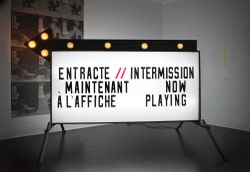
The CCA galleries are transformed into cinematic screening rooms to present a range of artistic, scientific, and experimental films on speed and space. Selected by curators from the archives of NASA, the Smithsonian National Air and Space Museum (NASM), the National Film Board of Canada (NFB), and UbuWeb, the films explore the impact of velocity and technology on our(...)
The CCA galleries are transformed into cinematic screening rooms to present a range of artistic, scientific, and experimental films on speed and space. Selected by curators from the archives of NASA, the Smithsonian National Air and Space Museum (NASM), the National Film Board of Canada (NFB), and UbuWeb, the films explore the impact of velocity and technology on our(...)
Location:
Main galleries
Main galleries
Date:
25 November 2009 to 28 February 2010
25 November 2009 to 28 February 2010
Title:
Intermission: Films From a Heroic Future
Actions:
Description:
The CCA galleries are transformed into cinematic screening rooms to present a range of artistic, scientific, and experimental films on speed and space. Selected by curators from the archives of NASA, the Smithsonian National Air and Space Museum (NASM), the National Film Board of Canada (NFB), and UbuWeb, the films explore the impact of velocity and technology on our(...)
Intermission: Films From a Heroic Future
Actions:
Description:
The CCA galleries are transformed into cinematic screening rooms to present a range of artistic, scientific, and experimental films on speed and space. Selected by curators from the archives of NASA, the Smithsonian National Air and Space Museum (NASM), the National Film Board of Canada (NFB), and UbuWeb, the films explore the impact of velocity and technology on our(...)
Form:
exhibitions
exhibitions
Date:
25 November 2009 to
28 February 2010
25 November 2009 to
28 February 2010
Location:
Main galleries
Main galleries
Form:
exhibitions
exhibitions
Actions:
Description:
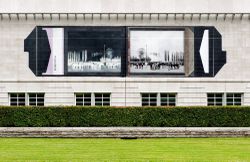
Created on the occasion of the Mois de la Photo à Montréal 2009, Canadian photographer Robert Burley’s Photographic Proof is a large-scale photographic installation on the north facade of the CCA. The mural reproduces a processed Polaroid photograph, symmetrically juxtaposing the negative and positive versions of the same image, and shows an unidentified crowd observing(...)
Created on the occasion of the Mois de la Photo à Montréal 2009, Canadian photographer Robert Burley’s Photographic Proof is a large-scale photographic installation on the north facade of the CCA. The mural reproduces a processed Polaroid photograph, symmetrically juxtaposing the negative and positive versions of the same image, and shows an unidentified crowd observing(...)
Location:
North façade
North façade
Date:
11 September 2009 to 19 October 2009
11 September 2009 to 19 October 2009
Title:
Robert Burley: Photographic Proof
Actions:
Description:
Created on the occasion of the Mois de la Photo à Montréal 2009, Canadian photographer Robert Burley’s Photographic Proof is a large-scale photographic installation on the north facade of the CCA. The mural reproduces a processed Polaroid photograph, symmetrically juxtaposing the negative and positive versions of the same image, and shows an unidentified crowd observing(...)
Robert Burley: Photographic Proof
Actions:
Description:
Created on the occasion of the Mois de la Photo à Montréal 2009, Canadian photographer Robert Burley’s Photographic Proof is a large-scale photographic installation on the north facade of the CCA. The mural reproduces a processed Polaroid photograph, symmetrically juxtaposing the negative and positive versions of the same image, and shows an unidentified crowd observing(...)
Form:
exhibitions
exhibitions
Date:
11 September 2009 to
19 October 2009
11 September 2009 to
19 October 2009
Location:
North façade
North façade
Form:
exhibitions
exhibitions
Actions:
Description:
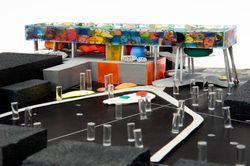
This exhibition features British architect Will Alsop’s preparatory work for the Sharp Centre for Design at the Ontario College of Art Design (OCAD) in Toronto and explores the role of painting in his design process. Completed in 2004, OCAD’s Sharp Centre for Design was designed by Alsop Architects in collaboration with the Toronto-based firm Robbie/Young + Wright. The(...)
This exhibition features British architect Will Alsop’s preparatory work for the Sharp Centre for Design at the Ontario College of Art Design (OCAD) in Toronto and explores the role of painting in his design process. Completed in 2004, OCAD’s Sharp Centre for Design was designed by Alsop Architects in collaboration with the Toronto-based firm Robbie/Young + Wright. The(...)
Location:
Octagonal gallery
Octagonal gallery
Date:
13 June 2008 to 5 October 2008
13 June 2008 to 5 October 2008
Title:
Will Alsop: OCAD, An Urban Manifesto
Actions:
Description:
This exhibition features British architect Will Alsop’s preparatory work for the Sharp Centre for Design at the Ontario College of Art Design (OCAD) in Toronto and explores the role of painting in his design process. Completed in 2004, OCAD’s Sharp Centre for Design was designed by Alsop Architects in collaboration with the Toronto-based firm Robbie/Young + Wright. The(...)
Will Alsop: OCAD, An Urban Manifesto
Actions:
Description:
This exhibition features British architect Will Alsop’s preparatory work for the Sharp Centre for Design at the Ontario College of Art Design (OCAD) in Toronto and explores the role of painting in his design process. Completed in 2004, OCAD’s Sharp Centre for Design was designed by Alsop Architects in collaboration with the Toronto-based firm Robbie/Young + Wright. The(...)
Form:
exhibitions
exhibitions
Date:
13 June 2008 to
5 October 2008
13 June 2008 to
5 October 2008
Location:
Octagonal gallery
Octagonal gallery


