


4975 Results
Form:
drawings
Quantity:
24 presentation drawing(s)
drawings
Quantity:
24 presentation drawing(s)
Reference number:
AP140.S2.SS1.D23.P6
Description:
rendered site plan, floor plans, partial plans, elevations for the penultimate and final designs, several cross sections and partial sections, a partial elevation, sections and plans for the head of the chimney flue, a sectional axonometric for the entrance podium, and a few plan obliques for the building; also a freehand axonometric showing the distribution of the functions and the circulation patterns for students and vehicles
AP140.S2.SS1.D23.P6
Description:
rendered site plan, floor plans, partial plans, elevations for the penultimate and final designs, several cross sections and partial sections, a partial elevation, sections and plans for the head of the chimney flue, a sectional axonometric for the entrance podium, and a few plan obliques for the building; also a freehand axonometric showing the distribution of the functions and the circulation patterns for students and vehicles
People:
Date:
between 1959 and 1963
between 1959 and 1963
Title:
Rendered site plan, floor plans, partial plans, elevations for the penultimate and final designs
Actions:
AP140.S2.SS1.D23.P6
Description:
rendered site plan, floor plans, partial plans, elevations for the penultimate and final designs, several cross sections and partial sections, a partial elevation, sections and plans for the head of the chimney flue, a sectional axonometric for the entrance podium, and a few plan obliques for the building; also a freehand axonometric showing the distribution of the functions and the circulation patterns for students and vehicles
Rendered site plan, floor plans, partial plans, elevations for the penultimate and final designs
Actions:
AP140.S2.SS1.D23.P6
Description:
rendered site plan, floor plans, partial plans, elevations for the penultimate and final designs, several cross sections and partial sections, a partial elevation, sections and plans for the head of the chimney flue, a sectional axonometric for the entrance podium, and a few plan obliques for the building; also a freehand axonometric showing the distribution of the functions and the circulation patterns for students and vehicles
Form:
drawings
Quantity:
24 presentation drawing(s)
drawings
Quantity:
24 presentation drawing(s)
Date:
between 1959 and 1963
between 1959 and 1963
People:
Level of archival description:
Project
Project
Reference number:
AP207.S1.1971.PR05
Description:
The project series documents the performance "Falsa Curva D'Autostrada", also know in English as Fake Expressway Bend. The performance was undertaken with a group of Pettena's students from the Minneapolis College of Art and Design in Minneapolis, in 1971. It consisted of hanging a large tarp from the overpass of an expressway under construction. The tarp extended to the road underneath and was used to create a fake bend in the overpass. The performance was targeting "the excess of uniformity in urban design" by reimagining the linearity of the overpass into a fake curve. The project series contains two photographs of the fake expressway bend, two sketches for the installation, and project descriptions in English and in Italian. Source: [1] Gianni Pettena website, https://www.giannipettena.it/italiano/opere-1/ff-intens-1971-1/ (last accessed 4 November 2019)
AP207.S1.1971.PR05
Description:
The project series documents the performance "Falsa Curva D'Autostrada", also know in English as Fake Expressway Bend. The performance was undertaken with a group of Pettena's students from the Minneapolis College of Art and Design in Minneapolis, in 1971. It consisted of hanging a large tarp from the overpass of an expressway under construction. The tarp extended to the road underneath and was used to create a fake bend in the overpass. The performance was targeting "the excess of uniformity in urban design" by reimagining the linearity of the overpass into a fake curve. The project series contains two photographs of the fake expressway bend, two sketches for the installation, and project descriptions in English and in Italian. Source: [1] Gianni Pettena website, https://www.giannipettena.it/italiano/opere-1/ff-intens-1971-1/ (last accessed 4 November 2019)
People:
Date:
circa 1971-2015
circa 1971-2015
Title:
Falsa Curva D'Autostrada [Fake Expressway Bend] (1971)
Actions:
AP207.S1.1971.PR05
Description:
The project series documents the performance "Falsa Curva D'Autostrada", also know in English as Fake Expressway Bend. The performance was undertaken with a group of Pettena's students from the Minneapolis College of Art and Design in Minneapolis, in 1971. It consisted of hanging a large tarp from the overpass of an expressway under construction. The tarp extended to the road underneath and was used to create a fake bend in the overpass. The performance was targeting "the excess of uniformity in urban design" by reimagining the linearity of the overpass into a fake curve. The project series contains two photographs of the fake expressway bend, two sketches for the installation, and project descriptions in English and in Italian. Source: [1] Gianni Pettena website, https://www.giannipettena.it/italiano/opere-1/ff-intens-1971-1/ (last accessed 4 November 2019)
Falsa Curva D'Autostrada [Fake Expressway Bend] (1971)
Actions:
AP207.S1.1971.PR05
Description:
The project series documents the performance "Falsa Curva D'Autostrada", also know in English as Fake Expressway Bend. The performance was undertaken with a group of Pettena's students from the Minneapolis College of Art and Design in Minneapolis, in 1971. It consisted of hanging a large tarp from the overpass of an expressway under construction. The tarp extended to the road underneath and was used to create a fake bend in the overpass. The performance was targeting "the excess of uniformity in urban design" by reimagining the linearity of the overpass into a fake curve. The project series contains two photographs of the fake expressway bend, two sketches for the installation, and project descriptions in English and in Italian. Source: [1] Gianni Pettena website, https://www.giannipettena.it/italiano/opere-1/ff-intens-1971-1/ (last accessed 4 November 2019)
Level of archival description:
Project
Project
Date:
circa 1971-2015
circa 1971-2015
People:
Form:
articles
articles
Title:
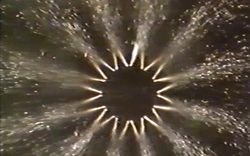
Fuochi d’Artificio
Fuochi d’Artificio
Actions:
A fireworks display in the Piazza del Campo by the students of ILAUD
Title:
Fuochi d’Artificio
A fireworks display in the Piazza del Campo by the students of ILAUD
Actions:
Fuochi d’Artificio
A fireworks display in the Piazza del Campo by the students of ILAUD
Actions:
Issue:
The Other Architect
The Other Architect
Level of archival description:
Project
Project
Actions:
Reference number:
AP018.S1.1962.PR06
Description:
This project series documents Huntington University in Sudbury, Ontario in 1962. The office identified the project number as 6249. The project consisted of a rectangular, pavillion style building with concrete exteriors and large columns lining the first storey. This was the sole building for the small university and included student housing, lounges, a library, a chapel, classrooms and seminar rooms. The project is recorded through a mounted photograph of the finished building dating from around 1962.
AP018.S1.1962.PR06
Description:
This project series documents Huntington University in Sudbury, Ontario in 1962. The office identified the project number as 6249. The project consisted of a rectangular, pavillion style building with concrete exteriors and large columns lining the first storey. This was the sole building for the small university and included student housing, lounges, a library, a chapel, classrooms and seminar rooms. The project is recorded through a mounted photograph of the finished building dating from around 1962.
People:
Date:
1962
1962
Title:
Huntington University, Sudbury, Ontario (1962-1964)
Actions:
AP018.S1.1962.PR06
Description:
This project series documents Huntington University in Sudbury, Ontario in 1962. The office identified the project number as 6249. The project consisted of a rectangular, pavillion style building with concrete exteriors and large columns lining the first storey. This was the sole building for the small university and included student housing, lounges, a library, a chapel, classrooms and seminar rooms. The project is recorded through a mounted photograph of the finished building dating from around 1962.
Huntington University, Sudbury, Ontario (1962-1964)
Actions:
AP018.S1.1962.PR06
Description:
This project series documents Huntington University in Sudbury, Ontario in 1962. The office identified the project number as 6249. The project consisted of a rectangular, pavillion style building with concrete exteriors and large columns lining the first storey. This was the sole building for the small university and included student housing, lounges, a library, a chapel, classrooms and seminar rooms. The project is recorded through a mounted photograph of the finished building dating from around 1962.
Level of archival description:
Project
Project
Date:
1962
1962
People:
Level of archival description:
Series
Series
Actions:
Reference number:
AP032.S3
Description:
This series consists of papers concerning Goldsmith's career as a professor of architecture at I.I.T. and a visiting teacher at Harvard University. The papers include many of his lectures and talks, as well as correspondence and papers related to his participation with committees studying education and his involvement with the Mies van der Rohe Centennial Project. Also included in this series are a collection of over 300 graduate student papers and master theses, for which many Goldsmith was advisor.
AP032.S3
Description:
This series consists of papers concerning Goldsmith's career as a professor of architecture at I.I.T. and a visiting teacher at Harvard University. The papers include many of his lectures and talks, as well as correspondence and papers related to his participation with committees studying education and his involvement with the Mies van der Rohe Centennial Project. Also included in this series are a collection of over 300 graduate student papers and master theses, for which many Goldsmith was advisor.
People:
Date:
1950-1996
1950-1996
Title:
Professional Activities - Teaching
Actions:
AP032.S3
Description:
This series consists of papers concerning Goldsmith's career as a professor of architecture at I.I.T. and a visiting teacher at Harvard University. The papers include many of his lectures and talks, as well as correspondence and papers related to his participation with committees studying education and his involvement with the Mies van der Rohe Centennial Project. Also included in this series are a collection of over 300 graduate student papers and master theses, for which many Goldsmith was advisor.
Professional Activities - Teaching
Actions:
AP032.S3
Description:
This series consists of papers concerning Goldsmith's career as a professor of architecture at I.I.T. and a visiting teacher at Harvard University. The papers include many of his lectures and talks, as well as correspondence and papers related to his participation with committees studying education and his involvement with the Mies van der Rohe Centennial Project. Also included in this series are a collection of over 300 graduate student papers and master theses, for which many Goldsmith was advisor.
Level of archival description:
Series 3
Series 3
Date:
1950-1996
1950-1996
People:
Level of archival description:
Project
Project
Actions:
Reference number:
AP075.S1.1992.PR04
Description:
Project series documents Cornelia Hahn Oberlander's landscape project for Thunderbird Housing at University of British Columbia, in Vancouver, British Columbia. Orberlander worked on this project from 1992-1995 with architectural firm Waisman Dewar Grout Carter. Oberlander landscape design for this project included planting beds, trees and espaliers to screen the windows from the paved commun courtyard. The courtyard also includes a circular barbecue construsted by continuing pavers, the same used as pavement for the courtyard. She also included planting of trees along the facades of the building and along the pathway connecting the student housing to the rest of the campus pavilions. The project series includes sketches, design development drawings, including landscape concept plans with plant lists, landscape elevations and sections, presentation drawings, and working drawings, such as irrigation plans, site plans, landscape plans and planting plans. The project is also documented through working drawings for the new student housing used as reference and photographs of the landscaping work. Textual records for this project comprises a proposal, concept notes by Oberlander, correspondence, including with clients, architects and consultants, and specifications.
AP075.S1.1992.PR04
Description:
Project series documents Cornelia Hahn Oberlander's landscape project for Thunderbird Housing at University of British Columbia, in Vancouver, British Columbia. Orberlander worked on this project from 1992-1995 with architectural firm Waisman Dewar Grout Carter. Oberlander landscape design for this project included planting beds, trees and espaliers to screen the windows from the paved commun courtyard. The courtyard also includes a circular barbecue construsted by continuing pavers, the same used as pavement for the courtyard. She also included planting of trees along the facades of the building and along the pathway connecting the student housing to the rest of the campus pavilions. The project series includes sketches, design development drawings, including landscape concept plans with plant lists, landscape elevations and sections, presentation drawings, and working drawings, such as irrigation plans, site plans, landscape plans and planting plans. The project is also documented through working drawings for the new student housing used as reference and photographs of the landscaping work. Textual records for this project comprises a proposal, concept notes by Oberlander, correspondence, including with clients, architects and consultants, and specifications.
People:
Date:
1991-2001
1991-2001
Title:
Thunderbird Housing, University of British Columbia, Vancouver, British Columbia (1992-1996)
Actions:
AP075.S1.1992.PR04
Description:
Project series documents Cornelia Hahn Oberlander's landscape project for Thunderbird Housing at University of British Columbia, in Vancouver, British Columbia. Orberlander worked on this project from 1992-1995 with architectural firm Waisman Dewar Grout Carter. Oberlander landscape design for this project included planting beds, trees and espaliers to screen the windows from the paved commun courtyard. The courtyard also includes a circular barbecue construsted by continuing pavers, the same used as pavement for the courtyard. She also included planting of trees along the facades of the building and along the pathway connecting the student housing to the rest of the campus pavilions. The project series includes sketches, design development drawings, including landscape concept plans with plant lists, landscape elevations and sections, presentation drawings, and working drawings, such as irrigation plans, site plans, landscape plans and planting plans. The project is also documented through working drawings for the new student housing used as reference and photographs of the landscaping work. Textual records for this project comprises a proposal, concept notes by Oberlander, correspondence, including with clients, architects and consultants, and specifications.
Thunderbird Housing, University of British Columbia, Vancouver, British Columbia (1992-1996)
Actions:
AP075.S1.1992.PR04
Description:
Project series documents Cornelia Hahn Oberlander's landscape project for Thunderbird Housing at University of British Columbia, in Vancouver, British Columbia. Orberlander worked on this project from 1992-1995 with architectural firm Waisman Dewar Grout Carter. Oberlander landscape design for this project included planting beds, trees and espaliers to screen the windows from the paved commun courtyard. The courtyard also includes a circular barbecue construsted by continuing pavers, the same used as pavement for the courtyard. She also included planting of trees along the facades of the building and along the pathway connecting the student housing to the rest of the campus pavilions. The project series includes sketches, design development drawings, including landscape concept plans with plant lists, landscape elevations and sections, presentation drawings, and working drawings, such as irrigation plans, site plans, landscape plans and planting plans. The project is also documented through working drawings for the new student housing used as reference and photographs of the landscaping work. Textual records for this project comprises a proposal, concept notes by Oberlander, correspondence, including with clients, architects and consultants, and specifications.
Level of archival description:
Project
Project
Date:
1991-2001
1991-2001
People:
Level of archival description:
Project
Project
Reference number:
AP149.S1.1984.PR01
Description:
This project series documents Minimum Cost Housing Group's post-occupancy study for Aranya Township, India, which was a newly development township completed in 1988 near Indore. Minimum Cost Housing Group initially work on the design of a plot of the township, which was the first one to be built and served as an alternative model to the whole township. The masterplan for the township was created by architect Balkrishna Doshi and the Vastu-Shilpa Foundation in 1981. The other plots started to be planned by and built in 1989. The Minimum Cost Housing Group then returned to Aranya to undertake the post-occupancy survey of the whole site and students from the group kept studying the site up to 2018. The material for this file was produced between 1984 and 2012. The project series contains slides, study drawings of the township and a publication on the post-occupancy study by the McGill group.
AP149.S1.1984.PR01
Description:
This project series documents Minimum Cost Housing Group's post-occupancy study for Aranya Township, India, which was a newly development township completed in 1988 near Indore. Minimum Cost Housing Group initially work on the design of a plot of the township, which was the first one to be built and served as an alternative model to the whole township. The masterplan for the township was created by architect Balkrishna Doshi and the Vastu-Shilpa Foundation in 1981. The other plots started to be planned by and built in 1989. The Minimum Cost Housing Group then returned to Aranya to undertake the post-occupancy survey of the whole site and students from the group kept studying the site up to 2018. The material for this file was produced between 1984 and 2012. The project series contains slides, study drawings of the township and a publication on the post-occupancy study by the McGill group.
People:
Date:
1984-2002
1984-2002
Title:
Aranya township post-occupancy study
Actions:
AP149.S1.1984.PR01
Description:
This project series documents Minimum Cost Housing Group's post-occupancy study for Aranya Township, India, which was a newly development township completed in 1988 near Indore. Minimum Cost Housing Group initially work on the design of a plot of the township, which was the first one to be built and served as an alternative model to the whole township. The masterplan for the township was created by architect Balkrishna Doshi and the Vastu-Shilpa Foundation in 1981. The other plots started to be planned by and built in 1989. The Minimum Cost Housing Group then returned to Aranya to undertake the post-occupancy survey of the whole site and students from the group kept studying the site up to 2018. The material for this file was produced between 1984 and 2012. The project series contains slides, study drawings of the township and a publication on the post-occupancy study by the McGill group.
Aranya township post-occupancy study
Actions:
AP149.S1.1984.PR01
Description:
This project series documents Minimum Cost Housing Group's post-occupancy study for Aranya Township, India, which was a newly development township completed in 1988 near Indore. Minimum Cost Housing Group initially work on the design of a plot of the township, which was the first one to be built and served as an alternative model to the whole township. The masterplan for the township was created by architect Balkrishna Doshi and the Vastu-Shilpa Foundation in 1981. The other plots started to be planned by and built in 1989. The Minimum Cost Housing Group then returned to Aranya to undertake the post-occupancy survey of the whole site and students from the group kept studying the site up to 2018. The material for this file was produced between 1984 and 2012. The project series contains slides, study drawings of the township and a publication on the post-occupancy study by the McGill group.
Level of archival description:
Project
Project
Date:
1984-2002
1984-2002
People:
Level of archival description:
Project
Project
Reference number:
AP178.S1.1965.PR01
Description:
This project series documents the submission for Siza's CODA (Concurso para a Obtenção do Diploma de Arquitecto), for which he submitted his project Casa Rui Feijó in Caminha, Portugal. While the records were held in the office’s archives this project was assigned the number [17]/60. The office assigned the date 1965 to this project. CODA is the final step for students to obtain their architecture degree. Siza used his preliminary work for the Casa Rui Feijó to develop his submission for his CODA. This project is a vacation house with three bedrooms, a bathroom, kitchen, living room, service bedroom, exterior annex, garage, lounge and terrace. The original project for the home is also described in this fonds (see project series AP178.S1.1963.PR01). Documenting this project are plans and elevations. Also included are a small number of photographs and some project documentation.
AP178.S1.1965.PR01
Description:
This project series documents the submission for Siza's CODA (Concurso para a Obtenção do Diploma de Arquitecto), for which he submitted his project Casa Rui Feijó in Caminha, Portugal. While the records were held in the office’s archives this project was assigned the number [17]/60. The office assigned the date 1965 to this project. CODA is the final step for students to obtain their architecture degree. Siza used his preliminary work for the Casa Rui Feijó to develop his submission for his CODA. This project is a vacation house with three bedrooms, a bathroom, kitchen, living room, service bedroom, exterior annex, garage, lounge and terrace. The original project for the home is also described in this fonds (see project series AP178.S1.1963.PR01). Documenting this project are plans and elevations. Also included are a small number of photographs and some project documentation.
People:
Date:
1965
1965
Title:
CODA (Casa Rui Feijó) [Competition for Obtaining the Diploma of Architecture (Rui Feijó house)], Moledo do Minho, Caminha, Portugal (1965)
Actions:
AP178.S1.1965.PR01
Description:
This project series documents the submission for Siza's CODA (Concurso para a Obtenção do Diploma de Arquitecto), for which he submitted his project Casa Rui Feijó in Caminha, Portugal. While the records were held in the office’s archives this project was assigned the number [17]/60. The office assigned the date 1965 to this project. CODA is the final step for students to obtain their architecture degree. Siza used his preliminary work for the Casa Rui Feijó to develop his submission for his CODA. This project is a vacation house with three bedrooms, a bathroom, kitchen, living room, service bedroom, exterior annex, garage, lounge and terrace. The original project for the home is also described in this fonds (see project series AP178.S1.1963.PR01). Documenting this project are plans and elevations. Also included are a small number of photographs and some project documentation.
CODA (Casa Rui Feijó) [Competition for Obtaining the Diploma of Architecture (Rui Feijó house)], Moledo do Minho, Caminha, Portugal (1965)
Actions:
AP178.S1.1965.PR01
Description:
This project series documents the submission for Siza's CODA (Concurso para a Obtenção do Diploma de Arquitecto), for which he submitted his project Casa Rui Feijó in Caminha, Portugal. While the records were held in the office’s archives this project was assigned the number [17]/60. The office assigned the date 1965 to this project. CODA is the final step for students to obtain their architecture degree. Siza used his preliminary work for the Casa Rui Feijó to develop his submission for his CODA. This project is a vacation house with three bedrooms, a bathroom, kitchen, living room, service bedroom, exterior annex, garage, lounge and terrace. The original project for the home is also described in this fonds (see project series AP178.S1.1963.PR01). Documenting this project are plans and elevations. Also included are a small number of photographs and some project documentation.
Level of archival description:
Project
Project
Date:
1965
1965
People:
Form:
events
events

Actions:
Description:
The Toolkit for Today seminar is a constitutive part of the CCA Doctoral Students Program. We invite scholars to open up their toolboxes, share methodological challenges and approaches, and discuss the key concepts they work with on contemporary issues in architecture and related disciplines.
The Toolkit for Today seminar is a constitutive part of the CCA Doctoral Students Program. We invite scholars to open up their toolboxes, share methodological challenges and approaches, and discuss the key concepts they work with on contemporary issues in architecture and related disciplines.
Date:
8 July 2013 to 18 July 2013
8 July 2013 to 18 July 2013
Title:
Toolkit for Today: Archaeology of the Digital
Actions:
Description:
The Toolkit for Today seminar is a constitutive part of the CCA Doctoral Students Program. We invite scholars to open up their toolboxes, share methodological challenges and approaches, and discuss the key concepts they work with on contemporary issues in architecture and related disciplines.
Toolkit for Today: Archaeology of the Digital
Actions:
Description:
The Toolkit for Today seminar is a constitutive part of the CCA Doctoral Students Program. We invite scholars to open up their toolboxes, share methodological challenges and approaches, and discuss the key concepts they work with on contemporary issues in architecture and related disciplines.
Form:
events
events
Date:
8 July 2013 to
18 July 2013
8 July 2013 to
18 July 2013
Level of archival description:
Project
Project
Title:
Piper (1966-1967)
Piper (1966-1967)
Reference number:
AP148.S1.1966.PR01
Description:
This project series documents an unexecuted student project by Roberto Gherrardi, Serena Pacini, Alessandro Poli, Franca Spinelli, and Roberto Russo at the University of Florence under Professor Leonardo Savioli. Piper is an amusement ride designed for Parco delle Cascine in Florence. The drawings for this project were produced between the years 1966 and 1967. The project series contains drawings and reprographic copies, predominantly presentation drawings, two models for the project, photographs of the models, and project documentation.
AP148.S1.1966.PR01
Description:
This project series documents an unexecuted student project by Roberto Gherrardi, Serena Pacini, Alessandro Poli, Franca Spinelli, and Roberto Russo at the University of Florence under Professor Leonardo Savioli. Piper is an amusement ride designed for Parco delle Cascine in Florence. The drawings for this project were produced between the years 1966 and 1967. The project series contains drawings and reprographic copies, predominantly presentation drawings, two models for the project, photographs of the models, and project documentation.
People:
Date:
1966-1967
1966-1967
Title:
Piper (1966-1967)
Actions:
AP148.S1.1966.PR01
Description:
This project series documents an unexecuted student project by Roberto Gherrardi, Serena Pacini, Alessandro Poli, Franca Spinelli, and Roberto Russo at the University of Florence under Professor Leonardo Savioli. Piper is an amusement ride designed for Parco delle Cascine in Florence. The drawings for this project were produced between the years 1966 and 1967. The project series contains drawings and reprographic copies, predominantly presentation drawings, two models for the project, photographs of the models, and project documentation.
Piper (1966-1967)
Actions:
AP148.S1.1966.PR01
Description:
This project series documents an unexecuted student project by Roberto Gherrardi, Serena Pacini, Alessandro Poli, Franca Spinelli, and Roberto Russo at the University of Florence under Professor Leonardo Savioli. Piper is an amusement ride designed for Parco delle Cascine in Florence. The drawings for this project were produced between the years 1966 and 1967. The project series contains drawings and reprographic copies, predominantly presentation drawings, two models for the project, photographs of the models, and project documentation.
Level of archival description:
Project
Project
Date:
1966-1967
1966-1967
People:


