


7241 Results
Form:
drawings, textual records
drawings, textual records
Actions:
Reference number:
DR1982:0127 R
Description:
- The drawing apparently depicts a coronation ceremony showing an interior resembling that of St. Peter's, Rome, looking towards the altar. Under the dome there is an elevated throne with a baldachin formed by a huge central crown with swags of red fabric which extend from the crown to the piers at the crossing. The design for a smaller structure which figures below is probably an earlier drawing.
DR1982:0127 R
Description:
- The drawing apparently depicts a coronation ceremony showing an interior resembling that of St. Peter's, Rome, looking towards the altar. Under the dome there is an elevated throne with a baldachin formed by a huge central crown with swags of red fabric which extend from the crown to the piers at the crossing. The design for a smaller structure which figures below is probably an earlier drawing.
People:
Subject:
architecture
architecture
Date:
second half of the 19th century
second half of the 19th century
Title:
Sketch and a manuscript relating to the coronation ceremony of Alberto I
Actions:
DR1982:0127 R
Description:
- The drawing apparently depicts a coronation ceremony showing an interior resembling that of St. Peter's, Rome, looking towards the altar. Under the dome there is an elevated throne with a baldachin formed by a huge central crown with swags of red fabric which extend from the crown to the piers at the crossing. The design for a smaller structure which figures below is probably an earlier drawing.
Sketch and a manuscript relating to the coronation ceremony of Alberto I
Actions:
DR1982:0127 R
Description:
- The drawing apparently depicts a coronation ceremony showing an interior resembling that of St. Peter's, Rome, looking towards the altar. Under the dome there is an elevated throne with a baldachin formed by a huge central crown with swags of red fabric which extend from the crown to the piers at the crossing. The design for a smaller structure which figures below is probably an earlier drawing.
Form:
drawings, textual records
drawings, textual records
Date:
second half of the 19th century
second half of the 19th century
People:
Subject:
architecture
architecture
Form:
works of art
works of art
Actions:
Reference number:
DR1979:0283
DR1979:0283
People:
Subject:
architecture
architecture
Date:
printed 1546
printed 1546
Title:
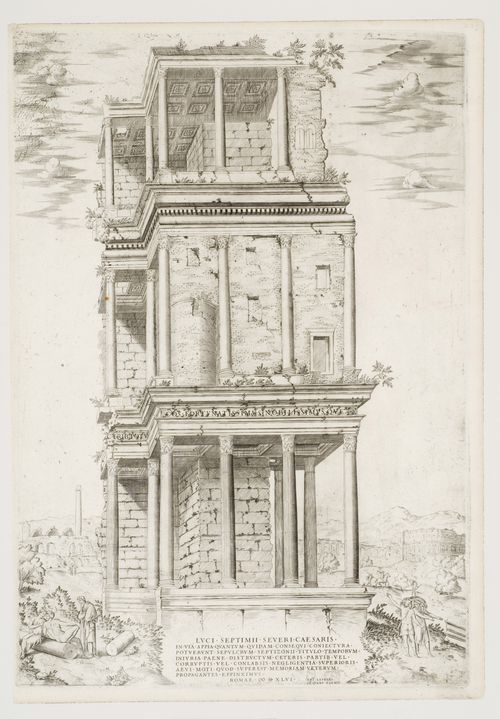
Perspective of the ruined Septizodium, the so-called tomb of Septimius Severus
Actions:
DR1979:0283
Perspective of the ruined Septizodium, the so-called tomb of Septimius Severus
Actions:
DR1979:0283
Form:
works of art
works of art
Date:
printed 1546
printed 1546
People:
Subject:
architecture
architecture
Form:
textual records
textual records
Reference number:
DR1983:0652:001-038
Description:
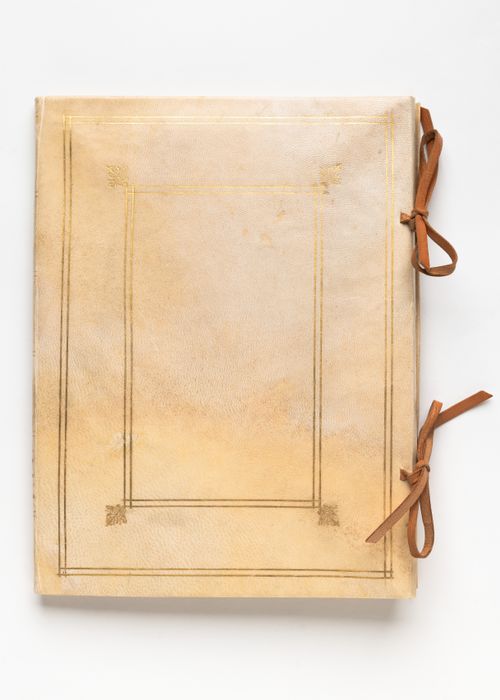
Album of unsigned drawings, chiefly of architectural details, including windows from palaces in Rome or from San Pietro in Vaticano, and Roman antiquities. Other subjects include a design for an illustrated title page for Antonio Bosio’s 'Roma Sotterranea', a sketch after a detail from Raphael’s 'The mass of Bolsena', and drawings of skeletons (an ostrich, a frog and a fish), ceremonial staves, vases, coats of arms and putti.
DR1983:0652:001-038
Description:
Album of unsigned drawings, chiefly of architectural details, including windows from palaces in Rome or from San Pietro in Vaticano, and Roman antiquities. Other subjects include a design for an illustrated title page for Antonio Bosio’s 'Roma Sotterranea', a sketch after a detail from Raphael’s 'The mass of Bolsena', and drawings of skeletons (an ostrich, a frog and a fish), ceremonial staves, vases, coats of arms and putti.
People:
Subject:
architecture
architecture
Date:
circa 1620-1757 or after
circa 1620-1757 or after
Title:
Album of drawings of architectural details and ancient monuments
Actions:
DR1983:0652:001-038
Description:
Album of unsigned drawings, chiefly of architectural details, including windows from palaces in Rome or from San Pietro in Vaticano, and Roman antiquities. Other subjects include a design for an illustrated title page for Antonio Bosio’s 'Roma Sotterranea', a sketch after a detail from Raphael’s 'The mass of Bolsena', and drawings of skeletons (an ostrich, a frog and a fish), ceremonial staves, vases, coats of arms and putti.
Album of drawings of architectural details and ancient monuments
Actions:
DR1983:0652:001-038
Description:
Album of unsigned drawings, chiefly of architectural details, including windows from palaces in Rome or from San Pietro in Vaticano, and Roman antiquities. Other subjects include a design for an illustrated title page for Antonio Bosio’s 'Roma Sotterranea', a sketch after a detail from Raphael’s 'The mass of Bolsena', and drawings of skeletons (an ostrich, a frog and a fish), ceremonial staves, vases, coats of arms and putti.
Form:
textual records
textual records
Date:
circa 1620-1757 or after
circa 1620-1757 or after
People:
Subject:
architecture
architecture
Form:
works of art
works of art
Reference number:
DR1988:0323
Description:
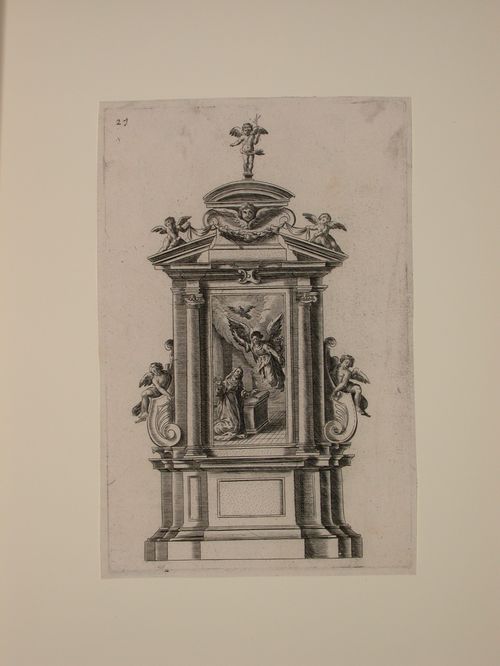
- This print depicts an altarpiece with two columns supporting a broken pediment. In the centre is a painting depicting the Annunciation, with the angel Gabriel desending from the upper right. The painting is flanked by large sculpted angels and surmounted by three winged putti and a sculpted decorative head. - The incomplete series of numbered prints, DR1988:0306 - DR1988:0331, shows Early Baroque church facades in Rome, altars, tombs, wall monuments, tabernacles and an antique temple.
DR1988:0323
Description:
- This print depicts an altarpiece with two columns supporting a broken pediment. In the centre is a painting depicting the Annunciation, with the angel Gabriel desending from the upper right. The painting is flanked by large sculpted angels and surmounted by three winged putti and a sculpted decorative head. - The incomplete series of numbered prints, DR1988:0306 - DR1988:0331, shows Early Baroque church facades in Rome, altars, tombs, wall monuments, tabernacles and an antique temple.
People:
Subject:
architecture
architecture
Date:
printed during the first half of the 17th century
printed during the first half of the 17th century
Title:
Design for an altar with an altarpiece showing the Annunciation
Actions:
DR1988:0323
Description:
- This print depicts an altarpiece with two columns supporting a broken pediment. In the centre is a painting depicting the Annunciation, with the angel Gabriel desending from the upper right. The painting is flanked by large sculpted angels and surmounted by three winged putti and a sculpted decorative head. - The incomplete series of numbered prints, DR1988:0306 - DR1988:0331, shows Early Baroque church facades in Rome, altars, tombs, wall monuments, tabernacles and an antique temple.
Design for an altar with an altarpiece showing the Annunciation
Actions:
DR1988:0323
Description:
- This print depicts an altarpiece with two columns supporting a broken pediment. In the centre is a painting depicting the Annunciation, with the angel Gabriel desending from the upper right. The painting is flanked by large sculpted angels and surmounted by three winged putti and a sculpted decorative head. - The incomplete series of numbered prints, DR1988:0306 - DR1988:0331, shows Early Baroque church facades in Rome, altars, tombs, wall monuments, tabernacles and an antique temple.
Form:
works of art
works of art
Date:
printed during the first half of the 17th century
printed during the first half of the 17th century
People:
Subject:
architecture
architecture
Form:
archives
Level of archival description:
Fonds
archives
Level of archival description:
Fonds
Title:
Joseph Rykwert fonds
Joseph Rykwert fonds
Reference number:
AP209
Synopsis:
The Joseph Rykwert fonds, 1928-2022, documents Joseph Rykwert’s career as an architectural historian, author and professor. The fonds includes the records for over a dozen monographs written between the mid-1960s and the mid-2010s as well as edited works and articles, and details his teaching and lecturing activities from the 1960s onwards in universities in Europe and the United States. The records highlight Joseph Rykwert’s multidisciplinary approach, which involved archaeology, anthropology and psychoanalysis in his study of the history and theory of architecture and of the urban form. The fonds is composed of textual records, publications and ephemera, and of photographs including multiple albums and a large number of slides; the fonds also documents Joseph Rykwert’s career as an independent designer through drawings realized between the late 1940s and the late 1970s.
AP209
Synopsis:
The Joseph Rykwert fonds, 1928-2022, documents Joseph Rykwert’s career as an architectural historian, author and professor. The fonds includes the records for over a dozen monographs written between the mid-1960s and the mid-2010s as well as edited works and articles, and details his teaching and lecturing activities from the 1960s onwards in universities in Europe and the United States. The records highlight Joseph Rykwert’s multidisciplinary approach, which involved archaeology, anthropology and psychoanalysis in his study of the history and theory of architecture and of the urban form. The fonds is composed of textual records, publications and ephemera, and of photographs including multiple albums and a large number of slides; the fonds also documents Joseph Rykwert’s career as an independent designer through drawings realized between the late 1940s and the late 1970s.
People:
Date:
1928-2022
1928-2022
Title:
Joseph Rykwert fonds
Actions:
AP209
Synopsis:
The Joseph Rykwert fonds, 1928-2022, documents Joseph Rykwert’s career as an architectural historian, author and professor. The fonds includes the records for over a dozen monographs written between the mid-1960s and the mid-2010s as well as edited works and articles, and details his teaching and lecturing activities from the 1960s onwards in universities in Europe and the United States. The records highlight Joseph Rykwert’s multidisciplinary approach, which involved archaeology, anthropology and psychoanalysis in his study of the history and theory of architecture and of the urban form. The fonds is composed of textual records, publications and ephemera, and of photographs including multiple albums and a large number of slides; the fonds also documents Joseph Rykwert’s career as an independent designer through drawings realized between the late 1940s and the late 1970s.
Joseph Rykwert fonds
Actions:
AP209
Synopsis:
The Joseph Rykwert fonds, 1928-2022, documents Joseph Rykwert’s career as an architectural historian, author and professor. The fonds includes the records for over a dozen monographs written between the mid-1960s and the mid-2010s as well as edited works and articles, and details his teaching and lecturing activities from the 1960s onwards in universities in Europe and the United States. The records highlight Joseph Rykwert’s multidisciplinary approach, which involved archaeology, anthropology and psychoanalysis in his study of the history and theory of architecture and of the urban form. The fonds is composed of textual records, publications and ephemera, and of photographs including multiple albums and a large number of slides; the fonds also documents Joseph Rykwert’s career as an independent designer through drawings realized between the late 1940s and the late 1970s.
Form:
archives
Level of archival description:
Fonds
archives
Level of archival description:
Fonds
Date:
1928-2022
1928-2022
People:
Form:
events
events
Actions:
Description:
When Gordon Matta-Clark assembled the titles to and documentation of a dozen-odd small, vacant parcels of New York property between 1974 and 1977 (later assembled and exhibited as Reality Properties: Fake Estates in 1992), it was with no well-formed agenda—other than his view that the availability of vacant and underutilized parcels [was] a direct reminder of the fallacy(...)
When Gordon Matta-Clark assembled the titles to and documentation of a dozen-odd small, vacant parcels of New York property between 1974 and 1977 (later assembled and exhibited as Reality Properties: Fake Estates in 1992), it was with no well-formed agenda—other than his view that the availability of vacant and underutilized parcels [was] a direct reminder of the fallacy(...)
Location:
Paul Desmarais Theatre
Paul Desmarais Theatre
Date:
22 September 2016, 6pm
22 September 2016, 6pm
Title:
Nicholas de Monchaux: Local Code
Actions:
Description:
When Gordon Matta-Clark assembled the titles to and documentation of a dozen-odd small, vacant parcels of New York property between 1974 and 1977 (later assembled and exhibited as Reality Properties: Fake Estates in 1992), it was with no well-formed agenda—other than his view that the availability of vacant and underutilized parcels [was] a direct reminder of the fallacy(...)
Nicholas de Monchaux: Local Code
Actions:
Description:
When Gordon Matta-Clark assembled the titles to and documentation of a dozen-odd small, vacant parcels of New York property between 1974 and 1977 (later assembled and exhibited as Reality Properties: Fake Estates in 1992), it was with no well-formed agenda—other than his view that the availability of vacant and underutilized parcels [was] a direct reminder of the fallacy(...)
Form:
events
events
Date:
22 September 2016
6pm
22 September 2016
6pm
Location:
Paul Desmarais Theatre
Paul Desmarais Theatre
Form:
works of art
works of art
Actions:
Reference number:
DR1988:0321
Description:
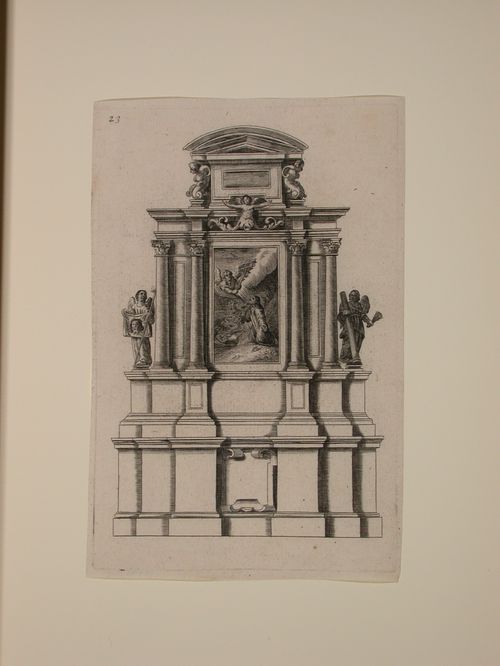
- This print depicts a design for an altarpiece, complete with statues and a painting. The painting showss the Agony in the Garden. Flanking this are two sculpted angels holding the instruments of the passion: the left angel holds a sudarium and a pike with a sponge, while the right angel holds a column and a bundle of sticks, signifying Christ's flagellation. At the top of the altar there are three sculpted ornamental half-figures. - The incomplete series of numbered prints, DR1988:0306 - DR1988:0331, shows Early Baroque church facades in Rome, altars, tombs, wall monuments, tabernacles and an antique temple.
DR1988:0321
Description:
- This print depicts a design for an altarpiece, complete with statues and a painting. The painting showss the Agony in the Garden. Flanking this are two sculpted angels holding the instruments of the passion: the left angel holds a sudarium and a pike with a sponge, while the right angel holds a column and a bundle of sticks, signifying Christ's flagellation. At the top of the altar there are three sculpted ornamental half-figures. - The incomplete series of numbered prints, DR1988:0306 - DR1988:0331, shows Early Baroque church facades in Rome, altars, tombs, wall monuments, tabernacles and an antique temple.
People:
Subject:
architecture
architecture
Date:
printed during the first half of the 17th century
printed during the first half of the 17th century
Title:
Design for an altar with an altarpiece showing the Agony in the Garden
Actions:
DR1988:0321
Description:
- This print depicts a design for an altarpiece, complete with statues and a painting. The painting showss the Agony in the Garden. Flanking this are two sculpted angels holding the instruments of the passion: the left angel holds a sudarium and a pike with a sponge, while the right angel holds a column and a bundle of sticks, signifying Christ's flagellation. At the top of the altar there are three sculpted ornamental half-figures. - The incomplete series of numbered prints, DR1988:0306 - DR1988:0331, shows Early Baroque church facades in Rome, altars, tombs, wall monuments, tabernacles and an antique temple.
Design for an altar with an altarpiece showing the Agony in the Garden
Actions:
DR1988:0321
Description:
- This print depicts a design for an altarpiece, complete with statues and a painting. The painting showss the Agony in the Garden. Flanking this are two sculpted angels holding the instruments of the passion: the left angel holds a sudarium and a pike with a sponge, while the right angel holds a column and a bundle of sticks, signifying Christ's flagellation. At the top of the altar there are three sculpted ornamental half-figures. - The incomplete series of numbered prints, DR1988:0306 - DR1988:0331, shows Early Baroque church facades in Rome, altars, tombs, wall monuments, tabernacles and an antique temple.
Form:
works of art
works of art
Date:
printed during the first half of the 17th century
printed during the first half of the 17th century
People:
Subject:
architecture
architecture
Form:
drawings, textual records, works of art, journals and magazines
drawings, textual records, works of art, journals and magazines
Reference number:
DR1974:0002:017:001-060
Description:
- This album contains plans, elevations and sections as well as written documents - the contract, specifications, work logs, letters and financial records - for the Hippodrome national, Paris. Most of the drawings and documents date from 1845, when the Hippodrome national was constructed, including the contract and contract drawings (DR1974:0002:017:025 and DR1974:0002:017:027 - DR1974:0002:017:031), a description and cost estimate, structural drawings, and plans, sections and elevations, some coloured, showing the various elements of the design. The construction of the building is documented by two work logs, one of which is probably a draft (work log: DR1974:0002:017:017:001-027; draft work log: DR1974:0002:017:044:001-038). The building was designed in the Islamic Revival style. It was constructed primarily of painted canvas stretched on frames and attached to the structural framework (Dupavillion, 81). Several preliminary drawings for the Hippodrome national are included: an elevation and plan dated 1844 and a pencil rendering of an elaborate Moorish façade, probably alternate designs (DR1974:0002:017:004, DR1974:0002:017:026, and DR1974:0002:017:060), and a watercolour perspective view, plan and section (DR1974:0002:017:001 - DR1974:0002:017:003), possibly for a different site, dated February 1845. Four drawings dated February 1846 are for additions to the hippodrome, including a portico on the front of the princes' pavilion, and a pedestrian bridge over the service court entrance (DR1974:0002:017:011, DR1974:0002:017:012, DR1974:0002:017:016 and DR1974:0002:017:037). Plan DR1974:0002:017:015 is probably also related to these additions. It has not been determined if these additions were carried out. Also included are three record drawings of the Circus of Maxentius and the hippodrome at Villa Borghese in Rome; a copy of "L'Entr'acte" containing an article on the proposed construction of a hippodrome (cirque) in Paris; and two letters requesting information on the Hippodrome national.
DR1974:0002:017:001-060
Description:
- This album contains plans, elevations and sections as well as written documents - the contract, specifications, work logs, letters and financial records - for the Hippodrome national, Paris. Most of the drawings and documents date from 1845, when the Hippodrome national was constructed, including the contract and contract drawings (DR1974:0002:017:025 and DR1974:0002:017:027 - DR1974:0002:017:031), a description and cost estimate, structural drawings, and plans, sections and elevations, some coloured, showing the various elements of the design. The construction of the building is documented by two work logs, one of which is probably a draft (work log: DR1974:0002:017:017:001-027; draft work log: DR1974:0002:017:044:001-038). The building was designed in the Islamic Revival style. It was constructed primarily of painted canvas stretched on frames and attached to the structural framework (Dupavillion, 81). Several preliminary drawings for the Hippodrome national are included: an elevation and plan dated 1844 and a pencil rendering of an elaborate Moorish façade, probably alternate designs (DR1974:0002:017:004, DR1974:0002:017:026, and DR1974:0002:017:060), and a watercolour perspective view, plan and section (DR1974:0002:017:001 - DR1974:0002:017:003), possibly for a different site, dated February 1845. Four drawings dated February 1846 are for additions to the hippodrome, including a portico on the front of the princes' pavilion, and a pedestrian bridge over the service court entrance (DR1974:0002:017:011, DR1974:0002:017:012, DR1974:0002:017:016 and DR1974:0002:017:037). Plan DR1974:0002:017:015 is probably also related to these additions. It has not been determined if these additions were carried out. Also included are three record drawings of the Circus of Maxentius and the hippodrome at Villa Borghese in Rome; a copy of "L'Entr'acte" containing an article on the proposed construction of a hippodrome (cirque) in Paris; and two letters requesting information on the Hippodrome national.
People:
Subject:
architecture
architecture
Date:
1840-1850, printed 1845, published 11 September 1844
1840-1850, printed 1845, published 11 September 1844
Title:
Album of drawings and documents for the Hippodrome national, Paris
Actions:
DR1974:0002:017:001-060
Description:
- This album contains plans, elevations and sections as well as written documents - the contract, specifications, work logs, letters and financial records - for the Hippodrome national, Paris. Most of the drawings and documents date from 1845, when the Hippodrome national was constructed, including the contract and contract drawings (DR1974:0002:017:025 and DR1974:0002:017:027 - DR1974:0002:017:031), a description and cost estimate, structural drawings, and plans, sections and elevations, some coloured, showing the various elements of the design. The construction of the building is documented by two work logs, one of which is probably a draft (work log: DR1974:0002:017:017:001-027; draft work log: DR1974:0002:017:044:001-038). The building was designed in the Islamic Revival style. It was constructed primarily of painted canvas stretched on frames and attached to the structural framework (Dupavillion, 81). Several preliminary drawings for the Hippodrome national are included: an elevation and plan dated 1844 and a pencil rendering of an elaborate Moorish façade, probably alternate designs (DR1974:0002:017:004, DR1974:0002:017:026, and DR1974:0002:017:060), and a watercolour perspective view, plan and section (DR1974:0002:017:001 - DR1974:0002:017:003), possibly for a different site, dated February 1845. Four drawings dated February 1846 are for additions to the hippodrome, including a portico on the front of the princes' pavilion, and a pedestrian bridge over the service court entrance (DR1974:0002:017:011, DR1974:0002:017:012, DR1974:0002:017:016 and DR1974:0002:017:037). Plan DR1974:0002:017:015 is probably also related to these additions. It has not been determined if these additions were carried out. Also included are three record drawings of the Circus of Maxentius and the hippodrome at Villa Borghese in Rome; a copy of "L'Entr'acte" containing an article on the proposed construction of a hippodrome (cirque) in Paris; and two letters requesting information on the Hippodrome national.
Album of drawings and documents for the Hippodrome national, Paris
Actions:
DR1974:0002:017:001-060
Description:
- This album contains plans, elevations and sections as well as written documents - the contract, specifications, work logs, letters and financial records - for the Hippodrome national, Paris. Most of the drawings and documents date from 1845, when the Hippodrome national was constructed, including the contract and contract drawings (DR1974:0002:017:025 and DR1974:0002:017:027 - DR1974:0002:017:031), a description and cost estimate, structural drawings, and plans, sections and elevations, some coloured, showing the various elements of the design. The construction of the building is documented by two work logs, one of which is probably a draft (work log: DR1974:0002:017:017:001-027; draft work log: DR1974:0002:017:044:001-038). The building was designed in the Islamic Revival style. It was constructed primarily of painted canvas stretched on frames and attached to the structural framework (Dupavillion, 81). Several preliminary drawings for the Hippodrome national are included: an elevation and plan dated 1844 and a pencil rendering of an elaborate Moorish façade, probably alternate designs (DR1974:0002:017:004, DR1974:0002:017:026, and DR1974:0002:017:060), and a watercolour perspective view, plan and section (DR1974:0002:017:001 - DR1974:0002:017:003), possibly for a different site, dated February 1845. Four drawings dated February 1846 are for additions to the hippodrome, including a portico on the front of the princes' pavilion, and a pedestrian bridge over the service court entrance (DR1974:0002:017:011, DR1974:0002:017:012, DR1974:0002:017:016 and DR1974:0002:017:037). Plan DR1974:0002:017:015 is probably also related to these additions. It has not been determined if these additions were carried out. Also included are three record drawings of the Circus of Maxentius and the hippodrome at Villa Borghese in Rome; a copy of "L'Entr'acte" containing an article on the proposed construction of a hippodrome (cirque) in Paris; and two letters requesting information on the Hippodrome national.
Form:
drawings, textual records, works of art, journals and magazines
drawings, textual records, works of art, journals and magazines
Date:
1840-1850, printed 1845, published 11 September 1844
1840-1850, printed 1845, published 11 September 1844
People:
Subject:
architecture
architecture
Form:
works of art
works of art

Actions:
Reference number:
DR1988:0322
Description:
- This print depicts an altarpiece with painted and sculpted elements. The architectural framework consists of two pairs of columns, unfluted Corinthian and Solomonic, supporting an elaborate broken pediment. In the centre is a tall painting depicting the entombment of Christ in a diagonal composition, with Mary Magdalen kneeling prominently in the foreground. The top of the altar is adorned with angels holding instruments of the Passion - cross, nails, crown of thorns - and a staff with a cross symbolizing the Resurrection. - The incomplete series of numbered prints, DR1988:0306 - DR1988:0331, shows Early Baroque church facades in Rome, altars, tombs, wall monuments, tabernacles and an antique temple.
DR1988:0322
Description:
- This print depicts an altarpiece with painted and sculpted elements. The architectural framework consists of two pairs of columns, unfluted Corinthian and Solomonic, supporting an elaborate broken pediment. In the centre is a tall painting depicting the entombment of Christ in a diagonal composition, with Mary Magdalen kneeling prominently in the foreground. The top of the altar is adorned with angels holding instruments of the Passion - cross, nails, crown of thorns - and a staff with a cross symbolizing the Resurrection. - The incomplete series of numbered prints, DR1988:0306 - DR1988:0331, shows Early Baroque church facades in Rome, altars, tombs, wall monuments, tabernacles and an antique temple.
People:
Subject:
architecture
architecture
Date:
printed during the first half of the 17th century
printed during the first half of the 17th century
Title:
Design for an altar with an altarpiece showing the Entombment of Christ
Actions:
DR1988:0322
Description:
- This print depicts an altarpiece with painted and sculpted elements. The architectural framework consists of two pairs of columns, unfluted Corinthian and Solomonic, supporting an elaborate broken pediment. In the centre is a tall painting depicting the entombment of Christ in a diagonal composition, with Mary Magdalen kneeling prominently in the foreground. The top of the altar is adorned with angels holding instruments of the Passion - cross, nails, crown of thorns - and a staff with a cross symbolizing the Resurrection. - The incomplete series of numbered prints, DR1988:0306 - DR1988:0331, shows Early Baroque church facades in Rome, altars, tombs, wall monuments, tabernacles and an antique temple.
Design for an altar with an altarpiece showing the Entombment of Christ
Actions:
DR1988:0322
Description:
- This print depicts an altarpiece with painted and sculpted elements. The architectural framework consists of two pairs of columns, unfluted Corinthian and Solomonic, supporting an elaborate broken pediment. In the centre is a tall painting depicting the entombment of Christ in a diagonal composition, with Mary Magdalen kneeling prominently in the foreground. The top of the altar is adorned with angels holding instruments of the Passion - cross, nails, crown of thorns - and a staff with a cross symbolizing the Resurrection. - The incomplete series of numbered prints, DR1988:0306 - DR1988:0331, shows Early Baroque church facades in Rome, altars, tombs, wall monuments, tabernacles and an antique temple.
Form:
works of art
works of art
Date:
printed during the first half of the 17th century
printed during the first half of the 17th century
People:
Subject:
architecture
architecture
Form:
archives
Level of archival description:
Collection
archives
Level of archival description:
Collection
Title:
Rohault de Fleury collection
Rohault de Fleury collection
Reference number:
CI001
Synopsis:
The Rohault de Fleury collection documents the work of three generations of French architects, Hubert, his son Charles, and his grandson Georges, spanning from the early 18th to late 19th century. The collection is extremely varied encompassing both private and government commissions and including domestic work, institutional buildings, commercial buildings, urban planning, and student work from both the École des beaux-arts and the École polytechnique, and archaeological studies. Stylistically, the projects incorporate the two dominant contemporary directions in French architecture - functionalism as advocated by Jean-Nicolas-Louis Durand and the classicism of the École des beaux-arts.
CI001
Synopsis:
The Rohault de Fleury collection documents the work of three generations of French architects, Hubert, his son Charles, and his grandson Georges, spanning from the early 18th to late 19th century. The collection is extremely varied encompassing both private and government commissions and including domestic work, institutional buildings, commercial buildings, urban planning, and student work from both the École des beaux-arts and the École polytechnique, and archaeological studies. Stylistically, the projects incorporate the two dominant contemporary directions in French architecture - functionalism as advocated by Jean-Nicolas-Louis Durand and the classicism of the École des beaux-arts.
People:
Date:
1717-[1884]
1717-[1884]
Title:
Rohault de Fleury collection
CI001
Synopsis:
The Rohault de Fleury collection documents the work of three generations of French architects, Hubert, his son Charles, and his grandson Georges, spanning from the early 18th to late 19th century. The collection is extremely varied encompassing both private and government commissions and including domestic work, institutional buildings, commercial buildings, urban planning, and student work from both the École des beaux-arts and the École polytechnique, and archaeological studies. Stylistically, the projects incorporate the two dominant contemporary directions in French architecture - functionalism as advocated by Jean-Nicolas-Louis Durand and the classicism of the École des beaux-arts.
Rohault de Fleury collection
CI001
Synopsis:
The Rohault de Fleury collection documents the work of three generations of French architects, Hubert, his son Charles, and his grandson Georges, spanning from the early 18th to late 19th century. The collection is extremely varied encompassing both private and government commissions and including domestic work, institutional buildings, commercial buildings, urban planning, and student work from both the École des beaux-arts and the École polytechnique, and archaeological studies. Stylistically, the projects incorporate the two dominant contemporary directions in French architecture - functionalism as advocated by Jean-Nicolas-Louis Durand and the classicism of the École des beaux-arts.
Form:
archives
Level of archival description:
Collection 1
archives
Level of archival description:
Collection 1
Date:
1717-[1884]
1717-[1884]
People:


