


212 Results
Form:
events
events
Actions:
Description:
Visiting Scholar Katie Lloyd Thomas presents her research: In the United Kingdom, the naming and selection of building products—or ‘shopping’ on behalf of the client—only became part of the architect’s role during the vast expansion of mass manufacturing in the 1930s. These radical transformations, largely overlooked today, were enthusiastically embraced and debated by(...)
Visiting Scholar Katie Lloyd Thomas presents her research: In the United Kingdom, the naming and selection of building products—or ‘shopping’ on behalf of the client—only became part of the architect’s role during the vast expansion of mass manufacturing in the 1930s. These radical transformations, largely overlooked today, were enthusiastically embraced and debated by(...)
Location:
Shaughnessy House
Shaughnessy House
Date:
20 July 2017, 6pm
20 July 2017, 6pm
Title:
Visiting Scholar Seminar: Katie Lloyd Thomas
Actions:
Description:
Visiting Scholar Katie Lloyd Thomas presents her research: In the United Kingdom, the naming and selection of building products—or ‘shopping’ on behalf of the client—only became part of the architect’s role during the vast expansion of mass manufacturing in the 1930s. These radical transformations, largely overlooked today, were enthusiastically embraced and debated by(...)
Visiting Scholar Seminar: Katie Lloyd Thomas
Actions:
Description:
Visiting Scholar Katie Lloyd Thomas presents her research: In the United Kingdom, the naming and selection of building products—or ‘shopping’ on behalf of the client—only became part of the architect’s role during the vast expansion of mass manufacturing in the 1930s. These radical transformations, largely overlooked today, were enthusiastically embraced and debated by(...)
Form:
events
events
Date:
20 July 2017
6pm
20 July 2017
6pm
Location:
Shaughnessy House
Shaughnessy House
Form:
exhibitions
exhibitions
Actions:
Description:
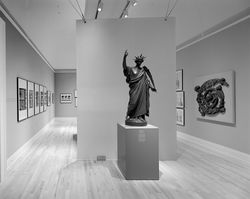
The exhibition examines the important role the Pantheon played in French artistic and political life from its foundation in 1744 well into the twentieth century. Coinciding with the international celebrations of the bicentennial of the French Revolution, the exhibition focuses on one of the central architectural episodes of the Revolution—the transformation of Saint(...)
The exhibition examines the important role the Pantheon played in French artistic and political life from its foundation in 1744 well into the twentieth century. Coinciding with the international celebrations of the bicentennial of the French Revolution, the exhibition focuses on one of the central architectural episodes of the Revolution—the transformation of Saint(...)
Location:
Main galleries
Main galleries
Date:
19 September 1989 to 19 November 1989
19 September 1989 to 19 November 1989
Title:
Le Panthéon: Symbol of Revolution
Actions:
Description:
The exhibition examines the important role the Pantheon played in French artistic and political life from its foundation in 1744 well into the twentieth century. Coinciding with the international celebrations of the bicentennial of the French Revolution, the exhibition focuses on one of the central architectural episodes of the Revolution—the transformation of Saint(...)
Le Panthéon: Symbol of Revolution
Actions:
Description:
The exhibition examines the important role the Pantheon played in French artistic and political life from its foundation in 1744 well into the twentieth century. Coinciding with the international celebrations of the bicentennial of the French Revolution, the exhibition focuses on one of the central architectural episodes of the Revolution—the transformation of Saint(...)
Form:
exhibitions
exhibitions
Date:
19 September 1989 to
19 November 1989
19 September 1989 to
19 November 1989
Location:
Main galleries
Main galleries
Form:
exhibitions
exhibitions
Description:
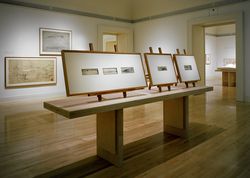
A revolutionary approach to the relationship between building and landscape, which shaped them together according to peculiarly American ideals, is the subject of Frank Lloyd Wright: Designs for an American Landscape, 1922–1932. In this exhibition, the CCA reconstructs five unbuilt, visionary projects that imagined nothing less than a new American landscape, integrating(...)
A revolutionary approach to the relationship between building and landscape, which shaped them together according to peculiarly American ideals, is the subject of Frank Lloyd Wright: Designs for an American Landscape, 1922–1932. In this exhibition, the CCA reconstructs five unbuilt, visionary projects that imagined nothing less than a new American landscape, integrating(...)
Location:
Main galleries
Main galleries
Date:
18 June 1996 to 29 September 1996
18 June 1996 to 29 September 1996
Title:
Frank Lloyd Wright: Designs for an American Landscape, 1922-1932
Actions:
Description:
A revolutionary approach to the relationship between building and landscape, which shaped them together according to peculiarly American ideals, is the subject of Frank Lloyd Wright: Designs for an American Landscape, 1922–1932. In this exhibition, the CCA reconstructs five unbuilt, visionary projects that imagined nothing less than a new American landscape, integrating(...)
Frank Lloyd Wright: Designs for an American Landscape, 1922-1932
Actions:
Description:
A revolutionary approach to the relationship between building and landscape, which shaped them together according to peculiarly American ideals, is the subject of Frank Lloyd Wright: Designs for an American Landscape, 1922–1932. In this exhibition, the CCA reconstructs five unbuilt, visionary projects that imagined nothing less than a new American landscape, integrating(...)
Form:
exhibitions
exhibitions
Date:
18 June 1996 to
29 September 1996
18 June 1996 to
29 September 1996
Location:
Main galleries
Main galleries
Form:
exhibitions
exhibitions
Actions:
Description:
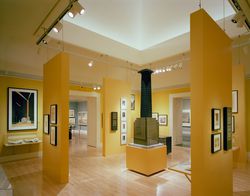
Americanism, the pattern of idealization, imitation and criticisms with which European architects greeted American urban models and building practices, is the subject of Scenes of the World to Come: European Architecture and the American Challenge, 1893–1960. The skyscrapers, massive industrial plants, and new sense of mobility and efficiency of North America became a(...)
Americanism, the pattern of idealization, imitation and criticisms with which European architects greeted American urban models and building practices, is the subject of Scenes of the World to Come: European Architecture and the American Challenge, 1893–1960. The skyscrapers, massive industrial plants, and new sense of mobility and efficiency of North America became a(...)
Location:
Main galleries
Main galleries
Date:
14 June 1995 to 14 September 1995
14 June 1995 to 14 September 1995
Title:
Scenes of the World to Come: European Architecture and the American Challenge, 1893–1960
Actions:
Description:
Americanism, the pattern of idealization, imitation and criticisms with which European architects greeted American urban models and building practices, is the subject of Scenes of the World to Come: European Architecture and the American Challenge, 1893–1960. The skyscrapers, massive industrial plants, and new sense of mobility and efficiency of North America became a(...)
Scenes of the World to Come: European Architecture and the American Challenge, 1893–1960
Actions:
Description:
Americanism, the pattern of idealization, imitation and criticisms with which European architects greeted American urban models and building practices, is the subject of Scenes of the World to Come: European Architecture and the American Challenge, 1893–1960. The skyscrapers, massive industrial plants, and new sense of mobility and efficiency of North America became a(...)
Form:
exhibitions
exhibitions
Date:
14 June 1995 to
14 September 1995
14 June 1995 to
14 September 1995
Location:
Main galleries
Main galleries
Form:
exhibitions
exhibitions
Actions:
Description:
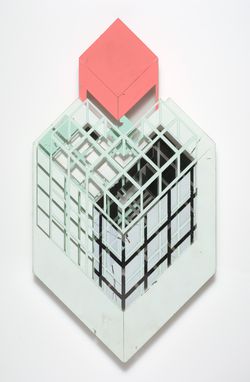
Through the work of internationally renowned architects, this exhibition reveals the presence of utopian modernist ideas thought to have been discarded with the advent of the postmodern era. According to the exhibition’s lead curator Reinhold Martin, much of the architectural production of the last half-century has been haunted by the ghosts of modernist utopias: “The(...)
Through the work of internationally renowned architects, this exhibition reveals the presence of utopian modernist ideas thought to have been discarded with the advent of the postmodern era. According to the exhibition’s lead curator Reinhold Martin, much of the architectural production of the last half-century has been haunted by the ghosts of modernist utopias: “The(...)
Location:
Octagonal gallery
Octagonal gallery
Date:
28 February 2008 to 25 May 2008
28 February 2008 to 25 May 2008
Title:
Utopia's Ghost: Postmodernism Reconsidered
Actions:
Description:
Through the work of internationally renowned architects, this exhibition reveals the presence of utopian modernist ideas thought to have been discarded with the advent of the postmodern era. According to the exhibition’s lead curator Reinhold Martin, much of the architectural production of the last half-century has been haunted by the ghosts of modernist utopias: “The(...)
Utopia's Ghost: Postmodernism Reconsidered
Actions:
Description:
Through the work of internationally renowned architects, this exhibition reveals the presence of utopian modernist ideas thought to have been discarded with the advent of the postmodern era. According to the exhibition’s lead curator Reinhold Martin, much of the architectural production of the last half-century has been haunted by the ghosts of modernist utopias: “The(...)
Form:
exhibitions
exhibitions
Date:
28 February 2008 to
25 May 2008
28 February 2008 to
25 May 2008
Location:
Octagonal gallery
Octagonal gallery
Form:
events
events
Actions:
Description:
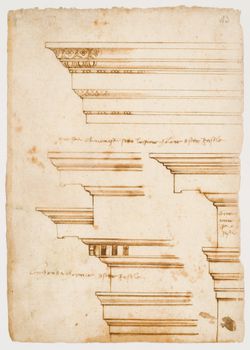
2016 Visiting Scholar Cara Rachele presents her research: This lecture investigates the explosion of detail drawings in the Renaissance. It connects the emergence of the detail in the sixteenth century as a canonical drawing type with the evocation of the material antique. The organic evolution of the detail drawing method can be seen in the sketchbooks of everyday(...)
2016 Visiting Scholar Cara Rachele presents her research: This lecture investigates the explosion of detail drawings in the Renaissance. It connects the emergence of the detail in the sixteenth century as a canonical drawing type with the evocation of the material antique. The organic evolution of the detail drawing method can be seen in the sketchbooks of everyday(...)
Date:
11 August 2016, 6pm
11 August 2016, 6pm
Title:
Visiting Scholar Seminar: Cara Rachele
Actions:
Description:
2016 Visiting Scholar Cara Rachele presents her research: This lecture investigates the explosion of detail drawings in the Renaissance. It connects the emergence of the detail in the sixteenth century as a canonical drawing type with the evocation of the material antique. The organic evolution of the detail drawing method can be seen in the sketchbooks of everyday(...)
Visiting Scholar Seminar: Cara Rachele
Actions:
Description:
2016 Visiting Scholar Cara Rachele presents her research: This lecture investigates the explosion of detail drawings in the Renaissance. It connects the emergence of the detail in the sixteenth century as a canonical drawing type with the evocation of the material antique. The organic evolution of the detail drawing method can be seen in the sketchbooks of everyday(...)
Form:
events
events
Date:
11 August 2016
6pm
11 August 2016
6pm
Form:
exhibitions
exhibitions
Actions:
Description:
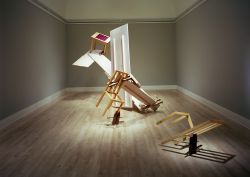
Parables and Other Allegories: The Work of Melvin Charney 1975–1990 comprises approximately 100 drawings, including many large-scale, sketches, photographs, and three large constructions. By assembling works from various public and private collections, including the CCA, the exhibition permits a comprehensive analysis of Charney’s artistic process to reveal the dialogue(...)
Parables and Other Allegories: The Work of Melvin Charney 1975–1990 comprises approximately 100 drawings, including many large-scale, sketches, photographs, and three large constructions. By assembling works from various public and private collections, including the CCA, the exhibition permits a comprehensive analysis of Charney’s artistic process to reveal the dialogue(...)
Location:
Main galleries
Main galleries
Date:
9 October 1991 to 12 January 1992
9 October 1991 to 12 January 1992
Title:
Parables and Other Allegories: The Work of Melvin Charney, 1975-1990
Actions:
Description:
Parables and Other Allegories: The Work of Melvin Charney 1975–1990 comprises approximately 100 drawings, including many large-scale, sketches, photographs, and three large constructions. By assembling works from various public and private collections, including the CCA, the exhibition permits a comprehensive analysis of Charney’s artistic process to reveal the dialogue(...)
Parables and Other Allegories: The Work of Melvin Charney, 1975-1990
Actions:
Description:
Parables and Other Allegories: The Work of Melvin Charney 1975–1990 comprises approximately 100 drawings, including many large-scale, sketches, photographs, and three large constructions. By assembling works from various public and private collections, including the CCA, the exhibition permits a comprehensive analysis of Charney’s artistic process to reveal the dialogue(...)
Form:
exhibitions
exhibitions
Date:
9 October 1991 to
12 January 1992
9 October 1991 to
12 January 1992
Location:
Main galleries
Main galleries
Form:
exhibitions
exhibitions
Actions:
Description:
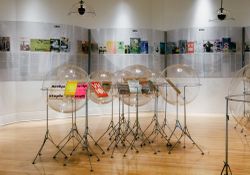
Coined in the early twentieth century to designate progressive literary journals, the term “little magazine” was remobilized during the 1960s to grapple with the contemporary proliferation of independent architectural periodicals that appeared in response to the political, social, and artistic changes of the period. Clip/Stamp/Fold 2 investigates how a diverse group of(...)
Coined in the early twentieth century to designate progressive literary journals, the term “little magazine” was remobilized during the 1960s to grapple with the contemporary proliferation of independent architectural periodicals that appeared in response to the political, social, and artistic changes of the period. Clip/Stamp/Fold 2 investigates how a diverse group of(...)
Location:
Octagonal gallery and library rotunda
Octagonal gallery and library rotunda
Date:
12 April 2007 to 9 September 2007
12 April 2007 to 9 September 2007
Title:
Clip/Stamp/Fold 2: The Radical Architecture of Little Magazines 196X - 197X
Actions:
Description:
Coined in the early twentieth century to designate progressive literary journals, the term “little magazine” was remobilized during the 1960s to grapple with the contemporary proliferation of independent architectural periodicals that appeared in response to the political, social, and artistic changes of the period. Clip/Stamp/Fold 2 investigates how a diverse group of(...)
Clip/Stamp/Fold 2: The Radical Architecture of Little Magazines 196X - 197X
Actions:
Description:
Coined in the early twentieth century to designate progressive literary journals, the term “little magazine” was remobilized during the 1960s to grapple with the contemporary proliferation of independent architectural periodicals that appeared in response to the political, social, and artistic changes of the period. Clip/Stamp/Fold 2 investigates how a diverse group of(...)
Form:
exhibitions
exhibitions
Date:
12 April 2007 to
9 September 2007
12 April 2007 to
9 September 2007
Location:
Octagonal gallery and library rotunda
Octagonal gallery and library rotunda
Form:
exhibitions
exhibitions
Title:
Mirrors / Miroirs
Mirrors / Miroirs
Actions:
Description:
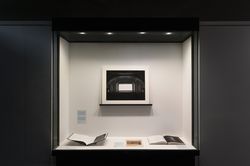
Mirrors/ Miroirs is conceived through an indirect dialogue with the exhibition Besides, History: Go Hasegawa, Kersten Geers, David Van Severen, a project rooted in the shared references and resonances between the work of two contemporary practices in the presence of history. If Besides, History is premised on impressions of one office’s work registered through(...)
Mirrors/ Miroirs is conceived through an indirect dialogue with the exhibition Besides, History: Go Hasegawa, Kersten Geers, David Van Severen, a project rooted in the shared references and resonances between the work of two contemporary practices in the presence of history. If Besides, History is premised on impressions of one office’s work registered through(...)
Location:
Hall cases
Hall cases
Date:
22 June 2017 to 14 January 2018
22 June 2017 to 14 January 2018
Title:
Mirrors / Miroirs
Actions:
Description:
Mirrors/ Miroirs is conceived through an indirect dialogue with the exhibition Besides, History: Go Hasegawa, Kersten Geers, David Van Severen, a project rooted in the shared references and resonances between the work of two contemporary practices in the presence of history. If Besides, History is premised on impressions of one office’s work registered through(...)
Mirrors / Miroirs
Actions:
Description:
Mirrors/ Miroirs is conceived through an indirect dialogue with the exhibition Besides, History: Go Hasegawa, Kersten Geers, David Van Severen, a project rooted in the shared references and resonances between the work of two contemporary practices in the presence of history. If Besides, History is premised on impressions of one office’s work registered through(...)
Form:
exhibitions
exhibitions
Date:
22 June 2017 to
14 January 2018
22 June 2017 to
14 January 2018
Location:
Hall cases
Hall cases
Form:
exhibitions
exhibitions
Title:
Mies in America
Mies in America
Actions:
Description:
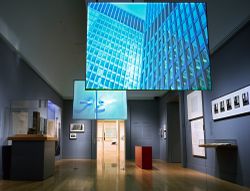
A profound thinker, painstaking artist, and one of the greatest architects in history, Ludwig Mies van der Rohe emigrated from Germany to the United States in 1938, when he was already in his fifties and one of the recognized masters of his profession. Transplanted from the Bauhaus (of which he was the last director) to a technical institute in Chicago, from the European(...)
A profound thinker, painstaking artist, and one of the greatest architects in history, Ludwig Mies van der Rohe emigrated from Germany to the United States in 1938, when he was already in his fifties and one of the recognized masters of his profession. Transplanted from the Bauhaus (of which he was the last director) to a technical institute in Chicago, from the European(...)
Location:
Main galleries
Main galleries
Date:
17 October 2001 to 20 January 2002
17 October 2001 to 20 January 2002
Title:
Mies in America
Actions:
Description:
A profound thinker, painstaking artist, and one of the greatest architects in history, Ludwig Mies van der Rohe emigrated from Germany to the United States in 1938, when he was already in his fifties and one of the recognized masters of his profession. Transplanted from the Bauhaus (of which he was the last director) to a technical institute in Chicago, from the European(...)
Mies in America
Actions:
Description:
A profound thinker, painstaking artist, and one of the greatest architects in history, Ludwig Mies van der Rohe emigrated from Germany to the United States in 1938, when he was already in his fifties and one of the recognized masters of his profession. Transplanted from the Bauhaus (of which he was the last director) to a technical institute in Chicago, from the European(...)
Form:
exhibitions
exhibitions
Date:
17 October 2001 to
20 January 2002
17 October 2001 to
20 January 2002
Location:
Main galleries
Main galleries


