


213 Results
Form:
books
books
Actions:
Price:
$22.95
(available to order)
Summary:
Why do walls marking national boundaries proliferate amid widespread proclamations of global connectedness and despite anticipation of a world without borders? Why are barricades built of concrete, steel, and barbed wire when threats to the nation today are so often miniaturized, vaporous, clandestine, dispersed, or networked? In "Walled states, waning sovereignty", Wendy(...)
Title:
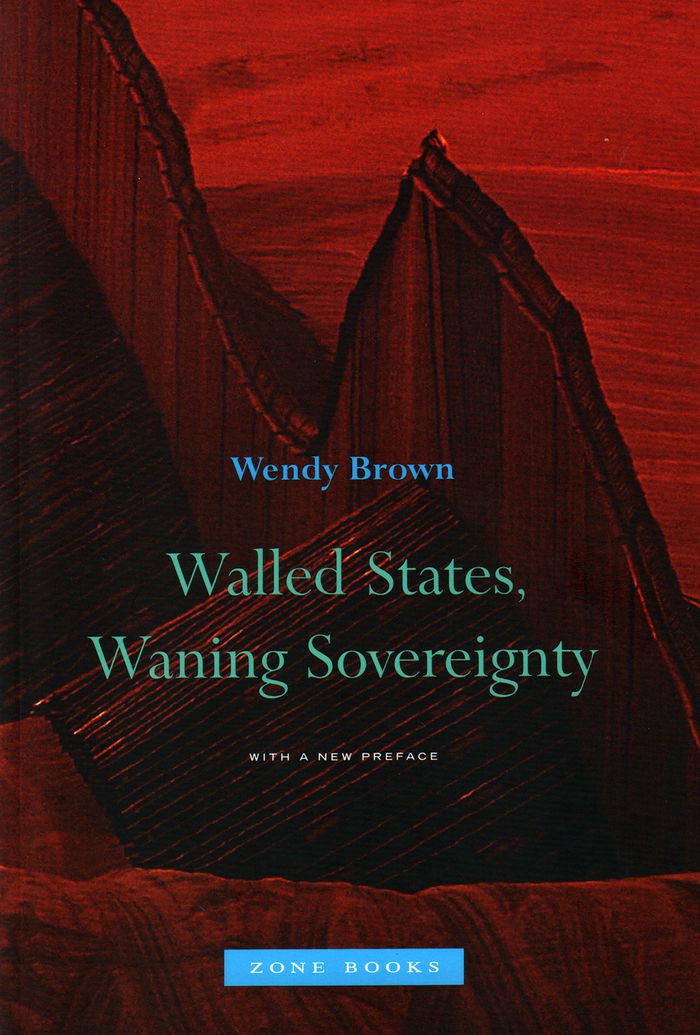
Walled states, waning sovereignty, New edition
Actions:
Price:
$22.95
(available to order)
Summary:
Why do walls marking national boundaries proliferate amid widespread proclamations of global connectedness and despite anticipation of a world without borders? Why are barricades built of concrete, steel, and barbed wire when threats to the nation today are so often miniaturized, vaporous, clandestine, dispersed, or networked? In "Walled states, waning sovereignty", Wendy Brown considers the recent spate of wall building in contrast to the erosion of nation-state sovereignty. Drawing on classical and contemporary political theories of state sovereignty in order to understand how state power and national identity persist amid its decline, Brown considers both the need of the state for legitimacy and the popular desires that incite the contemporary building of walls. The new walls—dividing Texas from Mexico, Israel from Palestine, South Africa from Zimbabwe—consecrate the broken boundaries they would seem to contest and signify the ungovernability of a range of forces unleashed by globalization. Yet these same walls often amount to little more than theatrical props, frequently breached, and blur the distinction between law and lawlessness that they are intended to represent. But if today’s walls fail to resolve the conflicts between globalization and national identity, they nonetheless project a stark image of sovereign power. Walls, Brown argues, address human desires for containment and protection in a world increasingly without these provisions. Walls respond to the wish for horizons even as horizons are vanquished.
Form:
books
books
Publication:
April 2017
April 2017
Subject:
Architectural Theory
Architectural Theory
Form:
books
books
Actions:
Description:
1 online resource
Author:
Subject:
Publication:
[Place of publication not identified] : Aggregate Architectural History Collaborative, 2015.
[Place of publication not identified] : Aggregate Architectural History Collaborative, 2015.
Form:
books
books
Publication:
[Place of publication not identified] : Aggregate Architectural History Collaborative, 2015.
[Place of publication not identified] : Aggregate Architectural History Collaborative, 2015.
Author:
Subject:
Form:
books
books
Actions:
Subject:
Publication:
K. Verlag Haus der Kulturen der Welt 2025
K. Verlag Haus der Kulturen der Welt 2025
Form:
books
books
Publication:
K. Verlag Haus der Kulturen der Welt 2025
K. Verlag Haus der Kulturen der Welt 2025
Subject:
Form:
books
books
Actions:
Holdings:
Description:
431 pages : illustrations (some color), maps (some color) ; 23 cm
Description:
431 pages : illustrations (some color), maps (some color) ; 23 cm
Subject:
Publication:
New York, N.Y. : Monacelli Press, 2002.
New York, N.Y. : Monacelli Press, 2002.
Title:
The next Jerusalem : sharing the divided city / Michael Sorkin, editor.
Actions:
Holdings:
Description:
431 pages : illustrations (some color), maps (some color) ; 23 cm
The next Jerusalem : sharing the divided city / Michael Sorkin, editor.
Actions:
Holdings:
Description:
431 pages : illustrations (some color), maps (some color) ; 23 cm
Form:
books
books
Publication:
New York, N.Y. : Monacelli Press, 2002.
New York, N.Y. : Monacelli Press, 2002.
Subject:
Form:
books
books
Actions:
Subject:
Publication:
The Avery Review 2018
The Avery Review 2018
Form:
books
books
Publication:
The Avery Review 2018
The Avery Review 2018
Subject:
Form:
audio
audio
Actions:
Description:
1 online resource.
Author:
Subject:
Publication:
[Place of publication not identified] : The Funambulist, 2014.
[Place of publication not identified] : The Funambulist, 2014.
Title:
Thinking the Volume : Subterranean, Atmospheric and Oblique Territories.
Actions:
Description:
1 online resource.
Thinking the Volume : Subterranean, Atmospheric and Oblique Territories.
Actions:
Description:
1 online resource.
Form:
audio
audio
Publication:
[Place of publication not identified] : The Funambulist, 2014.
[Place of publication not identified] : The Funambulist, 2014.
Author:
Subject:
Form:
books
books
Actions:
Subject:
Publication:
The Avery Review 2022
The Avery Review 2022
Form:
books
books
Publication:
The Avery Review 2022
The Avery Review 2022
Subject:
Form:
books
books
Title:
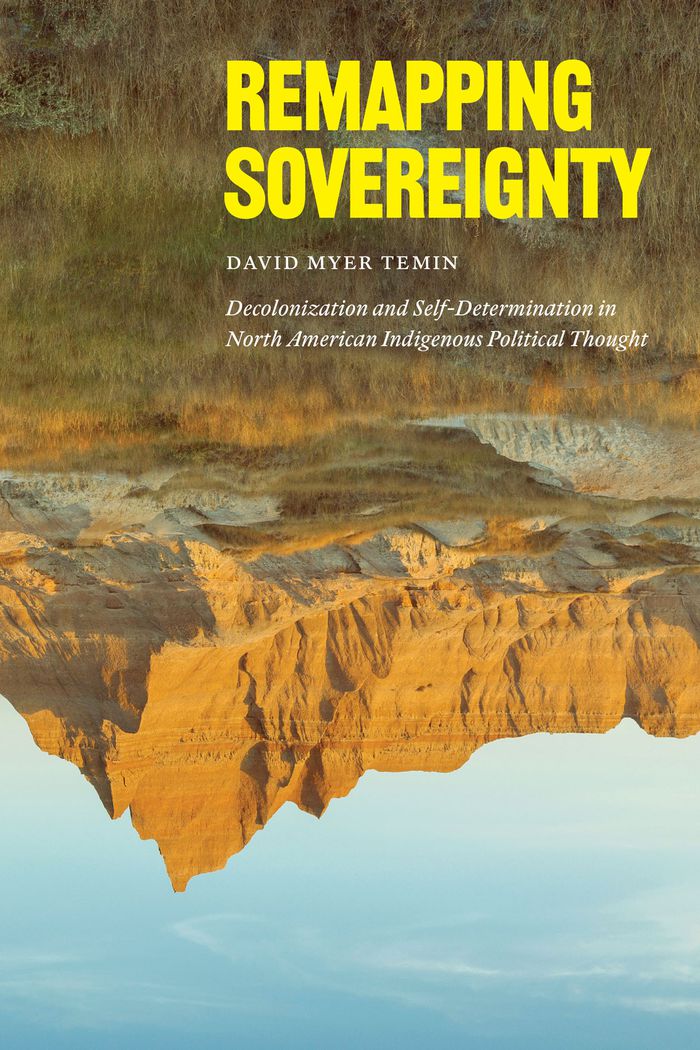
Remapping sovereignty: Decolonization and selfdetermination in NA indigenous political thought
Remapping sovereignty: Decolonization and selfdetermination in NA indigenous political thought
Actions:
Price:
$48.00
(available to order)
Summary:
Accounts of decolonization routinely neglect Indigenous societies, yet Native communities have made unique contributions to anticolonial thought and activism. ''Remapping sovereignty'' examines how twentieth-century Indigenous activists in North America debated questions of decolonization and self-determination, developing distinctive conceptual approaches that both(...)
Title:
Remapping sovereignty: Decolonization and selfdetermination in NA indigenous political thought
Actions:
Price:
$48.00
(available to order)
Summary:
Accounts of decolonization routinely neglect Indigenous societies, yet Native communities have made unique contributions to anticolonial thought and activism. ''Remapping sovereignty'' examines how twentieth-century Indigenous activists in North America debated questions of decolonization and self-determination, developing distinctive conceptual approaches that both resonate with and reformulate key strands in other civil rights and global decolonization movements. In contrast to decolonization projects that envisioned liberation through state sovereignty, Indigenous theorists emphasized the self-determination of peoples against sovereign state supremacy and articulated a visionary politics of decolonization as earthmaking. Temin traces the interplay between anticolonial thought and practice across key thinkers, interweaving history and textual analysis. He shows how these insights broaden the political and intellectual horizons open to us today.
Form:
books
books
Publication:
August 2023
August 2023
Subject:
indigenous
indigenous
Form:
books
books
Actions:
Holdings:
Description:
vii, 241 pages : illustrations, maps ; 24 cm
Description:
vii, 241 pages : illustrations, maps ; 24 cm
Author:
Subject:
Publication:
Cambridge, Mass. : MIT Press, ©2005.
Cambridge, Mass. : MIT Press, ©2005.
Title:
Enduring innocence : global architecture and its political masquerades / Keller Easterling.
Actions:
Holdings:
Description:
vii, 241 pages : illustrations, maps ; 24 cm
Enduring innocence : global architecture and its political masquerades / Keller Easterling.
Actions:
Holdings:
Description:
vii, 241 pages : illustrations, maps ; 24 cm
Form:
books
books
Publication:
Cambridge, Mass. : MIT Press, ©2005.
Cambridge, Mass. : MIT Press, ©2005.
Author:
Subject:
Form:
books
books
Actions:
Subject:
Publication:
Institute of Network Cultures 2019
Institute of Network Cultures 2019
Form:
books
books
Publication:
Institute of Network Cultures 2019
Institute of Network Cultures 2019
Subject:


