


10680 Results
Form:
drawings
drawings
Actions:
Reference number:
DR2006:0168
DR2006:0168
People:
Date:
1995?
1995?
Form:
drawings
drawings
Date:
1995?
1995?
People:
Form:
drawings
drawings
Actions:
Reference number:
DR2006:0169
DR2006:0169
People:
Date:
1995?
1995?
Title:
Île Derborence, Parc Matisse, Lille, France : schéma initial : plan de plantation
Actions:
DR2006:0169
Île Derborence, Parc Matisse, Lille, France : schéma initial : plan de plantation
Actions:
DR2006:0169
Form:
drawings
drawings
Date:
1995?
1995?
People:
Form:
drawings
drawings
Reference number:
AP178.S2.1981.002
Description:
This sketchbook inlcudes sketches for Blocke 121, Schlesisches Tor in Berlin, Germany (including Bonjour Tristesse) as well as sketches for Casa Avelino Duarte in Ovar, Portugal. The sketchbook also contains notes, sketches of people, and furniture.
AP178.S2.1981.002
Description:
This sketchbook inlcudes sketches for Blocke 121, Schlesisches Tor in Berlin, Germany (including Bonjour Tristesse) as well as sketches for Casa Avelino Duarte in Ovar, Portugal. The sketchbook also contains notes, sketches of people, and furniture.
People:
Date:
January 1981
January 1981
Title:
Sketchbook 74: Berlim
Actions:
AP178.S2.1981.002
Description:
This sketchbook inlcudes sketches for Blocke 121, Schlesisches Tor in Berlin, Germany (including Bonjour Tristesse) as well as sketches for Casa Avelino Duarte in Ovar, Portugal. The sketchbook also contains notes, sketches of people, and furniture.
Sketchbook 74: Berlim
Actions:
AP178.S2.1981.002
Description:
This sketchbook inlcudes sketches for Blocke 121, Schlesisches Tor in Berlin, Germany (including Bonjour Tristesse) as well as sketches for Casa Avelino Duarte in Ovar, Portugal. The sketchbook also contains notes, sketches of people, and furniture.
Form:
drawings
drawings
Date:
January 1981
January 1981
People:
Form:
drawings
drawings
Actions:
Reference number:
AP178.S2.1987.005
Description:
This sketchbook includes sketches for the Faculty of Architecture of the University of Porto, Portugal, for Bonjour Tristesse in Berlin, Germany and for a project in Setubal. It also includes notes for the Macau City expansion plan in China.
AP178.S2.1987.005
Description:
This sketchbook includes sketches for the Faculty of Architecture of the University of Porto, Portugal, for Bonjour Tristesse in Berlin, Germany and for a project in Setubal. It also includes notes for the Macau City expansion plan in China.
People:
Date:
April 1987
April 1987
Title:
Sketchbook 247: Setubal - Texto Macau
Actions:
AP178.S2.1987.005
Description:
This sketchbook includes sketches for the Faculty of Architecture of the University of Porto, Portugal, for Bonjour Tristesse in Berlin, Germany and for a project in Setubal. It also includes notes for the Macau City expansion plan in China.
Sketchbook 247: Setubal - Texto Macau
Actions:
AP178.S2.1987.005
Description:
This sketchbook includes sketches for the Faculty of Architecture of the University of Porto, Portugal, for Bonjour Tristesse in Berlin, Germany and for a project in Setubal. It also includes notes for the Macau City expansion plan in China.
Form:
drawings
drawings
Date:
April 1987
April 1987
People:
Form:
drawings
drawings
Reference number:
AP178.S2.1980.001
Description:
This sketchbook includes notes and sketches of Kreuzberg, Berlin, Germany and the Bouça housing complex in Porto, Portugal. Notes mention Brigitte Fleck, Dr. Braga, B. Borges, and include a schedule of meetings regarding work in Évora, Portugal.
AP178.S2.1980.001
Description:
This sketchbook includes notes and sketches of Kreuzberg, Berlin, Germany and the Bouça housing complex in Porto, Portugal. Notes mention Brigitte Fleck, Dr. Braga, B. Borges, and include a schedule of meetings regarding work in Évora, Portugal.
People:
Date:
May 1980
May 1980
Title:
Sketchbook 55: Évora Casa Garagens - Berlim (Pequeno)
Actions:
AP178.S2.1980.001
Description:
This sketchbook includes notes and sketches of Kreuzberg, Berlin, Germany and the Bouça housing complex in Porto, Portugal. Notes mention Brigitte Fleck, Dr. Braga, B. Borges, and include a schedule of meetings regarding work in Évora, Portugal.
Sketchbook 55: Évora Casa Garagens - Berlim (Pequeno)
Actions:
AP178.S2.1980.001
Description:
This sketchbook includes notes and sketches of Kreuzberg, Berlin, Germany and the Bouça housing complex in Porto, Portugal. Notes mention Brigitte Fleck, Dr. Braga, B. Borges, and include a schedule of meetings regarding work in Évora, Portugal.
Form:
drawings
drawings
Date:
May 1980
May 1980
People:
Form:
drawings
drawings
Actions:
Reference number:
ARCH281730
Description:
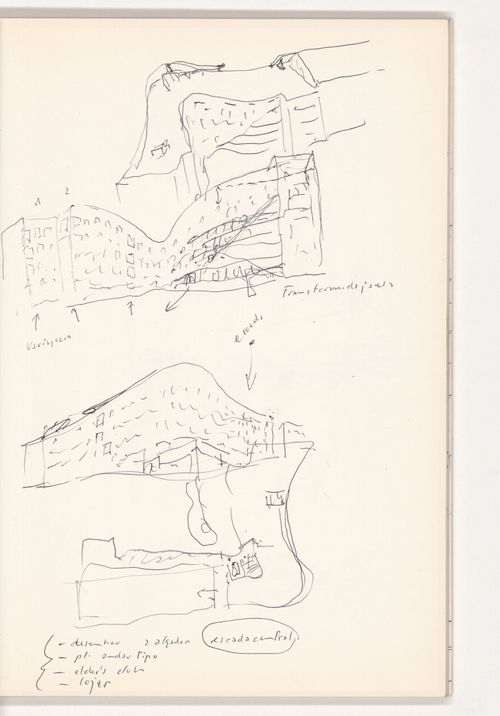
This sketchbook includes notes and sketches for Blocke 121, Schlesisches Tor in Berlin, Germany (including Bonjour Tristesse and Kita) and for the Quinta da Malagueira housing estate in Évora, Portugal. The sketchbook also includes notes and sketches of people.
ARCH281730
Description:
This sketchbook includes notes and sketches for Blocke 121, Schlesisches Tor in Berlin, Germany (including Bonjour Tristesse and Kita) and for the Quinta da Malagueira housing estate in Évora, Portugal. The sketchbook also includes notes and sketches of people.
People:
Date:
October 1981
October 1981
Title:
Sketchbook 95: Évora (Remates) - Berlim
Actions:
ARCH281730
Description:
This sketchbook includes notes and sketches for Blocke 121, Schlesisches Tor in Berlin, Germany (including Bonjour Tristesse and Kita) and for the Quinta da Malagueira housing estate in Évora, Portugal. The sketchbook also includes notes and sketches of people.
Sketchbook 95: Évora (Remates) - Berlim
Actions:
ARCH281730
Description:
This sketchbook includes notes and sketches for Blocke 121, Schlesisches Tor in Berlin, Germany (including Bonjour Tristesse and Kita) and for the Quinta da Malagueira housing estate in Évora, Portugal. The sketchbook also includes notes and sketches of people.
Form:
drawings
drawings
Date:
October 1981
October 1981
People:
Form:
exhibitions
exhibitions
Actions:
Description:
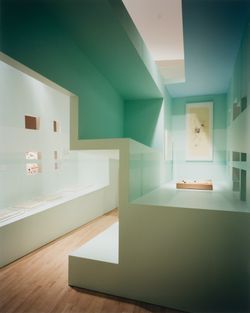
*Cities of Artificial Excavation: The Work of Peter Eisenman, 1978–1988* explores how American architect and writer Peter Eisenman questioned the concept of “site,” and demonstrates the importance of drawing and modelmaking in generating his ideas. The exhibition reveals the richness and complexity of the design process by looking carefully at Eisenman’s drawings and(...)
*Cities of Artificial Excavation: The Work of Peter Eisenman, 1978–1988* explores how American architect and writer Peter Eisenman questioned the concept of “site,” and demonstrates the importance of drawing and modelmaking in generating his ideas. The exhibition reveals the richness and complexity of the design process by looking carefully at Eisenman’s drawings and(...)
Location:
Main galleries
Main galleries
Date:
2 March 1994 to 19 June 1994
2 March 1994 to 19 June 1994
Title:
Cities of Artificial Excavation: The Work of Peter Eisenman, 1978-1988
Actions:
Description:
*Cities of Artificial Excavation: The Work of Peter Eisenman, 1978–1988* explores how American architect and writer Peter Eisenman questioned the concept of “site,” and demonstrates the importance of drawing and modelmaking in generating his ideas. The exhibition reveals the richness and complexity of the design process by looking carefully at Eisenman’s drawings and(...)
Cities of Artificial Excavation: The Work of Peter Eisenman, 1978-1988
Actions:
Description:
*Cities of Artificial Excavation: The Work of Peter Eisenman, 1978–1988* explores how American architect and writer Peter Eisenman questioned the concept of “site,” and demonstrates the importance of drawing and modelmaking in generating his ideas. The exhibition reveals the richness and complexity of the design process by looking carefully at Eisenman’s drawings and(...)
Form:
exhibitions
exhibitions
Date:
2 March 1994 to
19 June 1994
2 March 1994 to
19 June 1994
Location:
Main galleries
Main galleries
Form:
textual records, photographs
textual records, photographs
Actions:
Reference number:
DR1999:0511
Description:
documents include 38 negatives, 121 photographs, guidebook, historical maps/pictures/text/dates, publications, color, competition brief, site plans, axonometrics, sketches, 1941 Berlin phone directory, Leonardo da Vinci information, mechanical, microchip information, notes, ground foam, samples
DR1999:0511
Description:
documents include 38 negatives, 121 photographs, guidebook, historical maps/pictures/text/dates, publications, color, competition brief, site plans, axonometrics, sketches, 1941 Berlin phone directory, Leonardo da Vinci information, mechanical, microchip information, notes, ground foam, samples
People:
Title:
Negatives, photographs, guidebook, historical maps/pictures/text/dates
Actions:
DR1999:0511
Description:
documents include 38 negatives, 121 photographs, guidebook, historical maps/pictures/text/dates, publications, color, competition brief, site plans, axonometrics, sketches, 1941 Berlin phone directory, Leonardo da Vinci information, mechanical, microchip information, notes, ground foam, samples
Negatives, photographs, guidebook, historical maps/pictures/text/dates
Actions:
DR1999:0511
Description:
documents include 38 negatives, 121 photographs, guidebook, historical maps/pictures/text/dates, publications, color, competition brief, site plans, axonometrics, sketches, 1941 Berlin phone directory, Leonardo da Vinci information, mechanical, microchip information, notes, ground foam, samples
Form:
textual records, photographs
textual records, photographs
People:
Level of archival description:
Series
Series
Title:
Bruno Taut
Bruno Taut
Reference number:
AP162.S8
Description:
Series documents the contribution of architect Bruno Taut to the correspondence circle of Die gläserne Kette. Bruno Taut participated under the pseudonym Glas. Born in 1880 in Königsberg, Germany, Bruno Taut studied architecture at the Bauwerkschule in Königsberg. After working in architectural firms from 1903 to 1909, he worked in partnership with Franz Hoffman and later with his brother Max Taut. Bruno Taut undertook various architectural projects including housing projects, public commissions, and later projects for universities and schools. In 1918, he founded the Arbeisrat für Kunst, a union of architects, painters, writers and other artists based in Berlin and dedicated to bring architectural and artisit tendencies of the time to a broader public. This union also involved some members of the Die gläserne Kette circle. Between 1920 and 1921, Bruno Taut was editor to the magazine "Frühlich". He taught architecture at the Technische Hochschule at Berlin-Charlottenburg from 1930 to 1932, and undertook a working visit in Russia in 1932 to 1933. After spending time in Japan between 1933 and 1936 due to enforced emigration, he taught at the Academy of Arts in Istanbul. He died in Istanbul in 1938. (Source: Ian Boyd Whyte, Bruno Taut and the Architecture of Activism. Cambridge: Cambridge University Press, 1982) This series comprises part of Bruno Taut's correspondence to the Die gläserne Kette circle, along with related drawings and documents. The series also includes photographic materials of some of his architectural projects.
AP162.S8
Description:
Series documents the contribution of architect Bruno Taut to the correspondence circle of Die gläserne Kette. Bruno Taut participated under the pseudonym Glas. Born in 1880 in Königsberg, Germany, Bruno Taut studied architecture at the Bauwerkschule in Königsberg. After working in architectural firms from 1903 to 1909, he worked in partnership with Franz Hoffman and later with his brother Max Taut. Bruno Taut undertook various architectural projects including housing projects, public commissions, and later projects for universities and schools. In 1918, he founded the Arbeisrat für Kunst, a union of architects, painters, writers and other artists based in Berlin and dedicated to bring architectural and artisit tendencies of the time to a broader public. This union also involved some members of the Die gläserne Kette circle. Between 1920 and 1921, Bruno Taut was editor to the magazine "Frühlich". He taught architecture at the Technische Hochschule at Berlin-Charlottenburg from 1930 to 1932, and undertook a working visit in Russia in 1932 to 1933. After spending time in Japan between 1933 and 1936 due to enforced emigration, he taught at the Academy of Arts in Istanbul. He died in Istanbul in 1938. (Source: Ian Boyd Whyte, Bruno Taut and the Architecture of Activism. Cambridge: Cambridge University Press, 1982) This series comprises part of Bruno Taut's correspondence to the Die gläserne Kette circle, along with related drawings and documents. The series also includes photographic materials of some of his architectural projects.
People:
Date:
between 1919 and 1920
between 1919 and 1920
Title:
Bruno Taut
Actions:
AP162.S8
Description:
Series documents the contribution of architect Bruno Taut to the correspondence circle of Die gläserne Kette. Bruno Taut participated under the pseudonym Glas. Born in 1880 in Königsberg, Germany, Bruno Taut studied architecture at the Bauwerkschule in Königsberg. After working in architectural firms from 1903 to 1909, he worked in partnership with Franz Hoffman and later with his brother Max Taut. Bruno Taut undertook various architectural projects including housing projects, public commissions, and later projects for universities and schools. In 1918, he founded the Arbeisrat für Kunst, a union of architects, painters, writers and other artists based in Berlin and dedicated to bring architectural and artisit tendencies of the time to a broader public. This union also involved some members of the Die gläserne Kette circle. Between 1920 and 1921, Bruno Taut was editor to the magazine "Frühlich". He taught architecture at the Technische Hochschule at Berlin-Charlottenburg from 1930 to 1932, and undertook a working visit in Russia in 1932 to 1933. After spending time in Japan between 1933 and 1936 due to enforced emigration, he taught at the Academy of Arts in Istanbul. He died in Istanbul in 1938. (Source: Ian Boyd Whyte, Bruno Taut and the Architecture of Activism. Cambridge: Cambridge University Press, 1982) This series comprises part of Bruno Taut's correspondence to the Die gläserne Kette circle, along with related drawings and documents. The series also includes photographic materials of some of his architectural projects.
Bruno Taut
Actions:
AP162.S8
Description:
Series documents the contribution of architect Bruno Taut to the correspondence circle of Die gläserne Kette. Bruno Taut participated under the pseudonym Glas. Born in 1880 in Königsberg, Germany, Bruno Taut studied architecture at the Bauwerkschule in Königsberg. After working in architectural firms from 1903 to 1909, he worked in partnership with Franz Hoffman and later with his brother Max Taut. Bruno Taut undertook various architectural projects including housing projects, public commissions, and later projects for universities and schools. In 1918, he founded the Arbeisrat für Kunst, a union of architects, painters, writers and other artists based in Berlin and dedicated to bring architectural and artisit tendencies of the time to a broader public. This union also involved some members of the Die gläserne Kette circle. Between 1920 and 1921, Bruno Taut was editor to the magazine "Frühlich". He taught architecture at the Technische Hochschule at Berlin-Charlottenburg from 1930 to 1932, and undertook a working visit in Russia in 1932 to 1933. After spending time in Japan between 1933 and 1936 due to enforced emigration, he taught at the Academy of Arts in Istanbul. He died in Istanbul in 1938. (Source: Ian Boyd Whyte, Bruno Taut and the Architecture of Activism. Cambridge: Cambridge University Press, 1982) This series comprises part of Bruno Taut's correspondence to the Die gläserne Kette circle, along with related drawings and documents. The series also includes photographic materials of some of his architectural projects.
Level of archival description:
series
series
Date:
between 1919 and 1920
between 1919 and 1920
People:
Form:
drawings
drawings
Reference number:
AP178.S2.1981.011
Description:
This sketchbook includes notes and sketches for Blocke 121, Schlesisches Tor in Berlin, Germany (including Bonjour Tristesse and Kita) and for the Quinta da Malagueira housing estate in Évora, Portugal. The sketchbook also includes notes and sketches of people.
AP178.S2.1981.011
Description:
This sketchbook includes notes and sketches for Blocke 121, Schlesisches Tor in Berlin, Germany (including Bonjour Tristesse and Kita) and for the Quinta da Malagueira housing estate in Évora, Portugal. The sketchbook also includes notes and sketches of people.
People:
Date:
October 1981
October 1981
Title:
Sketchbook 95: Évora (Remates) - Berlim
Actions:
AP178.S2.1981.011
Description:
This sketchbook includes notes and sketches for Blocke 121, Schlesisches Tor in Berlin, Germany (including Bonjour Tristesse and Kita) and for the Quinta da Malagueira housing estate in Évora, Portugal. The sketchbook also includes notes and sketches of people.
Sketchbook 95: Évora (Remates) - Berlim
Actions:
AP178.S2.1981.011
Description:
This sketchbook includes notes and sketches for Blocke 121, Schlesisches Tor in Berlin, Germany (including Bonjour Tristesse and Kita) and for the Quinta da Malagueira housing estate in Évora, Portugal. The sketchbook also includes notes and sketches of people.
Form:
drawings
drawings
Date:
October 1981
October 1981
People:


