


12622 Results
Form:
photographs
photographs
Reference number:
PH1998:0031:001-109
Description:
- Album PH1998:0031:001-109 comprises 86 views of Italy, 19 views of France, and 4 views of Windsor Castle, New Windsor, England. The 86 views of Italy include: 10 views of Rome and 25 photographs of sculptures in two collections in Rome, 17 in the Vatican Museum and 8 in the Capitolano Museum; 11 views of Pisa and 3 photographs of paintings located in Pisa; 10 views of Naples and 2 photographs of sculptures located in Naples; 10 views of Genoa; 6 views of Italy; 4 views of Florence; 1 view of San Remo; one photograph of an unidentified architectural plan; one photograph of a drawing; and two photographs of frescoes. -- The 19 views of France include 2 views of Nice.
PH1998:0031:001-109
Description:
- Album PH1998:0031:001-109 comprises 86 views of Italy, 19 views of France, and 4 views of Windsor Castle, New Windsor, England. The 86 views of Italy include: 10 views of Rome and 25 photographs of sculptures in two collections in Rome, 17 in the Vatican Museum and 8 in the Capitolano Museum; 11 views of Pisa and 3 photographs of paintings located in Pisa; 10 views of Naples and 2 photographs of sculptures located in Naples; 10 views of Genoa; 6 views of Italy; 4 views of Florence; 1 view of San Remo; one photograph of an unidentified architectural plan; one photograph of a drawing; and two photographs of frescoes. -- The 19 views of France include 2 views of Nice.
People:
Subject:
architecture, painting, portrait, sculpture
architecture, painting, portrait, sculpture
Date:
1870s-1880s
1870s-1880s
Title:
Album of photographic views of Italy, France and England
Actions:
PH1998:0031:001-109
Description:
- Album PH1998:0031:001-109 comprises 86 views of Italy, 19 views of France, and 4 views of Windsor Castle, New Windsor, England. The 86 views of Italy include: 10 views of Rome and 25 photographs of sculptures in two collections in Rome, 17 in the Vatican Museum and 8 in the Capitolano Museum; 11 views of Pisa and 3 photographs of paintings located in Pisa; 10 views of Naples and 2 photographs of sculptures located in Naples; 10 views of Genoa; 6 views of Italy; 4 views of Florence; 1 view of San Remo; one photograph of an unidentified architectural plan; one photograph of a drawing; and two photographs of frescoes. -- The 19 views of France include 2 views of Nice.
Album of photographic views of Italy, France and England
Actions:
PH1998:0031:001-109
Description:
- Album PH1998:0031:001-109 comprises 86 views of Italy, 19 views of France, and 4 views of Windsor Castle, New Windsor, England. The 86 views of Italy include: 10 views of Rome and 25 photographs of sculptures in two collections in Rome, 17 in the Vatican Museum and 8 in the Capitolano Museum; 11 views of Pisa and 3 photographs of paintings located in Pisa; 10 views of Naples and 2 photographs of sculptures located in Naples; 10 views of Genoa; 6 views of Italy; 4 views of Florence; 1 view of San Remo; one photograph of an unidentified architectural plan; one photograph of a drawing; and two photographs of frescoes. -- The 19 views of France include 2 views of Nice.
Form:
photographs
photographs
Date:
1870s-1880s
1870s-1880s
People:
Subject:
architecture, painting, portrait, sculpture
architecture, painting, portrait, sculpture
Level of archival description:
Project
Project
Actions:
Reference number:
CI005.S1.1928.PR1
Description:
Oud lectured in 1924-1925 in Prague and Brno on 'The Development of Modern Architecture in the Netherlands' where he made contact with contemporary international architects involved in avant-garde artists circles. As a result of his lecture tours, Oud was commissioned in 1928 to design an apartment building for a private client in Brno, Czechoslovakia. Oud designed a building where each floor consisted of a single dwelling with a communal ground floor that featured shared and functional spaces. The servants' dwelling occupied a separate wing and met with the residential dwellings at the communal staircase and lobby (Taverne et al. 2001, 319). Project series includes drawings of floor plans and elevations.
CI005.S1.1928.PR1
Description:
Oud lectured in 1924-1925 in Prague and Brno on 'The Development of Modern Architecture in the Netherlands' where he made contact with contemporary international architects involved in avant-garde artists circles. As a result of his lecture tours, Oud was commissioned in 1928 to design an apartment building for a private client in Brno, Czechoslovakia. Oud designed a building where each floor consisted of a single dwelling with a communal ground floor that featured shared and functional spaces. The servants' dwelling occupied a separate wing and met with the residential dwellings at the communal staircase and lobby (Taverne et al. 2001, 319). Project series includes drawings of floor plans and elevations.
People:
Date:
1928
1928
Title:
Three-Family House, Brno, Czechoslovakia (1928)
Actions:
CI005.S1.1928.PR1
Description:
Oud lectured in 1924-1925 in Prague and Brno on 'The Development of Modern Architecture in the Netherlands' where he made contact with contemporary international architects involved in avant-garde artists circles. As a result of his lecture tours, Oud was commissioned in 1928 to design an apartment building for a private client in Brno, Czechoslovakia. Oud designed a building where each floor consisted of a single dwelling with a communal ground floor that featured shared and functional spaces. The servants' dwelling occupied a separate wing and met with the residential dwellings at the communal staircase and lobby (Taverne et al. 2001, 319). Project series includes drawings of floor plans and elevations.
Three-Family House, Brno, Czechoslovakia (1928)
Actions:
CI005.S1.1928.PR1
Description:
Oud lectured in 1924-1925 in Prague and Brno on 'The Development of Modern Architecture in the Netherlands' where he made contact with contemporary international architects involved in avant-garde artists circles. As a result of his lecture tours, Oud was commissioned in 1928 to design an apartment building for a private client in Brno, Czechoslovakia. Oud designed a building where each floor consisted of a single dwelling with a communal ground floor that featured shared and functional spaces. The servants' dwelling occupied a separate wing and met with the residential dwellings at the communal staircase and lobby (Taverne et al. 2001, 319). Project series includes drawings of floor plans and elevations.
Level of archival description:
project
project
Date:
1928
1928
People:
Level of archival description:
Project
Project
Actions:
Reference number:
AP018.S1.1968.PR05
Description:
This project series documents the College E building at York University in North York, Ontario from 1968-1969. The office identified the project number as 68007. This project, referred to as College E Academic and Dining Complex, consisted of a three-level building with a basement and mechanical penthouse. This project was built by John B. Parkin Associates, in a joint venture with Gordon S. Adamson Associates and Shore & Moffat and Partners. These three architecture firms formed a joint venture known as UPACE (University Planners Architects And Consulting Engineer). This project was part of a larger master plan by UPACE, which built more than a dozen buildings for the university during this time. The project is recorded through reprographic copies of drawings dating from 1969. These were a set of construction plans, details, elevations, sections, schedules and mechanical, electrical and structural drawings.
AP018.S1.1968.PR05
Description:
This project series documents the College E building at York University in North York, Ontario from 1968-1969. The office identified the project number as 68007. This project, referred to as College E Academic and Dining Complex, consisted of a three-level building with a basement and mechanical penthouse. This project was built by John B. Parkin Associates, in a joint venture with Gordon S. Adamson Associates and Shore & Moffat and Partners. These three architecture firms formed a joint venture known as UPACE (University Planners Architects And Consulting Engineer). This project was part of a larger master plan by UPACE, which built more than a dozen buildings for the university during this time. The project is recorded through reprographic copies of drawings dating from 1969. These were a set of construction plans, details, elevations, sections, schedules and mechanical, electrical and structural drawings.
People:
Date:
1969
1969
Title:
York University, Second College Complex, College E Academic and Dining Building, York, Ontario (1968-1969)
Actions:
AP018.S1.1968.PR05
Description:
This project series documents the College E building at York University in North York, Ontario from 1968-1969. The office identified the project number as 68007. This project, referred to as College E Academic and Dining Complex, consisted of a three-level building with a basement and mechanical penthouse. This project was built by John B. Parkin Associates, in a joint venture with Gordon S. Adamson Associates and Shore & Moffat and Partners. These three architecture firms formed a joint venture known as UPACE (University Planners Architects And Consulting Engineer). This project was part of a larger master plan by UPACE, which built more than a dozen buildings for the university during this time. The project is recorded through reprographic copies of drawings dating from 1969. These were a set of construction plans, details, elevations, sections, schedules and mechanical, electrical and structural drawings.
York University, Second College Complex, College E Academic and Dining Building, York, Ontario (1968-1969)
Actions:
AP018.S1.1968.PR05
Description:
This project series documents the College E building at York University in North York, Ontario from 1968-1969. The office identified the project number as 68007. This project, referred to as College E Academic and Dining Complex, consisted of a three-level building with a basement and mechanical penthouse. This project was built by John B. Parkin Associates, in a joint venture with Gordon S. Adamson Associates and Shore & Moffat and Partners. These three architecture firms formed a joint venture known as UPACE (University Planners Architects And Consulting Engineer). This project was part of a larger master plan by UPACE, which built more than a dozen buildings for the university during this time. The project is recorded through reprographic copies of drawings dating from 1969. These were a set of construction plans, details, elevations, sections, schedules and mechanical, electrical and structural drawings.
Level of archival description:
Project
Project
Date:
1969
1969
People:
Form:
drawings
drawings
Reference number:
DR1988:0391
Description:
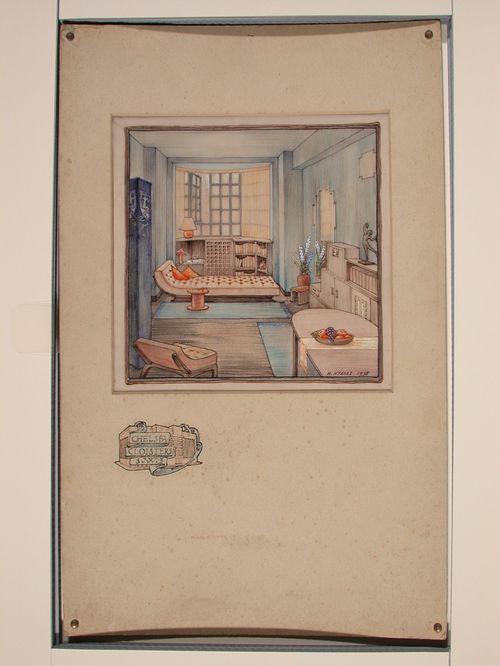
- This drawing shows the interior of a living room, looking towards a bay window. The title design, executed on the front of the mat below the window, includes a small sketch, apparently for the exterior of the project. - The style of many of these drawings and reprographic copies by Henry Hyams (DR1988:0332 - DR1988:0414) suggests that they were possibly for periodical illustrations. Hyams contributed articles to the periodicals 'The Builder' and 'The Architect'. Two objects in the CCA collections can be linked to the article "Music in Stone" published prior to 1926 in 'The Architect'; a reprographic copy (DR1988:0357) and a drawing (DR1988:0364) (Who's Who in Architecture, 161).
DR1988:0391
Description:
- This drawing shows the interior of a living room, looking towards a bay window. The title design, executed on the front of the mat below the window, includes a small sketch, apparently for the exterior of the project. - The style of many of these drawings and reprographic copies by Henry Hyams (DR1988:0332 - DR1988:0414) suggests that they were possibly for periodical illustrations. Hyams contributed articles to the periodicals 'The Builder' and 'The Architect'. Two objects in the CCA collections can be linked to the article "Music in Stone" published prior to 1926 in 'The Architect'; a reprographic copy (DR1988:0357) and a drawing (DR1988:0364) (Who's Who in Architecture, 161).
People:
Subject:
architecture, interior design
architecture, interior design
Date:
1938
1938
Title:
Interior perspective showing a room in Chelsea Cloisters, England
Actions:
DR1988:0391
Description:
- This drawing shows the interior of a living room, looking towards a bay window. The title design, executed on the front of the mat below the window, includes a small sketch, apparently for the exterior of the project. - The style of many of these drawings and reprographic copies by Henry Hyams (DR1988:0332 - DR1988:0414) suggests that they were possibly for periodical illustrations. Hyams contributed articles to the periodicals 'The Builder' and 'The Architect'. Two objects in the CCA collections can be linked to the article "Music in Stone" published prior to 1926 in 'The Architect'; a reprographic copy (DR1988:0357) and a drawing (DR1988:0364) (Who's Who in Architecture, 161).
Interior perspective showing a room in Chelsea Cloisters, England
Actions:
DR1988:0391
Description:
- This drawing shows the interior of a living room, looking towards a bay window. The title design, executed on the front of the mat below the window, includes a small sketch, apparently for the exterior of the project. - The style of many of these drawings and reprographic copies by Henry Hyams (DR1988:0332 - DR1988:0414) suggests that they were possibly for periodical illustrations. Hyams contributed articles to the periodicals 'The Builder' and 'The Architect'. Two objects in the CCA collections can be linked to the article "Music in Stone" published prior to 1926 in 'The Architect'; a reprographic copy (DR1988:0357) and a drawing (DR1988:0364) (Who's Who in Architecture, 161).
Form:
drawings
drawings
Date:
1938
1938
People:
Subject:
architecture, interior design
architecture, interior design
Form:
drawings
drawings
Reference number:
DR1988:0341
Description:
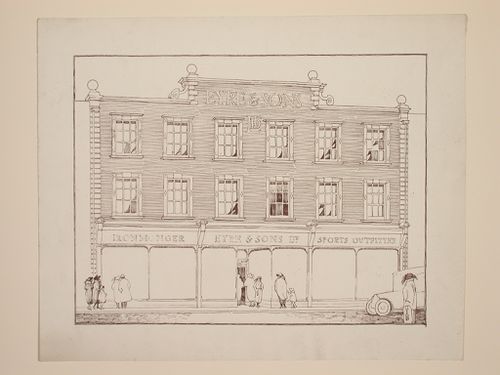
- This reprographic copy shows a storefront for a three storey building, with plate glass windows at the street level. - The style of many of these drawings and reprographic copies by Henry Hyams (DR1988:0332 - DR1988:0414) suggests that they were possibly for periodical illustrations. Hyams contributed articles to the periodicals 'The Builder' and 'The Architect'. Two objects in the CCA collections can be linked to the article "Music in Stone" published prior to 1926 in 'The Architect'; a reprographic copy (DR1988:0357) and a drawing (DR1988:0364) (Who's Who in Architecture, 161).
DR1988:0341
Description:
- This reprographic copy shows a storefront for a three storey building, with plate glass windows at the street level. - The style of many of these drawings and reprographic copies by Henry Hyams (DR1988:0332 - DR1988:0414) suggests that they were possibly for periodical illustrations. Hyams contributed articles to the periodicals 'The Builder' and 'The Architect'. Two objects in the CCA collections can be linked to the article "Music in Stone" published prior to 1926 in 'The Architect'; a reprographic copy (DR1988:0357) and a drawing (DR1988:0364) (Who's Who in Architecture, 161).
People:
Subject:
architecture
architecture
Date:
printed in the 1920s or 1930s
printed in the 1920s or 1930s
Title:
Elevation showing a storefront for Eyre and Sons, Ltd., England
Actions:
DR1988:0341
Description:
- This reprographic copy shows a storefront for a three storey building, with plate glass windows at the street level. - The style of many of these drawings and reprographic copies by Henry Hyams (DR1988:0332 - DR1988:0414) suggests that they were possibly for periodical illustrations. Hyams contributed articles to the periodicals 'The Builder' and 'The Architect'. Two objects in the CCA collections can be linked to the article "Music in Stone" published prior to 1926 in 'The Architect'; a reprographic copy (DR1988:0357) and a drawing (DR1988:0364) (Who's Who in Architecture, 161).
Elevation showing a storefront for Eyre and Sons, Ltd., England
Actions:
DR1988:0341
Description:
- This reprographic copy shows a storefront for a three storey building, with plate glass windows at the street level. - The style of many of these drawings and reprographic copies by Henry Hyams (DR1988:0332 - DR1988:0414) suggests that they were possibly for periodical illustrations. Hyams contributed articles to the periodicals 'The Builder' and 'The Architect'. Two objects in the CCA collections can be linked to the article "Music in Stone" published prior to 1926 in 'The Architect'; a reprographic copy (DR1988:0357) and a drawing (DR1988:0364) (Who's Who in Architecture, 161).
Form:
drawings
drawings
Date:
printed in the 1920s or 1930s
printed in the 1920s or 1930s
People:
Subject:
architecture
architecture
Form:
drawings
drawings
Actions:
Reference number:
DR1988:0389
Description:
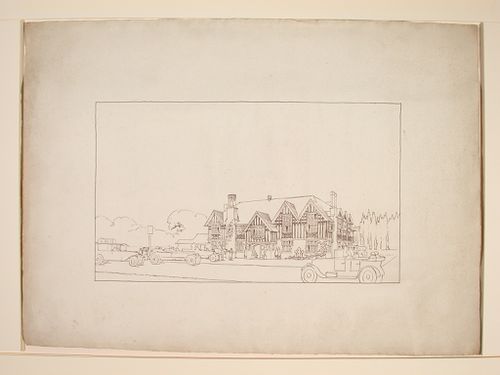
- This rendering shows the project for the Railway Hotel, Pitsea, from across the street, with the inn surrounded by cars and people. - The style of many of these drawings and reprographic copies by Henry Hyams (DR1988:0332 - DR1988:0414) suggests that they were possibly for periodical illustrations. Hyams contributed articles to the periodicals 'The Builder' and 'The Architect'. Two objects in the CCA collections can be linked to the article "Music in Stone" published prior to 1926 in 'The Architect'; a reprographic copy (DR1988:0357) and a drawing (DR1988:0364) (Who's Who in Architecture, 161).
DR1988:0389
Description:
- This rendering shows the project for the Railway Hotel, Pitsea, from across the street, with the inn surrounded by cars and people. - The style of many of these drawings and reprographic copies by Henry Hyams (DR1988:0332 - DR1988:0414) suggests that they were possibly for periodical illustrations. Hyams contributed articles to the periodicals 'The Builder' and 'The Architect'. Two objects in the CCA collections can be linked to the article "Music in Stone" published prior to 1926 in 'The Architect'; a reprographic copy (DR1988:0357) and a drawing (DR1988:0364) (Who's Who in Architecture, 161).
People:
Subject:
architecture
architecture
Date:
printed after 1934
printed after 1934
Title:
Perspectival view showing the Railway Hotel, Pitsea
Actions:
DR1988:0389
Description:
- This rendering shows the project for the Railway Hotel, Pitsea, from across the street, with the inn surrounded by cars and people. - The style of many of these drawings and reprographic copies by Henry Hyams (DR1988:0332 - DR1988:0414) suggests that they were possibly for periodical illustrations. Hyams contributed articles to the periodicals 'The Builder' and 'The Architect'. Two objects in the CCA collections can be linked to the article "Music in Stone" published prior to 1926 in 'The Architect'; a reprographic copy (DR1988:0357) and a drawing (DR1988:0364) (Who's Who in Architecture, 161).
Perspectival view showing the Railway Hotel, Pitsea
Actions:
DR1988:0389
Description:
- This rendering shows the project for the Railway Hotel, Pitsea, from across the street, with the inn surrounded by cars and people. - The style of many of these drawings and reprographic copies by Henry Hyams (DR1988:0332 - DR1988:0414) suggests that they were possibly for periodical illustrations. Hyams contributed articles to the periodicals 'The Builder' and 'The Architect'. Two objects in the CCA collections can be linked to the article "Music in Stone" published prior to 1926 in 'The Architect'; a reprographic copy (DR1988:0357) and a drawing (DR1988:0364) (Who's Who in Architecture, 161).
Form:
drawings
drawings
Date:
printed after 1934
printed after 1934
People:
Subject:
architecture
architecture
Level of archival description:
Sub-series
Sub-series
Title:
Education
Education
Reference number:
CI001.S1.D1
Description:
Hubert Rohault de Fleury studied under Jean-Nicolas-Louis Durand at the École polytechnique and with Julien-David Leroy at the École des beaux-arts. The confluence of their respective pedagogies is evident in albums DR1974:0002:012:001-049 and DR1974:0002:013:001-008 where Durand's` "rationalized" methodology of design is applied to Leroy's vocabulary of antiquity(1). Hubert's two albums of student drawings for the École des Beaux-Arts (DR1974:0002:012:001-049 and DR1974:0002:013:001-008) are complimentary. The former contains competition drawings and programmes for the monthly competitions (Concours d'emulation) as well as drawing, prints, and programmes for the 1800 (2e), 1801, and 1802 (1er) Grand Prix competitions, each of which trace the entire process from "Concours d'essai" and "esquisse", up to and including, studies for final renderings. The latter album contains large-scale final renderings for the 1800, 1801, and possibly the 1798 Grand prix competitions. As in Durand's "mecanisme de la composition", Hubert proceeds from the simple to the complex, often utilizing the graph paper or hand drawn grid particular to Durand's design methodology (codified in his book 'Precis des Lecons' 1802). This process is readily apparent in both Hubert's "Concours d'emulation" drawings, and, more completely, in the drawings for the Grand Prix competitions. The studies for Hubert's winning 1802 Grand Prix entry for a'Foire' indicate that he isolated and studied different building types before combining them into the unified complex evident in his final renderings. The original final renderings of the Grand Prix winners were kept by the École des beaux-arts. Album DR1974:0002:012:001-049 contains only the prints of the final renderings. The success of Hubert in the Grand Prix competitions is not surprising. His large wash final renderings for the 1800 and 1801 competitions (DR1974:0002:013:001-008) indicate that the neo-classical simplicity then favoured by the judges at the École des beaux-arts dovetailed with the notions of economy implicit in Durand's functionalist approach to design. (1) Barry Bergdoll, "Hubert Rohault de Fleury: Architectural Education", 'CCA Research Report', n.d.
CI001.S1.D1
Description:
Hubert Rohault de Fleury studied under Jean-Nicolas-Louis Durand at the École polytechnique and with Julien-David Leroy at the École des beaux-arts. The confluence of their respective pedagogies is evident in albums DR1974:0002:012:001-049 and DR1974:0002:013:001-008 where Durand's` "rationalized" methodology of design is applied to Leroy's vocabulary of antiquity(1). Hubert's two albums of student drawings for the École des Beaux-Arts (DR1974:0002:012:001-049 and DR1974:0002:013:001-008) are complimentary. The former contains competition drawings and programmes for the monthly competitions (Concours d'emulation) as well as drawing, prints, and programmes for the 1800 (2e), 1801, and 1802 (1er) Grand Prix competitions, each of which trace the entire process from "Concours d'essai" and "esquisse", up to and including, studies for final renderings. The latter album contains large-scale final renderings for the 1800, 1801, and possibly the 1798 Grand prix competitions. As in Durand's "mecanisme de la composition", Hubert proceeds from the simple to the complex, often utilizing the graph paper or hand drawn grid particular to Durand's design methodology (codified in his book 'Precis des Lecons' 1802). This process is readily apparent in both Hubert's "Concours d'emulation" drawings, and, more completely, in the drawings for the Grand Prix competitions. The studies for Hubert's winning 1802 Grand Prix entry for a'Foire' indicate that he isolated and studied different building types before combining them into the unified complex evident in his final renderings. The original final renderings of the Grand Prix winners were kept by the École des beaux-arts. Album DR1974:0002:012:001-049 contains only the prints of the final renderings. The success of Hubert in the Grand Prix competitions is not surprising. His large wash final renderings for the 1800 and 1801 competitions (DR1974:0002:013:001-008) indicate that the neo-classical simplicity then favoured by the judges at the École des beaux-arts dovetailed with the notions of economy implicit in Durand's functionalist approach to design. (1) Barry Bergdoll, "Hubert Rohault de Fleury: Architectural Education", 'CCA Research Report', n.d.
People:
Date:
1800-1807
1800-1807
Title:
Education
CI001.S1.D1
Description:
Hubert Rohault de Fleury studied under Jean-Nicolas-Louis Durand at the École polytechnique and with Julien-David Leroy at the École des beaux-arts. The confluence of their respective pedagogies is evident in albums DR1974:0002:012:001-049 and DR1974:0002:013:001-008 where Durand's` "rationalized" methodology of design is applied to Leroy's vocabulary of antiquity(1). Hubert's two albums of student drawings for the École des Beaux-Arts (DR1974:0002:012:001-049 and DR1974:0002:013:001-008) are complimentary. The former contains competition drawings and programmes for the monthly competitions (Concours d'emulation) as well as drawing, prints, and programmes for the 1800 (2e), 1801, and 1802 (1er) Grand Prix competitions, each of which trace the entire process from "Concours d'essai" and "esquisse", up to and including, studies for final renderings. The latter album contains large-scale final renderings for the 1800, 1801, and possibly the 1798 Grand prix competitions. As in Durand's "mecanisme de la composition", Hubert proceeds from the simple to the complex, often utilizing the graph paper or hand drawn grid particular to Durand's design methodology (codified in his book 'Precis des Lecons' 1802). This process is readily apparent in both Hubert's "Concours d'emulation" drawings, and, more completely, in the drawings for the Grand Prix competitions. The studies for Hubert's winning 1802 Grand Prix entry for a'Foire' indicate that he isolated and studied different building types before combining them into the unified complex evident in his final renderings. The original final renderings of the Grand Prix winners were kept by the École des beaux-arts. Album DR1974:0002:012:001-049 contains only the prints of the final renderings. The success of Hubert in the Grand Prix competitions is not surprising. His large wash final renderings for the 1800 and 1801 competitions (DR1974:0002:013:001-008) indicate that the neo-classical simplicity then favoured by the judges at the École des beaux-arts dovetailed with the notions of economy implicit in Durand's functionalist approach to design. (1) Barry Bergdoll, "Hubert Rohault de Fleury: Architectural Education", 'CCA Research Report', n.d.
Education
CI001.S1.D1
Description:
Hubert Rohault de Fleury studied under Jean-Nicolas-Louis Durand at the École polytechnique and with Julien-David Leroy at the École des beaux-arts. The confluence of their respective pedagogies is evident in albums DR1974:0002:012:001-049 and DR1974:0002:013:001-008 where Durand's` "rationalized" methodology of design is applied to Leroy's vocabulary of antiquity(1). Hubert's two albums of student drawings for the École des Beaux-Arts (DR1974:0002:012:001-049 and DR1974:0002:013:001-008) are complimentary. The former contains competition drawings and programmes for the monthly competitions (Concours d'emulation) as well as drawing, prints, and programmes for the 1800 (2e), 1801, and 1802 (1er) Grand Prix competitions, each of which trace the entire process from "Concours d'essai" and "esquisse", up to and including, studies for final renderings. The latter album contains large-scale final renderings for the 1800, 1801, and possibly the 1798 Grand prix competitions. As in Durand's "mecanisme de la composition", Hubert proceeds from the simple to the complex, often utilizing the graph paper or hand drawn grid particular to Durand's design methodology (codified in his book 'Precis des Lecons' 1802). This process is readily apparent in both Hubert's "Concours d'emulation" drawings, and, more completely, in the drawings for the Grand Prix competitions. The studies for Hubert's winning 1802 Grand Prix entry for a'Foire' indicate that he isolated and studied different building types before combining them into the unified complex evident in his final renderings. The original final renderings of the Grand Prix winners were kept by the École des beaux-arts. Album DR1974:0002:012:001-049 contains only the prints of the final renderings. The success of Hubert in the Grand Prix competitions is not surprising. His large wash final renderings for the 1800 and 1801 competitions (DR1974:0002:013:001-008) indicate that the neo-classical simplicity then favoured by the judges at the École des beaux-arts dovetailed with the notions of economy implicit in Durand's functionalist approach to design. (1) Barry Bergdoll, "Hubert Rohault de Fleury: Architectural Education", 'CCA Research Report', n.d.
Level of archival description:
File 1
File 1
Date:
1800-1807
1800-1807
People:
Level of archival description:
Project
Project
Actions:
Reference number:
AP018.S1.1966.PR04
Description:
This project series documents the Central Plaza building at York University in North York, Ontario from 1966-1967. The office identified the project number as 6653. This project consisted of a two-storey building with a basement that was connected to a library, Lecture Hall No. 2 and No. 3, and the humanities building that was under construction at the same time. This project was built by John B. Parkin Associates, in a joint venture with Gordon S. Adamson Associates and Shore & Moffat and Partners. These three architecture firms formed a joint venture known as UPACE (University Planners Architects And Consulting Engineer). This project was part of a larger master plan by UPACE, which built more than a dozen buildings for the university during this time. The project is recorded through reprographic copies of drawings dating from 1967. These were a set of construction plans, details, elevations, sections, schedules and mechanical, electrical and structural drawings.
AP018.S1.1966.PR04
Description:
This project series documents the Central Plaza building at York University in North York, Ontario from 1966-1967. The office identified the project number as 6653. This project consisted of a two-storey building with a basement that was connected to a library, Lecture Hall No. 2 and No. 3, and the humanities building that was under construction at the same time. This project was built by John B. Parkin Associates, in a joint venture with Gordon S. Adamson Associates and Shore & Moffat and Partners. These three architecture firms formed a joint venture known as UPACE (University Planners Architects And Consulting Engineer). This project was part of a larger master plan by UPACE, which built more than a dozen buildings for the university during this time. The project is recorded through reprographic copies of drawings dating from 1967. These were a set of construction plans, details, elevations, sections, schedules and mechanical, electrical and structural drawings.
People:
Date:
1967
1967
Title:
York University, Central Plaza Building, York, Ontario (1966-1967)
Actions:
AP018.S1.1966.PR04
Description:
This project series documents the Central Plaza building at York University in North York, Ontario from 1966-1967. The office identified the project number as 6653. This project consisted of a two-storey building with a basement that was connected to a library, Lecture Hall No. 2 and No. 3, and the humanities building that was under construction at the same time. This project was built by John B. Parkin Associates, in a joint venture with Gordon S. Adamson Associates and Shore & Moffat and Partners. These three architecture firms formed a joint venture known as UPACE (University Planners Architects And Consulting Engineer). This project was part of a larger master plan by UPACE, which built more than a dozen buildings for the university during this time. The project is recorded through reprographic copies of drawings dating from 1967. These were a set of construction plans, details, elevations, sections, schedules and mechanical, electrical and structural drawings.
York University, Central Plaza Building, York, Ontario (1966-1967)
Actions:
AP018.S1.1966.PR04
Description:
This project series documents the Central Plaza building at York University in North York, Ontario from 1966-1967. The office identified the project number as 6653. This project consisted of a two-storey building with a basement that was connected to a library, Lecture Hall No. 2 and No. 3, and the humanities building that was under construction at the same time. This project was built by John B. Parkin Associates, in a joint venture with Gordon S. Adamson Associates and Shore & Moffat and Partners. These three architecture firms formed a joint venture known as UPACE (University Planners Architects And Consulting Engineer). This project was part of a larger master plan by UPACE, which built more than a dozen buildings for the university during this time. The project is recorded through reprographic copies of drawings dating from 1967. These were a set of construction plans, details, elevations, sections, schedules and mechanical, electrical and structural drawings.
Level of archival description:
Project
Project
Date:
1967
1967
People:
Form:
drawings
drawings
Actions:
Reference number:
AP206.S3.042
Description:
This drawing was related to an article entitled "The Making of Fatehpur Sikri" by Satish Davar and the study undertaken by the Chandigarh College of Architecture.
AP206.S3.042
Description:
This drawing was related to an article entitled "The Making of Fatehpur Sikri" by Satish Davar and the study undertaken by the Chandigarh College of Architecture.
People:
Date:
circa 1980s
circa 1980s
Title:
Plan study of Fatehpur Sikri Complex
Actions:
AP206.S3.042
Description:
This drawing was related to an article entitled "The Making of Fatehpur Sikri" by Satish Davar and the study undertaken by the Chandigarh College of Architecture.
Plan study of Fatehpur Sikri Complex
Actions:
AP206.S3.042
Description:
This drawing was related to an article entitled "The Making of Fatehpur Sikri" by Satish Davar and the study undertaken by the Chandigarh College of Architecture.
Form:
drawings
drawings
Date:
circa 1980s
circa 1980s
People:
Form:
exhibitions
exhibitions
Title:
Toys that Teach
Toys that Teach
Actions:
Description:
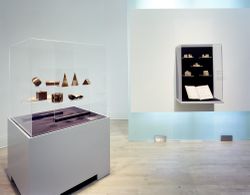
The architectural toy typically looks to the world of “real” buildings, reproducing columns, arches, and windows in miniature form. Toys That Teach, however, presents a range of construction toys based on the elementary forms of geometry found in nature: cubes and spheres, cones and cylinders, rods and prisms. The toys serve not only for building but also for mathematical(...)
The architectural toy typically looks to the world of “real” buildings, reproducing columns, arches, and windows in miniature form. Toys That Teach, however, presents a range of construction toys based on the elementary forms of geometry found in nature: cubes and spheres, cones and cylinders, rods and prisms. The toys serve not only for building but also for mathematical(...)
Location:
Octagonal gallery
Octagonal gallery
Date:
16 December 1992 to 25 April 1993
16 December 1992 to 25 April 1993
Title:
Toys that Teach
Actions:
Description:
The architectural toy typically looks to the world of “real” buildings, reproducing columns, arches, and windows in miniature form. Toys That Teach, however, presents a range of construction toys based on the elementary forms of geometry found in nature: cubes and spheres, cones and cylinders, rods and prisms. The toys serve not only for building but also for mathematical(...)
Toys that Teach
Actions:
Description:
The architectural toy typically looks to the world of “real” buildings, reproducing columns, arches, and windows in miniature form. Toys That Teach, however, presents a range of construction toys based on the elementary forms of geometry found in nature: cubes and spheres, cones and cylinders, rods and prisms. The toys serve not only for building but also for mathematical(...)
Form:
exhibitions
exhibitions
Date:
16 December 1992 to
25 April 1993
16 December 1992 to
25 April 1993
Location:
Octagonal gallery
Octagonal gallery


