


5600 Results
Form:
events
events
Title:
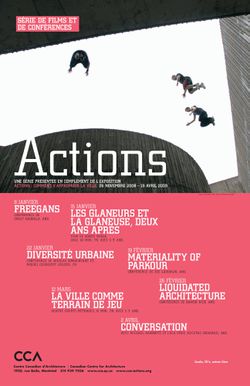
Materiality of Parkour
Materiality of Parkour
Actions:
Description:
Engineer, artist, and theoretician Zoe Laughlin presents the new functions of existing materials in public spaces in relation to parkour, an activity which reinterprets the urban landscape. Her ideas focus on the materiality of daily life: how matter behaves, its sensorial qualities, and how people react to it. A member of the Division of Engineering’s Materials Research(...)
Engineer, artist, and theoretician Zoe Laughlin presents the new functions of existing materials in public spaces in relation to parkour, an activity which reinterprets the urban landscape. Her ideas focus on the materiality of daily life: how matter behaves, its sensorial qualities, and how people react to it. A member of the Division of Engineering’s Materials Research(...)
Location:
Paul Desmarais Theatre
Paul Desmarais Theatre
Date:
19 February 2009
19 February 2009
Title:
Materiality of Parkour
Actions:
Description:
Engineer, artist, and theoretician Zoe Laughlin presents the new functions of existing materials in public spaces in relation to parkour, an activity which reinterprets the urban landscape. Her ideas focus on the materiality of daily life: how matter behaves, its sensorial qualities, and how people react to it. A member of the Division of Engineering’s Materials Research(...)
Materiality of Parkour
Actions:
Description:
Engineer, artist, and theoretician Zoe Laughlin presents the new functions of existing materials in public spaces in relation to parkour, an activity which reinterprets the urban landscape. Her ideas focus on the materiality of daily life: how matter behaves, its sensorial qualities, and how people react to it. A member of the Division of Engineering’s Materials Research(...)
Form:
events
events
Date:
19 February 2009
19 February 2009
Location:
Paul Desmarais Theatre
Paul Desmarais Theatre
Form:
events
events
Actions:
Description:
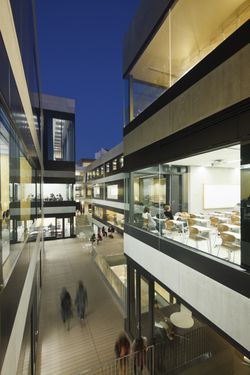
In this talk, titled Design the place for people to meet, Manabu Chiba will explain his approach to design with an emphasis on realizing architecture as a facilitator for new place-to-place, person-to-person and people-to-place interactions. His work attempts to reveal the context of a site and create formal simplicity, in order to nurture relationships among(...)
In this talk, titled Design the place for people to meet, Manabu Chiba will explain his approach to design with an emphasis on realizing architecture as a facilitator for new place-to-place, person-to-person and people-to-place interactions. His work attempts to reveal the context of a site and create formal simplicity, in order to nurture relationships among(...)
Date:
11 February 2016
11 February 2016
Title:
Manabu Chiba wants to speak with you
Actions:
Description:
In this talk, titled Design the place for people to meet, Manabu Chiba will explain his approach to design with an emphasis on realizing architecture as a facilitator for new place-to-place, person-to-person and people-to-place interactions. His work attempts to reveal the context of a site and create formal simplicity, in order to nurture relationships among(...)
Manabu Chiba wants to speak with you
Actions:
Description:
In this talk, titled Design the place for people to meet, Manabu Chiba will explain his approach to design with an emphasis on realizing architecture as a facilitator for new place-to-place, person-to-person and people-to-place interactions. His work attempts to reveal the context of a site and create formal simplicity, in order to nurture relationships among(...)
Form:
events
events
Date:
11 February 2016
11 February 2016
Form:
drawings, textual records, born digital
drawings, textual records, born digital
Actions:
Reference number:
AP181.S1.006
Description:
Original directory name: "05_Konsulenten". File contains records created and shared by COOP HIMMELB(L)AU and the various consultants on the project. These include PRO-Elektroplan GmbH, Bollinger+Grohmann, Dr. Pfeiler GmbH, Kersken + Kirchner GmbH., KBP Beratende Ingenieure GmbH, pbb planungsbüro balke, Ingenieurgemeinschaft BDP, a.g Licht, Realgruen Landschaftsarchitekten ,Lang + Burkhardt Verkehrsplanung und Städtebau, Emmer Pfenninger Partner AG, IB Rüdiger Schönenberg, Thomas A. Weisse + Partner. Bulk dates run from 2003-2006. Consultant expertise ranges from electricity, (electrical conveyor technology, Foerdertechnik) to structural physics (bauphysik), including open space planning (Freiflächenplanung), interior design (Inneneinrichtung), fire protection (Brandschutz), stage technology (Buehnentechnik), kitchen planning (Küchenplanung), facade engineering (Fassadentechnik), light design and planning (Lichtplaner), and solar panels for the roof. The records, largely plans, show the specific parts on which each of these consultants was working. The bulk of the records may be found under the “k_SSF_Ausführungsplanung/G_Pläne” directory which contains close to half of the records in this file. These are plans and views of the different areas and components of the BMW Welt building. These often include a CAD and a PDF version, some of which are annotated digitally or by hand prior to being digitized. CAD files include 2D drawings or 3D models, wireframes, screen captures, renderings, and plotter files. Records also include project management files, lists of the components of each room, engineering and analyses reports, many of which were digitized. Related to electrical and building engineering, there are a few databases in "c_PRO_Elektro_Foerdertechnik" and "b_KBP_Haustechnik". These contain information on the rooms and their technical requirements, such as equipment for plumbing, heat and ventilation, refrigeration systems, building automation, etc. Some database reports are also part of the records. Various sub-directories are named “quelldaten” (source data), which are typically zipped archives and often contain duplicate files. Duplicates were kept due to possible dependencies. Finally, the more than 7,000 plotter files across most directories suggest that printing physical copies of digital drawings for consultation was common practice. Early files (1997-2000) are AutoCAD Compiled Shape/Font File, AutoCAD Font Mapping Table, TrueType Font, and AutoCAD Colour-Dependant Plot Style Table. CAD files may depend on these to display drawings accurately. Most common file formats: Hewlett Packard Vector Graphic Plotter File, AutoCAD Drawing, Acrobat PDF 1.3 - Portable Document Format, Acrobat PDF 1.4 - Portable Document Format, ZIP Format
AP181.S1.006
Description:
Original directory name: "05_Konsulenten". File contains records created and shared by COOP HIMMELB(L)AU and the various consultants on the project. These include PRO-Elektroplan GmbH, Bollinger+Grohmann, Dr. Pfeiler GmbH, Kersken + Kirchner GmbH., KBP Beratende Ingenieure GmbH, pbb planungsbüro balke, Ingenieurgemeinschaft BDP, a.g Licht, Realgruen Landschaftsarchitekten ,Lang + Burkhardt Verkehrsplanung und Städtebau, Emmer Pfenninger Partner AG, IB Rüdiger Schönenberg, Thomas A. Weisse + Partner. Bulk dates run from 2003-2006. Consultant expertise ranges from electricity, (electrical conveyor technology, Foerdertechnik) to structural physics (bauphysik), including open space planning (Freiflächenplanung), interior design (Inneneinrichtung), fire protection (Brandschutz), stage technology (Buehnentechnik), kitchen planning (Küchenplanung), facade engineering (Fassadentechnik), light design and planning (Lichtplaner), and solar panels for the roof. The records, largely plans, show the specific parts on which each of these consultants was working. The bulk of the records may be found under the “k_SSF_Ausführungsplanung/G_Pläne” directory which contains close to half of the records in this file. These are plans and views of the different areas and components of the BMW Welt building. These often include a CAD and a PDF version, some of which are annotated digitally or by hand prior to being digitized. CAD files include 2D drawings or 3D models, wireframes, screen captures, renderings, and plotter files. Records also include project management files, lists of the components of each room, engineering and analyses reports, many of which were digitized. Related to electrical and building engineering, there are a few databases in "c_PRO_Elektro_Foerdertechnik" and "b_KBP_Haustechnik". These contain information on the rooms and their technical requirements, such as equipment for plumbing, heat and ventilation, refrigeration systems, building automation, etc. Some database reports are also part of the records. Various sub-directories are named “quelldaten” (source data), which are typically zipped archives and often contain duplicate files. Duplicates were kept due to possible dependencies. Finally, the more than 7,000 plotter files across most directories suggest that printing physical copies of digital drawings for consultation was common practice. Early files (1997-2000) are AutoCAD Compiled Shape/Font File, AutoCAD Font Mapping Table, TrueType Font, and AutoCAD Colour-Dependant Plot Style Table. CAD files may depend on these to display drawings accurately. Most common file formats: Hewlett Packard Vector Graphic Plotter File, AutoCAD Drawing, Acrobat PDF 1.3 - Portable Document Format, Acrobat PDF 1.4 - Portable Document Format, ZIP Format
People:
Date:
1996-2008
1996-2008
Title:
Consultants files for construction planning phase, BMW Welt, Munich
Actions:
AP181.S1.006
Description:
Original directory name: "05_Konsulenten". File contains records created and shared by COOP HIMMELB(L)AU and the various consultants on the project. These include PRO-Elektroplan GmbH, Bollinger+Grohmann, Dr. Pfeiler GmbH, Kersken + Kirchner GmbH., KBP Beratende Ingenieure GmbH, pbb planungsbüro balke, Ingenieurgemeinschaft BDP, a.g Licht, Realgruen Landschaftsarchitekten ,Lang + Burkhardt Verkehrsplanung und Städtebau, Emmer Pfenninger Partner AG, IB Rüdiger Schönenberg, Thomas A. Weisse + Partner. Bulk dates run from 2003-2006. Consultant expertise ranges from electricity, (electrical conveyor technology, Foerdertechnik) to structural physics (bauphysik), including open space planning (Freiflächenplanung), interior design (Inneneinrichtung), fire protection (Brandschutz), stage technology (Buehnentechnik), kitchen planning (Küchenplanung), facade engineering (Fassadentechnik), light design and planning (Lichtplaner), and solar panels for the roof. The records, largely plans, show the specific parts on which each of these consultants was working. The bulk of the records may be found under the “k_SSF_Ausführungsplanung/G_Pläne” directory which contains close to half of the records in this file. These are plans and views of the different areas and components of the BMW Welt building. These often include a CAD and a PDF version, some of which are annotated digitally or by hand prior to being digitized. CAD files include 2D drawings or 3D models, wireframes, screen captures, renderings, and plotter files. Records also include project management files, lists of the components of each room, engineering and analyses reports, many of which were digitized. Related to electrical and building engineering, there are a few databases in "c_PRO_Elektro_Foerdertechnik" and "b_KBP_Haustechnik". These contain information on the rooms and their technical requirements, such as equipment for plumbing, heat and ventilation, refrigeration systems, building automation, etc. Some database reports are also part of the records. Various sub-directories are named “quelldaten” (source data), which are typically zipped archives and often contain duplicate files. Duplicates were kept due to possible dependencies. Finally, the more than 7,000 plotter files across most directories suggest that printing physical copies of digital drawings for consultation was common practice. Early files (1997-2000) are AutoCAD Compiled Shape/Font File, AutoCAD Font Mapping Table, TrueType Font, and AutoCAD Colour-Dependant Plot Style Table. CAD files may depend on these to display drawings accurately. Most common file formats: Hewlett Packard Vector Graphic Plotter File, AutoCAD Drawing, Acrobat PDF 1.3 - Portable Document Format, Acrobat PDF 1.4 - Portable Document Format, ZIP Format
Consultants files for construction planning phase, BMW Welt, Munich
Actions:
AP181.S1.006
Description:
Original directory name: "05_Konsulenten". File contains records created and shared by COOP HIMMELB(L)AU and the various consultants on the project. These include PRO-Elektroplan GmbH, Bollinger+Grohmann, Dr. Pfeiler GmbH, Kersken + Kirchner GmbH., KBP Beratende Ingenieure GmbH, pbb planungsbüro balke, Ingenieurgemeinschaft BDP, a.g Licht, Realgruen Landschaftsarchitekten ,Lang + Burkhardt Verkehrsplanung und Städtebau, Emmer Pfenninger Partner AG, IB Rüdiger Schönenberg, Thomas A. Weisse + Partner. Bulk dates run from 2003-2006. Consultant expertise ranges from electricity, (electrical conveyor technology, Foerdertechnik) to structural physics (bauphysik), including open space planning (Freiflächenplanung), interior design (Inneneinrichtung), fire protection (Brandschutz), stage technology (Buehnentechnik), kitchen planning (Küchenplanung), facade engineering (Fassadentechnik), light design and planning (Lichtplaner), and solar panels for the roof. The records, largely plans, show the specific parts on which each of these consultants was working. The bulk of the records may be found under the “k_SSF_Ausführungsplanung/G_Pläne” directory which contains close to half of the records in this file. These are plans and views of the different areas and components of the BMW Welt building. These often include a CAD and a PDF version, some of which are annotated digitally or by hand prior to being digitized. CAD files include 2D drawings or 3D models, wireframes, screen captures, renderings, and plotter files. Records also include project management files, lists of the components of each room, engineering and analyses reports, many of which were digitized. Related to electrical and building engineering, there are a few databases in "c_PRO_Elektro_Foerdertechnik" and "b_KBP_Haustechnik". These contain information on the rooms and their technical requirements, such as equipment for plumbing, heat and ventilation, refrigeration systems, building automation, etc. Some database reports are also part of the records. Various sub-directories are named “quelldaten” (source data), which are typically zipped archives and often contain duplicate files. Duplicates were kept due to possible dependencies. Finally, the more than 7,000 plotter files across most directories suggest that printing physical copies of digital drawings for consultation was common practice. Early files (1997-2000) are AutoCAD Compiled Shape/Font File, AutoCAD Font Mapping Table, TrueType Font, and AutoCAD Colour-Dependant Plot Style Table. CAD files may depend on these to display drawings accurately. Most common file formats: Hewlett Packard Vector Graphic Plotter File, AutoCAD Drawing, Acrobat PDF 1.3 - Portable Document Format, Acrobat PDF 1.4 - Portable Document Format, ZIP Format
Form:
drawings, textual records, born digital
drawings, textual records, born digital
Date:
1996-2008
1996-2008
People:
Level of archival description:
Project
Project
Title:
O.C.H. Feasibility Study
O.C.H. Feasibility Study
Reference number:
AP144.S2.D59
Description:
File documents a feasibility study commissioned by J. Lyons Co. Ltd for the conversion of the Oxford Corner House, in London, England, United Kingdom, into a combined information, education and skill centre. The unrealized project was to include a 'self-pace public skill and information hive' with facilities for conferences, teaching, exhibitions, computer use, planetarium, audio-visual library, and public eating areas. The project included a movable floor system and projection screens. Reference material includes plans and details of London Electric Railway subway line, alterations to Oxford Street Corner House by J. Lyons and Co. Ltd., field notes, photographs and photomontages of site. Conceptual diagrammatic plans explore designs for the organization of activities. Charts show variables, including number of people, monitors/screens, and study carrels; circulation patterns; and maximization of viewing capacity. Preliminary presentation boards illustrate project feasibility and include photographs of model and existing conditions. Design development drawings include floor plans, plans exploring the relationships between various activities, analysis of building volumes and networks, comparative plans showing main structural grid, sections, diagrammatic sections for public activity areas, axonometric drawings of roof, perspectives of projection screens and moveable floor system, progress charts, and diagrams and graphs of communication and travel modes, routes, and time into central London from outlying areas. Some material in this file was published in Price, Cedric. 'Cedric Price-Works II' (London: Architectural Press, 1984), 11, 54, 112; Landau, Royston. 'New Directions in British Architecture'. New York: George Braziller, 1968. 108-111; and 'Self-Pace Public Skill and Information Hive.' 'Architectural Design'. (May 1968), 237-239. Material in this file was produced between 1927 and 1967, but predominantly between 1965 and 1966. Group DR1995:0224:001-013 contains reference drawings attributed to London Transport Architect's Department and J. Lyons & Company Limited Architect's Office. Group DR1995:0224:333-341 contains drawings attributed to Richard Sutcliffe Limited, Felix J. Samuely & Partners, and G.E.C. (Process Engineering) Ltd. File contains conceptual drawings, consultant drawings, design development drawings, presentation drawings, presentation panels, reference drawings, photographic material, and textual records.
AP144.S2.D59
Description:
File documents a feasibility study commissioned by J. Lyons Co. Ltd for the conversion of the Oxford Corner House, in London, England, United Kingdom, into a combined information, education and skill centre. The unrealized project was to include a 'self-pace public skill and information hive' with facilities for conferences, teaching, exhibitions, computer use, planetarium, audio-visual library, and public eating areas. The project included a movable floor system and projection screens. Reference material includes plans and details of London Electric Railway subway line, alterations to Oxford Street Corner House by J. Lyons and Co. Ltd., field notes, photographs and photomontages of site. Conceptual diagrammatic plans explore designs for the organization of activities. Charts show variables, including number of people, monitors/screens, and study carrels; circulation patterns; and maximization of viewing capacity. Preliminary presentation boards illustrate project feasibility and include photographs of model and existing conditions. Design development drawings include floor plans, plans exploring the relationships between various activities, analysis of building volumes and networks, comparative plans showing main structural grid, sections, diagrammatic sections for public activity areas, axonometric drawings of roof, perspectives of projection screens and moveable floor system, progress charts, and diagrams and graphs of communication and travel modes, routes, and time into central London from outlying areas. Some material in this file was published in Price, Cedric. 'Cedric Price-Works II' (London: Architectural Press, 1984), 11, 54, 112; Landau, Royston. 'New Directions in British Architecture'. New York: George Braziller, 1968. 108-111; and 'Self-Pace Public Skill and Information Hive.' 'Architectural Design'. (May 1968), 237-239. Material in this file was produced between 1927 and 1967, but predominantly between 1965 and 1966. Group DR1995:0224:001-013 contains reference drawings attributed to London Transport Architect's Department and J. Lyons & Company Limited Architect's Office. Group DR1995:0224:333-341 contains drawings attributed to Richard Sutcliffe Limited, Felix J. Samuely & Partners, and G.E.C. (Process Engineering) Ltd. File contains conceptual drawings, consultant drawings, design development drawings, presentation drawings, presentation panels, reference drawings, photographic material, and textual records.
People:
Date:
1927-1967, predominant 1965-1966
1927-1967, predominant 1965-1966
Title:
O.C.H. Feasibility Study
Actions:
AP144.S2.D59
Description:
File documents a feasibility study commissioned by J. Lyons Co. Ltd for the conversion of the Oxford Corner House, in London, England, United Kingdom, into a combined information, education and skill centre. The unrealized project was to include a 'self-pace public skill and information hive' with facilities for conferences, teaching, exhibitions, computer use, planetarium, audio-visual library, and public eating areas. The project included a movable floor system and projection screens. Reference material includes plans and details of London Electric Railway subway line, alterations to Oxford Street Corner House by J. Lyons and Co. Ltd., field notes, photographs and photomontages of site. Conceptual diagrammatic plans explore designs for the organization of activities. Charts show variables, including number of people, monitors/screens, and study carrels; circulation patterns; and maximization of viewing capacity. Preliminary presentation boards illustrate project feasibility and include photographs of model and existing conditions. Design development drawings include floor plans, plans exploring the relationships between various activities, analysis of building volumes and networks, comparative plans showing main structural grid, sections, diagrammatic sections for public activity areas, axonometric drawings of roof, perspectives of projection screens and moveable floor system, progress charts, and diagrams and graphs of communication and travel modes, routes, and time into central London from outlying areas. Some material in this file was published in Price, Cedric. 'Cedric Price-Works II' (London: Architectural Press, 1984), 11, 54, 112; Landau, Royston. 'New Directions in British Architecture'. New York: George Braziller, 1968. 108-111; and 'Self-Pace Public Skill and Information Hive.' 'Architectural Design'. (May 1968), 237-239. Material in this file was produced between 1927 and 1967, but predominantly between 1965 and 1966. Group DR1995:0224:001-013 contains reference drawings attributed to London Transport Architect's Department and J. Lyons & Company Limited Architect's Office. Group DR1995:0224:333-341 contains drawings attributed to Richard Sutcliffe Limited, Felix J. Samuely & Partners, and G.E.C. (Process Engineering) Ltd. File contains conceptual drawings, consultant drawings, design development drawings, presentation drawings, presentation panels, reference drawings, photographic material, and textual records.
O.C.H. Feasibility Study
Actions:
AP144.S2.D59
Description:
File documents a feasibility study commissioned by J. Lyons Co. Ltd for the conversion of the Oxford Corner House, in London, England, United Kingdom, into a combined information, education and skill centre. The unrealized project was to include a 'self-pace public skill and information hive' with facilities for conferences, teaching, exhibitions, computer use, planetarium, audio-visual library, and public eating areas. The project included a movable floor system and projection screens. Reference material includes plans and details of London Electric Railway subway line, alterations to Oxford Street Corner House by J. Lyons and Co. Ltd., field notes, photographs and photomontages of site. Conceptual diagrammatic plans explore designs for the organization of activities. Charts show variables, including number of people, monitors/screens, and study carrels; circulation patterns; and maximization of viewing capacity. Preliminary presentation boards illustrate project feasibility and include photographs of model and existing conditions. Design development drawings include floor plans, plans exploring the relationships between various activities, analysis of building volumes and networks, comparative plans showing main structural grid, sections, diagrammatic sections for public activity areas, axonometric drawings of roof, perspectives of projection screens and moveable floor system, progress charts, and diagrams and graphs of communication and travel modes, routes, and time into central London from outlying areas. Some material in this file was published in Price, Cedric. 'Cedric Price-Works II' (London: Architectural Press, 1984), 11, 54, 112; Landau, Royston. 'New Directions in British Architecture'. New York: George Braziller, 1968. 108-111; and 'Self-Pace Public Skill and Information Hive.' 'Architectural Design'. (May 1968), 237-239. Material in this file was produced between 1927 and 1967, but predominantly between 1965 and 1966. Group DR1995:0224:001-013 contains reference drawings attributed to London Transport Architect's Department and J. Lyons & Company Limited Architect's Office. Group DR1995:0224:333-341 contains drawings attributed to Richard Sutcliffe Limited, Felix J. Samuely & Partners, and G.E.C. (Process Engineering) Ltd. File contains conceptual drawings, consultant drawings, design development drawings, presentation drawings, presentation panels, reference drawings, photographic material, and textual records.
Level of archival description:
File 59
File 59
Date:
1927-1967, predominant 1965-1966
1927-1967, predominant 1965-1966
People:
Level of archival description:
Project
Project
Actions:
Reference number:
AP018.S1.1972.PR18
Description:
This project series documents the design and construction of a library and an addition to city hall in Fredericton, New Brunswick from 1972-1975. The office identified the project number as 7226. This project consisted of two distinct parts; a public library constructed at the corners of Campbell and Carleton Streets, and an addition to city hall whose original building was constructed at the corners of Queen and York Streets around 1875. These two buildings were located two blocks from one another, but a master plan for the project shows that the separating streets would be removed in favour of a pedestrian friendly landscape. Both buildings were located next to the St. John River. For this project, Parkin Architects Planners partnered with architectural firm Graham Napier Associates to form the joint venture referred to as Graham Parkin Architects Engineers Planners. The brick-clad addition to city hall nearly doubled the square footage of the ground and first floors. The original city hall was four levels and the addition was two, with a mechanical penthouse on top. The new areas included departmental offices such as planning, engineering and sewage, a drafting room, conference room, and reception, among others. The library consisted of a two-storey, brick-clad building that was approximately 24,000 square feet in size with a 16 car parking lot. The ground floor included reception and exhibit areas, stacks, administration offices, bookmobiles, and staff lockers, while the second level had stacks and reading areas, audiovisual areas and a staff work room and break room. The library also had a mechanical penthouse on top. The project is recorded through drawings, including mounted presentation boards, photographic materials and textual records dating from 1972-1978. The drawings consist of original sketches, plans, sections, elevations and details of both city hall and the library, and some drawings used for construction. There are also drawings of the original city hall, first drafted around 1875. The photographs show existing buildings and the construction progress of the project. The textual records consist of correspondence, conference reports, interoffice letters, specifications, consultancy documentation, a soil investigation, research and drawing transmittal records. File AP018.S1.1972.PR18.020 contains an index to the textual materials, which was created by the office.
AP018.S1.1972.PR18
Description:
This project series documents the design and construction of a library and an addition to city hall in Fredericton, New Brunswick from 1972-1975. The office identified the project number as 7226. This project consisted of two distinct parts; a public library constructed at the corners of Campbell and Carleton Streets, and an addition to city hall whose original building was constructed at the corners of Queen and York Streets around 1875. These two buildings were located two blocks from one another, but a master plan for the project shows that the separating streets would be removed in favour of a pedestrian friendly landscape. Both buildings were located next to the St. John River. For this project, Parkin Architects Planners partnered with architectural firm Graham Napier Associates to form the joint venture referred to as Graham Parkin Architects Engineers Planners. The brick-clad addition to city hall nearly doubled the square footage of the ground and first floors. The original city hall was four levels and the addition was two, with a mechanical penthouse on top. The new areas included departmental offices such as planning, engineering and sewage, a drafting room, conference room, and reception, among others. The library consisted of a two-storey, brick-clad building that was approximately 24,000 square feet in size with a 16 car parking lot. The ground floor included reception and exhibit areas, stacks, administration offices, bookmobiles, and staff lockers, while the second level had stacks and reading areas, audiovisual areas and a staff work room and break room. The library also had a mechanical penthouse on top. The project is recorded through drawings, including mounted presentation boards, photographic materials and textual records dating from 1972-1978. The drawings consist of original sketches, plans, sections, elevations and details of both city hall and the library, and some drawings used for construction. There are also drawings of the original city hall, first drafted around 1875. The photographs show existing buildings and the construction progress of the project. The textual records consist of correspondence, conference reports, interoffice letters, specifications, consultancy documentation, a soil investigation, research and drawing transmittal records. File AP018.S1.1972.PR18.020 contains an index to the textual materials, which was created by the office.
People:
Date:
circa 1972-1978
circa 1972-1978
Title:
City Hall and Library Facilities, Fredericton, New Brunswick (1972-1975)
Actions:
AP018.S1.1972.PR18
Description:
This project series documents the design and construction of a library and an addition to city hall in Fredericton, New Brunswick from 1972-1975. The office identified the project number as 7226. This project consisted of two distinct parts; a public library constructed at the corners of Campbell and Carleton Streets, and an addition to city hall whose original building was constructed at the corners of Queen and York Streets around 1875. These two buildings were located two blocks from one another, but a master plan for the project shows that the separating streets would be removed in favour of a pedestrian friendly landscape. Both buildings were located next to the St. John River. For this project, Parkin Architects Planners partnered with architectural firm Graham Napier Associates to form the joint venture referred to as Graham Parkin Architects Engineers Planners. The brick-clad addition to city hall nearly doubled the square footage of the ground and first floors. The original city hall was four levels and the addition was two, with a mechanical penthouse on top. The new areas included departmental offices such as planning, engineering and sewage, a drafting room, conference room, and reception, among others. The library consisted of a two-storey, brick-clad building that was approximately 24,000 square feet in size with a 16 car parking lot. The ground floor included reception and exhibit areas, stacks, administration offices, bookmobiles, and staff lockers, while the second level had stacks and reading areas, audiovisual areas and a staff work room and break room. The library also had a mechanical penthouse on top. The project is recorded through drawings, including mounted presentation boards, photographic materials and textual records dating from 1972-1978. The drawings consist of original sketches, plans, sections, elevations and details of both city hall and the library, and some drawings used for construction. There are also drawings of the original city hall, first drafted around 1875. The photographs show existing buildings and the construction progress of the project. The textual records consist of correspondence, conference reports, interoffice letters, specifications, consultancy documentation, a soil investigation, research and drawing transmittal records. File AP018.S1.1972.PR18.020 contains an index to the textual materials, which was created by the office.
City Hall and Library Facilities, Fredericton, New Brunswick (1972-1975)
Actions:
AP018.S1.1972.PR18
Description:
This project series documents the design and construction of a library and an addition to city hall in Fredericton, New Brunswick from 1972-1975. The office identified the project number as 7226. This project consisted of two distinct parts; a public library constructed at the corners of Campbell and Carleton Streets, and an addition to city hall whose original building was constructed at the corners of Queen and York Streets around 1875. These two buildings were located two blocks from one another, but a master plan for the project shows that the separating streets would be removed in favour of a pedestrian friendly landscape. Both buildings were located next to the St. John River. For this project, Parkin Architects Planners partnered with architectural firm Graham Napier Associates to form the joint venture referred to as Graham Parkin Architects Engineers Planners. The brick-clad addition to city hall nearly doubled the square footage of the ground and first floors. The original city hall was four levels and the addition was two, with a mechanical penthouse on top. The new areas included departmental offices such as planning, engineering and sewage, a drafting room, conference room, and reception, among others. The library consisted of a two-storey, brick-clad building that was approximately 24,000 square feet in size with a 16 car parking lot. The ground floor included reception and exhibit areas, stacks, administration offices, bookmobiles, and staff lockers, while the second level had stacks and reading areas, audiovisual areas and a staff work room and break room. The library also had a mechanical penthouse on top. The project is recorded through drawings, including mounted presentation boards, photographic materials and textual records dating from 1972-1978. The drawings consist of original sketches, plans, sections, elevations and details of both city hall and the library, and some drawings used for construction. There are also drawings of the original city hall, first drafted around 1875. The photographs show existing buildings and the construction progress of the project. The textual records consist of correspondence, conference reports, interoffice letters, specifications, consultancy documentation, a soil investigation, research and drawing transmittal records. File AP018.S1.1972.PR18.020 contains an index to the textual materials, which was created by the office.
Level of archival description:
Project
Project
Date:
circa 1972-1978
circa 1972-1978
People:
Form:
textual records
textual records
Reference number:
ARCH255581
Description:
20 publications including: Werner Sobek, The architecture of Peter and Mary Doyle 1970-1990; Representative projects of SOM March 1975; Nuove possibilita per le construzioni navali in cemento armato / Ing P.L. Nervi; Rassegna critica di architettura / Nervi 1954; World Trade CEnter: new headquarters for international business; Architecture Aug. 1962; Engineering News Record 10 Feb. 1972; The effect of steel and glass upon architectural design 1952; Dome structures, reprinted from Consulting Engineer Dec. 1959; Nuova Sede Pirelli in Milano; Technique and aesthetics in the design of tall buildings / Fazler Khan memorial session; L'architettura Aug. 1961; House Beautiful: your heritage from Frank Lloyd Wright Oct. 1959; Architectural Forum May 1958 and April 1965; Progressive Architecture Jan 1979; Kenchiku Bunka Oct. 1965; L'architettura Jan-Feb. 1956
ARCH255581
Description:
20 publications including: Werner Sobek, The architecture of Peter and Mary Doyle 1970-1990; Representative projects of SOM March 1975; Nuove possibilita per le construzioni navali in cemento armato / Ing P.L. Nervi; Rassegna critica di architettura / Nervi 1954; World Trade CEnter: new headquarters for international business; Architecture Aug. 1962; Engineering News Record 10 Feb. 1972; The effect of steel and glass upon architectural design 1952; Dome structures, reprinted from Consulting Engineer Dec. 1959; Nuova Sede Pirelli in Milano; Technique and aesthetics in the design of tall buildings / Fazler Khan memorial session; L'architettura Aug. 1961; House Beautiful: your heritage from Frank Lloyd Wright Oct. 1959; Architectural Forum May 1958 and April 1965; Progressive Architecture Jan 1979; Kenchiku Bunka Oct. 1965; L'architettura Jan-Feb. 1956
People:
Date:
1954-1979
1954-1979
Title:
Misc. publications and magazines of architecture
Actions:
ARCH255581
Description:
20 publications including: Werner Sobek, The architecture of Peter and Mary Doyle 1970-1990; Representative projects of SOM March 1975; Nuove possibilita per le construzioni navali in cemento armato / Ing P.L. Nervi; Rassegna critica di architettura / Nervi 1954; World Trade CEnter: new headquarters for international business; Architecture Aug. 1962; Engineering News Record 10 Feb. 1972; The effect of steel and glass upon architectural design 1952; Dome structures, reprinted from Consulting Engineer Dec. 1959; Nuova Sede Pirelli in Milano; Technique and aesthetics in the design of tall buildings / Fazler Khan memorial session; L'architettura Aug. 1961; House Beautiful: your heritage from Frank Lloyd Wright Oct. 1959; Architectural Forum May 1958 and April 1965; Progressive Architecture Jan 1979; Kenchiku Bunka Oct. 1965; L'architettura Jan-Feb. 1956
Misc. publications and magazines of architecture
Actions:
ARCH255581
Description:
20 publications including: Werner Sobek, The architecture of Peter and Mary Doyle 1970-1990; Representative projects of SOM March 1975; Nuove possibilita per le construzioni navali in cemento armato / Ing P.L. Nervi; Rassegna critica di architettura / Nervi 1954; World Trade CEnter: new headquarters for international business; Architecture Aug. 1962; Engineering News Record 10 Feb. 1972; The effect of steel and glass upon architectural design 1952; Dome structures, reprinted from Consulting Engineer Dec. 1959; Nuova Sede Pirelli in Milano; Technique and aesthetics in the design of tall buildings / Fazler Khan memorial session; L'architettura Aug. 1961; House Beautiful: your heritage from Frank Lloyd Wright Oct. 1959; Architectural Forum May 1958 and April 1965; Progressive Architecture Jan 1979; Kenchiku Bunka Oct. 1965; L'architettura Jan-Feb. 1956
Form:
textual records
textual records
Date:
1954-1979
1954-1979
People:
Form:
archives
Level of archival description:
Fonds
archives
Level of archival description:
Fonds
Title:
John C. Parkin fonds
John C. Parkin fonds
Reference number:
AP018
Synopsis:
The John C. Parkin fonds documents the professional career of Toronto-based architect John C. Parkin (1922-1988) at his firms John B. Parkin Associates and Parkin Architects Planners. Most materials in this fonds record 347 architectural projects covering the years 1947-1987. John C. Parkin’s professional involvement in the arts and architecture, his firms’ activities, and his professional achievements are also recorded.
AP018
Synopsis:
The John C. Parkin fonds documents the professional career of Toronto-based architect John C. Parkin (1922-1988) at his firms John B. Parkin Associates and Parkin Architects Planners. Most materials in this fonds record 347 architectural projects covering the years 1947-1987. John C. Parkin’s professional involvement in the arts and architecture, his firms’ activities, and his professional achievements are also recorded.
People:
Date:
1929-1987
1929-1987
Title:
John C. Parkin fonds
Actions:
AP018
Synopsis:
The John C. Parkin fonds documents the professional career of Toronto-based architect John C. Parkin (1922-1988) at his firms John B. Parkin Associates and Parkin Architects Planners. Most materials in this fonds record 347 architectural projects covering the years 1947-1987. John C. Parkin’s professional involvement in the arts and architecture, his firms’ activities, and his professional achievements are also recorded.
John C. Parkin fonds
Actions:
AP018
Synopsis:
The John C. Parkin fonds documents the professional career of Toronto-based architect John C. Parkin (1922-1988) at his firms John B. Parkin Associates and Parkin Architects Planners. Most materials in this fonds record 347 architectural projects covering the years 1947-1987. John C. Parkin’s professional involvement in the arts and architecture, his firms’ activities, and his professional achievements are also recorded.
Form:
archives
Level of archival description:
Fonds
archives
Level of archival description:
Fonds
Date:
1929-1987
1929-1987
People:
Level of archival description:
Series
Series
Actions:
Reference number:
CD041.S5
Description:
This series documents nine projects by the firm Vecsei Architects. In 1984, Eva Hollo Vecsei and André Vecsei opened a joint practice, Vecsei Architects. Both architects retired in 2005. Together they worked on several major planning studies, such as Les Hautières du Mont-Royal, Montréal, Québec (circa 1983-1988) and the Genome Centre and the Lorne M. Trottier Building, Montréal (1999-2000), documented in this series. Les Hautières du Mont-Royal was a residential complex adjacent to Montréal's Golden Square Mile, on Cedar Avenue. The project consisted of nine staggering buildings (29 villas) around a landscaped European-style courtyard on a sloping site facing Mount Royal while also preserving a turn of the century landmark situated within the Mount Royal Heritage Site . The project is also known as "Projet Cours Cedar". Through the Genome Centre, McGill University sought to fill a need for a modern and cross-disciplinary research space in genomics and proteomics. Vecsei Architects submitted a joint proposal with Dupuis, Le Tourneaux, architects, and NFOE et associés architectes. Ultimately, KPMB Architects and Fichten Soiferman et Associés, Architectes' proposal was chosen and built. The Lorne M. Trottier Building is a building for popular electrical engineering, computer science and telecommunications programs at McGill University. Vecsei Architects submitted a joint proposal for this project with Julian Jacobs Architectes and Architectes Lemay et associés. Jodoin Lamarre Pratte architectes and Marosi Troy's proposal was chosen and built. Also documented in this series are the following projects: Elementary school for College Marie de France, Montréal, Québec (circa 1984-1986); High-rise office tower, underground commercial centre tied to Montréal’s underground mall and subway network, Christ Church Cathedral, Montréal, Québec (circa 1987-1988); Seniors condominium, Manoir Montefiore, Côte-Saint-Luc, Québec (1988); Ark and artworks for the Beth Zion Synagogue, Côte-Saint-Luc, Québec (1989); Municipal library, Dollard-des-Ormeaux, Québec (circa 1990), Cultural Centre and extension of sport centre, Dollard-des-Ormeaux, Québec (circa 2001-2003); Renovation and new elevation for Schneider house, Montréal, Québec (2002). Collection material in this series was produced between 1983 and 2006. Documents include architectural records, such as presentation, conceptual, and design development drawings, and as well as photographs of facades and interior views. This series also includes digital material (mainly photographs), and a few project proposals and publications. The level of documentation varies greatly from project to project, from a single presentation drawing to complete project proposal.
CD041.S5
Description:
This series documents nine projects by the firm Vecsei Architects. In 1984, Eva Hollo Vecsei and André Vecsei opened a joint practice, Vecsei Architects. Both architects retired in 2005. Together they worked on several major planning studies, such as Les Hautières du Mont-Royal, Montréal, Québec (circa 1983-1988) and the Genome Centre and the Lorne M. Trottier Building, Montréal (1999-2000), documented in this series. Les Hautières du Mont-Royal was a residential complex adjacent to Montréal's Golden Square Mile, on Cedar Avenue. The project consisted of nine staggering buildings (29 villas) around a landscaped European-style courtyard on a sloping site facing Mount Royal while also preserving a turn of the century landmark situated within the Mount Royal Heritage Site . The project is also known as "Projet Cours Cedar". Through the Genome Centre, McGill University sought to fill a need for a modern and cross-disciplinary research space in genomics and proteomics. Vecsei Architects submitted a joint proposal with Dupuis, Le Tourneaux, architects, and NFOE et associés architectes. Ultimately, KPMB Architects and Fichten Soiferman et Associés, Architectes' proposal was chosen and built. The Lorne M. Trottier Building is a building for popular electrical engineering, computer science and telecommunications programs at McGill University. Vecsei Architects submitted a joint proposal for this project with Julian Jacobs Architectes and Architectes Lemay et associés. Jodoin Lamarre Pratte architectes and Marosi Troy's proposal was chosen and built. Also documented in this series are the following projects: Elementary school for College Marie de France, Montréal, Québec (circa 1984-1986); High-rise office tower, underground commercial centre tied to Montréal’s underground mall and subway network, Christ Church Cathedral, Montréal, Québec (circa 1987-1988); Seniors condominium, Manoir Montefiore, Côte-Saint-Luc, Québec (1988); Ark and artworks for the Beth Zion Synagogue, Côte-Saint-Luc, Québec (1989); Municipal library, Dollard-des-Ormeaux, Québec (circa 1990), Cultural Centre and extension of sport centre, Dollard-des-Ormeaux, Québec (circa 2001-2003); Renovation and new elevation for Schneider house, Montréal, Québec (2002). Collection material in this series was produced between 1983 and 2006. Documents include architectural records, such as presentation, conceptual, and design development drawings, and as well as photographs of facades and interior views. This series also includes digital material (mainly photographs), and a few project proposals and publications. The level of documentation varies greatly from project to project, from a single presentation drawing to complete project proposal.
People:
Date:
1983-2006
1983-2006
Title:
Vecsei Architects (1984-2005)
Actions:
CD041.S5
Description:
This series documents nine projects by the firm Vecsei Architects. In 1984, Eva Hollo Vecsei and André Vecsei opened a joint practice, Vecsei Architects. Both architects retired in 2005. Together they worked on several major planning studies, such as Les Hautières du Mont-Royal, Montréal, Québec (circa 1983-1988) and the Genome Centre and the Lorne M. Trottier Building, Montréal (1999-2000), documented in this series. Les Hautières du Mont-Royal was a residential complex adjacent to Montréal's Golden Square Mile, on Cedar Avenue. The project consisted of nine staggering buildings (29 villas) around a landscaped European-style courtyard on a sloping site facing Mount Royal while also preserving a turn of the century landmark situated within the Mount Royal Heritage Site . The project is also known as "Projet Cours Cedar". Through the Genome Centre, McGill University sought to fill a need for a modern and cross-disciplinary research space in genomics and proteomics. Vecsei Architects submitted a joint proposal with Dupuis, Le Tourneaux, architects, and NFOE et associés architectes. Ultimately, KPMB Architects and Fichten Soiferman et Associés, Architectes' proposal was chosen and built. The Lorne M. Trottier Building is a building for popular electrical engineering, computer science and telecommunications programs at McGill University. Vecsei Architects submitted a joint proposal for this project with Julian Jacobs Architectes and Architectes Lemay et associés. Jodoin Lamarre Pratte architectes and Marosi Troy's proposal was chosen and built. Also documented in this series are the following projects: Elementary school for College Marie de France, Montréal, Québec (circa 1984-1986); High-rise office tower, underground commercial centre tied to Montréal’s underground mall and subway network, Christ Church Cathedral, Montréal, Québec (circa 1987-1988); Seniors condominium, Manoir Montefiore, Côte-Saint-Luc, Québec (1988); Ark and artworks for the Beth Zion Synagogue, Côte-Saint-Luc, Québec (1989); Municipal library, Dollard-des-Ormeaux, Québec (circa 1990), Cultural Centre and extension of sport centre, Dollard-des-Ormeaux, Québec (circa 2001-2003); Renovation and new elevation for Schneider house, Montréal, Québec (2002). Collection material in this series was produced between 1983 and 2006. Documents include architectural records, such as presentation, conceptual, and design development drawings, and as well as photographs of facades and interior views. This series also includes digital material (mainly photographs), and a few project proposals and publications. The level of documentation varies greatly from project to project, from a single presentation drawing to complete project proposal.
Vecsei Architects (1984-2005)
Actions:
CD041.S5
Description:
This series documents nine projects by the firm Vecsei Architects. In 1984, Eva Hollo Vecsei and André Vecsei opened a joint practice, Vecsei Architects. Both architects retired in 2005. Together they worked on several major planning studies, such as Les Hautières du Mont-Royal, Montréal, Québec (circa 1983-1988) and the Genome Centre and the Lorne M. Trottier Building, Montréal (1999-2000), documented in this series. Les Hautières du Mont-Royal was a residential complex adjacent to Montréal's Golden Square Mile, on Cedar Avenue. The project consisted of nine staggering buildings (29 villas) around a landscaped European-style courtyard on a sloping site facing Mount Royal while also preserving a turn of the century landmark situated within the Mount Royal Heritage Site . The project is also known as "Projet Cours Cedar". Through the Genome Centre, McGill University sought to fill a need for a modern and cross-disciplinary research space in genomics and proteomics. Vecsei Architects submitted a joint proposal with Dupuis, Le Tourneaux, architects, and NFOE et associés architectes. Ultimately, KPMB Architects and Fichten Soiferman et Associés, Architectes' proposal was chosen and built. The Lorne M. Trottier Building is a building for popular electrical engineering, computer science and telecommunications programs at McGill University. Vecsei Architects submitted a joint proposal for this project with Julian Jacobs Architectes and Architectes Lemay et associés. Jodoin Lamarre Pratte architectes and Marosi Troy's proposal was chosen and built. Also documented in this series are the following projects: Elementary school for College Marie de France, Montréal, Québec (circa 1984-1986); High-rise office tower, underground commercial centre tied to Montréal’s underground mall and subway network, Christ Church Cathedral, Montréal, Québec (circa 1987-1988); Seniors condominium, Manoir Montefiore, Côte-Saint-Luc, Québec (1988); Ark and artworks for the Beth Zion Synagogue, Côte-Saint-Luc, Québec (1989); Municipal library, Dollard-des-Ormeaux, Québec (circa 1990), Cultural Centre and extension of sport centre, Dollard-des-Ormeaux, Québec (circa 2001-2003); Renovation and new elevation for Schneider house, Montréal, Québec (2002). Collection material in this series was produced between 1983 and 2006. Documents include architectural records, such as presentation, conceptual, and design development drawings, and as well as photographs of facades and interior views. This series also includes digital material (mainly photographs), and a few project proposals and publications. The level of documentation varies greatly from project to project, from a single presentation drawing to complete project proposal.
Level of archival description:
Series
Series
Date:
1983-2006
1983-2006
People:
Level of archival description:
Series
Series
Reference number:
AP175.S1
Description:
Series 1, Erasmus Bridge, Rotterdam, Netherlands, 1990-1996, documents the design, conception and construction of a third bridge for Rotterdam over the Nieuwe Maas River. The bridge connects the Kop van Zuid neighborhood, located on the south side of the river, to Willemsplein, located on the north side. The bridge is considered as a landmark in Rotterdam’s landscape. The Erasmus Bridge was a formative project in the thinking of UNStudio. It was originally supposed to be designed by architect Maarten Struijs who was the city of Rotterdam principal architect and who is responsible for the concept of the neighboring Willem Bridge. Ben van Berkel came later into the project and was hired as a designing consultant along with architect Wim Quist. Ben van Berkel proposed design was selected allowing him and his firm, which was called Van Berkel & Bos Architectuurbureau at that time, to supervise the conception and construction of the project, from the original concept to piers design to the selection of every item of bridge furniture such as traffic lights, bridge camera and handrails. The bridge was designed to fit the distinct character and industrial past of Rotterdam. The construction of this landmark was one component of a larger redevelopment project, coinciding with other major developments in the city of Rotterdam. The goal was to develop a dense urban intervention on the southern shore of the Nieuwe Maas, in the Kop van Zuid neighborhood. This explains the implication of UNStudio in the planning of urban configuration of the neighborhoods on both sides of the river and their work for Spido, a ferry company operating on the Nieuwe Maas, work spaces and parking garage. This commercial building was designed by the firm and also hosts The Grand Café and Jazz Café. This commercial building is integrated to one of the bridge pillar on the north shore of the river. For the design the firm used AutoCAD to work along with engineers and to conceptualize 3D models. They also used the software to evaluate the circulation flow of drivers, pedestrians and streetcars, measuring its impact on the structure and the urban configuration of the neighborhoods on both sides of the river. The records contain sketches for bridge and pier design, plans and sections for pier, Spido and bridge, architectural and construction details created by engineering companies for every component of the bridge, from drawbridge, to cable car system, to bridge furnitures such as traffic light, handrails and cameras and photographs documenting the research for precedent and the original configuration of the neighborhoods on both sides of the river. The record contains AutoCAD plans, details and sections for both the bridge and Spido parking garage. The records also contain one physical model: a small scale plastic, glass and metal model of the bridge.
AP175.S1
Description:
Series 1, Erasmus Bridge, Rotterdam, Netherlands, 1990-1996, documents the design, conception and construction of a third bridge for Rotterdam over the Nieuwe Maas River. The bridge connects the Kop van Zuid neighborhood, located on the south side of the river, to Willemsplein, located on the north side. The bridge is considered as a landmark in Rotterdam’s landscape. The Erasmus Bridge was a formative project in the thinking of UNStudio. It was originally supposed to be designed by architect Maarten Struijs who was the city of Rotterdam principal architect and who is responsible for the concept of the neighboring Willem Bridge. Ben van Berkel came later into the project and was hired as a designing consultant along with architect Wim Quist. Ben van Berkel proposed design was selected allowing him and his firm, which was called Van Berkel & Bos Architectuurbureau at that time, to supervise the conception and construction of the project, from the original concept to piers design to the selection of every item of bridge furniture such as traffic lights, bridge camera and handrails. The bridge was designed to fit the distinct character and industrial past of Rotterdam. The construction of this landmark was one component of a larger redevelopment project, coinciding with other major developments in the city of Rotterdam. The goal was to develop a dense urban intervention on the southern shore of the Nieuwe Maas, in the Kop van Zuid neighborhood. This explains the implication of UNStudio in the planning of urban configuration of the neighborhoods on both sides of the river and their work for Spido, a ferry company operating on the Nieuwe Maas, work spaces and parking garage. This commercial building was designed by the firm and also hosts The Grand Café and Jazz Café. This commercial building is integrated to one of the bridge pillar on the north shore of the river. For the design the firm used AutoCAD to work along with engineers and to conceptualize 3D models. They also used the software to evaluate the circulation flow of drivers, pedestrians and streetcars, measuring its impact on the structure and the urban configuration of the neighborhoods on both sides of the river. The records contain sketches for bridge and pier design, plans and sections for pier, Spido and bridge, architectural and construction details created by engineering companies for every component of the bridge, from drawbridge, to cable car system, to bridge furnitures such as traffic light, handrails and cameras and photographs documenting the research for precedent and the original configuration of the neighborhoods on both sides of the river. The record contains AutoCAD plans, details and sections for both the bridge and Spido parking garage. The records also contain one physical model: a small scale plastic, glass and metal model of the bridge.
People:
Date:
1990-1996
1990-1996
Title:
Erasmus Bridge, Rotterdam, Netherlands, 1990-1996
Actions:
AP175.S1
Description:
Series 1, Erasmus Bridge, Rotterdam, Netherlands, 1990-1996, documents the design, conception and construction of a third bridge for Rotterdam over the Nieuwe Maas River. The bridge connects the Kop van Zuid neighborhood, located on the south side of the river, to Willemsplein, located on the north side. The bridge is considered as a landmark in Rotterdam’s landscape. The Erasmus Bridge was a formative project in the thinking of UNStudio. It was originally supposed to be designed by architect Maarten Struijs who was the city of Rotterdam principal architect and who is responsible for the concept of the neighboring Willem Bridge. Ben van Berkel came later into the project and was hired as a designing consultant along with architect Wim Quist. Ben van Berkel proposed design was selected allowing him and his firm, which was called Van Berkel & Bos Architectuurbureau at that time, to supervise the conception and construction of the project, from the original concept to piers design to the selection of every item of bridge furniture such as traffic lights, bridge camera and handrails. The bridge was designed to fit the distinct character and industrial past of Rotterdam. The construction of this landmark was one component of a larger redevelopment project, coinciding with other major developments in the city of Rotterdam. The goal was to develop a dense urban intervention on the southern shore of the Nieuwe Maas, in the Kop van Zuid neighborhood. This explains the implication of UNStudio in the planning of urban configuration of the neighborhoods on both sides of the river and their work for Spido, a ferry company operating on the Nieuwe Maas, work spaces and parking garage. This commercial building was designed by the firm and also hosts The Grand Café and Jazz Café. This commercial building is integrated to one of the bridge pillar on the north shore of the river. For the design the firm used AutoCAD to work along with engineers and to conceptualize 3D models. They also used the software to evaluate the circulation flow of drivers, pedestrians and streetcars, measuring its impact on the structure and the urban configuration of the neighborhoods on both sides of the river. The records contain sketches for bridge and pier design, plans and sections for pier, Spido and bridge, architectural and construction details created by engineering companies for every component of the bridge, from drawbridge, to cable car system, to bridge furnitures such as traffic light, handrails and cameras and photographs documenting the research for precedent and the original configuration of the neighborhoods on both sides of the river. The record contains AutoCAD plans, details and sections for both the bridge and Spido parking garage. The records also contain one physical model: a small scale plastic, glass and metal model of the bridge.
Erasmus Bridge, Rotterdam, Netherlands, 1990-1996
Actions:
AP175.S1
Description:
Series 1, Erasmus Bridge, Rotterdam, Netherlands, 1990-1996, documents the design, conception and construction of a third bridge for Rotterdam over the Nieuwe Maas River. The bridge connects the Kop van Zuid neighborhood, located on the south side of the river, to Willemsplein, located on the north side. The bridge is considered as a landmark in Rotterdam’s landscape. The Erasmus Bridge was a formative project in the thinking of UNStudio. It was originally supposed to be designed by architect Maarten Struijs who was the city of Rotterdam principal architect and who is responsible for the concept of the neighboring Willem Bridge. Ben van Berkel came later into the project and was hired as a designing consultant along with architect Wim Quist. Ben van Berkel proposed design was selected allowing him and his firm, which was called Van Berkel & Bos Architectuurbureau at that time, to supervise the conception and construction of the project, from the original concept to piers design to the selection of every item of bridge furniture such as traffic lights, bridge camera and handrails. The bridge was designed to fit the distinct character and industrial past of Rotterdam. The construction of this landmark was one component of a larger redevelopment project, coinciding with other major developments in the city of Rotterdam. The goal was to develop a dense urban intervention on the southern shore of the Nieuwe Maas, in the Kop van Zuid neighborhood. This explains the implication of UNStudio in the planning of urban configuration of the neighborhoods on both sides of the river and their work for Spido, a ferry company operating on the Nieuwe Maas, work spaces and parking garage. This commercial building was designed by the firm and also hosts The Grand Café and Jazz Café. This commercial building is integrated to one of the bridge pillar on the north shore of the river. For the design the firm used AutoCAD to work along with engineers and to conceptualize 3D models. They also used the software to evaluate the circulation flow of drivers, pedestrians and streetcars, measuring its impact on the structure and the urban configuration of the neighborhoods on both sides of the river. The records contain sketches for bridge and pier design, plans and sections for pier, Spido and bridge, architectural and construction details created by engineering companies for every component of the bridge, from drawbridge, to cable car system, to bridge furnitures such as traffic light, handrails and cameras and photographs documenting the research for precedent and the original configuration of the neighborhoods on both sides of the river. The record contains AutoCAD plans, details and sections for both the bridge and Spido parking garage. The records also contain one physical model: a small scale plastic, glass and metal model of the bridge.
Level of archival description:
Series
Series
Date:
1990-1996
1990-1996
People:
Form:
exhibitions
exhibitions
Actions:
Description:
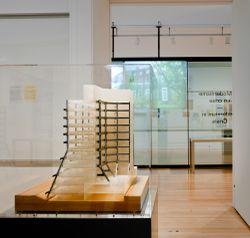
Architect James Frazer Stirling’s work has resisted characterization because of its radical shifts in influence, named by others as prewar modernism to Neoclassicism, Rationalism and Brutalism to Postmodernism. But the continuity of his thinking emerges through the quantity and variety of material in the James Stirling/Michael Wilford Archive, a tool for understanding an(...)
Architect James Frazer Stirling’s work has resisted characterization because of its radical shifts in influence, named by others as prewar modernism to Neoclassicism, Rationalism and Brutalism to Postmodernism. But the continuity of his thinking emerges through the quantity and variety of material in the James Stirling/Michael Wilford Archive, a tool for understanding an(...)
Location:
Main galleries
Main galleries
Date:
16 May 2012 to 14 October 2012
16 May 2012 to 14 October 2012
Title:
Notes from the Archive: James Frazer Stirling
Actions:
Description:
Architect James Frazer Stirling’s work has resisted characterization because of its radical shifts in influence, named by others as prewar modernism to Neoclassicism, Rationalism and Brutalism to Postmodernism. But the continuity of his thinking emerges through the quantity and variety of material in the James Stirling/Michael Wilford Archive, a tool for understanding an(...)
Notes from the Archive: James Frazer Stirling
Actions:
Description:
Architect James Frazer Stirling’s work has resisted characterization because of its radical shifts in influence, named by others as prewar modernism to Neoclassicism, Rationalism and Brutalism to Postmodernism. But the continuity of his thinking emerges through the quantity and variety of material in the James Stirling/Michael Wilford Archive, a tool for understanding an(...)
Form:
exhibitions
exhibitions
Date:
16 May 2012 to
14 October 2012
16 May 2012 to
14 October 2012
Location:
Main galleries
Main galleries


