


1296 Results
Form:
books
books
Actions:
Price:
$47.95
(available to order)
Summary:
Since its invention, photography has been used to document and interpret the landscape. Survey photographers in the 1860s were the first environmental advocates, arguing for the U.S. national park system. During the first half of the 20th century photographers Ansel Adams and Eliot Porter were central figures in influencing American attitudes toward wilderness and(...)
$47.95
(available to order)
Summary:
Since its invention, photography has been used to document and interpret the landscape. Survey photographers in the 1860s were the first environmental advocates, arguing for the U.S. national park system. During the first half of the 20th century photographers Ansel Adams and Eliot Porter were central figures in influencing American attitudes toward wilderness and(...)
Subject:
Photography by Region
Photography by Region
Publication:
April 2011
April 2011
Title:
Earth now: american photographers and the environment
Actions:
Price:
$47.95
(available to order)
Summary:
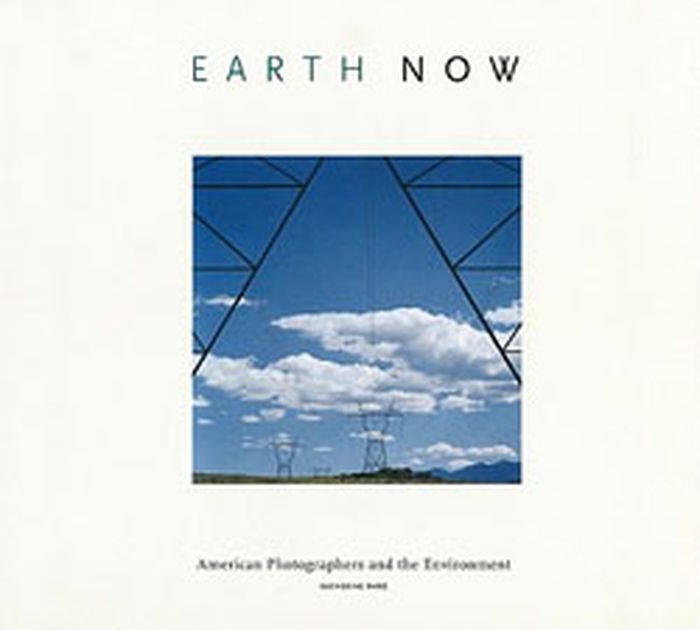
Since its invention, photography has been used to document and interpret the landscape. Survey photographers in the 1860s were the first environmental advocates, arguing for the U.S. national park system. During the first half of the 20th century photographers Ansel Adams and Eliot Porter were central figures in influencing American attitudes toward wilderness and conservation. This book traces the development of environmental photography beginning with Adams, Porter and others, and the next generation of landscape photographers - Robert Adams, Richard Misrach, Robert Glenn Ketchum, Patrick Nagatani, Mark Klett, whose works confronted the issues of landscape and the environment in less idealised terms. Shifting from the historical framework, the book presents new work by twenty-three photographers working in the U.S., the next wave of artists using the camera to engage the environmental issues of the day. Ranging from documentary to conceptual, the photographs touch on topics such as land and water use, the human place in the landscape, mounting consumer waste, industrial pollution, roof gardens and the green roof initiative, local food production, energy consumption, and the effects of industry on humans and animals. Katherine Ware's text offers insightful commentary on photography and the ways that environmental issues have been framed and advanced through the medium of photography. This is a powerful commentary on global environmental issues as seen through the lens of the newest wave of environmental photographers. This book is published to coincide with an exhibition to open at the New Mexico Museum of Art, Santa Fe, New Mexico, in April 2011.
Earth now: american photographers and the environment
Actions:
Price:
$47.95
(available to order)
Summary:
Since its invention, photography has been used to document and interpret the landscape. Survey photographers in the 1860s were the first environmental advocates, arguing for the U.S. national park system. During the first half of the 20th century photographers Ansel Adams and Eliot Porter were central figures in influencing American attitudes toward wilderness and conservation. This book traces the development of environmental photography beginning with Adams, Porter and others, and the next generation of landscape photographers - Robert Adams, Richard Misrach, Robert Glenn Ketchum, Patrick Nagatani, Mark Klett, whose works confronted the issues of landscape and the environment in less idealised terms. Shifting from the historical framework, the book presents new work by twenty-three photographers working in the U.S., the next wave of artists using the camera to engage the environmental issues of the day. Ranging from documentary to conceptual, the photographs touch on topics such as land and water use, the human place in the landscape, mounting consumer waste, industrial pollution, roof gardens and the green roof initiative, local food production, energy consumption, and the effects of industry on humans and animals. Katherine Ware's text offers insightful commentary on photography and the ways that environmental issues have been framed and advanced through the medium of photography. This is a powerful commentary on global environmental issues as seen through the lens of the newest wave of environmental photographers. This book is published to coincide with an exhibition to open at the New Mexico Museum of Art, Santa Fe, New Mexico, in April 2011.
Form:
books
books
Publication:
April 2011
April 2011
Subject:
Photography by Region
Photography by Region
Form:
books
books
Actions:
Price:
$65.99
(available to order)
Summary:
Today, the physical scale model is a centrepiece for design education, celebrated practices and architecture’s public relations. The development of digital fabrication devices has made model manufacture even more pervasive. The physical model is the most accessible form of architectural communication. Clients and the general public seem to immediately respond to and(...)
$65.99
(available to order)
Summary:
Today, the physical scale model is a centrepiece for design education, celebrated practices and architecture’s public relations. The development of digital fabrication devices has made model manufacture even more pervasive. The physical model is the most accessible form of architectural communication. Clients and the general public seem to immediately respond to and(...)
Title:
Architecture and the miniature : models
Actions:
Price:
$65.99
(available to order)
Summary:
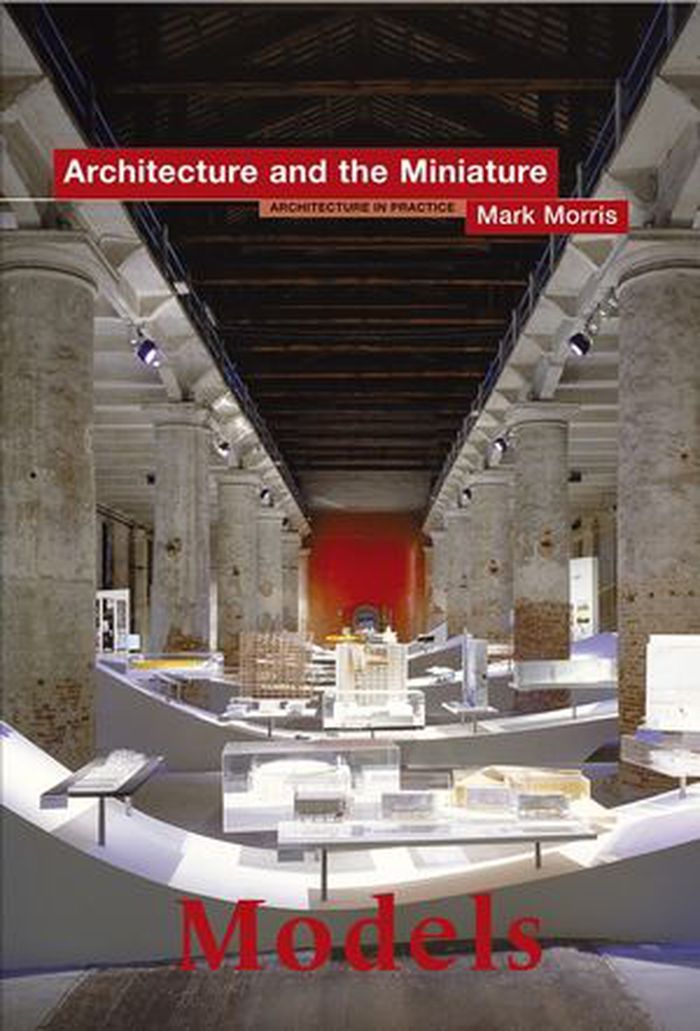
Today, the physical scale model is a centrepiece for design education, celebrated practices and architecture’s public relations. The development of digital fabrication devices has made model manufacture even more pervasive. The physical model is the most accessible form of architectural communication. Clients and the general public seem to immediately respond to and understand the model, over blueprints and computer simulations. Many architects use finished models for presentations, competitions and exhibitions. Others also embrace sketch models as quick, economic and flexible generative tools. It is only with the rise of the virtual that the advantages and disadvantages of more traditional models can be fully evaluated. As attested by this book, we are now at an important watershed for the model in architecture. Practitioners and educators alike are seeking to fully understand the multiplicity of model types and how they might be strategically deployed at appropriate stages in the design process. The historic role that the model has played is outlined with attention paid to Alberti, John Soane, the Bauhaus and education reforms. A cultural history is offered by examining models in the guise of toys, food, cinema, product design, souvenirs, narrative and art. Model theories are considered and tied to specific examples in the field. New technologies and creative combinations of traditional model-making techniques are evaluated. Kinetic, multi-media, nightscape and interdisciplinary models reveal the broad scope and exceptional versatility offered by this important tool. Models: Architecture and the Miniature focuses on current model use and experimentation by architects across the globe including David Chipperfield, Peter Eisenman, Frank Gehry, Zaha Hadid, Coop Himmelb(l)au, Daniel Libeskind, Greg Lynn and UN Studio.
Architecture and the miniature : models
Actions:
Price:
$65.99
(available to order)
Summary:
Today, the physical scale model is a centrepiece for design education, celebrated practices and architecture’s public relations. The development of digital fabrication devices has made model manufacture even more pervasive. The physical model is the most accessible form of architectural communication. Clients and the general public seem to immediately respond to and understand the model, over blueprints and computer simulations. Many architects use finished models for presentations, competitions and exhibitions. Others also embrace sketch models as quick, economic and flexible generative tools. It is only with the rise of the virtual that the advantages and disadvantages of more traditional models can be fully evaluated. As attested by this book, we are now at an important watershed for the model in architecture. Practitioners and educators alike are seeking to fully understand the multiplicity of model types and how they might be strategically deployed at appropriate stages in the design process. The historic role that the model has played is outlined with attention paid to Alberti, John Soane, the Bauhaus and education reforms. A cultural history is offered by examining models in the guise of toys, food, cinema, product design, souvenirs, narrative and art. Model theories are considered and tied to specific examples in the field. New technologies and creative combinations of traditional model-making techniques are evaluated. Kinetic, multi-media, nightscape and interdisciplinary models reveal the broad scope and exceptional versatility offered by this important tool. Models: Architecture and the Miniature focuses on current model use and experimentation by architects across the globe including David Chipperfield, Peter Eisenman, Frank Gehry, Zaha Hadid, Coop Himmelb(l)au, Daniel Libeskind, Greg Lynn and UN Studio.
Form:
books
books
Publication:
October 2005, Chichester
October 2005, Chichester
Subject:
Models
Models
Form:
books
books
Title:
Phyllis Ma: Special nothing
Phyllis Ma: Special nothing
Actions:
Price:
$65.00
(available to order)
Summary:
In a supermarket in Berlin, wandering through aisle after aisle of processed meats, the artist Phyllis Ma conceived of Special Nothing, a collection of travel photos that take the form of still lifes. To Ma, ''special nothings'' are those everyday objects that, on the right day, or in the right moment, are sources of pure delight: a very hairy flower; a block of head(...)
$65.00
(available to order)
Summary:
In a supermarket in Berlin, wandering through aisle after aisle of processed meats, the artist Phyllis Ma conceived of Special Nothing, a collection of travel photos that take the form of still lifes. To Ma, ''special nothings'' are those everyday objects that, on the right day, or in the right moment, are sources of pure delight: a very hairy flower; a block of head(...)
Title:
Phyllis Ma: Special nothing
Actions:
Price:
$65.00
(available to order)
Summary:
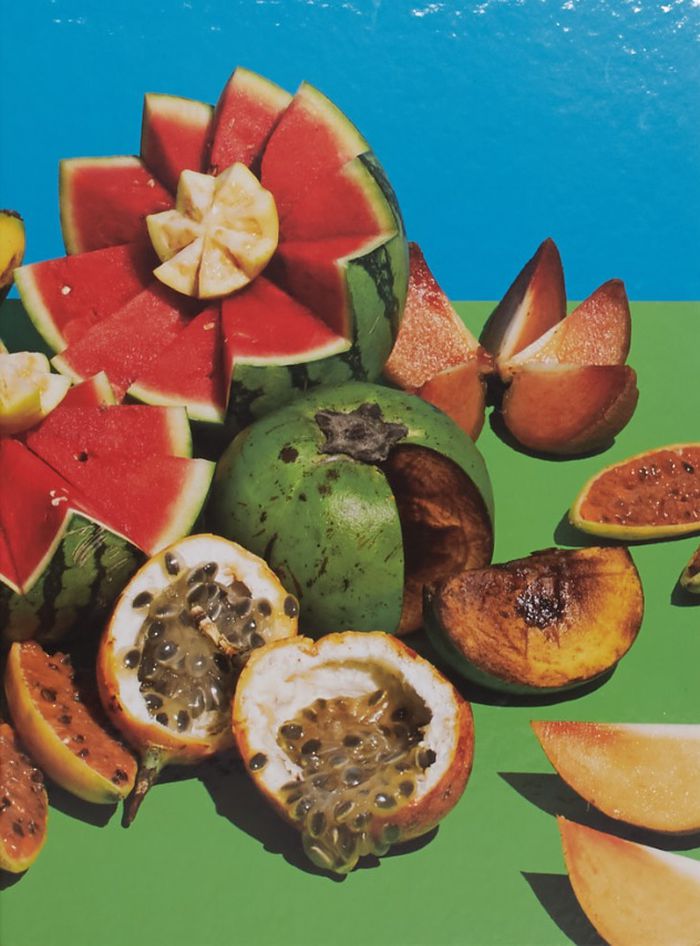
In a supermarket in Berlin, wandering through aisle after aisle of processed meats, the artist Phyllis Ma conceived of Special Nothing, a collection of travel photos that take the form of still lifes. To Ma, ''special nothings'' are those everyday objects that, on the right day, or in the right moment, are sources of pure delight: a very hairy flower; a block of head cheese the size and shape of an iPhone; a gherkin that looks especially perverse. If you pay attention, you can find these special nothings in your home or on your block, but we tend to be more attuned to them when we’re in an unfamiliar place. In a new country, the most mundane sights and tasks are often fascinating, difficult, and strange: doing laundry, boarding a bus, buying groceries. But it’s in supermarkets, with their promise of familiarity — the same bright overhead lighting, neat aisles, and row of checkout counters can be found the world over — where things become most uncanny. In today’s global economy, you can visit a supermarket in any major city and find many of the same goods and brands that you would in your hometown. And yet everything isn’t the same. Refrigeration practices differ, labels confuse. You are seduced by a product’s packaging, want to buy it badly, but then realize you’re not even sure what type of food it is. This feeling of wonderment is at the heart of Ma’s fantastical aesthetic. Created in Berlin, London, Tokyo, Mexico City and New York, ''Special nothing'' is a unique travel diary, a distillation of those moments when the commonplace and the strange coalesce, turn into something magical, surreal.
Phyllis Ma: Special nothing
Actions:
Price:
$65.00
(available to order)
Summary:
In a supermarket in Berlin, wandering through aisle after aisle of processed meats, the artist Phyllis Ma conceived of Special Nothing, a collection of travel photos that take the form of still lifes. To Ma, ''special nothings'' are those everyday objects that, on the right day, or in the right moment, are sources of pure delight: a very hairy flower; a block of head cheese the size and shape of an iPhone; a gherkin that looks especially perverse. If you pay attention, you can find these special nothings in your home or on your block, but we tend to be more attuned to them when we’re in an unfamiliar place. In a new country, the most mundane sights and tasks are often fascinating, difficult, and strange: doing laundry, boarding a bus, buying groceries. But it’s in supermarkets, with their promise of familiarity — the same bright overhead lighting, neat aisles, and row of checkout counters can be found the world over — where things become most uncanny. In today’s global economy, you can visit a supermarket in any major city and find many of the same goods and brands that you would in your hometown. And yet everything isn’t the same. Refrigeration practices differ, labels confuse. You are seduced by a product’s packaging, want to buy it badly, but then realize you’re not even sure what type of food it is. This feeling of wonderment is at the heart of Ma’s fantastical aesthetic. Created in Berlin, London, Tokyo, Mexico City and New York, ''Special nothing'' is a unique travel diary, a distillation of those moments when the commonplace and the strange coalesce, turn into something magical, surreal.
Form:
books
books
Publication:
October 2020
October 2020
Subject:
Photography monographs
Photography monographs
Form:
books
books
Title:
London the biography
London the biography
Actions:
Price:
$37.95
(available to order)
Summary:
Novelist and biographer Ackroyd (The Plato Papers; T.S. Eliot; etc.) offers a huge, enthralling "biography" of the city of London. The reader segues through this litany of lists and anthology of anecdotes via the sketchiest of topical linkages, but no matter not a page is dull, until brief closing chapters in which Ackroyd succumbs to bathos, for which he's(...)
$37.95
(available to order)
Summary:
Novelist and biographer Ackroyd (The Plato Papers; T.S. Eliot; etc.) offers a huge, enthralling "biography" of the city of London. The reader segues through this litany of lists and anthology of anecdotes via the sketchiest of topical linkages, but no matter not a page is dull, until brief closing chapters in which Ackroyd succumbs to bathos, for which he's(...)
Title:
London the biography
Actions:
Price:
$37.95
(available to order)
Summary:
Novelist and biographer Ackroyd (The Plato Papers; T.S. Eliot; etc.) offers a huge, enthralling "biography" of the city of London. The reader segues through this litany of lists and anthology of anecdotes via the sketchiest of topical linkages, but no matter not a page is dull, until brief closing chapters in which Ackroyd succumbs to bathos, for which he's instantaneously redeemed by the preceding chapters. He admits to using no original research, openly crediting his printed sources. Ackroyd examines London from its pre-history through today, artfully selecting, organizing and pacing stories, and rendering the past in witty and imaginative ways. "The opium quarter of Limehouse," he tells readers, for example, "is now represented by a Chinese take-away." Fast food, it seems, was always part of the London scene. When poet Thomas Southey asked a pastry cook why she kept her shop open in the worst weather, she told him that otherwise she would lose business, "so many were the persons who took up buns or biscuits as they passed by and threw their pence in, not allowing themselves time to enter." Ackroyd covers unrest and peace, fires and ruins, river and rail transport, crime and punishment, wealth and poverty, markets and churches, uncontrolled growth and barely controlled filth. If there is a hero among the throngs, it may be engineer Joseph Bazalgette, who in 1855 began building 1,265 miles of sewers to contain the Stygian odor of progress and keep the huge, ugly metropolis livable. No one should mind the extraordinary price of this extraordinary achievement. B illus., maps not seen by PW. (On sale Oct. 16)Forecast: Published to acclaim in England, this is virtually guaranteed major review coverage here, and the publisher will also shoot for national media. Anglophiles and others will rejoice.
London the biography
Actions:
Price:
$37.95
(available to order)
Summary:
Novelist and biographer Ackroyd (The Plato Papers; T.S. Eliot; etc.) offers a huge, enthralling "biography" of the city of London. The reader segues through this litany of lists and anthology of anecdotes via the sketchiest of topical linkages, but no matter not a page is dull, until brief closing chapters in which Ackroyd succumbs to bathos, for which he's instantaneously redeemed by the preceding chapters. He admits to using no original research, openly crediting his printed sources. Ackroyd examines London from its pre-history through today, artfully selecting, organizing and pacing stories, and rendering the past in witty and imaginative ways. "The opium quarter of Limehouse," he tells readers, for example, "is now represented by a Chinese take-away." Fast food, it seems, was always part of the London scene. When poet Thomas Southey asked a pastry cook why she kept her shop open in the worst weather, she told him that otherwise she would lose business, "so many were the persons who took up buns or biscuits as they passed by and threw their pence in, not allowing themselves time to enter." Ackroyd covers unrest and peace, fires and ruins, river and rail transport, crime and punishment, wealth and poverty, markets and churches, uncontrolled growth and barely controlled filth. If there is a hero among the throngs, it may be engineer Joseph Bazalgette, who in 1855 began building 1,265 miles of sewers to contain the Stygian odor of progress and keep the huge, ugly metropolis livable. No one should mind the extraordinary price of this extraordinary achievement. B illus., maps not seen by PW. (On sale Oct. 16)Forecast: Published to acclaim in England, this is virtually guaranteed major review coverage here, and the publisher will also shoot for national media. Anglophiles and others will rejoice.
Form:
books
books
Publication:
September 2001, London
September 2001, London
Subject:
Urban Theory
Urban Theory
Form:
books
books
Title:
OMA NY: Search term
OMA NY: Search term
Actions:
Price:
$170.00
(available in store)
Summary:
Well into its fourth decade, the Office for Metropolitan Architecture (OMA), founded by Rem Koolhaas in 1975, remains one of the most influential and successful practices of its kind. OMA describes itself as ''a firm operating within the traditional boundaries of architecture and urbanism that applies architectural thinking to domains beyond.'' OMA New York, has grown(...)
$170.00
(available in store)
Summary:
Well into its fourth decade, the Office for Metropolitan Architecture (OMA), founded by Rem Koolhaas in 1975, remains one of the most influential and successful practices of its kind. OMA describes itself as ''a firm operating within the traditional boundaries of architecture and urbanism that applies architectural thinking to domains beyond.'' OMA New York, has grown(...)
Title:
OMA NY: Search term
Actions:
Price:
$170.00
(available in store)
Summary:
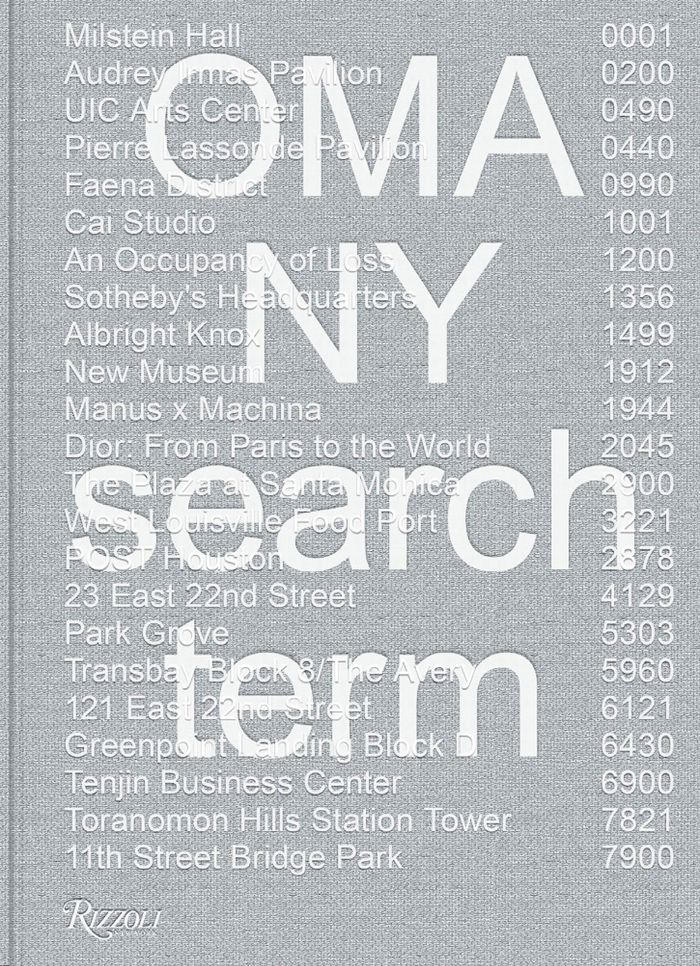
Well into its fourth decade, the Office for Metropolitan Architecture (OMA), founded by Rem Koolhaas in 1975, remains one of the most influential and successful practices of its kind. OMA describes itself as ''a firm operating within the traditional boundaries of architecture and urbanism that applies architectural thinking to domains beyond.'' OMA New York, has grown from an American outpost to a full-fledged operation with its own attitudes, contributing to the evolution of the globally acclaimed office. Through a diversity of projects, the firm has transformed our understanding of the city and our evolving relationship with art, fashion, food, sustainability, and other quintessentially twenty-first-century preoccupations. The works presented here elaborate on OMA’s philosophy even as they expand its portfolio geographically. Featured projects include residential skyscrapers in New York, Miami, and San Francisco, mixed-use developments in cities from Tokyo to Houston, and projects like 11th Street Bridge Park in the public realm, alongside more intimate spaces such as the studio for renowned Chinese artist Cai Guo-Qiang. Permanent structures, such as Milstein Hall at Cornell University, the new galleries of Quebec’s Musée National des Beaux-Arts, a cultural forum and neighborhood for Faena in Miami, and the expansion of museums such as the Albright-Knox Art Gallery in Buffalo and the New Museum in Manhattan, contrast vividly with temporary interventions such as the Manus x Machina exhibition at the Met Costume Institute and the sculptural installation of soaring concrete columns for An Occupation of Loss. In between projects are dialogues with leading policy makers, museum directors, artists, fashion designers, musicians, chefs, and curators—Christopher Hawthorne, Lisa Phillips and Massimiliano Gioni, Taryn Simon, Iris van Herpen, Virgil Abloh, David Byrne, Alice Waters, and Cecilia Alemani—who provide insight onto areas of the firm’s interests and preoccupations beyond the realm of architecture.
OMA NY: Search term
Actions:
Price:
$170.00
(available in store)
Summary:
Well into its fourth decade, the Office for Metropolitan Architecture (OMA), founded by Rem Koolhaas in 1975, remains one of the most influential and successful practices of its kind. OMA describes itself as ''a firm operating within the traditional boundaries of architecture and urbanism that applies architectural thinking to domains beyond.'' OMA New York, has grown from an American outpost to a full-fledged operation with its own attitudes, contributing to the evolution of the globally acclaimed office. Through a diversity of projects, the firm has transformed our understanding of the city and our evolving relationship with art, fashion, food, sustainability, and other quintessentially twenty-first-century preoccupations. The works presented here elaborate on OMA’s philosophy even as they expand its portfolio geographically. Featured projects include residential skyscrapers in New York, Miami, and San Francisco, mixed-use developments in cities from Tokyo to Houston, and projects like 11th Street Bridge Park in the public realm, alongside more intimate spaces such as the studio for renowned Chinese artist Cai Guo-Qiang. Permanent structures, such as Milstein Hall at Cornell University, the new galleries of Quebec’s Musée National des Beaux-Arts, a cultural forum and neighborhood for Faena in Miami, and the expansion of museums such as the Albright-Knox Art Gallery in Buffalo and the New Museum in Manhattan, contrast vividly with temporary interventions such as the Manus x Machina exhibition at the Met Costume Institute and the sculptural installation of soaring concrete columns for An Occupation of Loss. In between projects are dialogues with leading policy makers, museum directors, artists, fashion designers, musicians, chefs, and curators—Christopher Hawthorne, Lisa Phillips and Massimiliano Gioni, Taryn Simon, Iris van Herpen, Virgil Abloh, David Byrne, Alice Waters, and Cecilia Alemani—who provide insight onto areas of the firm’s interests and preoccupations beyond the realm of architecture.
Form:
books
books
Publication:
November 2021
November 2021
Subject:
Architecture Monographs
Architecture Monographs
Form:
audio
audio
Description:
1 online resource.
Author:
Subject:
Publication:
[Place of publication not identified] : Lateral Addition, 2018.
[Place of publication not identified] : Lateral Addition, 2018.
Title:
June 21, 2018 : Listening for Southwest Key in San Diego.
Actions:
Description:
1 online resource.
June 21, 2018 : Listening for Southwest Key in San Diego.
Actions:
Description:
1 online resource.
Form:
audio
audio
Publication:
[Place of publication not identified] : Lateral Addition, 2018.
[Place of publication not identified] : Lateral Addition, 2018.
Author:
Subject:


