


1361 Results
Form:
books
books
Actions:
Price:
$45.00
(available to order)
Summary:
As the world’s population swells and the need for sustainable ways of living grows ever more urgent and obvious, prefabricated architecture has taken center stage. Even before our current predicaments, the mass-produced, factory-made home had a distinguished history, having served as a vital precept in the development of Modern architecture. Today, with the digital(...)
$45.00
(available to order)
Summary:
As the world’s population swells and the need for sustainable ways of living grows ever more urgent and obvious, prefabricated architecture has taken center stage. Even before our current predicaments, the mass-produced, factory-made home had a distinguished history, having served as a vital precept in the development of Modern architecture. Today, with the digital(...)
Subject:
Prefabricated Architecture
Prefabricated Architecture
Publication:
August 2008, New York
August 2008, New York
Title:
Home delivery, fabricating the modern dwelling
Actions:
Price:
$45.00
(available to order)
Summary:
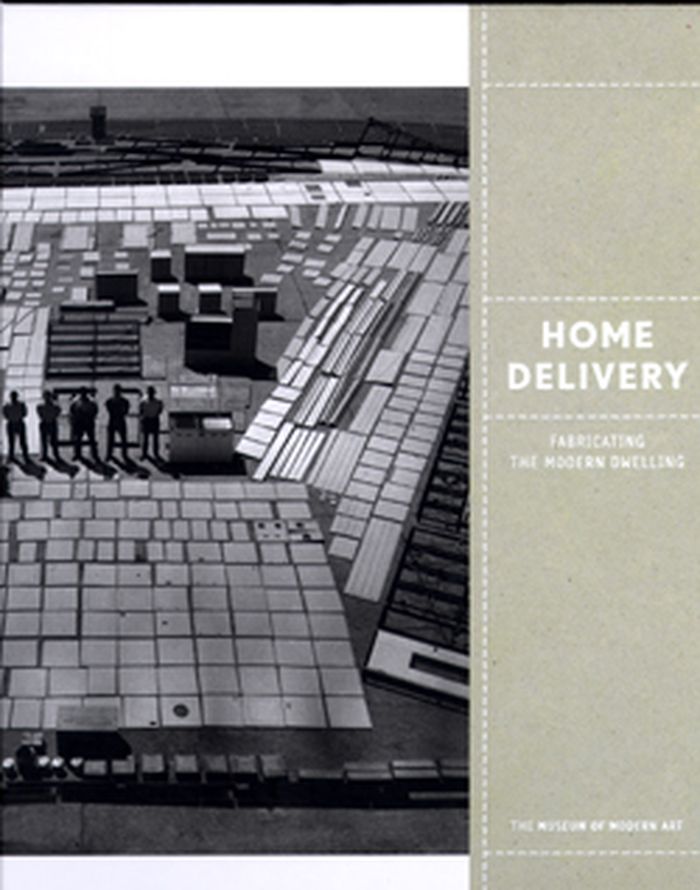
As the world’s population swells and the need for sustainable ways of living grows ever more urgent and obvious, prefabricated architecture has taken center stage. Even before our current predicaments, the mass-produced, factory-made home had a distinguished history, having served as a vital precept in the development of Modern architecture. Today, with the digital revolution reorganizing the relationship between drafting board and factory, it continues to spur innovative manufacturing and design, and its potential has clearly not yet come to fruition. Home Delivery traces the history of prefabrication in architecture, from its early roots in colonial cottages though the work of such figures as Jean Prouvé and Buckminster Fuller, and mass-produced variants such as the Lustron house, to a group of full-scale contemporary houses commissioned specifically for the MoMA exhibition that this book accompanies. In addition to an introductory essay by Barry Bergdoll, Chief Curator in the Museum’s Department of Architecture and Design, this volume contains essays on prefabricated housing in Japan and in Nordic countries by Ken Tadashi Oshima and Rasmus Waern, respectively. It also includes focused texts on approximately 40 historical projects and five commissions, as well as a bibliography.
Home delivery, fabricating the modern dwelling
Actions:
Price:
$45.00
(available to order)
Summary:
As the world’s population swells and the need for sustainable ways of living grows ever more urgent and obvious, prefabricated architecture has taken center stage. Even before our current predicaments, the mass-produced, factory-made home had a distinguished history, having served as a vital precept in the development of Modern architecture. Today, with the digital revolution reorganizing the relationship between drafting board and factory, it continues to spur innovative manufacturing and design, and its potential has clearly not yet come to fruition. Home Delivery traces the history of prefabrication in architecture, from its early roots in colonial cottages though the work of such figures as Jean Prouvé and Buckminster Fuller, and mass-produced variants such as the Lustron house, to a group of full-scale contemporary houses commissioned specifically for the MoMA exhibition that this book accompanies. In addition to an introductory essay by Barry Bergdoll, Chief Curator in the Museum’s Department of Architecture and Design, this volume contains essays on prefabricated housing in Japan and in Nordic countries by Ken Tadashi Oshima and Rasmus Waern, respectively. It also includes focused texts on approximately 40 historical projects and five commissions, as well as a bibliography.
Form:
books
books
Publication:
August 2008, New York
August 2008, New York
Subject:
Prefabricated Architecture
Prefabricated Architecture
Form:
books
books
Actions:
Price:
$24.50
(available to order)
Summary:
Set in the long-lost City of Victoria (a fictional world similar to Hong Kong), Atlas is written from the unified perspective of future archaeologists struggling to rebuild a thrilling metropolis. Divided into four sections — “Theory,” “The City,” “Streets,” and “Signs” — the novel reimagines Victoria through maps and other historical documents and artifacts, mixing(...)
$24.50
(available to order)
Summary:
Set in the long-lost City of Victoria (a fictional world similar to Hong Kong), Atlas is written from the unified perspective of future archaeologists struggling to rebuild a thrilling metropolis. Divided into four sections — “Theory,” “The City,” “Streets,” and “Signs” — the novel reimagines Victoria through maps and other historical documents and artifacts, mixing(...)
Title:
Atlas : the archaeology of an imaginary city
Actions:
Price:
$24.50
(available to order)
Summary:
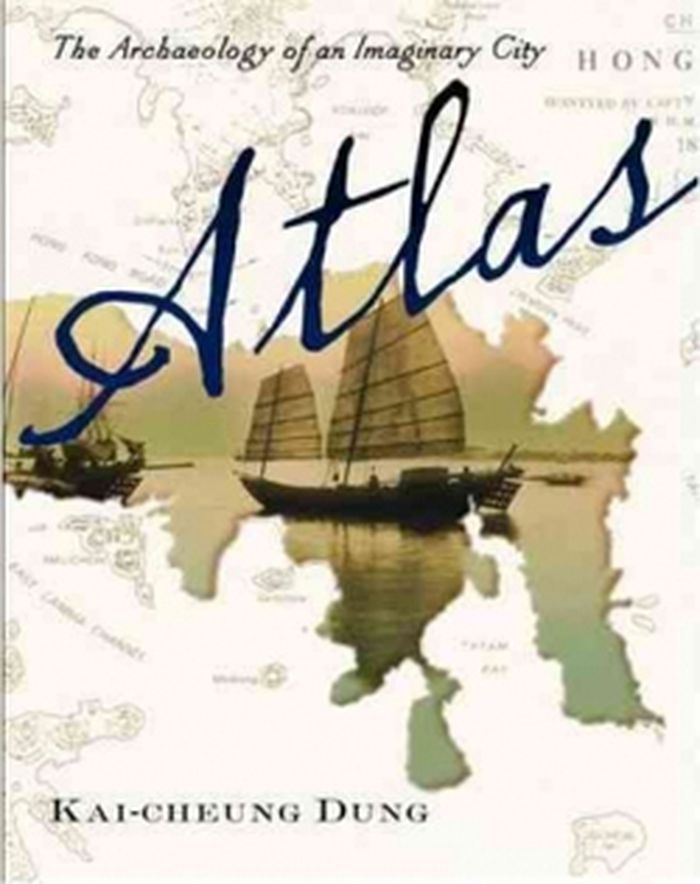
Set in the long-lost City of Victoria (a fictional world similar to Hong Kong), Atlas is written from the unified perspective of future archaeologists struggling to rebuild a thrilling metropolis. Divided into four sections — “Theory,” “The City,” “Streets,” and “Signs” — the novel reimagines Victoria through maps and other historical documents and artifacts, mixing real-world scenarios with purely imaginary people and events while incorporating anecdotes and actual and fictional social commentary and critique. Much like the quasi-fictional adventures in map-reading and remapping explored by Paul Auster, Jorge Luis Borges, and Italo Calvino, Dung Kai-cheung’s novel challenges the representation of place and history and the limits of technical and scientific media in reconstructing a history. It best exemplifies the author’s versatility and experimentation, along with China’s rapidly evolving literary culture, by blending fiction, nonfiction, and poetry in a story about succeeding and failing to recapture the things we lose. Playing with a variety of styles and subjects, Dung Kai-cheung inventively engages with the fate of Hong Kong since its British “handover” in 1997, which officially marked the end of colonial rule and the beginning of an uncharted future.
Atlas : the archaeology of an imaginary city
Actions:
Price:
$24.50
(available to order)
Summary:
Set in the long-lost City of Victoria (a fictional world similar to Hong Kong), Atlas is written from the unified perspective of future archaeologists struggling to rebuild a thrilling metropolis. Divided into four sections — “Theory,” “The City,” “Streets,” and “Signs” — the novel reimagines Victoria through maps and other historical documents and artifacts, mixing real-world scenarios with purely imaginary people and events while incorporating anecdotes and actual and fictional social commentary and critique. Much like the quasi-fictional adventures in map-reading and remapping explored by Paul Auster, Jorge Luis Borges, and Italo Calvino, Dung Kai-cheung’s novel challenges the representation of place and history and the limits of technical and scientific media in reconstructing a history. It best exemplifies the author’s versatility and experimentation, along with China’s rapidly evolving literary culture, by blending fiction, nonfiction, and poetry in a story about succeeding and failing to recapture the things we lose. Playing with a variety of styles and subjects, Dung Kai-cheung inventively engages with the fate of Hong Kong since its British “handover” in 1997, which officially marked the end of colonial rule and the beginning of an uncharted future.
Form:
books
books
Publication:
November 2012
November 2012
Subject:
Architectural Theory
Architectural Theory
Form:
books
books

Price:
$34.95
(available to order)
Summary:
From the advent of early colonial photography in the 19th century to contemporary 'white savior' social-media images, photography continues to play an integral role in the maintenance of white sovereignty. As various scholars have shown, the technology of the camera is not innocent, and neither are the images it produces. The invention and continuation of the 'white(...)
$34.95
(available to order)
Summary:
From the advent of early colonial photography in the 19th century to contemporary 'white savior' social-media images, photography continues to play an integral role in the maintenance of white sovereignty. As various scholars have shown, the technology of the camera is not innocent, and neither are the images it produces. The invention and continuation of the 'white(...)
Title:
The image of whiteness: Contemporary photography and racialization
Actions:
Price:
$34.95
(available to order)
Summary:
From the advent of early colonial photography in the 19th century to contemporary 'white savior' social-media images, photography continues to play an integral role in the maintenance of white sovereignty. As various scholars have shown, the technology of the camera is not innocent, and neither are the images it produces. The invention and continuation of the 'white race' is not just a political, social and legal phenomenon; it is also a complexly visual one. What does whiteness look like, and how might we begin to trace an antiracist history of artistic resistance that works against it? ''The image of whiteness'' seeks to introduce its reader to some important extracts from the troubling story of whiteness, to describe its falsehoods, its paradoxes and its oppressive nature, and to highlight some of the crucial work photographic artists have done to subvert and critique its image.
The image of whiteness: Contemporary photography and racialization
Actions:
Price:
$34.95
(available to order)
Summary:
From the advent of early colonial photography in the 19th century to contemporary 'white savior' social-media images, photography continues to play an integral role in the maintenance of white sovereignty. As various scholars have shown, the technology of the camera is not innocent, and neither are the images it produces. The invention and continuation of the 'white race' is not just a political, social and legal phenomenon; it is also a complexly visual one. What does whiteness look like, and how might we begin to trace an antiracist history of artistic resistance that works against it? ''The image of whiteness'' seeks to introduce its reader to some important extracts from the troubling story of whiteness, to describe its falsehoods, its paradoxes and its oppressive nature, and to highlight some of the crucial work photographic artists have done to subvert and critique its image.
Form:
books
books
Publication:
July 2022
July 2022
Subject:
Theory of Photography
Theory of Photography
Form:
books
books
Actions:
Price:
$44.00
(available to order)
Summary:
Environments associated with migration are often seen as provisional, lacking history or architecture. As Anooradha Iyer Siddiqi demonstrates in "Architecture of migration," a refugee camp's aesthetic and material landscapes-even if born out of emergency-reveal histories, futures, politics, and rhetorics. She identifies forces of colonial and humanitarian settlement,(...)
$44.00
(available to order)
Summary:
Environments associated with migration are often seen as provisional, lacking history or architecture. As Anooradha Iyer Siddiqi demonstrates in "Architecture of migration," a refugee camp's aesthetic and material landscapes-even if born out of emergency-reveal histories, futures, politics, and rhetorics. She identifies forces of colonial and humanitarian settlement,(...)
Title:
Architecture of migration: The Dadaab Refugee Camps and Humanitarian Settlement
Actions:
Price:
$44.00
(available to order)
Summary:
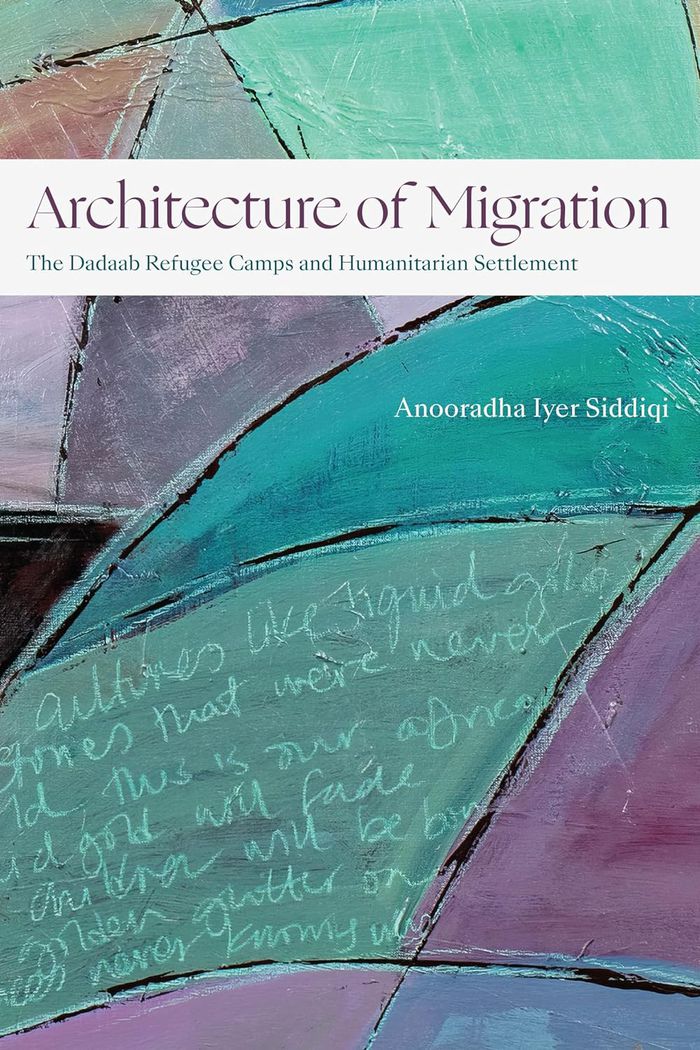
Environments associated with migration are often seen as provisional, lacking history or architecture. As Anooradha Iyer Siddiqi demonstrates in "Architecture of migration," a refugee camp's aesthetic and material landscapes-even if born out of emergency-reveal histories, futures, politics, and rhetorics. She identifies forces of colonial and humanitarian settlement, tracing spatial and racial politics in the Dadaab refugee camps established in 1991 on the Kenya-Somalia border-at once a dense setting that manifests decades of architectural, planning, and design initiatives and a much older constructed environment that reflects its own ways of knowing. She moves beyond ahistorical representations of camps and their inhabitants by constructing a material and visual archive of Dadaab, finding long migratory traditions in the architecture, spatial practices, landscapes, and iconography of refugees and humanitarians. Countering conceptualizations of refugee camps as sites of border transgression, criminality, and placelessness, Siddiqi instead theorizes them as complex settlements, ecologies, and material archives created through histories of partitions, sedentarizations, domesticities, and migrations.
Architecture of migration: The Dadaab Refugee Camps and Humanitarian Settlement
Actions:
Price:
$44.00
(available to order)
Summary:
Environments associated with migration are often seen as provisional, lacking history or architecture. As Anooradha Iyer Siddiqi demonstrates in "Architecture of migration," a refugee camp's aesthetic and material landscapes-even if born out of emergency-reveal histories, futures, politics, and rhetorics. She identifies forces of colonial and humanitarian settlement, tracing spatial and racial politics in the Dadaab refugee camps established in 1991 on the Kenya-Somalia border-at once a dense setting that manifests decades of architectural, planning, and design initiatives and a much older constructed environment that reflects its own ways of knowing. She moves beyond ahistorical representations of camps and their inhabitants by constructing a material and visual archive of Dadaab, finding long migratory traditions in the architecture, spatial practices, landscapes, and iconography of refugees and humanitarians. Countering conceptualizations of refugee camps as sites of border transgression, criminality, and placelessness, Siddiqi instead theorizes them as complex settlements, ecologies, and material archives created through histories of partitions, sedentarizations, domesticities, and migrations.
Form:
books
books
Publication:
January 2024
January 2024
Subject:
Architectural Theory
Architectural Theory
Form:
books
books
Price:
$86.50
(available to order)
Summary:
Mass-produced housing became increasingly prevalent through the second half of the twentieth century and is now found around the globe. Though its popularity and growing adoption have been primarily connected to the post–World War II housing boom, Etien Santiago weaves together architectural, construction, and sociopolitical history to reveal how its foundations were laid(...)
$86.50
(available to order)
Summary:
Mass-produced housing became increasingly prevalent through the second half of the twentieth century and is now found around the globe. Though its popularity and growing adoption have been primarily connected to the post–World War II housing boom, Etien Santiago weaves together architectural, construction, and sociopolitical history to reveal how its foundations were laid(...)
Title:
A barrage of houses: World War I and mass-produced housing for France
Actions:
Price:
$86.50
(available to order)
Summary:
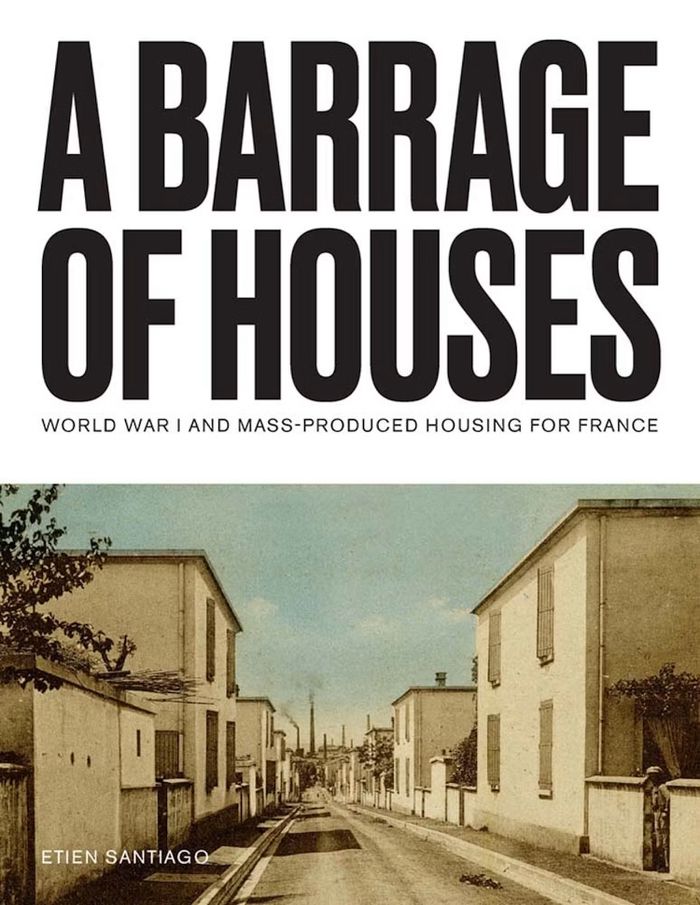
Mass-produced housing became increasingly prevalent through the second half of the twentieth century and is now found around the globe. Though its popularity and growing adoption have been primarily connected to the post–World War II housing boom, Etien Santiago weaves together architectural, construction, and sociopolitical history to reveal how its foundations were laid earlier, during World War I. Prior to World War I, buildings that were made serially—quickly, cheaply, and in large numbers—were typically limited to utilitarian colonial or military applications. Such buildings were moreover assumed to be temporary. Yet the Great War shattered these assumptions, pushing architects, designers, and engineers to appropriate military advances in construction to create a new form of permanent residential architecture. A Barrage of Houses charts the rise of mass-produced dwellings in France from 1914 to the mid-1920s, as demonstrated through housing designs by Auguste and Gustave Perret, Henri Sauvage, and Le Corbusier.
A barrage of houses: World War I and mass-produced housing for France
Actions:
Price:
$86.50
(available to order)
Summary:
Mass-produced housing became increasingly prevalent through the second half of the twentieth century and is now found around the globe. Though its popularity and growing adoption have been primarily connected to the post–World War II housing boom, Etien Santiago weaves together architectural, construction, and sociopolitical history to reveal how its foundations were laid earlier, during World War I. Prior to World War I, buildings that were made serially—quickly, cheaply, and in large numbers—were typically limited to utilitarian colonial or military applications. Such buildings were moreover assumed to be temporary. Yet the Great War shattered these assumptions, pushing architects, designers, and engineers to appropriate military advances in construction to create a new form of permanent residential architecture. A Barrage of Houses charts the rise of mass-produced dwellings in France from 1914 to the mid-1920s, as demonstrated through housing designs by Auguste and Gustave Perret, Henri Sauvage, and Le Corbusier.
Form:
books
books
Publication:
August 2026
August 2026
Subject:
Collective Housing
Collective Housing
Form:
books
books
Actions:
Price:
$75.00
(available in store)
Summary:
Wallace Neff may have been the preeminent architect of Spanish colonial-revival houses in Southern California. Neff was an inventive designer who was not only adept at manipulating traditional styles to please famous, wealthy clients like Cary Grant, Claudette Colbert, and Darryl Zanuck; he was also a pioneer in low-cost housing and pneumatic building. The Bubble House,(...)
$75.00
(available in store)
Summary:
Wallace Neff may have been the preeminent architect of Spanish colonial-revival houses in Southern California. Neff was an inventive designer who was not only adept at manipulating traditional styles to please famous, wealthy clients like Cary Grant, Claudette Colbert, and Darryl Zanuck; he was also a pioneer in low-cost housing and pneumatic building. The Bubble House,(...)
Title:
Wallace Neff and the grand houses of the golden state
Actions:
Price:
$75.00
(available in store)
Summary:
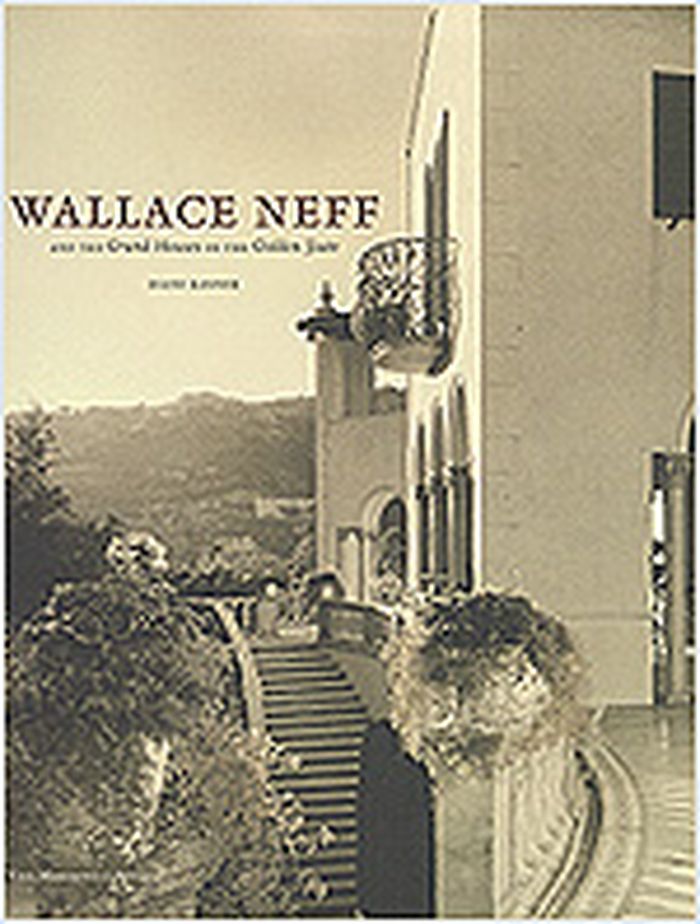
Wallace Neff may have been the preeminent architect of Spanish colonial-revival houses in Southern California. Neff was an inventive designer who was not only adept at manipulating traditional styles to please famous, wealthy clients like Cary Grant, Claudette Colbert, and Darryl Zanuck; he was also a pioneer in low-cost housing and pneumatic building. The Bubble House, as his best-known Airform structure was fondly nicknamed, had a social vision as compelling as that of any modernist housing project. "Wallace Neff and the grand houses of the golden state" tells the life story of this architect, who was raised as Southern California aristocracy - an heir to one of the founders of Rand McNally & Company -- and grew up to influence the course of architectural history in California. Illustrated throughout with black-and-white archival photographs that document Neff's family life and professional accomplishments, journalist Diane Kanner's compelling narrative offers a behind-the-scenes look at the development of residential architecture in Southern California.
Wallace Neff and the grand houses of the golden state
Actions:
Price:
$75.00
(available in store)
Summary:
Wallace Neff may have been the preeminent architect of Spanish colonial-revival houses in Southern California. Neff was an inventive designer who was not only adept at manipulating traditional styles to please famous, wealthy clients like Cary Grant, Claudette Colbert, and Darryl Zanuck; he was also a pioneer in low-cost housing and pneumatic building. The Bubble House, as his best-known Airform structure was fondly nicknamed, had a social vision as compelling as that of any modernist housing project. "Wallace Neff and the grand houses of the golden state" tells the life story of this architect, who was raised as Southern California aristocracy - an heir to one of the founders of Rand McNally & Company -- and grew up to influence the course of architectural history in California. Illustrated throughout with black-and-white archival photographs that document Neff's family life and professional accomplishments, journalist Diane Kanner's compelling narrative offers a behind-the-scenes look at the development of residential architecture in Southern California.
Form:
books
books
Publication:
November 2005, New York
November 2005, New York
Subject:
Architecture Monographs
Architecture Monographs
Form:
books
books

Actions:
Price:
$36.00
(available to order)
Summary:
Coffee, tea, and chocolate were all the rage in Enlightenment Europe. These fashionable beverages profoundly shaped modes of sociability and patterns of consumption, yet none of the plants required for their preparation was native to the continent: coffee was imported from the Levant, tea from Asia, and chocolate from Mesoamerica. Their introduction to 17th-century Europe(...)
$36.00
(available to order)
Summary:
Coffee, tea, and chocolate were all the rage in Enlightenment Europe. These fashionable beverages profoundly shaped modes of sociability and patterns of consumption, yet none of the plants required for their preparation was native to the continent: coffee was imported from the Levant, tea from Asia, and chocolate from Mesoamerica. Their introduction to 17th-century Europe(...)
Title:
Coffee, tea, and chocolate: consuming the world
Actions:
Price:
$36.00
(available to order)
Summary:
Coffee, tea, and chocolate were all the rage in Enlightenment Europe. These fashionable beverages profoundly shaped modes of sociability and patterns of consumption, yet none of the plants required for their preparation was native to the continent: coffee was imported from the Levant, tea from Asia, and chocolate from Mesoamerica. Their introduction to 17th-century Europe revolutionized drinking habits and social customs. It also spurred an insatiable demand for specialized vessels such as hot beverage services and tea canisters, coffee cups and chocolate pots. This beautiful book demonstrates how the paraphernalia associated with coffee, tea, and chocolate can eloquently evoke the culture of these new beverages and the material pleasures that surrounded them. Contributors address such topics as the politics of coffee consumption in 18th-century Germany; 18th-century visual satires on the European consumption of tea, coffee, and chocolate; and the design history of coffee pots in the United States between the colonial period and the present.
Coffee, tea, and chocolate: consuming the world
Actions:
Price:
$36.00
(available to order)
Summary:
Coffee, tea, and chocolate were all the rage in Enlightenment Europe. These fashionable beverages profoundly shaped modes of sociability and patterns of consumption, yet none of the plants required for their preparation was native to the continent: coffee was imported from the Levant, tea from Asia, and chocolate from Mesoamerica. Their introduction to 17th-century Europe revolutionized drinking habits and social customs. It also spurred an insatiable demand for specialized vessels such as hot beverage services and tea canisters, coffee cups and chocolate pots. This beautiful book demonstrates how the paraphernalia associated with coffee, tea, and chocolate can eloquently evoke the culture of these new beverages and the material pleasures that surrounded them. Contributors address such topics as the politics of coffee consumption in 18th-century Germany; 18th-century visual satires on the European consumption of tea, coffee, and chocolate; and the design history of coffee pots in the United States between the colonial period and the present.
Form:
books
books
Publication:
November 2016
November 2016
Subject:
Food
Food
Form:
books
books
Title:
Decolonize museums
Decolonize museums
Actions:
Price:
$29.95
(available to order)
Summary:
The idealized Western museum, as typified by the Metropolitan Museum of Art, the British Museum, and the Museum of Natural History, has remained much the same for over a century: a rarified space of cool stone, providing an experience of leisure and education for the general public while carefully preserving fragile artifacts from distant lands. As questions about(...)
$29.95
(available to order)
Summary:
The idealized Western museum, as typified by the Metropolitan Museum of Art, the British Museum, and the Museum of Natural History, has remained much the same for over a century: a rarified space of cool stone, providing an experience of leisure and education for the general public while carefully preserving fragile artifacts from distant lands. As questions about(...)
Title:
Decolonize museums
Actions:
Price:
$29.95
(available to order)
Summary:
The idealized Western museum, as typified by the Metropolitan Museum of Art, the British Museum, and the Museum of Natural History, has remained much the same for over a century: a rarified space of cool stone, providing an experience of leisure and education for the general public while carefully preserving fragile artifacts from distant lands. As questions about representation and ethics have increasingly arisen, these institutions have proclaimed their interest in diversity and responsible conservation, asserting both their adaptability and their immovably essential role in a flourishing society. With this book, Shimrit Lee punctures this fantasy, tracing the colonial origins of the concept of the museum. White Europeans’ atrocities were reimagined through narratives of benign curiosity and abundant respect for the occupied or annihilated culture, and these racist narratives, Lee argues, remain integral to the authority—and even the aesthetics—of the contemporary museum. This volume argues that we must face a dismantling of these seemingly eternal edifices, and consider what, if anything, might take their place.
Decolonize museums
Actions:
Price:
$29.95
(available to order)
Summary:
The idealized Western museum, as typified by the Metropolitan Museum of Art, the British Museum, and the Museum of Natural History, has remained much the same for over a century: a rarified space of cool stone, providing an experience of leisure and education for the general public while carefully preserving fragile artifacts from distant lands. As questions about representation and ethics have increasingly arisen, these institutions have proclaimed their interest in diversity and responsible conservation, asserting both their adaptability and their immovably essential role in a flourishing society. With this book, Shimrit Lee punctures this fantasy, tracing the colonial origins of the concept of the museum. White Europeans’ atrocities were reimagined through narratives of benign curiosity and abundant respect for the occupied or annihilated culture, and these racist narratives, Lee argues, remain integral to the authority—and even the aesthetics—of the contemporary museum. This volume argues that we must face a dismantling of these seemingly eternal edifices, and consider what, if anything, might take their place.
Form:
books
books
Publication:
June 2022
June 2022
Subject:
Museology
Museology
Form:
books
books
Title:
For a new georgraphy
For a new georgraphy
Actions:
Price:
$38.99
(available to order)
Summary:
Originally published in 1978 in Portuguese, ''For a new geography'' is a milestone in the history of critical geography, and it marked the emergence of its author, Milton Santos (1926-2001), as a major interpreter of geographical thought, a prominent Afro-Brazilian public intellectual, and one of the foremost global theorists of space. Published in the midst of a(...)
$38.99
(available to order)
Summary:
Originally published in 1978 in Portuguese, ''For a new geography'' is a milestone in the history of critical geography, and it marked the emergence of its author, Milton Santos (1926-2001), as a major interpreter of geographical thought, a prominent Afro-Brazilian public intellectual, and one of the foremost global theorists of space. Published in the midst of a(...)
Title:
For a new georgraphy
Actions:
Price:
$38.99
(available to order)
Summary:
Originally published in 1978 in Portuguese, ''For a new geography'' is a milestone in the history of critical geography, and it marked the emergence of its author, Milton Santos (1926-2001), as a major interpreter of geographical thought, a prominent Afro-Brazilian public intellectual, and one of the foremost global theorists of space. Published in the midst of a crisis in geographical thought, ''For a new geography'' functioned as a bridge between geography's past and its future. In advancing his vision of a geography of action and liberation, Santos begins by turning to the roots of modern geography and its colonial legacies. Moving from a critique of the shortcomings of geography from the field's foundations as a modern science to the outline of a new field of critical geography, he sets forth both an ontology of space and a methodology for geography. In so doing, he introduces novel theoretical categories to the analysis of space. It is, in short, both a critique of the Northern, Anglo-centric discipline from within and a systematic critique of its flaws and assumptions from outside. Critical geography has developed in the past four decades into a heterogenous and creative field of enquiry. Though accruing a set of theoretical touchstones in the process, it has become detached from a longer and broader history of geographical thought. ''For a new geography'' reconciles these divergent histories. Arriving in English at a time of renewed interest in alternative geographical traditions and the history of radical geography, it takes its place in the canonical works of critical geography.
For a new georgraphy
Actions:
Price:
$38.99
(available to order)
Summary:
Originally published in 1978 in Portuguese, ''For a new geography'' is a milestone in the history of critical geography, and it marked the emergence of its author, Milton Santos (1926-2001), as a major interpreter of geographical thought, a prominent Afro-Brazilian public intellectual, and one of the foremost global theorists of space. Published in the midst of a crisis in geographical thought, ''For a new geography'' functioned as a bridge between geography's past and its future. In advancing his vision of a geography of action and liberation, Santos begins by turning to the roots of modern geography and its colonial legacies. Moving from a critique of the shortcomings of geography from the field's foundations as a modern science to the outline of a new field of critical geography, he sets forth both an ontology of space and a methodology for geography. In so doing, he introduces novel theoretical categories to the analysis of space. It is, in short, both a critique of the Northern, Anglo-centric discipline from within and a systematic critique of its flaws and assumptions from outside. Critical geography has developed in the past four decades into a heterogenous and creative field of enquiry. Though accruing a set of theoretical touchstones in the process, it has become detached from a longer and broader history of geographical thought. ''For a new geography'' reconciles these divergent histories. Arriving in English at a time of renewed interest in alternative geographical traditions and the history of radical geography, it takes its place in the canonical works of critical geography.
Form:
books
books
Publication:
November 2021
November 2021
Subject:
Social
Social
Form:
journals and magazines
journals and magazines
Actions:
Price:
$16.95
(available in store)
Summary:
With this issue, the funambulist offers a critique of their own framework of knowledge production. The concept of “Global South” has been turned into a handy word to lazily designate two-thirds of the world’s earthly area and 90% of its population, thus flattening the millions of specificities that characterize this grouping. It also often embodies an entity that only(...)
$16.95
(available in store)
Summary:
With this issue, the funambulist offers a critique of their own framework of knowledge production. The concept of “Global South” has been turned into a handy word to lazily designate two-thirds of the world’s earthly area and 90% of its population, thus flattening the millions of specificities that characterize this grouping. It also often embodies an entity that only(...)
Title:
The Funambulist 66: Beyond the global South
Actions:
Price:
$16.95
(available in store)
Summary:
With this issue, the funambulist offers a critique of their own framework of knowledge production. The concept of “Global South” has been turned into a handy word to lazily designate two-thirds of the world’s earthly area and 90% of its population, thus flattening the millions of specificities that characterize this grouping. It also often embodies an entity that only exists dependent on its alter ego, the Global North. As such, it denies any form of agency to the peoples designated as “the South” independently from their relationship to the “North,” as we examine in the case of the war in the eastern Congo (Josaphat Musamba). The South/North binary also designates borders as lines (rather than as regimes operating on both sides of these lines) and essentializes the difference between sides. Can Blackness and Indigeneity in Abya Yala be read without a fundamental split at the settler colonial line that separates North and Central-South Americas (Ashley Ngozi Agbasoga)? Can 20th century Korea’s history show us that the line that currently separates the north (usually presented as part of the Global South) and the south (usually presented as part of the Global North) particularly illustrates the North/South framework’s lack of complexity (Lina Eunji Chang and Andrei-Sergei Kim)? What kind of colonial violence the Non-Aligned Movement invisibilizes in West Papua (Quito Swan), in Kashmir (Choakkeladd) or Western Sahara (Buhari Lehbib) and, in contrast, what kind of solidarities it allowed from Yugoslavia (Dubravka Sekulic and Sanja Horvatincic)? And, crucially, how can we honor the complexity of politics by being able to hold two contradictory truths together as Micol Meghnagi reminds us in the context of Gaddafi’s Libya and Pan-Arabism.
The Funambulist 66: Beyond the global South
Actions:
Price:
$16.95
(available in store)
Summary:
With this issue, the funambulist offers a critique of their own framework of knowledge production. The concept of “Global South” has been turned into a handy word to lazily designate two-thirds of the world’s earthly area and 90% of its population, thus flattening the millions of specificities that characterize this grouping. It also often embodies an entity that only exists dependent on its alter ego, the Global North. As such, it denies any form of agency to the peoples designated as “the South” independently from their relationship to the “North,” as we examine in the case of the war in the eastern Congo (Josaphat Musamba). The South/North binary also designates borders as lines (rather than as regimes operating on both sides of these lines) and essentializes the difference between sides. Can Blackness and Indigeneity in Abya Yala be read without a fundamental split at the settler colonial line that separates North and Central-South Americas (Ashley Ngozi Agbasoga)? Can 20th century Korea’s history show us that the line that currently separates the north (usually presented as part of the Global South) and the south (usually presented as part of the Global North) particularly illustrates the North/South framework’s lack of complexity (Lina Eunji Chang and Andrei-Sergei Kim)? What kind of colonial violence the Non-Aligned Movement invisibilizes in West Papua (Quito Swan), in Kashmir (Choakkeladd) or Western Sahara (Buhari Lehbib) and, in contrast, what kind of solidarities it allowed from Yugoslavia (Dubravka Sekulic and Sanja Horvatincic)? And, crucially, how can we honor the complexity of politics by being able to hold two contradictory truths together as Micol Meghnagi reminds us in the context of Gaddafi’s Libya and Pan-Arabism.
Form:
journals and magazines
journals and magazines
Publication:
July 2026
July 2026
Subject:
Magazines
Magazines


