


44145 Results
Level of archival description:
Sub-series
Sub-series
Title:
Portraits et photographies de Pierre Jeanneret = Pierre Jeanneret’s portraits and photographs
Portraits et photographies de Pierre Jeanneret = Pierre Jeanneret’s portraits and photographs
Actions:
Reference number:
AP156.S4.SS1.D2
Description:
Le dossier documente la vie de Pierre Jeanneret et son travail principalement en Europe, entre les fin des années 1910 et la fin des années 1940. Le dossier contient des photographies, principalement des portraits. Le dossier contient aussi quelques photographies de son appartement de la rue Jacob à Genève. File documents Pierre Jeanneret's life and work predominantly in Europe, between the end of the 1910s and the end of the 1940s. The file contains photographs, predominantly portraits. The file also contains a few photographs of his appartment at Jacob Street in Geneva.
AP156.S4.SS1.D2
Description:
Le dossier documente la vie de Pierre Jeanneret et son travail principalement en Europe, entre les fin des années 1910 et la fin des années 1940. Le dossier contient des photographies, principalement des portraits. Le dossier contient aussi quelques photographies de son appartement de la rue Jacob à Genève. File documents Pierre Jeanneret's life and work predominantly in Europe, between the end of the 1910s and the end of the 1940s. The file contains photographs, predominantly portraits. The file also contains a few photographs of his appartment at Jacob Street in Geneva.
People:
Date:
late 1920s-late 1940s
late 1920s-late 1940s
Title:
Portraits et photographies de Pierre Jeanneret = Pierre Jeanneret’s portraits and photographs
Actions:
AP156.S4.SS1.D2
Description:
Le dossier documente la vie de Pierre Jeanneret et son travail principalement en Europe, entre les fin des années 1910 et la fin des années 1940. Le dossier contient des photographies, principalement des portraits. Le dossier contient aussi quelques photographies de son appartement de la rue Jacob à Genève. File documents Pierre Jeanneret's life and work predominantly in Europe, between the end of the 1910s and the end of the 1940s. The file contains photographs, predominantly portraits. The file also contains a few photographs of his appartment at Jacob Street in Geneva.
Portraits et photographies de Pierre Jeanneret = Pierre Jeanneret’s portraits and photographs
Actions:
AP156.S4.SS1.D2
Description:
Le dossier documente la vie de Pierre Jeanneret et son travail principalement en Europe, entre les fin des années 1910 et la fin des années 1940. Le dossier contient des photographies, principalement des portraits. Le dossier contient aussi quelques photographies de son appartement de la rue Jacob à Genève. File documents Pierre Jeanneret's life and work predominantly in Europe, between the end of the 1910s and the end of the 1940s. The file contains photographs, predominantly portraits. The file also contains a few photographs of his appartment at Jacob Street in Geneva.
Level of archival description:
Dossier 2
Dossier 2
Date:
late 1920s-late 1940s
late 1920s-late 1940s
People:
Level of archival description:
Project
Project
Actions:
Reference number:
AP178.S1.1999.PR05
Description:
This project series documents the Casa Museo Jose Regio in Villa do Conde, Portugal. While the records were held in the office’s archives this project was assigned the number 110/90. The office assigned the dates 1999 to this project. The museum was the house of the poet José Régio. This project included renovations to the building, as well as the construction of a new building. The proposed renovations were mainly done to the structure with some upgrades to the mechanical installations. The design for the new building included exhibition halls and spaces for work. The project was not realized. Documenting this project are studies, plans, and a building program.
AP178.S1.1999.PR05
Description:
This project series documents the Casa Museo Jose Regio in Villa do Conde, Portugal. While the records were held in the office’s archives this project was assigned the number 110/90. The office assigned the dates 1999 to this project. The museum was the house of the poet José Régio. This project included renovations to the building, as well as the construction of a new building. The proposed renovations were mainly done to the structure with some upgrades to the mechanical installations. The design for the new building included exhibition halls and spaces for work. The project was not realized. Documenting this project are studies, plans, and a building program.
People:
Date:
1999
1999
Title:
Casa Museu José Régio [José Régio House Museum], Villa do Conde, Portugal (1999)
Actions:
AP178.S1.1999.PR05
Description:
This project series documents the Casa Museo Jose Regio in Villa do Conde, Portugal. While the records were held in the office’s archives this project was assigned the number 110/90. The office assigned the dates 1999 to this project. The museum was the house of the poet José Régio. This project included renovations to the building, as well as the construction of a new building. The proposed renovations were mainly done to the structure with some upgrades to the mechanical installations. The design for the new building included exhibition halls and spaces for work. The project was not realized. Documenting this project are studies, plans, and a building program.
Casa Museu José Régio [José Régio House Museum], Villa do Conde, Portugal (1999)
Actions:
AP178.S1.1999.PR05
Description:
This project series documents the Casa Museo Jose Regio in Villa do Conde, Portugal. While the records were held in the office’s archives this project was assigned the number 110/90. The office assigned the dates 1999 to this project. The museum was the house of the poet José Régio. This project included renovations to the building, as well as the construction of a new building. The proposed renovations were mainly done to the structure with some upgrades to the mechanical installations. The design for the new building included exhibition halls and spaces for work. The project was not realized. Documenting this project are studies, plans, and a building program.
Level of archival description:
Project
Project
Date:
1999
1999
People:
Form:
archives
Level of archival description:
Fonds
archives
Level of archival description:
Fonds
Title:
Pierre Dionne fonds
Pierre Dionne fonds
Actions:
Reference number:
AP006
Synopsis:
The Pierre Dionne fonds, 1948-1976, documents the professional career of architect Pierre Dionne. The fonds documents 467of Dionne’s architectural works: 11 student projects (ca. 1948-1952), 437 professional projects (1951-1976) and 19 miscellaneous projects (various dates). Materials in this fonds consist of 6244 drawings (including reprographic copies), 857 photographic materials, 165 slides, 5 l.m. of textual records and 6 models.
AP006
Synopsis:
The Pierre Dionne fonds, 1948-1976, documents the professional career of architect Pierre Dionne. The fonds documents 467of Dionne’s architectural works: 11 student projects (ca. 1948-1952), 437 professional projects (1951-1976) and 19 miscellaneous projects (various dates). Materials in this fonds consist of 6244 drawings (including reprographic copies), 857 photographic materials, 165 slides, 5 l.m. of textual records and 6 models.
People:
Date:
1948-1976
1948-1976
Title:
Pierre Dionne fonds
Actions:
AP006
Synopsis:
The Pierre Dionne fonds, 1948-1976, documents the professional career of architect Pierre Dionne. The fonds documents 467of Dionne’s architectural works: 11 student projects (ca. 1948-1952), 437 professional projects (1951-1976) and 19 miscellaneous projects (various dates). Materials in this fonds consist of 6244 drawings (including reprographic copies), 857 photographic materials, 165 slides, 5 l.m. of textual records and 6 models.
Pierre Dionne fonds
Actions:
AP006
Synopsis:
The Pierre Dionne fonds, 1948-1976, documents the professional career of architect Pierre Dionne. The fonds documents 467of Dionne’s architectural works: 11 student projects (ca. 1948-1952), 437 professional projects (1951-1976) and 19 miscellaneous projects (various dates). Materials in this fonds consist of 6244 drawings (including reprographic copies), 857 photographic materials, 165 slides, 5 l.m. of textual records and 6 models.
Form:
archives
Level of archival description:
Fonds
archives
Level of archival description:
Fonds
Date:
1948-1976
1948-1976
People:
Level of archival description:
Project
Project
Reference number:
AP056.S1.1992.PR03
Description:
This project series documents interior design work for Creative Copy and Design in Toronto in 1992. The office identified the project number as 9203. This project consisted of interiors for the high resolution imaging company, Creative Copy and Design, located on the ground floor of King James Place at 145 King Street East. The office was made up of an unfinished ground floor and existing mezzanine at the back, totalling 2630 square feet. The ground floor interiors consisted mainly of the reception area, which was visible from the sidewalk through the office's glass storefront. The reception area was comprised of two long, boomerang-shaped counters, and one rectangular counter behind them, made of wood with plastic laminate tops. The wood was stained to match the corrugated wood wall that ran the length of the room, directly behind the three counters. A large, ellipse-shaped lighting fixture made from fibre glass panels and steel stud framing was a prominent feature above the reception area. Bathrooms and a processing area were located behind the wall, as well as a stair case leading to the mezzanine, which contained work stations and an additional processing area. The program also included electrical and mechanical installation. The project is recorded through drawings and photographs dating from 1992. The drawings consist of sketches, a floor plan, and a set of construction drawings with specifications and schedules. The photographs show the completed project.
AP056.S1.1992.PR03
Description:
This project series documents interior design work for Creative Copy and Design in Toronto in 1992. The office identified the project number as 9203. This project consisted of interiors for the high resolution imaging company, Creative Copy and Design, located on the ground floor of King James Place at 145 King Street East. The office was made up of an unfinished ground floor and existing mezzanine at the back, totalling 2630 square feet. The ground floor interiors consisted mainly of the reception area, which was visible from the sidewalk through the office's glass storefront. The reception area was comprised of two long, boomerang-shaped counters, and one rectangular counter behind them, made of wood with plastic laminate tops. The wood was stained to match the corrugated wood wall that ran the length of the room, directly behind the three counters. A large, ellipse-shaped lighting fixture made from fibre glass panels and steel stud framing was a prominent feature above the reception area. Bathrooms and a processing area were located behind the wall, as well as a stair case leading to the mezzanine, which contained work stations and an additional processing area. The program also included electrical and mechanical installation. The project is recorded through drawings and photographs dating from 1992. The drawings consist of sketches, a floor plan, and a set of construction drawings with specifications and schedules. The photographs show the completed project.
People:
Date:
1992
1992
Title:
Creative Copy and Design, Toronto (1992)
Actions:
AP056.S1.1992.PR03
Description:
This project series documents interior design work for Creative Copy and Design in Toronto in 1992. The office identified the project number as 9203. This project consisted of interiors for the high resolution imaging company, Creative Copy and Design, located on the ground floor of King James Place at 145 King Street East. The office was made up of an unfinished ground floor and existing mezzanine at the back, totalling 2630 square feet. The ground floor interiors consisted mainly of the reception area, which was visible from the sidewalk through the office's glass storefront. The reception area was comprised of two long, boomerang-shaped counters, and one rectangular counter behind them, made of wood with plastic laminate tops. The wood was stained to match the corrugated wood wall that ran the length of the room, directly behind the three counters. A large, ellipse-shaped lighting fixture made from fibre glass panels and steel stud framing was a prominent feature above the reception area. Bathrooms and a processing area were located behind the wall, as well as a stair case leading to the mezzanine, which contained work stations and an additional processing area. The program also included electrical and mechanical installation. The project is recorded through drawings and photographs dating from 1992. The drawings consist of sketches, a floor plan, and a set of construction drawings with specifications and schedules. The photographs show the completed project.
Creative Copy and Design, Toronto (1992)
Actions:
AP056.S1.1992.PR03
Description:
This project series documents interior design work for Creative Copy and Design in Toronto in 1992. The office identified the project number as 9203. This project consisted of interiors for the high resolution imaging company, Creative Copy and Design, located on the ground floor of King James Place at 145 King Street East. The office was made up of an unfinished ground floor and existing mezzanine at the back, totalling 2630 square feet. The ground floor interiors consisted mainly of the reception area, which was visible from the sidewalk through the office's glass storefront. The reception area was comprised of two long, boomerang-shaped counters, and one rectangular counter behind them, made of wood with plastic laminate tops. The wood was stained to match the corrugated wood wall that ran the length of the room, directly behind the three counters. A large, ellipse-shaped lighting fixture made from fibre glass panels and steel stud framing was a prominent feature above the reception area. Bathrooms and a processing area were located behind the wall, as well as a stair case leading to the mezzanine, which contained work stations and an additional processing area. The program also included electrical and mechanical installation. The project is recorded through drawings and photographs dating from 1992. The drawings consist of sketches, a floor plan, and a set of construction drawings with specifications and schedules. The photographs show the completed project.
Level of archival description:
Project
Project
Date:
1992
1992
People:
Level of archival description:
Series
Series
Reference number:
AP041.S6
Description:
This series documents Melvin Charney's student years, travels and professional activities, artistic and architectural projects from 1947 to 2010. The series contains notebooks and sketchbooks related to Charney's studies, his travels in Europe, as well as notes and sketches related to his projects. It also contains travel photographs, photographic documentation of his projects and his artworks, collected ephemera of events of interest or events to which he participated, including exhibitions. The series includes also reference materials, such as publications and press clippings, used for his artistic and architectural work, and some awards and honours received by Melvin Charney during his career.
AP041.S6
Description:
This series documents Melvin Charney's student years, travels and professional activities, artistic and architectural projects from 1947 to 2010. The series contains notebooks and sketchbooks related to Charney's studies, his travels in Europe, as well as notes and sketches related to his projects. It also contains travel photographs, photographic documentation of his projects and his artworks, collected ephemera of events of interest or events to which he participated, including exhibitions. The series includes also reference materials, such as publications and press clippings, used for his artistic and architectural work, and some awards and honours received by Melvin Charney during his career.
People:
Date:
1902-2010
1902-2010
Title:
Professional papers and other materials
Actions:
AP041.S6
Description:
This series documents Melvin Charney's student years, travels and professional activities, artistic and architectural projects from 1947 to 2010. The series contains notebooks and sketchbooks related to Charney's studies, his travels in Europe, as well as notes and sketches related to his projects. It also contains travel photographs, photographic documentation of his projects and his artworks, collected ephemera of events of interest or events to which he participated, including exhibitions. The series includes also reference materials, such as publications and press clippings, used for his artistic and architectural work, and some awards and honours received by Melvin Charney during his career.
Professional papers and other materials
Actions:
AP041.S6
Description:
This series documents Melvin Charney's student years, travels and professional activities, artistic and architectural projects from 1947 to 2010. The series contains notebooks and sketchbooks related to Charney's studies, his travels in Europe, as well as notes and sketches related to his projects. It also contains travel photographs, photographic documentation of his projects and his artworks, collected ephemera of events of interest or events to which he participated, including exhibitions. The series includes also reference materials, such as publications and press clippings, used for his artistic and architectural work, and some awards and honours received by Melvin Charney during his career.
Level of archival description:
Series
Series
Date:
1902-2010
1902-2010
People:
Form:
drawings
drawings
Actions:
Reference number:
DR1987:0018
Description:
- This drawing depicts a cardinal and a monk standing in front of a gallery wall which is composed of marble facing below, and with alternating round and square niches above which are decorated with polychromatic frescoes and possibly tiles. The niches house busts of bearded men. The decoration includes trompe-l'oeil and grotesque work in a classical revival style, interspersed with simple pictographs in a vaguely archaic style.
DR1987:0018
Description:
- This drawing depicts a cardinal and a monk standing in front of a gallery wall which is composed of marble facing below, and with alternating round and square niches above which are decorated with polychromatic frescoes and possibly tiles. The niches house busts of bearded men. The decoration includes trompe-l'oeil and grotesque work in a classical revival style, interspersed with simple pictographs in a vaguely archaic style.
People:
Subject:
architecture
architecture
Date:
1854
1854
Title:
Polychromatic interior with a cardinal and a monk
Actions:
DR1987:0018
Description:
- This drawing depicts a cardinal and a monk standing in front of a gallery wall which is composed of marble facing below, and with alternating round and square niches above which are decorated with polychromatic frescoes and possibly tiles. The niches house busts of bearded men. The decoration includes trompe-l'oeil and grotesque work in a classical revival style, interspersed with simple pictographs in a vaguely archaic style.
Polychromatic interior with a cardinal and a monk
Actions:
DR1987:0018
Description:
- This drawing depicts a cardinal and a monk standing in front of a gallery wall which is composed of marble facing below, and with alternating round and square niches above which are decorated with polychromatic frescoes and possibly tiles. The niches house busts of bearded men. The decoration includes trompe-l'oeil and grotesque work in a classical revival style, interspersed with simple pictographs in a vaguely archaic style.
Form:
drawings
drawings
Date:
1854
1854
People:
Subject:
architecture
architecture
Level of archival description:
Project
Project
Reference number:
AP207.S1.2009.PR01
Description:
The project series documents the installation "Brano di Città" presented at the Galleria Enrico Fornello, in Prato, in 2009. The installation consists of covering the walls and the floor of an entire gallery space with branches and dry leaves. "The material is predominant here, and “becomes” architecture. It is a piece of city, or a ghost of it, where nature turns into architecture, or a work of architecture structures itself, describes itself with natural materials." [1] The project series contains drawings and photographs of the installation. Source: [1] Gianni Pettena website, https://www.giannipettena.it/italiano/opere-1/inst-city-architecture-2009/ (last accessed 22 January 2020).
AP207.S1.2009.PR01
Description:
The project series documents the installation "Brano di Città" presented at the Galleria Enrico Fornello, in Prato, in 2009. The installation consists of covering the walls and the floor of an entire gallery space with branches and dry leaves. "The material is predominant here, and “becomes” architecture. It is a piece of city, or a ghost of it, where nature turns into architecture, or a work of architecture structures itself, describes itself with natural materials." [1] The project series contains drawings and photographs of the installation. Source: [1] Gianni Pettena website, https://www.giannipettena.it/italiano/opere-1/inst-city-architecture-2009/ (last accessed 22 January 2020).
People:
Date:
2009-2015
2009-2015
Title:
Brano di Città [City Architecture] (2009)
Actions:
AP207.S1.2009.PR01
Description:
The project series documents the installation "Brano di Città" presented at the Galleria Enrico Fornello, in Prato, in 2009. The installation consists of covering the walls and the floor of an entire gallery space with branches and dry leaves. "The material is predominant here, and “becomes” architecture. It is a piece of city, or a ghost of it, where nature turns into architecture, or a work of architecture structures itself, describes itself with natural materials." [1] The project series contains drawings and photographs of the installation. Source: [1] Gianni Pettena website, https://www.giannipettena.it/italiano/opere-1/inst-city-architecture-2009/ (last accessed 22 January 2020).
Brano di Città [City Architecture] (2009)
Actions:
AP207.S1.2009.PR01
Description:
The project series documents the installation "Brano di Città" presented at the Galleria Enrico Fornello, in Prato, in 2009. The installation consists of covering the walls and the floor of an entire gallery space with branches and dry leaves. "The material is predominant here, and “becomes” architecture. It is a piece of city, or a ghost of it, where nature turns into architecture, or a work of architecture structures itself, describes itself with natural materials." [1] The project series contains drawings and photographs of the installation. Source: [1] Gianni Pettena website, https://www.giannipettena.it/italiano/opere-1/inst-city-architecture-2009/ (last accessed 22 January 2020).
Level of archival description:
Project
Project
Date:
2009-2015
2009-2015
People:
Level of archival description:
Project
Project
Actions:
Reference number:
AP018.S1.1981.PR18
Description:
This project series documents alterations to the Toronto Sun building in downtown Toronto in 1981. The office identified the project number as 8118. From 1973-1975, Parkin Architects Planners designed and constructed the Toronto Sun press plant and office building at 333 King Street East. This project consisted of alterations to the press hall of that building. It is not clear from the project documentation whether work for this expansion ever occurred. The project is recorded through drawings and textual records dating from 1981. The drawings consist of press hall and mezzanine plans, while the textual materials consist of a conference report and correspondence.
AP018.S1.1981.PR18
Description:
This project series documents alterations to the Toronto Sun building in downtown Toronto in 1981. The office identified the project number as 8118. From 1973-1975, Parkin Architects Planners designed and constructed the Toronto Sun press plant and office building at 333 King Street East. This project consisted of alterations to the press hall of that building. It is not clear from the project documentation whether work for this expansion ever occurred. The project is recorded through drawings and textual records dating from 1981. The drawings consist of press hall and mezzanine plans, while the textual materials consist of a conference report and correspondence.
People:
Date:
1981
1981
Title:
The Toronto Sun Publishing Limited, Press Plant and Office Building, Alterations to Press Hall, Toronto (1981)
Actions:
AP018.S1.1981.PR18
Description:
This project series documents alterations to the Toronto Sun building in downtown Toronto in 1981. The office identified the project number as 8118. From 1973-1975, Parkin Architects Planners designed and constructed the Toronto Sun press plant and office building at 333 King Street East. This project consisted of alterations to the press hall of that building. It is not clear from the project documentation whether work for this expansion ever occurred. The project is recorded through drawings and textual records dating from 1981. The drawings consist of press hall and mezzanine plans, while the textual materials consist of a conference report and correspondence.
The Toronto Sun Publishing Limited, Press Plant and Office Building, Alterations to Press Hall, Toronto (1981)
Actions:
AP018.S1.1981.PR18
Description:
This project series documents alterations to the Toronto Sun building in downtown Toronto in 1981. The office identified the project number as 8118. From 1973-1975, Parkin Architects Planners designed and constructed the Toronto Sun press plant and office building at 333 King Street East. This project consisted of alterations to the press hall of that building. It is not clear from the project documentation whether work for this expansion ever occurred. The project is recorded through drawings and textual records dating from 1981. The drawings consist of press hall and mezzanine plans, while the textual materials consist of a conference report and correspondence.
Level of archival description:
Project
Project
Date:
1981
1981
People:
Form:
exhibitions
exhibitions
Description:
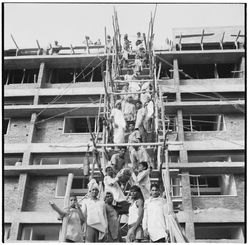
madskills: Self-Documenting Construction on Social Media investigates popular social media clips documenting construction work by those present on site. Inspired by the rise of the creator economy, contractors, builders, and tradespeople have started to record and share their skills, creativity, and concerns with a digitally connected community of peers, clients, and(...)
madskills: Self-Documenting Construction on Social Media investigates popular social media clips documenting construction work by those present on site. Inspired by the rise of the creator economy, contractors, builders, and tradespeople have started to record and share their skills, creativity, and concerns with a digitally connected community of peers, clients, and(...)
Location:
Octagonal gallery Keyword(s):
social media, TikTok, Instagram, architectural photography, construction workers, labour, skills
Octagonal gallery Keyword(s):
social media, TikTok, Instagram, architectural photography, construction workers, labour, skills
Date:
June 2024 to October 2024
June 2024 to October 2024
Title:
madskills: Self-Documenting Construction on Social Media
Actions:
Description:
madskills: Self-Documenting Construction on Social Media investigates popular social media clips documenting construction work by those present on site. Inspired by the rise of the creator economy, contractors, builders, and tradespeople have started to record and share their skills, creativity, and concerns with a digitally connected community of peers, clients, and(...)
madskills: Self-Documenting Construction on Social Media
Actions:
Description:
madskills: Self-Documenting Construction on Social Media investigates popular social media clips documenting construction work by those present on site. Inspired by the rise of the creator economy, contractors, builders, and tradespeople have started to record and share their skills, creativity, and concerns with a digitally connected community of peers, clients, and(...)
Form:
exhibitions
exhibitions
Date:
June 2024 to
October 2024
June 2024 to
October 2024
Location:
Octagonal gallery Keyword(s):
social media, TikTok, Instagram, architectural photography, construction workers, labour, skills
Octagonal gallery Keyword(s):
social media, TikTok, Instagram, architectural photography, construction workers, labour, skills
Form:
textual records
textual records
Actions:
Reference number:
ARCH266273
Description:
This group consists of correspondence with the City of Montréal, and related documents, about the Mont-Royal metro station, in Montréal, Québec, including correspondence about the writing of the specifications. There is a document of dispositions and generalities about the specifications and a copy of the specifications themselves. There are also notices about the rules of day-to-day work on the construction site addressed to the sub-contractors and the architects.
ARCH266273
Description:
This group consists of correspondence with the City of Montréal, and related documents, about the Mont-Royal metro station, in Montréal, Québec, including correspondence about the writing of the specifications. There is a document of dispositions and generalities about the specifications and a copy of the specifications themselves. There are also notices about the rules of day-to-day work on the construction site addressed to the sub-contractors and the architects.
People:
Date:
1965
1965
Title:
Correspondence with the City of Montréal, and related documents
Actions:
ARCH266273
Description:
This group consists of correspondence with the City of Montréal, and related documents, about the Mont-Royal metro station, in Montréal, Québec, including correspondence about the writing of the specifications. There is a document of dispositions and generalities about the specifications and a copy of the specifications themselves. There are also notices about the rules of day-to-day work on the construction site addressed to the sub-contractors and the architects.
Correspondence with the City of Montréal, and related documents
Actions:
ARCH266273
Description:
This group consists of correspondence with the City of Montréal, and related documents, about the Mont-Royal metro station, in Montréal, Québec, including correspondence about the writing of the specifications. There is a document of dispositions and generalities about the specifications and a copy of the specifications themselves. There are also notices about the rules of day-to-day work on the construction site addressed to the sub-contractors and the architects.
Form:
textual records
textual records
Date:
1965
1965
People:


