


1416 Results
Form:
books
books
Price:
$23.50
(available to order)
Summary:
''In 1969 the Architectural Review invited guest editor Tim Rock to produce a few issues of the magazine. His brief was to take a hard look at the state of Britain, which must have come as a rude awakening for the readers of this conservative journal. I was lucky to receive the opening assignment for this ambitious project and spent the following six weeks recording the(...)
$23.50
(available to order)
Summary:
''In 1969 the Architectural Review invited guest editor Tim Rock to produce a few issues of the magazine. His brief was to take a hard look at the state of Britain, which must have come as a rude awakening for the readers of this conservative journal. I was lucky to receive the opening assignment for this ambitious project and spent the following six weeks recording the(...)
Title:
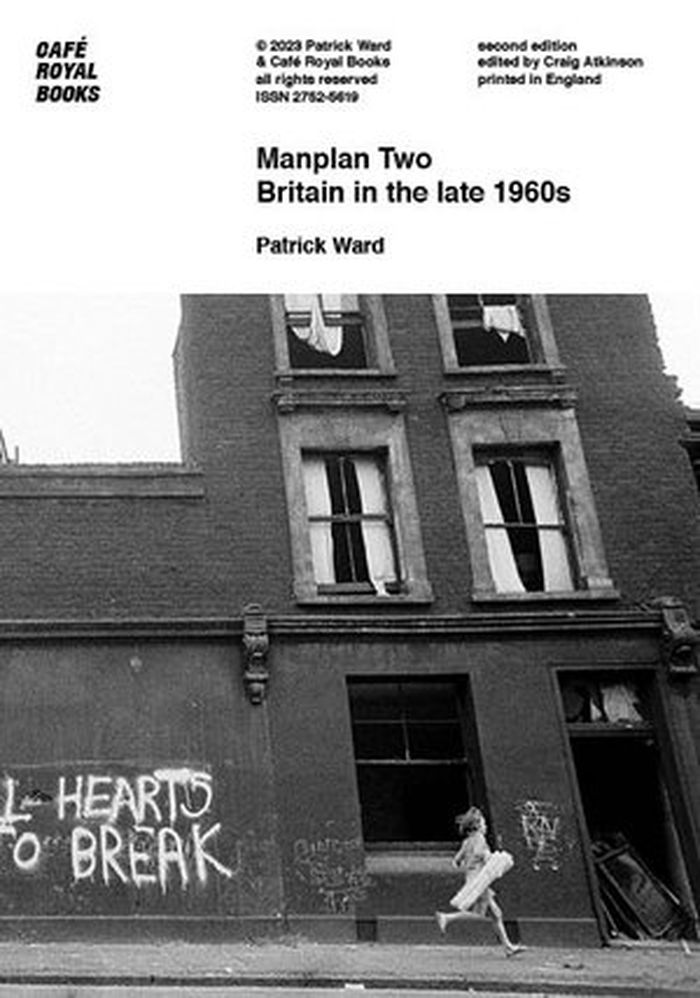
Patrick Ward : Manplan 1 & 2, Britain in the late 1960s (2 vol.)
Actions:
Price:
$23.50
(available to order)
Summary:
''In 1969 the Architectural Review invited guest editor Tim Rock to produce a few issues of the magazine. His brief was to take a hard look at the state of Britain, which must have come as a rude awakening for the readers of this conservative journal. I was lucky to receive the opening assignment for this ambitious project and spent the following six weeks recording the frustrations surrounding life, work and leisure in the Britain of the late 1960s. The result was a photo essay called 'Manplan' which ran for 75 pages in the magazine and from which these images are drawn. The project ran for several more issues, with other editorial photographers exploring more specific subjects for the project. However, I think it’s fair to surmise that the magazine, its readers, and its advertisers were relieved to return to the safer territory of architectural photography, with its correct verticals and its political correctness too!'' - PW
Patrick Ward : Manplan 1 & 2, Britain in the late 1960s (2 vol.)
Actions:
Price:
$23.50
(available to order)
Summary:
''In 1969 the Architectural Review invited guest editor Tim Rock to produce a few issues of the magazine. His brief was to take a hard look at the state of Britain, which must have come as a rude awakening for the readers of this conservative journal. I was lucky to receive the opening assignment for this ambitious project and spent the following six weeks recording the frustrations surrounding life, work and leisure in the Britain of the late 1960s. The result was a photo essay called 'Manplan' which ran for 75 pages in the magazine and from which these images are drawn. The project ran for several more issues, with other editorial photographers exploring more specific subjects for the project. However, I think it’s fair to surmise that the magazine, its readers, and its advertisers were relieved to return to the safer territory of architectural photography, with its correct verticals and its political correctness too!'' - PW
Form:
books
books
Publication:
January 2023
January 2023
Subject:
Photography monographs
Photography monographs
Form:
books
books
Actions:
Subject:
Publication:
Earshot 2025
Earshot 2025
Form:
books
books
Publication:
Earshot 2025
Earshot 2025
Subject:
Form:
books
books
Actions:
Holdings:
Description:
248 pages : illustrations ; 27 cm
Description:
248 pages : illustrations ; 27 cm
Author:
Subject:
Publication:
New Haven, Conn. : Published for the Paul Mellon Centre for Studies in British Art by Yale University Press, 1994.
New Haven, Conn. : Published for the Paul Mellon Centre for Studies in British Art by Yale University Press, 1994.
Title:
The Tory view of landscape / Nigel Everett.
Actions:
Holdings:
Description:
248 pages : illustrations ; 27 cm
The Tory view of landscape / Nigel Everett.
Actions:
Holdings:
Description:
248 pages : illustrations ; 27 cm
Form:
books
books
Publication:
New Haven, Conn. : Published for the Paul Mellon Centre for Studies in British Art by Yale University Press, 1994.
New Haven, Conn. : Published for the Paul Mellon Centre for Studies in British Art by Yale University Press, 1994.
Author:
Subject:
Form:
books
books
Actions:
Price:
$47.95
(available to order)
Summary:
"Understanding sustainable architecture" is a concise review of the assumptions, beliefs, goals and bodies of knowledge that underlie the endeavor to design environmentally sustainable buildings and other built environments. The authors set out a coherent framework within which they discuss the important ethical, cultural, and conceptual issues of sustainable(...)
$47.95
(available to order)
Summary:
"Understanding sustainable architecture" is a concise review of the assumptions, beliefs, goals and bodies of knowledge that underlie the endeavor to design environmentally sustainable buildings and other built environments. The authors set out a coherent framework within which they discuss the important ethical, cultural, and conceptual issues of sustainable(...)
Subject:
Green Architecture
Green Architecture
Publication:
October 2002, London
October 2002, London
Title:
Understanding sustainable architecture
Actions:
Price:
$47.95
(available to order)
Summary:
"Understanding sustainable architecture" is a concise review of the assumptions, beliefs, goals and bodies of knowledge that underlie the endeavor to design environmentally sustainable buildings and other built environments. The authors set out a coherent framework within which they discuss the important ethical, cultural, and conceptual issues of sustainable architecture. Through a series of self-reflective questions, the importance of ecological, social, and built contexts is argued, and problem framing is linked to succesful practice.
Understanding sustainable architecture
Actions:
Price:
$47.95
(available to order)
Summary:
"Understanding sustainable architecture" is a concise review of the assumptions, beliefs, goals and bodies of knowledge that underlie the endeavor to design environmentally sustainable buildings and other built environments. The authors set out a coherent framework within which they discuss the important ethical, cultural, and conceptual issues of sustainable architecture. Through a series of self-reflective questions, the importance of ecological, social, and built contexts is argued, and problem framing is linked to succesful practice.
Form:
books
books
Publication:
October 2002, London
October 2002, London
Subject:
Green Architecture
Green Architecture
Form:
books
books
Actions:
Price:
$108.00
(available to order)
Summary:
Japan is becoming a popular travel destination for more and more architects today. With its wide variety of architecture, it is both a source of fascination and inspiration. Over a number of years, the review Detail has been consistently documenting the construction activities which have taken place in Japan, and this book draws on the best of their experience and(...)
$108.00
(available to order)
Summary:
Japan is becoming a popular travel destination for more and more architects today. With its wide variety of architecture, it is both a source of fascination and inspiration. Over a number of years, the review Detail has been consistently documenting the construction activities which have taken place in Japan, and this book draws on the best of their experience and(...)
Subject:
Contemporary Asian Architecture
Contemporary Asian Architecture
Publication:
October 2002, München
October 2002, München
Title:
In detail : Japan - architecture, constructions, ambiances
Actions:
Price:
$108.00
(available to order)
Summary:
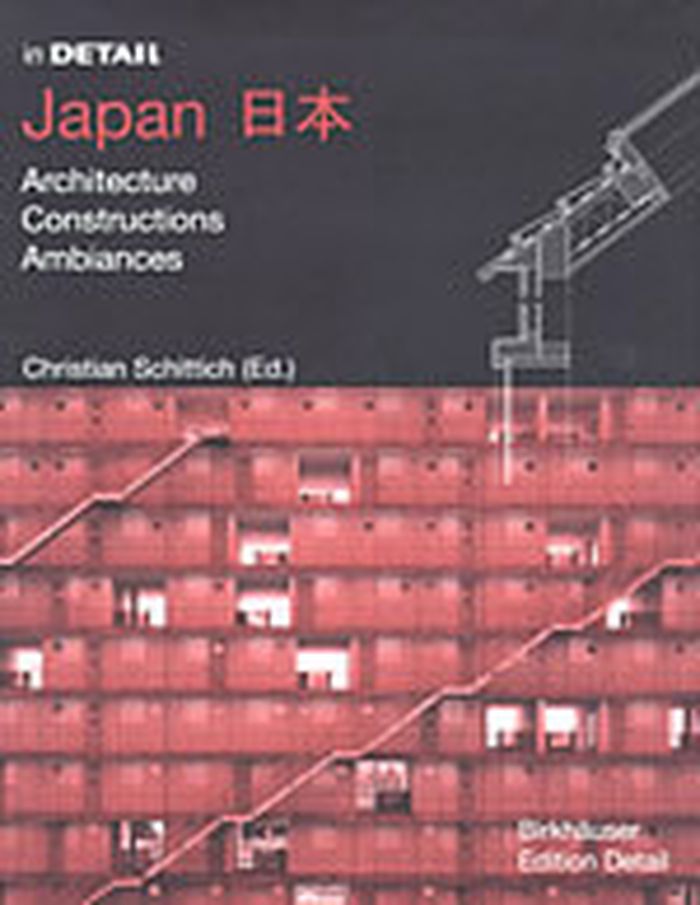
Japan is becoming a popular travel destination for more and more architects today. With its wide variety of architecture, it is both a source of fascination and inspiration. Over a number of years, the review Detail has been consistently documenting the construction activities which have taken place in Japan, and this book draws on the best of their experience and connections to present and analyse with plans and details the most interesting buildings from various architectural trends in contemporary Japan, including Ando's Museum for Contemporary Art in Naoshima, Toyo Ito's Mediathek, a residential building by Kazuyo Sejima, and a temple gallery in Kyoto by Takashi Yamaguchi. Introductory essays discuss the developments in Japanese architecture, and together with portraits of not only well-known Japanese architects and offices, but also young offices such as Atelier Bow Wow, this volume provides a stimulating discussion of current Japanese building in the context of traditional architecture.
In detail : Japan - architecture, constructions, ambiances
Actions:
Price:
$108.00
(available to order)
Summary:
Japan is becoming a popular travel destination for more and more architects today. With its wide variety of architecture, it is both a source of fascination and inspiration. Over a number of years, the review Detail has been consistently documenting the construction activities which have taken place in Japan, and this book draws on the best of their experience and connections to present and analyse with plans and details the most interesting buildings from various architectural trends in contemporary Japan, including Ando's Museum for Contemporary Art in Naoshima, Toyo Ito's Mediathek, a residential building by Kazuyo Sejima, and a temple gallery in Kyoto by Takashi Yamaguchi. Introductory essays discuss the developments in Japanese architecture, and together with portraits of not only well-known Japanese architects and offices, but also young offices such as Atelier Bow Wow, this volume provides a stimulating discussion of current Japanese building in the context of traditional architecture.
Form:
books
books
Publication:
October 2002, München
October 2002, München
Subject:
Contemporary Asian Architecture
Contemporary Asian Architecture
Form:
books
books
Actions:
Price:
$43.75
(available to order)
Summary:
Between 1937 and 1938, garden designer Christopher Tunnard published a series of articles in the British Architectural Review that rejected the prevailing English landscape style. Inspired by the principles of Modernist art and Japanese aesthetics, Tunnard called for a "new technique" in garden design that emphasized an integration of form and purpose. Tunnard's magazine(...)
$43.75
(available to order)
Summary:
Between 1937 and 1938, garden designer Christopher Tunnard published a series of articles in the British Architectural Review that rejected the prevailing English landscape style. Inspired by the principles of Modernist art and Japanese aesthetics, Tunnard called for a "new technique" in garden design that emphasized an integration of form and purpose. Tunnard's magazine(...)
Title:
Gardens in the modern landscape
Actions:
Price:
$43.75
(available to order)
Summary:
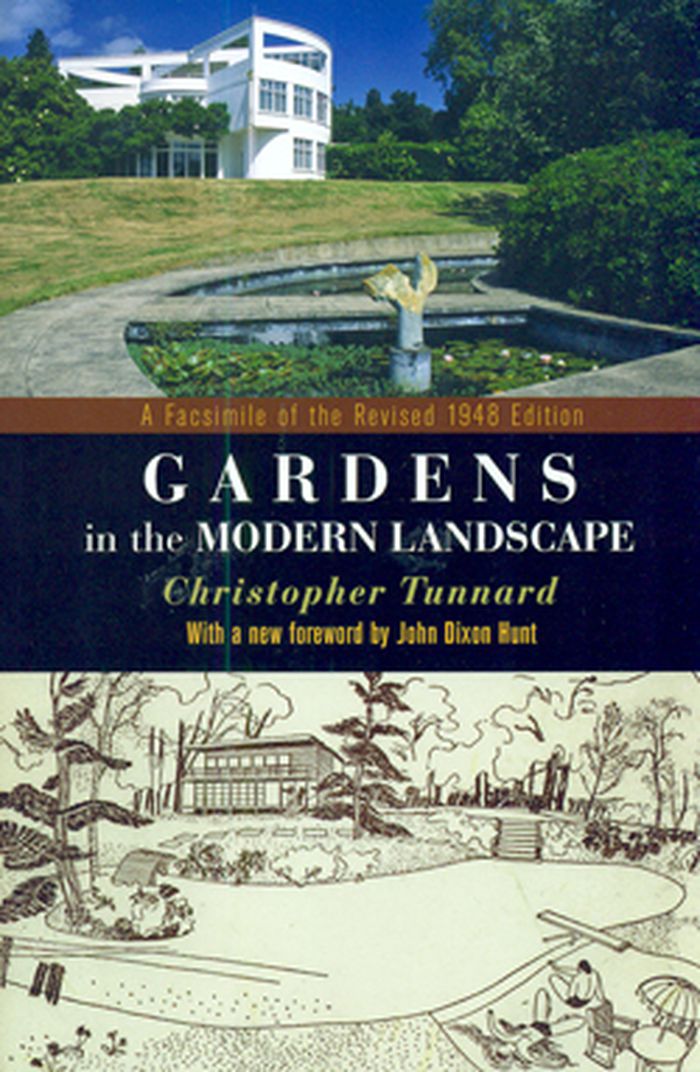
Between 1937 and 1938, garden designer Christopher Tunnard published a series of articles in the British Architectural Review that rejected the prevailing English landscape style. Inspired by the principles of Modernist art and Japanese aesthetics, Tunnard called for a "new technique" in garden design that emphasized an integration of form and purpose. Tunnard's magazine pieces were republished in book form as Gardens in the Modern Landscape in 1938, and a revised second edition was issued a decade later. Taken together, these articles constituted a manifesto for the modern garden, its influence evident in the work of such figures as Lawrence Halprin, Philip Johnson, and Edward Larrabee Barnes. Long out of print, the book is here reissued in a facsimile of the 1948 edition, accompanied by a contextualizing foreword by John Dixon Hunt.
Gardens in the modern landscape
Actions:
Price:
$43.75
(available to order)
Summary:
Between 1937 and 1938, garden designer Christopher Tunnard published a series of articles in the British Architectural Review that rejected the prevailing English landscape style. Inspired by the principles of Modernist art and Japanese aesthetics, Tunnard called for a "new technique" in garden design that emphasized an integration of form and purpose. Tunnard's magazine pieces were republished in book form as Gardens in the Modern Landscape in 1938, and a revised second edition was issued a decade later. Taken together, these articles constituted a manifesto for the modern garden, its influence evident in the work of such figures as Lawrence Halprin, Philip Johnson, and Edward Larrabee Barnes. Long out of print, the book is here reissued in a facsimile of the 1948 edition, accompanied by a contextualizing foreword by John Dixon Hunt.
Form:
books
books
Publication:
June 2014
June 2014
Subject:
Landscape Theory
Landscape Theory
Form:
books
books
Actions:
Price:
$39.95
(available to order)
Summary:
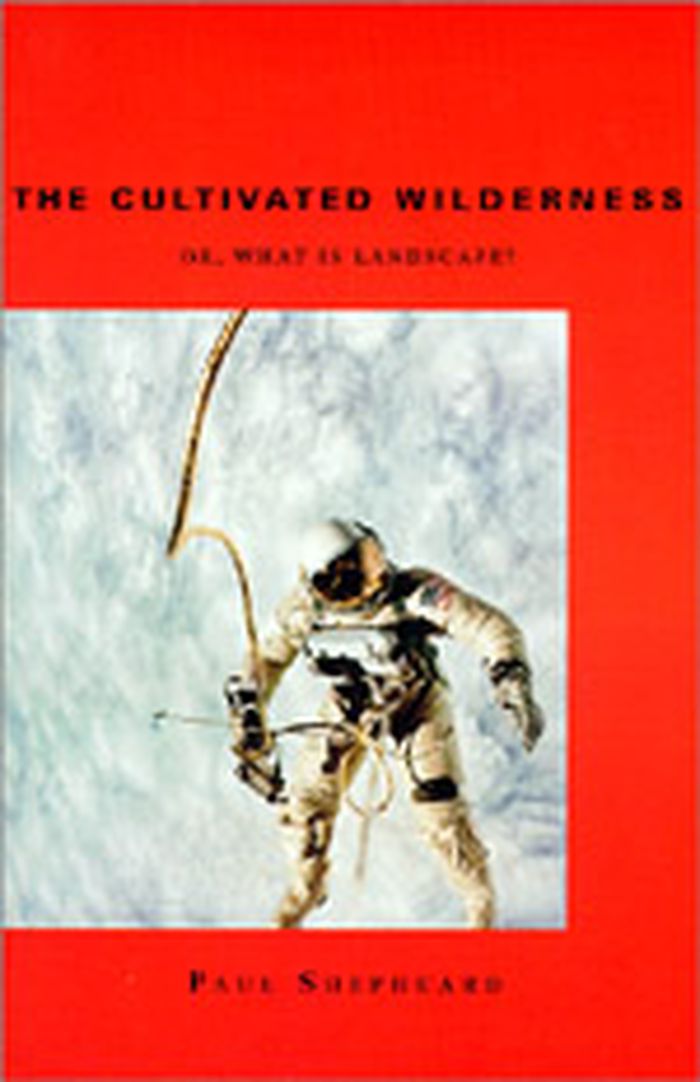
Paul Shepheard's previous book, What is Architecture?, was about making real, material things in the world -- landscapes, buildings, and machines. The Cultivated Wilderness is about those landscapes, and about the strategies that govern what we've done in shaping them.In the author's words, this book is about "seeing things that are too big to see." His emphasis on(...)
$39.95
(available to order)
Summary:
Paul Shepheard's previous book, What is Architecture?, was about making real, material things in the world -- landscapes, buildings, and machines. The Cultivated Wilderness is about those landscapes, and about the strategies that govern what we've done in shaping them.In the author's words, this book is about "seeing things that are too big to see." His emphasis on(...)
Title:
The cultivated wilderness or, what is landscape?
Actions:
Price:
$39.95
(available to order)
Summary:
Paul Shepheard's previous book, What is Architecture?, was about making real, material things in the world -- landscapes, buildings, and machines. The Cultivated Wilderness is about those landscapes, and about the strategies that govern what we've done in shaping them.In the author's words, this book is about "seeing things that are too big to see." His emphasis on strategy makes landscape fundamental -- he says that every architectural move is set in a landscape. Norman England, for example, was constructed as a network of strong points, in a strategy of occupation. The eighteenth-century grid cities of the New World reflect a strategy of reason. Our current strategy is the economic exploitation of the Earth, an intricately woven blanket of commerce that covers up a multitude of other possibilities, many other ways to treat the surface of the globe -- some of which are the landscapes revealed in this book.In a series of first-person narratives, reminiscent of his last book, the author pairs six landscapes, in order of descending scale from global to local, from the seven wonders of the ancient world to the condensed destruction of World War I's Western Front. In an engaging style, Shepheard takes the reader on an odyssey through these landscapes, meeting people and seeing places. He states that now, at the end of a century in which the appropriate landscape was sought but never found, the strategy of turning the land to profit is under review -- and offers this book as his contribution to that review.
The cultivated wilderness or, what is landscape?
Actions:
Price:
$39.95
(available to order)
Summary:
Paul Shepheard's previous book, What is Architecture?, was about making real, material things in the world -- landscapes, buildings, and machines. The Cultivated Wilderness is about those landscapes, and about the strategies that govern what we've done in shaping them.In the author's words, this book is about "seeing things that are too big to see." His emphasis on strategy makes landscape fundamental -- he says that every architectural move is set in a landscape. Norman England, for example, was constructed as a network of strong points, in a strategy of occupation. The eighteenth-century grid cities of the New World reflect a strategy of reason. Our current strategy is the economic exploitation of the Earth, an intricately woven blanket of commerce that covers up a multitude of other possibilities, many other ways to treat the surface of the globe -- some of which are the landscapes revealed in this book.In a series of first-person narratives, reminiscent of his last book, the author pairs six landscapes, in order of descending scale from global to local, from the seven wonders of the ancient world to the condensed destruction of World War I's Western Front. In an engaging style, Shepheard takes the reader on an odyssey through these landscapes, meeting people and seeing places. He states that now, at the end of a century in which the appropriate landscape was sought but never found, the strategy of turning the land to profit is under review -- and offers this book as his contribution to that review.
Form:
books
books
Publication:
March 1997, Cambridge, Mass.
March 1997, Cambridge, Mass.
Subject:
Landscape Theory
Landscape Theory
Form:
books
books
Title:
Renzo Piano: Piece by piece
Renzo Piano: Piece by piece
Actions:
Price:
$30.95
(available to order)
Summary:
Renzo Piano has worked, designed, built, dreamt and taught around the globe. He is the recipient of the Pritzker Architecture Prize, the Kyoto Prize, the Sonning Prize and the AIA Gold Medal. Looking over a twenty-year time span, we see in Piano's work a picture of differentiated experiences based on a coherent line of research. The book takes the form of a catalog, and(...)
$30.95
(available to order)
Summary:
Renzo Piano has worked, designed, built, dreamt and taught around the globe. He is the recipient of the Pritzker Architecture Prize, the Kyoto Prize, the Sonning Prize and the AIA Gold Medal. Looking over a twenty-year time span, we see in Piano's work a picture of differentiated experiences based on a coherent line of research. The book takes the form of a catalog, and(...)
Title:
Renzo Piano: Piece by piece
Actions:
Price:
$30.95
(available to order)
Summary:
Renzo Piano has worked, designed, built, dreamt and taught around the globe. He is the recipient of the Pritzker Architecture Prize, the Kyoto Prize, the Sonning Prize and the AIA Gold Medal. Looking over a twenty-year time span, we see in Piano's work a picture of differentiated experiences based on a coherent line of research. The book takes the form of a catalog, and for this reason is arranged in three parts: a collection of short essays, a critical illustrative review and a systematic text.
Renzo Piano: Piece by piece
Actions:
Price:
$30.95
(available to order)
Summary:
Renzo Piano has worked, designed, built, dreamt and taught around the globe. He is the recipient of the Pritzker Architecture Prize, the Kyoto Prize, the Sonning Prize and the AIA Gold Medal. Looking over a twenty-year time span, we see in Piano's work a picture of differentiated experiences based on a coherent line of research. The book takes the form of a catalog, and for this reason is arranged in three parts: a collection of short essays, a critical illustrative review and a systematic text.
Form:
books
books
Publication:
September 1989
September 1989
Subject:
Architecture Monographs
Architecture Monographs
Form:
books
books
Actions:
Holdings:
Description:
xvi, 336 pages : illustrations, maps ; 26 cm
Description:
xvi, 336 pages : illustrations, maps ; 26 cm
Author:
Subject:
Publication:
Oxford : Oxbow Books, 2008.
Oxford : Oxbow Books, 2008.
Title:
Landscapes, documents and maps : villages in northern England and beyond, AD 900-1250 / Brian K. Roberts.
Actions:
Holdings:
Description:
xvi, 336 pages : illustrations, maps ; 26 cm
Landscapes, documents and maps : villages in northern England and beyond, AD 900-1250 / Brian K. Roberts.
Actions:
Holdings:
Description:
xvi, 336 pages : illustrations, maps ; 26 cm
Form:
books
books
Publication:
Oxford : Oxbow Books, 2008.
Oxford : Oxbow Books, 2008.
Author:
Subject:
Form:
archives
archives
Actions:
Holdings:
Description:
3.5 l.m. of textual records, 0.7 l.m. of photographic materials, 297 film and video reels and cassettes, 108 drawings, prints and collages, 36 audio reels, 23 audio...
Description:
3.5 l.m. of textual records, 0.7 l.m. of photographic materials, 297 film and video reels and cassettes, 108 drawings, prints and collages, 36 audio reels, 23 audio...
Author:
Subject:
Title:
Gordon Matta-Clark collection, 1914-2008.
Actions:
Holdings:
Description:
3.5 l.m. of textual records, 0.7 l.m. of photographic materials, 297 film and video reels and cassettes, 108 drawings, prints and collages, 36 audio reels, 23 audio...
Gordon Matta-Clark collection, 1914-2008.
Actions:
Holdings:
Description:
3.5 l.m. of textual records, 0.7 l.m. of photographic materials, 297 film and video reels and cassettes, 108 drawings, prints and collages, 36 audio reels, 23 audio...
Form:
archives
archives
Author:
Subject:


