


4204 Results
Level of archival description:
Series
Series
Title:
Architectural projects
Architectural projects
Reference number:
AP164.S1
Description:
This series documents the architectural projects of Ábalos&Herreros from 1986 to 2006 and represents over 150 projects, including exhibitions. The firm worked on a wide variety of projects from commercial and residential structures to libraries and sewage treatment plants. The firm's design process was research oriented and involved conversations between Ábalos and Herreros, office collaborators, artists who partook in the projects, as well as other architects. Several projects found in this series were developed in collaboration with other architects including: José Manuel Ábalos; Salvador Pérez Arroyo; Filippo Costi; Ángel Jaramillo Esteban; Javier Fresneda; Eduardo Horta; Martín Marciano; Ángel Jaramillo Sánchez; Renata Sentkiewicz; and Héctor Vigliecca. Most projects were designed for the city of Madrid and the Community of Madrid. Projects were also developed for other sites in Spain, including the Canary Islands, as well as for sites in Portugal, Germany, the United States, and Brazil. Ábalos & Herreros often created new projects from the firm's existing work. The firm also identified their projects numerically. These identification numbers are documented at the project series level for each project. Among the materials documenting the firm's projects are conceptual, design development, presentation, and working drawings, as well as panels. There are also several CAD drawings and prints of born digital drawings. Documenting the firms conceptual process are collages and photomontages. Photographic materials included in this series depict project sites and built projects. Also included are a variety of research reference materials, correspondence, project documentation, and project submissions. Although creating models was not a common practice for the firm, there are a few project series which include models.
AP164.S1
Description:
This series documents the architectural projects of Ábalos&Herreros from 1986 to 2006 and represents over 150 projects, including exhibitions. The firm worked on a wide variety of projects from commercial and residential structures to libraries and sewage treatment plants. The firm's design process was research oriented and involved conversations between Ábalos and Herreros, office collaborators, artists who partook in the projects, as well as other architects. Several projects found in this series were developed in collaboration with other architects including: José Manuel Ábalos; Salvador Pérez Arroyo; Filippo Costi; Ángel Jaramillo Esteban; Javier Fresneda; Eduardo Horta; Martín Marciano; Ángel Jaramillo Sánchez; Renata Sentkiewicz; and Héctor Vigliecca. Most projects were designed for the city of Madrid and the Community of Madrid. Projects were also developed for other sites in Spain, including the Canary Islands, as well as for sites in Portugal, Germany, the United States, and Brazil. Ábalos & Herreros often created new projects from the firm's existing work. The firm also identified their projects numerically. These identification numbers are documented at the project series level for each project. Among the materials documenting the firm's projects are conceptual, design development, presentation, and working drawings, as well as panels. There are also several CAD drawings and prints of born digital drawings. Documenting the firms conceptual process are collages and photomontages. Photographic materials included in this series depict project sites and built projects. Also included are a variety of research reference materials, correspondence, project documentation, and project submissions. Although creating models was not a common practice for the firm, there are a few project series which include models.
People:
Date:
1953-2009
1953-2009
Title:
Architectural projects
Actions:
AP164.S1
Description:
This series documents the architectural projects of Ábalos&Herreros from 1986 to 2006 and represents over 150 projects, including exhibitions. The firm worked on a wide variety of projects from commercial and residential structures to libraries and sewage treatment plants. The firm's design process was research oriented and involved conversations between Ábalos and Herreros, office collaborators, artists who partook in the projects, as well as other architects. Several projects found in this series were developed in collaboration with other architects including: José Manuel Ábalos; Salvador Pérez Arroyo; Filippo Costi; Ángel Jaramillo Esteban; Javier Fresneda; Eduardo Horta; Martín Marciano; Ángel Jaramillo Sánchez; Renata Sentkiewicz; and Héctor Vigliecca. Most projects were designed for the city of Madrid and the Community of Madrid. Projects were also developed for other sites in Spain, including the Canary Islands, as well as for sites in Portugal, Germany, the United States, and Brazil. Ábalos & Herreros often created new projects from the firm's existing work. The firm also identified their projects numerically. These identification numbers are documented at the project series level for each project. Among the materials documenting the firm's projects are conceptual, design development, presentation, and working drawings, as well as panels. There are also several CAD drawings and prints of born digital drawings. Documenting the firms conceptual process are collages and photomontages. Photographic materials included in this series depict project sites and built projects. Also included are a variety of research reference materials, correspondence, project documentation, and project submissions. Although creating models was not a common practice for the firm, there are a few project series which include models.
Architectural projects
Actions:
AP164.S1
Description:
This series documents the architectural projects of Ábalos&Herreros from 1986 to 2006 and represents over 150 projects, including exhibitions. The firm worked on a wide variety of projects from commercial and residential structures to libraries and sewage treatment plants. The firm's design process was research oriented and involved conversations between Ábalos and Herreros, office collaborators, artists who partook in the projects, as well as other architects. Several projects found in this series were developed in collaboration with other architects including: José Manuel Ábalos; Salvador Pérez Arroyo; Filippo Costi; Ángel Jaramillo Esteban; Javier Fresneda; Eduardo Horta; Martín Marciano; Ángel Jaramillo Sánchez; Renata Sentkiewicz; and Héctor Vigliecca. Most projects were designed for the city of Madrid and the Community of Madrid. Projects were also developed for other sites in Spain, including the Canary Islands, as well as for sites in Portugal, Germany, the United States, and Brazil. Ábalos & Herreros often created new projects from the firm's existing work. The firm also identified their projects numerically. These identification numbers are documented at the project series level for each project. Among the materials documenting the firm's projects are conceptual, design development, presentation, and working drawings, as well as panels. There are also several CAD drawings and prints of born digital drawings. Documenting the firms conceptual process are collages and photomontages. Photographic materials included in this series depict project sites and built projects. Also included are a variety of research reference materials, correspondence, project documentation, and project submissions. Although creating models was not a common practice for the firm, there are a few project series which include models.
Level of archival description:
Series
Series
Date:
1953-2009
1953-2009
People:
Title:
Fried. Krupp Essen A/R
Fried. Krupp Essen A/R
Actions:
Reference number:
PH1983:0485
Description:
Portfolio of photographs showing cast-steel muzzle-loading guns and artillery, fortress and siege mortars, coast and landing guns, workshops, machinery and company products, manufactured by the Krupp armament plant in Essen/Ruhr river valley (in Prussia). This portfolio shows different models of guns and canons, locomotive wheels, exterior views of the factory with large chimneys and line-ups of workers, a panorama showing the factory complex and dwellings built for the workers, mines, inside views of the factory with machinery and two maps : one of the layout of the grounds that is colour-coded to indicate growth between 1861 and 1871 - Rhenish Prussia (Rhein provinz), and one of the world distribution of Krupp representatives - District of Essen, Europe, Germany and the World. This portfolio was compiled and probably sent, like many others by the company, to Krupp Cast Steel Works agents throughout Europe or used as a presentation catalogue for international expositions.
PH1983:0485
Description:
Portfolio of photographs showing cast-steel muzzle-loading guns and artillery, fortress and siege mortars, coast and landing guns, workshops, machinery and company products, manufactured by the Krupp armament plant in Essen/Ruhr river valley (in Prussia). This portfolio shows different models of guns and canons, locomotive wheels, exterior views of the factory with large chimneys and line-ups of workers, a panorama showing the factory complex and dwellings built for the workers, mines, inside views of the factory with machinery and two maps : one of the layout of the grounds that is colour-coded to indicate growth between 1861 and 1871 - Rhenish Prussia (Rhein provinz), and one of the world distribution of Krupp representatives - District of Essen, Europe, Germany and the World. This portfolio was compiled and probably sent, like many others by the company, to Krupp Cast Steel Works agents throughout Europe or used as a presentation catalogue for international expositions.
People:
Subject:
engineering
engineering
Date:
between ca.1861 and ca. 1872
between ca.1861 and ca. 1872
Title:
Fried. Krupp Essen A/R
Actions:
PH1983:0485
Description:
Portfolio of photographs showing cast-steel muzzle-loading guns and artillery, fortress and siege mortars, coast and landing guns, workshops, machinery and company products, manufactured by the Krupp armament plant in Essen/Ruhr river valley (in Prussia). This portfolio shows different models of guns and canons, locomotive wheels, exterior views of the factory with large chimneys and line-ups of workers, a panorama showing the factory complex and dwellings built for the workers, mines, inside views of the factory with machinery and two maps : one of the layout of the grounds that is colour-coded to indicate growth between 1861 and 1871 - Rhenish Prussia (Rhein provinz), and one of the world distribution of Krupp representatives - District of Essen, Europe, Germany and the World. This portfolio was compiled and probably sent, like many others by the company, to Krupp Cast Steel Works agents throughout Europe or used as a presentation catalogue for international expositions.
Fried. Krupp Essen A/R
Actions:
PH1983:0485
Description:
Portfolio of photographs showing cast-steel muzzle-loading guns and artillery, fortress and siege mortars, coast and landing guns, workshops, machinery and company products, manufactured by the Krupp armament plant in Essen/Ruhr river valley (in Prussia). This portfolio shows different models of guns and canons, locomotive wheels, exterior views of the factory with large chimneys and line-ups of workers, a panorama showing the factory complex and dwellings built for the workers, mines, inside views of the factory with machinery and two maps : one of the layout of the grounds that is colour-coded to indicate growth between 1861 and 1871 - Rhenish Prussia (Rhein provinz), and one of the world distribution of Krupp representatives - District of Essen, Europe, Germany and the World. This portfolio was compiled and probably sent, like many others by the company, to Krupp Cast Steel Works agents throughout Europe or used as a presentation catalogue for international expositions.
Date:
between ca.1861 and ca. 1872
between ca.1861 and ca. 1872
People:
Subject:
engineering
engineering
Form:
drawings, photographs
Quantity:
131 photograph(s) photomechanical print
drawings, photographs
Quantity:
131 photograph(s) photomechanical print
Title:
V.S. Balikhin Archive
V.S. Balikhin Archive
Actions:
Reference number:
PH1998:0020:001-131
Description:
- This archive which was collected by the Soviet architect, V.S. Balikhin (1893-1953), includes 129 views of cities, towns, and/or projects designed by various architects from 1923 through 1935, one photograph of a perspective drawing (PH11998:0020:112) and one magazine article by Balikhin (PH1998:0020:131). The photographer(s) of this archive have not been determined. -- There are 63 views of subjects in Moscow (PH1998:0020:001-028; PH1998:0020:033-067), mostly of housing, and these include: 20 views of the Dubrovka complex; 16 views of the Usachevka complex; 6 views of the Shabolovka complex; 3 views of the Dangauerovka complex; 2 views of the Serpukhovskii complex; 2 views of the Sharikopodshipnik [Bearing] plant complex; 1 view of the AMO plant complex; 2 views of the house-commune of the students of the Textile Institute; 2 views of the housing complex at 45/51 Bol'shaia Pirogovskaia Street; and 1 view of a student dormitory complex on Donskoi Val. Other subjects in Moscow include 3 views of the street decorations for the celebration of the 17th anniversary of the October Revolution, 2 views of Sverdlova Square, and one view of the Foto Insnab building, a market, and a park. -- There are 4 views of the village of Kozhukhovo near Moscow (PH1998:0020:029-032) including views of houses, barracks, a summer stage, and tents. -- The 18 views of Sverdlovsk (now Ekaterinburg, Russia) (PH1998:0020:113-130) include 7 views of 1905 Goda Square showing the various buildings around the square; 3 views of the Second House of Soviets; 2 views of the monument to Iakov Sverdlov, one with the "Chekist City" housing complex in the background (now Hotel Iset'); 2 views of the water sports station Dinamo; and one view of the Verkhne-Isetskii metalworking plant, the District Trade Union Soviet garden, the Higher Communist Agricultural School in Narodnoi Mesti Square, and a collage of views of a city square in 1914 and 1933. -- The 17 views of Magnitogorsk (PH1998:0020:096-112) include the earth-made shack constructed by the first inhabitants of the area; a city view; 14 views of the First Block showing mostly housing; and one photograph of a perspective drawing for the Second Block. -- The 10 views of Novosibirsk (PH1998:0020:086-095) include housing, government office buildings, a multipurpose building, a Palace of Labor, and the Sibir' Hotel. -- There are 14 photographs of subjects in cities and towns in Kemerovskaia oblast', a subdivision of southern Russia in Asia, and these include: 6 views of Prokopyevsk (PH1998:0020:072-077) showing clubs or palaces of culture and housing; 4 views of Kemerovo (PH1998:0020:068-071) showing the Palace of Labor, housing, and general views of the city; 3 views of Leninsk-Kuznetskiy (PH1998:0020:078-080) showing a house, clubs, and a playground; 1 view of Kuznetsk (now Novokuznetsk) (PH1998:0020:081) showing housing; and 3 views of Stalinsk (now Novokuznetsk) (PH1998:0020:082-085) showing housing and an hotel.
PH1998:0020:001-131
Description:
- This archive which was collected by the Soviet architect, V.S. Balikhin (1893-1953), includes 129 views of cities, towns, and/or projects designed by various architects from 1923 through 1935, one photograph of a perspective drawing (PH11998:0020:112) and one magazine article by Balikhin (PH1998:0020:131). The photographer(s) of this archive have not been determined. -- There are 63 views of subjects in Moscow (PH1998:0020:001-028; PH1998:0020:033-067), mostly of housing, and these include: 20 views of the Dubrovka complex; 16 views of the Usachevka complex; 6 views of the Shabolovka complex; 3 views of the Dangauerovka complex; 2 views of the Serpukhovskii complex; 2 views of the Sharikopodshipnik [Bearing] plant complex; 1 view of the AMO plant complex; 2 views of the house-commune of the students of the Textile Institute; 2 views of the housing complex at 45/51 Bol'shaia Pirogovskaia Street; and 1 view of a student dormitory complex on Donskoi Val. Other subjects in Moscow include 3 views of the street decorations for the celebration of the 17th anniversary of the October Revolution, 2 views of Sverdlova Square, and one view of the Foto Insnab building, a market, and a park. -- There are 4 views of the village of Kozhukhovo near Moscow (PH1998:0020:029-032) including views of houses, barracks, a summer stage, and tents. -- The 18 views of Sverdlovsk (now Ekaterinburg, Russia) (PH1998:0020:113-130) include 7 views of 1905 Goda Square showing the various buildings around the square; 3 views of the Second House of Soviets; 2 views of the monument to Iakov Sverdlov, one with the "Chekist City" housing complex in the background (now Hotel Iset'); 2 views of the water sports station Dinamo; and one view of the Verkhne-Isetskii metalworking plant, the District Trade Union Soviet garden, the Higher Communist Agricultural School in Narodnoi Mesti Square, and a collage of views of a city square in 1914 and 1933. -- The 17 views of Magnitogorsk (PH1998:0020:096-112) include the earth-made shack constructed by the first inhabitants of the area; a city view; 14 views of the First Block showing mostly housing; and one photograph of a perspective drawing for the Second Block. -- The 10 views of Novosibirsk (PH1998:0020:086-095) include housing, government office buildings, a multipurpose building, a Palace of Labor, and the Sibir' Hotel. -- There are 14 photographs of subjects in cities and towns in Kemerovskaia oblast', a subdivision of southern Russia in Asia, and these include: 6 views of Prokopyevsk (PH1998:0020:072-077) showing clubs or palaces of culture and housing; 4 views of Kemerovo (PH1998:0020:068-071) showing the Palace of Labor, housing, and general views of the city; 3 views of Leninsk-Kuznetskiy (PH1998:0020:078-080) showing a house, clubs, and a playground; 1 view of Kuznetsk (now Novokuznetsk) (PH1998:0020:081) showing housing; and 3 views of Stalinsk (now Novokuznetsk) (PH1998:0020:082-085) showing housing and an hotel.
People:
Subject:
architecture, portrait, sculpture
architecture, portrait, sculpture
Date:
published before 15 September 1936
published before 15 September 1936
Title:
V.S. Balikhin Archive
Actions:
PH1998:0020:001-131
Description:
- This archive which was collected by the Soviet architect, V.S. Balikhin (1893-1953), includes 129 views of cities, towns, and/or projects designed by various architects from 1923 through 1935, one photograph of a perspective drawing (PH11998:0020:112) and one magazine article by Balikhin (PH1998:0020:131). The photographer(s) of this archive have not been determined. -- There are 63 views of subjects in Moscow (PH1998:0020:001-028; PH1998:0020:033-067), mostly of housing, and these include: 20 views of the Dubrovka complex; 16 views of the Usachevka complex; 6 views of the Shabolovka complex; 3 views of the Dangauerovka complex; 2 views of the Serpukhovskii complex; 2 views of the Sharikopodshipnik [Bearing] plant complex; 1 view of the AMO plant complex; 2 views of the house-commune of the students of the Textile Institute; 2 views of the housing complex at 45/51 Bol'shaia Pirogovskaia Street; and 1 view of a student dormitory complex on Donskoi Val. Other subjects in Moscow include 3 views of the street decorations for the celebration of the 17th anniversary of the October Revolution, 2 views of Sverdlova Square, and one view of the Foto Insnab building, a market, and a park. -- There are 4 views of the village of Kozhukhovo near Moscow (PH1998:0020:029-032) including views of houses, barracks, a summer stage, and tents. -- The 18 views of Sverdlovsk (now Ekaterinburg, Russia) (PH1998:0020:113-130) include 7 views of 1905 Goda Square showing the various buildings around the square; 3 views of the Second House of Soviets; 2 views of the monument to Iakov Sverdlov, one with the "Chekist City" housing complex in the background (now Hotel Iset'); 2 views of the water sports station Dinamo; and one view of the Verkhne-Isetskii metalworking plant, the District Trade Union Soviet garden, the Higher Communist Agricultural School in Narodnoi Mesti Square, and a collage of views of a city square in 1914 and 1933. -- The 17 views of Magnitogorsk (PH1998:0020:096-112) include the earth-made shack constructed by the first inhabitants of the area; a city view; 14 views of the First Block showing mostly housing; and one photograph of a perspective drawing for the Second Block. -- The 10 views of Novosibirsk (PH1998:0020:086-095) include housing, government office buildings, a multipurpose building, a Palace of Labor, and the Sibir' Hotel. -- There are 14 photographs of subjects in cities and towns in Kemerovskaia oblast', a subdivision of southern Russia in Asia, and these include: 6 views of Prokopyevsk (PH1998:0020:072-077) showing clubs or palaces of culture and housing; 4 views of Kemerovo (PH1998:0020:068-071) showing the Palace of Labor, housing, and general views of the city; 3 views of Leninsk-Kuznetskiy (PH1998:0020:078-080) showing a house, clubs, and a playground; 1 view of Kuznetsk (now Novokuznetsk) (PH1998:0020:081) showing housing; and 3 views of Stalinsk (now Novokuznetsk) (PH1998:0020:082-085) showing housing and an hotel.
V.S. Balikhin Archive
Actions:
PH1998:0020:001-131
Description:
- This archive which was collected by the Soviet architect, V.S. Balikhin (1893-1953), includes 129 views of cities, towns, and/or projects designed by various architects from 1923 through 1935, one photograph of a perspective drawing (PH11998:0020:112) and one magazine article by Balikhin (PH1998:0020:131). The photographer(s) of this archive have not been determined. -- There are 63 views of subjects in Moscow (PH1998:0020:001-028; PH1998:0020:033-067), mostly of housing, and these include: 20 views of the Dubrovka complex; 16 views of the Usachevka complex; 6 views of the Shabolovka complex; 3 views of the Dangauerovka complex; 2 views of the Serpukhovskii complex; 2 views of the Sharikopodshipnik [Bearing] plant complex; 1 view of the AMO plant complex; 2 views of the house-commune of the students of the Textile Institute; 2 views of the housing complex at 45/51 Bol'shaia Pirogovskaia Street; and 1 view of a student dormitory complex on Donskoi Val. Other subjects in Moscow include 3 views of the street decorations for the celebration of the 17th anniversary of the October Revolution, 2 views of Sverdlova Square, and one view of the Foto Insnab building, a market, and a park. -- There are 4 views of the village of Kozhukhovo near Moscow (PH1998:0020:029-032) including views of houses, barracks, a summer stage, and tents. -- The 18 views of Sverdlovsk (now Ekaterinburg, Russia) (PH1998:0020:113-130) include 7 views of 1905 Goda Square showing the various buildings around the square; 3 views of the Second House of Soviets; 2 views of the monument to Iakov Sverdlov, one with the "Chekist City" housing complex in the background (now Hotel Iset'); 2 views of the water sports station Dinamo; and one view of the Verkhne-Isetskii metalworking plant, the District Trade Union Soviet garden, the Higher Communist Agricultural School in Narodnoi Mesti Square, and a collage of views of a city square in 1914 and 1933. -- The 17 views of Magnitogorsk (PH1998:0020:096-112) include the earth-made shack constructed by the first inhabitants of the area; a city view; 14 views of the First Block showing mostly housing; and one photograph of a perspective drawing for the Second Block. -- The 10 views of Novosibirsk (PH1998:0020:086-095) include housing, government office buildings, a multipurpose building, a Palace of Labor, and the Sibir' Hotel. -- There are 14 photographs of subjects in cities and towns in Kemerovskaia oblast', a subdivision of southern Russia in Asia, and these include: 6 views of Prokopyevsk (PH1998:0020:072-077) showing clubs or palaces of culture and housing; 4 views of Kemerovo (PH1998:0020:068-071) showing the Palace of Labor, housing, and general views of the city; 3 views of Leninsk-Kuznetskiy (PH1998:0020:078-080) showing a house, clubs, and a playground; 1 view of Kuznetsk (now Novokuznetsk) (PH1998:0020:081) showing housing; and 3 views of Stalinsk (now Novokuznetsk) (PH1998:0020:082-085) showing housing and an hotel.
Form:
drawings, photographs
Quantity:
131 photograph(s) photomechanical print
drawings, photographs
Quantity:
131 photograph(s) photomechanical print
Date:
published before 15 September 1936
published before 15 September 1936
People:
Subject:
architecture, portrait, sculpture
architecture, portrait, sculpture
Level of archival description:
Project
Project
Reference number:
AP075.S1.1965.PR01
Description:
This project series documents Cornelia Hahn Oberlander's landscape project for the outdoor playground of the Children's Creative Centre. The Centre was part of the Canadian Federal Pavilion built for the Universal and International Exposition of 1967 (Expo 67), located at the south end of Notre-Dame Island in Montréal. Oberlander worked on this project from 1965-1966. She based her design on children's spontaneous exploration, to encourage self-motivation and creative play. The playground included a rolling terrain, looping paths, a wobble walk made of short logs embeded in the ground, a canal, and "giant wooden building pieces and a rocking boat in water replaced static sculptures". [1] The playground included a sand beach-like area with drifwood and plants to be used as play props. At the centre of the playground was a grass mound with an interior cave and a high wooden platform only reachable by a commando rope. A forty-foot long circulating water channel was situated in the east section of the playground and included two small islands linked by bridges, but was narrow enough to allow children to jump over it. The project series contains sketches, preliminary landscape concept plans, site plans, general landscape plans at different stages of design development, several sections and detail drawings for the playground's equipment and installations, and presentation drawings, including perspective views. The project series also contains architectural, electrical, and structural drawings of the Pavilion, which were provided to Oberlander for reference. Also included are photographs of the playground, research material on playgrounds, and articles and publications on the project, including Oberlander's writings, and publications on Expo '67. Source: [1] Herrington, Susan. Cornelia Hahn Oberlander: Making the Modern Landscape, University of Virginia Press, 2014, 304 pages. p. 106.
AP075.S1.1965.PR01
Description:
This project series documents Cornelia Hahn Oberlander's landscape project for the outdoor playground of the Children's Creative Centre. The Centre was part of the Canadian Federal Pavilion built for the Universal and International Exposition of 1967 (Expo 67), located at the south end of Notre-Dame Island in Montréal. Oberlander worked on this project from 1965-1966. She based her design on children's spontaneous exploration, to encourage self-motivation and creative play. The playground included a rolling terrain, looping paths, a wobble walk made of short logs embeded in the ground, a canal, and "giant wooden building pieces and a rocking boat in water replaced static sculptures". [1] The playground included a sand beach-like area with drifwood and plants to be used as play props. At the centre of the playground was a grass mound with an interior cave and a high wooden platform only reachable by a commando rope. A forty-foot long circulating water channel was situated in the east section of the playground and included two small islands linked by bridges, but was narrow enough to allow children to jump over it. The project series contains sketches, preliminary landscape concept plans, site plans, general landscape plans at different stages of design development, several sections and detail drawings for the playground's equipment and installations, and presentation drawings, including perspective views. The project series also contains architectural, electrical, and structural drawings of the Pavilion, which were provided to Oberlander for reference. Also included are photographs of the playground, research material on playgrounds, and articles and publications on the project, including Oberlander's writings, and publications on Expo '67. Source: [1] Herrington, Susan. Cornelia Hahn Oberlander: Making the Modern Landscape, University of Virginia Press, 2014, 304 pages. p. 106.
People:
Date:
1965-1971
1965-1971
Title:
Children's Creative Centre Playground, Canadian Federal Pavilion, Expo '67, Montréal, Québec (1965-1967)
Actions:
AP075.S1.1965.PR01
Description:
This project series documents Cornelia Hahn Oberlander's landscape project for the outdoor playground of the Children's Creative Centre. The Centre was part of the Canadian Federal Pavilion built for the Universal and International Exposition of 1967 (Expo 67), located at the south end of Notre-Dame Island in Montréal. Oberlander worked on this project from 1965-1966. She based her design on children's spontaneous exploration, to encourage self-motivation and creative play. The playground included a rolling terrain, looping paths, a wobble walk made of short logs embeded in the ground, a canal, and "giant wooden building pieces and a rocking boat in water replaced static sculptures". [1] The playground included a sand beach-like area with drifwood and plants to be used as play props. At the centre of the playground was a grass mound with an interior cave and a high wooden platform only reachable by a commando rope. A forty-foot long circulating water channel was situated in the east section of the playground and included two small islands linked by bridges, but was narrow enough to allow children to jump over it. The project series contains sketches, preliminary landscape concept plans, site plans, general landscape plans at different stages of design development, several sections and detail drawings for the playground's equipment and installations, and presentation drawings, including perspective views. The project series also contains architectural, electrical, and structural drawings of the Pavilion, which were provided to Oberlander for reference. Also included are photographs of the playground, research material on playgrounds, and articles and publications on the project, including Oberlander's writings, and publications on Expo '67. Source: [1] Herrington, Susan. Cornelia Hahn Oberlander: Making the Modern Landscape, University of Virginia Press, 2014, 304 pages. p. 106.
Children's Creative Centre Playground, Canadian Federal Pavilion, Expo '67, Montréal, Québec (1965-1967)
Actions:
AP075.S1.1965.PR01
Description:
This project series documents Cornelia Hahn Oberlander's landscape project for the outdoor playground of the Children's Creative Centre. The Centre was part of the Canadian Federal Pavilion built for the Universal and International Exposition of 1967 (Expo 67), located at the south end of Notre-Dame Island in Montréal. Oberlander worked on this project from 1965-1966. She based her design on children's spontaneous exploration, to encourage self-motivation and creative play. The playground included a rolling terrain, looping paths, a wobble walk made of short logs embeded in the ground, a canal, and "giant wooden building pieces and a rocking boat in water replaced static sculptures". [1] The playground included a sand beach-like area with drifwood and plants to be used as play props. At the centre of the playground was a grass mound with an interior cave and a high wooden platform only reachable by a commando rope. A forty-foot long circulating water channel was situated in the east section of the playground and included two small islands linked by bridges, but was narrow enough to allow children to jump over it. The project series contains sketches, preliminary landscape concept plans, site plans, general landscape plans at different stages of design development, several sections and detail drawings for the playground's equipment and installations, and presentation drawings, including perspective views. The project series also contains architectural, electrical, and structural drawings of the Pavilion, which were provided to Oberlander for reference. Also included are photographs of the playground, research material on playgrounds, and articles and publications on the project, including Oberlander's writings, and publications on Expo '67. Source: [1] Herrington, Susan. Cornelia Hahn Oberlander: Making the Modern Landscape, University of Virginia Press, 2014, 304 pages. p. 106.
Level of archival description:
Project
Project
Date:
1965-1971
1965-1971
People:
Form:
archives
Level of archival description:
Fonds
archives
Level of archival description:
Fonds
Actions:
Reference number:
AP176
Synopsis:
Karl Chu X PHYLUM project records, 1998-2014 (predominant 1998-2002), documents the development and design process of Chu’s project X PHYLUM. The archive consists exclusively of original born-digital material.
AP176
Synopsis:
Karl Chu X PHYLUM project records, 1998-2014 (predominant 1998-2002), documents the development and design process of Chu’s project X PHYLUM. The archive consists exclusively of original born-digital material.
People:
Date:
1998-2014
1998-2014
Title:
Karl Chu X Phylum project records
Actions:
AP176
Synopsis:
Karl Chu X PHYLUM project records, 1998-2014 (predominant 1998-2002), documents the development and design process of Chu’s project X PHYLUM. The archive consists exclusively of original born-digital material.
Karl Chu X Phylum project records
Actions:
AP176
Synopsis:
Karl Chu X PHYLUM project records, 1998-2014 (predominant 1998-2002), documents the development and design process of Chu’s project X PHYLUM. The archive consists exclusively of original born-digital material.
Form:
archives
Level of archival description:
Fonds
archives
Level of archival description:
Fonds
Date:
1998-2014
1998-2014
People:
Form:
events
events
Title:
Learning from... Rome
Learning from... Rome
Actions:
Description:
Filmmaker and photographer Armin Linke reveals the societal changes, cultural complexities, and beauty of contemporary Rome through two short films and architectural photographs from his archives. The first film focuses on a moment of natural choreography as some 100,000 starlings fly against the backdrop of the city of Rome. Linke presents a selection of photographs,(...)
Filmmaker and photographer Armin Linke reveals the societal changes, cultural complexities, and beauty of contemporary Rome through two short films and architectural photographs from his archives. The first film focuses on a moment of natural choreography as some 100,000 starlings fly against the backdrop of the city of Rome. Linke presents a selection of photographs,(...)
Location:
Paul Desmarais Theatre
Paul Desmarais Theatre
Date:
5 March 2009
5 March 2009
Title:
Learning from... Rome
Actions:
Description:
Filmmaker and photographer Armin Linke reveals the societal changes, cultural complexities, and beauty of contemporary Rome through two short films and architectural photographs from his archives. The first film focuses on a moment of natural choreography as some 100,000 starlings fly against the backdrop of the city of Rome. Linke presents a selection of photographs,(...)
Learning from... Rome
Actions:
Description:
Filmmaker and photographer Armin Linke reveals the societal changes, cultural complexities, and beauty of contemporary Rome through two short films and architectural photographs from his archives. The first film focuses on a moment of natural choreography as some 100,000 starlings fly against the backdrop of the city of Rome. Linke presents a selection of photographs,(...)
Form:
events
events
Date:
5 March 2009
5 March 2009
Location:
Paul Desmarais Theatre
Paul Desmarais Theatre
Form:
drawings
drawings
Title:
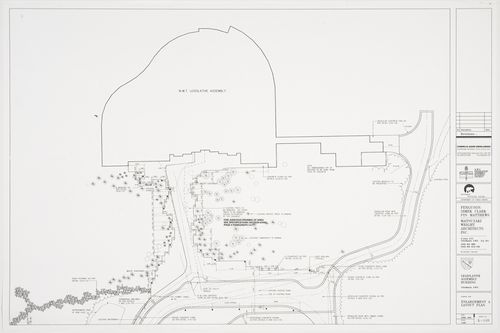
Layout plan, Northwest Territories Legislative Assembly Building, Yellowknife, Northwest Territories
Layout plan, Northwest Territories Legislative Assembly Building, Yellowknife, Northwest Territories
Actions:
Reference number:
ARCH280757
Description:
site plans, enlarged landscape plans and planting plans
ARCH280757
Description:
site plans, enlarged landscape plans and planting plans
People:
Date:
April 1993
April 1993
Title:
Layout plan, Northwest Territories Legislative Assembly Building, Yellowknife, Northwest Territories
Actions:
ARCH280757
Description:
site plans, enlarged landscape plans and planting plans
Layout plan, Northwest Territories Legislative Assembly Building, Yellowknife, Northwest Territories
Actions:
ARCH280757
Description:
site plans, enlarged landscape plans and planting plans
Form:
drawings
drawings
Date:
April 1993
April 1993
People:
Form:
drawings
drawings
Actions:
Reference number:
AP046.S1.1983.PR01.409
Description:
This file includes planting, grading and layout plans.
AP046.S1.1983.PR01.409
Description:
This file includes planting, grading and layout plans.
People:
Date:
1987
1987
Title:
Landscaping plans, Canadian Centre for Architecture, Montréal, Québec
Actions:
AP046.S1.1983.PR01.409
Description:
This file includes planting, grading and layout plans.
Landscaping plans, Canadian Centre for Architecture, Montréal, Québec
Actions:
AP046.S1.1983.PR01.409
Description:
This file includes planting, grading and layout plans.
Form:
drawings
drawings
Date:
1987
1987
People:
Level of archival description:
Project
Project
Reference number:
AP144.S2.D31
Description:
File documents the new aviary built at The London Zoological Gardens at Regent's Park, in London, England, for the Zoological Society of London. It was designed by Lord Snowdon, Cedric Price and engineer Frank Newby. The aviary was constructed using aluminium cast tubes, cables, and welded aluminium mesh, and incorporated an elevated walkway. Material in this file includes early site surveys, development and landscaping plans for the zoo and adjacent areas; conceptual sketches; design development sketches; working drawings, including plans, elevations, sections, axonometric drawings, and details showing footings, elevated walkway, planting and nesting boxes, pool cliffs and waterfalls, retaining wall, public entrance, perch prototype, diagrams showing bird activities/locations, structural details, work schedules; and working drawings by associate architects, engineering consultants, and manufacturers. Publication materials include originals and copies for an article in 'Architectural Design' (Sept. 1965), 451-459. Material is this file was produced between 1958 and 2001, but predominantly between 1960 and 1966. File contains conceptual drawings, design development drawings, presentation drawings, reference drawings, working drawings, photographic materials, and textual records.
AP144.S2.D31
Description:
File documents the new aviary built at The London Zoological Gardens at Regent's Park, in London, England, for the Zoological Society of London. It was designed by Lord Snowdon, Cedric Price and engineer Frank Newby. The aviary was constructed using aluminium cast tubes, cables, and welded aluminium mesh, and incorporated an elevated walkway. Material in this file includes early site surveys, development and landscaping plans for the zoo and adjacent areas; conceptual sketches; design development sketches; working drawings, including plans, elevations, sections, axonometric drawings, and details showing footings, elevated walkway, planting and nesting boxes, pool cliffs and waterfalls, retaining wall, public entrance, perch prototype, diagrams showing bird activities/locations, structural details, work schedules; and working drawings by associate architects, engineering consultants, and manufacturers. Publication materials include originals and copies for an article in 'Architectural Design' (Sept. 1965), 451-459. Material is this file was produced between 1958 and 2001, but predominantly between 1960 and 1966. File contains conceptual drawings, design development drawings, presentation drawings, reference drawings, working drawings, photographic materials, and textual records.
People:
Date:
1958-2001, predominant 1960-1966
1958-2001, predominant 1960-1966
Title:
New Aviary, Zoological Society
Actions:
AP144.S2.D31
Description:
File documents the new aviary built at The London Zoological Gardens at Regent's Park, in London, England, for the Zoological Society of London. It was designed by Lord Snowdon, Cedric Price and engineer Frank Newby. The aviary was constructed using aluminium cast tubes, cables, and welded aluminium mesh, and incorporated an elevated walkway. Material in this file includes early site surveys, development and landscaping plans for the zoo and adjacent areas; conceptual sketches; design development sketches; working drawings, including plans, elevations, sections, axonometric drawings, and details showing footings, elevated walkway, planting and nesting boxes, pool cliffs and waterfalls, retaining wall, public entrance, perch prototype, diagrams showing bird activities/locations, structural details, work schedules; and working drawings by associate architects, engineering consultants, and manufacturers. Publication materials include originals and copies for an article in 'Architectural Design' (Sept. 1965), 451-459. Material is this file was produced between 1958 and 2001, but predominantly between 1960 and 1966. File contains conceptual drawings, design development drawings, presentation drawings, reference drawings, working drawings, photographic materials, and textual records.
New Aviary, Zoological Society
Actions:
AP144.S2.D31
Description:
File documents the new aviary built at The London Zoological Gardens at Regent's Park, in London, England, for the Zoological Society of London. It was designed by Lord Snowdon, Cedric Price and engineer Frank Newby. The aviary was constructed using aluminium cast tubes, cables, and welded aluminium mesh, and incorporated an elevated walkway. Material in this file includes early site surveys, development and landscaping plans for the zoo and adjacent areas; conceptual sketches; design development sketches; working drawings, including plans, elevations, sections, axonometric drawings, and details showing footings, elevated walkway, planting and nesting boxes, pool cliffs and waterfalls, retaining wall, public entrance, perch prototype, diagrams showing bird activities/locations, structural details, work schedules; and working drawings by associate architects, engineering consultants, and manufacturers. Publication materials include originals and copies for an article in 'Architectural Design' (Sept. 1965), 451-459. Material is this file was produced between 1958 and 2001, but predominantly between 1960 and 1966. File contains conceptual drawings, design development drawings, presentation drawings, reference drawings, working drawings, photographic materials, and textual records.
Level of archival description:
File 31
File 31
Date:
1958-2001, predominant 1960-1966
1958-2001, predominant 1960-1966
People:
Level of archival description:
Project
Project
Reference number:
AP075.S1.1958.PR02
Description:
This project series documents Cornelia Hahn Oberlander's landscape project for her own residence on Olympic street, in Vancouver. Known as the Tick-Tack-Toe House, the Oberlanders designed the residence themselves in 1958-1959, as well as later additions in 1966-1967. The residence is a two-storey house, with the main living area all on the second floor, while the entrance and a part of the utility core is on the ground level. For minimal maintenance and to provide a dry space to play during rainy days, the landscaping included a paved perimeter around the central core. The landscape design included a wall on the west side of the site and tree planting along Olympic Street to block the view and the noise from the street. The project series is made up predominantly of plans of the residence, such as elevations, sections, details and floor plans, and working drawings for the landscaping, including landscape plans, and elevations and details for the garden wall. The project is also documented through photographs of the garden, and exterior and interior views of the house itself. Source: Herrington, Susan. Cornelia Hahn Oberlander: Making the Modern Landscape, University of Virginia Press, 2014, 304 pages.
AP075.S1.1958.PR02
Description:
This project series documents Cornelia Hahn Oberlander's landscape project for her own residence on Olympic street, in Vancouver. Known as the Tick-Tack-Toe House, the Oberlanders designed the residence themselves in 1958-1959, as well as later additions in 1966-1967. The residence is a two-storey house, with the main living area all on the second floor, while the entrance and a part of the utility core is on the ground level. For minimal maintenance and to provide a dry space to play during rainy days, the landscaping included a paved perimeter around the central core. The landscape design included a wall on the west side of the site and tree planting along Olympic Street to block the view and the noise from the street. The project series is made up predominantly of plans of the residence, such as elevations, sections, details and floor plans, and working drawings for the landscaping, including landscape plans, and elevations and details for the garden wall. The project is also documented through photographs of the garden, and exterior and interior views of the house itself. Source: Herrington, Susan. Cornelia Hahn Oberlander: Making the Modern Landscape, University of Virginia Press, 2014, 304 pages.
People:
Date:
1958 and 1966-1967
1958 and 1966-1967
Title:
Oberlander Residence (construction and addition), Vancouver, British Columbia (1958 -1967)
Actions:
AP075.S1.1958.PR02
Description:
This project series documents Cornelia Hahn Oberlander's landscape project for her own residence on Olympic street, in Vancouver. Known as the Tick-Tack-Toe House, the Oberlanders designed the residence themselves in 1958-1959, as well as later additions in 1966-1967. The residence is a two-storey house, with the main living area all on the second floor, while the entrance and a part of the utility core is on the ground level. For minimal maintenance and to provide a dry space to play during rainy days, the landscaping included a paved perimeter around the central core. The landscape design included a wall on the west side of the site and tree planting along Olympic Street to block the view and the noise from the street. The project series is made up predominantly of plans of the residence, such as elevations, sections, details and floor plans, and working drawings for the landscaping, including landscape plans, and elevations and details for the garden wall. The project is also documented through photographs of the garden, and exterior and interior views of the house itself. Source: Herrington, Susan. Cornelia Hahn Oberlander: Making the Modern Landscape, University of Virginia Press, 2014, 304 pages.
Oberlander Residence (construction and addition), Vancouver, British Columbia (1958 -1967)
Actions:
AP075.S1.1958.PR02
Description:
This project series documents Cornelia Hahn Oberlander's landscape project for her own residence on Olympic street, in Vancouver. Known as the Tick-Tack-Toe House, the Oberlanders designed the residence themselves in 1958-1959, as well as later additions in 1966-1967. The residence is a two-storey house, with the main living area all on the second floor, while the entrance and a part of the utility core is on the ground level. For minimal maintenance and to provide a dry space to play during rainy days, the landscaping included a paved perimeter around the central core. The landscape design included a wall on the west side of the site and tree planting along Olympic Street to block the view and the noise from the street. The project series is made up predominantly of plans of the residence, such as elevations, sections, details and floor plans, and working drawings for the landscaping, including landscape plans, and elevations and details for the garden wall. The project is also documented through photographs of the garden, and exterior and interior views of the house itself. Source: Herrington, Susan. Cornelia Hahn Oberlander: Making the Modern Landscape, University of Virginia Press, 2014, 304 pages.
Level of archival description:
Project
Project
Date:
1958 and 1966-1967
1958 and 1966-1967
People:


