


26977 Results
Level of archival description:
Project
Project
Title:
IBA
IBA
Reference number:
AP143.S4.D32
Description:
File documents the partially executed project for the Restricted International Competition "South Friedrichstadt as a Place to Live and Work," West Berlin (now Berlin), West Germany (now in Germany). Material in this file was produced between 1980 and 1988. File documents the design for one of four urban blocks in the area of the Kochstrasse and Friedrichstrasse, Berlin. The competition required the preservation of three existing structures and the construction of mixed-used buildings on vacant lots. The architect develops an overall strategy to occupy the urban block by extending the geometry of the three existing buildings onto the site (DR1991:0018:002; DR1991:0018:004-006), on which he overlays what he calls the "Mercator grid", an orthogonal grid oriented according to the compass (DR1991:0018:016). The "el structures" used by Eisenman in House X, House 11a, and the Cannaregio project reappear in plan, and later as forms emerging from the square compartments delimited by the "Mercator grid", this time developed three-dimensionally (House X, 1975-1977, DR1994:0138:001-1546; House 11a, 1978, DR1994:0139:001-303; Cannaregio project, 1978, DR1991:0017:001-094). After finalizing the urban concept, Eisenman concentrates his efforts on the planning of individual buildings, developing the massing of the building facing Kochstrasse in a series of axonometrics (DR1991:0018:088-092), sections (DR1991:0018:088) and facade studies (DR1991:0018:204-210). A series of scrolled drawings study the L-shaped elements and thin slabs with characteristically gridded surfaces found in House X (DR1991:0018:204 and DR1991:0018:209-210). File contains record drawings, conceptual drawings, design development drawings, schematic drawings, competition drawings, presentation drawings, photographic material, and textual records.
AP143.S4.D32
Description:
File documents the partially executed project for the Restricted International Competition "South Friedrichstadt as a Place to Live and Work," West Berlin (now Berlin), West Germany (now in Germany). Material in this file was produced between 1980 and 1988. File documents the design for one of four urban blocks in the area of the Kochstrasse and Friedrichstrasse, Berlin. The competition required the preservation of three existing structures and the construction of mixed-used buildings on vacant lots. The architect develops an overall strategy to occupy the urban block by extending the geometry of the three existing buildings onto the site (DR1991:0018:002; DR1991:0018:004-006), on which he overlays what he calls the "Mercator grid", an orthogonal grid oriented according to the compass (DR1991:0018:016). The "el structures" used by Eisenman in House X, House 11a, and the Cannaregio project reappear in plan, and later as forms emerging from the square compartments delimited by the "Mercator grid", this time developed three-dimensionally (House X, 1975-1977, DR1994:0138:001-1546; House 11a, 1978, DR1994:0139:001-303; Cannaregio project, 1978, DR1991:0017:001-094). After finalizing the urban concept, Eisenman concentrates his efforts on the planning of individual buildings, developing the massing of the building facing Kochstrasse in a series of axonometrics (DR1991:0018:088-092), sections (DR1991:0018:088) and facade studies (DR1991:0018:204-210). A series of scrolled drawings study the L-shaped elements and thin slabs with characteristically gridded surfaces found in House X (DR1991:0018:204 and DR1991:0018:209-210). File contains record drawings, conceptual drawings, design development drawings, schematic drawings, competition drawings, presentation drawings, photographic material, and textual records.
People:
Date:
1980-1988
1980-1988
Title:
IBA
Actions:
AP143.S4.D32
Description:
File documents the partially executed project for the Restricted International Competition "South Friedrichstadt as a Place to Live and Work," West Berlin (now Berlin), West Germany (now in Germany). Material in this file was produced between 1980 and 1988. File documents the design for one of four urban blocks in the area of the Kochstrasse and Friedrichstrasse, Berlin. The competition required the preservation of three existing structures and the construction of mixed-used buildings on vacant lots. The architect develops an overall strategy to occupy the urban block by extending the geometry of the three existing buildings onto the site (DR1991:0018:002; DR1991:0018:004-006), on which he overlays what he calls the "Mercator grid", an orthogonal grid oriented according to the compass (DR1991:0018:016). The "el structures" used by Eisenman in House X, House 11a, and the Cannaregio project reappear in plan, and later as forms emerging from the square compartments delimited by the "Mercator grid", this time developed three-dimensionally (House X, 1975-1977, DR1994:0138:001-1546; House 11a, 1978, DR1994:0139:001-303; Cannaregio project, 1978, DR1991:0017:001-094). After finalizing the urban concept, Eisenman concentrates his efforts on the planning of individual buildings, developing the massing of the building facing Kochstrasse in a series of axonometrics (DR1991:0018:088-092), sections (DR1991:0018:088) and facade studies (DR1991:0018:204-210). A series of scrolled drawings study the L-shaped elements and thin slabs with characteristically gridded surfaces found in House X (DR1991:0018:204 and DR1991:0018:209-210). File contains record drawings, conceptual drawings, design development drawings, schematic drawings, competition drawings, presentation drawings, photographic material, and textual records.
IBA
Actions:
AP143.S4.D32
Description:
File documents the partially executed project for the Restricted International Competition "South Friedrichstadt as a Place to Live and Work," West Berlin (now Berlin), West Germany (now in Germany). Material in this file was produced between 1980 and 1988. File documents the design for one of four urban blocks in the area of the Kochstrasse and Friedrichstrasse, Berlin. The competition required the preservation of three existing structures and the construction of mixed-used buildings on vacant lots. The architect develops an overall strategy to occupy the urban block by extending the geometry of the three existing buildings onto the site (DR1991:0018:002; DR1991:0018:004-006), on which he overlays what he calls the "Mercator grid", an orthogonal grid oriented according to the compass (DR1991:0018:016). The "el structures" used by Eisenman in House X, House 11a, and the Cannaregio project reappear in plan, and later as forms emerging from the square compartments delimited by the "Mercator grid", this time developed three-dimensionally (House X, 1975-1977, DR1994:0138:001-1546; House 11a, 1978, DR1994:0139:001-303; Cannaregio project, 1978, DR1991:0017:001-094). After finalizing the urban concept, Eisenman concentrates his efforts on the planning of individual buildings, developing the massing of the building facing Kochstrasse in a series of axonometrics (DR1991:0018:088-092), sections (DR1991:0018:088) and facade studies (DR1991:0018:204-210). A series of scrolled drawings study the L-shaped elements and thin slabs with characteristically gridded surfaces found in House X (DR1991:0018:204 and DR1991:0018:209-210). File contains record drawings, conceptual drawings, design development drawings, schematic drawings, competition drawings, presentation drawings, photographic material, and textual records.
Level of archival description:
File 32
File 32
Date:
1980-1988
1980-1988
People:
Form:
works of art
works of art
Reference number:
DR1988:0437:029
Description:
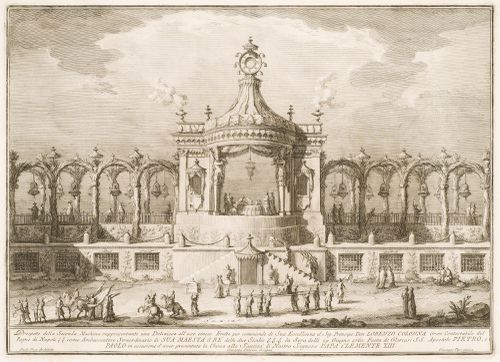
- This etching of a fireworks construction or macchina is in the form of a pavilion with unroofed arcades extending to either side. The pavilion is roofed by a tent-like structure and is open at front and back to show a group of people gathered around a large table. The two arcades are made of palm trees: the tree trunks are the columns and their leaves form the arches. The substructure includes rooms containing animals, which are visible behind barred windows.
DR1988:0437:029
Description:
- This etching of a fireworks construction or macchina is in the form of a pavilion with unroofed arcades extending to either side. The pavilion is roofed by a tent-like structure and is open at front and back to show a group of people gathered around a large table. The two arcades are made of palm trees: the tree trunks are the columns and their leaves form the arches. The substructure includes rooms containing animals, which are visible behind barred windows.
People:
Subject:
temporary architecture
temporary architecture
Date:
printed 1760
printed 1760
Title:
Etching of Posi's design for the "seconda macchina" of 1760
Actions:
DR1988:0437:029
Description:
- This etching of a fireworks construction or macchina is in the form of a pavilion with unroofed arcades extending to either side. The pavilion is roofed by a tent-like structure and is open at front and back to show a group of people gathered around a large table. The two arcades are made of palm trees: the tree trunks are the columns and their leaves form the arches. The substructure includes rooms containing animals, which are visible behind barred windows.
Etching of Posi's design for the "seconda macchina" of 1760
Actions:
DR1988:0437:029
Description:
- This etching of a fireworks construction or macchina is in the form of a pavilion with unroofed arcades extending to either side. The pavilion is roofed by a tent-like structure and is open at front and back to show a group of people gathered around a large table. The two arcades are made of palm trees: the tree trunks are the columns and their leaves form the arches. The substructure includes rooms containing animals, which are visible behind barred windows.
Form:
works of art
works of art
Date:
printed 1760
printed 1760
People:
Subject:
temporary architecture
temporary architecture
Level of archival description:
Project
Project
Actions:
Reference number:
AP207.S1.2013.PR01
Description:
The project series documents "The Game of Architecture", a drawing realized in 2013. The drawing is of triangular-shaped structures made of bricks standing in a desert. This drawing is a reinterpretation of a previous project by Pettena "Situazioni Competitive" in 1971. "Here architecture, albeit with the same characteristic of competitiveness, becomes indistinct, confused, no longer the leading actor, at the mercy of an unknown context (a desert? the nature of an alien planet?) which, threatening to overwhelm it, seems to nullify its every need and characteristic." [1] The project series contains a drawing for the 2013 edition and the 2018 version, which is a digital photograph modified to show the architectural construction standing in rough water. Source: [1] Gianni Pettena website, https://www.giannipettena.it/italiano/opere-1/nat-the-game-of-architecture-2013-1/ (last accessed 28 January 2020)
AP207.S1.2013.PR01
Description:
The project series documents "The Game of Architecture", a drawing realized in 2013. The drawing is of triangular-shaped structures made of bricks standing in a desert. This drawing is a reinterpretation of a previous project by Pettena "Situazioni Competitive" in 1971. "Here architecture, albeit with the same characteristic of competitiveness, becomes indistinct, confused, no longer the leading actor, at the mercy of an unknown context (a desert? the nature of an alien planet?) which, threatening to overwhelm it, seems to nullify its every need and characteristic." [1] The project series contains a drawing for the 2013 edition and the 2018 version, which is a digital photograph modified to show the architectural construction standing in rough water. Source: [1] Gianni Pettena website, https://www.giannipettena.it/italiano/opere-1/nat-the-game-of-architecture-2013-1/ (last accessed 28 January 2020)
People:
Date:
2011-2018
2011-2018
Title:
The Game of Architecture (2013)
Actions:
AP207.S1.2013.PR01
Description:
The project series documents "The Game of Architecture", a drawing realized in 2013. The drawing is of triangular-shaped structures made of bricks standing in a desert. This drawing is a reinterpretation of a previous project by Pettena "Situazioni Competitive" in 1971. "Here architecture, albeit with the same characteristic of competitiveness, becomes indistinct, confused, no longer the leading actor, at the mercy of an unknown context (a desert? the nature of an alien planet?) which, threatening to overwhelm it, seems to nullify its every need and characteristic." [1] The project series contains a drawing for the 2013 edition and the 2018 version, which is a digital photograph modified to show the architectural construction standing in rough water. Source: [1] Gianni Pettena website, https://www.giannipettena.it/italiano/opere-1/nat-the-game-of-architecture-2013-1/ (last accessed 28 January 2020)
The Game of Architecture (2013)
Actions:
AP207.S1.2013.PR01
Description:
The project series documents "The Game of Architecture", a drawing realized in 2013. The drawing is of triangular-shaped structures made of bricks standing in a desert. This drawing is a reinterpretation of a previous project by Pettena "Situazioni Competitive" in 1971. "Here architecture, albeit with the same characteristic of competitiveness, becomes indistinct, confused, no longer the leading actor, at the mercy of an unknown context (a desert? the nature of an alien planet?) which, threatening to overwhelm it, seems to nullify its every need and characteristic." [1] The project series contains a drawing for the 2013 edition and the 2018 version, which is a digital photograph modified to show the architectural construction standing in rough water. Source: [1] Gianni Pettena website, https://www.giannipettena.it/italiano/opere-1/nat-the-game-of-architecture-2013-1/ (last accessed 28 January 2020)
Level of archival description:
Project
Project
Date:
2011-2018
2011-2018
People:
Form:
photographs
photographs
Actions:
Reference number:
AP140.S2.SS1.D29.P9
Description:
views on contact sheets of two models, one being a site model in wood (not otherwise present in project documents) that shows an earlier design for the service and circulation towers of the office building, the other being a more detailed model for what is probably the final design that shows the office building in section with the external steel structure and splayed glass wall of the front elevation; also interior views of an unknown building or buildings
AP140.S2.SS1.D29.P9
Description:
views on contact sheets of two models, one being a site model in wood (not otherwise present in project documents) that shows an earlier design for the service and circulation towers of the office building, the other being a more detailed model for what is probably the final design that shows the office building in section with the external steel structure and splayed glass wall of the front elevation; also interior views of an unknown building or buildings
People:
Date:
1965
1965
Title:
Views on contact sheets of two models
Actions:
AP140.S2.SS1.D29.P9
Description:
views on contact sheets of two models, one being a site model in wood (not otherwise present in project documents) that shows an earlier design for the service and circulation towers of the office building, the other being a more detailed model for what is probably the final design that shows the office building in section with the external steel structure and splayed glass wall of the front elevation; also interior views of an unknown building or buildings
Views on contact sheets of two models
Actions:
AP140.S2.SS1.D29.P9
Description:
views on contact sheets of two models, one being a site model in wood (not otherwise present in project documents) that shows an earlier design for the service and circulation towers of the office building, the other being a more detailed model for what is probably the final design that shows the office building in section with the external steel structure and splayed glass wall of the front elevation; also interior views of an unknown building or buildings
Form:
photographs
photographs
Date:
1965
1965
People:
Form:
photographs
photographs

Reference number:
DR2004:0136
Description:
photographs of interior, exterior, and detail views of pneumatic structures, sketches, microfiche, reprint of articles
DR2004:0136
Description:
photographs of interior, exterior, and detail views of pneumatic structures, sketches, microfiche, reprint of articles
People:
Date:
1972-1983
1972-1983
Title:
Binder 99B C.P. Lightweight Enclosures Unit
Actions:
DR2004:0136
Description:
photographs of interior, exterior, and detail views of pneumatic structures, sketches, microfiche, reprint of articles
Binder 99B C.P. Lightweight Enclosures Unit
Actions:
DR2004:0136
Description:
photographs of interior, exterior, and detail views of pneumatic structures, sketches, microfiche, reprint of articles
Form:
photographs
photographs
Date:
1972-1983
1972-1983
People:
Form:
exhibitions
exhibitions
Title:
Empire
Empire
Actions:
Description:
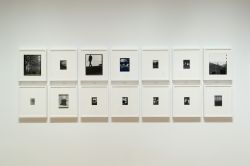
The exhibition presents Empire, a visual essay by American artist John Gossage on the relationship between architecture and power. Gossage’s photographs of government buildings and monuments in Washington, D.C. are juxtaposed with images of Egypt taken by German chemist Hermann Vogel in 1868, exposing the parallel actions of governments, over a century apart, in(...)
The exhibition presents Empire, a visual essay by American artist John Gossage on the relationship between architecture and power. Gossage’s photographs of government buildings and monuments in Washington, D.C. are juxtaposed with images of Egypt taken by German chemist Hermann Vogel in 1868, exposing the parallel actions of governments, over a century apart, in(...)
Location:
Octagonal gallery
Octagonal gallery
Date:
8 December 2005 to 12 March 2006
8 December 2005 to 12 March 2006
Title:
Empire
Actions:
Description:
The exhibition presents Empire, a visual essay by American artist John Gossage on the relationship between architecture and power. Gossage’s photographs of government buildings and monuments in Washington, D.C. are juxtaposed with images of Egypt taken by German chemist Hermann Vogel in 1868, exposing the parallel actions of governments, over a century apart, in(...)
Empire
Actions:
Description:
The exhibition presents Empire, a visual essay by American artist John Gossage on the relationship between architecture and power. Gossage’s photographs of government buildings and monuments in Washington, D.C. are juxtaposed with images of Egypt taken by German chemist Hermann Vogel in 1868, exposing the parallel actions of governments, over a century apart, in(...)
Form:
exhibitions
exhibitions
Date:
8 December 2005 to
12 March 2006
8 December 2005 to
12 March 2006
Location:
Octagonal gallery
Octagonal gallery
Level of archival description:
Sub-series
Sub-series
Actions:
Reference number:
AP178.S1.1988.PR07.SS2
Description:
This project subseries documents the Bloco A of the reconstruction of the Chiado in Lisbon, Portugal. The office's archives identified this project as 58/80. The office assigned the dates 1988-1998 for this project. The Bloco A was located between Rua Ivens, Rua Garrett, and Rua Nova Do Almada. In the reconstruction plan, Bloco A included buildings 7 (Camara Chaves building) 8/9 (Castro & Melo building), 10, 11, 20, 21, 22, 23, and 24. The construction work for the buildings of Bloco A included restorations of windows, doors, façades, painting, stonework, as well as work on the structure and mechanical systems. Drawings include plans prior to the fire, working drawings, and structural drawings. Textual material includes project documentation and studies. Photographic materials and slides document the buildings prior to the fire, damaged buildings, project site, construction work, and models. It is important to note that this subseries includes general details of the Bloco A. For more specific details, see individual project subseries: the Camara Chaves building (AP178.S1.1988.PR07.SS3) and Edifício Castro e Melo (AP178.S1.1988.PR07.SS4). General documentation can also be found in the master plans and exterior spaces work subseries (AP178.S1.1988.PR07.SS1).
AP178.S1.1988.PR07.SS2
Description:
This project subseries documents the Bloco A of the reconstruction of the Chiado in Lisbon, Portugal. The office's archives identified this project as 58/80. The office assigned the dates 1988-1998 for this project. The Bloco A was located between Rua Ivens, Rua Garrett, and Rua Nova Do Almada. In the reconstruction plan, Bloco A included buildings 7 (Camara Chaves building) 8/9 (Castro & Melo building), 10, 11, 20, 21, 22, 23, and 24. The construction work for the buildings of Bloco A included restorations of windows, doors, façades, painting, stonework, as well as work on the structure and mechanical systems. Drawings include plans prior to the fire, working drawings, and structural drawings. Textual material includes project documentation and studies. Photographic materials and slides document the buildings prior to the fire, damaged buildings, project site, construction work, and models. It is important to note that this subseries includes general details of the Bloco A. For more specific details, see individual project subseries: the Camara Chaves building (AP178.S1.1988.PR07.SS3) and Edifício Castro e Melo (AP178.S1.1988.PR07.SS4). General documentation can also be found in the master plans and exterior spaces work subseries (AP178.S1.1988.PR07.SS1).
People:
Date:
1988-1998
1988-1998
Title:
Bloco A, Reconstrução do Chiado [Block A, Reconstruction of the Chiado area] Lisbon, Portugal (1988-1998)
Actions:
AP178.S1.1988.PR07.SS2
Description:
This project subseries documents the Bloco A of the reconstruction of the Chiado in Lisbon, Portugal. The office's archives identified this project as 58/80. The office assigned the dates 1988-1998 for this project. The Bloco A was located between Rua Ivens, Rua Garrett, and Rua Nova Do Almada. In the reconstruction plan, Bloco A included buildings 7 (Camara Chaves building) 8/9 (Castro & Melo building), 10, 11, 20, 21, 22, 23, and 24. The construction work for the buildings of Bloco A included restorations of windows, doors, façades, painting, stonework, as well as work on the structure and mechanical systems. Drawings include plans prior to the fire, working drawings, and structural drawings. Textual material includes project documentation and studies. Photographic materials and slides document the buildings prior to the fire, damaged buildings, project site, construction work, and models. It is important to note that this subseries includes general details of the Bloco A. For more specific details, see individual project subseries: the Camara Chaves building (AP178.S1.1988.PR07.SS3) and Edifício Castro e Melo (AP178.S1.1988.PR07.SS4). General documentation can also be found in the master plans and exterior spaces work subseries (AP178.S1.1988.PR07.SS1).
Bloco A, Reconstrução do Chiado [Block A, Reconstruction of the Chiado area] Lisbon, Portugal (1988-1998)
Actions:
AP178.S1.1988.PR07.SS2
Description:
This project subseries documents the Bloco A of the reconstruction of the Chiado in Lisbon, Portugal. The office's archives identified this project as 58/80. The office assigned the dates 1988-1998 for this project. The Bloco A was located between Rua Ivens, Rua Garrett, and Rua Nova Do Almada. In the reconstruction plan, Bloco A included buildings 7 (Camara Chaves building) 8/9 (Castro & Melo building), 10, 11, 20, 21, 22, 23, and 24. The construction work for the buildings of Bloco A included restorations of windows, doors, façades, painting, stonework, as well as work on the structure and mechanical systems. Drawings include plans prior to the fire, working drawings, and structural drawings. Textual material includes project documentation and studies. Photographic materials and slides document the buildings prior to the fire, damaged buildings, project site, construction work, and models. It is important to note that this subseries includes general details of the Bloco A. For more specific details, see individual project subseries: the Camara Chaves building (AP178.S1.1988.PR07.SS3) and Edifício Castro e Melo (AP178.S1.1988.PR07.SS4). General documentation can also be found in the master plans and exterior spaces work subseries (AP178.S1.1988.PR07.SS1).
Level of archival description:
Project
Project
Date:
1988-1998
1988-1998
People:
Form:
works of art
works of art
Actions:
Reference number:
DR1987:0064
Description:
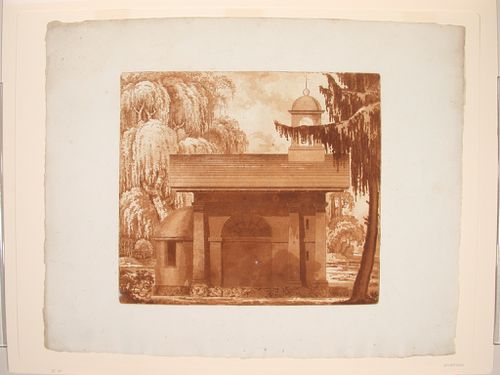
- Prints DR1987:0064 - DR1987:0069 are probably for a mausoleum and include 3 elevations, 2 sections and 1 plan. The mausoleum is almost square in plan with a protruding semidomed apse and a portico "in antis" consisting of two Tuscan engaged pillars supporting a thick architrave which runs around the exterior of the mausoleum. The structure is raised on a podium and has a gabled roof perched high above the main structure, surmounted by a cupola crowned with an orb and cross. On the interior, the barrel vaulted nave is separated from the apse by a rood-like screen pierced by three doors and by a Corinthian colonnade. The chancel and apse areas are slightly raised and are accessed by a flight of stairs. A spiral staircase on the left side of the narthex provides access to the gallery, upper level, and cupola. A tomb monument or sarcophagus, composed of a rectangular masonry slab surmounted by a vertical slab decorated with a recumbent female figure, is located at the centre of the lateral wall of the nave under the fanlight.
DR1987:0064
Description:
- Prints DR1987:0064 - DR1987:0069 are probably for a mausoleum and include 3 elevations, 2 sections and 1 plan. The mausoleum is almost square in plan with a protruding semidomed apse and a portico "in antis" consisting of two Tuscan engaged pillars supporting a thick architrave which runs around the exterior of the mausoleum. The structure is raised on a podium and has a gabled roof perched high above the main structure, surmounted by a cupola crowned with an orb and cross. On the interior, the barrel vaulted nave is separated from the apse by a rood-like screen pierced by three doors and by a Corinthian colonnade. The chancel and apse areas are slightly raised and are accessed by a flight of stairs. A spiral staircase on the left side of the narthex provides access to the gallery, upper level, and cupola. A tomb monument or sarcophagus, composed of a rectangular masonry slab surmounted by a vertical slab decorated with a recumbent female figure, is located at the centre of the lateral wall of the nave under the fanlight.
People:
Subject:
architecture
architecture
Date:
early 19th century
early 19th century
Title:
Side elevation of a mausoleum in a wooded setting
Actions:
DR1987:0064
Description:
- Prints DR1987:0064 - DR1987:0069 are probably for a mausoleum and include 3 elevations, 2 sections and 1 plan. The mausoleum is almost square in plan with a protruding semidomed apse and a portico "in antis" consisting of two Tuscan engaged pillars supporting a thick architrave which runs around the exterior of the mausoleum. The structure is raised on a podium and has a gabled roof perched high above the main structure, surmounted by a cupola crowned with an orb and cross. On the interior, the barrel vaulted nave is separated from the apse by a rood-like screen pierced by three doors and by a Corinthian colonnade. The chancel and apse areas are slightly raised and are accessed by a flight of stairs. A spiral staircase on the left side of the narthex provides access to the gallery, upper level, and cupola. A tomb monument or sarcophagus, composed of a rectangular masonry slab surmounted by a vertical slab decorated with a recumbent female figure, is located at the centre of the lateral wall of the nave under the fanlight.
Side elevation of a mausoleum in a wooded setting
Actions:
DR1987:0064
Description:
- Prints DR1987:0064 - DR1987:0069 are probably for a mausoleum and include 3 elevations, 2 sections and 1 plan. The mausoleum is almost square in plan with a protruding semidomed apse and a portico "in antis" consisting of two Tuscan engaged pillars supporting a thick architrave which runs around the exterior of the mausoleum. The structure is raised on a podium and has a gabled roof perched high above the main structure, surmounted by a cupola crowned with an orb and cross. On the interior, the barrel vaulted nave is separated from the apse by a rood-like screen pierced by three doors and by a Corinthian colonnade. The chancel and apse areas are slightly raised and are accessed by a flight of stairs. A spiral staircase on the left side of the narthex provides access to the gallery, upper level, and cupola. A tomb monument or sarcophagus, composed of a rectangular masonry slab surmounted by a vertical slab decorated with a recumbent female figure, is located at the centre of the lateral wall of the nave under the fanlight.
Form:
works of art
works of art
Date:
early 19th century
early 19th century
People:
Subject:
architecture
architecture
Form:
works of art
works of art
Actions:
Reference number:
DR1987:0065
Description:
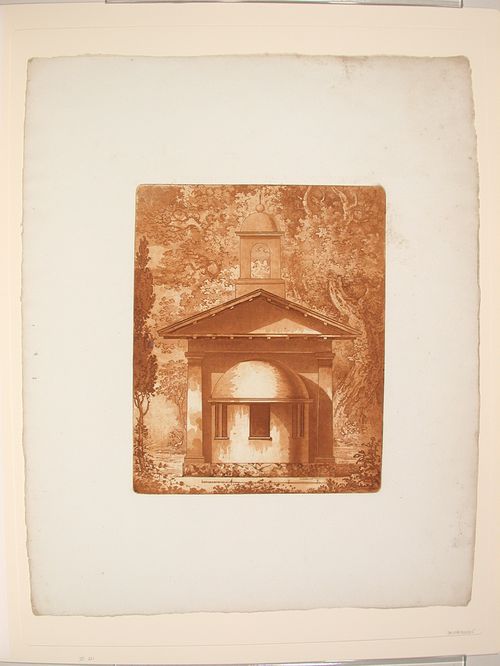
- Prints DR1987:0064 - DR1987:0069 are probably for a mausoleum and include 3 elevations, 2 sections and 1 plan. The mausoleum is almost square in plan with a protruding semidomed apse and a portico "in antis" consisting of two Tuscan engaged pillars supporting a thick architrave which runs around the exterior of the mausoleum. The structure is raised on a podium and has a gabled roof perched high above the main structure, surmounted by a cupola crowned with an orb and cross. On the interior, the barrel vaulted nave is separated from the apse by a rood-like screen pierced by three doors and by a Corinthian colonnade. The chancel and apse areas are slightly raised and are accessed by a flight of stairs. A spiral staircase on the left side of the narthex provides access to the gallery, upper level, and cupola. A tomb monument or sarcophagus, composed of a rectangular masonry slab surmounted by a vertical slab decorated with a recumbent female figure, is located at the centre of the lateral wall of the nave under the fanlight.
DR1987:0065
Description:
- Prints DR1987:0064 - DR1987:0069 are probably for a mausoleum and include 3 elevations, 2 sections and 1 plan. The mausoleum is almost square in plan with a protruding semidomed apse and a portico "in antis" consisting of two Tuscan engaged pillars supporting a thick architrave which runs around the exterior of the mausoleum. The structure is raised on a podium and has a gabled roof perched high above the main structure, surmounted by a cupola crowned with an orb and cross. On the interior, the barrel vaulted nave is separated from the apse by a rood-like screen pierced by three doors and by a Corinthian colonnade. The chancel and apse areas are slightly raised and are accessed by a flight of stairs. A spiral staircase on the left side of the narthex provides access to the gallery, upper level, and cupola. A tomb monument or sarcophagus, composed of a rectangular masonry slab surmounted by a vertical slab decorated with a recumbent female figure, is located at the centre of the lateral wall of the nave under the fanlight.
People:
Subject:
architecture
architecture
Date:
early 19th century
early 19th century
Title:
Rear elevation of a mausoleum in a wooded setting
Actions:
DR1987:0065
Description:
- Prints DR1987:0064 - DR1987:0069 are probably for a mausoleum and include 3 elevations, 2 sections and 1 plan. The mausoleum is almost square in plan with a protruding semidomed apse and a portico "in antis" consisting of two Tuscan engaged pillars supporting a thick architrave which runs around the exterior of the mausoleum. The structure is raised on a podium and has a gabled roof perched high above the main structure, surmounted by a cupola crowned with an orb and cross. On the interior, the barrel vaulted nave is separated from the apse by a rood-like screen pierced by three doors and by a Corinthian colonnade. The chancel and apse areas are slightly raised and are accessed by a flight of stairs. A spiral staircase on the left side of the narthex provides access to the gallery, upper level, and cupola. A tomb monument or sarcophagus, composed of a rectangular masonry slab surmounted by a vertical slab decorated with a recumbent female figure, is located at the centre of the lateral wall of the nave under the fanlight.
Rear elevation of a mausoleum in a wooded setting
Actions:
DR1987:0065
Description:
- Prints DR1987:0064 - DR1987:0069 are probably for a mausoleum and include 3 elevations, 2 sections and 1 plan. The mausoleum is almost square in plan with a protruding semidomed apse and a portico "in antis" consisting of two Tuscan engaged pillars supporting a thick architrave which runs around the exterior of the mausoleum. The structure is raised on a podium and has a gabled roof perched high above the main structure, surmounted by a cupola crowned with an orb and cross. On the interior, the barrel vaulted nave is separated from the apse by a rood-like screen pierced by three doors and by a Corinthian colonnade. The chancel and apse areas are slightly raised and are accessed by a flight of stairs. A spiral staircase on the left side of the narthex provides access to the gallery, upper level, and cupola. A tomb monument or sarcophagus, composed of a rectangular masonry slab surmounted by a vertical slab decorated with a recumbent female figure, is located at the centre of the lateral wall of the nave under the fanlight.
Form:
works of art
works of art
Date:
early 19th century
early 19th century
People:
Subject:
architecture
architecture
Form:
works of art
works of art
Actions:
Reference number:
DR1987:0066
Description:
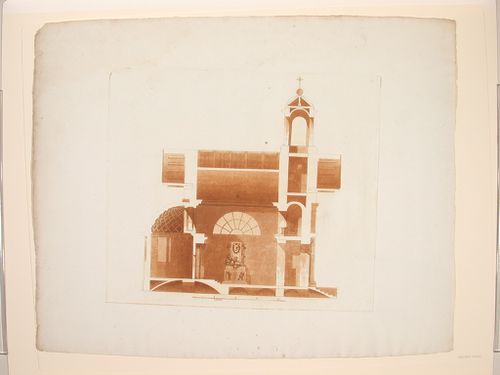
- Prints DR1987:0064 - DR1987:0069 are probably for a mausoleum and include 3 elevations, 2 sections and 1 plan. The mausoleum is almost square in plan with a protruding semidomed apse and a portico "in antis" consisting of two Tuscan engaged pillars supporting a thick architrave which runs around the exterior of the mausoleum. The structure is raised on a podium and has a gabled roof perched high above the main structure, surmounted by a cupola crowned with an orb and cross. On the interior, the barrel vaulted nave is separated from the apse by a rood-like screen pierced by three doors and by a Corinthian colonnade. The chancel and apse areas are slightly raised and are accessed by a flight of stairs. A spiral staircase on the left side of the narthex provides access to the gallery, upper level, and cupola. A tomb monument or sarcophagus, composed of a rectangular masonry slab surmounted by a vertical slab decorated with a recumbent female figure, is located at the centre of the lateral wall of the nave under the fanlight.
DR1987:0066
Description:
- Prints DR1987:0064 - DR1987:0069 are probably for a mausoleum and include 3 elevations, 2 sections and 1 plan. The mausoleum is almost square in plan with a protruding semidomed apse and a portico "in antis" consisting of two Tuscan engaged pillars supporting a thick architrave which runs around the exterior of the mausoleum. The structure is raised on a podium and has a gabled roof perched high above the main structure, surmounted by a cupola crowned with an orb and cross. On the interior, the barrel vaulted nave is separated from the apse by a rood-like screen pierced by three doors and by a Corinthian colonnade. The chancel and apse areas are slightly raised and are accessed by a flight of stairs. A spiral staircase on the left side of the narthex provides access to the gallery, upper level, and cupola. A tomb monument or sarcophagus, composed of a rectangular masonry slab surmounted by a vertical slab decorated with a recumbent female figure, is located at the centre of the lateral wall of the nave under the fanlight.
People:
Subject:
architecture
architecture
Date:
early 19th century
early 19th century
Title:
Longitudinal section of a mausoleum in a wooded setting
Actions:
DR1987:0066
Description:
- Prints DR1987:0064 - DR1987:0069 are probably for a mausoleum and include 3 elevations, 2 sections and 1 plan. The mausoleum is almost square in plan with a protruding semidomed apse and a portico "in antis" consisting of two Tuscan engaged pillars supporting a thick architrave which runs around the exterior of the mausoleum. The structure is raised on a podium and has a gabled roof perched high above the main structure, surmounted by a cupola crowned with an orb and cross. On the interior, the barrel vaulted nave is separated from the apse by a rood-like screen pierced by three doors and by a Corinthian colonnade. The chancel and apse areas are slightly raised and are accessed by a flight of stairs. A spiral staircase on the left side of the narthex provides access to the gallery, upper level, and cupola. A tomb monument or sarcophagus, composed of a rectangular masonry slab surmounted by a vertical slab decorated with a recumbent female figure, is located at the centre of the lateral wall of the nave under the fanlight.
Longitudinal section of a mausoleum in a wooded setting
Actions:
DR1987:0066
Description:
- Prints DR1987:0064 - DR1987:0069 are probably for a mausoleum and include 3 elevations, 2 sections and 1 plan. The mausoleum is almost square in plan with a protruding semidomed apse and a portico "in antis" consisting of two Tuscan engaged pillars supporting a thick architrave which runs around the exterior of the mausoleum. The structure is raised on a podium and has a gabled roof perched high above the main structure, surmounted by a cupola crowned with an orb and cross. On the interior, the barrel vaulted nave is separated from the apse by a rood-like screen pierced by three doors and by a Corinthian colonnade. The chancel and apse areas are slightly raised and are accessed by a flight of stairs. A spiral staircase on the left side of the narthex provides access to the gallery, upper level, and cupola. A tomb monument or sarcophagus, composed of a rectangular masonry slab surmounted by a vertical slab decorated with a recumbent female figure, is located at the centre of the lateral wall of the nave under the fanlight.
Form:
works of art
works of art
Date:
early 19th century
early 19th century
People:
Subject:
architecture
architecture


