


4469 Results
Level of archival description:
Project
Project
Reference number:
AP178.S1.2001.PR04
Description:
This project series documents the Casa em Palma de Maiorca in Palma de Maiorca, Spain. While the records were held in the office’s archives this project was assigned the number 28/00. The office assigned the date 2001 to this project. The project site is located in Palma, a Spanish island in the Mediterranean sea. The summer house is divided into three blocks, each divided into smaller parts. The two-story house was built on sloping land and completed in 2008. Collaborators on this project were Atsushi Ueno, Fafel Moranta, and Miquel Capllonch. The eastern wing includes the master bedroom and guest bedroom. The western wing has three bedrooms and a living room. The western block connects the northeast and eastern wings. The northeast block, with two rooms and a living room, hosts the housekeeper. The private spaces are all located on the upper section and the public sections are on the ground level. Documenting this project are sketches, studies, preliminary drawings, plans, working drawings, and technical drawings. Textual material includes project documentation and correspondence. Photographic material documents construction work and the built project.
AP178.S1.2001.PR04
Description:
This project series documents the Casa em Palma de Maiorca in Palma de Maiorca, Spain. While the records were held in the office’s archives this project was assigned the number 28/00. The office assigned the date 2001 to this project. The project site is located in Palma, a Spanish island in the Mediterranean sea. The summer house is divided into three blocks, each divided into smaller parts. The two-story house was built on sloping land and completed in 2008. Collaborators on this project were Atsushi Ueno, Fafel Moranta, and Miquel Capllonch. The eastern wing includes the master bedroom and guest bedroom. The western wing has three bedrooms and a living room. The western block connects the northeast and eastern wings. The northeast block, with two rooms and a living room, hosts the housekeeper. The private spaces are all located on the upper section and the public sections are on the ground level. Documenting this project are sketches, studies, preliminary drawings, plans, working drawings, and technical drawings. Textual material includes project documentation and correspondence. Photographic material documents construction work and the built project.
People:
Date:
2001-2008
2001-2008
Title:
Casa em Palma de Maiorca [House in Palma de Maiorca], Palma de Mallorca, Spain (2001)
Actions:
AP178.S1.2001.PR04
Description:
This project series documents the Casa em Palma de Maiorca in Palma de Maiorca, Spain. While the records were held in the office’s archives this project was assigned the number 28/00. The office assigned the date 2001 to this project. The project site is located in Palma, a Spanish island in the Mediterranean sea. The summer house is divided into three blocks, each divided into smaller parts. The two-story house was built on sloping land and completed in 2008. Collaborators on this project were Atsushi Ueno, Fafel Moranta, and Miquel Capllonch. The eastern wing includes the master bedroom and guest bedroom. The western wing has three bedrooms and a living room. The western block connects the northeast and eastern wings. The northeast block, with two rooms and a living room, hosts the housekeeper. The private spaces are all located on the upper section and the public sections are on the ground level. Documenting this project are sketches, studies, preliminary drawings, plans, working drawings, and technical drawings. Textual material includes project documentation and correspondence. Photographic material documents construction work and the built project.
Casa em Palma de Maiorca [House in Palma de Maiorca], Palma de Mallorca, Spain (2001)
Actions:
AP178.S1.2001.PR04
Description:
This project series documents the Casa em Palma de Maiorca in Palma de Maiorca, Spain. While the records were held in the office’s archives this project was assigned the number 28/00. The office assigned the date 2001 to this project. The project site is located in Palma, a Spanish island in the Mediterranean sea. The summer house is divided into three blocks, each divided into smaller parts. The two-story house was built on sloping land and completed in 2008. Collaborators on this project were Atsushi Ueno, Fafel Moranta, and Miquel Capllonch. The eastern wing includes the master bedroom and guest bedroom. The western wing has three bedrooms and a living room. The western block connects the northeast and eastern wings. The northeast block, with two rooms and a living room, hosts the housekeeper. The private spaces are all located on the upper section and the public sections are on the ground level. Documenting this project are sketches, studies, preliminary drawings, plans, working drawings, and technical drawings. Textual material includes project documentation and correspondence. Photographic material documents construction work and the built project.
Level of archival description:
Project
Project
Date:
2001-2008
2001-2008
People:
Level of archival description:
Project
Project
Reference number:
AP178.S1.1993.PR06
Description:
This project series documents the proposed design for the J. Paul Getty Museum. While the records were held in the office’s archives this project was assigned the number 40/90. The office assigned the date 1993 to this project. The project was a collaboration between Álvaro Siza and Peter Testa. The proposal included renovations of the Villa and the Ranch House, the reorganization of the site, as well as the addition of new installations. The main change proposed by the architects was the creation of a Terrace Gallery and a natural amphitheater, forming a new entrance west of the Villa. Renovations to the Villa included modifications to the structure and the reorganization of the interior spaces. They proposed to rearrangeme the interior of the Ranch House and the construction of a 6,000 sqaure foot auditorium with a capacity of 200 people. The proposal also included the construction of a 13,000 square foot U-shaped building for the conservation program, the scholar program, and artist residency program. The main public entrance was redirected to the Los Liones Drives and a new parking area was proposed, with a 300 automobile and 6 bus capacity. In 1994, the Machado Silvetti Firm proposal was selected. Documenting this project are sketches and studies. Textual materials include project documentation and correspondence. Photographic materials document the models and project site.
AP178.S1.1993.PR06
Description:
This project series documents the proposed design for the J. Paul Getty Museum. While the records were held in the office’s archives this project was assigned the number 40/90. The office assigned the date 1993 to this project. The project was a collaboration between Álvaro Siza and Peter Testa. The proposal included renovations of the Villa and the Ranch House, the reorganization of the site, as well as the addition of new installations. The main change proposed by the architects was the creation of a Terrace Gallery and a natural amphitheater, forming a new entrance west of the Villa. Renovations to the Villa included modifications to the structure and the reorganization of the interior spaces. They proposed to rearrangeme the interior of the Ranch House and the construction of a 6,000 sqaure foot auditorium with a capacity of 200 people. The proposal also included the construction of a 13,000 square foot U-shaped building for the conservation program, the scholar program, and artist residency program. The main public entrance was redirected to the Los Liones Drives and a new parking area was proposed, with a 300 automobile and 6 bus capacity. In 1994, the Machado Silvetti Firm proposal was selected. Documenting this project are sketches and studies. Textual materials include project documentation and correspondence. Photographic materials document the models and project site.
People:
Date:
1993-2012
1993-2012
Title:
Museu J. Paul Getty [The J. Paul Getty Museum], Malibu, United States (1993)
Actions:
AP178.S1.1993.PR06
Description:
This project series documents the proposed design for the J. Paul Getty Museum. While the records were held in the office’s archives this project was assigned the number 40/90. The office assigned the date 1993 to this project. The project was a collaboration between Álvaro Siza and Peter Testa. The proposal included renovations of the Villa and the Ranch House, the reorganization of the site, as well as the addition of new installations. The main change proposed by the architects was the creation of a Terrace Gallery and a natural amphitheater, forming a new entrance west of the Villa. Renovations to the Villa included modifications to the structure and the reorganization of the interior spaces. They proposed to rearrangeme the interior of the Ranch House and the construction of a 6,000 sqaure foot auditorium with a capacity of 200 people. The proposal also included the construction of a 13,000 square foot U-shaped building for the conservation program, the scholar program, and artist residency program. The main public entrance was redirected to the Los Liones Drives and a new parking area was proposed, with a 300 automobile and 6 bus capacity. In 1994, the Machado Silvetti Firm proposal was selected. Documenting this project are sketches and studies. Textual materials include project documentation and correspondence. Photographic materials document the models and project site.
Museu J. Paul Getty [The J. Paul Getty Museum], Malibu, United States (1993)
Actions:
AP178.S1.1993.PR06
Description:
This project series documents the proposed design for the J. Paul Getty Museum. While the records were held in the office’s archives this project was assigned the number 40/90. The office assigned the date 1993 to this project. The project was a collaboration between Álvaro Siza and Peter Testa. The proposal included renovations of the Villa and the Ranch House, the reorganization of the site, as well as the addition of new installations. The main change proposed by the architects was the creation of a Terrace Gallery and a natural amphitheater, forming a new entrance west of the Villa. Renovations to the Villa included modifications to the structure and the reorganization of the interior spaces. They proposed to rearrangeme the interior of the Ranch House and the construction of a 6,000 sqaure foot auditorium with a capacity of 200 people. The proposal also included the construction of a 13,000 square foot U-shaped building for the conservation program, the scholar program, and artist residency program. The main public entrance was redirected to the Los Liones Drives and a new parking area was proposed, with a 300 automobile and 6 bus capacity. In 1994, the Machado Silvetti Firm proposal was selected. Documenting this project are sketches and studies. Textual materials include project documentation and correspondence. Photographic materials document the models and project site.
Level of archival description:
Project
Project
Date:
1993-2012
1993-2012
People:
Level of archival description:
Project
Project
Actions:
Reference number:
AP056.S1.1993.PR01
Description:
This project series documents the Scarborough Community Complex in Scarborough, Ontario from 1993-1996. The office identified the project number as 9311. This project, headed by Bruce Kuwabara in joint-venture with Patrick T. Chan, consisted of a multi-building complex on the corner of Progress and Sheppard Avenues. The project was formerly known as the Chinese Community Centre, which was the prominent building on the site. The Complex's main entrance, located on the site's interior, was highlighted by the Festival Plaza and Festival Court, whose octagonal shape was a nod to the eight essential strokes of Chinese calligraphy. The Festival Court led both to the Chinese Community Centre and a building with a public library and multi-purpose spaces (commonly referred to in the drawings as the Scarborough Community Complex). The Chinese Community Centre had a Festival Hall at it's entrance with wood and custom light fixtures that referred to Chinese craft techniques. This project also planned for vast Chinese gardens around the buildings, a large theatre building and a school at the south-end of the site. The project is recorded through drawings and a magazine publication on the finished project dating from 1992-1996. The drawings are mostly originals and include sketches, presentation drawings, plans, elevations, sections, perspectives and construction drawings. At least eleven schemes were investigated through these drawings.
AP056.S1.1993.PR01
Description:
This project series documents the Scarborough Community Complex in Scarborough, Ontario from 1993-1996. The office identified the project number as 9311. This project, headed by Bruce Kuwabara in joint-venture with Patrick T. Chan, consisted of a multi-building complex on the corner of Progress and Sheppard Avenues. The project was formerly known as the Chinese Community Centre, which was the prominent building on the site. The Complex's main entrance, located on the site's interior, was highlighted by the Festival Plaza and Festival Court, whose octagonal shape was a nod to the eight essential strokes of Chinese calligraphy. The Festival Court led both to the Chinese Community Centre and a building with a public library and multi-purpose spaces (commonly referred to in the drawings as the Scarborough Community Complex). The Chinese Community Centre had a Festival Hall at it's entrance with wood and custom light fixtures that referred to Chinese craft techniques. This project also planned for vast Chinese gardens around the buildings, a large theatre building and a school at the south-end of the site. The project is recorded through drawings and a magazine publication on the finished project dating from 1992-1996. The drawings are mostly originals and include sketches, presentation drawings, plans, elevations, sections, perspectives and construction drawings. At least eleven schemes were investigated through these drawings.
People:
Date:
1992-1996
1992-1996
Title:
Scarborough Community Complex, Scarborough, Ontario (1993-1996)
Actions:
AP056.S1.1993.PR01
Description:
This project series documents the Scarborough Community Complex in Scarborough, Ontario from 1993-1996. The office identified the project number as 9311. This project, headed by Bruce Kuwabara in joint-venture with Patrick T. Chan, consisted of a multi-building complex on the corner of Progress and Sheppard Avenues. The project was formerly known as the Chinese Community Centre, which was the prominent building on the site. The Complex's main entrance, located on the site's interior, was highlighted by the Festival Plaza and Festival Court, whose octagonal shape was a nod to the eight essential strokes of Chinese calligraphy. The Festival Court led both to the Chinese Community Centre and a building with a public library and multi-purpose spaces (commonly referred to in the drawings as the Scarborough Community Complex). The Chinese Community Centre had a Festival Hall at it's entrance with wood and custom light fixtures that referred to Chinese craft techniques. This project also planned for vast Chinese gardens around the buildings, a large theatre building and a school at the south-end of the site. The project is recorded through drawings and a magazine publication on the finished project dating from 1992-1996. The drawings are mostly originals and include sketches, presentation drawings, plans, elevations, sections, perspectives and construction drawings. At least eleven schemes were investigated through these drawings.
Scarborough Community Complex, Scarborough, Ontario (1993-1996)
Actions:
AP056.S1.1993.PR01
Description:
This project series documents the Scarborough Community Complex in Scarborough, Ontario from 1993-1996. The office identified the project number as 9311. This project, headed by Bruce Kuwabara in joint-venture with Patrick T. Chan, consisted of a multi-building complex on the corner of Progress and Sheppard Avenues. The project was formerly known as the Chinese Community Centre, which was the prominent building on the site. The Complex's main entrance, located on the site's interior, was highlighted by the Festival Plaza and Festival Court, whose octagonal shape was a nod to the eight essential strokes of Chinese calligraphy. The Festival Court led both to the Chinese Community Centre and a building with a public library and multi-purpose spaces (commonly referred to in the drawings as the Scarborough Community Complex). The Chinese Community Centre had a Festival Hall at it's entrance with wood and custom light fixtures that referred to Chinese craft techniques. This project also planned for vast Chinese gardens around the buildings, a large theatre building and a school at the south-end of the site. The project is recorded through drawings and a magazine publication on the finished project dating from 1992-1996. The drawings are mostly originals and include sketches, presentation drawings, plans, elevations, sections, perspectives and construction drawings. At least eleven schemes were investigated through these drawings.
Level of archival description:
Project
Project
Date:
1992-1996
1992-1996
People:
Level of archival description:
Project
Project
Title:
San Diego Convention Center
San Diego Convention Center
Actions:
Reference number:
AP022.S1.1981.PR16
Description:
File documents a built convention centre comprised of exhibit spaces, meeting rooms and offices on the upper level, a 250.000 square-foot exhibition hall at street level, and underground parking, San Diego, California. File contains photographic materials, publication drawings, a presentation drawing, textual records and a model.
AP022.S1.1981.PR16
Description:
File documents a built convention centre comprised of exhibit spaces, meeting rooms and offices on the upper level, a 250.000 square-foot exhibition hall at street level, and underground parking, San Diego, California. File contains photographic materials, publication drawings, a presentation drawing, textual records and a model.
People:
Date:
1981-1985
1981-1985
Title:
San Diego Convention Center
Actions:
AP022.S1.1981.PR16
Description:
File documents a built convention centre comprised of exhibit spaces, meeting rooms and offices on the upper level, a 250.000 square-foot exhibition hall at street level, and underground parking, San Diego, California. File contains photographic materials, publication drawings, a presentation drawing, textual records and a model.
San Diego Convention Center
Actions:
AP022.S1.1981.PR16
Description:
File documents a built convention centre comprised of exhibit spaces, meeting rooms and offices on the upper level, a 250.000 square-foot exhibition hall at street level, and underground parking, San Diego, California. File contains photographic materials, publication drawings, a presentation drawing, textual records and a model.
Level of archival description:
Project
Project
Date:
1981-1985
1981-1985
People:
Form:
photographs
photographs
Actions:
Reference number:
AP140.S2.SS1.D4.P4
Description:
views of presentation drawings, a publication drawing for the first-floor plan with highlighted circulation spaces, and a publication perspective for the two-level entrance hall
AP140.S2.SS1.D4.P4
Description:
views of presentation drawings, a publication drawing for the first-floor plan with highlighted circulation spaces, and a publication perspective for the two-level entrance hall
People:
Date:
circa 1951-1970s
circa 1951-1970s
Title:
Views of presentation drawings, floor plan, and interior perspective, Poole College of Further Education Competition, Poole, United Kingdom
Actions:
AP140.S2.SS1.D4.P4
Description:
views of presentation drawings, a publication drawing for the first-floor plan with highlighted circulation spaces, and a publication perspective for the two-level entrance hall
Views of presentation drawings, floor plan, and interior perspective, Poole College of Further Education Competition, Poole, United Kingdom
Actions:
AP140.S2.SS1.D4.P4
Description:
views of presentation drawings, a publication drawing for the first-floor plan with highlighted circulation spaces, and a publication perspective for the two-level entrance hall
Form:
photographs
photographs
Date:
circa 1951-1970s
circa 1951-1970s
People:
Form:
exhibitions
exhibitions
Description:
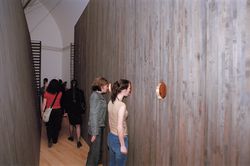
Laboratories examines how architecture can respond to an uncertain post-September 11 world and construct a new stage for thought. Six young Montreal architecture firms present environments or installations that investigate the fundamental language of architecture and that affirm the civilizing power of the imagination. The contributing firms are Atelier Big City, Atelier(...)
Laboratories examines how architecture can respond to an uncertain post-September 11 world and construct a new stage for thought. Six young Montreal architecture firms present environments or installations that investigate the fundamental language of architecture and that affirm the civilizing power of the imagination. The contributing firms are Atelier Big City, Atelier(...)
Location:
Main galleries
Main galleries
Date:
18 April 2002 to 15 September 2002
18 April 2002 to 15 September 2002
Title:
Laboratories: Six Young Architectural Firms in the CCA Galleries
Actions:
Description:
Laboratories examines how architecture can respond to an uncertain post-September 11 world and construct a new stage for thought. Six young Montreal architecture firms present environments or installations that investigate the fundamental language of architecture and that affirm the civilizing power of the imagination. The contributing firms are Atelier Big City, Atelier(...)
Laboratories: Six Young Architectural Firms in the CCA Galleries
Actions:
Description:
Laboratories examines how architecture can respond to an uncertain post-September 11 world and construct a new stage for thought. Six young Montreal architecture firms present environments or installations that investigate the fundamental language of architecture and that affirm the civilizing power of the imagination. The contributing firms are Atelier Big City, Atelier(...)
Form:
exhibitions
exhibitions
Date:
18 April 2002 to
15 September 2002
18 April 2002 to
15 September 2002
Location:
Main galleries
Main galleries
Level of archival description:
Sub-series
Sub-series
Reference number:
AP178.S1.1988.PR07.SS9
Description:
This project series documents the restoration of the Grandes Armazéns do Chiado building in Lisbon, Portugal. While the records were held in the office’s archives this project was assigned the number 58/80 N4. The office assigned the dates 1988-1998 for this project. The Grandes Armazéns do Chiado was part of Bloco C and identified as building 4 in Siza's reconstruction plan. The site of the Grandes Armazéns served several different functions in its history, including a hotel, a palace, and a convent, before becoming a department store in 1894. In the 1920s, a hotel was created at the top floors. After the destructive fire of 1988, the new owners of the building were interested in using the totality of the building for a shopping mall and restaurants. On the other hand, Siza's proposal included the expansion of the hotel in the building to introduce more public activity in the area after the regular work and shopping hours. Several programs were proposed to the owners of the building, and it was decided in 1996 that the hotel space would be reduced to the two top floors to have more room for the shopping center. The new division included 41 hotel rooms and 41 stores. The interior of the shopping mall was designed by Eduardo Souto Moura. Drawings include studies, working drawings, mechanical drawings, and structural drawings. Textual material includes project documentation, studies, meeting reports, and correspondence. Photographic material includes photographs of the building before the fire, ruins, model, and construction work. Documentation for this project can also be found in subseries AP178.S1.1988.PR07.SS1 and AP178.S1.1988.PR07.SS7 of this project series.
AP178.S1.1988.PR07.SS9
Description:
This project series documents the restoration of the Grandes Armazéns do Chiado building in Lisbon, Portugal. While the records were held in the office’s archives this project was assigned the number 58/80 N4. The office assigned the dates 1988-1998 for this project. The Grandes Armazéns do Chiado was part of Bloco C and identified as building 4 in Siza's reconstruction plan. The site of the Grandes Armazéns served several different functions in its history, including a hotel, a palace, and a convent, before becoming a department store in 1894. In the 1920s, a hotel was created at the top floors. After the destructive fire of 1988, the new owners of the building were interested in using the totality of the building for a shopping mall and restaurants. On the other hand, Siza's proposal included the expansion of the hotel in the building to introduce more public activity in the area after the regular work and shopping hours. Several programs were proposed to the owners of the building, and it was decided in 1996 that the hotel space would be reduced to the two top floors to have more room for the shopping center. The new division included 41 hotel rooms and 41 stores. The interior of the shopping mall was designed by Eduardo Souto Moura. Drawings include studies, working drawings, mechanical drawings, and structural drawings. Textual material includes project documentation, studies, meeting reports, and correspondence. Photographic material includes photographs of the building before the fire, ruins, model, and construction work. Documentation for this project can also be found in subseries AP178.S1.1988.PR07.SS1 and AP178.S1.1988.PR07.SS7 of this project series.
People:
Date:
1988-2000
1988-2000
Title:
Recuperação do Edifício dos Grandes Armazéns, Bloco C, Reconstrução do Chiado [Restoration of Grandes Armazéns do Chiado building, Block C, Reconstruction of the Chiado] Lisbon, Portugal (1988-1998)
Actions:
AP178.S1.1988.PR07.SS9
Description:
This project series documents the restoration of the Grandes Armazéns do Chiado building in Lisbon, Portugal. While the records were held in the office’s archives this project was assigned the number 58/80 N4. The office assigned the dates 1988-1998 for this project. The Grandes Armazéns do Chiado was part of Bloco C and identified as building 4 in Siza's reconstruction plan. The site of the Grandes Armazéns served several different functions in its history, including a hotel, a palace, and a convent, before becoming a department store in 1894. In the 1920s, a hotel was created at the top floors. After the destructive fire of 1988, the new owners of the building were interested in using the totality of the building for a shopping mall and restaurants. On the other hand, Siza's proposal included the expansion of the hotel in the building to introduce more public activity in the area after the regular work and shopping hours. Several programs were proposed to the owners of the building, and it was decided in 1996 that the hotel space would be reduced to the two top floors to have more room for the shopping center. The new division included 41 hotel rooms and 41 stores. The interior of the shopping mall was designed by Eduardo Souto Moura. Drawings include studies, working drawings, mechanical drawings, and structural drawings. Textual material includes project documentation, studies, meeting reports, and correspondence. Photographic material includes photographs of the building before the fire, ruins, model, and construction work. Documentation for this project can also be found in subseries AP178.S1.1988.PR07.SS1 and AP178.S1.1988.PR07.SS7 of this project series.
Recuperação do Edifício dos Grandes Armazéns, Bloco C, Reconstrução do Chiado [Restoration of Grandes Armazéns do Chiado building, Block C, Reconstruction of the Chiado] Lisbon, Portugal (1988-1998)
Actions:
AP178.S1.1988.PR07.SS9
Description:
This project series documents the restoration of the Grandes Armazéns do Chiado building in Lisbon, Portugal. While the records were held in the office’s archives this project was assigned the number 58/80 N4. The office assigned the dates 1988-1998 for this project. The Grandes Armazéns do Chiado was part of Bloco C and identified as building 4 in Siza's reconstruction plan. The site of the Grandes Armazéns served several different functions in its history, including a hotel, a palace, and a convent, before becoming a department store in 1894. In the 1920s, a hotel was created at the top floors. After the destructive fire of 1988, the new owners of the building were interested in using the totality of the building for a shopping mall and restaurants. On the other hand, Siza's proposal included the expansion of the hotel in the building to introduce more public activity in the area after the regular work and shopping hours. Several programs were proposed to the owners of the building, and it was decided in 1996 that the hotel space would be reduced to the two top floors to have more room for the shopping center. The new division included 41 hotel rooms and 41 stores. The interior of the shopping mall was designed by Eduardo Souto Moura. Drawings include studies, working drawings, mechanical drawings, and structural drawings. Textual material includes project documentation, studies, meeting reports, and correspondence. Photographic material includes photographs of the building before the fire, ruins, model, and construction work. Documentation for this project can also be found in subseries AP178.S1.1988.PR07.SS1 and AP178.S1.1988.PR07.SS7 of this project series.
Level of archival description:
Project
Project
Date:
1988-2000
1988-2000
People:
Form:
archives
Level of archival description:
Collection
archives
Level of archival description:
Collection
Title:
Eva Hollo Vecsei collection
Eva Hollo Vecsei collection
Actions:
Reference number:
CD041
Synopsis:
The Eva Hollo Vecsei collection documents the career of Hungarian-Canadian architect Eva Hollo Vecsei with a few materials from her husband’s, Andrei Vecsei, work. Records in this collection, ranging from 1959 to 2019, document key elements of several of Vecsei’s projects, including built and unbuilt designs.
CD041
Synopsis:
The Eva Hollo Vecsei collection documents the career of Hungarian-Canadian architect Eva Hollo Vecsei with a few materials from her husband’s, Andrei Vecsei, work. Records in this collection, ranging from 1959 to 2019, document key elements of several of Vecsei’s projects, including built and unbuilt designs.
People:
Date:
1959-2019
1959-2019
Title:
Eva Hollo Vecsei collection
Actions:
CD041
Synopsis:
The Eva Hollo Vecsei collection documents the career of Hungarian-Canadian architect Eva Hollo Vecsei with a few materials from her husband’s, Andrei Vecsei, work. Records in this collection, ranging from 1959 to 2019, document key elements of several of Vecsei’s projects, including built and unbuilt designs.
Eva Hollo Vecsei collection
Actions:
CD041
Synopsis:
The Eva Hollo Vecsei collection documents the career of Hungarian-Canadian architect Eva Hollo Vecsei with a few materials from her husband’s, Andrei Vecsei, work. Records in this collection, ranging from 1959 to 2019, document key elements of several of Vecsei’s projects, including built and unbuilt designs.
Form:
archives
Level of archival description:
Collection
archives
Level of archival description:
Collection
Date:
1959-2019
1959-2019
People:
Form:
articles
articles
Title:
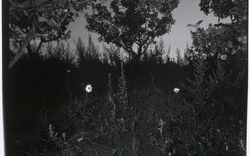
Are You Afraid of the Dark?
Are You Afraid of the Dark?
Actions:
Zainab Marvi on how superstitions regulate women's urban experience in Karachi
Title:
Are You Afraid of the Dark?
Zainab Marvi on how superstitions regulate women's urban experience in Karachi
Actions:
Are You Afraid of the Dark?
Zainab Marvi on how superstitions regulate women's urban experience in Karachi
Actions:
Issue:
Keep Safe
Keep Safe
Form:
archives
Level of archival description:
Fonds
archives
Level of archival description:
Fonds
Reference number:
AP167
Synopsis:
The ONL [Oosterhuis_Lénárd] NSA Muscle project records, 1995-2013, contain approximately 5,000 digital working files for the NSA Muscle, a built prototype commissioned for the Non-Standard Architecture exhibition at the Centre George Pompidou in Paris in 2003. The NSA Muscle is a programmable structure that changes its shape and content in real time. The records are entirely digital, and include administrative files, CAD files, Virtools files, publicity materials and photographs. They document the planning, design development, construction and exhibition of the NSA Muscle and related projects.
AP167
Synopsis:
The ONL [Oosterhuis_Lénárd] NSA Muscle project records, 1995-2013, contain approximately 5,000 digital working files for the NSA Muscle, a built prototype commissioned for the Non-Standard Architecture exhibition at the Centre George Pompidou in Paris in 2003. The NSA Muscle is a programmable structure that changes its shape and content in real time. The records are entirely digital, and include administrative files, CAD files, Virtools files, publicity materials and photographs. They document the planning, design development, construction and exhibition of the NSA Muscle and related projects.
People:
Date:
1995-2013
1995-2013
Title:
ONL [Oosterhuis_Lénárd] NSA Muscle project records
Actions:
AP167
Synopsis:
The ONL [Oosterhuis_Lénárd] NSA Muscle project records, 1995-2013, contain approximately 5,000 digital working files for the NSA Muscle, a built prototype commissioned for the Non-Standard Architecture exhibition at the Centre George Pompidou in Paris in 2003. The NSA Muscle is a programmable structure that changes its shape and content in real time. The records are entirely digital, and include administrative files, CAD files, Virtools files, publicity materials and photographs. They document the planning, design development, construction and exhibition of the NSA Muscle and related projects.
ONL [Oosterhuis_Lénárd] NSA Muscle project records
Actions:
AP167
Synopsis:
The ONL [Oosterhuis_Lénárd] NSA Muscle project records, 1995-2013, contain approximately 5,000 digital working files for the NSA Muscle, a built prototype commissioned for the Non-Standard Architecture exhibition at the Centre George Pompidou in Paris in 2003. The NSA Muscle is a programmable structure that changes its shape and content in real time. The records are entirely digital, and include administrative files, CAD files, Virtools files, publicity materials and photographs. They document the planning, design development, construction and exhibition of the NSA Muscle and related projects.
Form:
archives
Level of archival description:
Fonds
archives
Level of archival description:
Fonds
Date:
1995-2013
1995-2013
People:


