


1462 Results
Form:
books
books
Actions:
Price:
$99.95
(available to order)
Summary:
Think plastic. Think inflatable PVC chairs and TV tables. It must be the 1960s, when radical furniture designs "popped" next to new art, traditional designs were recast with new materials, and the results were often mixed in one room. One of the boldest decades of design in the twentieth century, this a decade of contradictions in styles that Anne Bony has captured in(...)
Title:
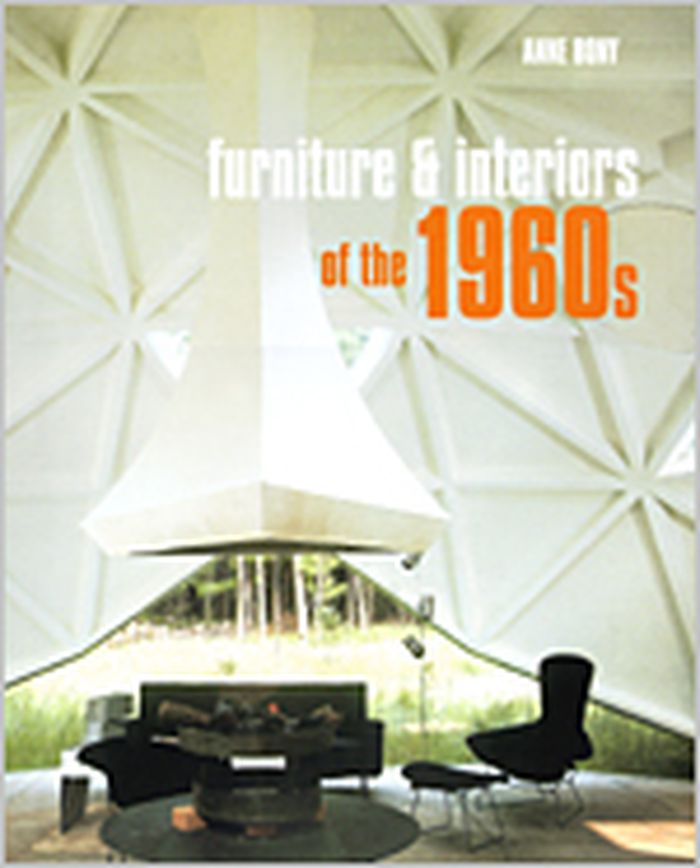
Furniture & interiors of the 1960s
Actions:
Price:
$99.95
(available to order)
Summary:
Think plastic. Think inflatable PVC chairs and TV tables. It must be the 1960s, when radical furniture designs "popped" next to new art, traditional designs were recast with new materials, and the results were often mixed in one room. One of the boldest decades of design in the twentieth century, this a decade of contradictions in styles that Anne Bony has captured in this book. "Furniture and interiors of the 1960s" pays homage to the vibrancy and buoyant energy of the decade's design trends and influences in 300 key designs that attract enormous interest and command unprecedented prices today. For the first time, America was leading a design revolution with Wendell Castle's Molar and Castle chairs, Estelle Lavergne's lucite furniture and the experiments of Ray and Charles Eames. Warren Planter, Hans Knoll, Harry Bertoia, Alexander Girard, and Robert Propst were world-ranked designers who pioneered new directions in furnishings and accessories that appeared in trendy homes and offices in Europe and Asia.
Form:
books
books
Publication:
May 2004, Paris
May 2004, Paris
Subject:
Interior Design
Interior Design
Form:
books
books
Price:
$61.95
(available to order)
Summary:
The cased photographic portrait was fashionable from the early 1840s until the end of the 1860s. Around it grew a considerable industry supplying everything from simple leather covered cases, to sophisticated creations in moulded thermoplastic. This book looks at the photographic portrait from daguerrotype to carte de visite, and at the range of cases in which it was(...)
Title:
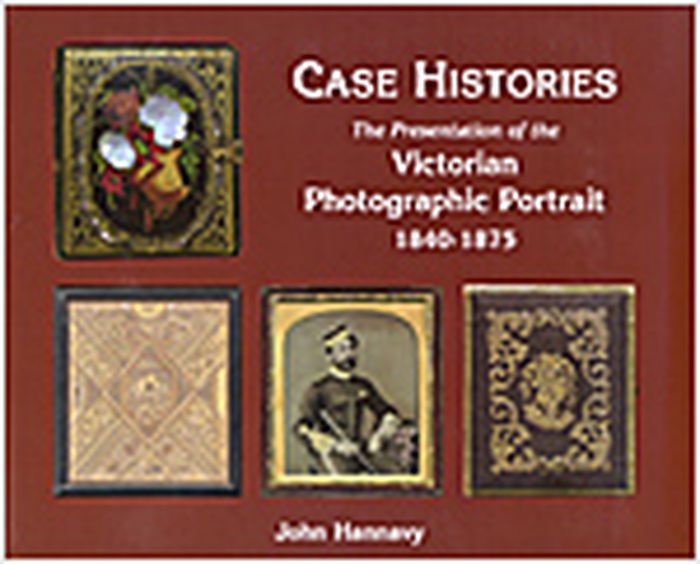
Case histories : the presentation of the photographic portrait 1840-1875
Actions:
Price:
$61.95
(available to order)
Summary:
The cased photographic portrait was fashionable from the early 1840s until the end of the 1860s. Around it grew a considerable industry supplying everything from simple leather covered cases, to sophisticated creations in moulded thermoplastic. This book looks at the photographic portrait from daguerrotype to carte de visite, and at the range of cases in which it was marketed. The cased Victorian photographic portrait was a sophisticated product, with the delicate hand-colouring of the image echoed in the colours of the protective velvet pad and trim with which the case was finished. Hitherto, the relationship between the portrait and its packaging and presentation has not been explored in book form. " Case histories " also highlights British manufacturers of cases and trims, and identifies the only British manufacturer yet found who made moulded thermoplastic cases. Such was the importance of the cased photographic portrait, that moulded picture cases were one of the world’s first uses for moulded plastic.
Form:
books
books
Publication:
January 1900, Suffolk
January 1900, Suffolk
Subject:
Theory of Photography
Theory of Photography
Form:
books
books
Actions:
Price:
$23.00
(available to order)
Summary:
First published in 1971. In this volume, British artist David Musgrave revisits Franz Kafka's novella Blumfeld, an Elderly Bachelor, the tale of a man who arrives home one day to find two plastic balls bouncing off the ground of their own accord. To his great irritation, these balls follow Blumfeld--who is a stickler for absolute order in his universe--wherever he goes,(...)
Subject:
Graphic Design and Typography
Graphic Design and Typography
Publication:
January 2009, London
January 2009, London
Title:
Blumfeld, an elderly bachelor
Actions:
Price:
$23.00
(available to order)
Summary:
First published in 1971. In this volume, British artist David Musgrave revisits Franz Kafka's novella Blumfeld, an Elderly Bachelor, the tale of a man who arrives home one day to find two plastic balls bouncing off the ground of their own accord. To his great irritation, these balls follow Blumfeld--who is a stickler for absolute order in his universe--wherever he goes, and his attempts to divest himself of their presence are described with Kafka's customary flair for the detached observation of the extremely bizarre. Musgrave has responded to Kafka's story with a series of pencil drawings of curious artifacts and pseudo-archaeological fragments of his own invention. Combined with John Morgan's austere design--which finds the book typeset in Kafka's preferred font and large type size, which he was never able to see printed in his lifetime--this volume almost feels like a case study of some unique bygone supernatural phenomenon.
Form:
books
books
Publication:
January 2009, London
January 2009, London
Subject:
Graphic Design and Typography
Graphic Design and Typography
Form:
books
books
Title:
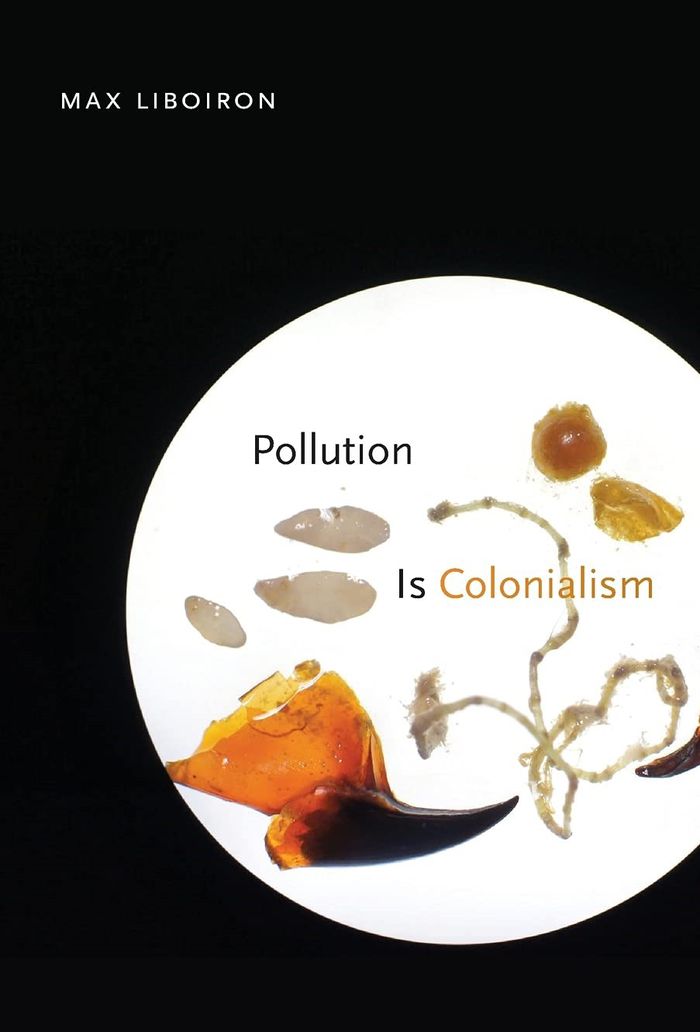
Pollution is colonialism
Pollution is colonialism
Actions:
Price:
$33.95
(available to order)
Summary:
In 'Pollution Is Colonialism' Max Liboiron presents a framework for understanding scientific research methods as practices that can align with or against colonialism. They point out that even when researchers are working toward benevolent goals, environmental science and activism are often premised on a colonial worldview and access to land. Focusing on plastic pollution,(...)
Title:
Pollution is colonialism
Actions:
Price:
$33.95
(available to order)
Summary:
In 'Pollution Is Colonialism' Max Liboiron presents a framework for understanding scientific research methods as practices that can align with or against colonialism. They point out that even when researchers are working toward benevolent goals, environmental science and activism are often premised on a colonial worldview and access to land. Focusing on plastic pollution, the book models an anticolonial scientific practice aligned with Indigenous, particularly Métis, concepts of land, ethics, and relations. Liboiron draws on their work in the Civic Laboratory for Environmental Action Research (CLEAR) — an anticolonial science laboratory in Newfoundland, Canada — to illuminate how pollution is not a symptom of capitalism but a violent enactment of colonial land relations that claim access to Indigenous land. Liboiron's creative, lively, and passionate text refuses theories of pollution that make Indigenous land available for settler and colonial goals. In this way, their methodology demonstrates that anticolonial science is not only possible but is currently being practiced in ways that enact more ethical modes of being in the world.
Form:
books
books
Publication:
May 2021
May 2021
Subject:
Environment and environmental theory
Environment and environmental theory
Form:
books
books
Title:
Other things
Other things
Actions:
Price:
$59.95
(available to order)
Summary:
From the pencil to the puppet to the drone, the humanities and the social sciences continue to ride a wave of interest in material culture and the world of things. How should we understand the force and figure of that wave as it shapes different disciplines? Other Things explores this question by considering a wide assortment of objects—from beach glass to cell phones,(...)
Title:
Other things
Actions:
Price:
$59.95
(available to order)
Summary:
From the pencil to the puppet to the drone, the humanities and the social sciences continue to ride a wave of interest in material culture and the world of things. How should we understand the force and figure of that wave as it shapes different disciplines? Other Things explores this question by considering a wide assortment of objects—from beach glass to cell phones, sneakers to skyscrapers—that have fascinated a range of writers and artists, including Virginia Woolf, Man Ray, Spike Lee, and Don DeLillo. The book ranges across the literary, visual, and plastic arts to depict the curious lives of things. Beginning with Achilles’s Shield, then tracking the object/thing distinction as it appears in the work of Martin Heidegger and Jacques Lacan, Bill Brown ultimately focuses on the thingness disclosed by specific literary and artistic works. Combining history and literature, criticism and theory, Other Things provides a new way of understanding the inanimate object world and the place of the human within it, encouraging us to think anew about what we mean by materiality itself.
Form:
books
books
Publication:
November 2015
November 2015
Subject:
Design Theory
Design Theory
Form:
books
books
Title:
Naked architecture
Naked architecture
Actions:
Price:
$51.00
(available to order)
Summary:
An account of one of the most interesting phenomena of contemporary architecture: the return to the structure. Over the last ten years architecture would seem to have rediscovered engineering. Now that the post modern period has passed—in which the structure of buildings was camouflaged by coverings of every kind—architecture today seems to have undressed, almost as(...)
Title:
Naked architecture
Actions:
Price:
$51.00
(available to order)
Summary:
An account of one of the most interesting phenomena of contemporary architecture: the return to the structure. Over the last ten years architecture would seem to have rediscovered engineering. Now that the post modern period has passed—in which the structure of buildings was camouflaged by coverings of every kind—architecture today seems to have undressed, almost as though wishing to show how it is made. The rediscovery in recent years of plastic form has brought about a closer relationship between architects and engineers. To this we must add the rise of new issues, such as that of environmental engineering, which has changed from being solely a technical and aesthetic practice into a movement in environmentally conscious architecture. If there is a phenomenon today that is able to hold together the various expressions of contemporary architecture, it is this return to the structure and the methods with which it is realized. Through its six thematic categories, this book provides an account of one of the most interesting phenomena of contemporary construction—the laying bare of architecture.
Form:
books
books
Publication:
November 2012
November 2012
Subject:
Engineering Structures
Engineering Structures
Form:
books
books
Actions:
Price:
$27.95
(available in store)
Summary:
The question "Are we human?" is both urgent and ancient. Beatriz Colomina and Mark Wigley offer a multi-layered exploration of the intimate relationship between human and design and rethink the philosophy of design in a multi-dimensional exploration from the very ?rst tools and ornaments to the constant buzz of social media. The average day involves the experience of(...)
Title:
Are we human?: notes on an archaeology of design
Actions:
Price:
$27.95
(available in store)
Summary:
The question "Are we human?" is both urgent and ancient. Beatriz Colomina and Mark Wigley offer a multi-layered exploration of the intimate relationship between human and design and rethink the philosophy of design in a multi-dimensional exploration from the very ?rst tools and ornaments to the constant buzz of social media. The average day involves the experience of thousands of layers of design that reach to outside space but also reach deep into our bodies and brains. Even the planet itself has been completely encrusted by design as a geological layer. There is no longer an outside to the world of design. Colomina’s and Wigley’s field notes offer an archaeology of the way design has gone viral and is now bigger than the world. They range across the last few hundred thousand years and the last few seconds to scrutinize the uniquely plastic relation between brain and artifact. A vivid portrait emerges. Design is what makes the human. It becomes the way humans ask questions and thereby continuously redesign themselves.
Form:
books
books
Publication:
January 2017
January 2017
Subject:
Design Theory
Design Theory
Form:
books
books
Title:
Antoni Gaudí, 1852 - 1926
Antoni Gaudí, 1852 - 1926
Actions:
Price:
$115.00
(available in store)
Summary:
Antoni Gaudí (1852–1928) was a builder by instinct and by practice, fanciful and baroque in his sensibility, in love with the bright colours and plastic forms of the Mediterranean tradition. Despite his considerable contributions, Gaudí was an isolated figure in the architecture of the modern era. Critics were slow to recognize the prophetic value of his work, owing to(...)
Title:
Antoni Gaudí, 1852 - 1926
Actions:
Price:
$115.00
(available in store)
Summary:
Antoni Gaudí (1852–1928) was a builder by instinct and by practice, fanciful and baroque in his sensibility, in love with the bright colours and plastic forms of the Mediterranean tradition. Despite his considerable contributions, Gaudí was an isolated figure in the architecture of the modern era. Critics were slow to recognize the prophetic value of his work, owing to the difficulty in reconciling it with the development of the Modern Movement. Gaudí invented a new form of modernism that combined elements of art nouveau, Catalan nationalism, Gothic Revival and his own relentlessly original imagination. His eclectic experience was made possible by special historical circumstances such as the economic prosperity of Barcelona and the existence of highly skilled craftsmen in Catalonia. This volume covers Gaudí’s work in systematic fashion, from the Güell Palace to the park of the same name, and finally to his unfinished masterpiece, the church of the Sagrada Familia. Author Juan José Lahuerta devotes an attentive critical re-examination of the architect’s work through a thorough analysis of his designs and writings.
Form:
books
books
Publication:
October 2003, Milan
October 2003, Milan
Subject:
Architecture Monographs
Architecture Monographs
Form:
books
books
Actions:
Price:
$75.00
(available to order)
Summary:
From constructivist textile and clothing designs by Aleksandr Rodchenko and Varvara Stepanova to the soft sculptures of Claes Oldenburg and Louise Bourgeois, twentieth century artists have looked to fabric and other materials to push artistic production beyond the image and the object. Over the past twenty-five years The Fabric Workshop and Museum, an experimental arts(...)
Subject:
Contemporary Art Monographs
Contemporary Art Monographs
Publication:
March 2003, Cambridge / London
March 2003, Cambridge / London
Title:
New material as new media : the fabric workhop and museum
Actions:
Price:
$75.00
(available to order)
Summary:
From constructivist textile and clothing designs by Aleksandr Rodchenko and Varvara Stepanova to the soft sculptures of Claes Oldenburg and Louise Bourgeois, twentieth century artists have looked to fabric and other materials to push artistic production beyond the image and the object. Over the past twenty-five years The Fabric Workshop and Museum, an experimental arts laboratory in Philadelphia, has evolved into an influential contemporary art museum with a significant permanent collection, collaborating with artists to redefine the boundaries of fabric and other innovative materials including rubber, industrial felt, fiberglass, horse hair, hog intestine, and plastic as artistic media. This book, which accompanies a twenty-five-year retrospective exhibition from the collection, highlights more than fifty artists' projects. The artists, designers, and architects include Marina Abramovic, Doug Aitken, Louise Bourgeois, Chris Burden, Felix Gonzalez-Torres, Ann Hamilton, Howard Hodgkin, Anish Kapoor, Roy Lichtenstein, Glenn Ligon, Robert Morris, Louise Nevelson, Faith Ringgold, Yinka Shonibare, Gary Simmons, Robert Venturi and Denise Scott Brown, Carrie Mae Weems, Rachel Whiteread, and Yukinori Yanagi.
Form:
books
books
Publication:
March 2003, Cambridge / London
March 2003, Cambridge / London
Subject:
Contemporary Art Monographs
Contemporary Art Monographs
Form:
books
books

Title:
Animate form, 2nd ed
Animate form, 2nd ed
Actions:
Price:
$48.00
(available to order)
Summary:
"Animate Form" is a book and interactive CD-ROM of recent architectural projects designed by Form, the office of Greg Lynn. The projects documented here explore the potential of time-based animation techniques to(...)
$48.00
(available to order)
Summary:
"Animate Form" is a book and interactive CD-ROM of recent architectural projects designed by Form, the office of Greg Lynn. The projects documented here explore the potential of time-based animation techniques to(...)
Title:
Animate form, 2nd ed
Actions:
Price:
$48.00
(available to order)
Summary:
"Animate Form" is a book and interactive CD-ROM of recent architectural projects designed by Form, the office of Greg Lynn. The projects documented here explore the potential of time-based animation techniques to inform architectural design. Historically, architecture has been considered static, fixed, and inert. Through the use of state-of-the-art animation and special-effects software, Lynn transforms space and form into highly plastic, flexible, and mutable entities. He uses topological geometries to bend, twist, deform, and differentiate structure, creating unprecedented departures from preconceived notions of architecture. In experimenting with these new methods and media, Lynn has charted an innovative direction in design. The book provides a theoretical context for the experimental projects through a collection of texts by Lynn, extensively illustrated in colour. The CD-ROM is an interactive HTML-based environment that fully documents the design processes used to generate the projects through animations, renderings, model photographs, animations, and texts. The viewer is able to navigate through space and select objects and animations to view at different scales.
Form:
books
books
Publication:
January 2011, New York
January 2011, New York
Subject:
Architecture Monographs
Architecture Monographs


