


33582 Results
Level of archival description:
Project
Project
Actions:
Reference number:
AP066.S5.D4
Description:
Le dossier documente la participation de Jacques Rousseau à l'exposition "Fondation", tenu dans la salle Sottsass au Centre Canadien d'Architecture, à Montréal, Québec, en 1996, du 24 mai au 4 aout 1996. Le dossier contient des documents textuels, des documents photographique et une peinture. Description du projet: "Sur le toît de cette maison-table-mausolée sont déposées, comme des offrandes, les maquettes des projets fondateurs de la démarche de Jacques Rousseau; un appel à l'engagement dans le travail personnel plutôt qu'à la recherche de dogme, de modes ou de paroles salvatrices." Georges Adamczyk, "Paroles", dans Installations architecturales: 5 architectes québécois au CCA, Montréal, Centre Canadien d'Architecture, 1999, p. 20.
AP066.S5.D4
Description:
Le dossier documente la participation de Jacques Rousseau à l'exposition "Fondation", tenu dans la salle Sottsass au Centre Canadien d'Architecture, à Montréal, Québec, en 1996, du 24 mai au 4 aout 1996. Le dossier contient des documents textuels, des documents photographique et une peinture. Description du projet: "Sur le toît de cette maison-table-mausolée sont déposées, comme des offrandes, les maquettes des projets fondateurs de la démarche de Jacques Rousseau; un appel à l'engagement dans le travail personnel plutôt qu'à la recherche de dogme, de modes ou de paroles salvatrices." Georges Adamczyk, "Paroles", dans Installations architecturales: 5 architectes québécois au CCA, Montréal, Centre Canadien d'Architecture, 1999, p. 20.
People:
Date:
24 mai-4 aout 1996
24 mai-4 aout 1996
Title:
Exposition "Fondation" au Centre Canadien d'Architecture
Actions:
AP066.S5.D4
Description:
Le dossier documente la participation de Jacques Rousseau à l'exposition "Fondation", tenu dans la salle Sottsass au Centre Canadien d'Architecture, à Montréal, Québec, en 1996, du 24 mai au 4 aout 1996. Le dossier contient des documents textuels, des documents photographique et une peinture. Description du projet: "Sur le toît de cette maison-table-mausolée sont déposées, comme des offrandes, les maquettes des projets fondateurs de la démarche de Jacques Rousseau; un appel à l'engagement dans le travail personnel plutôt qu'à la recherche de dogme, de modes ou de paroles salvatrices." Georges Adamczyk, "Paroles", dans Installations architecturales: 5 architectes québécois au CCA, Montréal, Centre Canadien d'Architecture, 1999, p. 20.
Exposition "Fondation" au Centre Canadien d'Architecture
Actions:
AP066.S5.D4
Description:
Le dossier documente la participation de Jacques Rousseau à l'exposition "Fondation", tenu dans la salle Sottsass au Centre Canadien d'Architecture, à Montréal, Québec, en 1996, du 24 mai au 4 aout 1996. Le dossier contient des documents textuels, des documents photographique et une peinture. Description du projet: "Sur le toît de cette maison-table-mausolée sont déposées, comme des offrandes, les maquettes des projets fondateurs de la démarche de Jacques Rousseau; un appel à l'engagement dans le travail personnel plutôt qu'à la recherche de dogme, de modes ou de paroles salvatrices." Georges Adamczyk, "Paroles", dans Installations architecturales: 5 architectes québécois au CCA, Montréal, Centre Canadien d'Architecture, 1999, p. 20.
Level of archival description:
Dossier 4
Dossier 4
Date:
24 mai-4 aout 1996
24 mai-4 aout 1996
People:
Form:
exhibitions
exhibitions
Description:
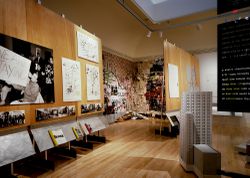
In the 1980s and 1990s, the trend in urban design shifted from the global planning approach—exemplified by the urban master plans of the 1950s and 1960s—to a sector based approach favouring gradual change rather than the rebuilding of cities. Urban Revisions: Current Projects for the Public Realm examines the physical and social space of the city, as seen by contemporary(...)
In the 1980s and 1990s, the trend in urban design shifted from the global planning approach—exemplified by the urban master plans of the 1950s and 1960s—to a sector based approach favouring gradual change rather than the rebuilding of cities. Urban Revisions: Current Projects for the Public Realm examines the physical and social space of the city, as seen by contemporary(...)
Location:
Main galleries
Main galleries
Date:
19 October 1994 to 8 January 1995
19 October 1994 to 8 January 1995
Title:
Urban Revisions: Current Projects for the Public Realm
Actions:
Description:
In the 1980s and 1990s, the trend in urban design shifted from the global planning approach—exemplified by the urban master plans of the 1950s and 1960s—to a sector based approach favouring gradual change rather than the rebuilding of cities. Urban Revisions: Current Projects for the Public Realm examines the physical and social space of the city, as seen by contemporary(...)
Urban Revisions: Current Projects for the Public Realm
Actions:
Description:
In the 1980s and 1990s, the trend in urban design shifted from the global planning approach—exemplified by the urban master plans of the 1950s and 1960s—to a sector based approach favouring gradual change rather than the rebuilding of cities. Urban Revisions: Current Projects for the Public Realm examines the physical and social space of the city, as seen by contemporary(...)
Form:
exhibitions
exhibitions
Date:
19 October 1994 to
8 January 1995
19 October 1994 to
8 January 1995
Location:
Main galleries
Main galleries
Form:
exhibitions
exhibitions
Actions:
Description:
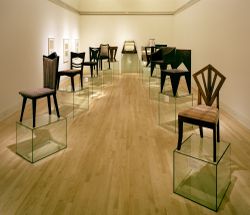
Combining enthusiasm for the radically new world view of cubist art with a desire to establish an autonomous aesthetic as well as political presence, the Czech cubists produced not only powerful visionary work, but also went beyond theory to practice. Czech Cubism: Architecture and Design, 1910–1925 brings together the work of a group of Czech artists, architects, and(...)
Combining enthusiasm for the radically new world view of cubist art with a desire to establish an autonomous aesthetic as well as political presence, the Czech cubists produced not only powerful visionary work, but also went beyond theory to practice. Czech Cubism: Architecture and Design, 1910–1925 brings together the work of a group of Czech artists, architects, and(...)
Location:
Main galleries
Main galleries
Date:
10 June 1992 to 2 August 1992
10 June 1992 to 2 August 1992
Title:
Czech Cubism: Architecture and Design, 1910–1925
Actions:
Description:
Combining enthusiasm for the radically new world view of cubist art with a desire to establish an autonomous aesthetic as well as political presence, the Czech cubists produced not only powerful visionary work, but also went beyond theory to practice. Czech Cubism: Architecture and Design, 1910–1925 brings together the work of a group of Czech artists, architects, and(...)
Czech Cubism: Architecture and Design, 1910–1925
Actions:
Description:
Combining enthusiasm for the radically new world view of cubist art with a desire to establish an autonomous aesthetic as well as political presence, the Czech cubists produced not only powerful visionary work, but also went beyond theory to practice. Czech Cubism: Architecture and Design, 1910–1925 brings together the work of a group of Czech artists, architects, and(...)
Form:
exhibitions
exhibitions
Date:
10 June 1992 to
2 August 1992
10 June 1992 to
2 August 1992
Location:
Main galleries
Main galleries
Level of archival description:
Series
Series
Title:
Research files
Research files
Reference number:
AP197.S2
Description:
This series consists of research materials, 1958-2016, that Frampton was either interested in or may have used to develop his works and teachings. Materials consist of articles, student essays, biographies, chronologies of architectural movements, maps, curriculum vitaes, and journal, newspaper and magazine clippings. Reprographic copies of architectural drawings as well as prints, photographs, negatives, and slides that depict the built projects of various architects are also included in this series. Research materials consist of writings by or about various architects and theorists such as: Mario Botta; Charles Correa; Alan Colquhoun; Marco Frascari;Ignacio de Sola-Morales; O.M. Ungers; James Stirling; Fumihiko Maki; Le Corbusier; Tadao Ando; Alvaro Siza; Peter Eisenman; Frank Lloyd Wright; Alvar Aalto; Hannah Arendt; Walter Benjamin; H.P. Berlage; Mario Botta; Louis Kahn; Mies dan ver Rohe; Jørn Utzon; August Perret; and Louis Sullivan. The subjects explored in these texts are diverse and include: various architectural styles; architecture education; meaning in architecture, philosophy; film; art; music; mathematics; ecology; landscapes/gardens; and housing and urbanism.
AP197.S2
Description:
This series consists of research materials, 1958-2016, that Frampton was either interested in or may have used to develop his works and teachings. Materials consist of articles, student essays, biographies, chronologies of architectural movements, maps, curriculum vitaes, and journal, newspaper and magazine clippings. Reprographic copies of architectural drawings as well as prints, photographs, negatives, and slides that depict the built projects of various architects are also included in this series. Research materials consist of writings by or about various architects and theorists such as: Mario Botta; Charles Correa; Alan Colquhoun; Marco Frascari;Ignacio de Sola-Morales; O.M. Ungers; James Stirling; Fumihiko Maki; Le Corbusier; Tadao Ando; Alvaro Siza; Peter Eisenman; Frank Lloyd Wright; Alvar Aalto; Hannah Arendt; Walter Benjamin; H.P. Berlage; Mario Botta; Louis Kahn; Mies dan ver Rohe; Jørn Utzon; August Perret; and Louis Sullivan. The subjects explored in these texts are diverse and include: various architectural styles; architecture education; meaning in architecture, philosophy; film; art; music; mathematics; ecology; landscapes/gardens; and housing and urbanism.
People:
Date:
1958-2016
1958-2016
Title:
Research files
Actions:
AP197.S2
Description:
This series consists of research materials, 1958-2016, that Frampton was either interested in or may have used to develop his works and teachings. Materials consist of articles, student essays, biographies, chronologies of architectural movements, maps, curriculum vitaes, and journal, newspaper and magazine clippings. Reprographic copies of architectural drawings as well as prints, photographs, negatives, and slides that depict the built projects of various architects are also included in this series. Research materials consist of writings by or about various architects and theorists such as: Mario Botta; Charles Correa; Alan Colquhoun; Marco Frascari;Ignacio de Sola-Morales; O.M. Ungers; James Stirling; Fumihiko Maki; Le Corbusier; Tadao Ando; Alvaro Siza; Peter Eisenman; Frank Lloyd Wright; Alvar Aalto; Hannah Arendt; Walter Benjamin; H.P. Berlage; Mario Botta; Louis Kahn; Mies dan ver Rohe; Jørn Utzon; August Perret; and Louis Sullivan. The subjects explored in these texts are diverse and include: various architectural styles; architecture education; meaning in architecture, philosophy; film; art; music; mathematics; ecology; landscapes/gardens; and housing and urbanism.
Research files
Actions:
AP197.S2
Description:
This series consists of research materials, 1958-2016, that Frampton was either interested in or may have used to develop his works and teachings. Materials consist of articles, student essays, biographies, chronologies of architectural movements, maps, curriculum vitaes, and journal, newspaper and magazine clippings. Reprographic copies of architectural drawings as well as prints, photographs, negatives, and slides that depict the built projects of various architects are also included in this series. Research materials consist of writings by or about various architects and theorists such as: Mario Botta; Charles Correa; Alan Colquhoun; Marco Frascari;Ignacio de Sola-Morales; O.M. Ungers; James Stirling; Fumihiko Maki; Le Corbusier; Tadao Ando; Alvaro Siza; Peter Eisenman; Frank Lloyd Wright; Alvar Aalto; Hannah Arendt; Walter Benjamin; H.P. Berlage; Mario Botta; Louis Kahn; Mies dan ver Rohe; Jørn Utzon; August Perret; and Louis Sullivan. The subjects explored in these texts are diverse and include: various architectural styles; architecture education; meaning in architecture, philosophy; film; art; music; mathematics; ecology; landscapes/gardens; and housing and urbanism.
Level of archival description:
Series
Series
Date:
1958-2016
1958-2016
People:
Level of archival description:
Project
Project
Reference number:
CI005.S1.1942.PR2
Description:
In the early 1900s, Hofplein became problematic for its traffic gridlock. In 1942 Allied bombing demolished some of the area's surrounding buildings and paved the way for re-planning. Architect W.G. Witteveen proposed a reconstruction plan, as did J.A. Ringers, but Oud subsequently was delegated as supervisor of the Hofplein reconstruction plan with Jos Klijnen as architect. Oud's proposal was drawn up by 1943. Oud planned to divide Hofplein into three parts, including a circular traffic loop, an oval entertainment plaza, and an outdoor space with a café. He also proposed replacing an older tower building with a new town hall. Witteveen proposed an entirely different design and was unable to reconcile Oud to his plan; however, the city adopted an entirely new plan that was favoured by influential Rotterdam businessmen, one designed by Witteveen's assistant (Taverne et al. 2001, 429-432). Project series includes drawings of site plans for Hofplein as well as photographs of perspective drawings.
CI005.S1.1942.PR2
Description:
In the early 1900s, Hofplein became problematic for its traffic gridlock. In 1942 Allied bombing demolished some of the area's surrounding buildings and paved the way for re-planning. Architect W.G. Witteveen proposed a reconstruction plan, as did J.A. Ringers, but Oud subsequently was delegated as supervisor of the Hofplein reconstruction plan with Jos Klijnen as architect. Oud's proposal was drawn up by 1943. Oud planned to divide Hofplein into three parts, including a circular traffic loop, an oval entertainment plaza, and an outdoor space with a café. He also proposed replacing an older tower building with a new town hall. Witteveen proposed an entirely different design and was unable to reconcile Oud to his plan; however, the city adopted an entirely new plan that was favoured by influential Rotterdam businessmen, one designed by Witteveen's assistant (Taverne et al. 2001, 429-432). Project series includes drawings of site plans for Hofplein as well as photographs of perspective drawings.
People:
Date:
1942-1945
1942-1945
Title:
Hofplein Design (City Centre), Rotterdam, Netherlands (1942-1945)
Actions:
CI005.S1.1942.PR2
Description:
In the early 1900s, Hofplein became problematic for its traffic gridlock. In 1942 Allied bombing demolished some of the area's surrounding buildings and paved the way for re-planning. Architect W.G. Witteveen proposed a reconstruction plan, as did J.A. Ringers, but Oud subsequently was delegated as supervisor of the Hofplein reconstruction plan with Jos Klijnen as architect. Oud's proposal was drawn up by 1943. Oud planned to divide Hofplein into three parts, including a circular traffic loop, an oval entertainment plaza, and an outdoor space with a café. He also proposed replacing an older tower building with a new town hall. Witteveen proposed an entirely different design and was unable to reconcile Oud to his plan; however, the city adopted an entirely new plan that was favoured by influential Rotterdam businessmen, one designed by Witteveen's assistant (Taverne et al. 2001, 429-432). Project series includes drawings of site plans for Hofplein as well as photographs of perspective drawings.
Hofplein Design (City Centre), Rotterdam, Netherlands (1942-1945)
Actions:
CI005.S1.1942.PR2
Description:
In the early 1900s, Hofplein became problematic for its traffic gridlock. In 1942 Allied bombing demolished some of the area's surrounding buildings and paved the way for re-planning. Architect W.G. Witteveen proposed a reconstruction plan, as did J.A. Ringers, but Oud subsequently was delegated as supervisor of the Hofplein reconstruction plan with Jos Klijnen as architect. Oud's proposal was drawn up by 1943. Oud planned to divide Hofplein into three parts, including a circular traffic loop, an oval entertainment plaza, and an outdoor space with a café. He also proposed replacing an older tower building with a new town hall. Witteveen proposed an entirely different design and was unable to reconcile Oud to his plan; however, the city adopted an entirely new plan that was favoured by influential Rotterdam businessmen, one designed by Witteveen's assistant (Taverne et al. 2001, 429-432). Project series includes drawings of site plans for Hofplein as well as photographs of perspective drawings.
Level of archival description:
project
project
Date:
1942-1945
1942-1945
People:
Level of archival description:
Project
Project
Reference number:
AP144.S2.D72
Description:
File documents an unexecuted project for a multiple use building in Birmingham, England, for Shantasea Limited. Cedric Price resigned as the architect for the project and took on the role of architect for Birmingham and Midland Institute (BMI), one of the proposed tenants for the Shantasea project. The multi-functional centre was to include a theatre, TV studios, an audio-visual exhibition area, retail stores, offices, a meeting hall, a gallery, a seminar area, a library, and parking within an approx. 3,500,000 square-foot area. Drawings include sections showing preliminary circulation patterns, and design development drawings for seven alternate schemes, each with different total square footage. Volumetric studies compare functions and areas for each design. Diagrammatic plans and sections explore vertical and horizontal circulation patterns, alternate layouts for parking, and the relationship between areas of the building for BMI and those shared by BMI and other tenants. Material in this file was produced between 1967 and 1970. File contains conceptual drawings, design development drawings, and textual records.
AP144.S2.D72
Description:
File documents an unexecuted project for a multiple use building in Birmingham, England, for Shantasea Limited. Cedric Price resigned as the architect for the project and took on the role of architect for Birmingham and Midland Institute (BMI), one of the proposed tenants for the Shantasea project. The multi-functional centre was to include a theatre, TV studios, an audio-visual exhibition area, retail stores, offices, a meeting hall, a gallery, a seminar area, a library, and parking within an approx. 3,500,000 square-foot area. Drawings include sections showing preliminary circulation patterns, and design development drawings for seven alternate schemes, each with different total square footage. Volumetric studies compare functions and areas for each design. Diagrammatic plans and sections explore vertical and horizontal circulation patterns, alternate layouts for parking, and the relationship between areas of the building for BMI and those shared by BMI and other tenants. Material in this file was produced between 1967 and 1970. File contains conceptual drawings, design development drawings, and textual records.
People:
Date:
1967-1970
1967-1970
Title:
Shantasea Development
Actions:
AP144.S2.D72
Description:
File documents an unexecuted project for a multiple use building in Birmingham, England, for Shantasea Limited. Cedric Price resigned as the architect for the project and took on the role of architect for Birmingham and Midland Institute (BMI), one of the proposed tenants for the Shantasea project. The multi-functional centre was to include a theatre, TV studios, an audio-visual exhibition area, retail stores, offices, a meeting hall, a gallery, a seminar area, a library, and parking within an approx. 3,500,000 square-foot area. Drawings include sections showing preliminary circulation patterns, and design development drawings for seven alternate schemes, each with different total square footage. Volumetric studies compare functions and areas for each design. Diagrammatic plans and sections explore vertical and horizontal circulation patterns, alternate layouts for parking, and the relationship between areas of the building for BMI and those shared by BMI and other tenants. Material in this file was produced between 1967 and 1970. File contains conceptual drawings, design development drawings, and textual records.
Shantasea Development
Actions:
AP144.S2.D72
Description:
File documents an unexecuted project for a multiple use building in Birmingham, England, for Shantasea Limited. Cedric Price resigned as the architect for the project and took on the role of architect for Birmingham and Midland Institute (BMI), one of the proposed tenants for the Shantasea project. The multi-functional centre was to include a theatre, TV studios, an audio-visual exhibition area, retail stores, offices, a meeting hall, a gallery, a seminar area, a library, and parking within an approx. 3,500,000 square-foot area. Drawings include sections showing preliminary circulation patterns, and design development drawings for seven alternate schemes, each with different total square footage. Volumetric studies compare functions and areas for each design. Diagrammatic plans and sections explore vertical and horizontal circulation patterns, alternate layouts for parking, and the relationship between areas of the building for BMI and those shared by BMI and other tenants. Material in this file was produced between 1967 and 1970. File contains conceptual drawings, design development drawings, and textual records.
Level of archival description:
File 72
File 72
Date:
1967-1970
1967-1970
People:
Level of archival description:
Project
Project
Actions:
Reference number:
AP207.S1.1973.PR02
Description:
The project series documents the performance "Io Sono La Spia". It consists of a group of photographs of the founders of Global Tools taken in 1973, in Milan, in which Pettena identifies himself as "the spy" by holding a sign that reads "Io Sono La Spia" [I am the Spy]. Global Tools, was a multidisciplinary program of workshops used to promote different tools and materials in architecture and represented the peak in the radical movement in Italy. By identifying himself as "the spy", Pettena "claimed to be a betraying architect and he stated his own 'diversity' by calling into question his identified role as a 'radical architect'." [1] The project series contains the sign with the words "Io Sono La Spia" and photographs of the Global Tools team, including a photograph showing Pettena holding the sign "Io Sono La Spia". Source: [1] Marco Scotini, editor. Non-conscious architecture: Gianni Pettena, Sternberg Press, 2018, 235 pages. p. 184.
AP207.S1.1973.PR02
Description:
The project series documents the performance "Io Sono La Spia". It consists of a group of photographs of the founders of Global Tools taken in 1973, in Milan, in which Pettena identifies himself as "the spy" by holding a sign that reads "Io Sono La Spia" [I am the Spy]. Global Tools, was a multidisciplinary program of workshops used to promote different tools and materials in architecture and represented the peak in the radical movement in Italy. By identifying himself as "the spy", Pettena "claimed to be a betraying architect and he stated his own 'diversity' by calling into question his identified role as a 'radical architect'." [1] The project series contains the sign with the words "Io Sono La Spia" and photographs of the Global Tools team, including a photograph showing Pettena holding the sign "Io Sono La Spia". Source: [1] Marco Scotini, editor. Non-conscious architecture: Gianni Pettena, Sternberg Press, 2018, 235 pages. p. 184.
People:
Date:
1973-2015
1973-2015
Title:
Io Sono La Spia [I am the Spy] (1973)
Actions:
AP207.S1.1973.PR02
Description:
The project series documents the performance "Io Sono La Spia". It consists of a group of photographs of the founders of Global Tools taken in 1973, in Milan, in which Pettena identifies himself as "the spy" by holding a sign that reads "Io Sono La Spia" [I am the Spy]. Global Tools, was a multidisciplinary program of workshops used to promote different tools and materials in architecture and represented the peak in the radical movement in Italy. By identifying himself as "the spy", Pettena "claimed to be a betraying architect and he stated his own 'diversity' by calling into question his identified role as a 'radical architect'." [1] The project series contains the sign with the words "Io Sono La Spia" and photographs of the Global Tools team, including a photograph showing Pettena holding the sign "Io Sono La Spia". Source: [1] Marco Scotini, editor. Non-conscious architecture: Gianni Pettena, Sternberg Press, 2018, 235 pages. p. 184.
Io Sono La Spia [I am the Spy] (1973)
Actions:
AP207.S1.1973.PR02
Description:
The project series documents the performance "Io Sono La Spia". It consists of a group of photographs of the founders of Global Tools taken in 1973, in Milan, in which Pettena identifies himself as "the spy" by holding a sign that reads "Io Sono La Spia" [I am the Spy]. Global Tools, was a multidisciplinary program of workshops used to promote different tools and materials in architecture and represented the peak in the radical movement in Italy. By identifying himself as "the spy", Pettena "claimed to be a betraying architect and he stated his own 'diversity' by calling into question his identified role as a 'radical architect'." [1] The project series contains the sign with the words "Io Sono La Spia" and photographs of the Global Tools team, including a photograph showing Pettena holding the sign "Io Sono La Spia". Source: [1] Marco Scotini, editor. Non-conscious architecture: Gianni Pettena, Sternberg Press, 2018, 235 pages. p. 184.
Level of archival description:
Project
Project
Date:
1973-2015
1973-2015
People:
Level of archival description:
Series
Series
Reference number:
AP133.S1
Description:
This series documents the research, writing, publishing and promotion of Pierre du Prey's "The Villas of Pliny: from antiquity to posterity." The focus of the book is Pliny the Younger’s continuous influence on the work of architects. The book was published in 1994 by The University of Chicago Press. Du Prey undertook this research and writing project after curating the Canadian Centre for Architecture's exhibition "The Villas of Pliny and Classical Architecture in Montréal" presented at the Musée des Beaux-arts de Montréal in 1983. In the exhibition, du Prey notes the influence of Pliny's work on Montréal architecture, including his influence on the work of architect Ernest Cormier. This theme of the exhibtion later became a chapter of his book. The series contains research material, such as notes by Pierre du Prey, sound recordings of interviews with experts and architectural historians, and correspondence. It also contains manuscripts, drafts and dummies for publication, as well as correspondence, financial documents related to publishing, and press clippings on Pierre du Prey and his book.
AP133.S1
Description:
This series documents the research, writing, publishing and promotion of Pierre du Prey's "The Villas of Pliny: from antiquity to posterity." The focus of the book is Pliny the Younger’s continuous influence on the work of architects. The book was published in 1994 by The University of Chicago Press. Du Prey undertook this research and writing project after curating the Canadian Centre for Architecture's exhibition "The Villas of Pliny and Classical Architecture in Montréal" presented at the Musée des Beaux-arts de Montréal in 1983. In the exhibition, du Prey notes the influence of Pliny's work on Montréal architecture, including his influence on the work of architect Ernest Cormier. This theme of the exhibtion later became a chapter of his book. The series contains research material, such as notes by Pierre du Prey, sound recordings of interviews with experts and architectural historians, and correspondence. It also contains manuscripts, drafts and dummies for publication, as well as correspondence, financial documents related to publishing, and press clippings on Pierre du Prey and his book.
People:
Date:
1983-2002
1983-2002
Title:
The Villas of Pliny : from antiquity to posterity, 1988-1994
Actions:
AP133.S1
Description:
This series documents the research, writing, publishing and promotion of Pierre du Prey's "The Villas of Pliny: from antiquity to posterity." The focus of the book is Pliny the Younger’s continuous influence on the work of architects. The book was published in 1994 by The University of Chicago Press. Du Prey undertook this research and writing project after curating the Canadian Centre for Architecture's exhibition "The Villas of Pliny and Classical Architecture in Montréal" presented at the Musée des Beaux-arts de Montréal in 1983. In the exhibition, du Prey notes the influence of Pliny's work on Montréal architecture, including his influence on the work of architect Ernest Cormier. This theme of the exhibtion later became a chapter of his book. The series contains research material, such as notes by Pierre du Prey, sound recordings of interviews with experts and architectural historians, and correspondence. It also contains manuscripts, drafts and dummies for publication, as well as correspondence, financial documents related to publishing, and press clippings on Pierre du Prey and his book.
The Villas of Pliny : from antiquity to posterity, 1988-1994
Actions:
AP133.S1
Description:
This series documents the research, writing, publishing and promotion of Pierre du Prey's "The Villas of Pliny: from antiquity to posterity." The focus of the book is Pliny the Younger’s continuous influence on the work of architects. The book was published in 1994 by The University of Chicago Press. Du Prey undertook this research and writing project after curating the Canadian Centre for Architecture's exhibition "The Villas of Pliny and Classical Architecture in Montréal" presented at the Musée des Beaux-arts de Montréal in 1983. In the exhibition, du Prey notes the influence of Pliny's work on Montréal architecture, including his influence on the work of architect Ernest Cormier. This theme of the exhibtion later became a chapter of his book. The series contains research material, such as notes by Pierre du Prey, sound recordings of interviews with experts and architectural historians, and correspondence. It also contains manuscripts, drafts and dummies for publication, as well as correspondence, financial documents related to publishing, and press clippings on Pierre du Prey and his book.
Level of archival description:
Series
Series
Date:
1983-2002
1983-2002
People:
Level of archival description:
Project
Project
Actions:
Reference number:
AP018.S1.1979.PR06
Description:
This project series documents the provisions made for the King Tutankhamun exhibit at the Art Gallery of Ontario in 1979. The office identified the project number as 7906. This project consisted of custom cabinets made for the King Tutankhamun exhibit. From the materials in this fonds, it is not clear if additional provisions were made for the exhibit. Beginning in 1969, Parkin’s firm was hired as the head architects for the AGO’s massive expansion program that would span more than a decade. This is one project relating to the expansion of the art gallery. It should be noted that while AGO project contracts were originally given to John B. Parkin Associates, John C. Parkin continued the project under his new firm, Parkin Architects Planners, after parting ways with partner John B. Parkin in 1971. The project is recorded through textual records and drawings dating from 1979. The textual records consist of progress billing invoices, while drawings for this project are of custom cabinets.
AP018.S1.1979.PR06
Description:
This project series documents the provisions made for the King Tutankhamun exhibit at the Art Gallery of Ontario in 1979. The office identified the project number as 7906. This project consisted of custom cabinets made for the King Tutankhamun exhibit. From the materials in this fonds, it is not clear if additional provisions were made for the exhibit. Beginning in 1969, Parkin’s firm was hired as the head architects for the AGO’s massive expansion program that would span more than a decade. This is one project relating to the expansion of the art gallery. It should be noted that while AGO project contracts were originally given to John B. Parkin Associates, John C. Parkin continued the project under his new firm, Parkin Architects Planners, after parting ways with partner John B. Parkin in 1971. The project is recorded through textual records and drawings dating from 1979. The textual records consist of progress billing invoices, while drawings for this project are of custom cabinets.
People:
Date:
1979
1979
Title:
Art Gallery of Ontario, Provisions for King Tutankhamun Exhibit, Toronto (1979)
Actions:
AP018.S1.1979.PR06
Description:
This project series documents the provisions made for the King Tutankhamun exhibit at the Art Gallery of Ontario in 1979. The office identified the project number as 7906. This project consisted of custom cabinets made for the King Tutankhamun exhibit. From the materials in this fonds, it is not clear if additional provisions were made for the exhibit. Beginning in 1969, Parkin’s firm was hired as the head architects for the AGO’s massive expansion program that would span more than a decade. This is one project relating to the expansion of the art gallery. It should be noted that while AGO project contracts were originally given to John B. Parkin Associates, John C. Parkin continued the project under his new firm, Parkin Architects Planners, after parting ways with partner John B. Parkin in 1971. The project is recorded through textual records and drawings dating from 1979. The textual records consist of progress billing invoices, while drawings for this project are of custom cabinets.
Art Gallery of Ontario, Provisions for King Tutankhamun Exhibit, Toronto (1979)
Actions:
AP018.S1.1979.PR06
Description:
This project series documents the provisions made for the King Tutankhamun exhibit at the Art Gallery of Ontario in 1979. The office identified the project number as 7906. This project consisted of custom cabinets made for the King Tutankhamun exhibit. From the materials in this fonds, it is not clear if additional provisions were made for the exhibit. Beginning in 1969, Parkin’s firm was hired as the head architects for the AGO’s massive expansion program that would span more than a decade. This is one project relating to the expansion of the art gallery. It should be noted that while AGO project contracts were originally given to John B. Parkin Associates, John C. Parkin continued the project under his new firm, Parkin Architects Planners, after parting ways with partner John B. Parkin in 1971. The project is recorded through textual records and drawings dating from 1979. The textual records consist of progress billing invoices, while drawings for this project are of custom cabinets.
Level of archival description:
Project
Project
Date:
1979
1979
People:
Level of archival description:
Project
Project
Actions:
Reference number:
AP018.S1.1982.PR04
Description:
This project series documents the implementation of room barricades in the Grange mansion at the Art Gallery of Ontario (AGO) in Toronto in 1982. The office identified the project number as 8204. This project consisted of the addition of railings to rooms in the Grange in order to facilitate the flow of patrons through the house. The Grange is a nineteenth century mansion that makes up part of the AGO. Beginning in 1969, Parkin’s firm was hired as the head architects for the AGO’s massive expansion program that would span more than a decade. This is one project relating to the expansion of the art gallery. It should be noted that while AGO project contracts were originally given to John B. Parkin Associates, John C. Parkin continued the project under his new firm, Parkin Architects Planners, after parting ways with partner John B. Parkin in 1971. The project is recorded through drawings and textual records from 1982 including correspondence and invoices.
AP018.S1.1982.PR04
Description:
This project series documents the implementation of room barricades in the Grange mansion at the Art Gallery of Ontario (AGO) in Toronto in 1982. The office identified the project number as 8204. This project consisted of the addition of railings to rooms in the Grange in order to facilitate the flow of patrons through the house. The Grange is a nineteenth century mansion that makes up part of the AGO. Beginning in 1969, Parkin’s firm was hired as the head architects for the AGO’s massive expansion program that would span more than a decade. This is one project relating to the expansion of the art gallery. It should be noted that while AGO project contracts were originally given to John B. Parkin Associates, John C. Parkin continued the project under his new firm, Parkin Architects Planners, after parting ways with partner John B. Parkin in 1971. The project is recorded through drawings and textual records from 1982 including correspondence and invoices.
People:
Date:
1982
1982
Title:
Art Gallery of Ontario, Room Barricades for the Grange, Toronto (1982)
Actions:
AP018.S1.1982.PR04
Description:
This project series documents the implementation of room barricades in the Grange mansion at the Art Gallery of Ontario (AGO) in Toronto in 1982. The office identified the project number as 8204. This project consisted of the addition of railings to rooms in the Grange in order to facilitate the flow of patrons through the house. The Grange is a nineteenth century mansion that makes up part of the AGO. Beginning in 1969, Parkin’s firm was hired as the head architects for the AGO’s massive expansion program that would span more than a decade. This is one project relating to the expansion of the art gallery. It should be noted that while AGO project contracts were originally given to John B. Parkin Associates, John C. Parkin continued the project under his new firm, Parkin Architects Planners, after parting ways with partner John B. Parkin in 1971. The project is recorded through drawings and textual records from 1982 including correspondence and invoices.
Art Gallery of Ontario, Room Barricades for the Grange, Toronto (1982)
Actions:
AP018.S1.1982.PR04
Description:
This project series documents the implementation of room barricades in the Grange mansion at the Art Gallery of Ontario (AGO) in Toronto in 1982. The office identified the project number as 8204. This project consisted of the addition of railings to rooms in the Grange in order to facilitate the flow of patrons through the house. The Grange is a nineteenth century mansion that makes up part of the AGO. Beginning in 1969, Parkin’s firm was hired as the head architects for the AGO’s massive expansion program that would span more than a decade. This is one project relating to the expansion of the art gallery. It should be noted that while AGO project contracts were originally given to John B. Parkin Associates, John C. Parkin continued the project under his new firm, Parkin Architects Planners, after parting ways with partner John B. Parkin in 1971. The project is recorded through drawings and textual records from 1982 including correspondence and invoices.
Level of archival description:
Project
Project
Date:
1982
1982
People:


