


12611 Results
Level of archival description:
Sub-series
Sub-series
Actions:
Reference number:
AP075.S2.SS4
Description:
This sub-series documents an exhibition held at the Smith College in Northampton, Massachusetts on Cornelia Hahn Oberlander and a selection of her landscape project in 2003. Oberlander's projects exhibited included Robson Square Provincial Government Complex (1974-1982), Museum of Anthropology (1975-1977), National Gallery of Canada (1983-1990), Canadian Chancery (1983-1990), Library Square (1992-1995), Liu Centre for Global Studies (1992), C. K. Choi Institute of Asian Research, University of British Columbia (1993-1996), Jim Everett Memorial Park (2000-2001), New York Times Building (2001), and Wellesley Central Health Corporation Neighbourhood Project (2003). Each projects were divided under five themes: Nature, Science, Space, Art and the Future. The sub-series also includes some documents related to the application for another exhibition at the Smith College in 2005 entitled "Designed Landscape: A Smith College Alumnae Exhibit". The sub-series contains correspondence, draft exhibition texts, proof of the presentation panels, including digital versions, and some installation plans. Document related to the 2005 exhibition project includes correspondence with Smith College and application form.
AP075.S2.SS4
Description:
This sub-series documents an exhibition held at the Smith College in Northampton, Massachusetts on Cornelia Hahn Oberlander and a selection of her landscape project in 2003. Oberlander's projects exhibited included Robson Square Provincial Government Complex (1974-1982), Museum of Anthropology (1975-1977), National Gallery of Canada (1983-1990), Canadian Chancery (1983-1990), Library Square (1992-1995), Liu Centre for Global Studies (1992), C. K. Choi Institute of Asian Research, University of British Columbia (1993-1996), Jim Everett Memorial Park (2000-2001), New York Times Building (2001), and Wellesley Central Health Corporation Neighbourhood Project (2003). Each projects were divided under five themes: Nature, Science, Space, Art and the Future. The sub-series also includes some documents related to the application for another exhibition at the Smith College in 2005 entitled "Designed Landscape: A Smith College Alumnae Exhibit". The sub-series contains correspondence, draft exhibition texts, proof of the presentation panels, including digital versions, and some installation plans. Document related to the 2005 exhibition project includes correspondence with Smith College and application form.
People:
Date:
2003-2005
2003-2005
Title:
Exhibition at the Smith College, Northampton, Massachusetts (circa 2003)
Actions:
AP075.S2.SS4
Description:
This sub-series documents an exhibition held at the Smith College in Northampton, Massachusetts on Cornelia Hahn Oberlander and a selection of her landscape project in 2003. Oberlander's projects exhibited included Robson Square Provincial Government Complex (1974-1982), Museum of Anthropology (1975-1977), National Gallery of Canada (1983-1990), Canadian Chancery (1983-1990), Library Square (1992-1995), Liu Centre for Global Studies (1992), C. K. Choi Institute of Asian Research, University of British Columbia (1993-1996), Jim Everett Memorial Park (2000-2001), New York Times Building (2001), and Wellesley Central Health Corporation Neighbourhood Project (2003). Each projects were divided under five themes: Nature, Science, Space, Art and the Future. The sub-series also includes some documents related to the application for another exhibition at the Smith College in 2005 entitled "Designed Landscape: A Smith College Alumnae Exhibit". The sub-series contains correspondence, draft exhibition texts, proof of the presentation panels, including digital versions, and some installation plans. Document related to the 2005 exhibition project includes correspondence with Smith College and application form.
Exhibition at the Smith College, Northampton, Massachusetts (circa 2003)
Actions:
AP075.S2.SS4
Description:
This sub-series documents an exhibition held at the Smith College in Northampton, Massachusetts on Cornelia Hahn Oberlander and a selection of her landscape project in 2003. Oberlander's projects exhibited included Robson Square Provincial Government Complex (1974-1982), Museum of Anthropology (1975-1977), National Gallery of Canada (1983-1990), Canadian Chancery (1983-1990), Library Square (1992-1995), Liu Centre for Global Studies (1992), C. K. Choi Institute of Asian Research, University of British Columbia (1993-1996), Jim Everett Memorial Park (2000-2001), New York Times Building (2001), and Wellesley Central Health Corporation Neighbourhood Project (2003). Each projects were divided under five themes: Nature, Science, Space, Art and the Future. The sub-series also includes some documents related to the application for another exhibition at the Smith College in 2005 entitled "Designed Landscape: A Smith College Alumnae Exhibit". The sub-series contains correspondence, draft exhibition texts, proof of the presentation panels, including digital versions, and some installation plans. Document related to the 2005 exhibition project includes correspondence with Smith College and application form.
Level of archival description:
Sub-series
Sub-series
Date:
2003-2005
2003-2005
People:
Level of archival description:
Series
Series
Reference number:
AP148.S1
Description:
This series includes student projects produced by Alessandro Poli between the years 1963 and 1970, Poli's professional work with Superstudio from 1970 to 1972, and his work as an independant architect from 1972 to the mid 1990s. The series documents his architectural projects, mainly in Italy, as well as his conceptual and research projects, such as "Architettura Interplanetaria (1970-1971)" [See AP148.S1.1970.PR02] and "Zeno, une cultura autosufficiente (1972-1980)" [See AP148.S1.1972.PR01], and his designs for furniture. Poli's latest projects includes mainly conceptual work for competition entries in Italy, such as "Ideas competition, Riqualificazione cava di San Carlo, San Vincenzo, Livorno, Italy (1988)" [See AP148.S1.1988.PR02] and "Ideas competition, Riqualificazione centro Storico di Pontassieve, Florence, Italy (1996)" [See AP148.S1.1996.PR01]. The series contains drawings, predominantly conceptual drawings, including sketches, and some presentation panels. Also included are notebooks, photographic materials, mainly photomontages, and storyboards documenting the projects. Furthermore, there are artefacts, such as objects for the "Zeno, une cultura autosufficiente (1972-1980)," and models for his student work, for his furniture designs, for competition entries.
AP148.S1
Description:
This series includes student projects produced by Alessandro Poli between the years 1963 and 1970, Poli's professional work with Superstudio from 1970 to 1972, and his work as an independant architect from 1972 to the mid 1990s. The series documents his architectural projects, mainly in Italy, as well as his conceptual and research projects, such as "Architettura Interplanetaria (1970-1971)" [See AP148.S1.1970.PR02] and "Zeno, une cultura autosufficiente (1972-1980)" [See AP148.S1.1972.PR01], and his designs for furniture. Poli's latest projects includes mainly conceptual work for competition entries in Italy, such as "Ideas competition, Riqualificazione cava di San Carlo, San Vincenzo, Livorno, Italy (1988)" [See AP148.S1.1988.PR02] and "Ideas competition, Riqualificazione centro Storico di Pontassieve, Florence, Italy (1996)" [See AP148.S1.1996.PR01]. The series contains drawings, predominantly conceptual drawings, including sketches, and some presentation panels. Also included are notebooks, photographic materials, mainly photomontages, and storyboards documenting the projects. Furthermore, there are artefacts, such as objects for the "Zeno, une cultura autosufficiente (1972-1980)," and models for his student work, for his furniture designs, for competition entries.
People:
Date:
1963-1996
1963-1996
Title:
Architectural and design projects
Actions:
AP148.S1
Description:
This series includes student projects produced by Alessandro Poli between the years 1963 and 1970, Poli's professional work with Superstudio from 1970 to 1972, and his work as an independant architect from 1972 to the mid 1990s. The series documents his architectural projects, mainly in Italy, as well as his conceptual and research projects, such as "Architettura Interplanetaria (1970-1971)" [See AP148.S1.1970.PR02] and "Zeno, une cultura autosufficiente (1972-1980)" [See AP148.S1.1972.PR01], and his designs for furniture. Poli's latest projects includes mainly conceptual work for competition entries in Italy, such as "Ideas competition, Riqualificazione cava di San Carlo, San Vincenzo, Livorno, Italy (1988)" [See AP148.S1.1988.PR02] and "Ideas competition, Riqualificazione centro Storico di Pontassieve, Florence, Italy (1996)" [See AP148.S1.1996.PR01]. The series contains drawings, predominantly conceptual drawings, including sketches, and some presentation panels. Also included are notebooks, photographic materials, mainly photomontages, and storyboards documenting the projects. Furthermore, there are artefacts, such as objects for the "Zeno, une cultura autosufficiente (1972-1980)," and models for his student work, for his furniture designs, for competition entries.
Architectural and design projects
Actions:
AP148.S1
Description:
This series includes student projects produced by Alessandro Poli between the years 1963 and 1970, Poli's professional work with Superstudio from 1970 to 1972, and his work as an independant architect from 1972 to the mid 1990s. The series documents his architectural projects, mainly in Italy, as well as his conceptual and research projects, such as "Architettura Interplanetaria (1970-1971)" [See AP148.S1.1970.PR02] and "Zeno, une cultura autosufficiente (1972-1980)" [See AP148.S1.1972.PR01], and his designs for furniture. Poli's latest projects includes mainly conceptual work for competition entries in Italy, such as "Ideas competition, Riqualificazione cava di San Carlo, San Vincenzo, Livorno, Italy (1988)" [See AP148.S1.1988.PR02] and "Ideas competition, Riqualificazione centro Storico di Pontassieve, Florence, Italy (1996)" [See AP148.S1.1996.PR01]. The series contains drawings, predominantly conceptual drawings, including sketches, and some presentation panels. Also included are notebooks, photographic materials, mainly photomontages, and storyboards documenting the projects. Furthermore, there are artefacts, such as objects for the "Zeno, une cultura autosufficiente (1972-1980)," and models for his student work, for his furniture designs, for competition entries.
Level of archival description:
Series
Series
Date:
1963-1996
1963-1996
People:
Level of archival description:
Series
Series
Title:
Publications
Publications
Actions:
Reference number:
AP207.S3
Description:
The series documents Pettena’s activities as a writer and a critic of contemporary architecture from 1973 to the end of the 2010s. The series documents only a few of the many articles, essays, monographs, and book chapters written by Pettena. The series contains materials for two of Pettena’s writings about Ettore Sottsass and Ettore Sottsass Jr’s work written at the end of the 1990s and early 2000s, and a monograph on steel structure in contemporary architecture. This predominantly consists of research materials, draft texts, and documents related to the image selection process for three publications: “Il linguaggio dell'acciaio" (1992), “Sottsass Associati 1980-1999 frammenti” (1999), and "Sottsass e Sottsass" (2001). The series also contains scans of two earlier books by Pettena: “L’anarchitetto” (1973) and “La citta' invisibile. Architettura sperimentale 1965/75” (1983), and of a later one “Vienna e dintorni. Abraham, Hollein, Peintner, Pettena, Pichler, Sottsass" (2013). The series also documents publications and articles written on Pettena’s work. This material mainly consists of scans of articles and pages from publications, as well as some texts. Finally, the series contains material related to the development of Pettena’s professional website, such as texts and image selection.
AP207.S3
Description:
The series documents Pettena’s activities as a writer and a critic of contemporary architecture from 1973 to the end of the 2010s. The series documents only a few of the many articles, essays, monographs, and book chapters written by Pettena. The series contains materials for two of Pettena’s writings about Ettore Sottsass and Ettore Sottsass Jr’s work written at the end of the 1990s and early 2000s, and a monograph on steel structure in contemporary architecture. This predominantly consists of research materials, draft texts, and documents related to the image selection process for three publications: “Il linguaggio dell'acciaio" (1992), “Sottsass Associati 1980-1999 frammenti” (1999), and "Sottsass e Sottsass" (2001). The series also contains scans of two earlier books by Pettena: “L’anarchitetto” (1973) and “La citta' invisibile. Architettura sperimentale 1965/75” (1983), and of a later one “Vienna e dintorni. Abraham, Hollein, Peintner, Pettena, Pichler, Sottsass" (2013). The series also documents publications and articles written on Pettena’s work. This material mainly consists of scans of articles and pages from publications, as well as some texts. Finally, the series contains material related to the development of Pettena’s professional website, such as texts and image selection.
People:
Date:
1992-2018
1992-2018
Title:
Publications
Actions:
AP207.S3
Description:
The series documents Pettena’s activities as a writer and a critic of contemporary architecture from 1973 to the end of the 2010s. The series documents only a few of the many articles, essays, monographs, and book chapters written by Pettena. The series contains materials for two of Pettena’s writings about Ettore Sottsass and Ettore Sottsass Jr’s work written at the end of the 1990s and early 2000s, and a monograph on steel structure in contemporary architecture. This predominantly consists of research materials, draft texts, and documents related to the image selection process for three publications: “Il linguaggio dell'acciaio" (1992), “Sottsass Associati 1980-1999 frammenti” (1999), and "Sottsass e Sottsass" (2001). The series also contains scans of two earlier books by Pettena: “L’anarchitetto” (1973) and “La citta' invisibile. Architettura sperimentale 1965/75” (1983), and of a later one “Vienna e dintorni. Abraham, Hollein, Peintner, Pettena, Pichler, Sottsass" (2013). The series also documents publications and articles written on Pettena’s work. This material mainly consists of scans of articles and pages from publications, as well as some texts. Finally, the series contains material related to the development of Pettena’s professional website, such as texts and image selection.
Publications
Actions:
AP207.S3
Description:
The series documents Pettena’s activities as a writer and a critic of contemporary architecture from 1973 to the end of the 2010s. The series documents only a few of the many articles, essays, monographs, and book chapters written by Pettena. The series contains materials for two of Pettena’s writings about Ettore Sottsass and Ettore Sottsass Jr’s work written at the end of the 1990s and early 2000s, and a monograph on steel structure in contemporary architecture. This predominantly consists of research materials, draft texts, and documents related to the image selection process for three publications: “Il linguaggio dell'acciaio" (1992), “Sottsass Associati 1980-1999 frammenti” (1999), and "Sottsass e Sottsass" (2001). The series also contains scans of two earlier books by Pettena: “L’anarchitetto” (1973) and “La citta' invisibile. Architettura sperimentale 1965/75” (1983), and of a later one “Vienna e dintorni. Abraham, Hollein, Peintner, Pettena, Pichler, Sottsass" (2013). The series also documents publications and articles written on Pettena’s work. This material mainly consists of scans of articles and pages from publications, as well as some texts. Finally, the series contains material related to the development of Pettena’s professional website, such as texts and image selection.
Level of archival description:
Series
Series
Date:
1992-2018
1992-2018
People:
Level of archival description:
Project
Project
Actions:
Reference number:
AP075.S1.2004.PR01
Description:
Project series documents Cornelia Hahn Oberlander's landscape project for the renovations of Buchanan Building at the University of British Columbia, Vancouver. Oberlander worked on this project in 2004 with architectural firm Busby, Perkins + Will Architects. The project consisted in a redesign of the landscaping for the two coutyards separated by a central pavilion and surrounded by the four other blocks of the Buchanan Building. The concept was to created a courtyard for ceremonies and activities and a courtyard for scultpure and contemplation. The east courtyard, designed for sitting and contemplation, included paved pathways circulating amount patches of grass and flower beds, with seating alvoces under the preserved trees to add shade. The west courtyard, designed for activities, consisted in a large parved area with a curving edge along the east side of the courtyard to provide seating and includes a covered café and a water feature. The project series contains sketches by Oberlander, design development drawings, including site plans, landscape plans and concept plans for the courtyards, and presentations drawings, including renderings. The project is also documented through correspondence, including correspondence with architects and consultants, research material, contract, financial documents, specifications, meeting notes, and photographs of existing landscaping.
AP075.S1.2004.PR01
Description:
Project series documents Cornelia Hahn Oberlander's landscape project for the renovations of Buchanan Building at the University of British Columbia, Vancouver. Oberlander worked on this project in 2004 with architectural firm Busby, Perkins + Will Architects. The project consisted in a redesign of the landscaping for the two coutyards separated by a central pavilion and surrounded by the four other blocks of the Buchanan Building. The concept was to created a courtyard for ceremonies and activities and a courtyard for scultpure and contemplation. The east courtyard, designed for sitting and contemplation, included paved pathways circulating amount patches of grass and flower beds, with seating alvoces under the preserved trees to add shade. The west courtyard, designed for activities, consisted in a large parved area with a curving edge along the east side of the courtyard to provide seating and includes a covered café and a water feature. The project series contains sketches by Oberlander, design development drawings, including site plans, landscape plans and concept plans for the courtyards, and presentations drawings, including renderings. The project is also documented through correspondence, including correspondence with architects and consultants, research material, contract, financial documents, specifications, meeting notes, and photographs of existing landscaping.
People:
Date:
2004-2009
2004-2009
Title:
Buchanan Building renovations, University of British Columbia, Vancouver, British Columbia (2004-2009)
Actions:
AP075.S1.2004.PR01
Description:
Project series documents Cornelia Hahn Oberlander's landscape project for the renovations of Buchanan Building at the University of British Columbia, Vancouver. Oberlander worked on this project in 2004 with architectural firm Busby, Perkins + Will Architects. The project consisted in a redesign of the landscaping for the two coutyards separated by a central pavilion and surrounded by the four other blocks of the Buchanan Building. The concept was to created a courtyard for ceremonies and activities and a courtyard for scultpure and contemplation. The east courtyard, designed for sitting and contemplation, included paved pathways circulating amount patches of grass and flower beds, with seating alvoces under the preserved trees to add shade. The west courtyard, designed for activities, consisted in a large parved area with a curving edge along the east side of the courtyard to provide seating and includes a covered café and a water feature. The project series contains sketches by Oberlander, design development drawings, including site plans, landscape plans and concept plans for the courtyards, and presentations drawings, including renderings. The project is also documented through correspondence, including correspondence with architects and consultants, research material, contract, financial documents, specifications, meeting notes, and photographs of existing landscaping.
Buchanan Building renovations, University of British Columbia, Vancouver, British Columbia (2004-2009)
Actions:
AP075.S1.2004.PR01
Description:
Project series documents Cornelia Hahn Oberlander's landscape project for the renovations of Buchanan Building at the University of British Columbia, Vancouver. Oberlander worked on this project in 2004 with architectural firm Busby, Perkins + Will Architects. The project consisted in a redesign of the landscaping for the two coutyards separated by a central pavilion and surrounded by the four other blocks of the Buchanan Building. The concept was to created a courtyard for ceremonies and activities and a courtyard for scultpure and contemplation. The east courtyard, designed for sitting and contemplation, included paved pathways circulating amount patches of grass and flower beds, with seating alvoces under the preserved trees to add shade. The west courtyard, designed for activities, consisted in a large parved area with a curving edge along the east side of the courtyard to provide seating and includes a covered café and a water feature. The project series contains sketches by Oberlander, design development drawings, including site plans, landscape plans and concept plans for the courtyards, and presentations drawings, including renderings. The project is also documented through correspondence, including correspondence with architects and consultants, research material, contract, financial documents, specifications, meeting notes, and photographs of existing landscaping.
Level of archival description:
Project
Project
Date:
2004-2009
2004-2009
People:
Level of archival description:
Project
Project
Actions:
Reference number:
AP178.S1.2003.PR03
Description:
This project series documents a competition for the Ciudad del Flamenco de Jerez de la Frontera in Jerez de la Frontera, Spain. While the records were held in the office’s archives this project was assigned the number 56/00. The office assigned the date 2002 to this project. The competition for the Ciudad del Flamenco was part of an urban revitalization project for the historic center of Jerez. The competition was organized by the Ayuntamiento de Jerez. Six proposals were presented to the jury, including a design by Àlvaro Siza and Juan Miguel Hernández León. The project included the design of an auditorium, a museum, a documentation and research center, a school, and communal spaces. The buildings were to host The National Auditorium of Flamenco Art, the Museum and the Center for Investigation, and Documentation of the Art of Flamenco (CIDAF). The proposal was "a complex of prisms and courtyards wisely articulated between one another, rounded off by a sculptural trapezoidal and cantilevering piece'' (http://ciudaddelflamenco.jerez.es/flash/concurso.pdf p. 6). Jacques Herzog and Pierre de Meuron's proposal won the competition. Documenting this project are studies, competition drawings, and plans. Textual documentation includes correspondence with the client and competition documentation.
AP178.S1.2003.PR03
Description:
This project series documents a competition for the Ciudad del Flamenco de Jerez de la Frontera in Jerez de la Frontera, Spain. While the records were held in the office’s archives this project was assigned the number 56/00. The office assigned the date 2002 to this project. The competition for the Ciudad del Flamenco was part of an urban revitalization project for the historic center of Jerez. The competition was organized by the Ayuntamiento de Jerez. Six proposals were presented to the jury, including a design by Àlvaro Siza and Juan Miguel Hernández León. The project included the design of an auditorium, a museum, a documentation and research center, a school, and communal spaces. The buildings were to host The National Auditorium of Flamenco Art, the Museum and the Center for Investigation, and Documentation of the Art of Flamenco (CIDAF). The proposal was "a complex of prisms and courtyards wisely articulated between one another, rounded off by a sculptural trapezoidal and cantilevering piece'' (http://ciudaddelflamenco.jerez.es/flash/concurso.pdf p. 6). Jacques Herzog and Pierre de Meuron's proposal won the competition. Documenting this project are studies, competition drawings, and plans. Textual documentation includes correspondence with the client and competition documentation.
People:
Date:
circa 2003-2004
circa 2003-2004
Title:
Ciudad del Flamenco de Jerez de la Frontera, Jerez de la Frontera, Spain (2003)
Actions:
AP178.S1.2003.PR03
Description:
This project series documents a competition for the Ciudad del Flamenco de Jerez de la Frontera in Jerez de la Frontera, Spain. While the records were held in the office’s archives this project was assigned the number 56/00. The office assigned the date 2002 to this project. The competition for the Ciudad del Flamenco was part of an urban revitalization project for the historic center of Jerez. The competition was organized by the Ayuntamiento de Jerez. Six proposals were presented to the jury, including a design by Àlvaro Siza and Juan Miguel Hernández León. The project included the design of an auditorium, a museum, a documentation and research center, a school, and communal spaces. The buildings were to host The National Auditorium of Flamenco Art, the Museum and the Center for Investigation, and Documentation of the Art of Flamenco (CIDAF). The proposal was "a complex of prisms and courtyards wisely articulated between one another, rounded off by a sculptural trapezoidal and cantilevering piece'' (http://ciudaddelflamenco.jerez.es/flash/concurso.pdf p. 6). Jacques Herzog and Pierre de Meuron's proposal won the competition. Documenting this project are studies, competition drawings, and plans. Textual documentation includes correspondence with the client and competition documentation.
Ciudad del Flamenco de Jerez de la Frontera, Jerez de la Frontera, Spain (2003)
Actions:
AP178.S1.2003.PR03
Description:
This project series documents a competition for the Ciudad del Flamenco de Jerez de la Frontera in Jerez de la Frontera, Spain. While the records were held in the office’s archives this project was assigned the number 56/00. The office assigned the date 2002 to this project. The competition for the Ciudad del Flamenco was part of an urban revitalization project for the historic center of Jerez. The competition was organized by the Ayuntamiento de Jerez. Six proposals were presented to the jury, including a design by Àlvaro Siza and Juan Miguel Hernández León. The project included the design of an auditorium, a museum, a documentation and research center, a school, and communal spaces. The buildings were to host The National Auditorium of Flamenco Art, the Museum and the Center for Investigation, and Documentation of the Art of Flamenco (CIDAF). The proposal was "a complex of prisms and courtyards wisely articulated between one another, rounded off by a sculptural trapezoidal and cantilevering piece'' (http://ciudaddelflamenco.jerez.es/flash/concurso.pdf p. 6). Jacques Herzog and Pierre de Meuron's proposal won the competition. Documenting this project are studies, competition drawings, and plans. Textual documentation includes correspondence with the client and competition documentation.
Level of archival description:
Project
Project
Date:
circa 2003-2004
circa 2003-2004
People:
Actions:
Reference number:
AP197.S2.059
Description:
The box contains VHS tapes that Kenneth Frampton was either involved in or may have used for research. VHS tapes include: Works of Shingu (1990-1992); Alvar Aalto: a vision of a better world (1998); Mies van der Rohe Pavilion award for European Architecture (1995); David by Moneo: A Place for Art at Wellesley College, a Geovision, INC. Production (1993); and Louis Kahn: Silence and Light, Michael Blackwood Productions. Several VHS tapes are unidentified. A negative roll depicting the Palais Royale is also included in this box.
AP197.S2.059
Description:
The box contains VHS tapes that Kenneth Frampton was either involved in or may have used for research. VHS tapes include: Works of Shingu (1990-1992); Alvar Aalto: a vision of a better world (1998); Mies van der Rohe Pavilion award for European Architecture (1995); David by Moneo: A Place for Art at Wellesley College, a Geovision, INC. Production (1993); and Louis Kahn: Silence and Light, Michael Blackwood Productions. Several VHS tapes are unidentified. A negative roll depicting the Palais Royale is also included in this box.
People:
Date:
circa 1990-2000
circa 1990-2000
Title:
VHS tapes about the works of architects and architecture
Actions:
AP197.S2.059
Description:
The box contains VHS tapes that Kenneth Frampton was either involved in or may have used for research. VHS tapes include: Works of Shingu (1990-1992); Alvar Aalto: a vision of a better world (1998); Mies van der Rohe Pavilion award for European Architecture (1995); David by Moneo: A Place for Art at Wellesley College, a Geovision, INC. Production (1993); and Louis Kahn: Silence and Light, Michael Blackwood Productions. Several VHS tapes are unidentified. A negative roll depicting the Palais Royale is also included in this box.
VHS tapes about the works of architects and architecture
Actions:
AP197.S2.059
Description:
The box contains VHS tapes that Kenneth Frampton was either involved in or may have used for research. VHS tapes include: Works of Shingu (1990-1992); Alvar Aalto: a vision of a better world (1998); Mies van der Rohe Pavilion award for European Architecture (1995); David by Moneo: A Place for Art at Wellesley College, a Geovision, INC. Production (1993); and Louis Kahn: Silence and Light, Michael Blackwood Productions. Several VHS tapes are unidentified. A negative roll depicting the Palais Royale is also included in this box.
Date:
circa 1990-2000
circa 1990-2000
People:
Level of archival description:
Project
Project
Actions:
Reference number:
AP075.S1.2001.PR01
Description:
Project series documents Cornelia Hahn Oberlander's proposal for the landscape master plan of Alberta Children's Hospital in Calgary. Oberlander worked on this project in the early 2000s. Oberlander was in charged of developping the concept for the landscape master plan and create a healing garden. Her concept included a site entry with a strong presence of the nature to reassure the visitor, the use of native plants to keep the landscape of the hospital in harmony with site natural landscape, the use of plants that encourage and support wildlife to allow sick children to appreciate nature, outdoor seating areas and pathways with lighting to be used even at nightime, and environments for play and learning for sick children and their relatives. A participatory method was also applied for the design of the master plan throughout workshops organized with the children of the hospital in which they were invited to draw what they wanted for the healing garden. The project series contains landscape plans, site plans, landscape concept plans, site concept plans and presentation drawings. The project is also documented through Oberlander's concept notes, correspondence, including correspondence with client, Oberlander's landscape proposal, landscape concept presentation documents, financial documents, research material, and photographs of the site for the hospital.
AP075.S1.2001.PR01
Description:
Project series documents Cornelia Hahn Oberlander's proposal for the landscape master plan of Alberta Children's Hospital in Calgary. Oberlander worked on this project in the early 2000s. Oberlander was in charged of developping the concept for the landscape master plan and create a healing garden. Her concept included a site entry with a strong presence of the nature to reassure the visitor, the use of native plants to keep the landscape of the hospital in harmony with site natural landscape, the use of plants that encourage and support wildlife to allow sick children to appreciate nature, outdoor seating areas and pathways with lighting to be used even at nightime, and environments for play and learning for sick children and their relatives. A participatory method was also applied for the design of the master plan throughout workshops organized with the children of the hospital in which they were invited to draw what they wanted for the healing garden. The project series contains landscape plans, site plans, landscape concept plans, site concept plans and presentation drawings. The project is also documented through Oberlander's concept notes, correspondence, including correspondence with client, Oberlander's landscape proposal, landscape concept presentation documents, financial documents, research material, and photographs of the site for the hospital.
People:
Date:
2000-2004
2000-2004
Title:
Alberta Children's Hospital, Calgary, Alberta (2001)
Actions:
AP075.S1.2001.PR01
Description:
Project series documents Cornelia Hahn Oberlander's proposal for the landscape master plan of Alberta Children's Hospital in Calgary. Oberlander worked on this project in the early 2000s. Oberlander was in charged of developping the concept for the landscape master plan and create a healing garden. Her concept included a site entry with a strong presence of the nature to reassure the visitor, the use of native plants to keep the landscape of the hospital in harmony with site natural landscape, the use of plants that encourage and support wildlife to allow sick children to appreciate nature, outdoor seating areas and pathways with lighting to be used even at nightime, and environments for play and learning for sick children and their relatives. A participatory method was also applied for the design of the master plan throughout workshops organized with the children of the hospital in which they were invited to draw what they wanted for the healing garden. The project series contains landscape plans, site plans, landscape concept plans, site concept plans and presentation drawings. The project is also documented through Oberlander's concept notes, correspondence, including correspondence with client, Oberlander's landscape proposal, landscape concept presentation documents, financial documents, research material, and photographs of the site for the hospital.
Alberta Children's Hospital, Calgary, Alberta (2001)
Actions:
AP075.S1.2001.PR01
Description:
Project series documents Cornelia Hahn Oberlander's proposal for the landscape master plan of Alberta Children's Hospital in Calgary. Oberlander worked on this project in the early 2000s. Oberlander was in charged of developping the concept for the landscape master plan and create a healing garden. Her concept included a site entry with a strong presence of the nature to reassure the visitor, the use of native plants to keep the landscape of the hospital in harmony with site natural landscape, the use of plants that encourage and support wildlife to allow sick children to appreciate nature, outdoor seating areas and pathways with lighting to be used even at nightime, and environments for play and learning for sick children and their relatives. A participatory method was also applied for the design of the master plan throughout workshops organized with the children of the hospital in which they were invited to draw what they wanted for the healing garden. The project series contains landscape plans, site plans, landscape concept plans, site concept plans and presentation drawings. The project is also documented through Oberlander's concept notes, correspondence, including correspondence with client, Oberlander's landscape proposal, landscape concept presentation documents, financial documents, research material, and photographs of the site for the hospital.
Level of archival description:
Project
Project
Date:
2000-2004
2000-2004
People:
Level of archival description:
Project
Project
Reference number:
AP075.S1.2000.PR01
Description:
Project series documents Cornelia Hahn Oberlander's landscape project for the Jim Everett Memorial Park, a neighbourhood park situated between Dalhousie Road, Allison Road and University Boulevard, in the University Endowment Lands (UEL) community land, in Vancouver. Oberlander worked on this project from 2000-2001. The UEL is a unincorporated community located between the City of Vancouver and the University of British Columbia. The park was planned as a recreation space for young families and children living in the University Village, a new village complex of UEL. The plants were also selected to provide interest through out the seasons with varying vegetation and flowers, and ensures low maintenance. The project series includes design development drawings and working drawings, including landscape and planting plans, presentation panels, and a presentation model. The series includes also photographs of the park during construction and once completed. The project is also documented through correspondence with clients and consultants, a project proposal by Oberlander, specifications and a contractor tender, concept notes, documentation for research, meetings notes, inspection reports and financial documents. Source: Herrington, Susan. Cornelia Hahn Oberlander: Making the Modern Landscape, University of Virginia Press, 2014, 304 pages.
AP075.S1.2000.PR01
Description:
Project series documents Cornelia Hahn Oberlander's landscape project for the Jim Everett Memorial Park, a neighbourhood park situated between Dalhousie Road, Allison Road and University Boulevard, in the University Endowment Lands (UEL) community land, in Vancouver. Oberlander worked on this project from 2000-2001. The UEL is a unincorporated community located between the City of Vancouver and the University of British Columbia. The park was planned as a recreation space for young families and children living in the University Village, a new village complex of UEL. The plants were also selected to provide interest through out the seasons with varying vegetation and flowers, and ensures low maintenance. The project series includes design development drawings and working drawings, including landscape and planting plans, presentation panels, and a presentation model. The series includes also photographs of the park during construction and once completed. The project is also documented through correspondence with clients and consultants, a project proposal by Oberlander, specifications and a contractor tender, concept notes, documentation for research, meetings notes, inspection reports and financial documents. Source: Herrington, Susan. Cornelia Hahn Oberlander: Making the Modern Landscape, University of Virginia Press, 2014, 304 pages.
People:
Date:
2000-2013
2000-2013
Title:
Jim Everett Memorial Park, Vancouver, British Columbia (2000-2001)
Actions:
AP075.S1.2000.PR01
Description:
Project series documents Cornelia Hahn Oberlander's landscape project for the Jim Everett Memorial Park, a neighbourhood park situated between Dalhousie Road, Allison Road and University Boulevard, in the University Endowment Lands (UEL) community land, in Vancouver. Oberlander worked on this project from 2000-2001. The UEL is a unincorporated community located between the City of Vancouver and the University of British Columbia. The park was planned as a recreation space for young families and children living in the University Village, a new village complex of UEL. The plants were also selected to provide interest through out the seasons with varying vegetation and flowers, and ensures low maintenance. The project series includes design development drawings and working drawings, including landscape and planting plans, presentation panels, and a presentation model. The series includes also photographs of the park during construction and once completed. The project is also documented through correspondence with clients and consultants, a project proposal by Oberlander, specifications and a contractor tender, concept notes, documentation for research, meetings notes, inspection reports and financial documents. Source: Herrington, Susan. Cornelia Hahn Oberlander: Making the Modern Landscape, University of Virginia Press, 2014, 304 pages.
Jim Everett Memorial Park, Vancouver, British Columbia (2000-2001)
Actions:
AP075.S1.2000.PR01
Description:
Project series documents Cornelia Hahn Oberlander's landscape project for the Jim Everett Memorial Park, a neighbourhood park situated between Dalhousie Road, Allison Road and University Boulevard, in the University Endowment Lands (UEL) community land, in Vancouver. Oberlander worked on this project from 2000-2001. The UEL is a unincorporated community located between the City of Vancouver and the University of British Columbia. The park was planned as a recreation space for young families and children living in the University Village, a new village complex of UEL. The plants were also selected to provide interest through out the seasons with varying vegetation and flowers, and ensures low maintenance. The project series includes design development drawings and working drawings, including landscape and planting plans, presentation panels, and a presentation model. The series includes also photographs of the park during construction and once completed. The project is also documented through correspondence with clients and consultants, a project proposal by Oberlander, specifications and a contractor tender, concept notes, documentation for research, meetings notes, inspection reports and financial documents. Source: Herrington, Susan. Cornelia Hahn Oberlander: Making the Modern Landscape, University of Virginia Press, 2014, 304 pages.
Level of archival description:
Project
Project
Date:
2000-2013
2000-2013
People:
Form:
events
events
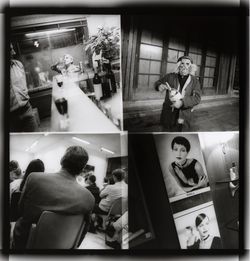
Title:
Talking Pictures, a Circuit
Talking Pictures, a Circuit
Actions:
Description:
In an nine-part circuit of installations and interventions travelling throughout the spaces of the CCA, Francesca Ammon, Davide Deriu, Reto Geiser, Sara Goldsmith, Catalina Mejía Moreno, Bas Princen, Mika Savela, and Peter Sealy invite us to reflect on photography’s critical and creative relationship with architecture. With funding from The Andrew W. Mellon Foundation,(...)
In an nine-part circuit of installations and interventions travelling throughout the spaces of the CCA, Francesca Ammon, Davide Deriu, Reto Geiser, Sara Goldsmith, Catalina Mejía Moreno, Bas Princen, Mika Savela, and Peter Sealy invite us to reflect on photography’s critical and creative relationship with architecture. With funding from The Andrew W. Mellon Foundation,(...)
Keyword(s):
Andrew W. Mellon Foundation, photography, photographs, Francesca Ammon, Davide Deriu, Reto Geiser, Sara Goldsmith, Catalina Mejía Moreno, Bas Princen, Mika Savela, Peter Sealy
Andrew W. Mellon Foundation, photography, photographs, Francesca Ammon, Davide Deriu, Reto Geiser, Sara Goldsmith, Catalina Mejía Moreno, Bas Princen, Mika Savela, Peter Sealy
Date:
14 October 2017, 4pm
14 October 2017, 4pm
Title:
Talking Pictures, a Circuit
Actions:
Description:
In an nine-part circuit of installations and interventions travelling throughout the spaces of the CCA, Francesca Ammon, Davide Deriu, Reto Geiser, Sara Goldsmith, Catalina Mejía Moreno, Bas Princen, Mika Savela, and Peter Sealy invite us to reflect on photography’s critical and creative relationship with architecture. With funding from The Andrew W. Mellon Foundation,(...)
Talking Pictures, a Circuit
Actions:
Description:
In an nine-part circuit of installations and interventions travelling throughout the spaces of the CCA, Francesca Ammon, Davide Deriu, Reto Geiser, Sara Goldsmith, Catalina Mejía Moreno, Bas Princen, Mika Savela, and Peter Sealy invite us to reflect on photography’s critical and creative relationship with architecture. With funding from The Andrew W. Mellon Foundation,(...)
Form:
events
events
Date:
14 October 2017
4pm
14 October 2017
4pm
Level of archival description:
Series
Series
Actions:
Reference number:
AP193.S2
Description:
Series 2, I’ve heard about and Hypnosis chamber, 2004-2006, relates to the conception of the urban structure “I’ve heard about”. The records contain algorithmically-generated images, renderings, pictures of models and exhibitions. There are also photographs of the contour crafting process, 3D models and animated renderings illustrating the construction process of the structure. The project is a conceptual, unbuilt project that is meant to be a habitable organism, an adaptive landscape in a constant state of evolution. By means of transitory scenarios in which the operational mode is entropy and uncertainty, it develops open algorithms based on growth scripts permeable not only to human expressions, but also to the most discrete data such as the chemical emissions (for example due to stress or anxiety) of those who inhabit it. The chemical information is harvested through nanoreceptors feeding the VIAB machine with information. This biostructure becomes the visible part of human contingencies and their negotiation in real time. The structure is conceptualized to be in constant construction through the VIAB machine which is also a constituent of the structure itself. It secretes fiber cement, shaping the landscape where it is located and through which it moves. It generates the reticular structure using a process modelled on contour crafting. The VIAB machine was developed with Robotics Research Lab of the University of Southern California and takes its name from the terms viability and variability. R&Sie(n) considers that due to its mode of emergence “I’ve heard about” fabrication is not subjugated to any political power. Hypnosis chamber is a component of “I’ve heard about”. It consists of an indoor chamber, which was realized as a full-scale sample constructed through automated machinery. The chamber is situated as a part of the whole urban structure presented by “I’ve heard about,” and its goal is to immerse the audience into the project, into a fictional environment only reachable by hypnosis. In this context, hypnosis is a way to help citizens escape from their social condition and experience the new condition of citizenship imagined in “I’ve heard about”, where democracy is re-evaluated as a process of self-determination. Both parts of the projects were shown in contemporary art museums. First at Musée d’art de la ville de Paris in Paris (2005), the Hypnotic chamber is permanently on view at Towada Art Center in Towanda, Japan. AP193.S4 contains a video orienting the project into François Roche theoretical stance, research as speculation, that can be summarize as the use of technological tools to take a critical and political position through esthetic in order to open new lines of thoughts. AP193.S4 contains an updated version of the VIAB machine
AP193.S2
Description:
Series 2, I’ve heard about and Hypnosis chamber, 2004-2006, relates to the conception of the urban structure “I’ve heard about”. The records contain algorithmically-generated images, renderings, pictures of models and exhibitions. There are also photographs of the contour crafting process, 3D models and animated renderings illustrating the construction process of the structure. The project is a conceptual, unbuilt project that is meant to be a habitable organism, an adaptive landscape in a constant state of evolution. By means of transitory scenarios in which the operational mode is entropy and uncertainty, it develops open algorithms based on growth scripts permeable not only to human expressions, but also to the most discrete data such as the chemical emissions (for example due to stress or anxiety) of those who inhabit it. The chemical information is harvested through nanoreceptors feeding the VIAB machine with information. This biostructure becomes the visible part of human contingencies and their negotiation in real time. The structure is conceptualized to be in constant construction through the VIAB machine which is also a constituent of the structure itself. It secretes fiber cement, shaping the landscape where it is located and through which it moves. It generates the reticular structure using a process modelled on contour crafting. The VIAB machine was developed with Robotics Research Lab of the University of Southern California and takes its name from the terms viability and variability. R&Sie(n) considers that due to its mode of emergence “I’ve heard about” fabrication is not subjugated to any political power. Hypnosis chamber is a component of “I’ve heard about”. It consists of an indoor chamber, which was realized as a full-scale sample constructed through automated machinery. The chamber is situated as a part of the whole urban structure presented by “I’ve heard about,” and its goal is to immerse the audience into the project, into a fictional environment only reachable by hypnosis. In this context, hypnosis is a way to help citizens escape from their social condition and experience the new condition of citizenship imagined in “I’ve heard about”, where democracy is re-evaluated as a process of self-determination. Both parts of the projects were shown in contemporary art museums. First at Musée d’art de la ville de Paris in Paris (2005), the Hypnotic chamber is permanently on view at Towada Art Center in Towanda, Japan. AP193.S4 contains a video orienting the project into François Roche theoretical stance, research as speculation, that can be summarize as the use of technological tools to take a critical and political position through esthetic in order to open new lines of thoughts. AP193.S4 contains an updated version of the VIAB machine
People:
Date:
2004-2006
2004-2006
Title:
I’ve heard about and Hypnosis chamber
Actions:
AP193.S2
Description:
Series 2, I’ve heard about and Hypnosis chamber, 2004-2006, relates to the conception of the urban structure “I’ve heard about”. The records contain algorithmically-generated images, renderings, pictures of models and exhibitions. There are also photographs of the contour crafting process, 3D models and animated renderings illustrating the construction process of the structure. The project is a conceptual, unbuilt project that is meant to be a habitable organism, an adaptive landscape in a constant state of evolution. By means of transitory scenarios in which the operational mode is entropy and uncertainty, it develops open algorithms based on growth scripts permeable not only to human expressions, but also to the most discrete data such as the chemical emissions (for example due to stress or anxiety) of those who inhabit it. The chemical information is harvested through nanoreceptors feeding the VIAB machine with information. This biostructure becomes the visible part of human contingencies and their negotiation in real time. The structure is conceptualized to be in constant construction through the VIAB machine which is also a constituent of the structure itself. It secretes fiber cement, shaping the landscape where it is located and through which it moves. It generates the reticular structure using a process modelled on contour crafting. The VIAB machine was developed with Robotics Research Lab of the University of Southern California and takes its name from the terms viability and variability. R&Sie(n) considers that due to its mode of emergence “I’ve heard about” fabrication is not subjugated to any political power. Hypnosis chamber is a component of “I’ve heard about”. It consists of an indoor chamber, which was realized as a full-scale sample constructed through automated machinery. The chamber is situated as a part of the whole urban structure presented by “I’ve heard about,” and its goal is to immerse the audience into the project, into a fictional environment only reachable by hypnosis. In this context, hypnosis is a way to help citizens escape from their social condition and experience the new condition of citizenship imagined in “I’ve heard about”, where democracy is re-evaluated as a process of self-determination. Both parts of the projects were shown in contemporary art museums. First at Musée d’art de la ville de Paris in Paris (2005), the Hypnotic chamber is permanently on view at Towada Art Center in Towanda, Japan. AP193.S4 contains a video orienting the project into François Roche theoretical stance, research as speculation, that can be summarize as the use of technological tools to take a critical and political position through esthetic in order to open new lines of thoughts. AP193.S4 contains an updated version of the VIAB machine
I’ve heard about and Hypnosis chamber
Actions:
AP193.S2
Description:
Series 2, I’ve heard about and Hypnosis chamber, 2004-2006, relates to the conception of the urban structure “I’ve heard about”. The records contain algorithmically-generated images, renderings, pictures of models and exhibitions. There are also photographs of the contour crafting process, 3D models and animated renderings illustrating the construction process of the structure. The project is a conceptual, unbuilt project that is meant to be a habitable organism, an adaptive landscape in a constant state of evolution. By means of transitory scenarios in which the operational mode is entropy and uncertainty, it develops open algorithms based on growth scripts permeable not only to human expressions, but also to the most discrete data such as the chemical emissions (for example due to stress or anxiety) of those who inhabit it. The chemical information is harvested through nanoreceptors feeding the VIAB machine with information. This biostructure becomes the visible part of human contingencies and their negotiation in real time. The structure is conceptualized to be in constant construction through the VIAB machine which is also a constituent of the structure itself. It secretes fiber cement, shaping the landscape where it is located and through which it moves. It generates the reticular structure using a process modelled on contour crafting. The VIAB machine was developed with Robotics Research Lab of the University of Southern California and takes its name from the terms viability and variability. R&Sie(n) considers that due to its mode of emergence “I’ve heard about” fabrication is not subjugated to any political power. Hypnosis chamber is a component of “I’ve heard about”. It consists of an indoor chamber, which was realized as a full-scale sample constructed through automated machinery. The chamber is situated as a part of the whole urban structure presented by “I’ve heard about,” and its goal is to immerse the audience into the project, into a fictional environment only reachable by hypnosis. In this context, hypnosis is a way to help citizens escape from their social condition and experience the new condition of citizenship imagined in “I’ve heard about”, where democracy is re-evaluated as a process of self-determination. Both parts of the projects were shown in contemporary art museums. First at Musée d’art de la ville de Paris in Paris (2005), the Hypnotic chamber is permanently on view at Towada Art Center in Towanda, Japan. AP193.S4 contains a video orienting the project into François Roche theoretical stance, research as speculation, that can be summarize as the use of technological tools to take a critical and political position through esthetic in order to open new lines of thoughts. AP193.S4 contains an updated version of the VIAB machine
Level of archival description:
Series
Series
Date:
2004-2006
2004-2006
People:


