


2636 Results
Form:
books
books
Actions:
Price:
$94.95
(available in store)
Summary:
The midwestern city of Columbus, Indiana, is more than a mecca of modern architecture; it is an example of how design can help foster a remarkable community. The dozens of buildings and projects by legendary architects – from mid-century titans such as Eero Saarinen and I. M. Pei to contemporary practitioners Deborah Berke and IwamotoScott – remain integral to its urban(...)
$94.95
(available in store)
Summary:
The midwestern city of Columbus, Indiana, is more than a mecca of modern architecture; it is an example of how design can help foster a remarkable community. The dozens of buildings and projects by legendary architects – from mid-century titans such as Eero Saarinen and I. M. Pei to contemporary practitioners Deborah Berke and IwamotoScott – remain integral to its urban(...)
Title:
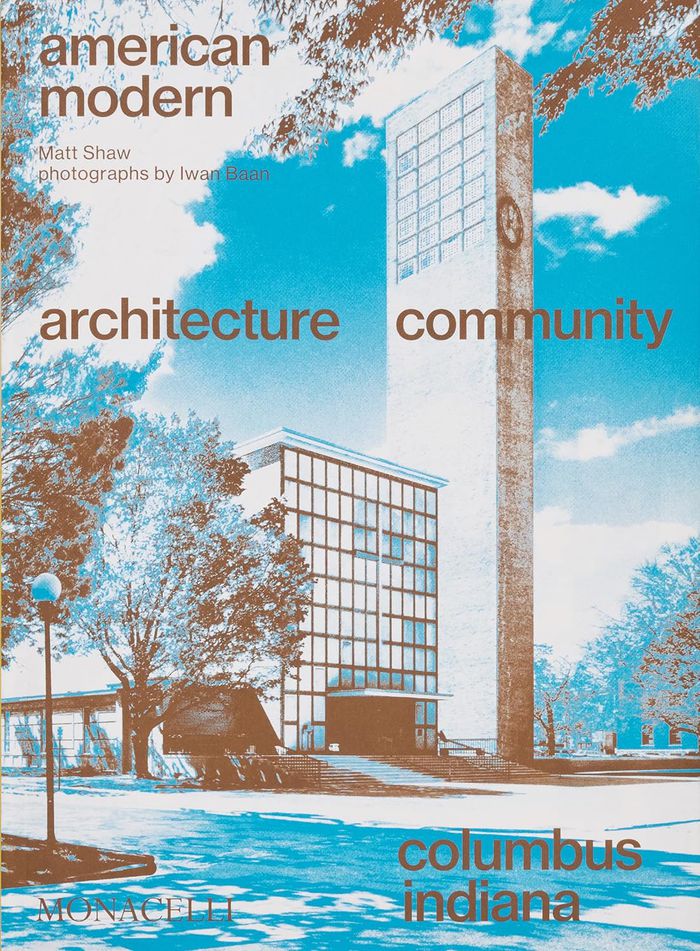
American modern: Architecture; Community; Columbus, Indiana
Actions:
Price:
$94.95
(available in store)
Summary:
The midwestern city of Columbus, Indiana, is more than a mecca of modern architecture; it is an example of how design can help foster a remarkable community. The dozens of buildings and projects by legendary architects – from mid-century titans such as Eero Saarinen and I. M. Pei to contemporary practitioners Deborah Berke and IwamotoScott – remain integral to its urban fabric. This book explores Columbus’s optimistic program of bold new architecture and landscapes, initiated by the legendary industrialist J. Irwin Miller and local leaders, and the generations-long quest to develop the ideal American city through design excellence.
American modern: Architecture; Community; Columbus, Indiana
Actions:
Price:
$94.95
(available in store)
Summary:
The midwestern city of Columbus, Indiana, is more than a mecca of modern architecture; it is an example of how design can help foster a remarkable community. The dozens of buildings and projects by legendary architects – from mid-century titans such as Eero Saarinen and I. M. Pei to contemporary practitioners Deborah Berke and IwamotoScott – remain integral to its urban fabric. This book explores Columbus’s optimistic program of bold new architecture and landscapes, initiated by the legendary industrialist J. Irwin Miller and local leaders, and the generations-long quest to develop the ideal American city through design excellence.
Form:
books
books
Publication:
July 2024
July 2024
Subject:
Modernism
Modernism
Form:
books
books
Actions:
Price:
$97.50
(available in store)
Summary:
The writings of graphic designer, prolific critic, and avant-garde partisan Karel Teige (1900-1951) represent one of the great forgotten legacies of modern artistic theory. Together with Jaromír Krejcar and Josef Chocol, he founded the radical Devetsil group in 1920, an(...)
$97.50
(available in store)
Summary:
The writings of graphic designer, prolific critic, and avant-garde partisan Karel Teige (1900-1951) represent one of the great forgotten legacies of modern artistic theory. Together with Jaromír Krejcar and Josef Chocol, he founded the radical Devetsil group in 1920, an(...)
Title:
Modern architecture in Czechoslovakia and other writings
Actions:
Price:
$97.50
(available in store)
Summary:
The writings of graphic designer, prolific critic, and avant-garde partisan Karel Teige (1900-1951) represent one of the great forgotten legacies of modern artistic theory. Together with Jaromír Krejcar and Josef Chocol, he founded the radical Devetsil group in 1920, an organization committed to promoting international modernism through manifestos and polemics. After meeting Le Corbusier in Paris in 1922, Teige increasingly turned his attention to architecture. Over the next decade he crystallized his ideas on functionalist and constructivist practice through relationships with ideological allies including Adolf Behne, Theo van Doesburg, Hannes Meyer, and El Lissitzky. In "Modern Architecture in Czechoslovakia" (published in 1930), Teige both publicized the modernist efforts of his native country, and aligned them with the avant-garde efforts of the East and West. Now in English for the first time, this work is supplemented by a selection of Teige's other writings on art and architecture. An introduction by Jean-Louis Cohen traces the diverse pursuits of this multifaceted figure.
Modern architecture in Czechoslovakia and other writings
Actions:
Price:
$97.50
(available in store)
Summary:
The writings of graphic designer, prolific critic, and avant-garde partisan Karel Teige (1900-1951) represent one of the great forgotten legacies of modern artistic theory. Together with Jaromír Krejcar and Josef Chocol, he founded the radical Devetsil group in 1920, an organization committed to promoting international modernism through manifestos and polemics. After meeting Le Corbusier in Paris in 1922, Teige increasingly turned his attention to architecture. Over the next decade he crystallized his ideas on functionalist and constructivist practice through relationships with ideological allies including Adolf Behne, Theo van Doesburg, Hannes Meyer, and El Lissitzky. In "Modern Architecture in Czechoslovakia" (published in 1930), Teige both publicized the modernist efforts of his native country, and aligned them with the avant-garde efforts of the East and West. Now in English for the first time, this work is supplemented by a selection of Teige's other writings on art and architecture. An introduction by Jean-Louis Cohen traces the diverse pursuits of this multifaceted figure.
Form:
books
books
Publication:
January 2001, Los Angeles
January 2001, Los Angeles
Subject:
Modernism
Modernism
Form:
books
books
Actions:
Price:
$67.95
(available to order)
Summary:
"Impossible histories" is the first critical survey of the extraordinary experiments in the arts that took place in the former Yugoslavia from the country's founding in 1918 to its breakup in 1991. The combination of Austro-Hungarian, French, German, Italian, and Turkish influences gave Yugoslavia's avant-gardes a distinct character unlike those of other Eastern and(...)
$67.95
(available to order)
Summary:
"Impossible histories" is the first critical survey of the extraordinary experiments in the arts that took place in the former Yugoslavia from the country's founding in 1918 to its breakup in 1991. The combination of Austro-Hungarian, French, German, Italian, and Turkish influences gave Yugoslavia's avant-gardes a distinct character unlike those of other Eastern and(...)
Subject:
Modernism
Modernism
Publication:
July 2003, Cambridge / London
July 2003, Cambridge / London
Title:
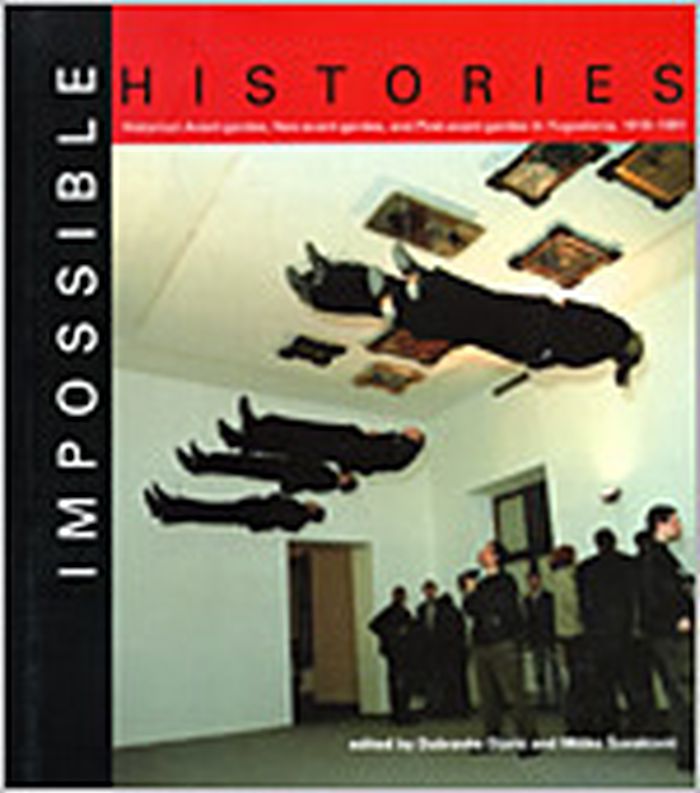
Impossible histories : historical avant-gardes, neo-avant-gardes, and post-avant-gardes in Yugoslavia, 1918-1991
Actions:
Price:
$67.95
(available to order)
Summary:
"Impossible histories" is the first critical survey of the extraordinary experiments in the arts that took place in the former Yugoslavia from the country's founding in 1918 to its breakup in 1991. The combination of Austro-Hungarian, French, German, Italian, and Turkish influences gave Yugoslavia's avant-gardes a distinct character unlike those of other Eastern and Central European avant-gardes. Censorship and suppression kept much of the work far from the eyes and ears of the Yugoslav people, while language barriers and the inaccessibility of archives caused it to remain largely unknown to Western scholars. Even at this late stage in the scholarly investigation of the avant-garde, few Westerners have heard of the movements Belgrade surrealism, signalism, Yugo-Dada, and zenitism; the groups Alfa, Exat 51, Gorgona, OHO, and Scipion Nasice Sisters Theater; or the magazines Danas, Red Pilot, Tank, Vecnost, and Zvrk. The pieces in this collection offer comparative and interpretive accounts of the avant-gardes in the former Yugoslavian countries of Croatia, Serbia, and Slovenia. The book is divided into four sections : art and politics; literature; visual art and architecture; and art in motion (covering theater, dance, music, film, and video). All of the contributors live in the region and many of them participated in the movements discussed. The book also reprints a selection of the most important manifestos generated by all phases of Yugoslav avant-garde activity.
Impossible histories : historical avant-gardes, neo-avant-gardes, and post-avant-gardes in Yugoslavia, 1918-1991
Actions:
Price:
$67.95
(available to order)
Summary:
"Impossible histories" is the first critical survey of the extraordinary experiments in the arts that took place in the former Yugoslavia from the country's founding in 1918 to its breakup in 1991. The combination of Austro-Hungarian, French, German, Italian, and Turkish influences gave Yugoslavia's avant-gardes a distinct character unlike those of other Eastern and Central European avant-gardes. Censorship and suppression kept much of the work far from the eyes and ears of the Yugoslav people, while language barriers and the inaccessibility of archives caused it to remain largely unknown to Western scholars. Even at this late stage in the scholarly investigation of the avant-garde, few Westerners have heard of the movements Belgrade surrealism, signalism, Yugo-Dada, and zenitism; the groups Alfa, Exat 51, Gorgona, OHO, and Scipion Nasice Sisters Theater; or the magazines Danas, Red Pilot, Tank, Vecnost, and Zvrk. The pieces in this collection offer comparative and interpretive accounts of the avant-gardes in the former Yugoslavian countries of Croatia, Serbia, and Slovenia. The book is divided into four sections : art and politics; literature; visual art and architecture; and art in motion (covering theater, dance, music, film, and video). All of the contributors live in the region and many of them participated in the movements discussed. The book also reprints a selection of the most important manifestos generated by all phases of Yugoslav avant-garde activity.
Form:
books
books
Publication:
July 2003, Cambridge / London
July 2003, Cambridge / London
Subject:
Modernism
Modernism
Form:
books
books
Title:
Modern architecture
Modern architecture
Actions:
Price:
$29.50
(available to order)
Summary:
This new account of international modernism explores the complex motivations behind this revolutionary movement and assesses its triumphs and failures. The work of the main architects of the movement such as Frank Lloyd Wright, Adolf Loos, Le Corbusier, and Mies van der Rohe is re-examined shedding new light on their roles as acknowledged masters. Alan Colquhoun(...)
$29.50
(available to order)
Summary:
This new account of international modernism explores the complex motivations behind this revolutionary movement and assesses its triumphs and failures. The work of the main architects of the movement such as Frank Lloyd Wright, Adolf Loos, Le Corbusier, and Mies van der Rohe is re-examined shedding new light on their roles as acknowledged masters. Alan Colquhoun(...)
Title:
Modern architecture
Actions:
Price:
$29.50
(available to order)
Summary:
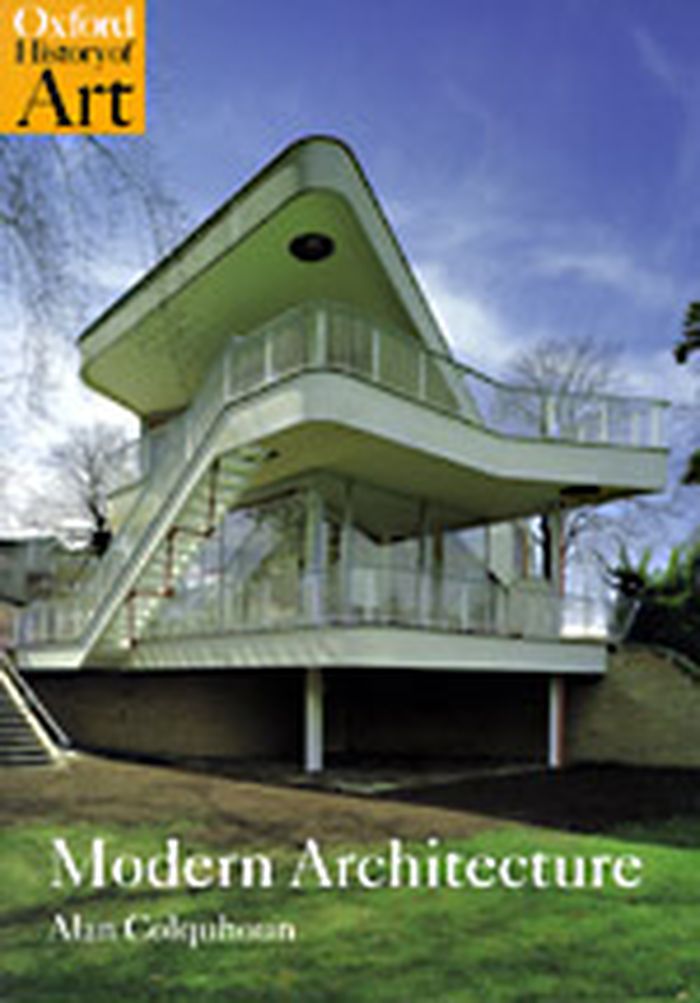
This new account of international modernism explores the complex motivations behind this revolutionary movement and assesses its triumphs and failures. The work of the main architects of the movement such as Frank Lloyd Wright, Adolf Loos, Le Corbusier, and Mies van der Rohe is re-examined shedding new light on their roles as acknowledged masters. Alan Colquhoun explores the evolution of the movement from Art Nouveau in the 1890s to the megastructures of the 1960s, revealing the often contradictory demands of form, function, social engagement, modernity and tradition.
Modern architecture
Actions:
Price:
$29.50
(available to order)
Summary:
This new account of international modernism explores the complex motivations behind this revolutionary movement and assesses its triumphs and failures. The work of the main architects of the movement such as Frank Lloyd Wright, Adolf Loos, Le Corbusier, and Mies van der Rohe is re-examined shedding new light on their roles as acknowledged masters. Alan Colquhoun explores the evolution of the movement from Art Nouveau in the 1890s to the megastructures of the 1960s, revealing the often contradictory demands of form, function, social engagement, modernity and tradition.
Form:
books
books
Publication:
June 2002, Oxford
June 2002, Oxford
Subject:
Modernism
Modernism
Form:
books
books
Actions:
Price:
$24.95
(available to order)
Summary:
The German architect Konrad Wachsmann (1901–80) played a major role in the development of industrialized building production, notably through his collaboration with Walter Gropius on a "Packaged House System" for prefabricated homes that could be assembled in under nine hours (Wachsmann was also known for the summer house he designed for Albert Einstein). This catalog(...)
$24.95
(available to order)
Summary:
The German architect Konrad Wachsmann (1901–80) played a major role in the development of industrialized building production, notably through his collaboration with Walter Gropius on a "Packaged House System" for prefabricated homes that could be assembled in under nine hours (Wachsmann was also known for the summer house he designed for Albert Einstein). This catalog(...)
Title:
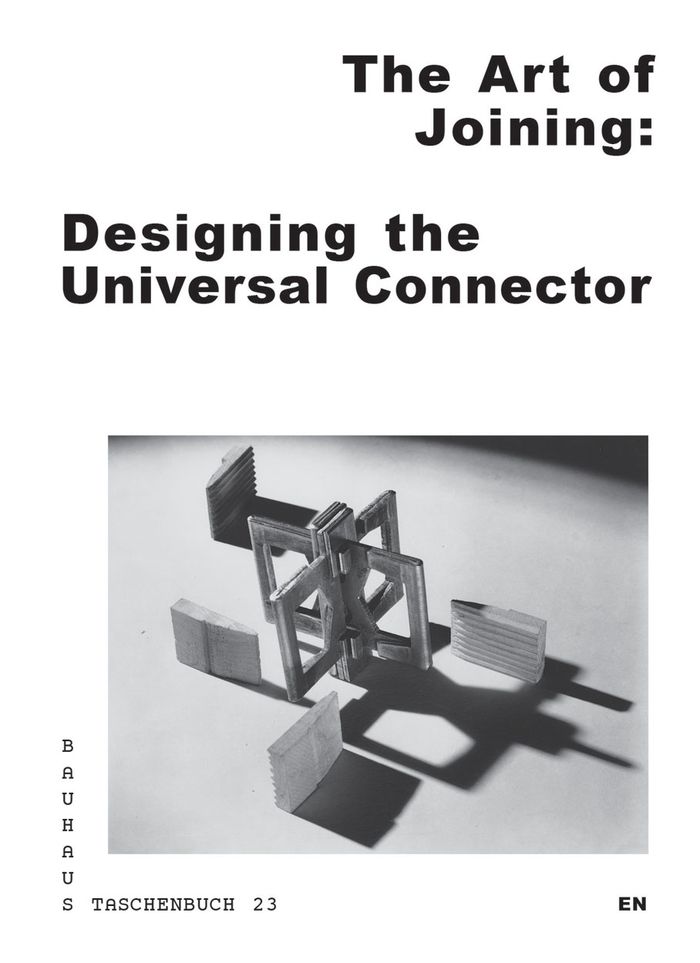
The art of joining: designing the universal connector. Bauhaus Taschenbuch 23
Actions:
Price:
$24.95
(available to order)
Summary:
The German architect Konrad Wachsmann (1901–80) played a major role in the development of industrialized building production, notably through his collaboration with Walter Gropius on a "Packaged House System" for prefabricated homes that could be assembled in under nine hours (Wachsmann was also known for the summer house he designed for Albert Einstein). This catalog collects research conducted at the Bauhaus in 2018 focusing on the decisive and historic importance of the universal wedge connector, one of Wachsmann’s key contributions that radically expanded the capacity for industrialized home production in its deceptively simple design, saving considerable time and cost. The collected texts by scientists and designers position the connector as "the cornerstone of an industrialized building system," and elaborately trace the historical contexts of postwar modernism and industrial design that led to the development of this decisive piece of technology.
The art of joining: designing the universal connector. Bauhaus Taschenbuch 23
Actions:
Price:
$24.95
(available to order)
Summary:
The German architect Konrad Wachsmann (1901–80) played a major role in the development of industrialized building production, notably through his collaboration with Walter Gropius on a "Packaged House System" for prefabricated homes that could be assembled in under nine hours (Wachsmann was also known for the summer house he designed for Albert Einstein). This catalog collects research conducted at the Bauhaus in 2018 focusing on the decisive and historic importance of the universal wedge connector, one of Wachsmann’s key contributions that radically expanded the capacity for industrialized home production in its deceptively simple design, saving considerable time and cost. The collected texts by scientists and designers position the connector as "the cornerstone of an industrialized building system," and elaborately trace the historical contexts of postwar modernism and industrial design that led to the development of this decisive piece of technology.
Form:
books
books
Publication:
September 2019
September 2019
Subject:
Modernism
Modernism
Form:
books
books
Actions:
Price:
$97.50
(available to order)
Summary:
In 1919 the Social Democrat city council of Vienna initiated a radical program of reforms designed to reshape the city's infrastructure along socialist lines. The centrepiece and most enduring achievement of "Red" Vienna was the construction of the Wiener (...)
$97.50
(available to order)
Summary:
In 1919 the Social Democrat city council of Vienna initiated a radical program of reforms designed to reshape the city's infrastructure along socialist lines. The centrepiece and most enduring achievement of "Red" Vienna was the construction of the Wiener (...)
Title:
The architecture of red Vienna 1919-1934
Actions:
Price:
$97.50
(available to order)
Summary:
In 1919 the Social Democrat city council of Vienna initiated a radical program of reforms designed to reshape the city's infrastructure along socialist lines. The centrepiece and most enduring achievement of "Red" Vienna was the construction of the Wiener Gemeindebauten, 400 communal housing blocks, distributed throughout the city, in which workers' dwellings were incorporated with kindergartens, libraries, medical clinics, theaters, cooperative stores, and other public facilities. The 64,000 units housed one tenth of the city's population. Throughout this socialist building campaign, however, Austria was ruled by a conservative, clerical, and antisocialist political majority. Thus the architecture of Red Vienna took shape in the midst of highly charged, and often violent, political conflict between left and right. In this book, Eve Blau looks at how that ideological conflict shaped the buildings of Red Vienna--in terms of their programme, spatial conception, language, and use--as well as how political meaning itself is manifested in architecture. She shows how the architecture of Red Vienna constructed meaning in relation to the ideological conflicts that defined Austrian politics in the interwar period--how it was shaped by the conditions of its making, and how it engaged its own codes, practices, and history to stake out a political position in relation to those conditions. Her investigation sheds light both on the complex relationship among political program, architectural practice, and urban history in interwar Vienna, and on the process by which architecture can generate a collective discourse that includes all members of society.
The architecture of red Vienna 1919-1934
Actions:
Price:
$97.50
(available to order)
Summary:
In 1919 the Social Democrat city council of Vienna initiated a radical program of reforms designed to reshape the city's infrastructure along socialist lines. The centrepiece and most enduring achievement of "Red" Vienna was the construction of the Wiener Gemeindebauten, 400 communal housing blocks, distributed throughout the city, in which workers' dwellings were incorporated with kindergartens, libraries, medical clinics, theaters, cooperative stores, and other public facilities. The 64,000 units housed one tenth of the city's population. Throughout this socialist building campaign, however, Austria was ruled by a conservative, clerical, and antisocialist political majority. Thus the architecture of Red Vienna took shape in the midst of highly charged, and often violent, political conflict between left and right. In this book, Eve Blau looks at how that ideological conflict shaped the buildings of Red Vienna--in terms of their programme, spatial conception, language, and use--as well as how political meaning itself is manifested in architecture. She shows how the architecture of Red Vienna constructed meaning in relation to the ideological conflicts that defined Austrian politics in the interwar period--how it was shaped by the conditions of its making, and how it engaged its own codes, practices, and history to stake out a political position in relation to those conditions. Her investigation sheds light both on the complex relationship among political program, architectural practice, and urban history in interwar Vienna, and on the process by which architecture can generate a collective discourse that includes all members of society.
Form:
books
books
Publication:
December 1998, Cambridge, Mass.
December 1998, Cambridge, Mass.
Subject:
Modernism
Modernism
Form:
books
books
Actions:
Price:
$49.95
(available to order)
Summary:
Modern is the most comprehensive study of Modern Movement architecture in Britain ever published. Shortlisted for the RIBA Bookshops International Book Award of 2005, this critically acclaimed publication is now available in paperback for the first time. Encyclopedic in scope and structure, it covers the work of such renowned architects as Walter Gropius, Marcel Breuer,(...)
$49.95
(available to order)
Summary:
Modern is the most comprehensive study of Modern Movement architecture in Britain ever published. Shortlisted for the RIBA Bookshops International Book Award of 2005, this critically acclaimed publication is now available in paperback for the first time. Encyclopedic in scope and structure, it covers the work of such renowned architects as Walter Gropius, Marcel Breuer,(...)
Subject:
Modernism
Modernism
Publication:
July 2007, London, New York
July 2007, London, New York
Title:
Modern : The modern movement in Britain
Actions:
Price:
$49.95
(available to order)
Summary:
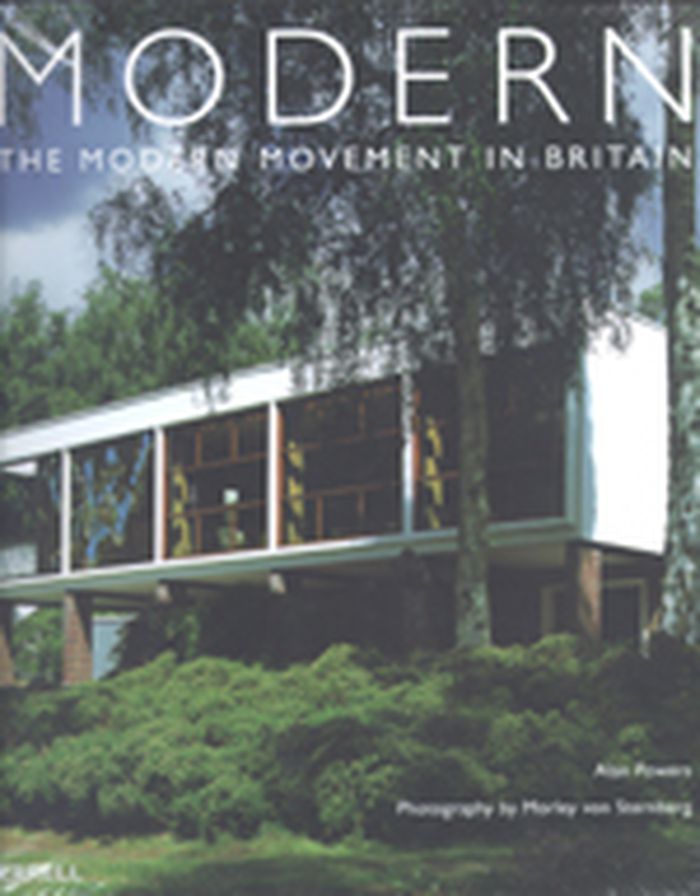
Modern is the most comprehensive study of Modern Movement architecture in Britain ever published. Shortlisted for the RIBA Bookshops International Book Award of 2005, this critically acclaimed publication is now available in paperback for the first time. Encyclopedic in scope and structure, it covers the work of such renowned architects as Walter Gropius, Marcel Breuer, Maxwell Fry, Ernö Goldfinger, Berthold Lubetkin and others who changed the vocabulary of architecture in Britain between the wars. Specially commissioned photographs document all the major surviving buildings, from private houses and apartment blocks to schools and factories.
Modern : The modern movement in Britain
Actions:
Price:
$49.95
(available to order)
Summary:
Modern is the most comprehensive study of Modern Movement architecture in Britain ever published. Shortlisted for the RIBA Bookshops International Book Award of 2005, this critically acclaimed publication is now available in paperback for the first time. Encyclopedic in scope and structure, it covers the work of such renowned architects as Walter Gropius, Marcel Breuer, Maxwell Fry, Ernö Goldfinger, Berthold Lubetkin and others who changed the vocabulary of architecture in Britain between the wars. Specially commissioned photographs document all the major surviving buildings, from private houses and apartment blocks to schools and factories.
Form:
books
books
Publication:
July 2007, London, New York
July 2007, London, New York
Subject:
Modernism
Modernism
Form:
books
books
Actions:
Price:
$44.00
(available to order)
Summary:
The design of imaginary, conceptual, or radical buildings is as old as the practice of architecture itself. For centuries, architects such as Piranesi, Ledoux, and Sant'Elia have drawn on their creative abilities to produce breathtaking works of imagination. Since World War II, technology has caught up with our imagination: there are few buildings that can be envisioned(...)
$44.00
(available to order)
Summary:
The design of imaginary, conceptual, or radical buildings is as old as the practice of architecture itself. For centuries, architects such as Piranesi, Ledoux, and Sant'Elia have drawn on their creative abilities to produce breathtaking works of imagination. Since World War II, technology has caught up with our imagination: there are few buildings that can be envisioned(...)
Title:
Visionary Architecture: Blueprints of the modern imagination
Actions:
Price:
$44.00
(available to order)
Summary:
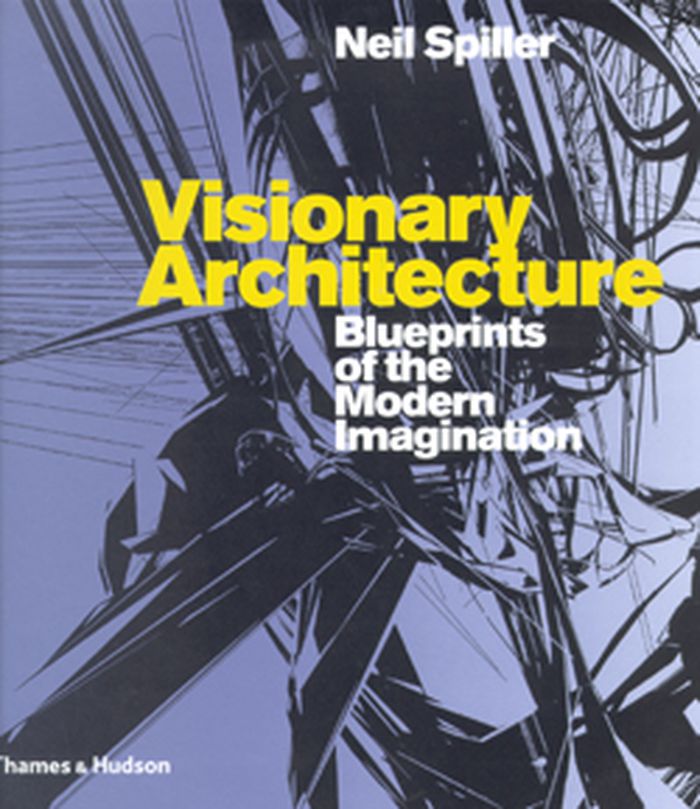
The design of imaginary, conceptual, or radical buildings is as old as the practice of architecture itself. For centuries, architects such as Piranesi, Ledoux, and Sant'Elia have drawn on their creative abilities to produce breathtaking works of imagination. Since World War II, technology has caught up with our imagination: there are few buildings that can be envisioned but not built. For the past six decades, architects have created an astonishing range of constructs and urban utopias that have influenced generations of practitioners. Architects such as Libeskind, Koolhaas, Eisenman, Hadid, and many others, whose works were once considered too experimental or controversial to construct, are creating cultural icons the world over. This definitive history of experimental architecture since 1945 provides a thematic overview of the most important and far-reaching work produced in the last sixty years; a survey of contemporary experimental practices, shown through case studies; and an illustrated glossary of ideas, movements, people, and terms. 450+ illustrations, 250 in color.
Visionary Architecture: Blueprints of the modern imagination
Actions:
Price:
$44.00
(available to order)
Summary:
The design of imaginary, conceptual, or radical buildings is as old as the practice of architecture itself. For centuries, architects such as Piranesi, Ledoux, and Sant'Elia have drawn on their creative abilities to produce breathtaking works of imagination. Since World War II, technology has caught up with our imagination: there are few buildings that can be envisioned but not built. For the past six decades, architects have created an astonishing range of constructs and urban utopias that have influenced generations of practitioners. Architects such as Libeskind, Koolhaas, Eisenman, Hadid, and many others, whose works were once considered too experimental or controversial to construct, are creating cultural icons the world over. This definitive history of experimental architecture since 1945 provides a thematic overview of the most important and far-reaching work produced in the last sixty years; a survey of contemporary experimental practices, shown through case studies; and an illustrated glossary of ideas, movements, people, and terms. 450+ illustrations, 250 in color.
Form:
books
books
Publication:
November 2007, New York
November 2007, New York
Subject:
Modernism
Modernism
Form:
books
books
Actions:
Price:
$42.00
(available in store)
Summary:
The Bauhaus Dessau, designed by Walter Gropius and from 1925 to 1932 the headquarters of the "Hochschule für Gestaltung Bauhaus Dessau", attracts around 80,000 visitors annually from Germany and abroad who are in search of the roots of the 20th century Modernism. Now the first book in which the UNESCO world cultural heritage site is introduced following its complete(...)
$42.00
(available in store)
Summary:
The Bauhaus Dessau, designed by Walter Gropius and from 1925 to 1932 the headquarters of the "Hochschule für Gestaltung Bauhaus Dessau", attracts around 80,000 visitors annually from Germany and abroad who are in search of the roots of the 20th century Modernism. Now the first book in which the UNESCO world cultural heritage site is introduced following its complete(...)
Title:
Bauhau Dessau : architecture, design, concept
Actions:
Price:
$42.00
(available in store)
Summary:
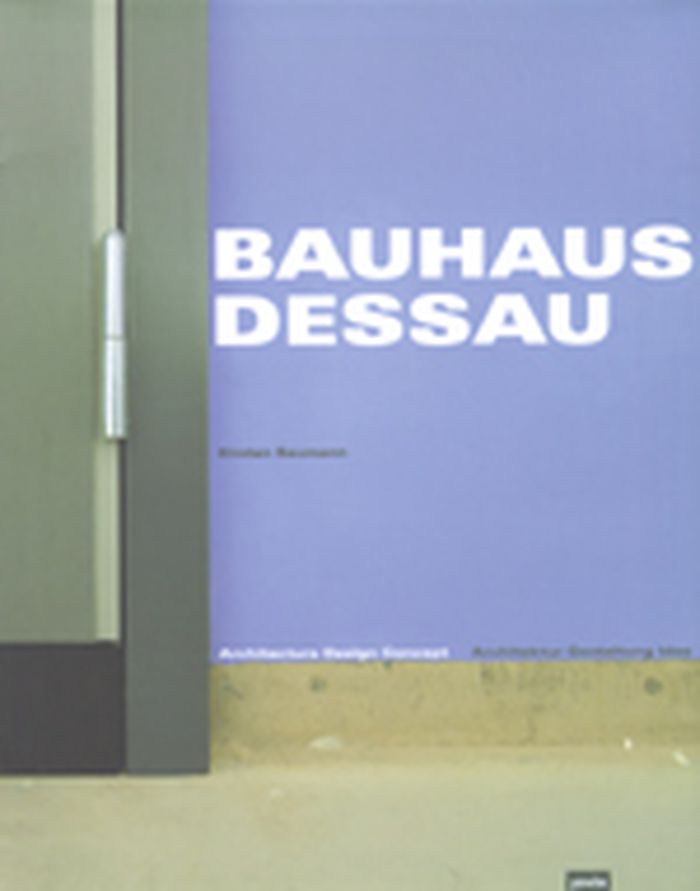
The Bauhaus Dessau, designed by Walter Gropius and from 1925 to 1932 the headquarters of the "Hochschule für Gestaltung Bauhaus Dessau", attracts around 80,000 visitors annually from Germany and abroad who are in search of the roots of the 20th century Modernism. Now the first book in which the UNESCO world cultural heritage site is introduced following its complete renovation is available. Featuring more than 110 black and white photographs, "Bauhaus Dessau" presents the whole scope of architectural and artistic variety and quality of the building. The book sketches the history of the building, its architectural parts, the interior design created by the Bauhaus artists, as well as the functions of the building. "Bauhaus Dessau" is well-suited as a companion for a tour through the building as well as a reference of individual details. In addition to the visual objects, the text also describes the work carried out in the former workshops and their most important products, because architecture, design and concept of the Bauhaus are inseparably connected to each other.
Bauhau Dessau : architecture, design, concept
Actions:
Price:
$42.00
(available in store)
Summary:
The Bauhaus Dessau, designed by Walter Gropius and from 1925 to 1932 the headquarters of the "Hochschule für Gestaltung Bauhaus Dessau", attracts around 80,000 visitors annually from Germany and abroad who are in search of the roots of the 20th century Modernism. Now the first book in which the UNESCO world cultural heritage site is introduced following its complete renovation is available. Featuring more than 110 black and white photographs, "Bauhaus Dessau" presents the whole scope of architectural and artistic variety and quality of the building. The book sketches the history of the building, its architectural parts, the interior design created by the Bauhaus artists, as well as the functions of the building. "Bauhaus Dessau" is well-suited as a companion for a tour through the building as well as a reference of individual details. In addition to the visual objects, the text also describes the work carried out in the former workshops and their most important products, because architecture, design and concept of the Bauhaus are inseparably connected to each other.
Form:
books
books
Publication:
July 2007, Berlin
July 2007, Berlin
Subject:
Modernism
Modernism
Form:
books
books

Title:
The lost vanguard
The lost vanguard
Actions:
Price:
$98.00
(available to order)
Summary:
The Lost Vanguard documents the work of modernist architects in the Soviet Union during the years following the 1917 revolution and civil war. In little more than a decade, some of the most radical buildings of the twentieth century were completed by a small group of architects who developed a new architectural language in support of new social goals of communal life.(...)
$98.00
(available to order)
Summary:
The Lost Vanguard documents the work of modernist architects in the Soviet Union during the years following the 1917 revolution and civil war. In little more than a decade, some of the most radical buildings of the twentieth century were completed by a small group of architects who developed a new architectural language in support of new social goals of communal life.(...)
Subject:
Modernism
Modernism
Publication:
June 2007, New York
June 2007, New York
Title:
The lost vanguard
Actions:
Price:
$98.00
(available to order)
Summary:
The Lost Vanguard documents the work of modernist architects in the Soviet Union during the years following the 1917 revolution and civil war. In little more than a decade, some of the most radical buildings of the twentieth century were completed by a small group of architects who developed a new architectural language in support of new social goals of communal life. Rarely published and virtually inaccessible until the collapse of the Soviet regime, these important buildings have remained unknown and unappreciated. Richard Pare's photographs reveal the powerful forms of these structures, some still in use but many now abandoned and decayed. Massive industrial complexes like the Dnieper River Dam and MoGES, which supplies electricity to the city of Moscow; vast communal houses for workers, including Ginzburg's Narkomfin; commercial buildings and government offices; and smaller clubs and theaters were all built in this brief period. In an incisive essay, architectural historian Jean-Louis Cohen surveys the history of the period, providing a context for the emergence of this startling new architecture in parallel to contemporary experiments in Europe.
The lost vanguard
Actions:
Price:
$98.00
(available to order)
Summary:
The Lost Vanguard documents the work of modernist architects in the Soviet Union during the years following the 1917 revolution and civil war. In little more than a decade, some of the most radical buildings of the twentieth century were completed by a small group of architects who developed a new architectural language in support of new social goals of communal life. Rarely published and virtually inaccessible until the collapse of the Soviet regime, these important buildings have remained unknown and unappreciated. Richard Pare's photographs reveal the powerful forms of these structures, some still in use but many now abandoned and decayed. Massive industrial complexes like the Dnieper River Dam and MoGES, which supplies electricity to the city of Moscow; vast communal houses for workers, including Ginzburg's Narkomfin; commercial buildings and government offices; and smaller clubs and theaters were all built in this brief period. In an incisive essay, architectural historian Jean-Louis Cohen surveys the history of the period, providing a context for the emergence of this startling new architecture in parallel to contemporary experiments in Europe.
Form:
books
books
Publication:
June 2007, New York
June 2007, New York
Subject:
Modernism
Modernism


