


9644 Results
Title:
Letters 1976-77
Letters 1976-77
Reference number:
PHCON2002:0016:004
Description:
Binder documents Gordon Matta-Clark' personal and professional correspondence predominantly from 1976 and 1977, a period when he began to have professional success as an artist. It includes correspondence regarding the sale of works of art as well as the following projects: The Caribbean Orange (1978), Jacob's Ladder (1977), Meander (1976); Office Baroque (1977); and Substrait (1976). Correspondence related to unnamed and unrealized projects in California, Missouri, Texas, Massachusetts, and Paris, France are also included. The subject of the other correspondence includes letters to and from grant agencies, including the Guggenheim Foundation, letters inviting Matta-Clark to participate in exhibitions, as well as his research on helium balloons. Legal documents such as tax returns and a copy of the sales agreement for the purchase of a building on 20th St. in New York City, New York are also found in the binder. Binder contains drawings and textual records.
PHCON2002:0016:004
Description:
Binder documents Gordon Matta-Clark' personal and professional correspondence predominantly from 1976 and 1977, a period when he began to have professional success as an artist. It includes correspondence regarding the sale of works of art as well as the following projects: The Caribbean Orange (1978), Jacob's Ladder (1977), Meander (1976); Office Baroque (1977); and Substrait (1976). Correspondence related to unnamed and unrealized projects in California, Missouri, Texas, Massachusetts, and Paris, France are also included. The subject of the other correspondence includes letters to and from grant agencies, including the Guggenheim Foundation, letters inviting Matta-Clark to participate in exhibitions, as well as his research on helium balloons. Legal documents such as tax returns and a copy of the sales agreement for the purchase of a building on 20th St. in New York City, New York are also found in the binder. Binder contains drawings and textual records.
People:
Date:
after 1974-1978
after 1974-1978
Title:
Letters 1976-77
Actions:
PHCON2002:0016:004
Description:
Binder documents Gordon Matta-Clark' personal and professional correspondence predominantly from 1976 and 1977, a period when he began to have professional success as an artist. It includes correspondence regarding the sale of works of art as well as the following projects: The Caribbean Orange (1978), Jacob's Ladder (1977), Meander (1976); Office Baroque (1977); and Substrait (1976). Correspondence related to unnamed and unrealized projects in California, Missouri, Texas, Massachusetts, and Paris, France are also included. The subject of the other correspondence includes letters to and from grant agencies, including the Guggenheim Foundation, letters inviting Matta-Clark to participate in exhibitions, as well as his research on helium balloons. Legal documents such as tax returns and a copy of the sales agreement for the purchase of a building on 20th St. in New York City, New York are also found in the binder. Binder contains drawings and textual records.
Letters 1976-77
Actions:
PHCON2002:0016:004
Description:
Binder documents Gordon Matta-Clark' personal and professional correspondence predominantly from 1976 and 1977, a period when he began to have professional success as an artist. It includes correspondence regarding the sale of works of art as well as the following projects: The Caribbean Orange (1978), Jacob's Ladder (1977), Meander (1976); Office Baroque (1977); and Substrait (1976). Correspondence related to unnamed and unrealized projects in California, Missouri, Texas, Massachusetts, and Paris, France are also included. The subject of the other correspondence includes letters to and from grant agencies, including the Guggenheim Foundation, letters inviting Matta-Clark to participate in exhibitions, as well as his research on helium balloons. Legal documents such as tax returns and a copy of the sales agreement for the purchase of a building on 20th St. in New York City, New York are also found in the binder. Binder contains drawings and textual records.
Date:
after 1974-1978
after 1974-1978
People:
Level of archival description:
Sub-series
Sub-series
Actions:
Reference number:
AP151.S1.D10
Description:
The project files documenting the construction of the Wayfarers' Chapel and site are extensive and quite complete. The documentation is more complete for the first two units of construction than for the latter units. Thus, the internal coherence of the papers is more apparent for the earlier development of the project. The most comprehensive record of the development of the Wayfarers' Chapel is contained in the "Supervision Journal" which covers the period from 1947-1971 (files 97a/97b of the "General Files"). It should be noted particularly by researchers using these papers. The research value of the "Supervision Journal" is complemented by a substantial body of general correspondence which documents Lloyd Wright's interaction with the client and with other parties involved with the design or construction of the Chapel (the Palos Verdes Corporation, the Wayfarers Chapel Building and Properties Committee, and Reverends of the Chapel between 1947 and 1960). Further correspondence relates to the publicity for the Chapel between 1951 and 1965. The textual documents are augmented by an extensive array of visual materials, such as drawings, photographs, postcards, newspaper articles and trade catalogues, which are valuable for providing a pictorial record of the Chapel and site from its earliest through to its later development. The "Trade Catalogues and Supplier Ephemera" file (file 98 of the "General Files") contains a record of the products and supplies Lloyd Wright considered or used in the construction of the Wayfarers' Chapel.
AP151.S1.D10
Description:
The project files documenting the construction of the Wayfarers' Chapel and site are extensive and quite complete. The documentation is more complete for the first two units of construction than for the latter units. Thus, the internal coherence of the papers is more apparent for the earlier development of the project. The most comprehensive record of the development of the Wayfarers' Chapel is contained in the "Supervision Journal" which covers the period from 1947-1971 (files 97a/97b of the "General Files"). It should be noted particularly by researchers using these papers. The research value of the "Supervision Journal" is complemented by a substantial body of general correspondence which documents Lloyd Wright's interaction with the client and with other parties involved with the design or construction of the Chapel (the Palos Verdes Corporation, the Wayfarers Chapel Building and Properties Committee, and Reverends of the Chapel between 1947 and 1960). Further correspondence relates to the publicity for the Chapel between 1951 and 1965. The textual documents are augmented by an extensive array of visual materials, such as drawings, photographs, postcards, newspaper articles and trade catalogues, which are valuable for providing a pictorial record of the Chapel and site from its earliest through to its later development. The "Trade Catalogues and Supplier Ephemera" file (file 98 of the "General Files") contains a record of the products and supplies Lloyd Wright considered or used in the construction of the Wayfarers' Chapel.
People:
Date:
1946-1977
1946-1977
Title:
Wayfarers' Chapel Architect's Project Files
Actions:
AP151.S1.D10
Description:
The project files documenting the construction of the Wayfarers' Chapel and site are extensive and quite complete. The documentation is more complete for the first two units of construction than for the latter units. Thus, the internal coherence of the papers is more apparent for the earlier development of the project. The most comprehensive record of the development of the Wayfarers' Chapel is contained in the "Supervision Journal" which covers the period from 1947-1971 (files 97a/97b of the "General Files"). It should be noted particularly by researchers using these papers. The research value of the "Supervision Journal" is complemented by a substantial body of general correspondence which documents Lloyd Wright's interaction with the client and with other parties involved with the design or construction of the Chapel (the Palos Verdes Corporation, the Wayfarers Chapel Building and Properties Committee, and Reverends of the Chapel between 1947 and 1960). Further correspondence relates to the publicity for the Chapel between 1951 and 1965. The textual documents are augmented by an extensive array of visual materials, such as drawings, photographs, postcards, newspaper articles and trade catalogues, which are valuable for providing a pictorial record of the Chapel and site from its earliest through to its later development. The "Trade Catalogues and Supplier Ephemera" file (file 98 of the "General Files") contains a record of the products and supplies Lloyd Wright considered or used in the construction of the Wayfarers' Chapel.
Wayfarers' Chapel Architect's Project Files
Actions:
AP151.S1.D10
Description:
The project files documenting the construction of the Wayfarers' Chapel and site are extensive and quite complete. The documentation is more complete for the first two units of construction than for the latter units. Thus, the internal coherence of the papers is more apparent for the earlier development of the project. The most comprehensive record of the development of the Wayfarers' Chapel is contained in the "Supervision Journal" which covers the period from 1947-1971 (files 97a/97b of the "General Files"). It should be noted particularly by researchers using these papers. The research value of the "Supervision Journal" is complemented by a substantial body of general correspondence which documents Lloyd Wright's interaction with the client and with other parties involved with the design or construction of the Chapel (the Palos Verdes Corporation, the Wayfarers Chapel Building and Properties Committee, and Reverends of the Chapel between 1947 and 1960). Further correspondence relates to the publicity for the Chapel between 1951 and 1965. The textual documents are augmented by an extensive array of visual materials, such as drawings, photographs, postcards, newspaper articles and trade catalogues, which are valuable for providing a pictorial record of the Chapel and site from its earliest through to its later development. The "Trade Catalogues and Supplier Ephemera" file (file 98 of the "General Files") contains a record of the products and supplies Lloyd Wright considered or used in the construction of the Wayfarers' Chapel.
Level of archival description:
Subseries
Subseries
Date:
1946-1977
1946-1977
People:
Form:
exhibitions
exhibitions
Actions:
Description:
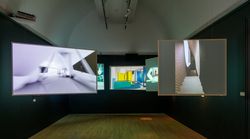
Archaeology of the Digital: Complexity and Convention is the third exhibition related to the development of a strategy for collecting and preserving digital archives at the CCA. The Archaeology of the Digital program comprises twenty-five projects for which digital materials are integral to an understanding of the design process. For projects included in the first two(...)
Archaeology of the Digital: Complexity and Convention is the third exhibition related to the development of a strategy for collecting and preserving digital archives at the CCA. The Archaeology of the Digital program comprises twenty-five projects for which digital materials are integral to an understanding of the design process. For projects included in the first two(...)
Date:
11 May 2016 to 16 October 2016
11 May 2016 to 16 October 2016
Title:
Archaeology of the Digital: Complexity and Convention
Actions:
Description:
Archaeology of the Digital: Complexity and Convention is the third exhibition related to the development of a strategy for collecting and preserving digital archives at the CCA. The Archaeology of the Digital program comprises twenty-five projects for which digital materials are integral to an understanding of the design process. For projects included in the first two(...)
Archaeology of the Digital: Complexity and Convention
Actions:
Description:
Archaeology of the Digital: Complexity and Convention is the third exhibition related to the development of a strategy for collecting and preserving digital archives at the CCA. The Archaeology of the Digital program comprises twenty-five projects for which digital materials are integral to an understanding of the design process. For projects included in the first two(...)
Form:
exhibitions
exhibitions
Date:
11 May 2016 to
16 October 2016
11 May 2016 to
16 October 2016
Reference number:
PHCON2002:0016:005
Description:
Binder consists of published documentation on the work of Gordon Matta-Clark from the period from 1971 to 1977. It includes exhibition catalogues, reviews of exhibitions, and published interviews; these include documentation on Alternatives to the Washington Square Art Fair (1973) ; Anarchitecture (1973-1974); A W-Hole House (1973); Bingo (1974); City Slivers (1976); Conical Intersect (1975); Contrabienal (1971); Day's End (1975); Fresh Air Cart (1972); Jacks (1971); Jacob's Ladder (1977); Meander (1976); Office Baroque (1977); Open House (1972); Underground Paris (1977); Subway Graffiti (1973); Splitting (1974); Tree Dance (1971); and Walls Paper (1972). Photographs, both personal and those created for publicity, are contained in the binder, as well as correspondence and an example of a Certificate of Authenticity created to give to purchasers of his works. Also included are a series of different resumes written by Matta-Clark along with a more extensive posthumous curriculum vitae and a list of the books in his library. Binder contains photographs, slides and textual records.
PHCON2002:0016:005
Description:
Binder consists of published documentation on the work of Gordon Matta-Clark from the period from 1971 to 1977. It includes exhibition catalogues, reviews of exhibitions, and published interviews; these include documentation on Alternatives to the Washington Square Art Fair (1973) ; Anarchitecture (1973-1974); A W-Hole House (1973); Bingo (1974); City Slivers (1976); Conical Intersect (1975); Contrabienal (1971); Day's End (1975); Fresh Air Cart (1972); Jacks (1971); Jacob's Ladder (1977); Meander (1976); Office Baroque (1977); Open House (1972); Underground Paris (1977); Subway Graffiti (1973); Splitting (1974); Tree Dance (1971); and Walls Paper (1972). Photographs, both personal and those created for publicity, are contained in the binder, as well as correspondence and an example of a Certificate of Authenticity created to give to purchasers of his works. Also included are a series of different resumes written by Matta-Clark along with a more extensive posthumous curriculum vitae and a list of the books in his library. Binder contains photographs, slides and textual records.
People:
Date:
1971-1977
1971-1977
Title:
Reviews, Announcements, Catalogues & Photos 1970-77
Actions:
PHCON2002:0016:005
Description:
Binder consists of published documentation on the work of Gordon Matta-Clark from the period from 1971 to 1977. It includes exhibition catalogues, reviews of exhibitions, and published interviews; these include documentation on Alternatives to the Washington Square Art Fair (1973) ; Anarchitecture (1973-1974); A W-Hole House (1973); Bingo (1974); City Slivers (1976); Conical Intersect (1975); Contrabienal (1971); Day's End (1975); Fresh Air Cart (1972); Jacks (1971); Jacob's Ladder (1977); Meander (1976); Office Baroque (1977); Open House (1972); Underground Paris (1977); Subway Graffiti (1973); Splitting (1974); Tree Dance (1971); and Walls Paper (1972). Photographs, both personal and those created for publicity, are contained in the binder, as well as correspondence and an example of a Certificate of Authenticity created to give to purchasers of his works. Also included are a series of different resumes written by Matta-Clark along with a more extensive posthumous curriculum vitae and a list of the books in his library. Binder contains photographs, slides and textual records.
Reviews, Announcements, Catalogues & Photos 1970-77
Actions:
PHCON2002:0016:005
Description:
Binder consists of published documentation on the work of Gordon Matta-Clark from the period from 1971 to 1977. It includes exhibition catalogues, reviews of exhibitions, and published interviews; these include documentation on Alternatives to the Washington Square Art Fair (1973) ; Anarchitecture (1973-1974); A W-Hole House (1973); Bingo (1974); City Slivers (1976); Conical Intersect (1975); Contrabienal (1971); Day's End (1975); Fresh Air Cart (1972); Jacks (1971); Jacob's Ladder (1977); Meander (1976); Office Baroque (1977); Open House (1972); Underground Paris (1977); Subway Graffiti (1973); Splitting (1974); Tree Dance (1971); and Walls Paper (1972). Photographs, both personal and those created for publicity, are contained in the binder, as well as correspondence and an example of a Certificate of Authenticity created to give to purchasers of his works. Also included are a series of different resumes written by Matta-Clark along with a more extensive posthumous curriculum vitae and a list of the books in his library. Binder contains photographs, slides and textual records.
Date:
1971-1977
1971-1977
People:
Form:
textual records
textual records
Actions:
Reference number:
AP197.S3.003
Description:
The box is comprised of correspondence for the years of 1991-1994, organized in alphabetical order by last name, from A-K. The box documents Frampton’s career as Ware professor at the Graduate School of Architecture, Planning and Preservation, Columbia University and his related professional activities. Correspondence in this box includes: offers of teaching positions; requests to write articles, reviews, books and recommendation letters; invitations to teach, present, or attend at lectures/symposiums/conferences; and requests to serve on juries. Throughout this period, Frampton corresponded with architects, professors, publishers, and editors of various publications such as: Botond Bognar; Norman Foster; Yukio Futagawa; Gevork Hartoonian; and the commissioning editor of Phaidon Press Limited, David Jenkins. Correspondence relates to Kenneth Frampton’s involvement/participation in the publication of Hopkins: The Work of Michael Hopkins and Partners; as a lecturer at the Association of Collegiate Schools of Architecture (ASCA) Conference, the Berlage Institute and the École polytechnique fédérale de Lausanne; and as a jury member for the Carlsberg Architectural Prize.
AP197.S3.003
Description:
The box is comprised of correspondence for the years of 1991-1994, organized in alphabetical order by last name, from A-K. The box documents Frampton’s career as Ware professor at the Graduate School of Architecture, Planning and Preservation, Columbia University and his related professional activities. Correspondence in this box includes: offers of teaching positions; requests to write articles, reviews, books and recommendation letters; invitations to teach, present, or attend at lectures/symposiums/conferences; and requests to serve on juries. Throughout this period, Frampton corresponded with architects, professors, publishers, and editors of various publications such as: Botond Bognar; Norman Foster; Yukio Futagawa; Gevork Hartoonian; and the commissioning editor of Phaidon Press Limited, David Jenkins. Correspondence relates to Kenneth Frampton’s involvement/participation in the publication of Hopkins: The Work of Michael Hopkins and Partners; as a lecturer at the Association of Collegiate Schools of Architecture (ASCA) Conference, the Berlage Institute and the École polytechnique fédérale de Lausanne; and as a jury member for the Carlsberg Architectural Prize.
People:
Date:
1991-1994
1991-1994
Title:
Personal and professional correspondence for names A-K from 1991-1994
Actions:
AP197.S3.003
Description:
The box is comprised of correspondence for the years of 1991-1994, organized in alphabetical order by last name, from A-K. The box documents Frampton’s career as Ware professor at the Graduate School of Architecture, Planning and Preservation, Columbia University and his related professional activities. Correspondence in this box includes: offers of teaching positions; requests to write articles, reviews, books and recommendation letters; invitations to teach, present, or attend at lectures/symposiums/conferences; and requests to serve on juries. Throughout this period, Frampton corresponded with architects, professors, publishers, and editors of various publications such as: Botond Bognar; Norman Foster; Yukio Futagawa; Gevork Hartoonian; and the commissioning editor of Phaidon Press Limited, David Jenkins. Correspondence relates to Kenneth Frampton’s involvement/participation in the publication of Hopkins: The Work of Michael Hopkins and Partners; as a lecturer at the Association of Collegiate Schools of Architecture (ASCA) Conference, the Berlage Institute and the École polytechnique fédérale de Lausanne; and as a jury member for the Carlsberg Architectural Prize.
Personal and professional correspondence for names A-K from 1991-1994
Actions:
AP197.S3.003
Description:
The box is comprised of correspondence for the years of 1991-1994, organized in alphabetical order by last name, from A-K. The box documents Frampton’s career as Ware professor at the Graduate School of Architecture, Planning and Preservation, Columbia University and his related professional activities. Correspondence in this box includes: offers of teaching positions; requests to write articles, reviews, books and recommendation letters; invitations to teach, present, or attend at lectures/symposiums/conferences; and requests to serve on juries. Throughout this period, Frampton corresponded with architects, professors, publishers, and editors of various publications such as: Botond Bognar; Norman Foster; Yukio Futagawa; Gevork Hartoonian; and the commissioning editor of Phaidon Press Limited, David Jenkins. Correspondence relates to Kenneth Frampton’s involvement/participation in the publication of Hopkins: The Work of Michael Hopkins and Partners; as a lecturer at the Association of Collegiate Schools of Architecture (ASCA) Conference, the Berlage Institute and the École polytechnique fédérale de Lausanne; and as a jury member for the Carlsberg Architectural Prize.
Form:
textual records
textual records
Date:
1991-1994
1991-1994
People:
Form:
textual records
textual records
Actions:
Reference number:
AP197.S3.007
Description:
The box is comprised of correspondence for the years of 1997-1998, organized in chronological order. The box documents Frampton’s career as Ware professor at the Graduate School of Architecture, Planning and Preservation, Columbia University and his related professional activities. Correspondence in this box includes: offers of teaching positions; requests to write articles, reviews, books and recommendation letters; invitations to teach, present, or attend at lectures/symposiums/conferences; and requests to serve on juries. Throughout this period, Frampton corresponded with various architects, professors, publishers, and editors of various publications such as: the Berlage Institute; the Finnish Association of Architect; Università della Svizzera italiana; Kisho Kurakawa; Tadao Ando; Mario Botta; Aurelio Galfetti; the Barragan Foundation; and Steven Holl. Correspondence relating to the following projects can be found in this box: editor of Technology, Place and Architecture: The Jerusalem Seminar in Architecture; and the General Editor of the publication World Architecture: a Critical Mosaic 1900-2000 Vols: 1-10.
AP197.S3.007
Description:
The box is comprised of correspondence for the years of 1997-1998, organized in chronological order. The box documents Frampton’s career as Ware professor at the Graduate School of Architecture, Planning and Preservation, Columbia University and his related professional activities. Correspondence in this box includes: offers of teaching positions; requests to write articles, reviews, books and recommendation letters; invitations to teach, present, or attend at lectures/symposiums/conferences; and requests to serve on juries. Throughout this period, Frampton corresponded with various architects, professors, publishers, and editors of various publications such as: the Berlage Institute; the Finnish Association of Architect; Università della Svizzera italiana; Kisho Kurakawa; Tadao Ando; Mario Botta; Aurelio Galfetti; the Barragan Foundation; and Steven Holl. Correspondence relating to the following projects can be found in this box: editor of Technology, Place and Architecture: The Jerusalem Seminar in Architecture; and the General Editor of the publication World Architecture: a Critical Mosaic 1900-2000 Vols: 1-10.
People:
Date:
1997-1998
1997-1998
Title:
Personal and professional correspondence from 1997-1998
Actions:
AP197.S3.007
Description:
The box is comprised of correspondence for the years of 1997-1998, organized in chronological order. The box documents Frampton’s career as Ware professor at the Graduate School of Architecture, Planning and Preservation, Columbia University and his related professional activities. Correspondence in this box includes: offers of teaching positions; requests to write articles, reviews, books and recommendation letters; invitations to teach, present, or attend at lectures/symposiums/conferences; and requests to serve on juries. Throughout this period, Frampton corresponded with various architects, professors, publishers, and editors of various publications such as: the Berlage Institute; the Finnish Association of Architect; Università della Svizzera italiana; Kisho Kurakawa; Tadao Ando; Mario Botta; Aurelio Galfetti; the Barragan Foundation; and Steven Holl. Correspondence relating to the following projects can be found in this box: editor of Technology, Place and Architecture: The Jerusalem Seminar in Architecture; and the General Editor of the publication World Architecture: a Critical Mosaic 1900-2000 Vols: 1-10.
Personal and professional correspondence from 1997-1998
Actions:
AP197.S3.007
Description:
The box is comprised of correspondence for the years of 1997-1998, organized in chronological order. The box documents Frampton’s career as Ware professor at the Graduate School of Architecture, Planning and Preservation, Columbia University and his related professional activities. Correspondence in this box includes: offers of teaching positions; requests to write articles, reviews, books and recommendation letters; invitations to teach, present, or attend at lectures/symposiums/conferences; and requests to serve on juries. Throughout this period, Frampton corresponded with various architects, professors, publishers, and editors of various publications such as: the Berlage Institute; the Finnish Association of Architect; Università della Svizzera italiana; Kisho Kurakawa; Tadao Ando; Mario Botta; Aurelio Galfetti; the Barragan Foundation; and Steven Holl. Correspondence relating to the following projects can be found in this box: editor of Technology, Place and Architecture: The Jerusalem Seminar in Architecture; and the General Editor of the publication World Architecture: a Critical Mosaic 1900-2000 Vols: 1-10.
Form:
textual records
textual records
Date:
1997-1998
1997-1998
People:
Form:
textual records
textual records
Actions:
Reference number:
AP197.S3.010
Description:
The box is comprised of correspondence for the year 2001. The box documents Frampton’s career as Ware professor at the Graduate School of Architecture, Planning and Preservation, Columbia University and his related professional activities. Correspondence in this box includes: offers of teaching positions; requests to write articles, reviews, books and recommendation letters; invitations to teach, present, or attend at lectures/symposiums/conferences; and requests to serve on juries. Throughout this period, Frampton corresponded with various universities, architects, professors, publishers, and editors of various publications such as: Yale University; Université de Montréal; Patkau Architects; Tadao Ando; Manuel de Sola-Morales; the Royal Institute of British Architects; ArquitecturaViva; Maki and Associates; and Kisho Kurakawa. Included in this box is correspondence with Oscar Niemeyer and Alvaro Siza in relation to the Michael Blackwood production on both these architects; correspondence about the Aga Khan Award; correspondence about writing an introduction essay to the publication Tadao Ando Light & Water; and correspondence about Frampton’s trip and itinerary to Japan and to meet with Tadao Ando.
AP197.S3.010
Description:
The box is comprised of correspondence for the year 2001. The box documents Frampton’s career as Ware professor at the Graduate School of Architecture, Planning and Preservation, Columbia University and his related professional activities. Correspondence in this box includes: offers of teaching positions; requests to write articles, reviews, books and recommendation letters; invitations to teach, present, or attend at lectures/symposiums/conferences; and requests to serve on juries. Throughout this period, Frampton corresponded with various universities, architects, professors, publishers, and editors of various publications such as: Yale University; Université de Montréal; Patkau Architects; Tadao Ando; Manuel de Sola-Morales; the Royal Institute of British Architects; ArquitecturaViva; Maki and Associates; and Kisho Kurakawa. Included in this box is correspondence with Oscar Niemeyer and Alvaro Siza in relation to the Michael Blackwood production on both these architects; correspondence about the Aga Khan Award; correspondence about writing an introduction essay to the publication Tadao Ando Light & Water; and correspondence about Frampton’s trip and itinerary to Japan and to meet with Tadao Ando.
People:
Date:
2001
2001
Title:
Personal and professional correspondence from 2001
Actions:
AP197.S3.010
Description:
The box is comprised of correspondence for the year 2001. The box documents Frampton’s career as Ware professor at the Graduate School of Architecture, Planning and Preservation, Columbia University and his related professional activities. Correspondence in this box includes: offers of teaching positions; requests to write articles, reviews, books and recommendation letters; invitations to teach, present, or attend at lectures/symposiums/conferences; and requests to serve on juries. Throughout this period, Frampton corresponded with various universities, architects, professors, publishers, and editors of various publications such as: Yale University; Université de Montréal; Patkau Architects; Tadao Ando; Manuel de Sola-Morales; the Royal Institute of British Architects; ArquitecturaViva; Maki and Associates; and Kisho Kurakawa. Included in this box is correspondence with Oscar Niemeyer and Alvaro Siza in relation to the Michael Blackwood production on both these architects; correspondence about the Aga Khan Award; correspondence about writing an introduction essay to the publication Tadao Ando Light & Water; and correspondence about Frampton’s trip and itinerary to Japan and to meet with Tadao Ando.
Personal and professional correspondence from 2001
Actions:
AP197.S3.010
Description:
The box is comprised of correspondence for the year 2001. The box documents Frampton’s career as Ware professor at the Graduate School of Architecture, Planning and Preservation, Columbia University and his related professional activities. Correspondence in this box includes: offers of teaching positions; requests to write articles, reviews, books and recommendation letters; invitations to teach, present, or attend at lectures/symposiums/conferences; and requests to serve on juries. Throughout this period, Frampton corresponded with various universities, architects, professors, publishers, and editors of various publications such as: Yale University; Université de Montréal; Patkau Architects; Tadao Ando; Manuel de Sola-Morales; the Royal Institute of British Architects; ArquitecturaViva; Maki and Associates; and Kisho Kurakawa. Included in this box is correspondence with Oscar Niemeyer and Alvaro Siza in relation to the Michael Blackwood production on both these architects; correspondence about the Aga Khan Award; correspondence about writing an introduction essay to the publication Tadao Ando Light & Water; and correspondence about Frampton’s trip and itinerary to Japan and to meet with Tadao Ando.
Form:
textual records
textual records
Date:
2001
2001
People:
Form:
archives
Level of archival description:
Fonds
archives
Level of archival description:
Fonds
Title:
Peter Carter fonds
Peter Carter fonds
Actions:
Reference number:
AP047
Synopsis:
The Peter Carter fonds, 1943-1996, documents the professional career of architect Peter Carter. The largest portion of the archive corresponds to projects Carter completed as principal of the office, Peter Carter Architect (1974-96). Materials in this fonds consist of 7263 drawings (including reprographic copies), 2007 photographic materials, approximately 65 panels, 3 l.m. of textual records, 26 models, 1 enclosing unit, 1 carpet sample, 1 graphic design layout for stationery letterhead, 1 brown oak sample, 1 window sample, 1 sign, 1 carioca stone, 1 travertine block and 1 grey carpet tile.
AP047
Synopsis:
The Peter Carter fonds, 1943-1996, documents the professional career of architect Peter Carter. The largest portion of the archive corresponds to projects Carter completed as principal of the office, Peter Carter Architect (1974-96). Materials in this fonds consist of 7263 drawings (including reprographic copies), 2007 photographic materials, approximately 65 panels, 3 l.m. of textual records, 26 models, 1 enclosing unit, 1 carpet sample, 1 graphic design layout for stationery letterhead, 1 brown oak sample, 1 window sample, 1 sign, 1 carioca stone, 1 travertine block and 1 grey carpet tile.
People:
Date:
1943-1996
1943-1996
Title:
Peter Carter fonds
Actions:
AP047
Synopsis:
The Peter Carter fonds, 1943-1996, documents the professional career of architect Peter Carter. The largest portion of the archive corresponds to projects Carter completed as principal of the office, Peter Carter Architect (1974-96). Materials in this fonds consist of 7263 drawings (including reprographic copies), 2007 photographic materials, approximately 65 panels, 3 l.m. of textual records, 26 models, 1 enclosing unit, 1 carpet sample, 1 graphic design layout for stationery letterhead, 1 brown oak sample, 1 window sample, 1 sign, 1 carioca stone, 1 travertine block and 1 grey carpet tile.
Peter Carter fonds
Actions:
AP047
Synopsis:
The Peter Carter fonds, 1943-1996, documents the professional career of architect Peter Carter. The largest portion of the archive corresponds to projects Carter completed as principal of the office, Peter Carter Architect (1974-96). Materials in this fonds consist of 7263 drawings (including reprographic copies), 2007 photographic materials, approximately 65 panels, 3 l.m. of textual records, 26 models, 1 enclosing unit, 1 carpet sample, 1 graphic design layout for stationery letterhead, 1 brown oak sample, 1 window sample, 1 sign, 1 carioca stone, 1 travertine block and 1 grey carpet tile.
Form:
archives
Level of archival description:
Fonds
archives
Level of archival description:
Fonds
Date:
1943-1996
1943-1996
People:
Level of archival description:
Project
Project
Title:
Hair Tent
Hair Tent
Reference number:
AP144.S2.D76
Description:
File documents the Hair Tent, a temporary theatre structure which was to house performances of the musical 'Hair', in Holland, for David Convyers Productions Ltd. Cedric Price was hired to convert a tent into a theatre venue. The tent structure was designed for an audience of 1,200 and was to be used for a six-month period. Due to cost and time constraints, the materials were recycled: the seating came from a demolished cinema; the steel structure from a field near Hartlepool; and the mobile heating was provided by the Dutch Military (Cedric Price-Works II). Design development drawings show numerous plans and sections of the tent structure and structural components; a plan and section show the seating arrangements; a section through the tent shows various internal stackable structures; and an axonometric view of the site shows the main tent, a tin hut entrance bar, and military mobile heaters. Reprographic copies of construction drawings of a Cinerama and circus structure with details of trussing configurations, mast layout and anchor plans were possibly for reference purposes. Some material in this file was published in "Cedric Price Supplement", 'Architectural Design', vol. 40, (October 1970), 516, and Price, Cedric, 'Cedric Price-Works II' (London: Architectural Press, 1984), 72, 76. Material in this file was produced between 1963 and 1971. Reference drawings included with the design development drawings are inscribed with the name L. Stromeyer, engineer, or Leonard Allen, architect. Tom Parkinson and Victor Spinetti are involved in the project. File contains design development drawings, photographic materials, and textual records.
AP144.S2.D76
Description:
File documents the Hair Tent, a temporary theatre structure which was to house performances of the musical 'Hair', in Holland, for David Convyers Productions Ltd. Cedric Price was hired to convert a tent into a theatre venue. The tent structure was designed for an audience of 1,200 and was to be used for a six-month period. Due to cost and time constraints, the materials were recycled: the seating came from a demolished cinema; the steel structure from a field near Hartlepool; and the mobile heating was provided by the Dutch Military (Cedric Price-Works II). Design development drawings show numerous plans and sections of the tent structure and structural components; a plan and section show the seating arrangements; a section through the tent shows various internal stackable structures; and an axonometric view of the site shows the main tent, a tin hut entrance bar, and military mobile heaters. Reprographic copies of construction drawings of a Cinerama and circus structure with details of trussing configurations, mast layout and anchor plans were possibly for reference purposes. Some material in this file was published in "Cedric Price Supplement", 'Architectural Design', vol. 40, (October 1970), 516, and Price, Cedric, 'Cedric Price-Works II' (London: Architectural Press, 1984), 72, 76. Material in this file was produced between 1963 and 1971. Reference drawings included with the design development drawings are inscribed with the name L. Stromeyer, engineer, or Leonard Allen, architect. Tom Parkinson and Victor Spinetti are involved in the project. File contains design development drawings, photographic materials, and textual records.
People:
Date:
1963-1971
1963-1971
Title:
Hair Tent
Actions:
AP144.S2.D76
Description:
File documents the Hair Tent, a temporary theatre structure which was to house performances of the musical 'Hair', in Holland, for David Convyers Productions Ltd. Cedric Price was hired to convert a tent into a theatre venue. The tent structure was designed for an audience of 1,200 and was to be used for a six-month period. Due to cost and time constraints, the materials were recycled: the seating came from a demolished cinema; the steel structure from a field near Hartlepool; and the mobile heating was provided by the Dutch Military (Cedric Price-Works II). Design development drawings show numerous plans and sections of the tent structure and structural components; a plan and section show the seating arrangements; a section through the tent shows various internal stackable structures; and an axonometric view of the site shows the main tent, a tin hut entrance bar, and military mobile heaters. Reprographic copies of construction drawings of a Cinerama and circus structure with details of trussing configurations, mast layout and anchor plans were possibly for reference purposes. Some material in this file was published in "Cedric Price Supplement", 'Architectural Design', vol. 40, (October 1970), 516, and Price, Cedric, 'Cedric Price-Works II' (London: Architectural Press, 1984), 72, 76. Material in this file was produced between 1963 and 1971. Reference drawings included with the design development drawings are inscribed with the name L. Stromeyer, engineer, or Leonard Allen, architect. Tom Parkinson and Victor Spinetti are involved in the project. File contains design development drawings, photographic materials, and textual records.
Hair Tent
Actions:
AP144.S2.D76
Description:
File documents the Hair Tent, a temporary theatre structure which was to house performances of the musical 'Hair', in Holland, for David Convyers Productions Ltd. Cedric Price was hired to convert a tent into a theatre venue. The tent structure was designed for an audience of 1,200 and was to be used for a six-month period. Due to cost and time constraints, the materials were recycled: the seating came from a demolished cinema; the steel structure from a field near Hartlepool; and the mobile heating was provided by the Dutch Military (Cedric Price-Works II). Design development drawings show numerous plans and sections of the tent structure and structural components; a plan and section show the seating arrangements; a section through the tent shows various internal stackable structures; and an axonometric view of the site shows the main tent, a tin hut entrance bar, and military mobile heaters. Reprographic copies of construction drawings of a Cinerama and circus structure with details of trussing configurations, mast layout and anchor plans were possibly for reference purposes. Some material in this file was published in "Cedric Price Supplement", 'Architectural Design', vol. 40, (October 1970), 516, and Price, Cedric, 'Cedric Price-Works II' (London: Architectural Press, 1984), 72, 76. Material in this file was produced between 1963 and 1971. Reference drawings included with the design development drawings are inscribed with the name L. Stromeyer, engineer, or Leonard Allen, architect. Tom Parkinson and Victor Spinetti are involved in the project. File contains design development drawings, photographic materials, and textual records.
Level of archival description:
File 76
File 76
Date:
1963-1971
1963-1971
People:
Level of archival description:
Series
Series
Title:
Architectural projects
Architectural projects
Reference number:
AP154.S1
Description:
Series AP154.S1, Architectural projects, is chiefly composed of drawings related to architectural projects from the period 1966-2007. Most projects are located in the Northeastern United States, a notable exception being a study for resort development in Negril, Jamaica. The series includes published projects, such as the master plan for a new campus at Wykeham Rise School in Washington, Connecticut, housing projects at Twin Parks in the Bronx, N.Y. and at Little Italy in Manhattan, new and renovated buildings for the State University College at Potsdam, New York, and the George & Annette Murphy Center at Asphalt Green, New York. Small, lesser-known projects are also present, including two renovation projects in Brooklyn and a design for a Manhattan apartment. In general, the projects in this series are documented at a specific phase in their development, often at the stage of working drawings, although some project series are composed of design or presentation drawings. A substantial number of documents in this series are related to the Seagram Building at 375 Park Avenue, New York, N.Y., a landmark skyscraper designed by Ludwig Mies van der Rohe and Philip Johnson and completed in 1958. Beginning in 1971, Giovanni Pasanella and his partners were responsible for the interior design and space planning of national and regional administrative and sales offices of Joseph E. Seagram & Sons. The series documents three decades of activities related to the maintenance and renovation of the Seagram Building as well as some renovations for Seagram offices at 800 Third Avenue.
AP154.S1
Description:
Series AP154.S1, Architectural projects, is chiefly composed of drawings related to architectural projects from the period 1966-2007. Most projects are located in the Northeastern United States, a notable exception being a study for resort development in Negril, Jamaica. The series includes published projects, such as the master plan for a new campus at Wykeham Rise School in Washington, Connecticut, housing projects at Twin Parks in the Bronx, N.Y. and at Little Italy in Manhattan, new and renovated buildings for the State University College at Potsdam, New York, and the George & Annette Murphy Center at Asphalt Green, New York. Small, lesser-known projects are also present, including two renovation projects in Brooklyn and a design for a Manhattan apartment. In general, the projects in this series are documented at a specific phase in their development, often at the stage of working drawings, although some project series are composed of design or presentation drawings. A substantial number of documents in this series are related to the Seagram Building at 375 Park Avenue, New York, N.Y., a landmark skyscraper designed by Ludwig Mies van der Rohe and Philip Johnson and completed in 1958. Beginning in 1971, Giovanni Pasanella and his partners were responsible for the interior design and space planning of national and regional administrative and sales offices of Joseph E. Seagram & Sons. The series documents three decades of activities related to the maintenance and renovation of the Seagram Building as well as some renovations for Seagram offices at 800 Third Avenue.
People:
Date:
1955-2007
1955-2007
Title:
Architectural projects
Actions:
AP154.S1
Description:
Series AP154.S1, Architectural projects, is chiefly composed of drawings related to architectural projects from the period 1966-2007. Most projects are located in the Northeastern United States, a notable exception being a study for resort development in Negril, Jamaica. The series includes published projects, such as the master plan for a new campus at Wykeham Rise School in Washington, Connecticut, housing projects at Twin Parks in the Bronx, N.Y. and at Little Italy in Manhattan, new and renovated buildings for the State University College at Potsdam, New York, and the George & Annette Murphy Center at Asphalt Green, New York. Small, lesser-known projects are also present, including two renovation projects in Brooklyn and a design for a Manhattan apartment. In general, the projects in this series are documented at a specific phase in their development, often at the stage of working drawings, although some project series are composed of design or presentation drawings. A substantial number of documents in this series are related to the Seagram Building at 375 Park Avenue, New York, N.Y., a landmark skyscraper designed by Ludwig Mies van der Rohe and Philip Johnson and completed in 1958. Beginning in 1971, Giovanni Pasanella and his partners were responsible for the interior design and space planning of national and regional administrative and sales offices of Joseph E. Seagram & Sons. The series documents three decades of activities related to the maintenance and renovation of the Seagram Building as well as some renovations for Seagram offices at 800 Third Avenue.
Architectural projects
Actions:
AP154.S1
Description:
Series AP154.S1, Architectural projects, is chiefly composed of drawings related to architectural projects from the period 1966-2007. Most projects are located in the Northeastern United States, a notable exception being a study for resort development in Negril, Jamaica. The series includes published projects, such as the master plan for a new campus at Wykeham Rise School in Washington, Connecticut, housing projects at Twin Parks in the Bronx, N.Y. and at Little Italy in Manhattan, new and renovated buildings for the State University College at Potsdam, New York, and the George & Annette Murphy Center at Asphalt Green, New York. Small, lesser-known projects are also present, including two renovation projects in Brooklyn and a design for a Manhattan apartment. In general, the projects in this series are documented at a specific phase in their development, often at the stage of working drawings, although some project series are composed of design or presentation drawings. A substantial number of documents in this series are related to the Seagram Building at 375 Park Avenue, New York, N.Y., a landmark skyscraper designed by Ludwig Mies van der Rohe and Philip Johnson and completed in 1958. Beginning in 1971, Giovanni Pasanella and his partners were responsible for the interior design and space planning of national and regional administrative and sales offices of Joseph E. Seagram & Sons. The series documents three decades of activities related to the maintenance and renovation of the Seagram Building as well as some renovations for Seagram offices at 800 Third Avenue.
Level of archival description:
Series 1
Series 1
Date:
1955-2007
1955-2007
People:


