


1571 Results
Form:
books
books
Actions:
Holdings:
Description:
79 pages : illustrations (chiefly color) ; 30 cm
Description:
79 pages : illustrations (chiefly color) ; 30 cm
Author:
Subject:
Publication:
[Ghent, Belgium] : Art Paper Editions, [2019], ©2019
[Ghent, Belgium] : Art Paper Editions, [2019], ©2019
Title:
Virtuous situations from the industrial past and some ideas for the 'climatic metropolis' to come : cases of Brussels and Paris = Situations vertueuses du passé industriel et quelques idées pour la métropole climatique à venir : les cas de Bruxelles et Paris = Deugdelijke situaties uit het industriële verleden en een aantal ideeën voor de klimaatmetropool van de toekomst : Brussel en Parijs / CENTRAL office for architecture and urbanism, Maxime Delvaux.
Actions:
Holdings:
Description:
79 pages : illustrations (chiefly color) ; 30 cm
Form:
books
books
Publication:
[Ghent, Belgium] : Art Paper Editions, [2019], ©2019
[Ghent, Belgium] : Art Paper Editions, [2019], ©2019
Author:
Subject:
Form:
books
books
Actions:
Price:
$35.00
(available to order)
Summary:
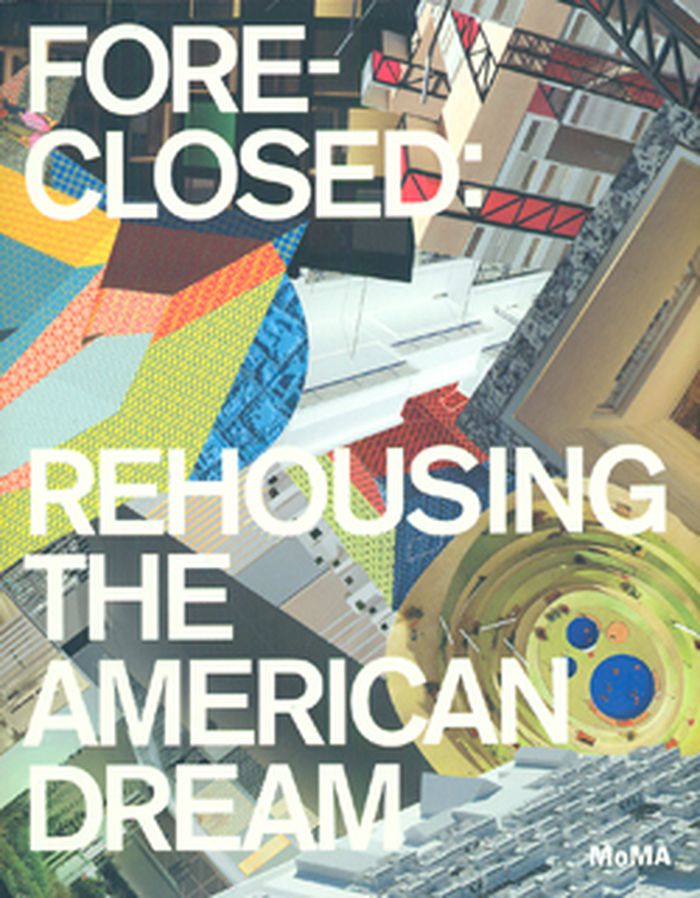
Forecolosed: Rehousing the American Dream is an exploration of new architectural possibilities for American cities and suburbs in the aftermath of the recent foreclosure crisis in the United States. During the summer of 2011, five interdisciplinary teams of architects, urban planners, ecologists, engineers and landscape designers were enlisted by The Museum of Modern(...)
Title:
Foreclosed: rehousing the American dream
Actions:
Price:
$35.00
(available to order)
Summary:
Forecolosed: Rehousing the American Dream is an exploration of new architectural possibilities for American cities and suburbs in the aftermath of the recent foreclosure crisis in the United States. During the summer of 2011, five interdisciplinary teams of architects, urban planners, ecologists, engineers and landscape designers were enlisted by The Museum of Modern Art, New York, and MoMA PS1 to envision new housing infrastructures that could catalyze urban transformation, particularly in the country’s suburbs. Drawing on ideas proposed in The Buell Hypothesis, a research publication prepared by the Temple Hoyne Buell Center for the Study of American Architecture at Columbia University, each team focused on a specific location within a “megaregion” to come up with inventive solutions for the future of housing and cities. This publication presents each of these proposals (exhibited at MoMA in Spring 2012) in detail, through photographs, drawings and renderings as well as interviews with the team leaders. Foreclosedexamines the relationship between land, infrastructure and urban form, exploring potential futures for America’s extended metropolises.
Form:
books
books
Publication:
March 2012
March 2012
Subject:
Collective Housing
Collective Housing
Form:
books
books
Title:
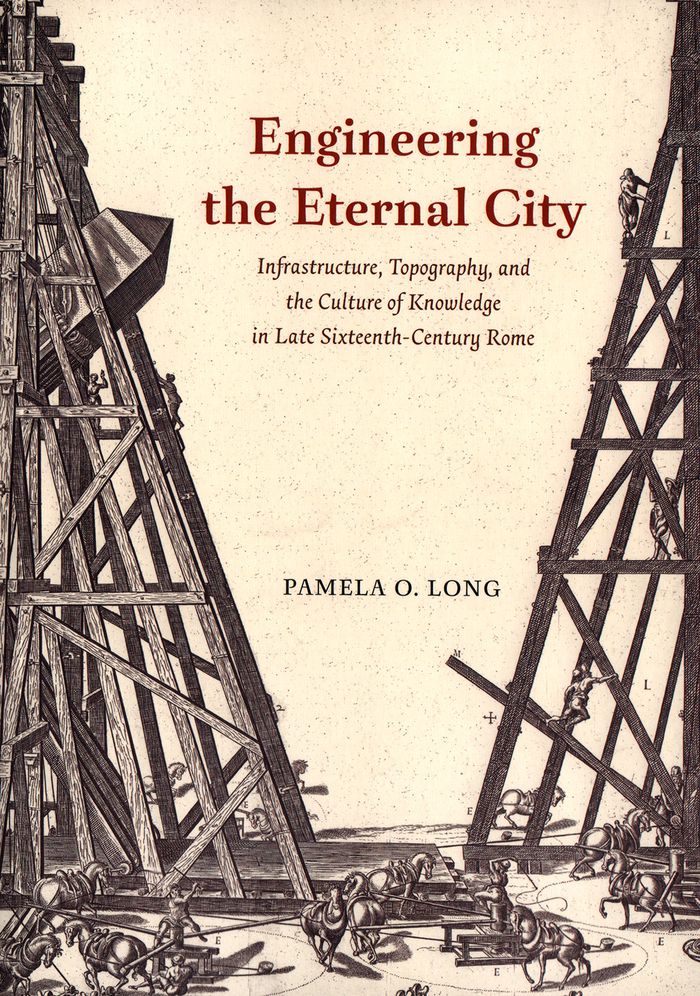
Engineering the eternal city: infrastructure, topography, and the culture of knowledge in Rome
Engineering the eternal city: infrastructure, topography, and the culture of knowledge in Rome
Actions:
Price:
$64.95
(available to order)
Summary:
Between the catastrophic flood of the Tiber River in 1557 and the death of the ''engineering pope'' Sixtus V in 1590, the city of Rome was transformed by intense activity involving building construction and engineering projects of all kinds. Using hundreds of archival documents and primary sources, ''Engineering the Eternal City'' explores the processes and people(...)
Title:
Engineering the eternal city: infrastructure, topography, and the culture of knowledge in Rome
Actions:
Price:
$64.95
(available to order)
Summary:
Between the catastrophic flood of the Tiber River in 1557 and the death of the ''engineering pope'' Sixtus V in 1590, the city of Rome was transformed by intense activity involving building construction and engineering projects of all kinds. Using hundreds of archival documents and primary sources, ''Engineering the Eternal City'' explores the processes and people involved in these infrastructure projects—sewers, bridge repair, flood prevention, aqueduct construction, the building of new, straight streets, and even the relocation of immensely heavy ancient Egyptian obelisks that Roman emperors had carried to the city centuries before.
Form:
books
books
Publication:
November 2018
November 2018
Subject:
History until 1900, Italy
History until 1900, Italy
Form:
books
books
Actions:
Holdings:
Description:
173 pages : illustrations (some color), maps (chiefly color) ; 26 cm
Description:
173 pages : illustrations (some color), maps (chiefly color) ; 26 cm
Author:
Subject:
Publication:
New York, NY : The Museum of Modern Art, [2021], ©2021
New York, NY : The Museum of Modern Art, [2021], ©2021
Title:
Reconstructions : architecture and Blackness in America / edited by Sean Anderson and Mabel O. Wilson.
Actions:
Holdings:
Description:
173 pages : illustrations (some color), maps (chiefly color) ; 26 cm
Reconstructions : architecture and Blackness in America / edited by Sean Anderson and Mabel O. Wilson.
Actions:
Holdings:
Description:
173 pages : illustrations (some color), maps (chiefly color) ; 26 cm
Form:
books
books
Publication:
New York, NY : The Museum of Modern Art, [2021], ©2021
New York, NY : The Museum of Modern Art, [2021], ©2021
Author:
Subject:
Form:
books
books
Actions:
Price:
$41.95
(available to order)
Summary:
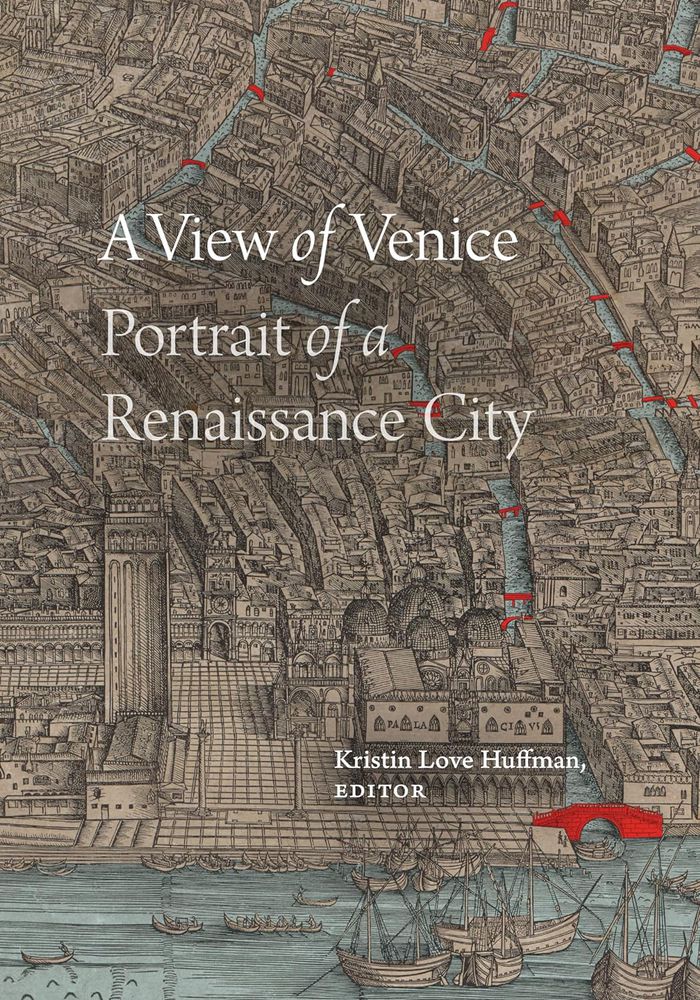
Jacopo de' Barbari's "View of Venice," a woodcut first printed in the year 1500, presents a bird's-eye portrait of Venice at its peak as an international hub of trade, art, and culture. An artistic and cartographic masterpiece of the Renaissance, the View depicts Venice as a vibrant, waterborne city interconnected by canals and bridges and filled with ornate buildings,(...)
Title:
A view of Venice: Portrait of a Renaissance city
Actions:
Price:
$41.95
(available to order)
Summary:
Jacopo de' Barbari's "View of Venice," a woodcut first printed in the year 1500, presents a bird's-eye portrait of Venice at its peak as an international hub of trade, art, and culture. An artistic and cartographic masterpiece of the Renaissance, the View depicts Venice as a vibrant, waterborne city interconnected by canals and bridges and filled with ornate buildings, elaborate gardens, and seafaring vessels. The contributors to "A view of Venice: Portrait of a Renaissance city" draw on a high-resolution digital scan of the over nine-foot-wide composite print to examine the complexities of this extraordinary woodcut and portrayal of early modern Venetian life. The essays show how the View constitutes an advanced material artifact of artistic, humanist, and scientific culture. They also outline the ways the print reveals information about the city's economic and military power, religious and social infrastructures, and cosmopolitan residents. Featuring methodological advancements in the digital humanities, "A view of Venice" highlights the reality and myths of a topographically unique, mystical city and its place in the world.
Form:
books
books
Publication:
January 2024
January 2024
Subject:
Art Theory
Art Theory
Form:
books
books
Price:
$34.00
(available to order)
Summary:
In November 2022, the first annual Alchemy Lecture took place at York University in Toronto, bringing four deep and agile writers from different geographies and disciplines into vibrant conversation on a topic of urgent relevance: humans and borders. Now, in these pages, that conversation is captured and expanded in insightful, passionate ways. Architect, artist, and(...)
Title:
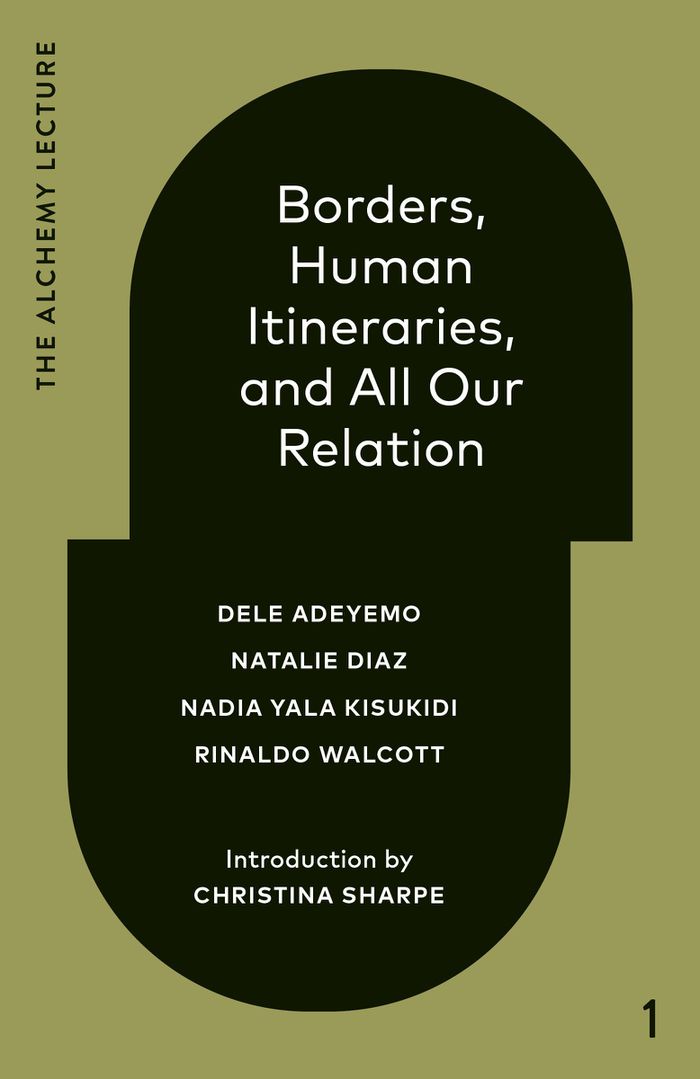
Borders, human itineraries, and all our relation. The alchemy lecture 1
Actions:
Price:
$34.00
(available to order)
Summary:
In November 2022, the first annual Alchemy Lecture took place at York University in Toronto, bringing four deep and agile writers from different geographies and disciplines into vibrant conversation on a topic of urgent relevance: humans and borders. Now, in these pages, that conversation is captured and expanded in insightful, passionate ways. Architect, artist, and urban theorist Dele Adeyemo (UK/Nigeria) calls attention to the complexity of Black infrastructures, questioning how “the environments that surround us condition the possibility of our being.” Poet Natalie Diaz (US/Mojave/Akimel O’otham) writes: “Like story, migration is the sensual movement of knowledge,” and asks, “What is the language we need to live right now?” Philosopher Nadia Yala Kisukidi (France) suggests there is no diasporic life “without the dynamics of fabulation, where we pass down, from generation to generation, the stories of our ancestors who walked barefoot for many months.” And cultural theorist Rinaldo Walcott (Canada) asks us to consider inheritances beyond white supremacist logics: “What might it mean to live a life, if we can’t risk desiring and working towards utopia?”
Form:
books
books
Publication:
October 2023
October 2023
Subject:
Social
Social
Form:
books
books
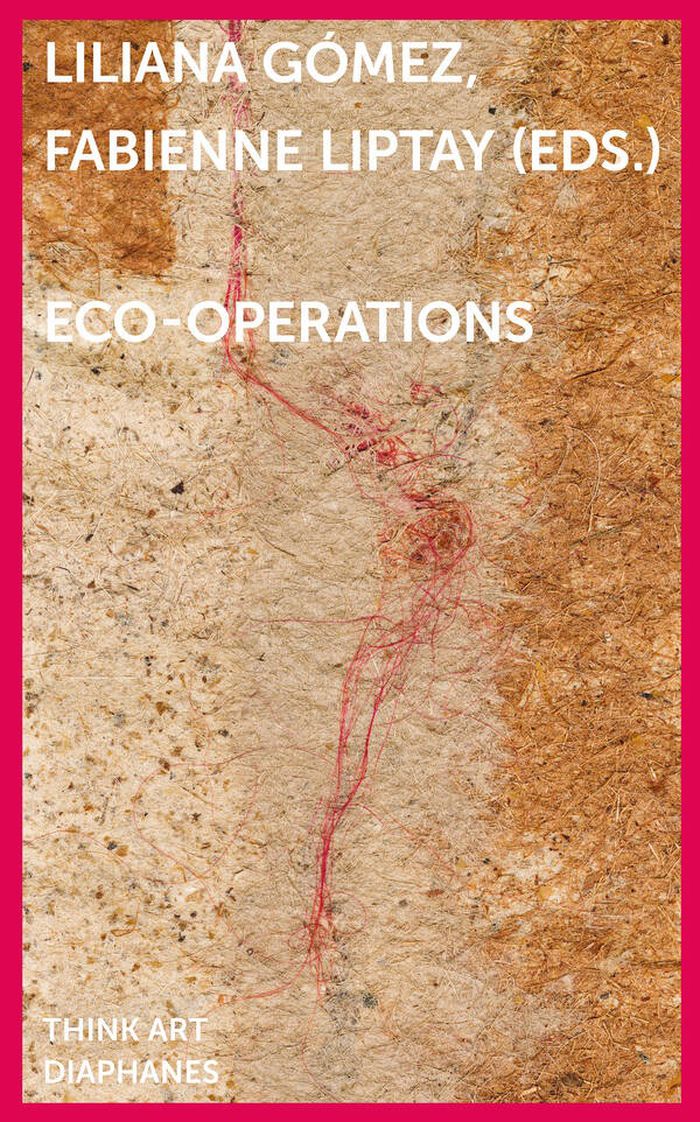
Title:
Eco-operations
Eco-operations
Actions:
Price:
$88.00
(available to order)
Summary:
The climate change crisis has become part of aesthetic discourse and critical research in culture and the arts. Future-oriented, ecologically conceived possibilities for action are being explored by artists, curators, and scholars alike. eco-operations addresses these emerging aesthetic ecologies and new technologies of cooperation that both challenge and shape a(...)
Title:
Eco-operations
Actions:
Price:
$88.00
(available to order)
Summary:
The climate change crisis has become part of aesthetic discourse and critical research in culture and the arts. Future-oriented, ecologically conceived possibilities for action are being explored by artists, curators, and scholars alike. eco-operations addresses these emerging aesthetic ecologies and new technologies of cooperation that both challenge and shape a sustainable future, foregrounding interruptions, ruptures, disconnections, dissonances, exclusions, and allochronism. Moving beyond the concepts of “flow” and “network” as a single, coherent (ecological or technological) system, "eco-operations" instead emphasizes the frictions within asynchronously running systems. The infrastructures and formats of artistic production and exhibition play a central role here, as they themselves constitute ecosystems that invite and regulate processes of sharing and exchange. Artists and activists are embedded in these ecosystems, in which they simultaneously intervene when searching for alternative ways of creating collaborative practice. Bringing together scholars, artists, writers, and curators, and working across a range of disciplines, "eco-operations" explores this field of tension between global and local ecologies and aims to speculate on where dissonances imply both creative potential and political challenges.
Form:
books
books
Publication:
March 2025
March 2025
Subject:
Architecture ecologies
Architecture ecologies
Form:
books
books

Price:
$27.00
(available to order)
Summary:
La notion de métabolisme place la matérialité de nos modes de vie au cœur des débats scientifiques et médiatiques. En suivant les matières à travers leur «?vie sociale?» (extraction, transformation, consommation et rejet sous forme de déchets), le métabolisme lie les enjeux sociaux et écologiques de la consommation humaine. De plus en plus mobilisée par les(...)
Title:
Métabolisme(s) : Matière en circulation, matière en tranformation
Actions:
Price:
$27.00
(available to order)
Summary:
La notion de métabolisme place la matérialité de nos modes de vie au cœur des débats scientifiques et médiatiques. En suivant les matières à travers leur «?vie sociale?» (extraction, transformation, consommation et rejet sous forme de déchets), le métabolisme lie les enjeux sociaux et écologiques de la consommation humaine. De plus en plus mobilisée par les universitaires spécialistes des questions environnementales, la notion est également réappropriée par d’autres milieux professionnels (urbanistes, architectes). Cet ouvrage, issu des réflexions du Studio Métabolisme de l’École urbaine de Lyon, vise à offrir un aperçu des réflexions en cours tout en ouvrant le débat vers le grand public. Le livre met en avant les enjeux sociaux, politiques, économiques et culturels de la matérialité des transformations des cycles bio-géochimiques en insistant sur les dimensions politiques et socialement construites des circulations et des transformations de la matière, de la ressource au déchet. Il s’agit de prendre en considération les impacts des prélèvements ou des rejets de nos sociétés et de comprendre comment ces matières s’insèrent dans des dispositifs socio-politiques dédiés (infrastructures, pratiques, normes, etc.).
Form:
books
books
Publication:
March 2025
March 2025
Subject:
Environment and environmental theory
Environment and environmental theory
Form:
books
books
Actions:
Price:
$33.00
(available to order)
Summary:
Urbanization is a system of power and knowledge, and today’s city functions through the expansive material infrastructures of the urban order. In The Urban Apparatus, Reinhold Martin analyzes urbanization and the contemporary city in aesthetic, socioeconomic, and mediapolitical terms. He argues that understanding the city as infrastructure reveals urbanization to be a way(...)
Title:
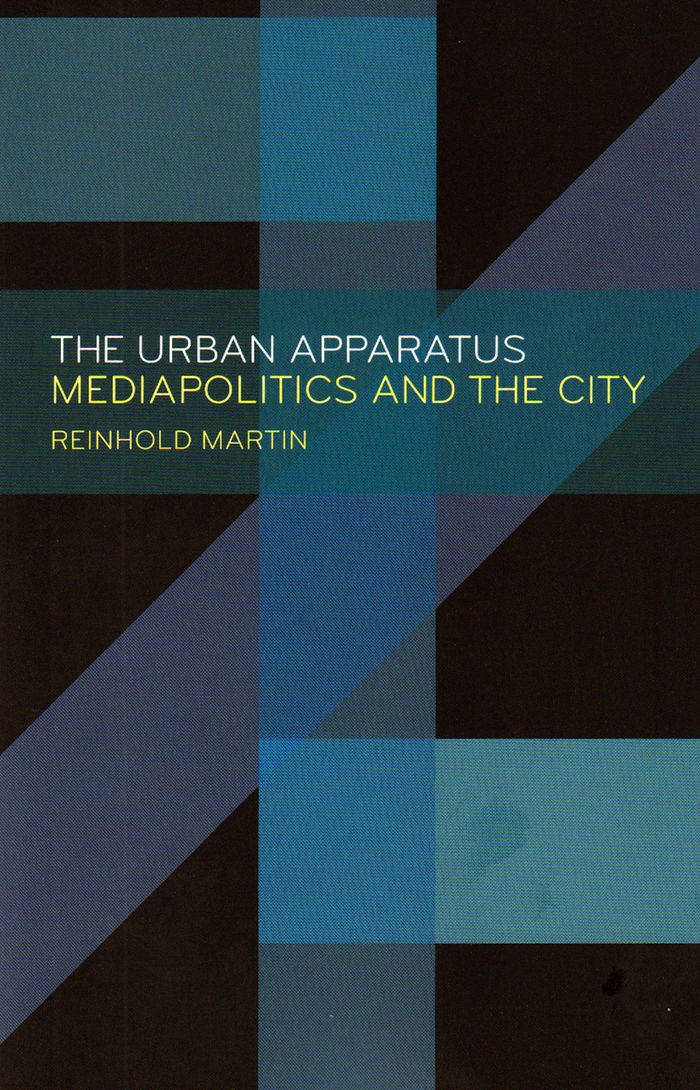
The urban apparatus: mediapolitics and the city
Actions:
Price:
$33.00
(available to order)
Summary:
Urbanization is a system of power and knowledge, and today’s city functions through the expansive material infrastructures of the urban order. In The Urban Apparatus, Reinhold Martin analyzes urbanization and the contemporary city in aesthetic, socioeconomic, and mediapolitical terms. He argues that understanding the city as infrastructure reveals urbanization to be a way of imparting functional, aesthetic, and cognitive order to a contradictory, doubly bound neoliberal regime. Blending critical philosophy, political theory, and media theory, The Urban Apparatus explores how the aesthetics of cities and their political economies overlap. In a series of ten essays, with a detailed theoretical introduction, Martin explores questions related to urban life, drawn from a wide range of global topics—from the fiscal crisis in Detroit to speculative development in Mumbai to the landscape of Mars, from discussions of race and the environment to housing and economic inequality. Each essay proposes a particular “mediator” (or a material complex) that is shaped by imaginative practices, each answering the question “What is a city, today?”
Form:
books
books
Publication:
October 2016
October 2016
Subject:
Urban Theory
Urban Theory
Form:
journals and magazines
journals and magazines
Actions:
Price:
$8.00
(available in store)
Summary:
As this year’s editorial cycle was titled Value Attachment—a poetic and materialist inquiry into how we assign worth to our worlds—the Sumud Flotilla offers a paradigm for what that question truly entails. The Gaza Biennial reasserts, in its own terms, the primacy of relationships as the ground on which politics is built. Not relationships as networks of exchange or(...)
Title:
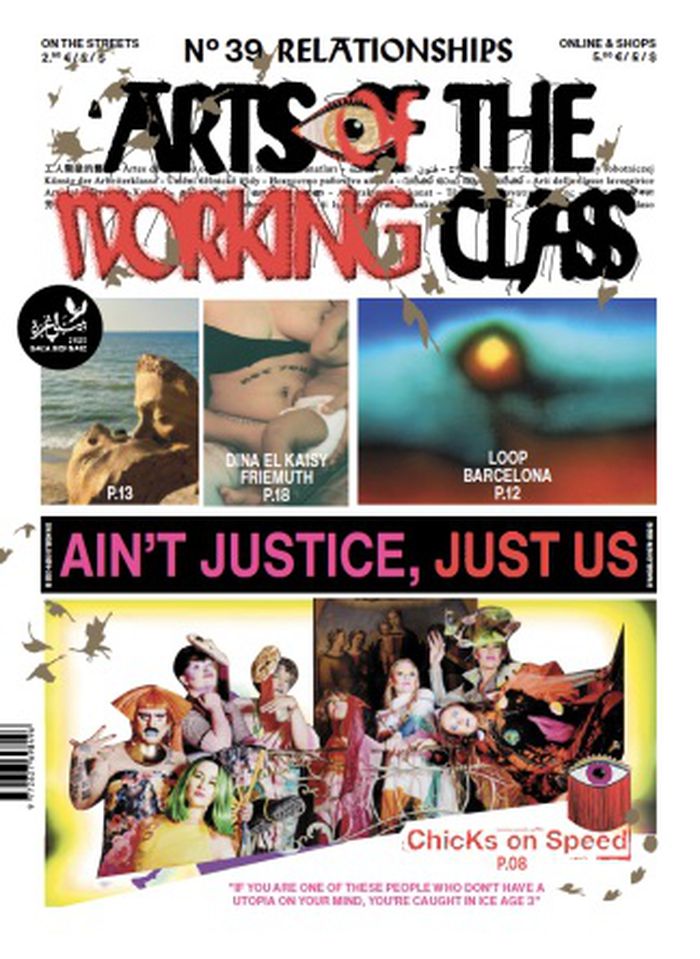
Arts of the Working Class #39: Relationships
Actions:
Price:
$8.00
(available in store)
Summary:
As this year’s editorial cycle was titled Value Attachment—a poetic and materialist inquiry into how we assign worth to our worlds—the Sumud Flotilla offers a paradigm for what that question truly entails. The Gaza Biennial reasserts, in its own terms, the primacy of relationships as the ground on which politics is built. Not relationships as networks of exchange or capital, but as infrastructures of mutual dependence and resistance: fragile, chaotic, complex, indispensable. Across the previous four issues in 2025, we have traced how this question recurs across different registers. Now, we turn to Relationships: to sentimental versions and terrains of struggle. Fascism, in its twenty-first-century iterations, thrives not only on nationalism and exclusion but on dismantling relational life: isolating, atomizing, privatizing it until solidarity becomes suspect and empathy itself a form of dissent. Proximity is policed, intimacy is surveilled. Love is reduced to transaction. Care is outsourced. Trust weaponized. Even friendship, the most basic form of political relation, is co-opted as a tool of influence and control.
Form:
journals and magazines
journals and magazines
Publication:
November 2025
November 2025
Subject:
Magazines
Magazines


