


1571 Results
Form:
books
books
Title:
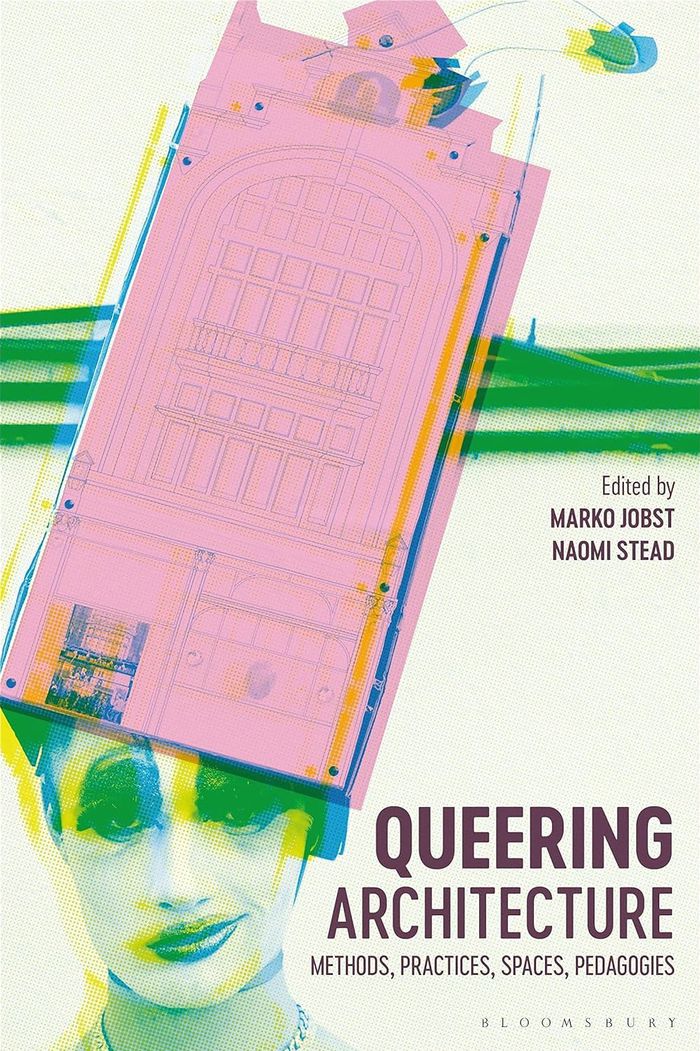
Queering architecture
Queering architecture
Actions:
Price:
$52.50
(available to order)
Summary:
Featuring contributions from a range of significant voices in the field, this volume renews the conversation around what it means to speak of the "queer" in the context of architecture, and offers a fresh take on the methodological and epistemological challenges this poses to the discipline of architectural theory. Architecture as a discipline, a profession and an applied(...)
Title:
Queering architecture
Actions:
Price:
$52.50
(available to order)
Summary:
Featuring contributions from a range of significant voices in the field, this volume renews the conversation around what it means to speak of the "queer" in the context of architecture, and offers a fresh take on the methodological and epistemological challenges this poses to the discipline of architectural theory. Architecture as a discipline, a profession and an applied practice, is always subordinate to its own conceptual framework, which is one of orderliness. It refers to buildings, but also to infrastructures of thought and knowledge, to conventions and taxonomies, to structures of governance, hierarchies of power and systems of administration. How, then, can one look at queering architectural discourse when the very term "queer", celebrated for its elusive, slippery nature, resists and attacks such order? Divided into four subsections, the essays in this anthology each purse a distinct line of inquiry - methods, practices, spaces, and pedagogies - in order to help particularize the proposed queering of architecture. They demonstrate the paradoxical nature of the endeavour from a diverse range of perspectives – from the questions of mapping queer theory in architecture; to the issues of queer architectural archives, or lack thereof; to the non-Western linguistic challenges to the very term queer alongside decolonial approaches to architecture via indigeneity and landscape.
Form:
books
books
Publication:
May 2024
May 2024
Subject:
Gender Theory in Architecture
Gender Theory in Architecture
Form:
books
books
Actions:
Price:
$33.95
(available to order)
Summary:
A manifesto for the Open City: vibrant, disordered, adaptable. In 1970 Richard Sennett published the ground breaking ''The uses of disorder,'' that the ideal of a planned and ordered city was flawed, likely to produce a fragile, restrictive urban environment. Fifty years later, Sennett returns to these still fertile ideas and alongside campaigner and architect, Pablo(...)
Title:
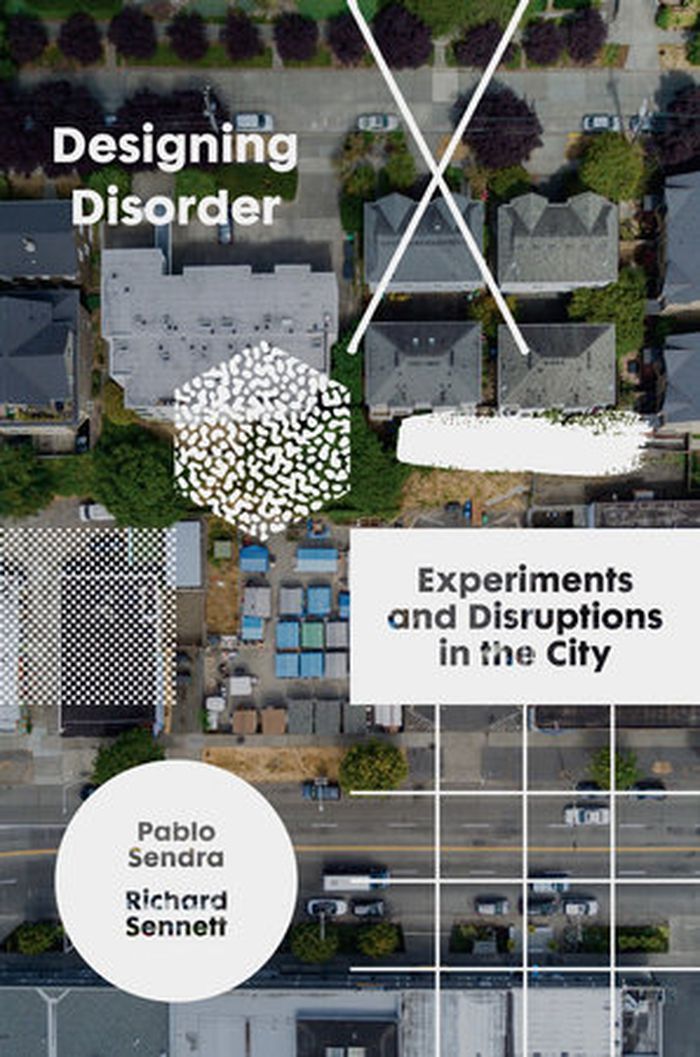
Designing disorder: experiments and disruptions in the city
Actions:
Price:
$33.95
(available to order)
Summary:
A manifesto for the Open City: vibrant, disordered, adaptable. In 1970 Richard Sennett published the ground breaking ''The uses of disorder,'' that the ideal of a planned and ordered city was flawed, likely to produce a fragile, restrictive urban environment. Fifty years later, Sennett returns to these still fertile ideas and alongside campaigner and architect, Pablo Sendra, sets out an agenda for the design and ethics of the Open City. The public spaces of our cities are under siege from planners, privatisation and increased surveillance. Our streets are becoming ever more lifeless and ordered. What is to be done? Can disorder be designed? Is it possible to maintain the public realm as a flexible space that adapts over time? In this provocative essay Sendra and Sennett propose a reorganisation of how we think and plan the social life of our cities. What the authors call 'Infrastructures of disorder' combine architecture, politics, urban planning and activism in order to develop places that nurture rather than stifle, bring together rather than divide up, remain open to change rather than closed off. The book proves that ideas of disorder are still some of the most radical and transformative in debates on 21st century cities.
Form:
books
books
Publication:
April 2020
April 2020
Subject:
Urban Theory
Urban Theory
Form:
books
books
Holdings:
Description:
xv, 252 pages : illustrations (chiefly color), maps (chiefly color) ; 25 cm
Description:
xv, 252 pages : illustrations (chiefly color), maps (chiefly color) ; 25 cm
Author:
Subject:
Publication:
London ; New York : Routledge, 2012.
London ; New York : Routledge, 2012.
Title:
Urban wildscapes / edited by Anna Jorgensen and Richard Keenan.
Actions:
Holdings:
Description:
xv, 252 pages : illustrations (chiefly color), maps (chiefly color) ; 25 cm
Urban wildscapes / edited by Anna Jorgensen and Richard Keenan.
Actions:
Holdings:
Description:
xv, 252 pages : illustrations (chiefly color), maps (chiefly color) ; 25 cm
Form:
books
books
Publication:
London ; New York : Routledge, 2012.
London ; New York : Routledge, 2012.
Author:
Subject:
Form:
books
books
Actions:
Price:
$79.95
(available to order)
Summary:
La médiocrité esthétique et le fonctionnalisme primaire de la reconstruction post 1945 sécrète une crise durable qui affecte l’architecture et l’urbanisme dans l’ensemble du monde occidental. A la "Cité radieuse" des années 1930 succède, au milieu du siècle, une nouvelle utopie la "Mégastructure". Hybride colossal traversant des territoires sans frontières, elle règle du(...)
Publication:
October 2004, Paris
October 2004, Paris
Title:
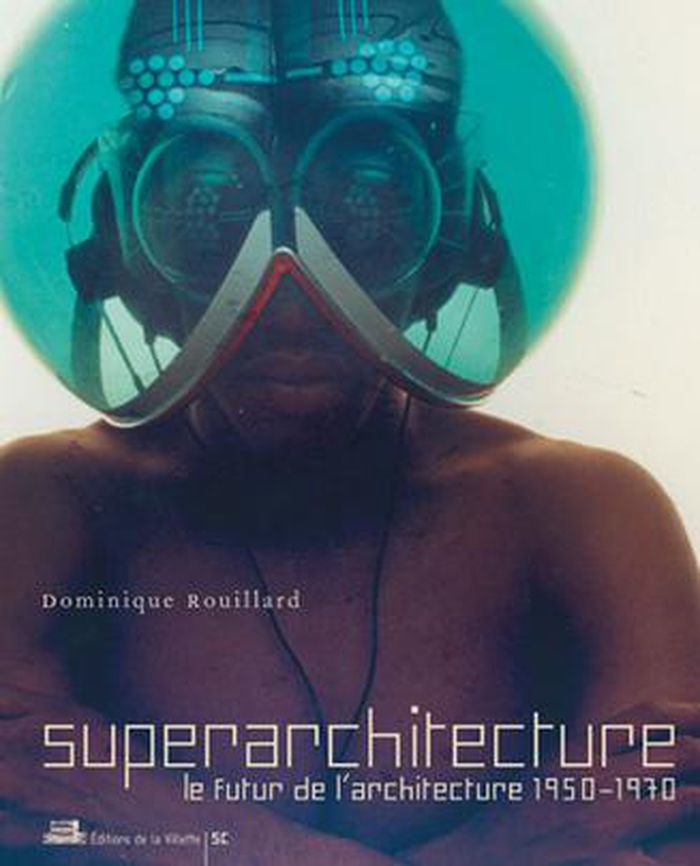
Superarchitecture : le futur de l'architecture 1950-1970
Actions:
Price:
$79.95
(available to order)
Summary:
La médiocrité esthétique et le fonctionnalisme primaire de la reconstruction post 1945 sécrète une crise durable qui affecte l’architecture et l’urbanisme dans l’ensemble du monde occidental. A la "Cité radieuse" des années 1930 succède, au milieu du siècle, une nouvelle utopie la "Mégastructure". Hybride colossal traversant des territoires sans frontières, elle règle du même élan, et l’architecture, et l’urbanisme, et les infrastructures. Mais l’engouement pour ces grandes machines sensées résoudre les problèmes à l’échelle planétaire s’émousse durant les sixties. La "Mégastructure" cède le pas à l’"Architecture radicale", ce faisant on assiste au basculement d’une approche de l’architecture dont les références sont le besoin et la construction à une autre dont les références sont l’immédiateté et la consommation, les objets mobiles et le plaisir du corps. Cette transformation correspond au passage d’une architecture conçue en terme de progrès social et de bonheur humain, à une architecture de la révélation du monde existant. Première monographie exhaustive sur la période, Superarchitecture est abondamment illustrée à l’aide d’une iconographie originale issue des archives des Smithson, d’Hollein, de Fuller, Friedman, Archigram, Price, Archizoom, Superstudio, etc. De l’utopie critique qui se dégage des projets de ces acteurs et de la puissance évocatrice de leurs dessins, les architectes contemporains comme Koolhaas, Tschumi ou MRDV se sont fortement inspirés pour construire leur univers conceptuel.
Form:
books
books
Publication:
October 2004, Paris
October 2004, Paris
Form:
books
books
Title:
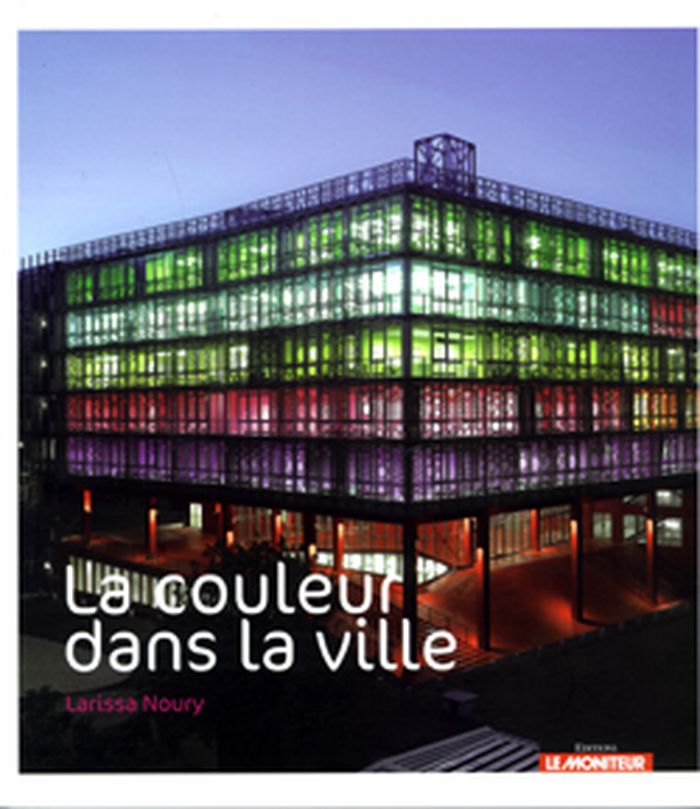
La couleur dans la ville
La couleur dans la ville
Actions:
Price:
$59.95
(available to order)
Summary:
Dans les décennies d'après-guerre, la couleur semblait avoir déserté la ville. Aujourd'hui, elle retrouve pleinement son droit de cité et investit aussi bien les immeubles de logement que les bureaux, les équipements, et même les infrastructures de transport. Les architectes et les urbanistes la considèrent comme indispensable à la compréhension de l'espace urbain et à la(...)
Title:
La couleur dans la ville
Actions:
Price:
$59.95
(available to order)
Summary:
Dans les décennies d'après-guerre, la couleur semblait avoir déserté la ville. Aujourd'hui, elle retrouve pleinement son droit de cité et investit aussi bien les immeubles de logement que les bureaux, les équipements, et même les infrastructures de transport. Les architectes et les urbanistes la considèrent comme indispensable à la compréhension de l'espace urbain et à la qualité de vie des habitants, susceptible d'enrichir l'environnement en lui apportant lisibilité, rythme et perspective. Cet ouvrage dresse un panorama historique de la couleur dans Le milieu urbain au cours du XXe siècle, avec des éclairages sur certains mouvements emblématiques tels que l'Art nouveau, l'avant-garde russe, le modernisme ou L'art cinétique. Il décrit ensuite les outils et les méthodes - gammes, palettes, nuanciers - qui permettent d'intervenir dans le paysage urbain avec rigueur et subtilité. Un certain nombre d'expériences, menées dans les domaines de La restauration chromatique du patrimoine urbain et de l'architecture contemporaine, retracent les démarches exemplaires de certains concepteurs. Depuis Jean-Philippe Lenclos, qui parcourt le monde pour constituer des " atlas de la couleur ", au Centre de la couleur de Moscou, qui œuvre à l'échelle de la métropole tout entière, et jusqu'aux architectes comme Jean Nouvel ou Christian de Portzamparc, qui utilisent la couleur (et de plus en plus la couleur-lumière) comme un matériau à part entière, nombreux sont les acteurs qui montrent que la question de la couleur dans nos villes, loin d'être marginale, est aujourd'hui devenue centrale.
Form:
books
books
Publication:
January 2008, Paris
January 2008, Paris
Subject:
Colour Theory and Design
Colour Theory and Design
Form:
books
books
Actions:
Price:
$49.95
(available to order)
Summary:
Un-volumetric architecture expresses a new condition acquired in dealing with and designing open and public space from the nineties to today. This volume is therefore intended to offer a theoretical reflection conducted through 100 construction projects worldwide that have faced the difficult challenge of delineating and building a new identity for that transient and(...)
Title:
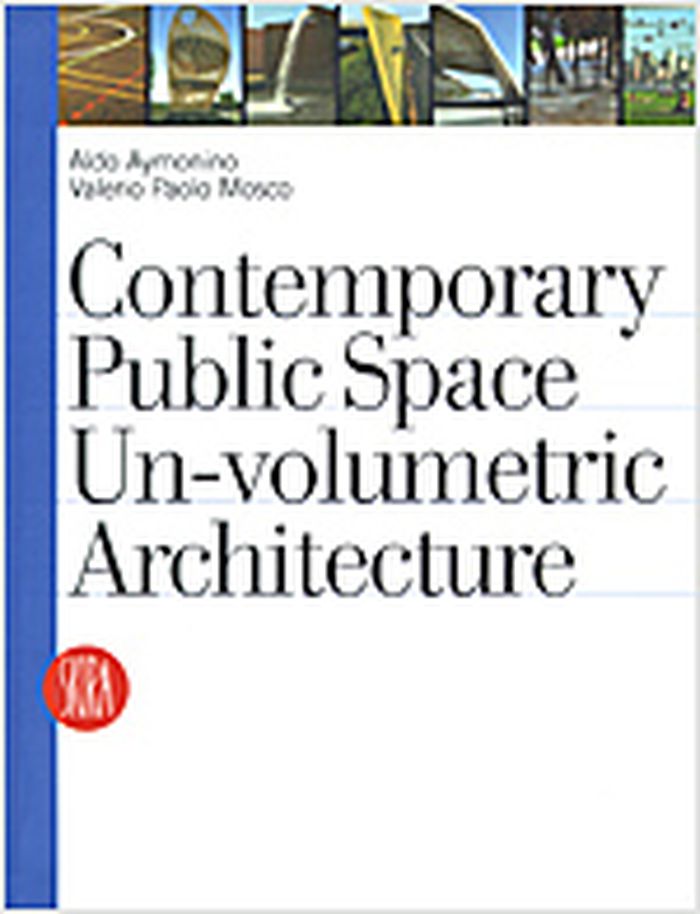
Contemporary public space : un-volumetric architecture
Actions:
Price:
$49.95
(available to order)
Summary:
Un-volumetric architecture expresses a new condition acquired in dealing with and designing open and public space from the nineties to today. This volume is therefore intended to offer a theoretical reflection conducted through 100 construction projects worldwide that have faced the difficult challenge of delineating and building a new identity for that transient and continually metamorphosing category that is the contemporary open space. The considerable creative freedom, the low budget, the sophisticated relationship with the landscape and geography, the dialogue with new metropolitan realities, the possibility of offering temporary solutions, all make these projects among the richest, freest and most stimulating collections currently available, through the work of major protagonists and many emerging authors on the international scene. The volume is divided into 10 sections: Surfaces, Vertical, Enclosures, Design, Shelters, Environment, Earthworks, Figures, Technique and Events, which attempt to accompany the reader around a complex world of solutions and projects ranging from the traditional public space to the landscape, from the rock concert to the provisional space for cultural and artistic events, from the design of infrastructures to the most sophisticated garden. Each section is introduced by a small essay, written by such important authors on the contemporary scene as Denise Scott Brown, James Wines, Pippo Ciorra, Wes Jones, Enrico Morteo, Alberto Ferlenga, Ilhyun Kim, Kengo Kuma, Arie Graafland, Juan Purcell and Bernardo Secchi, who attempt to tackle the theme of the contemporary open space, offering stimuli for theoretical reflection.
Form:
books
books
Publication:
January 1900, Milan
January 1900, Milan
Subject:
Urban Theory
Urban Theory
Form:
books
books
Title:
Smart cities
Smart cities
Actions:
Price:
$19.95
(available to order)
Summary:
Over the past ten years, urban planners, technology companies, and governments have promoted smart cities with a somewhat utopian vision of urban life made knowable and manageable through data collection and analysis. Emerging smart cities have become both crucibles and showrooms for the practical application of the Internet of Things, cloud computing, and the integration(...)
Title:
Smart cities
Actions:
Price:
$19.95
(available to order)
Summary:
Over the past ten years, urban planners, technology companies, and governments have promoted smart cities with a somewhat utopian vision of urban life made knowable and manageable through data collection and analysis. Emerging smart cities have become both crucibles and showrooms for the practical application of the Internet of Things, cloud computing, and the integration of big data into everyday life. Are smart cities optimized, sustainable, digitally networked solutions to urban problems? Or are they neoliberal, corporate-controlled, undemocratic non-places? This volume in the MIT Press Essential Knowledge series offers a concise introduction to smart cities, presenting key concepts, definitions, examples, and historical contexts, along with discussions of both the drawbacks and the benefits of this approach to urban life. After reviewing current terminology and justifications employed by technology designers, journalists, and researchers, the book describes three models for smart city development?smart-from-the-start cities, retrofitted cities, and social cities?and offers examples of each. It covers technologies and methods, including sensors, public wi-fi, big data, and smartphone apps, and discusses how developers conceive of interactions among the built environment, technological and urban infrastructures, citizens, and citizen engagement. Throughout, the author?who has studied smart cities around the world?argues that smart city developers should work more closely with local communities, recognizing their preexisting relationship to urban place and realizing the limits of technological fixes. Smartness is a means to an end: improving the quality of urban life.
Form:
books
books
Publication:
March 2020
March 2020
Subject:
Digital Architecture
Digital Architecture
Form:
books
books
Actions:
Holdings:
Description:
ix, 309 pages : illustrations, maps ; 26 cm
Description:
ix, 309 pages : illustrations, maps ; 26 cm
Author:
Subject:
Publication:
London ; New York : Routledge in association with the Open University, 1999.
London ; New York : Routledge in association with the Open University, 1999.
Title:
The American cities and technology reader : wilderness to wired city / edited by Gerrylynn K. Roberts.
Actions:
Holdings:
Description:
ix, 309 pages : illustrations, maps ; 26 cm
The American cities and technology reader : wilderness to wired city / edited by Gerrylynn K. Roberts.
Actions:
Holdings:
Description:
ix, 309 pages : illustrations, maps ; 26 cm
Form:
books
books
Publication:
London ; New York : Routledge in association with the Open University, 1999.
London ; New York : Routledge in association with the Open University, 1999.
Author:
Subject:
Form:
books
books
Actions:
Holdings:
Description:
201 pages ; 22 cm.
Description:
201 pages ; 22 cm.
Author:
Subject:
Publication:
Montréal : Les Presses de L'Université de Montréal, [2016], ©2016
Montréal : Les Presses de L'Université de Montréal, [2016], ©2016
Title:
L'âge de plastique : lire la ville contemporaine au Québec / Daniel Laforest.
Actions:
Holdings:
Description:
201 pages ; 22 cm.
L'âge de plastique : lire la ville contemporaine au Québec / Daniel Laforest.
Actions:
Holdings:
Description:
201 pages ; 22 cm.
Form:
books
books
Publication:
Montréal : Les Presses de L'Université de Montréal, [2016], ©2016
Montréal : Les Presses de L'Université de Montréal, [2016], ©2016
Author:
Subject:
Form:
books
books
Title:
On the digital humanities
On the digital humanities
Actions:
Price:
$35.99
(available to order)
Summary:
Since its inception, the digital humanities has been repeatedly attacked as a threat to the humanities: warnings from literary and cultural theorists of technology overtaking English departments and the mechanization of teaching have peppered popular media. Stephen Ramsay’s ''On the digital humanities'', a collection of essays spanning the personal to the polemic, is a(...)
Title:
On the digital humanities
Actions:
Price:
$35.99
(available to order)
Summary:
Since its inception, the digital humanities has been repeatedly attacked as a threat to the humanities: warnings from literary and cultural theorists of technology overtaking English departments and the mechanization of teaching have peppered popular media. Stephen Ramsay’s ''On the digital humanities'', a collection of essays spanning the personal to the polemic, is a spirited defense of the field of digital humanities. A founding figure in what was once known as 'humanities computing,' Ramsay has a well-known and contentious relationship with what is now called the digital humanities (DH). Here Ramsay collects and updates his most influential and notorious essays and speeches from the past fifteen years, considering DH from an array of practical and theoretical perspectives. The essays pursue a broad variety of themes, including the nature of data and its place in more conventional notions of text and interpretation, the relationship between the constraints of computation and the more open-ended nature of the humanities, the positioning of practical skills and infrastructures in both research and pedagogical contexts, the status of DH as a program for political and social action, and personal reflections on the author’s journey into the field as both a theorist and a technologist. These wide-ranging essays all center around one idea: that DH not forsake its connection to the humanities. While 'digital humanities' may sound like an entirely new form of engagement with the artifacts of human culture, Ramsay argues that the field well reveals what is most essential to humanistic inquiry.
Form:
books
books
Publication:
August 2023
August 2023
Subject:
Archive, library and the digital
Archive, library and the digital


