


1583 Results
Form:
books
books
Actions:
Price:
$84.00
(available to order)
Summary:
Arthur Brown Jr. (1874-1957) is celebrated by his peers for such masterpieces as the City Hall, War Memorial Opera House, Temple Emanu-El, and Coit Tower in San Francisco; the Pasadena City Hall; and the Labor-ICC block of the Federal Triangle in Washington, DC. Brown epitomized the idea that architecture not only houses society’s daily rituals and defining events but(...)
Title:
Arthur Brown, Jr. : progressive classicist
Actions:
Price:
$84.00
(available to order)
Summary:
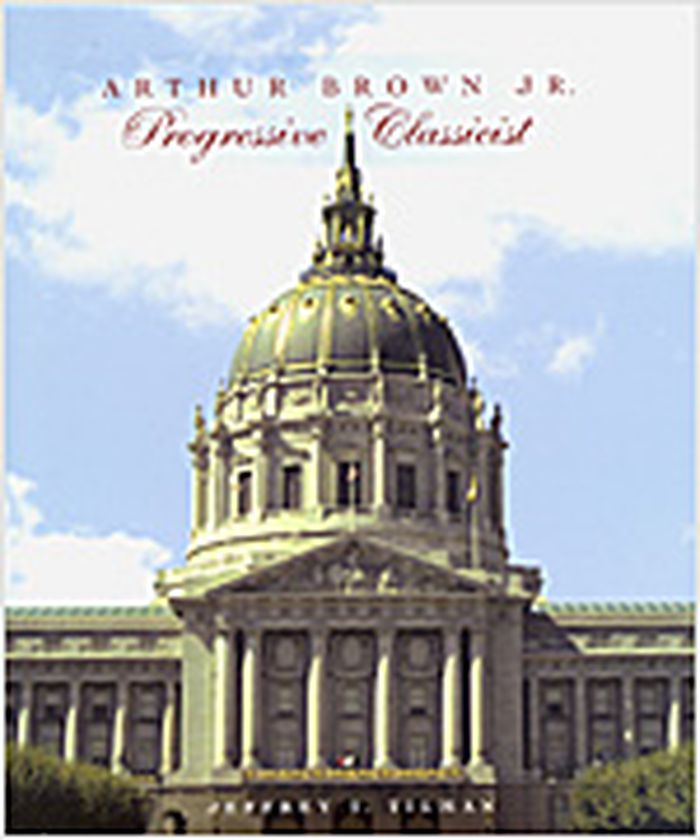
Arthur Brown Jr. (1874-1957) is celebrated by his peers for such masterpieces as the City Hall, War Memorial Opera House, Temple Emanu-El, and Coit Tower in San Francisco; the Pasadena City Hall; and the Labor-ICC block of the Federal Triangle in Washington, DC. Brown epitomized the idea that architecture not only houses society’s daily rituals and defining events but also can itself shape the sociopolitical landscape of America. "Arthur Brown Jr.: progressive classicist" unifies the varied strands of the architect’s life, from the architectural forms and methods of the Ecole des Beaux-Arts in Paris to the reforming spirit and self-reliant confidence of San Francisco after the earthquake and fire of 1906 to the challenging economics and changing aesthetics of machine-age America. It details the development of Brown’s major works and many other civic, commercial, religious, academic, and residential buildings. It chronicles his unflagging commitment to the classical tradition, which he employed in contemporary, forward-looking institutional buildings that emphasized continuity with the past while meeting the needs of the future. To Brown, the classical tradition was not a sacrosanct, unchanging body of knowledge; it was an expanding and evolving set of ideas about architectural design that permitted, and even demanded, change as new conditions and technologies were developed.
Form:
books
books
Publication:
November 2005, New York
November 2005, New York
Subject:
Architecture Monographs
Architecture Monographs
Form:
books
books
Actions:
Price:
$49.95
(available to order)
Summary:
Les villes du Québec, comme celles de l'ensemble des pays occidentaux ont été marquées par plusieurs périodes distinctes de croissance économique, une assez rapide (1962-1975) et une plus lente (1976-1990), la relative reprise n'est ensuite pas continue et la crise de 2008 rappelle l'incertitude des conjonctures internationales. Dans ce contexte, le Québec ne fait pas(...)
Title:
Villes québecoises et renouvellement urbain depuis la Révolution tranquille
Actions:
Price:
$49.95
(available to order)
Summary:
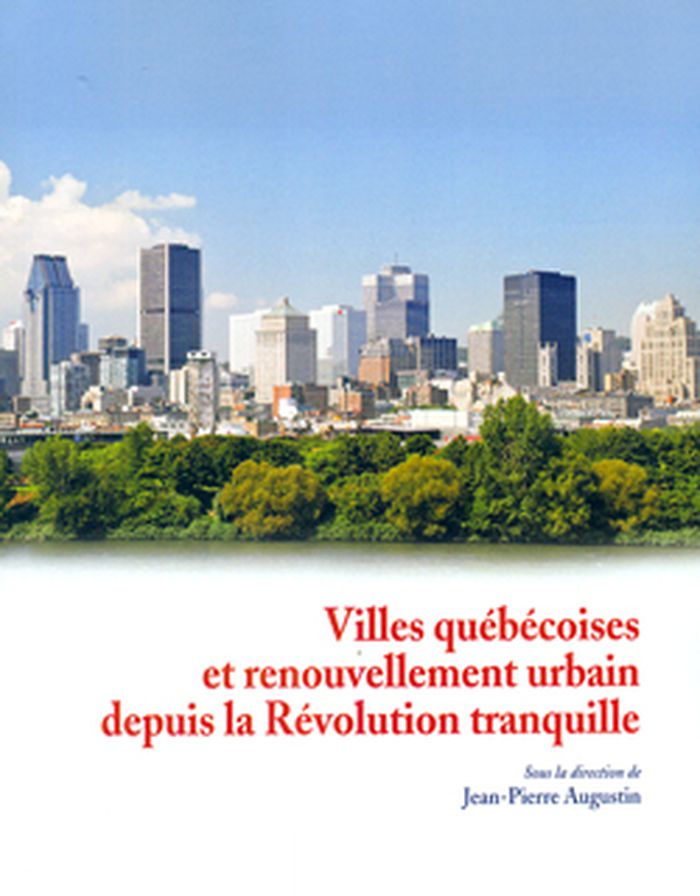
Les villes du Québec, comme celles de l'ensemble des pays occidentaux ont été marquées par plusieurs périodes distinctes de croissance économique, une assez rapide (1962-1975) et une plus lente (1976-1990), la relative reprise n'est ensuite pas continue et la crise de 2008 rappelle l'incertitude des conjonctures internationales. Dans ce contexte, le Québec ne fait pas exception dans la période succédant à la Révolution tranquille mais les actions socio-économiques, culturelles et aménagistes des villes québécoises soulignent des particularités originales. Sur ces questions, les auteurs spécialistes des villes québécoises, soulignent les spécificités urbaines de la province, même s'il est surtout question de Montréal qui s'affiche comme le moteur économique et expérimental du Québec. Nombre d'entre eux renforcent l'hypothèse d'une Ecole de Montréal, celle d'une montréalité en formation. Ces regards croisés de chercheurs québécois et français sur l'évolution et les particularités des villes du Québec renouvellent les approches et offrent des éléments d'évaluation utiles aux chercheurs, mais aussi aux élus, aménageurs, urbanistes, opérateurs urbains et bien sûr aux usagers. L'ouvrage s'inscrit dans la poursuite d'une réflexion engagée depuis plus de 15 ans par le Centre d'études canadiennes interuniversitaire de Bordeaux (CECIB) de la Maison des sciences de l'homme d'Aquitaine (MSHA), qui a déjà publié trois livres concernant les lieux culturels (1998), les sites publics (2000) et l'urbanité (2008) des villes québécoises et canadiennes. Les chercheurs du CECIB et de l'UMR ADES du CNRS ont établi un actif réseau d'échanges avec les universités du Québec qui s'affirme comme un pôle majeur des recherches québécoises en France.
Form:
books
books
Publication:
June 2010
June 2010
Subject:
Architecture du Québec
Architecture du Québec
Form:
books
books
Actions:
Price:
$99.00
(available to order)
Summary:
The power consumption due to air-conditioning of buildings becomes particularly significant in an urban environment because the temperature of the air of dense urban districts is higher than in the suburbs. This phenomenon, as well as the increase in the standards of living and other factors namely heatwaves, contribute to the growth of the traditionally low demand for(...)
Title:
Cooling the cities : Rafraichir les villes
Actions:
Price:
$99.00
(available to order)
Summary:
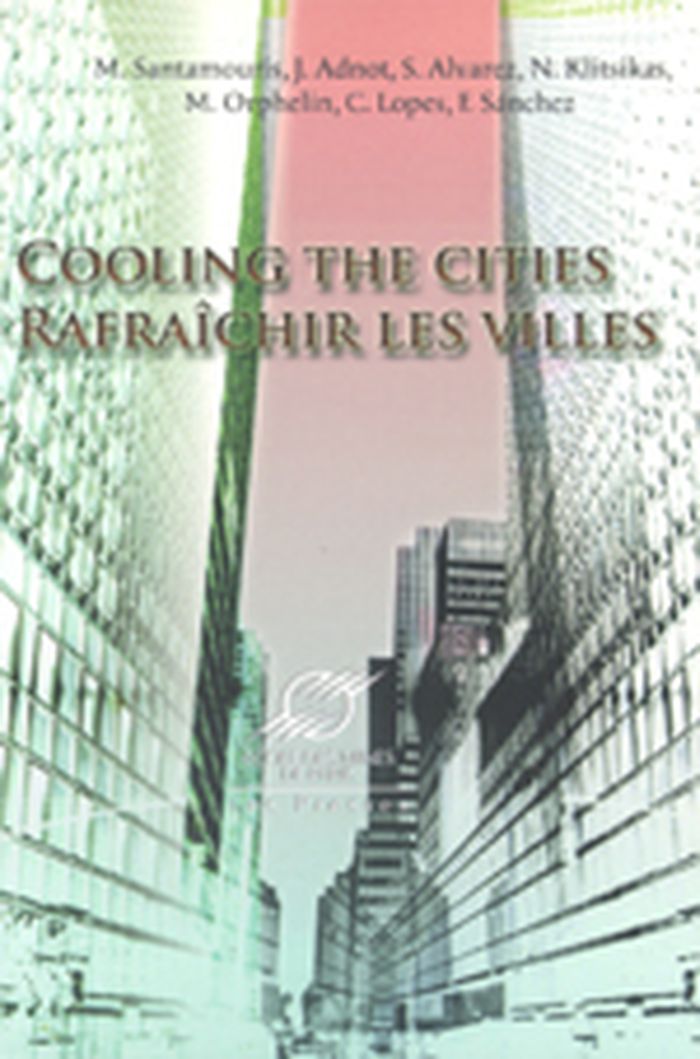
The power consumption due to air-conditioning of buildings becomes particularly significant in an urban environment because the temperature of the air of dense urban districts is higher than in the suburbs. This phenomenon, as well as the increase in the standards of living and other factors namely heatwaves, contribute to the growth of the traditionally low demand for artificial air-conditioning in Europe. Case studies make it possible to measure the heat island effect (the accumulation of heat in cities), to characterize the additional electricity consumption of the buildings in an urban environment, and to give an overall picture of the practices, techniques and materials which can help to cool the cities. Priority is given to the practices which avoid the need for artificial air-conditioning by taking into account the environment, the use of vegetation and " cool " materials for the construction of pavements and buildings. For the remaining needs for air-conditioning, the present systems of air-conditioning can also become more energy efficient. Case studies conducted in Seville made it possible to measure the dispersion of the needs for air-conditioning around their average value for the various zones of the city. One of the case studies evaluates the benefit associated with the systematic plantation of trees and other plants in Athens. Another case study relates to Paris and estimates the importance of centralized solutions for air-conditioning in an urban environment. This book results from a study launched by the European Commission and is written by authors from three European countries very concerned by heatwaves and their effects downtown : Greece (Athens), Spain (Seville) and France (Paris). All of them are professors or researchers in very high level laboratories (Group Building Environmental Studies in Athens University, Energy Laboratory in Ecole des Mines de Paris and in Seville University).
Form:
books
books
Publication:
September 2004, Paris
September 2004, Paris
Subject:
Green Architecture
Green Architecture


