


1598 Results
Form:
books
books
Price:
$90.00
(available to order)
Summary:
In this view of London, Farrell looks beyond the contribution of individual buildings to the city. He creates a larger, more exciting frame, charting how the capital’s messy and complex shape has been hewn out of a series of layers – natural and manmade, so the Thames and the natural landscape gets as much attention as the railway infrastructure, the roads and the canals.(...)
$90.00
(available to order)
Summary:
In this view of London, Farrell looks beyond the contribution of individual buildings to the city. He creates a larger, more exciting frame, charting how the capital’s messy and complex shape has been hewn out of a series of layers – natural and manmade, so the Thames and the natural landscape gets as much attention as the railway infrastructure, the roads and the canals.(...)
Title:
Shaping London: The patterns and forms that make the metropolis
Actions:
Price:
$90.00
(available to order)
Summary:
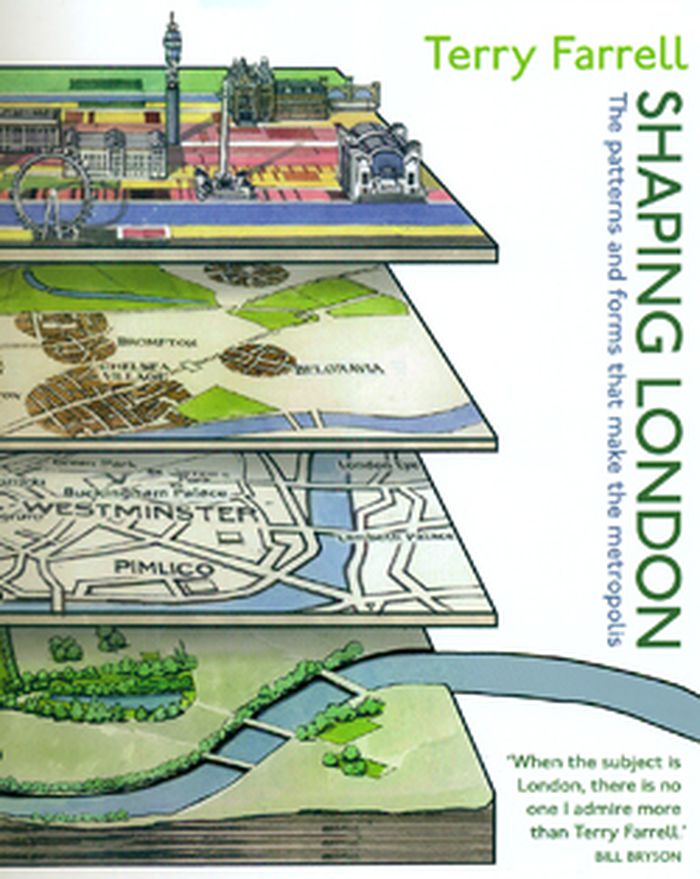
In this view of London, Farrell looks beyond the contribution of individual buildings to the city. He creates a larger, more exciting frame, charting how the capital’s messy and complex shape has been hewn out of a series of layers – natural and manmade, so the Thames and the natural landscape gets as much attention as the railway infrastructure, the roads and the canals. This provides a whole series of revelations that allow us to see the city afresh: How might the natural bends in the river have impacted where and what was built? How have the Thames’ tributaries affected historic boundaries and development, played out in the estates of Mayfair? How is the Roman plan for the city of London still discernible in today’s street patterns? Illustrated with original sketches, maps, archive photographs and paintings, this book provides a collage of London’s patterns and its history.
Shaping London: The patterns and forms that make the metropolis
Actions:
Price:
$90.00
(available to order)
Summary:
In this view of London, Farrell looks beyond the contribution of individual buildings to the city. He creates a larger, more exciting frame, charting how the capital’s messy and complex shape has been hewn out of a series of layers – natural and manmade, so the Thames and the natural landscape gets as much attention as the railway infrastructure, the roads and the canals. This provides a whole series of revelations that allow us to see the city afresh: How might the natural bends in the river have impacted where and what was built? How have the Thames’ tributaries affected historic boundaries and development, played out in the estates of Mayfair? How is the Roman plan for the city of London still discernible in today’s street patterns? Illustrated with original sketches, maps, archive photographs and paintings, this book provides a collage of London’s patterns and its history.
Form:
books
books
Publication:
December 2009
December 2009
Subject:
History until 1900, Great Britain
History until 1900, Great Britain
Form:
journals and magazines
journals and magazines
Price:
$18.95
(available in store)
Summary:
Log 33 delivers emerging currents and renewed interests in architectural thought. It includes a thorough examination of object-oriented philosophy: two essays offering contrasting positions on its value for the architectural discipline as well as a conversation between philosopher Graham Harman and architects Todd Gannon, David Ruy, and Tom Wiscombe. Objects are invoked(...)
$18.95
(available in store)
Summary:
Log 33 delivers emerging currents and renewed interests in architectural thought. It includes a thorough examination of object-oriented philosophy: two essays offering contrasting positions on its value for the architectural discipline as well as a conversation between philosopher Graham Harman and architects Todd Gannon, David Ruy, and Tom Wiscombe. Objects are invoked(...)
Title:
Log: 33
Actions:
Price:
$18.95
(available in store)
Summary:
Log 33 delivers emerging currents and renewed interests in architectural thought. It includes a thorough examination of object-oriented philosophy: two essays offering contrasting positions on its value for the architectural discipline as well as a conversation between philosopher Graham Harman and architects Todd Gannon, David Ruy, and Tom Wiscombe. Objects are invoked throughout the issue in myriad other ways – in essays on the postcritical legacy, architecture and objecthood, shape and character, history and machines – highlighting the currency and multivalence of the term object in the discourse today. Log 33 also presents Wolfgang Schivelbusch’s “World Machines,” the new preface to his recently republished book The Railway Journey (plus an introduction to his work by Sanford Kwinter) as well as critical commentary on architectural events from around the world, essays on urban noise and architectural acoustics, new explorations of the architect’s hand in drawing, and more.
Log: 33
Actions:
Price:
$18.95
(available in store)
Summary:
Log 33 delivers emerging currents and renewed interests in architectural thought. It includes a thorough examination of object-oriented philosophy: two essays offering contrasting positions on its value for the architectural discipline as well as a conversation between philosopher Graham Harman and architects Todd Gannon, David Ruy, and Tom Wiscombe. Objects are invoked throughout the issue in myriad other ways – in essays on the postcritical legacy, architecture and objecthood, shape and character, history and machines – highlighting the currency and multivalence of the term object in the discourse today. Log 33 also presents Wolfgang Schivelbusch’s “World Machines,” the new preface to his recently republished book The Railway Journey (plus an introduction to his work by Sanford Kwinter) as well as critical commentary on architectural events from around the world, essays on urban noise and architectural acoustics, new explorations of the architect’s hand in drawing, and more.
Form:
journals and magazines
journals and magazines
Publication:
March 2015
March 2015
Subject:
Magazines
Magazines
Form:
books
books
Actions:
Price:
$56.95
(available to order)
Summary:
"Once upon a time, Rome was entirely reachable by car, as if the city were a vast expanse, left openly accessible: You could park anywhere, and the squares were not mere scenery but spaces for everyday use, places to be crossed, occupied and lived in. Reaching the heart of the city was a right, a need, a natural and familiar matter, never a fault. It was a time when(...)
$56.95
(available to order)
Summary:
"Once upon a time, Rome was entirely reachable by car, as if the city were a vast expanse, left openly accessible: You could park anywhere, and the squares were not mere scenery but spaces for everyday use, places to be crossed, occupied and lived in. Reaching the heart of the city was a right, a need, a natural and familiar matter, never a fault. It was a time when(...)
Subject:
Architecture since 1900, Europe
Architecture since 1900, Europe
Publication:
June 2026
June 2026
Title:
Roma vietata: Journey into the reachable city
Actions:
Price:
$56.95
(available to order)
Summary:
"Once upon a time, Rome was entirely reachable by car, as if the city were a vast expanse, left openly accessible: You could park anywhere, and the squares were not mere scenery but spaces for everyday use, places to be crossed, occupied and lived in. Reaching the heart of the city was a right, a need, a natural and familiar matter, never a fault. It was a time when modern citizens felt most at home in the historic centre, from ancient to medieval Rome, from the Renaissance polis to that of the Baroque period, from eighteenth-century Rome to that under King Umberto and right through to the twentieth century. The book traces the history of freedom of movement prior to the advent of limited traffic zones, railway rings, pedestrian areas and the utopia of the smart city. Paradoxically, this book explores the future of Rome through what has become forbidden."
Roma vietata: Journey into the reachable city
Actions:
Price:
$56.95
(available to order)
Summary:
"Once upon a time, Rome was entirely reachable by car, as if the city were a vast expanse, left openly accessible: You could park anywhere, and the squares were not mere scenery but spaces for everyday use, places to be crossed, occupied and lived in. Reaching the heart of the city was a right, a need, a natural and familiar matter, never a fault. It was a time when modern citizens felt most at home in the historic centre, from ancient to medieval Rome, from the Renaissance polis to that of the Baroque period, from eighteenth-century Rome to that under King Umberto and right through to the twentieth century. The book traces the history of freedom of movement prior to the advent of limited traffic zones, railway rings, pedestrian areas and the utopia of the smart city. Paradoxically, this book explores the future of Rome through what has become forbidden."
Form:
books
books
Publication:
June 2026
June 2026
Subject:
Architecture since 1900, Europe
Architecture since 1900, Europe
Form:
books
books
Price:
$75.00
(available in store)
Summary:
Exhibition halls and sports arenas, factories and warehouses, airports and railway stations, arts centres and concert halls: big sheds are all around us yet the story behind their extraordinary growth has gone untold. Beginning with the roots of the big shed – including 19th-century iron structures, the work of Buckminster Fuller, Archigram, and the Pompidou and(...)
$75.00
(available in store)
Summary:
Exhibition halls and sports arenas, factories and warehouses, airports and railway stations, arts centres and concert halls: big sheds are all around us yet the story behind their extraordinary growth has gone untold. Beginning with the roots of the big shed – including 19th-century iron structures, the work of Buckminster Fuller, Archigram, and the Pompidou and(...)
Title:
Big shed
Actions:
Price:
$75.00
(available in store)
Summary:
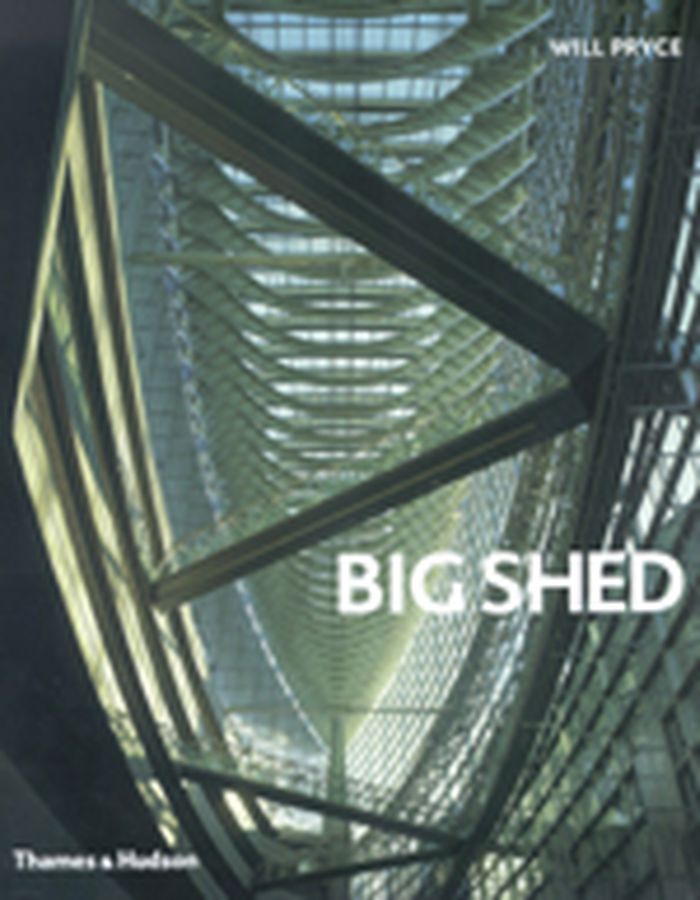
Exhibition halls and sports arenas, factories and warehouses, airports and railway stations, arts centres and concert halls: big sheds are all around us yet the story behind their extraordinary growth has gone untold. Beginning with the roots of the big shed – including 19th-century iron structures, the work of Buckminster Fuller, Archigram, and the Pompidou and Sainsbury Centres – the book is organized by function: exhibitions, industry, transport, sports and arts. Together these areas account for the best examples of big sheds over the past twenty years, and include work by Frank Gehry, Norman Foster, Richard Rogers, Jean Nouvel, Daniel Libeskind, Nicholas Grimshaw and Toyo Ito, among many others. From the vertiginous daring of Tokyo International Forum to Madrid’s award-winning Barajas Airport, these structures have changed the very nature of architecture. Throughout the book Pryce’s dramatic photography captures the buildings’ primal vastness, while technical drawings help explain how they were designed, built and function.
Big shed
Actions:
Price:
$75.00
(available in store)
Summary:
Exhibition halls and sports arenas, factories and warehouses, airports and railway stations, arts centres and concert halls: big sheds are all around us yet the story behind their extraordinary growth has gone untold. Beginning with the roots of the big shed – including 19th-century iron structures, the work of Buckminster Fuller, Archigram, and the Pompidou and Sainsbury Centres – the book is organized by function: exhibitions, industry, transport, sports and arts. Together these areas account for the best examples of big sheds over the past twenty years, and include work by Frank Gehry, Norman Foster, Richard Rogers, Jean Nouvel, Daniel Libeskind, Nicholas Grimshaw and Toyo Ito, among many others. From the vertiginous daring of Tokyo International Forum to Madrid’s award-winning Barajas Airport, these structures have changed the very nature of architecture. Throughout the book Pryce’s dramatic photography captures the buildings’ primal vastness, while technical drawings help explain how they were designed, built and function.
Form:
books
books
Publication:
June 2007, New York
June 2007, New York
Subject:
Commercial interiors, Building types
Commercial interiors, Building types
Form:
books
books
Title:
Alvar Aalto apartments
Alvar Aalto apartments
Actions:
Price:
$77.95
(available to order)
Summary:
Alvar Aalto Apartments opens views into Aalto’s ideals about dwelling. The internal organisation of an apartment, the relationship of the home to the outside world, the movement from one space to another and the “city on the hill” were all issues of importance in Aalto’s deliberations, as he tried to solve the problematics of dwelling. The book presents ten apartment(...)
$77.95
(available to order)
Summary:
Alvar Aalto Apartments opens views into Aalto’s ideals about dwelling. The internal organisation of an apartment, the relationship of the home to the outside world, the movement from one space to another and the “city on the hill” were all issues of importance in Aalto’s deliberations, as he tried to solve the problematics of dwelling. The book presents ten apartment(...)
Subject:
Architecture Monographs
Architecture Monographs
Publication:
June 2004, Helsinki
June 2004, Helsinki
Title:
Alvar Aalto apartments
Actions:
Price:
$77.95
(available to order)
Summary:
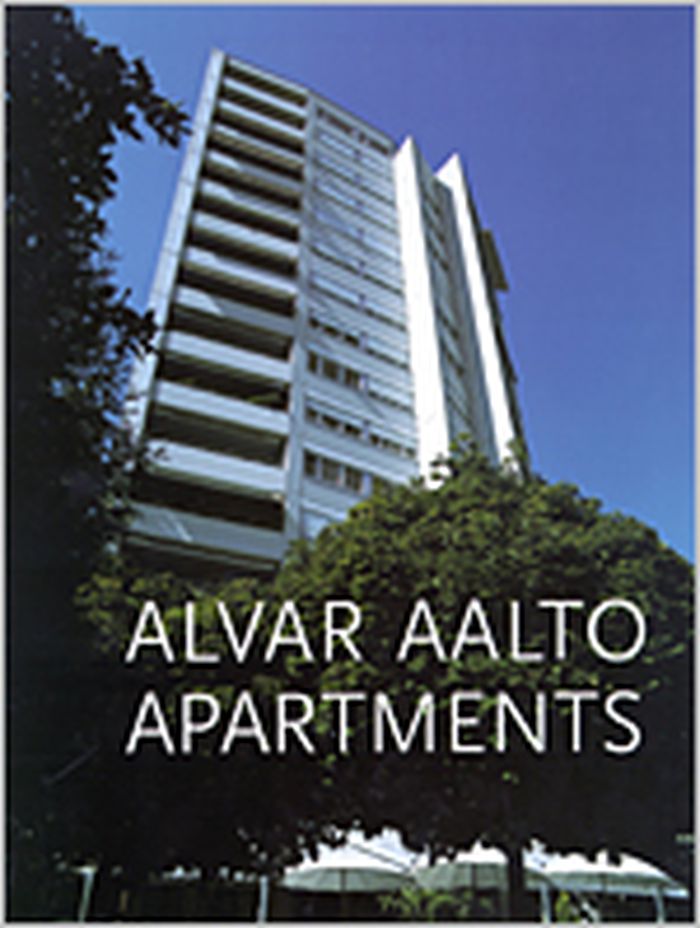
Alvar Aalto Apartments opens views into Aalto’s ideals about dwelling. The internal organisation of an apartment, the relationship of the home to the outside world, the movement from one space to another and the “city on the hill” were all issues of importance in Aalto’s deliberations, as he tried to solve the problematics of dwelling. The book presents ten apartment blocks and two student dormitories by Aalto built in Finland, Sweden, Germany, Switzerland and the United States, from the 1920s to the end of the 1960s: Aira Building Railway officials’ housing, Jyväskylä, Finland, ROT houses, ‘Slope-door houses’, Sunila, Finland Standard terrace housing, Kauttua, Finland, Baker House, Senior Dormitory, Massachusetts Institute of Technology, Cambridge, USA, National Pensions Institute employee housing, Helsinki, Finland, Hansaviertel apartment building, Berlin, Germany, Housing and business complex, ‘Sundh Centre’, Avesta, Sweden, Korkalovaara apartment buildings, Rovaniemi, Finland, Neue Vahr apartment building, Bremen, Germany, Harjuviita apartment buildings, Tapiola, Espoo, Finland, Student housing, Helsinki University of Technology, Otaniemi, Espoo, Finland, Schönbühl apartment building, Lucerne, Switzerland.
Alvar Aalto apartments
Actions:
Price:
$77.95
(available to order)
Summary:
Alvar Aalto Apartments opens views into Aalto’s ideals about dwelling. The internal organisation of an apartment, the relationship of the home to the outside world, the movement from one space to another and the “city on the hill” were all issues of importance in Aalto’s deliberations, as he tried to solve the problematics of dwelling. The book presents ten apartment blocks and two student dormitories by Aalto built in Finland, Sweden, Germany, Switzerland and the United States, from the 1920s to the end of the 1960s: Aira Building Railway officials’ housing, Jyväskylä, Finland, ROT houses, ‘Slope-door houses’, Sunila, Finland Standard terrace housing, Kauttua, Finland, Baker House, Senior Dormitory, Massachusetts Institute of Technology, Cambridge, USA, National Pensions Institute employee housing, Helsinki, Finland, Hansaviertel apartment building, Berlin, Germany, Housing and business complex, ‘Sundh Centre’, Avesta, Sweden, Korkalovaara apartment buildings, Rovaniemi, Finland, Neue Vahr apartment building, Bremen, Germany, Harjuviita apartment buildings, Tapiola, Espoo, Finland, Student housing, Helsinki University of Technology, Otaniemi, Espoo, Finland, Schönbühl apartment building, Lucerne, Switzerland.
Form:
books
books
Publication:
June 2004, Helsinki
June 2004, Helsinki
Subject:
Architecture Monographs
Architecture Monographs
Form:
books
books
Actions:
Price:
$23.95
(available to order)
Summary:
The term "guerrilla" may bring to mind a small band of armed soldiers, moving in the dead of night on a stealth mission. In the case of guerrilla gardening, the soldiers are planters, the weapons are shovels, and the mission is to transform an abandoned lot into a thing of beauty. Once an environmentalist's nonviolent direct action for inner-city renewal, this approach to(...)
$23.95
(available to order)
Summary:
The term "guerrilla" may bring to mind a small band of armed soldiers, moving in the dead of night on a stealth mission. In the case of guerrilla gardening, the soldiers are planters, the weapons are shovels, and the mission is to transform an abandoned lot into a thing of beauty. Once an environmentalist's nonviolent direct action for inner-city renewal, this approach to(...)
Title:
Guerrilla gardening : a manualfesto
Actions:
Price:
$23.95
(available to order)
Summary:
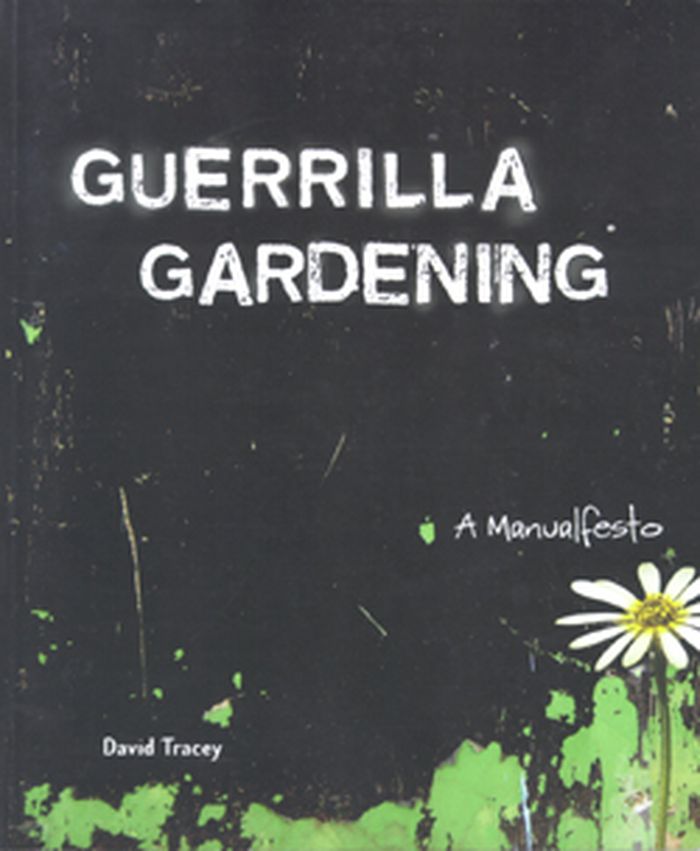
The term "guerrilla" may bring to mind a small band of armed soldiers, moving in the dead of night on a stealth mission. In the case of guerrilla gardening, the soldiers are planters, the weapons are shovels, and the mission is to transform an abandoned lot into a thing of beauty. Once an environmentalist's nonviolent direct action for inner-city renewal, this approach to urban beautification is spreading to all types of people in cities around the world. These modern-day Johnny Appleseeds perform random acts of gardening, often without the property owner's prior knowledge or permission. Typical targets are vacant lots, railway land, underused public squares, and back alleys. The concept is simple, whimsical and has the cheeky appeal of being a not-quite-legal call to action. Dig in some soil, plant a few seeds, or mend a sagging fence - one good deed inspiring another, with win-win results all around.
Guerrilla gardening : a manualfesto
Actions:
Price:
$23.95
(available to order)
Summary:
The term "guerrilla" may bring to mind a small band of armed soldiers, moving in the dead of night on a stealth mission. In the case of guerrilla gardening, the soldiers are planters, the weapons are shovels, and the mission is to transform an abandoned lot into a thing of beauty. Once an environmentalist's nonviolent direct action for inner-city renewal, this approach to urban beautification is spreading to all types of people in cities around the world. These modern-day Johnny Appleseeds perform random acts of gardening, often without the property owner's prior knowledge or permission. Typical targets are vacant lots, railway land, underused public squares, and back alleys. The concept is simple, whimsical and has the cheeky appeal of being a not-quite-legal call to action. Dig in some soil, plant a few seeds, or mend a sagging fence - one good deed inspiring another, with win-win results all around.
Form:
books
books
Publication:
April 2007, Gabriola Island
April 2007, Gabriola Island
Subject:
Urban Landscapes
Urban Landscapes
Form:
books
books
Actions:
Holdings:
Description:
270 pages : illustrations (some color), maps (on lining papers) ; 31 cm
Description:
270 pages : illustrations (some color), maps (on lining papers) ; 31 cm
Author:
Subject:
Publication:
Toronto : Macmillan of Canada, [1974]
Toronto : Macmillan of Canada, [1974]
Title:
Rivers of Canada / Hugh MacLennan ; with the camera of John De Visser.
Actions:
Holdings:
Description:
270 pages : illustrations (some color), maps (on lining papers) ; 31 cm
Rivers of Canada / Hugh MacLennan ; with the camera of John De Visser.
Actions:
Holdings:
Description:
270 pages : illustrations (some color), maps (on lining papers) ; 31 cm
Form:
books
books
Publication:
Toronto : Macmillan of Canada, [1974]
Toronto : Macmillan of Canada, [1974]
Author:
Subject:
Form:
books
books
Actions:
Price:
$48.95
(available to order)
Summary:
"Brandscaping" - the creation of a three-dimensional microcosm representing the brand is increasingly becoming a characteristic part in the architecture of retail areas, shopping centres, and showrooms. Rising to the challenge from E-commerce and the global competition for customers, companies, project developers, architects and interior architects are reacting with(...)
$48.95
(available to order)
Summary:
"Brandscaping" - the creation of a three-dimensional microcosm representing the brand is increasingly becoming a characteristic part in the architecture of retail areas, shopping centres, and showrooms. Rising to the challenge from E-commerce and the global competition for customers, companies, project developers, architects and interior architects are reacting with(...)
Title:
Brandscaping : worlds of experience in retail design
Actions:
Price:
$48.95
(available to order)
Summary:
"Brandscaping" - the creation of a three-dimensional microcosm representing the brand is increasingly becoming a characteristic part in the architecture of retail areas, shopping centres, and showrooms. Rising to the challenge from E-commerce and the global competition for customers, companies, project developers, architects and interior architects are reacting with complex concepts which present the brand image, the encounter with the product as an object of desire, as a microcosm, an experience to be perceived the senses. Using the latest technology and features from the entertainment industry, these real and tangible "brand landscapes" lay value on generating an emotional impact, and range from standard shop systems to monumental theme parks. "Brandscaping" presents 15 international projects from the fields of architecture and interior architecture, including Volkswagen AutoStadt, Wolfsburg, Niketown in London, the City Mall Sevens, Düsseldorf, the shopping centre at Leipzig railway station, the Showroom Qiora New York, the shop concept Superga in Italy, and the Migros supermarket chain in Switzerland. Concluding the volume is a documentation of the discussions which took place between image designers, architects and interior architects during a workshop.
Brandscaping : worlds of experience in retail design
Actions:
Price:
$48.95
(available to order)
Summary:
"Brandscaping" - the creation of a three-dimensional microcosm representing the brand is increasingly becoming a characteristic part in the architecture of retail areas, shopping centres, and showrooms. Rising to the challenge from E-commerce and the global competition for customers, companies, project developers, architects and interior architects are reacting with complex concepts which present the brand image, the encounter with the product as an object of desire, as a microcosm, an experience to be perceived the senses. Using the latest technology and features from the entertainment industry, these real and tangible "brand landscapes" lay value on generating an emotional impact, and range from standard shop systems to monumental theme parks. "Brandscaping" presents 15 international projects from the fields of architecture and interior architecture, including Volkswagen AutoStadt, Wolfsburg, Niketown in London, the City Mall Sevens, Düsseldorf, the shopping centre at Leipzig railway station, the Showroom Qiora New York, the shop concept Superga in Italy, and the Migros supermarket chain in Switzerland. Concluding the volume is a documentation of the discussions which took place between image designers, architects and interior architects during a workshop.
Form:
books
books
Publication:
March 2002, Basel
March 2002, Basel
Subject:
Commercial interiors, Building types
Commercial interiors, Building types
Form:
books
books
Title:
Herzog & de Meuron 1978-2002
Herzog & de Meuron 1978-2002
Actions:
Price:
$76.95
(available to order)
Summary:
This "Special Edition" from a+u includes essays by Jacques Herzog and Pierre de Meuron as well as Toyo Ito. Projects illustrated include: Prada, Tokyo; Walker Art Center, Expansion of the Museum and Cultural Center; new de Young Museum; Schaulager for the Emanuel Hoffmann Foundation; Cottbus University Library; Centro Cultural - Museum and Cultural Centre;(...)
$76.95
(available to order)
Summary:
This "Special Edition" from a+u includes essays by Jacques Herzog and Pierre de Meuron as well as Toyo Ito. Projects illustrated include: Prada, Tokyo; Walker Art Center, Expansion of the Museum and Cultural Center; new de Young Museum; Schaulager for the Emanuel Hoffmann Foundation; Cottbus University Library; Centro Cultural - Museum and Cultural Centre;(...)
Subject:
Architecture Monographs
Architecture Monographs
Publication:
January 1900, Tokyo
January 1900, Tokyo
Title:
Herzog & de Meuron 1978-2002
Actions:
Price:
$76.95
(available to order)
Summary:
This "Special Edition" from a+u includes essays by Jacques Herzog and Pierre de Meuron as well as Toyo Ito. Projects illustrated include: Prada, Tokyo; Walker Art Center, Expansion of the Museum and Cultural Center; new de Young Museum; Schaulager for the Emanuel Hoffmann Foundation; Cottbus University Library; Centro Cultural - Museum and Cultural Centre; The New Link Quai in Santa Cruz de Tenerife/Plaza de Espana; Kramlich Residence and Media Collection; The Virtual House; St. Jakob Park Basel; Football Stadium, Commercial Centre and Residence for Elderly People; Wood House; Greek Orthodox Church. Completed works include the following: Blue House; Stone House; Apartment and Commercial Building, Schutzenmattstrasse; Apartment Building along a Party Wall, Hebelstrasse; E,D,E,N, Pavilion; Ricola Storage Building; Railway Engine Depot, Auf dem Wolf; Signal Box, Auf dem Wolf; Gallery for a Private Collection of Modern Art, Goetz Collection; Ricola-Europe SA. Production and Storage Building; Roche Pharma-Research Building; Library of the Eberswalde Technical School; Central Signal Tower; Tate Modern; House in Leymen; Caricature and Cartoon Museum - conversion and new building; Institute for Hospital Pharmaceuticals, Rossetti Grounds; Studio Rémy Zaugg; Dominus Winery; Apartment Buildings, Rue des Suisses; Küppersmühle Museum - Grothe Collection; Ricola Marketing Building.
Herzog & de Meuron 1978-2002
Actions:
Price:
$76.95
(available to order)
Summary:
This "Special Edition" from a+u includes essays by Jacques Herzog and Pierre de Meuron as well as Toyo Ito. Projects illustrated include: Prada, Tokyo; Walker Art Center, Expansion of the Museum and Cultural Center; new de Young Museum; Schaulager for the Emanuel Hoffmann Foundation; Cottbus University Library; Centro Cultural - Museum and Cultural Centre; The New Link Quai in Santa Cruz de Tenerife/Plaza de Espana; Kramlich Residence and Media Collection; The Virtual House; St. Jakob Park Basel; Football Stadium, Commercial Centre and Residence for Elderly People; Wood House; Greek Orthodox Church. Completed works include the following: Blue House; Stone House; Apartment and Commercial Building, Schutzenmattstrasse; Apartment Building along a Party Wall, Hebelstrasse; E,D,E,N, Pavilion; Ricola Storage Building; Railway Engine Depot, Auf dem Wolf; Signal Box, Auf dem Wolf; Gallery for a Private Collection of Modern Art, Goetz Collection; Ricola-Europe SA. Production and Storage Building; Roche Pharma-Research Building; Library of the Eberswalde Technical School; Central Signal Tower; Tate Modern; House in Leymen; Caricature and Cartoon Museum - conversion and new building; Institute for Hospital Pharmaceuticals, Rossetti Grounds; Studio Rémy Zaugg; Dominus Winery; Apartment Buildings, Rue des Suisses; Küppersmühle Museum - Grothe Collection; Ricola Marketing Building.
Form:
books
books
Publication:
January 1900, Tokyo
January 1900, Tokyo
Subject:
Architecture Monographs
Architecture Monographs
Form:
books
books
Actions:
Price:
$23.00
(available in store)
Summary:
The construction of the Stuttgart-Ulm railway line is one of the largest infrastructure projects in Europe. The centrepiece is the new Stuttgart Main Station, which replaces the former 16-track terminus station as an underground 8-track through station. As part of this, the aboveground tracks in the city centre are being removed and the areas thus freed up open up new(...)
$23.00
(available in store)
Summary:
The construction of the Stuttgart-Ulm railway line is one of the largest infrastructure projects in Europe. The centrepiece is the new Stuttgart Main Station, which replaces the former 16-track terminus station as an underground 8-track through station. As part of this, the aboveground tracks in the city centre are being removed and the areas thus freed up open up new(...)
Title:
Christoph Ingenhoven: Stuttgart Main Station
Actions:
Price:
$23.00
(available in store)
Summary:
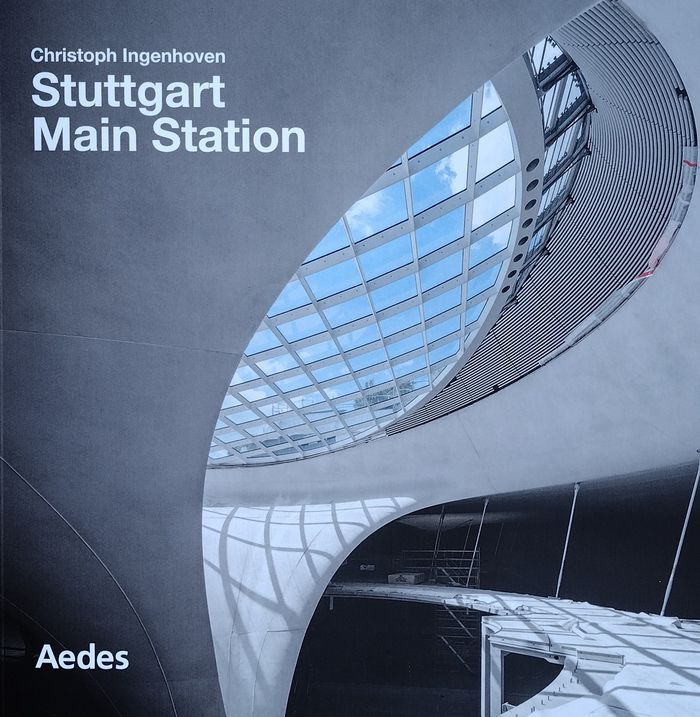
The construction of the Stuttgart-Ulm railway line is one of the largest infrastructure projects in Europe. The centrepiece is the new Stuttgart Main Station, which replaces the former 16-track terminus station as an underground 8-track through station. As part of this, the aboveground tracks in the city centre are being removed and the areas thus freed up open up new urban-development perspectives. Stuttgart-East and Stuttgart-North – city districts previously separated by tracks – will be connected with each other again after over 150 years and travel time shortened. Christoph Ingenhoven (advised by, et al., Frei Otto) won the competition for the new design for the Stuttgart Main Station in 1997. After the financing agreement was concluded in April 2009, construction work was begun on 2 February 2010. The new main station is supposed to go into operation for the change in timetables in December 2026. Christoph Ingenhoven explains: "This project will have enormous significance for the development of Stuttgart, Baden-Württemberg, and southwest Germany. The building must also do justice to this significance with its design – must show what Stuttgart is today and will be in future."
Christoph Ingenhoven: Stuttgart Main Station
Actions:
Price:
$23.00
(available in store)
Summary:
The construction of the Stuttgart-Ulm railway line is one of the largest infrastructure projects in Europe. The centrepiece is the new Stuttgart Main Station, which replaces the former 16-track terminus station as an underground 8-track through station. As part of this, the aboveground tracks in the city centre are being removed and the areas thus freed up open up new urban-development perspectives. Stuttgart-East and Stuttgart-North – city districts previously separated by tracks – will be connected with each other again after over 150 years and travel time shortened. Christoph Ingenhoven (advised by, et al., Frei Otto) won the competition for the new design for the Stuttgart Main Station in 1997. After the financing agreement was concluded in April 2009, construction work was begun on 2 February 2010. The new main station is supposed to go into operation for the change in timetables in December 2026. Christoph Ingenhoven explains: "This project will have enormous significance for the development of Stuttgart, Baden-Württemberg, and southwest Germany. The building must also do justice to this significance with its design – must show what Stuttgart is today and will be in future."
Form:
books
books
Publication:
September 2024
September 2024
Subject:
Architecture Monographs
Architecture Monographs


