


2984 Results
Form:
exhibitions
exhibitions
Description:
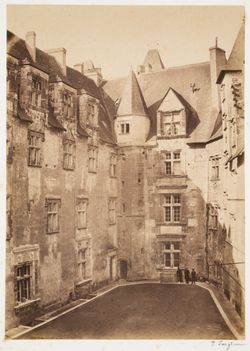
Through objects drawn from the CCA collection, Photography and French Architectural Practice, 1839–1870 examines how photography became an integral and indispensable part of the processes of architectural design, construction, restoration, and publishing in the second half of the nineteenth century. Curated by David Harris, CCA, and Barry Bergdoll, Columbia University.
Through objects drawn from the CCA collection, Photography and French Architectural Practice, 1839–1870 examines how photography became an integral and indispensable part of the processes of architectural design, construction, restoration, and publishing in the second half of the nineteenth century. Curated by David Harris, CCA, and Barry Bergdoll, Columbia University.
Location:
Hall cases
Hall cases
Date:
25 January 1995 to 4 June 1995
25 January 1995 to 4 June 1995
Title:
Photography and French Architectural Practice, 1839-1870
Actions:
Description:
Through objects drawn from the CCA collection, Photography and French Architectural Practice, 1839–1870 examines how photography became an integral and indispensable part of the processes of architectural design, construction, restoration, and publishing in the second half of the nineteenth century. Curated by David Harris, CCA, and Barry Bergdoll, Columbia University.
Photography and French Architectural Practice, 1839-1870
Actions:
Description:
Through objects drawn from the CCA collection, Photography and French Architectural Practice, 1839–1870 examines how photography became an integral and indispensable part of the processes of architectural design, construction, restoration, and publishing in the second half of the nineteenth century. Curated by David Harris, CCA, and Barry Bergdoll, Columbia University.
Form:
exhibitions
exhibitions
Date:
25 January 1995 to
4 June 1995
25 January 1995 to
4 June 1995
Location:
Hall cases
Hall cases
Form:
archives
Level of archival description:
Fonds
archives
Level of archival description:
Fonds
Title:
Maxwell Levinson fonds
Maxwell Levinson fonds
Reference number:
AP037
Synopsis:
The Maxwell Levison fonds (Shelter, T. Square) illustrates primarily the activities of Maxwell Levinson as editor of T-Square Club Journal, T-Square, Shelter and USA Tomorrow. It documents the various aspects of the publication of these magazines. It includes editorial, production and promotional material as well as documentation and research files. The fonds also contains records pertaining to the professional practice of Maxwell Levinson as architect and city planning consultant.
AP037
Synopsis:
The Maxwell Levison fonds (Shelter, T. Square) illustrates primarily the activities of Maxwell Levinson as editor of T-Square Club Journal, T-Square, Shelter and USA Tomorrow. It documents the various aspects of the publication of these magazines. It includes editorial, production and promotional material as well as documentation and research files. The fonds also contains records pertaining to the professional practice of Maxwell Levinson as architect and city planning consultant.
People:
Date:
1926-1990
1926-1990
Title:
Maxwell Levinson fonds
Actions:
AP037
Synopsis:
The Maxwell Levison fonds (Shelter, T. Square) illustrates primarily the activities of Maxwell Levinson as editor of T-Square Club Journal, T-Square, Shelter and USA Tomorrow. It documents the various aspects of the publication of these magazines. It includes editorial, production and promotional material as well as documentation and research files. The fonds also contains records pertaining to the professional practice of Maxwell Levinson as architect and city planning consultant.
Maxwell Levinson fonds
Actions:
AP037
Synopsis:
The Maxwell Levison fonds (Shelter, T. Square) illustrates primarily the activities of Maxwell Levinson as editor of T-Square Club Journal, T-Square, Shelter and USA Tomorrow. It documents the various aspects of the publication of these magazines. It includes editorial, production and promotional material as well as documentation and research files. The fonds also contains records pertaining to the professional practice of Maxwell Levinson as architect and city planning consultant.
Form:
archives
Level of archival description:
Fonds
archives
Level of archival description:
Fonds
Date:
1926-1990
1926-1990
People:
Level of archival description:
Series
Series
Title:
Academic works
Academic works
Actions:
Reference number:
AP169.S3
Description:
Series 3, Academic works, 1995 - 2011, relates to Bernard Cache’s work as a scholar and author. This series includes born-digital material and chiefly dates from 1999 to 2007. Cache pursued and academic career, teaching and lecturing at many universities while also publishing books and articles. His area of interest revolves around computational architecture, geometrics, history of geometric, stereotomy, engineering and philosophy. These records depict his investment in the study of the relation between ancient theory and the field of computational architecture drawings with CAD or BIM software. His work concentrates on prominent figures such as Greek mathematician Euclid to Roman architect Vitruvius and German painter and theorist Albrecht Dürer. Materials in this series reflect Bernard Cache’s work as a scholar. This includes notes for his articles and lectures as well as drafts for different lectures and texts. It also contains syllabi and planning materials for classes given by Cache on Non-Standard Design and Production in Architecture. The series holds a significant amount of images used for presentation or as examples during those lectures and classes (in JPEG and BMP formats). Those images are for the most part derived from CAD original drawings in TopSolid.
AP169.S3
Description:
Series 3, Academic works, 1995 - 2011, relates to Bernard Cache’s work as a scholar and author. This series includes born-digital material and chiefly dates from 1999 to 2007. Cache pursued and academic career, teaching and lecturing at many universities while also publishing books and articles. His area of interest revolves around computational architecture, geometrics, history of geometric, stereotomy, engineering and philosophy. These records depict his investment in the study of the relation between ancient theory and the field of computational architecture drawings with CAD or BIM software. His work concentrates on prominent figures such as Greek mathematician Euclid to Roman architect Vitruvius and German painter and theorist Albrecht Dürer. Materials in this series reflect Bernard Cache’s work as a scholar. This includes notes for his articles and lectures as well as drafts for different lectures and texts. It also contains syllabi and planning materials for classes given by Cache on Non-Standard Design and Production in Architecture. The series holds a significant amount of images used for presentation or as examples during those lectures and classes (in JPEG and BMP formats). Those images are for the most part derived from CAD original drawings in TopSolid.
People:
Date:
1995-2011
1995-2011
Title:
Academic works
Actions:
AP169.S3
Description:
Series 3, Academic works, 1995 - 2011, relates to Bernard Cache’s work as a scholar and author. This series includes born-digital material and chiefly dates from 1999 to 2007. Cache pursued and academic career, teaching and lecturing at many universities while also publishing books and articles. His area of interest revolves around computational architecture, geometrics, history of geometric, stereotomy, engineering and philosophy. These records depict his investment in the study of the relation between ancient theory and the field of computational architecture drawings with CAD or BIM software. His work concentrates on prominent figures such as Greek mathematician Euclid to Roman architect Vitruvius and German painter and theorist Albrecht Dürer. Materials in this series reflect Bernard Cache’s work as a scholar. This includes notes for his articles and lectures as well as drafts for different lectures and texts. It also contains syllabi and planning materials for classes given by Cache on Non-Standard Design and Production in Architecture. The series holds a significant amount of images used for presentation or as examples during those lectures and classes (in JPEG and BMP formats). Those images are for the most part derived from CAD original drawings in TopSolid.
Academic works
Actions:
AP169.S3
Description:
Series 3, Academic works, 1995 - 2011, relates to Bernard Cache’s work as a scholar and author. This series includes born-digital material and chiefly dates from 1999 to 2007. Cache pursued and academic career, teaching and lecturing at many universities while also publishing books and articles. His area of interest revolves around computational architecture, geometrics, history of geometric, stereotomy, engineering and philosophy. These records depict his investment in the study of the relation between ancient theory and the field of computational architecture drawings with CAD or BIM software. His work concentrates on prominent figures such as Greek mathematician Euclid to Roman architect Vitruvius and German painter and theorist Albrecht Dürer. Materials in this series reflect Bernard Cache’s work as a scholar. This includes notes for his articles and lectures as well as drafts for different lectures and texts. It also contains syllabi and planning materials for classes given by Cache on Non-Standard Design and Production in Architecture. The series holds a significant amount of images used for presentation or as examples during those lectures and classes (in JPEG and BMP formats). Those images are for the most part derived from CAD original drawings in TopSolid.
Level of archival description:
Series
Series
Date:
1995-2011
1995-2011
People:
Form:
archives
Level of archival description:
Fonds
archives
Level of archival description:
Fonds
Title:
Jean-Louis Cohen fonds
Jean-Louis Cohen fonds
Actions:
Reference number:
AP210
Synopsis:
The Jean-Louis Cohen fonds, 1968 – 2023, documents the projects and activities of historian, curator, professor, and architect Jean-Louis Cohen (1949 – 2023). Cohen’s research focus was largely modern architecture and transnational architectural exchange, particularly between and among the United States, Europe, and the former Soviet Union in the 20th century. Through physical and digital records, this fonds documents his academic, publishing, and curatorial work along with his professional activities within architectural research and heritage organizations, as well as his architectural practice.
AP210
Synopsis:
The Jean-Louis Cohen fonds, 1968 – 2023, documents the projects and activities of historian, curator, professor, and architect Jean-Louis Cohen (1949 – 2023). Cohen’s research focus was largely modern architecture and transnational architectural exchange, particularly between and among the United States, Europe, and the former Soviet Union in the 20th century. Through physical and digital records, this fonds documents his academic, publishing, and curatorial work along with his professional activities within architectural research and heritage organizations, as well as his architectural practice.
People:
Date:
1968 - 2023
1968 - 2023
Title:
Jean-Louis Cohen fonds
Actions:
AP210
Synopsis:
The Jean-Louis Cohen fonds, 1968 – 2023, documents the projects and activities of historian, curator, professor, and architect Jean-Louis Cohen (1949 – 2023). Cohen’s research focus was largely modern architecture and transnational architectural exchange, particularly between and among the United States, Europe, and the former Soviet Union in the 20th century. Through physical and digital records, this fonds documents his academic, publishing, and curatorial work along with his professional activities within architectural research and heritage organizations, as well as his architectural practice.
Jean-Louis Cohen fonds
Actions:
AP210
Synopsis:
The Jean-Louis Cohen fonds, 1968 – 2023, documents the projects and activities of historian, curator, professor, and architect Jean-Louis Cohen (1949 – 2023). Cohen’s research focus was largely modern architecture and transnational architectural exchange, particularly between and among the United States, Europe, and the former Soviet Union in the 20th century. Through physical and digital records, this fonds documents his academic, publishing, and curatorial work along with his professional activities within architectural research and heritage organizations, as well as his architectural practice.
Form:
archives
Level of archival description:
Fonds
archives
Level of archival description:
Fonds
Date:
1968 - 2023
1968 - 2023
People:
Form:
archives
Level of archival description:
Fonds
archives
Level of archival description:
Fonds
Title:
Bauhaus in America fonds
Bauhaus in America fonds
Actions:
Reference number:
AP217
Synopsis:
The Bauhaus in America fonds, circa 1930 – 2011, documents the research and production activities that went into producing the documentary film Bauhaus in America (1995) directed by Judith Pearlman. Material in the fonds consists of research in the form of photographs, textual records, publications, and ephemera from institutions in Germany and the United States. The fonds also contains film, video, and audio recordings that were used for preliminary research and compiled into the finished film. The recordings are primarily interviews with Bauhaus-related individuals. There is also material related to publishing activities based on the research for the film.
AP217
Synopsis:
The Bauhaus in America fonds, circa 1930 – 2011, documents the research and production activities that went into producing the documentary film Bauhaus in America (1995) directed by Judith Pearlman. Material in the fonds consists of research in the form of photographs, textual records, publications, and ephemera from institutions in Germany and the United States. The fonds also contains film, video, and audio recordings that were used for preliminary research and compiled into the finished film. The recordings are primarily interviews with Bauhaus-related individuals. There is also material related to publishing activities based on the research for the film.
People:
Date:
circa 1930 - 2011
circa 1930 - 2011
Title:
Bauhaus in America fonds
Actions:
AP217
Synopsis:
The Bauhaus in America fonds, circa 1930 – 2011, documents the research and production activities that went into producing the documentary film Bauhaus in America (1995) directed by Judith Pearlman. Material in the fonds consists of research in the form of photographs, textual records, publications, and ephemera from institutions in Germany and the United States. The fonds also contains film, video, and audio recordings that were used for preliminary research and compiled into the finished film. The recordings are primarily interviews with Bauhaus-related individuals. There is also material related to publishing activities based on the research for the film.
Bauhaus in America fonds
Actions:
AP217
Synopsis:
The Bauhaus in America fonds, circa 1930 – 2011, documents the research and production activities that went into producing the documentary film Bauhaus in America (1995) directed by Judith Pearlman. Material in the fonds consists of research in the form of photographs, textual records, publications, and ephemera from institutions in Germany and the United States. The fonds also contains film, video, and audio recordings that were used for preliminary research and compiled into the finished film. The recordings are primarily interviews with Bauhaus-related individuals. There is also material related to publishing activities based on the research for the film.
Form:
archives
Level of archival description:
Fonds
archives
Level of archival description:
Fonds
Date:
circa 1930 - 2011
circa 1930 - 2011
People:
Level of archival description:
Project
Project
Actions:
Reference number:
AP206.S1.1963.PR01
Description:
This project series documents the Punjab Agricultural University in Ludhiana, India from 1963-1968. With Prakash as the senior architect, this project consisted of the design of the entire campus, including the boys' hostel and mess, and the Agricultural Engineering College (AEC). Under this project, Prakash also designed campuses for the University in Hisar and Palampur. The boys' hostel, constructed first, consisted of a long, rectangular volume of exposed brick and concrete columns. Balconies lined its exterior, alternating on each floor so that every balcony had a view of the sky above. A covered walkway connected the hostel to the square mess, which was turned 45 degrees on its axis. The AEC, the campus's main building, was a long, single-storey building with a series of enclosed courtyards. Round exhaust openings were the only element that marked the building's façade. Prakash, developing his love of sculpture at this time, also crafted a large outdoor sculpture for the campus's main courtyard.[1] This project is recorded through a reprographic copy of a plan of the boys' hostel dating from around 1963. [1]Vikramaditya Prakash, One Continuous Line: Art, Architecture and Urbanism of Aditya Prakash (Ahmedabad, India: Mapin Publishing Pvt. Ltd., 2019), 107-132.
AP206.S1.1963.PR01
Description:
This project series documents the Punjab Agricultural University in Ludhiana, India from 1963-1968. With Prakash as the senior architect, this project consisted of the design of the entire campus, including the boys' hostel and mess, and the Agricultural Engineering College (AEC). Under this project, Prakash also designed campuses for the University in Hisar and Palampur. The boys' hostel, constructed first, consisted of a long, rectangular volume of exposed brick and concrete columns. Balconies lined its exterior, alternating on each floor so that every balcony had a view of the sky above. A covered walkway connected the hostel to the square mess, which was turned 45 degrees on its axis. The AEC, the campus's main building, was a long, single-storey building with a series of enclosed courtyards. Round exhaust openings were the only element that marked the building's façade. Prakash, developing his love of sculpture at this time, also crafted a large outdoor sculpture for the campus's main courtyard.[1] This project is recorded through a reprographic copy of a plan of the boys' hostel dating from around 1963. [1]Vikramaditya Prakash, One Continuous Line: Art, Architecture and Urbanism of Aditya Prakash (Ahmedabad, India: Mapin Publishing Pvt. Ltd., 2019), 107-132.
People:
Date:
circa 1963
circa 1963
Title:
Punjab Agricultural University, Ludhiana, India (1963-1968)
Actions:
AP206.S1.1963.PR01
Description:
This project series documents the Punjab Agricultural University in Ludhiana, India from 1963-1968. With Prakash as the senior architect, this project consisted of the design of the entire campus, including the boys' hostel and mess, and the Agricultural Engineering College (AEC). Under this project, Prakash also designed campuses for the University in Hisar and Palampur. The boys' hostel, constructed first, consisted of a long, rectangular volume of exposed brick and concrete columns. Balconies lined its exterior, alternating on each floor so that every balcony had a view of the sky above. A covered walkway connected the hostel to the square mess, which was turned 45 degrees on its axis. The AEC, the campus's main building, was a long, single-storey building with a series of enclosed courtyards. Round exhaust openings were the only element that marked the building's façade. Prakash, developing his love of sculpture at this time, also crafted a large outdoor sculpture for the campus's main courtyard.[1] This project is recorded through a reprographic copy of a plan of the boys' hostel dating from around 1963. [1]Vikramaditya Prakash, One Continuous Line: Art, Architecture and Urbanism of Aditya Prakash (Ahmedabad, India: Mapin Publishing Pvt. Ltd., 2019), 107-132.
Punjab Agricultural University, Ludhiana, India (1963-1968)
Actions:
AP206.S1.1963.PR01
Description:
This project series documents the Punjab Agricultural University in Ludhiana, India from 1963-1968. With Prakash as the senior architect, this project consisted of the design of the entire campus, including the boys' hostel and mess, and the Agricultural Engineering College (AEC). Under this project, Prakash also designed campuses for the University in Hisar and Palampur. The boys' hostel, constructed first, consisted of a long, rectangular volume of exposed brick and concrete columns. Balconies lined its exterior, alternating on each floor so that every balcony had a view of the sky above. A covered walkway connected the hostel to the square mess, which was turned 45 degrees on its axis. The AEC, the campus's main building, was a long, single-storey building with a series of enclosed courtyards. Round exhaust openings were the only element that marked the building's façade. Prakash, developing his love of sculpture at this time, also crafted a large outdoor sculpture for the campus's main courtyard.[1] This project is recorded through a reprographic copy of a plan of the boys' hostel dating from around 1963. [1]Vikramaditya Prakash, One Continuous Line: Art, Architecture and Urbanism of Aditya Prakash (Ahmedabad, India: Mapin Publishing Pvt. Ltd., 2019), 107-132.
Level of archival description:
Project
Project
Date:
circa 1963
circa 1963
People:
Form:
textual records
textual records
Reference number:
AP075.S3.SS2.152
Description:
This box contains professional and correspondence, organized in chronological order, from 2009-2012. This correspondence contains chiefly letters related to participation to publishing in landscape architecture publications, correspondence related to nominations and awards received by Oberlander, correspondence with schools of architecture and landscape architects associations, about membership or attendance to events. It also comprises correspondence related to research and involvement in sustainable development. It also includes correspondence related to Oberlander's work as jury member for design competitions. This correspondence also includes letters about preservation of the University of British Columbia Faculty Club and Robson Square.
AP075.S3.SS2.152
Description:
This box contains professional and correspondence, organized in chronological order, from 2009-2012. This correspondence contains chiefly letters related to participation to publishing in landscape architecture publications, correspondence related to nominations and awards received by Oberlander, correspondence with schools of architecture and landscape architects associations, about membership or attendance to events. It also comprises correspondence related to research and involvement in sustainable development. It also includes correspondence related to Oberlander's work as jury member for design competitions. This correspondence also includes letters about preservation of the University of British Columbia Faculty Club and Robson Square.
People:
Date:
2008-2017
2008-2017
Title:
Professional correspondence from 2008-2017
Actions:
AP075.S3.SS2.152
Description:
This box contains professional and correspondence, organized in chronological order, from 2009-2012. This correspondence contains chiefly letters related to participation to publishing in landscape architecture publications, correspondence related to nominations and awards received by Oberlander, correspondence with schools of architecture and landscape architects associations, about membership or attendance to events. It also comprises correspondence related to research and involvement in sustainable development. It also includes correspondence related to Oberlander's work as jury member for design competitions. This correspondence also includes letters about preservation of the University of British Columbia Faculty Club and Robson Square.
Professional correspondence from 2008-2017
Actions:
AP075.S3.SS2.152
Description:
This box contains professional and correspondence, organized in chronological order, from 2009-2012. This correspondence contains chiefly letters related to participation to publishing in landscape architecture publications, correspondence related to nominations and awards received by Oberlander, correspondence with schools of architecture and landscape architects associations, about membership or attendance to events. It also comprises correspondence related to research and involvement in sustainable development. It also includes correspondence related to Oberlander's work as jury member for design competitions. This correspondence also includes letters about preservation of the University of British Columbia Faculty Club and Robson Square.
Form:
textual records
textual records
Date:
2008-2017
2008-2017
People:
Form:
archives
Level of archival description:
Fonds
archives
Level of archival description:
Fonds
Title:
Anyone Corporation fonds
Anyone Corporation fonds
Reference number:
AP116
Synopsis:
The Anyone Corporation fonds is composed primarily of textual and photographic records which document the activities of the Anyone Corporation over the course of its planned ten year life span from 1990 to 2001. The non-profit, New York City based organization, was founded by Peter Eisenman, Cynthia Davidson, Arata Isozaki, and Ignasi de Solà-Morales Rubio in order to stimulate a fruitful dialogue between architecture and general culture at the dawn of the new millennium. To this end, ANY (acronym for Architecture New York) organised ten international conferences and numerous public seminars, as well as publishing conference journals, a series of architecture related books, and ANY, a theory driven bi-monthly magazine.
AP116
Synopsis:
The Anyone Corporation fonds is composed primarily of textual and photographic records which document the activities of the Anyone Corporation over the course of its planned ten year life span from 1990 to 2001. The non-profit, New York City based organization, was founded by Peter Eisenman, Cynthia Davidson, Arata Isozaki, and Ignasi de Solà-Morales Rubio in order to stimulate a fruitful dialogue between architecture and general culture at the dawn of the new millennium. To this end, ANY (acronym for Architecture New York) organised ten international conferences and numerous public seminars, as well as publishing conference journals, a series of architecture related books, and ANY, a theory driven bi-monthly magazine.
People:
Date:
1990-2001
1990-2001
Title:
Anyone Corporation fonds
Actions:
AP116
Synopsis:
The Anyone Corporation fonds is composed primarily of textual and photographic records which document the activities of the Anyone Corporation over the course of its planned ten year life span from 1990 to 2001. The non-profit, New York City based organization, was founded by Peter Eisenman, Cynthia Davidson, Arata Isozaki, and Ignasi de Solà-Morales Rubio in order to stimulate a fruitful dialogue between architecture and general culture at the dawn of the new millennium. To this end, ANY (acronym for Architecture New York) organised ten international conferences and numerous public seminars, as well as publishing conference journals, a series of architecture related books, and ANY, a theory driven bi-monthly magazine.
Anyone Corporation fonds
Actions:
AP116
Synopsis:
The Anyone Corporation fonds is composed primarily of textual and photographic records which document the activities of the Anyone Corporation over the course of its planned ten year life span from 1990 to 2001. The non-profit, New York City based organization, was founded by Peter Eisenman, Cynthia Davidson, Arata Isozaki, and Ignasi de Solà-Morales Rubio in order to stimulate a fruitful dialogue between architecture and general culture at the dawn of the new millennium. To this end, ANY (acronym for Architecture New York) organised ten international conferences and numerous public seminars, as well as publishing conference journals, a series of architecture related books, and ANY, a theory driven bi-monthly magazine.
Form:
archives
Level of archival description:
Fonds
archives
Level of archival description:
Fonds
Date:
1990-2001
1990-2001
People:
Form:
archives
Level of archival description:
Fonds
archives
Level of archival description:
Fonds
Title:
Office dA project records
Office dA project records
Actions:
Reference number:
AP179
Synopsis:
The Office dA project records, 1991-2007, document the firm’s work on the Casa La Roca, Witte Arts Center, and Tongxian Arts Center projects. All three projects involved the use of traditional and locally-sourced materials, such as brick and terracotta block, to create continuous surfaces that appear structural despite remaining an architectural effect in the skin of the building. The archive consists of approximately 8362 digital files (8.5 GB), 1461 drawings and reproductions, four models and approximately 40 model pieces, as well as photographic materials, textual records and ephemera.
AP179
Synopsis:
The Office dA project records, 1991-2007, document the firm’s work on the Casa La Roca, Witte Arts Center, and Tongxian Arts Center projects. All three projects involved the use of traditional and locally-sourced materials, such as brick and terracotta block, to create continuous surfaces that appear structural despite remaining an architectural effect in the skin of the building. The archive consists of approximately 8362 digital files (8.5 GB), 1461 drawings and reproductions, four models and approximately 40 model pieces, as well as photographic materials, textual records and ephemera.
People:
Date:
1991-2007
1991-2007
Title:
Office dA project records
Actions:
AP179
Synopsis:
The Office dA project records, 1991-2007, document the firm’s work on the Casa La Roca, Witte Arts Center, and Tongxian Arts Center projects. All three projects involved the use of traditional and locally-sourced materials, such as brick and terracotta block, to create continuous surfaces that appear structural despite remaining an architectural effect in the skin of the building. The archive consists of approximately 8362 digital files (8.5 GB), 1461 drawings and reproductions, four models and approximately 40 model pieces, as well as photographic materials, textual records and ephemera.
Office dA project records
Actions:
AP179
Synopsis:
The Office dA project records, 1991-2007, document the firm’s work on the Casa La Roca, Witte Arts Center, and Tongxian Arts Center projects. All three projects involved the use of traditional and locally-sourced materials, such as brick and terracotta block, to create continuous surfaces that appear structural despite remaining an architectural effect in the skin of the building. The archive consists of approximately 8362 digital files (8.5 GB), 1461 drawings and reproductions, four models and approximately 40 model pieces, as well as photographic materials, textual records and ephemera.
Form:
archives
Level of archival description:
Fonds
archives
Level of archival description:
Fonds
Date:
1991-2007
1991-2007
People:
Form:
events
events
Title:
T pour Typographie
T pour Typographie
Actions:
Description:
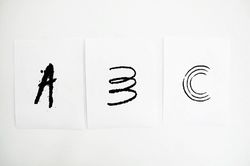
Feed is an independent graphic design studio founded in 1999 by Anouk Pennel and Raphaël Daudelin that specializes in branding, publishing and typeface design. In conjunction with the graphic design they created for the exhibition ABC: MTL, the studio invites university students to a typography drawing workshop. Each student will be assigned a letter of the alphabet and(...)
Feed is an independent graphic design studio founded in 1999 by Anouk Pennel and Raphaël Daudelin that specializes in branding, publishing and typeface design. In conjunction with the graphic design they created for the exhibition ABC: MTL, the studio invites university students to a typography drawing workshop. Each student will be assigned a letter of the alphabet and(...)
Location:
Shaughnessy House
Shaughnessy House
Date:
21 February 2013, 3pm - 5pm
21 February 2013, 3pm - 5pm
Title:
T pour Typographie
Actions:
Description:
Feed is an independent graphic design studio founded in 1999 by Anouk Pennel and Raphaël Daudelin that specializes in branding, publishing and typeface design. In conjunction with the graphic design they created for the exhibition ABC: MTL, the studio invites university students to a typography drawing workshop. Each student will be assigned a letter of the alphabet and(...)
T pour Typographie
Actions:
Description:
Feed is an independent graphic design studio founded in 1999 by Anouk Pennel and Raphaël Daudelin that specializes in branding, publishing and typeface design. In conjunction with the graphic design they created for the exhibition ABC: MTL, the studio invites university students to a typography drawing workshop. Each student will be assigned a letter of the alphabet and(...)
Form:
events
events
Date:
21 February 2013
3pm - 5pm
21 February 2013
3pm - 5pm
Location:
Shaughnessy House
Shaughnessy House


