


162 Results
Form:
books
books
Actions:
Price:
$44.95
(available to order)
Summary:
"Worldchanging : a User's guide for the 21st century " proposes innovative solutions, ideas and inventions emerging today for building a sustainable, livable, prosperous future. From consumer consciousness to a new vision for industry; non-toxic homes to refugee shelters; microfinance to effective philanthropy; socially responsible investing to starting a green business;(...)
$44.95
(available to order)
Summary:
"Worldchanging : a User's guide for the 21st century " proposes innovative solutions, ideas and inventions emerging today for building a sustainable, livable, prosperous future. From consumer consciousness to a new vision for industry; non-toxic homes to refugee shelters; microfinance to effective philanthropy; socially responsible investing to starting a green business;(...)
Title:
Worldchanging : a user's guide for the 21st century
Actions:
Price:
$44.95
(available to order)
Summary:
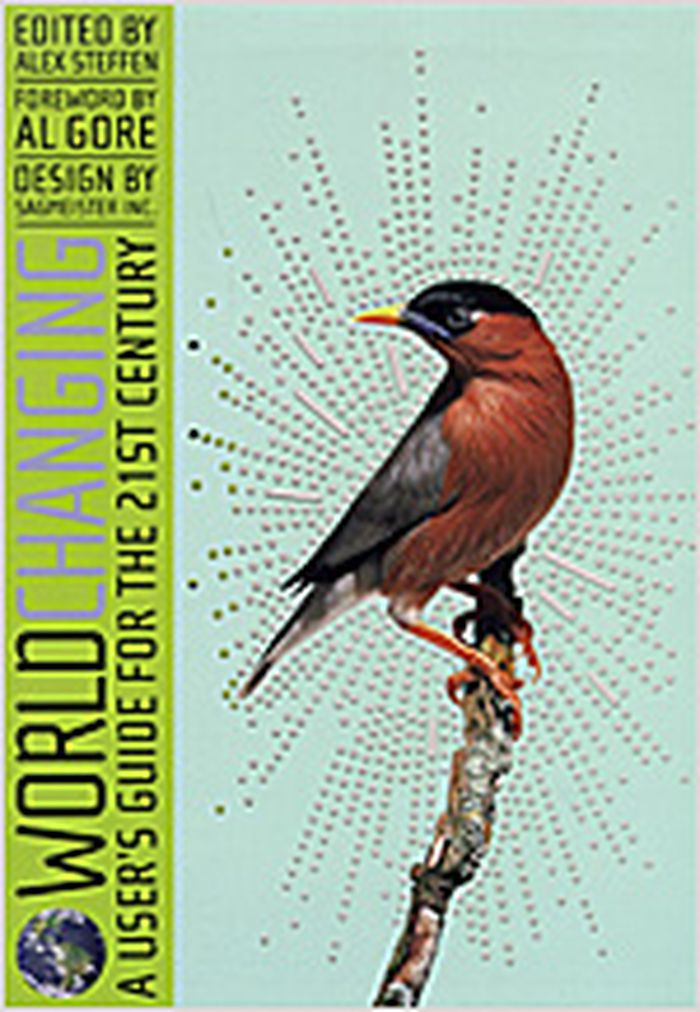
"Worldchanging : a User's guide for the 21st century " proposes innovative solutions, ideas and inventions emerging today for building a sustainable, livable, prosperous future. From consumer consciousness to a new vision for industry; non-toxic homes to refugee shelters; microfinance to effective philanthropy; socially responsible investing to starting a green business; citizen media to human rights; ecological economics to climate change, this is a comprehensive, cutting-edge overview. The book contains 7 sections which include those topics - from eco-building to responsible shopping, political action to humanitarian relief : stuff : green design, biomimicry, sustainable food, clothing, trade and technology ; shelter : green building and landscaping, clean energy, water, disaster relief and humanitarian design ; cities : smart growth, sustainable communities, transportation, greening infrastructure, product-service systems, leapfrogging and megacity challenges ; community : education, women's rights, public health, holistic approaches to community development, South-South science, social entrepreneurship and micro-lending, and philanthropy ; business : socially responsible investment, worldchanging start-ups, ecological economics, corporate social responsibility and green business ; politics : networked politics, new media, transparency, human rights, non-violent revolution and peacemaking ; planet : big picture -- everything from placing oneself in a bioregion to climate foresight to environmental history to green space exploration. Brought together by Alex Steffen, co-founder of the web site Worldchanging.com, this team of writers includes Cameron Sinclair, founder of Architecture for Humanity, Geekcorps founder Ethan Zuckerman, sustainable food expert Anna Lappé, and many others. With foreword by Al Gore. Design by Sagmeister.
Worldchanging : a user's guide for the 21st century
Actions:
Price:
$44.95
(available to order)
Summary:
"Worldchanging : a User's guide for the 21st century " proposes innovative solutions, ideas and inventions emerging today for building a sustainable, livable, prosperous future. From consumer consciousness to a new vision for industry; non-toxic homes to refugee shelters; microfinance to effective philanthropy; socially responsible investing to starting a green business; citizen media to human rights; ecological economics to climate change, this is a comprehensive, cutting-edge overview. The book contains 7 sections which include those topics - from eco-building to responsible shopping, political action to humanitarian relief : stuff : green design, biomimicry, sustainable food, clothing, trade and technology ; shelter : green building and landscaping, clean energy, water, disaster relief and humanitarian design ; cities : smart growth, sustainable communities, transportation, greening infrastructure, product-service systems, leapfrogging and megacity challenges ; community : education, women's rights, public health, holistic approaches to community development, South-South science, social entrepreneurship and micro-lending, and philanthropy ; business : socially responsible investment, worldchanging start-ups, ecological economics, corporate social responsibility and green business ; politics : networked politics, new media, transparency, human rights, non-violent revolution and peacemaking ; planet : big picture -- everything from placing oneself in a bioregion to climate foresight to environmental history to green space exploration. Brought together by Alex Steffen, co-founder of the web site Worldchanging.com, this team of writers includes Cameron Sinclair, founder of Architecture for Humanity, Geekcorps founder Ethan Zuckerman, sustainable food expert Anna Lappé, and many others. With foreword by Al Gore. Design by Sagmeister.
Form:
books
books
Publication:
January 2007, New York
January 2007, New York
Subject:
Green Architecture
Green Architecture
Form:
books
books
Actions:
Price:
$49.50
(available to order)
Summary:
Once symbols of the past, ruins have become ubiquitous signs of our future. Americans today encounter ruins in the media on a daily basis - images of abandoned factories and malls, toxic landscapes, devastating fires, hurricanes, and floods. In this sweeping study, Miles Orvell offers a new understanding of the spectacle of ruins in US culture, exploring how(...)
$49.50
(available to order)
Summary:
Once symbols of the past, ruins have become ubiquitous signs of our future. Americans today encounter ruins in the media on a daily basis - images of abandoned factories and malls, toxic landscapes, devastating fires, hurricanes, and floods. In this sweeping study, Miles Orvell offers a new understanding of the spectacle of ruins in US culture, exploring how(...)
Title:
Empire of ruins: American culture, photography, and the spectacle of destruction
Actions:
Price:
$49.50
(available to order)
Summary:
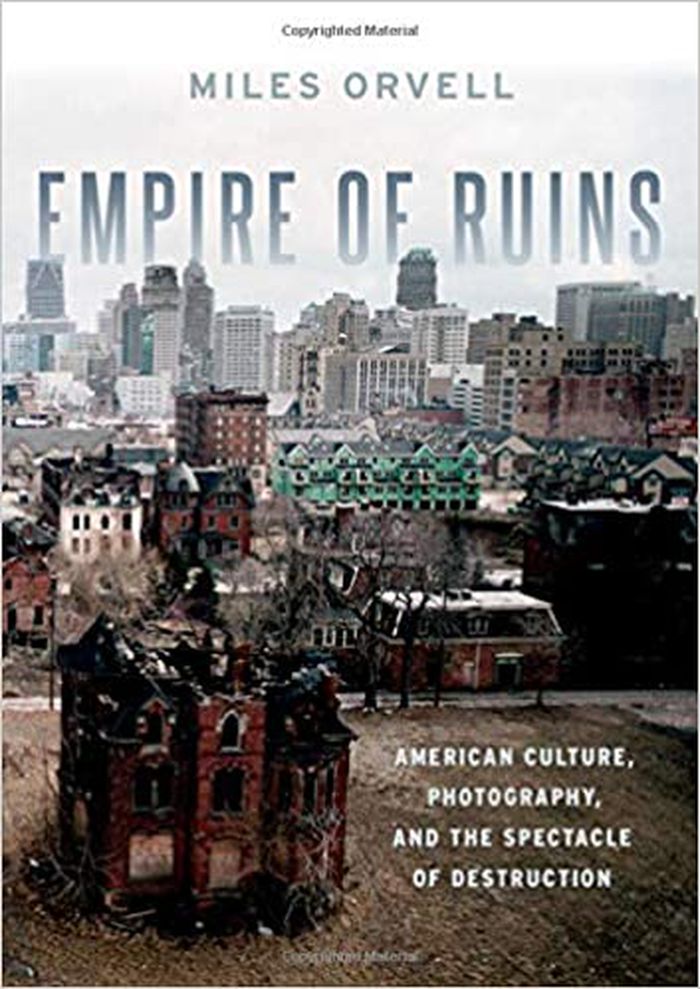
Once symbols of the past, ruins have become ubiquitous signs of our future. Americans today encounter ruins in the media on a daily basis - images of abandoned factories and malls, toxic landscapes, devastating fires, hurricanes, and floods. In this sweeping study, Miles Orvell offers a new understanding of the spectacle of ruins in US culture, exploring how photographers, writers, painters, and filmmakers have responded to ruin and destruction, both real and imaginary, in an effort to make sense of the past and envision the future. ''Empire of ruins'' explains why Americans in the nineteenth century yearned for the ruins of Rome and Egypt and how they portrayed a past as ancient and mysterious in the remains of Native American cultures. As the romance of ruins gave way to twentieth-century capitalism, older structures were demolished to make way for grander ones, a process interpreted by artists as a symptom of America's "creative destruction." In the late twentieth century, Americans began to inhabit a perpetual state of ruins, made visible by photographs of decaying inner cities, derelict factories and malls, and the waste lands of the mining industry. This interdisciplinary work focuses on how visual media have transformed disaster and decay into spectacles that compel our moral attention even as they balance horror and beauty. Looking to the future, Orvell considers the visual portrayal of climate ruins as we face the political and ethical responsibilities of our changing world. A wide-ranging work by an acclaimed urban, cultural, and photography scholar, ''Empire of ruins'' offers a provocative and lavishly illustrated look at the American past, present, and future.
Empire of ruins: American culture, photography, and the spectacle of destruction
Actions:
Price:
$49.50
(available to order)
Summary:
Once symbols of the past, ruins have become ubiquitous signs of our future. Americans today encounter ruins in the media on a daily basis - images of abandoned factories and malls, toxic landscapes, devastating fires, hurricanes, and floods. In this sweeping study, Miles Orvell offers a new understanding of the spectacle of ruins in US culture, exploring how photographers, writers, painters, and filmmakers have responded to ruin and destruction, both real and imaginary, in an effort to make sense of the past and envision the future. ''Empire of ruins'' explains why Americans in the nineteenth century yearned for the ruins of Rome and Egypt and how they portrayed a past as ancient and mysterious in the remains of Native American cultures. As the romance of ruins gave way to twentieth-century capitalism, older structures were demolished to make way for grander ones, a process interpreted by artists as a symptom of America's "creative destruction." In the late twentieth century, Americans began to inhabit a perpetual state of ruins, made visible by photographs of decaying inner cities, derelict factories and malls, and the waste lands of the mining industry. This interdisciplinary work focuses on how visual media have transformed disaster and decay into spectacles that compel our moral attention even as they balance horror and beauty. Looking to the future, Orvell considers the visual portrayal of climate ruins as we face the political and ethical responsibilities of our changing world. A wide-ranging work by an acclaimed urban, cultural, and photography scholar, ''Empire of ruins'' offers a provocative and lavishly illustrated look at the American past, present, and future.
Form:
books
books
Publication:
January 2021
January 2021
Subject:
Theory of Photography
Theory of Photography


