


14911 Results
Form:
events
events
Actions:
Description:
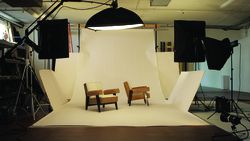
American artist Amie Siegel’s moving image work Provenance (2013) follows the global trade of furniture from Chandigarh in reverse: from the homes of collectors in Europe and North America to sale at auction, restoration, through overseas transport and finally back to India. Originally designed by Le Corbusier and Pierre Jeanneret, the Chandigarh furniture now sells(...)
American artist Amie Siegel’s moving image work Provenance (2013) follows the global trade of furniture from Chandigarh in reverse: from the homes of collectors in Europe and North America to sale at auction, restoration, through overseas transport and finally back to India. Originally designed by Le Corbusier and Pierre Jeanneret, the Chandigarh furniture now sells(...)
Date:
24 April 2014 , 6pm
24 April 2014 , 6pm
Title:
Artist’s Talk: Amie Siegel, Provenance
Actions:
Description:
American artist Amie Siegel’s moving image work Provenance (2013) follows the global trade of furniture from Chandigarh in reverse: from the homes of collectors in Europe and North America to sale at auction, restoration, through overseas transport and finally back to India. Originally designed by Le Corbusier and Pierre Jeanneret, the Chandigarh furniture now sells(...)
Artist’s Talk: Amie Siegel, Provenance
Actions:
Description:
American artist Amie Siegel’s moving image work Provenance (2013) follows the global trade of furniture from Chandigarh in reverse: from the homes of collectors in Europe and North America to sale at auction, restoration, through overseas transport and finally back to India. Originally designed by Le Corbusier and Pierre Jeanneret, the Chandigarh furniture now sells(...)
Form:
events
events
Date:
24 April 2014
6pm
24 April 2014
6pm
Form:
textual records
textual records
Actions:
Reference number:
ARCH273529
Description:
File contains correspondence relating to the activities of the Arthur Erickson Corporation, the Advisory Committee of the Museum of Anthropology and some correspondence with family and friends, including Geoffrey Erickson.
ARCH273529
Description:
File contains correspondence relating to the activities of the Arthur Erickson Corporation, the Advisory Committee of the Museum of Anthropology and some correspondence with family and friends, including Geoffrey Erickson.
People:
Date:
2008
2008
Title:
Correspondence related to professional activities of Erickson
Actions:
ARCH273529
Description:
File contains correspondence relating to the activities of the Arthur Erickson Corporation, the Advisory Committee of the Museum of Anthropology and some correspondence with family and friends, including Geoffrey Erickson.
Correspondence related to professional activities of Erickson
Actions:
ARCH273529
Description:
File contains correspondence relating to the activities of the Arthur Erickson Corporation, the Advisory Committee of the Museum of Anthropology and some correspondence with family and friends, including Geoffrey Erickson.
Form:
textual records
textual records
Date:
2008
2008
People:
Form:
textual records
textual records
Actions:
Reference number:
ARCH257076
Description:
press clipping, offer of services: Clark County Government Centre (1991), DHL-London (correspondence), Granville Waterfront, Boca Raton Art Museum, General Motors, City of lawndale, IBM
ARCH257076
Description:
press clipping, offer of services: Clark County Government Centre (1991), DHL-London (correspondence), Granville Waterfront, Boca Raton Art Museum, General Motors, City of lawndale, IBM
People:
Title:
Press clipping, and offer of services
Actions:
ARCH257076
Description:
press clipping, offer of services: Clark County Government Centre (1991), DHL-London (correspondence), Granville Waterfront, Boca Raton Art Museum, General Motors, City of lawndale, IBM
Press clipping, and offer of services
Actions:
ARCH257076
Description:
press clipping, offer of services: Clark County Government Centre (1991), DHL-London (correspondence), Granville Waterfront, Boca Raton Art Museum, General Motors, City of lawndale, IBM
Form:
textual records
textual records
People:
Form:
photographs
photographs
Actions:
Reference number:
AP178.S1.1993.PR06.019.1
Description:
Original file title: The J. P. Getty Museum Levantamento Fotográfico do existente Siza's office numbered photographs in this file JPGM142 JPGM153 Siza also appears on some photographs.
AP178.S1.1993.PR06.019.1
Description:
Original file title: The J. P. Getty Museum Levantamento Fotográfico do existente Siza's office numbered photographs in this file JPGM142 JPGM153 Siza also appears on some photographs.
People:
Date:
1993
1993
Title:
Panoramas of the existing buildings, Museu J. Paul Getty, Malibu (folder 1 of 2)
Actions:
AP178.S1.1993.PR06.019.1
Description:
Original file title: The J. P. Getty Museum Levantamento Fotográfico do existente Siza's office numbered photographs in this file JPGM142 JPGM153 Siza also appears on some photographs.
Panoramas of the existing buildings, Museu J. Paul Getty, Malibu (folder 1 of 2)
Actions:
AP178.S1.1993.PR06.019.1
Description:
Original file title: The J. P. Getty Museum Levantamento Fotográfico do existente Siza's office numbered photographs in this file JPGM142 JPGM153 Siza also appears on some photographs.
Form:
photographs
photographs
Date:
1993
1993
People:
Form:
photographs
photographs
Actions:
Reference number:
AP178.S1.1993.PR06.019.2
Description:
Original file title: The J. P. Getty Museum Levantamento Fotográfico do existente Siza's office numbered photographs in this file JPGM142 JPGM153 Siza also appears on some photographs.
AP178.S1.1993.PR06.019.2
Description:
Original file title: The J. P. Getty Museum Levantamento Fotográfico do existente Siza's office numbered photographs in this file JPGM142 JPGM153 Siza also appears on some photographs.
People:
Date:
1993
1993
Title:
Panoramas of the existing buildings, Museu J. Paul Getty, Malibu (folder 2 of 2)
Actions:
AP178.S1.1993.PR06.019.2
Description:
Original file title: The J. P. Getty Museum Levantamento Fotográfico do existente Siza's office numbered photographs in this file JPGM142 JPGM153 Siza also appears on some photographs.
Panoramas of the existing buildings, Museu J. Paul Getty, Malibu (folder 2 of 2)
Actions:
AP178.S1.1993.PR06.019.2
Description:
Original file title: The J. P. Getty Museum Levantamento Fotográfico do existente Siza's office numbered photographs in this file JPGM142 JPGM153 Siza also appears on some photographs.
Form:
photographs
photographs
Date:
1993
1993
People:
Form:
events
events
Title:
Learning from... Saadiyat
Learning from... Saadiyat
Actions:
Description:
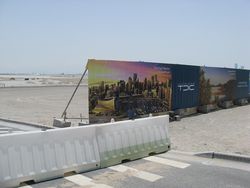
Saadiyat Island is a “dreamscape” created by Tourism Development Investment Company just half a kilometer from downtown Abu Dhabi. It is an amalgam of luxury residential areas, 5-star resorts and golf courses crowned by a Cultural District containing a hallucinatory collection of museums designed by five Pritzker Prize winners. Is this the future of private(...)
Saadiyat Island is a “dreamscape” created by Tourism Development Investment Company just half a kilometer from downtown Abu Dhabi. It is an amalgam of luxury residential areas, 5-star resorts and golf courses crowned by a Cultural District containing a hallucinatory collection of museums designed by five Pritzker Prize winners. Is this the future of private(...)
Location:
Paul-Desmarais Theatre
Paul-Desmarais Theatre
Date:
21 August 2014 , 6pm
21 August 2014 , 6pm
Title:
Learning from... Saadiyat
Actions:
Description:
Saadiyat Island is a “dreamscape” created by Tourism Development Investment Company just half a kilometer from downtown Abu Dhabi. It is an amalgam of luxury residential areas, 5-star resorts and golf courses crowned by a Cultural District containing a hallucinatory collection of museums designed by five Pritzker Prize winners. Is this the future of private(...)
Learning from... Saadiyat
Actions:
Description:
Saadiyat Island is a “dreamscape” created by Tourism Development Investment Company just half a kilometer from downtown Abu Dhabi. It is an amalgam of luxury residential areas, 5-star resorts and golf courses crowned by a Cultural District containing a hallucinatory collection of museums designed by five Pritzker Prize winners. Is this the future of private(...)
Form:
events
events
Date:
21 August 2014
6pm
21 August 2014
6pm
Location:
Paul-Desmarais Theatre
Paul-Desmarais Theatre
Form:
drawings, textual records
drawings, textual records
Title:
Project documentation and drawings, C. Cultural e Audit. para a Fundação Ibere Camargo, Porto Alegre
Project documentation and drawings, C. Cultural e Audit. para a Fundação Ibere Camargo, Porto Alegre
Actions:
Reference number:
AP178.S1.1998.PR07.066
Description:
Original file title: Ibere Camargo Building program, reprographic copies of the models, reprographic copies of sketches draw by Miranda Giraldino, and documentation about the visual identity of the museum.
AP178.S1.1998.PR07.066
Description:
Original file title: Ibere Camargo Building program, reprographic copies of the models, reprographic copies of sketches draw by Miranda Giraldino, and documentation about the visual identity of the museum.
People:
Date:
2000-2006
2000-2006
Title:
Project documentation and drawings, C. Cultural e Audit. para a Fundação Ibere Camargo, Porto Alegre
Actions:
AP178.S1.1998.PR07.066
Description:
Original file title: Ibere Camargo Building program, reprographic copies of the models, reprographic copies of sketches draw by Miranda Giraldino, and documentation about the visual identity of the museum.
Project documentation and drawings, C. Cultural e Audit. para a Fundação Ibere Camargo, Porto Alegre
Actions:
AP178.S1.1998.PR07.066
Description:
Original file title: Ibere Camargo Building program, reprographic copies of the models, reprographic copies of sketches draw by Miranda Giraldino, and documentation about the visual identity of the museum.
Form:
drawings, textual records
drawings, textual records
Date:
2000-2006
2000-2006
People:
Level of archival description:
Project
Project
Actions:
Reference number:
AP164.S1.1997.D12
Description:
The subseries documents the show-event base “Fabricaciones / Fabrications,” held at the Museu d'Art Contemporani de Barcelona (MACBA) (February 10th to April 20th, 1998). The firm identified this project as number 110. “Fabrications was an innovative exhibition on architecture conceived and produced jointly by MACBA, MoMA, the Wexner Center for the Arts and the San Francisco Museum of Modern Art. The exhibition presented sixteen life-size architectural interventions, four at each participating center, each produced by a team of architects who explored tectonic issues in a broad sense. The four installations presented at Plaça dels Àngels – the square in front of the MACBA building – explored and modified the surfaces that defined this public space. Vicente Gualla (Barcelona) created an intervention on the façade opposite the Museum, which drew attention to the occupation and the population density that was absent from the buildings in the square. Abalos & Herreros (Madrid) acted upon the façade of the MACBA building itself, cladding and decorating its most monumental elements: the tower and the balcony. Riegler Riewe (Graz) worked with the whole of the square, inscribing a broken horizontal line along the perimeter of the public space. Finally, MVRDV (Rotterdam) acted upon the paving through an evocation of a series of different kinds of sports grounds.” (MACBA website) Documenting the exhibition are design development drawings, correspondence, project descriptions, budgets, notes, and reference, graphic and photographic materials.
AP164.S1.1997.D12
Description:
The subseries documents the show-event base “Fabricaciones / Fabrications,” held at the Museu d'Art Contemporani de Barcelona (MACBA) (February 10th to April 20th, 1998). The firm identified this project as number 110. “Fabrications was an innovative exhibition on architecture conceived and produced jointly by MACBA, MoMA, the Wexner Center for the Arts and the San Francisco Museum of Modern Art. The exhibition presented sixteen life-size architectural interventions, four at each participating center, each produced by a team of architects who explored tectonic issues in a broad sense. The four installations presented at Plaça dels Àngels – the square in front of the MACBA building – explored and modified the surfaces that defined this public space. Vicente Gualla (Barcelona) created an intervention on the façade opposite the Museum, which drew attention to the occupation and the population density that was absent from the buildings in the square. Abalos & Herreros (Madrid) acted upon the façade of the MACBA building itself, cladding and decorating its most monumental elements: the tower and the balcony. Riegler Riewe (Graz) worked with the whole of the square, inscribing a broken horizontal line along the perimeter of the public space. Finally, MVRDV (Rotterdam) acted upon the paving through an evocation of a series of different kinds of sports grounds.” (MACBA website) Documenting the exhibition are design development drawings, correspondence, project descriptions, budgets, notes, and reference, graphic and photographic materials.
People:
Date:
1996-2002
1996-2002
Title:
MACBA [Museu d'Art Contemporani de Barcelona] (1997)
Actions:
AP164.S1.1997.D12
Description:
The subseries documents the show-event base “Fabricaciones / Fabrications,” held at the Museu d'Art Contemporani de Barcelona (MACBA) (February 10th to April 20th, 1998). The firm identified this project as number 110. “Fabrications was an innovative exhibition on architecture conceived and produced jointly by MACBA, MoMA, the Wexner Center for the Arts and the San Francisco Museum of Modern Art. The exhibition presented sixteen life-size architectural interventions, four at each participating center, each produced by a team of architects who explored tectonic issues in a broad sense. The four installations presented at Plaça dels Àngels – the square in front of the MACBA building – explored and modified the surfaces that defined this public space. Vicente Gualla (Barcelona) created an intervention on the façade opposite the Museum, which drew attention to the occupation and the population density that was absent from the buildings in the square. Abalos & Herreros (Madrid) acted upon the façade of the MACBA building itself, cladding and decorating its most monumental elements: the tower and the balcony. Riegler Riewe (Graz) worked with the whole of the square, inscribing a broken horizontal line along the perimeter of the public space. Finally, MVRDV (Rotterdam) acted upon the paving through an evocation of a series of different kinds of sports grounds.” (MACBA website) Documenting the exhibition are design development drawings, correspondence, project descriptions, budgets, notes, and reference, graphic and photographic materials.
MACBA [Museu d'Art Contemporani de Barcelona] (1997)
Actions:
AP164.S1.1997.D12
Description:
The subseries documents the show-event base “Fabricaciones / Fabrications,” held at the Museu d'Art Contemporani de Barcelona (MACBA) (February 10th to April 20th, 1998). The firm identified this project as number 110. “Fabrications was an innovative exhibition on architecture conceived and produced jointly by MACBA, MoMA, the Wexner Center for the Arts and the San Francisco Museum of Modern Art. The exhibition presented sixteen life-size architectural interventions, four at each participating center, each produced by a team of architects who explored tectonic issues in a broad sense. The four installations presented at Plaça dels Àngels – the square in front of the MACBA building – explored and modified the surfaces that defined this public space. Vicente Gualla (Barcelona) created an intervention on the façade opposite the Museum, which drew attention to the occupation and the population density that was absent from the buildings in the square. Abalos & Herreros (Madrid) acted upon the façade of the MACBA building itself, cladding and decorating its most monumental elements: the tower and the balcony. Riegler Riewe (Graz) worked with the whole of the square, inscribing a broken horizontal line along the perimeter of the public space. Finally, MVRDV (Rotterdam) acted upon the paving through an evocation of a series of different kinds of sports grounds.” (MACBA website) Documenting the exhibition are design development drawings, correspondence, project descriptions, budgets, notes, and reference, graphic and photographic materials.
Level of archival description:
Project
Project
Date:
1996-2002
1996-2002
People:
Form:
drawings
drawings
Reference number:
AP178.S2.1991.010
Description:
This sketchbook includes sketches for the Santa Maria church and parish centre, the Galician Centre of Contemporary Art, the Serralves Museum. It about contains portraits of people and notes of Chiado.
AP178.S2.1991.010
Description:
This sketchbook includes sketches for the Santa Maria church and parish centre, the Galician Centre of Contemporary Art, the Serralves Museum. It about contains portraits of people and notes of Chiado.
People:
Date:
November 1991
November 1991
Title:
Sketchbook 323: Bar Serralves - Barcelona - Haia
Actions:
AP178.S2.1991.010
Description:
This sketchbook includes sketches for the Santa Maria church and parish centre, the Galician Centre of Contemporary Art, the Serralves Museum. It about contains portraits of people and notes of Chiado.
Sketchbook 323: Bar Serralves - Barcelona - Haia
Actions:
AP178.S2.1991.010
Description:
This sketchbook includes sketches for the Santa Maria church and parish centre, the Galician Centre of Contemporary Art, the Serralves Museum. It about contains portraits of people and notes of Chiado.
Form:
drawings
drawings
Date:
November 1991
November 1991
People:
Level of archival description:
Series
Series
Actions:
Reference number:
AP193.S1
Description:
Series 1, Water Flux and Scrambled Flat, 2002-2010, documents the conception and evolution of a project that was originally a farm building and later became a geology and glaciology museum and research center focused on the Swiss Alps. The project was never realized. R&Sie(n) conceptualized Scrambled Flat as an experimental farm. The project goal was to reconcile European Union’s agricultural regulations, imposing a separation between animal and human living, to the community of Évolène traditional way of living, contiguously with animals, benefiting from the resources they offer. As conceived, Scrambled Flat creates an environment where fluidity between the existence of the animals and the humans is materialized. The size of the form is also adapted from a typical local rural house and exploits the heat of the animals and the insulation of the hay. For this project, R&Sie(n) approached the mayor of the community with the design proposition. The mayor then called for a competition, while also changing the program to an ecology museum and research center illustrating the local effects of global warming and the thawing of the Alps. R&Sie(n) won the competition with Water Flux, a reinterpretation of Scrambled Flat. The project was intended to uncover and exorcise the anxieties of ecological disaster, and the principle of flux related to seasonal change and, more broadly, climate change. The firm designed rooms that reproduce the geological and meteorological environment of the high mountains making it visible and experimental, offering refrigerated spaces for art installations and scientific demonstrations. The concept was also to build with the use of new technologies such as digital modelling, point scanning, and computer numerical control (CNC), combined with ancient local knowledge of knocking on trees to decide which specific pines have the best wood for construction. The building is designed to be constructed with local lamellar wood milled by nearby CNC. The resulting parts would be used for the structure, the insulation, the waterproofing and both the interior and exterior finishes. The design includes a grille wrapping the building, reproducing the profile of traditional houses and enclosure and making it possible to hold the snow inside a typo-morphological imprint. Therefore, the transformable envelope of the building reacts to the rhythm of the seasons. In the winter, the structure would appear like a solid cut-out of ice and snow, with cavities similar to those found in glaciers. In the summer, it would resemble piles of stones used in these areas to make borders. A small pool would collect rainwater and supply it to an interior artificial snowmaking system designed for the gallery. Transformation of the water is an integral part of the design. The records contain images of plans, sections, details for the structure of the façade, renderings, plans of the engineered structure, and photographs documenting the conception of the models with the CNC machinery. The Rhino 3D modelling files are also part of the records along with AutoCAD models and a video documenting the process. The records contain two physical models: a smaller polymer model at 1:20 scale representing the whole structure of the building, and a larger 1:1 latch wood fragment representing detail of the structure in its integrality.
AP193.S1
Description:
Series 1, Water Flux and Scrambled Flat, 2002-2010, documents the conception and evolution of a project that was originally a farm building and later became a geology and glaciology museum and research center focused on the Swiss Alps. The project was never realized. R&Sie(n) conceptualized Scrambled Flat as an experimental farm. The project goal was to reconcile European Union’s agricultural regulations, imposing a separation between animal and human living, to the community of Évolène traditional way of living, contiguously with animals, benefiting from the resources they offer. As conceived, Scrambled Flat creates an environment where fluidity between the existence of the animals and the humans is materialized. The size of the form is also adapted from a typical local rural house and exploits the heat of the animals and the insulation of the hay. For this project, R&Sie(n) approached the mayor of the community with the design proposition. The mayor then called for a competition, while also changing the program to an ecology museum and research center illustrating the local effects of global warming and the thawing of the Alps. R&Sie(n) won the competition with Water Flux, a reinterpretation of Scrambled Flat. The project was intended to uncover and exorcise the anxieties of ecological disaster, and the principle of flux related to seasonal change and, more broadly, climate change. The firm designed rooms that reproduce the geological and meteorological environment of the high mountains making it visible and experimental, offering refrigerated spaces for art installations and scientific demonstrations. The concept was also to build with the use of new technologies such as digital modelling, point scanning, and computer numerical control (CNC), combined with ancient local knowledge of knocking on trees to decide which specific pines have the best wood for construction. The building is designed to be constructed with local lamellar wood milled by nearby CNC. The resulting parts would be used for the structure, the insulation, the waterproofing and both the interior and exterior finishes. The design includes a grille wrapping the building, reproducing the profile of traditional houses and enclosure and making it possible to hold the snow inside a typo-morphological imprint. Therefore, the transformable envelope of the building reacts to the rhythm of the seasons. In the winter, the structure would appear like a solid cut-out of ice and snow, with cavities similar to those found in glaciers. In the summer, it would resemble piles of stones used in these areas to make borders. A small pool would collect rainwater and supply it to an interior artificial snowmaking system designed for the gallery. Transformation of the water is an integral part of the design. The records contain images of plans, sections, details for the structure of the façade, renderings, plans of the engineered structure, and photographs documenting the conception of the models with the CNC machinery. The Rhino 3D modelling files are also part of the records along with AutoCAD models and a video documenting the process. The records contain two physical models: a smaller polymer model at 1:20 scale representing the whole structure of the building, and a larger 1:1 latch wood fragment representing detail of the structure in its integrality.
People:
Date:
2002-2010
2002-2010
Title:
Water Flux and Scrambled Flat
Actions:
AP193.S1
Description:
Series 1, Water Flux and Scrambled Flat, 2002-2010, documents the conception and evolution of a project that was originally a farm building and later became a geology and glaciology museum and research center focused on the Swiss Alps. The project was never realized. R&Sie(n) conceptualized Scrambled Flat as an experimental farm. The project goal was to reconcile European Union’s agricultural regulations, imposing a separation between animal and human living, to the community of Évolène traditional way of living, contiguously with animals, benefiting from the resources they offer. As conceived, Scrambled Flat creates an environment where fluidity between the existence of the animals and the humans is materialized. The size of the form is also adapted from a typical local rural house and exploits the heat of the animals and the insulation of the hay. For this project, R&Sie(n) approached the mayor of the community with the design proposition. The mayor then called for a competition, while also changing the program to an ecology museum and research center illustrating the local effects of global warming and the thawing of the Alps. R&Sie(n) won the competition with Water Flux, a reinterpretation of Scrambled Flat. The project was intended to uncover and exorcise the anxieties of ecological disaster, and the principle of flux related to seasonal change and, more broadly, climate change. The firm designed rooms that reproduce the geological and meteorological environment of the high mountains making it visible and experimental, offering refrigerated spaces for art installations and scientific demonstrations. The concept was also to build with the use of new technologies such as digital modelling, point scanning, and computer numerical control (CNC), combined with ancient local knowledge of knocking on trees to decide which specific pines have the best wood for construction. The building is designed to be constructed with local lamellar wood milled by nearby CNC. The resulting parts would be used for the structure, the insulation, the waterproofing and both the interior and exterior finishes. The design includes a grille wrapping the building, reproducing the profile of traditional houses and enclosure and making it possible to hold the snow inside a typo-morphological imprint. Therefore, the transformable envelope of the building reacts to the rhythm of the seasons. In the winter, the structure would appear like a solid cut-out of ice and snow, with cavities similar to those found in glaciers. In the summer, it would resemble piles of stones used in these areas to make borders. A small pool would collect rainwater and supply it to an interior artificial snowmaking system designed for the gallery. Transformation of the water is an integral part of the design. The records contain images of plans, sections, details for the structure of the façade, renderings, plans of the engineered structure, and photographs documenting the conception of the models with the CNC machinery. The Rhino 3D modelling files are also part of the records along with AutoCAD models and a video documenting the process. The records contain two physical models: a smaller polymer model at 1:20 scale representing the whole structure of the building, and a larger 1:1 latch wood fragment representing detail of the structure in its integrality.
Water Flux and Scrambled Flat
Actions:
AP193.S1
Description:
Series 1, Water Flux and Scrambled Flat, 2002-2010, documents the conception and evolution of a project that was originally a farm building and later became a geology and glaciology museum and research center focused on the Swiss Alps. The project was never realized. R&Sie(n) conceptualized Scrambled Flat as an experimental farm. The project goal was to reconcile European Union’s agricultural regulations, imposing a separation between animal and human living, to the community of Évolène traditional way of living, contiguously with animals, benefiting from the resources they offer. As conceived, Scrambled Flat creates an environment where fluidity between the existence of the animals and the humans is materialized. The size of the form is also adapted from a typical local rural house and exploits the heat of the animals and the insulation of the hay. For this project, R&Sie(n) approached the mayor of the community with the design proposition. The mayor then called for a competition, while also changing the program to an ecology museum and research center illustrating the local effects of global warming and the thawing of the Alps. R&Sie(n) won the competition with Water Flux, a reinterpretation of Scrambled Flat. The project was intended to uncover and exorcise the anxieties of ecological disaster, and the principle of flux related to seasonal change and, more broadly, climate change. The firm designed rooms that reproduce the geological and meteorological environment of the high mountains making it visible and experimental, offering refrigerated spaces for art installations and scientific demonstrations. The concept was also to build with the use of new technologies such as digital modelling, point scanning, and computer numerical control (CNC), combined with ancient local knowledge of knocking on trees to decide which specific pines have the best wood for construction. The building is designed to be constructed with local lamellar wood milled by nearby CNC. The resulting parts would be used for the structure, the insulation, the waterproofing and both the interior and exterior finishes. The design includes a grille wrapping the building, reproducing the profile of traditional houses and enclosure and making it possible to hold the snow inside a typo-morphological imprint. Therefore, the transformable envelope of the building reacts to the rhythm of the seasons. In the winter, the structure would appear like a solid cut-out of ice and snow, with cavities similar to those found in glaciers. In the summer, it would resemble piles of stones used in these areas to make borders. A small pool would collect rainwater and supply it to an interior artificial snowmaking system designed for the gallery. Transformation of the water is an integral part of the design. The records contain images of plans, sections, details for the structure of the façade, renderings, plans of the engineered structure, and photographs documenting the conception of the models with the CNC machinery. The Rhino 3D modelling files are also part of the records along with AutoCAD models and a video documenting the process. The records contain two physical models: a smaller polymer model at 1:20 scale representing the whole structure of the building, and a larger 1:1 latch wood fragment representing detail of the structure in its integrality.
Level of archival description:
Series
Series
Date:
2002-2010
2002-2010
People:


