


exhibitions

During the Second World War, exhibitions and publications played a critical role in the war effort. They were organized internationally as moments of reflection and propaganda, productions of a disciplinary approach to architecture and urban design. This display springs from Jean-Louis Cohen’s research for Architecture in Uniform: Designing and Building for the Second(...)
Hall cases
13 April 2011 to 18 September 2011
A Paper War: Pictures and words, 1939-1945
Actions:
Description:
During the Second World War, exhibitions and publications played a critical role in the war effort. They were organized internationally as moments of reflection and propaganda, productions of a disciplinary approach to architecture and urban design. This display springs from Jean-Louis Cohen’s research for Architecture in Uniform: Designing and Building for the Second(...)
exhibitions
13 April 2011 to
18 September 2011
Hall cases
exhibitions
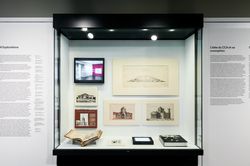
On the occasion of Phyllis Lambert’s ninetieth birthday, this exhibition offers an autobiographical glimpse into the evolution of the CCA founder’s ideas and her work as an architect, activist, editor, and curator. Highlighting her deep commitment to the city and to intellectual research, this display of archival material from the CCA’s collection, institutional archives,(...)
Hall cases
18 January 2017 to 11 June 2017
Phyllis Lambert: 75 Years At Work
Actions:
Description:
On the occasion of Phyllis Lambert’s ninetieth birthday, this exhibition offers an autobiographical glimpse into the evolution of the CCA founder’s ideas and her work as an architect, activist, editor, and curator. Highlighting her deep commitment to the city and to intellectual research, this display of archival material from the CCA’s collection, institutional archives,(...)
exhibitions
18 January 2017 to
11 June 2017
Hall cases
research
TD Bank Group-CCA Collection Research Grant Recipients Maria Elisa Navarro Morales (McGill University); Imen Ben Jemia (Université de Montréal); Lori Riva (McGill University); Maureen Mahoney (Carleton University); Nadia Kurd (McGill University) Julie Boivin (University of Toronto); Horea Avram (McGill University); Thomas Strickland (McGill University); Fan Lin(...)
February 2009 to November 2009
Doctoral Students Program 2009
Actions:
Description:
TD Bank Group-CCA Collection Research Grant Recipients Maria Elisa Navarro Morales (McGill University); Imen Ben Jemia (Université de Montréal); Lori Riva (McGill University); Maureen Mahoney (Carleton University); Nadia Kurd (McGill University) Julie Boivin (University of Toronto); Horea Avram (McGill University); Thomas Strickland (McGill University); Fan Lin(...)
research
February 2009 to
November 2009
events
On New Year’s Eve 1987, the people of Gonaïves, an impoverished port town on Haiti’s west coast, awoke to 4,000 tons of toxic ash. Amidst political turmoil in Haiti, officials had approved the import of toxic waste from the United States classified as “fertilizer.” In this case, the ash came from Philadelphia, which was facing a waste management crisis brought on by the(...)
Canada, environment, Jodoin, Müller, It's all happening so fast, toxic, Haiti, voluntary exchange, garbage imperialism, Gonaives
16 March 2017
Here It Is Toxic, There It Is Not
Actions:
Description:
On New Year’s Eve 1987, the people of Gonaïves, an impoverished port town on Haiti’s west coast, awoke to 4,000 tons of toxic ash. Amidst political turmoil in Haiti, officials had approved the import of toxic waste from the United States classified as “fertilizer.” In this case, the ash came from Philadelphia, which was facing a waste management crisis brought on by the(...)
events
16 March 2017
Canada, environment, Jodoin, Müller, It's all happening so fast, toxic, Haiti, voluntary exchange, garbage imperialism, Gonaives
Series
AP175.S1
Description:
Series 1, Erasmus Bridge, Rotterdam, Netherlands, 1990-1996, documents the design, conception and construction of a third bridge for Rotterdam over the Nieuwe Maas River. The bridge connects the Kop van Zuid neighborhood, located on the south side of the river, to Willemsplein, located on the north side. The bridge is considered as a landmark in Rotterdam’s landscape. The Erasmus Bridge was a formative project in the thinking of UNStudio. It was originally supposed to be designed by architect Maarten Struijs who was the city of Rotterdam principal architect and who is responsible for the concept of the neighboring Willem Bridge. Ben van Berkel came later into the project and was hired as a designing consultant along with architect Wim Quist. Ben van Berkel proposed design was selected allowing him and his firm, which was called Van Berkel & Bos Architectuurbureau at that time, to supervise the conception and construction of the project, from the original concept to piers design to the selection of every item of bridge furniture such as traffic lights, bridge camera and handrails. The bridge was designed to fit the distinct character and industrial past of Rotterdam. The construction of this landmark was one component of a larger redevelopment project, coinciding with other major developments in the city of Rotterdam. The goal was to develop a dense urban intervention on the southern shore of the Nieuwe Maas, in the Kop van Zuid neighborhood. This explains the implication of UNStudio in the planning of urban configuration of the neighborhoods on both sides of the river and their work for Spido, a ferry company operating on the Nieuwe Maas, work spaces and parking garage. This commercial building was designed by the firm and also hosts The Grand Café and Jazz Café. This commercial building is integrated to one of the bridge pillar on the north shore of the river. For the design the firm used AutoCAD to work along with engineers and to conceptualize 3D models. They also used the software to evaluate the circulation flow of drivers, pedestrians and streetcars, measuring its impact on the structure and the urban configuration of the neighborhoods on both sides of the river. The records contain sketches for bridge and pier design, plans and sections for pier, Spido and bridge, architectural and construction details created by engineering companies for every component of the bridge, from drawbridge, to cable car system, to bridge furnitures such as traffic light, handrails and cameras and photographs documenting the research for precedent and the original configuration of the neighborhoods on both sides of the river. The record contains AutoCAD plans, details and sections for both the bridge and Spido parking garage. The records also contain one physical model: a small scale plastic, glass and metal model of the bridge.
1990-1996
Erasmus Bridge, Rotterdam, Netherlands, 1990-1996
Actions:
AP175.S1
Description:
Series 1, Erasmus Bridge, Rotterdam, Netherlands, 1990-1996, documents the design, conception and construction of a third bridge for Rotterdam over the Nieuwe Maas River. The bridge connects the Kop van Zuid neighborhood, located on the south side of the river, to Willemsplein, located on the north side. The bridge is considered as a landmark in Rotterdam’s landscape. The Erasmus Bridge was a formative project in the thinking of UNStudio. It was originally supposed to be designed by architect Maarten Struijs who was the city of Rotterdam principal architect and who is responsible for the concept of the neighboring Willem Bridge. Ben van Berkel came later into the project and was hired as a designing consultant along with architect Wim Quist. Ben van Berkel proposed design was selected allowing him and his firm, which was called Van Berkel & Bos Architectuurbureau at that time, to supervise the conception and construction of the project, from the original concept to piers design to the selection of every item of bridge furniture such as traffic lights, bridge camera and handrails. The bridge was designed to fit the distinct character and industrial past of Rotterdam. The construction of this landmark was one component of a larger redevelopment project, coinciding with other major developments in the city of Rotterdam. The goal was to develop a dense urban intervention on the southern shore of the Nieuwe Maas, in the Kop van Zuid neighborhood. This explains the implication of UNStudio in the planning of urban configuration of the neighborhoods on both sides of the river and their work for Spido, a ferry company operating on the Nieuwe Maas, work spaces and parking garage. This commercial building was designed by the firm and also hosts The Grand Café and Jazz Café. This commercial building is integrated to one of the bridge pillar on the north shore of the river. For the design the firm used AutoCAD to work along with engineers and to conceptualize 3D models. They also used the software to evaluate the circulation flow of drivers, pedestrians and streetcars, measuring its impact on the structure and the urban configuration of the neighborhoods on both sides of the river. The records contain sketches for bridge and pier design, plans and sections for pier, Spido and bridge, architectural and construction details created by engineering companies for every component of the bridge, from drawbridge, to cable car system, to bridge furnitures such as traffic light, handrails and cameras and photographs documenting the research for precedent and the original configuration of the neighborhoods on both sides of the river. The record contains AutoCAD plans, details and sections for both the bridge and Spido parking garage. The records also contain one physical model: a small scale plastic, glass and metal model of the bridge.
Series
1990-1996
research
TD Bank Group-CCA Collection Research Grant Recipients: Esther Choi (Princeton University, Graduate School of Architecture); Meredith Gaglio (Columbia University, Graduate School of Architecture, Planning and Preservation); Lori Gibbs (University of Pennsylvania, PennDesign); Matthew Gin (Harvard University, Graduate School of Design); Elizabeth Knazook (Queen’s(...)
June 2015 to September 2015
Doctoral Students Program 2015
Actions:
Description:
TD Bank Group-CCA Collection Research Grant Recipients: Esther Choi (Princeton University, Graduate School of Architecture); Meredith Gaglio (Columbia University, Graduate School of Architecture, Planning and Preservation); Lori Gibbs (University of Pennsylvania, PennDesign); Matthew Gin (Harvard University, Graduate School of Design); Elizabeth Knazook (Queen’s(...)
research
June 2015 to
September 2015
webpages
The Curatorial Internships Program is designed to share the CCA’s expertise with students and young professionals in architecture, the design disciplines, the arts, the humanities, and cultural studies who are interested in exploring editorial and curatorial work in architecture. Selected candidates will have the opportunity to become acquainted with the CCA’s curatorial approach—in particular its Collection, exhibitions, editorial projects, and research programs—through a nine-month internship in Montréal.
Curatorial Internships Program
Actions:
Summary:
The Curatorial Internships Program is designed to share the CCA’s expertise with students and young professionals in architecture, the design disciplines, the arts, the humanities, and cultural studies who are interested in exploring editorial and curatorial work in architecture. Selected candidates will have the opportunity to become acquainted with the CCA’s curatorial approach—in particular its Collection, exhibitions, editorial projects, and research programs—through a nine-month internship in Montréal.
webpages
events
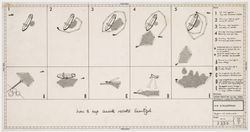
Environmental Histories
To kick off “Architecture and/for the Environment” —the CCA’s third Multidisciplinary Research Project funded by the Andrew W. Mellon Foundation—Daniel Abramson and Imre Szeman will present two key concepts that reconceive the environment in the history of architecture. Daniel Abramson, an architectural historian, will discuss how the idea of architectural “obsolescence”(...)
Paul Desmarais Theatre
15 December 2016, 6pm
Environmental Histories
Actions:
Description:
To kick off “Architecture and/for the Environment” —the CCA’s third Multidisciplinary Research Project funded by the Andrew W. Mellon Foundation—Daniel Abramson and Imre Szeman will present two key concepts that reconceive the environment in the history of architecture. Daniel Abramson, an architectural historian, will discuss how the idea of architectural “obsolescence”(...)
events
15 December 2016
6pm
Paul Desmarais Theatre
events
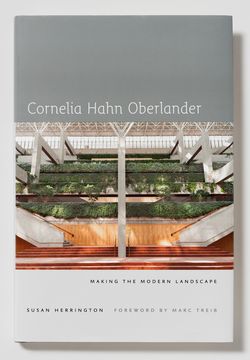
The first biography of one of the most influential landscape architects of the 20th century, Cornelia Hahn Oberlander: Making the Modern Landscape draws upon archival research, site analyses, and numerous interviews with Cornelia Oberlander and her collaborators. Author Susan Herrington joins Oberlander in conversation about her works and career. The series They want(...)
14 September 2014 , 3pm
Cornelia Oberlander and Susan Herrington want to speak with you
Actions:
Description:
The first biography of one of the most influential landscape architects of the 20th century, Cornelia Hahn Oberlander: Making the Modern Landscape draws upon archival research, site analyses, and numerous interviews with Cornelia Oberlander and her collaborators. Author Susan Herrington joins Oberlander in conversation about her works and career. The series They want(...)
events
14 September 2014
3pm
events
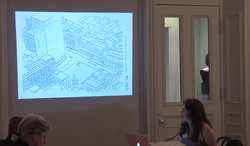
Michela Rosso, 2013 Support Grant Recipient, presents her research from Peter Carter’s archive on the Mansion House square scheme (1962–1985) and shows the different facets of the controversy over Mies van der Rohe’s unbuilt tower in the heart of the City of London. Rosso holds a doctorate from the Politecnico di Torino, where since 2003 she has been Associate professor(...)
Shaughnessy House
30 May 2013, 6pm
Friends and Enemies of Mies’s Mansion House Square
Actions:
Description:
Michela Rosso, 2013 Support Grant Recipient, presents her research from Peter Carter’s archive on the Mansion House square scheme (1962–1985) and shows the different facets of the controversy over Mies van der Rohe’s unbuilt tower in the heart of the City of London. Rosso holds a doctorate from the Politecnico di Torino, where since 2003 she has been Associate professor(...)
events
30 May 2013
6pm
Shaughnessy House


