


1749 Results
Form:
journals and magazines
journals and magazines
Title:
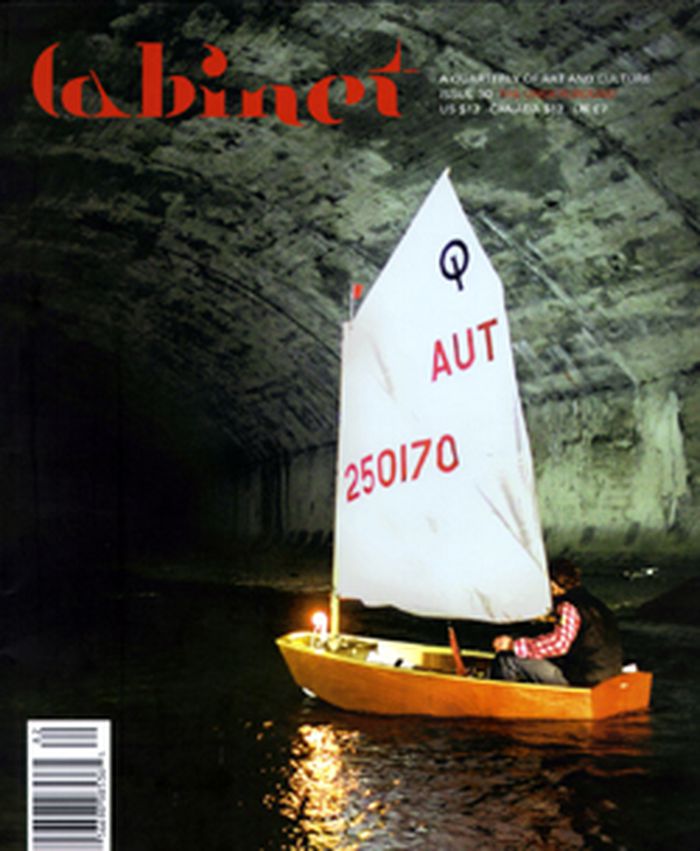
Cabinet 30: The Underground
Cabinet 30: The Underground
Actions:
Price:
$13.00
(available in store)
Summary:
Site of hidden infrastructure, source of material and energy, home to clandestine activity, buried landscape of darkness and silence: the physical and emotional space of the underground is at once prosaic and uncanny, rich with both functional potential and metaphorical meaning. Cabinet issue 30, with its special section on The Underground, features Irene Cheng on Thomas(...)
Title:
Cabinet 30: The Underground
Actions:
Price:
$13.00
(available in store)
Summary:
Site of hidden infrastructure, source of material and energy, home to clandestine activity, buried landscape of darkness and silence: the physical and emotional space of the underground is at once prosaic and uncanny, rich with both functional potential and metaphorical meaning. Cabinet issue 30, with its special section on The Underground, features Irene Cheng on Thomas W. Knox's 1876 book Underground, or Life Below the Surface and the vogue for underground tourism; an interview with Michel Siffre, a scientist who spent six months isolated in utter darkness in a cave; Jeffrey Kastner on the metaphor of the mole in revolutionary texts; and essays on the evolution of the mining industry, subterranean storage and political resistance movements. Elsewhere in the issue: Christopher Turner on the history of Day-glo; Christine Wertheim on the fabricated Australian Modernist poet Ern Malley; Tirdad Zolghadr on in-flight magazines; and Moyra Davey on the color maroon. This issue also features artist projects by Josiah McElheny and San Keller.
Form:
journals and magazines
journals and magazines
Publication:
September 2008, Brooklyn
September 2008, Brooklyn
Subject:
Magazines
Magazines
Form:
books
books
Price:
$27.50
(available to order)
Summary:
Los Angeles is a city that has long thrived on the continual re-creation of its own myth. In this extraordinary work, Norman Klein examines the process of memory erasure in LA. Using a provocative mixture of fact and fiction, the book takes us on an "anti-tour" of downtown LA, examines life for Vietnamese immigrants in the City of Dreams, imagines Walter Benjamin as a Los(...)
Title:
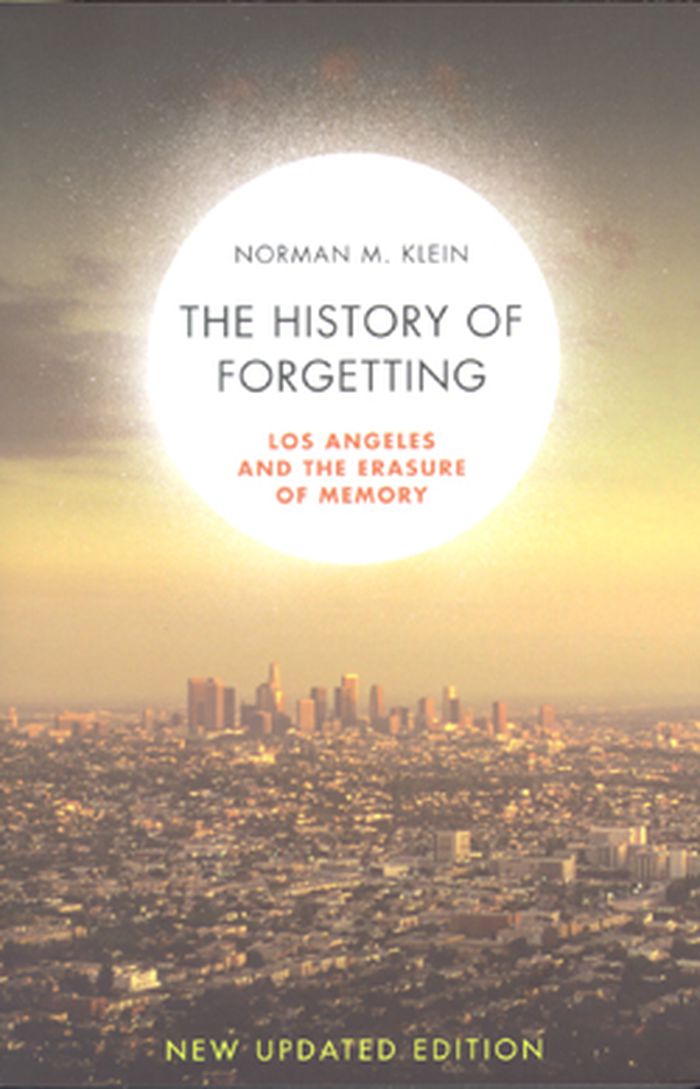
The history of forgetting: Los Angeles and the erasure of the memory
Actions:
Price:
$27.50
(available to order)
Summary:
Los Angeles is a city that has long thrived on the continual re-creation of its own myth. In this extraordinary work, Norman Klein examines the process of memory erasure in LA. Using a provocative mixture of fact and fiction, the book takes us on an "anti-tour" of downtown LA, examines life for Vietnamese immigrants in the City of Dreams, imagines Walter Benjamin as a Los Angeleno, and finally looks at the way information technology has recreated the city, turning cyberspace into the last suburb. In this new edition, Norman Klein explores the evolution of the Latino majority, how the Pacific economy is changing the structure of urban life, the impact of collapsing infrastructure in the city, and the restructuring of those very districts that had been "forgotten." Norman M. Klein is a critic and historian of mass culture, author of most recently, The Vatican to Vegas: The History of Special Effects. He teaches at the California Institute of the Arts in Los Angeles.
Form:
books
books
Publication:
August 2008, London, New York
August 2008, London, New York
Subject:
Urban Theory
Urban Theory
Form:
books
books
Actions:
Price:
$29.95
(available to order)
Summary:
Lake Ontario has profoundly influenced the historical evolution of North America. For centuries it has enabled and enriched the societies that crowded its edges, from fertile agricultural landscapes to energy production systems to sprawling cities. In "The lives of Lake Ontario" Daniel Macfarlane details the lake’s relationship with the Indigenous nations, settler(...)
Title:
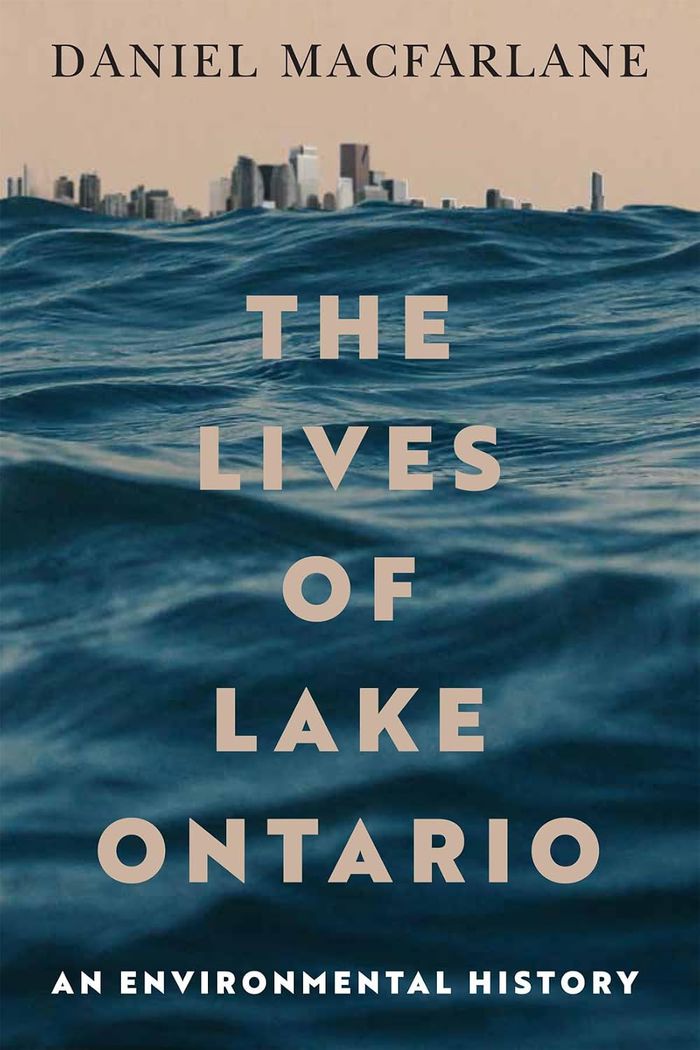
The lives of Lake Ontario: An environmental history
Actions:
Price:
$29.95
(available to order)
Summary:
Lake Ontario has profoundly influenced the historical evolution of North America. For centuries it has enabled and enriched the societies that crowded its edges, from fertile agricultural landscapes to energy production systems to sprawling cities. In "The lives of Lake Ontario" Daniel Macfarlane details the lake’s relationship with the Indigenous nations, settler cultures, and modern countries that have occupied its shores. He examines the myriad ways Canada and the United States have used and abused this resource: through dams and canals, drinking water and sewage, trash and pollution, fish and foreign species, industry and manufacturing, urbanization and infrastructure, population growth and biodiversity loss. Serving as both bridge and buffer between the two countries, Lake Ontario came to host Canada’s largest megalopolis. Yet its transborder exploitation exacted a tremendous ecological cost, leading people to abandon the lake. Innovative regulations in the later twentieth century, such as the Great Lakes Water Quality Agreements, have partially improved Lake Ontario’s health.
Form:
books
books
Publication:
March 2026
March 2026
Subject:
Architecture in Canada
Architecture in Canada
Form:
books
books
Actions:
Price:
$75.00
(available to order)
Summary:
The classical architectural and planning schemes conceived by Canada’s Anglo-settler elite in the early twentieth century embodied a prescriptive vision of power and grandeur for the country and its people on a scale almost unimaginable today. This provocative collection of essays examines the classical design precepts that shaped much of Canada’s built environment –(...)
Title:
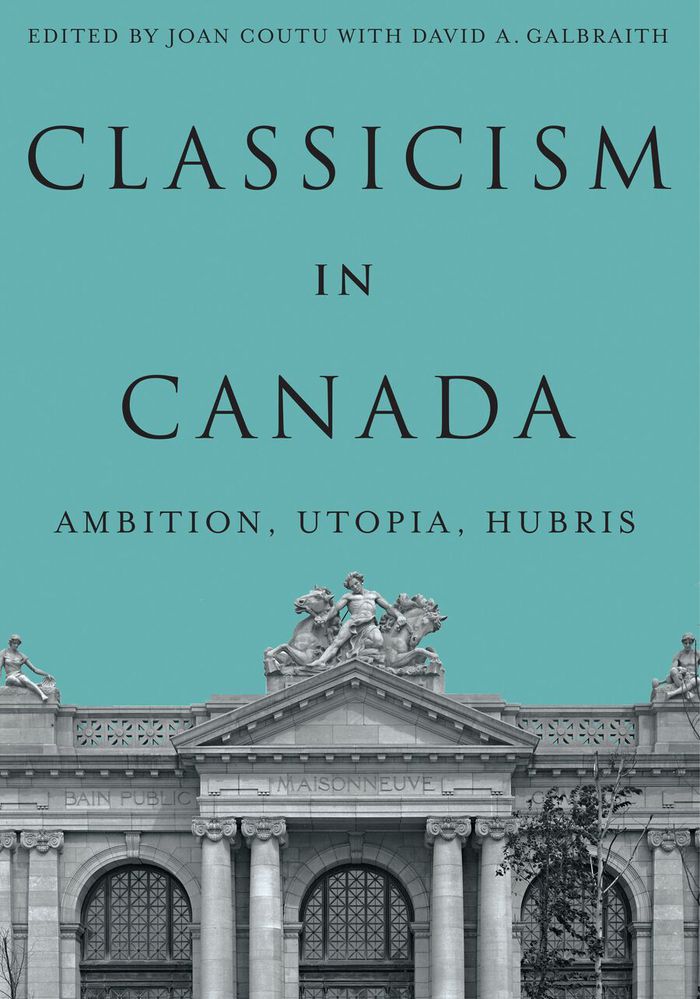
Classicism in Canada: Ambition, utopia, hubris
Actions:
Price:
$75.00
(available to order)
Summary:
The classical architectural and planning schemes conceived by Canada’s Anglo-settler elite in the early twentieth century embodied a prescriptive vision of power and grandeur for the country and its people on a scale almost unimaginable today. This provocative collection of essays examines the classical design precepts that shaped much of Canada’s built environment – leaving an imprint for how we continue to experience place today. "Classicism in Canada" brings together essays by planning, architectural, art, political, and social historians. Drawing on primary sources and the physical sites themselves, the contributors probe the meaning of a style that melded the École des Beaux-Arts with the sensibilities of the City Beautiful movement and that was rooted in assumptions about order and historical continuity. The transformation of built space and land was motivated by pragmatism, aesthetics, and an ideological infrastructure that reverberated with utopian zeal as much as it was driven by racial discrimination and Indigenous erasure.
Form:
books
books
Publication:
August 2026
August 2026
Subject:
Architecture in Canada
Architecture in Canada
Form:
books
books
Actions:
Price:
$55.95
(available to order)
Summary:
This is the first serious publication in which the architects present themselves as a group. This new brand of monograph stands in good stead with a contradictory world in which architects have to be chameleonic one moment and instantly recognizable the next, and their architecture both technocratic and popular. In their essays Crimson broach such issues as the changing(...)
Title:
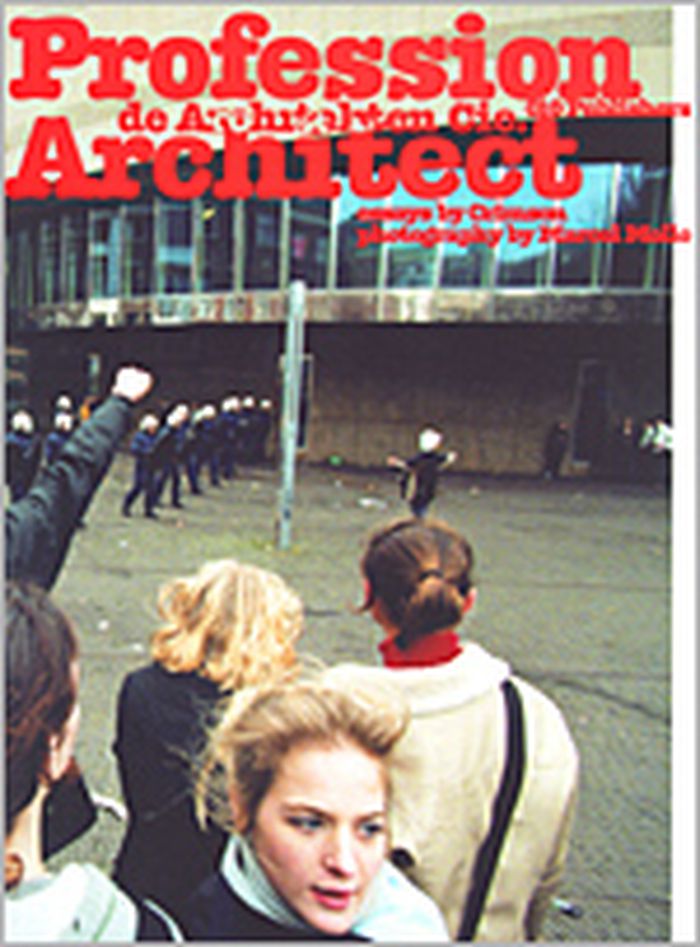
Profession architect : De Architekten Cie.
Actions:
Price:
$55.95
(available to order)
Summary:
This is the first serious publication in which the architects present themselves as a group. This new brand of monograph stands in good stead with a contradictory world in which architects have to be chameleonic one moment and instantly recognizable the next, and their architecture both technocratic and popular. In their essays Crimson broach such issues as the changing role of government as patron, client and everything in-between. Another phenomenon to feel the heat of the Crimson spotlight is the increasing demand for soft qualities in architecture and urban design. Market players in particular expect architects to design experiences. At the same time architects have to operate within hard confines that are ever narrowing in a country getting fuller all the time, not just of infrastructure and buildings but more particularly of rules and regulations. In his photographs Marcel Molle gives a focused look at the messy reality of a building in use.
Form:
books
books
Publication:
November 2002, Rotterdam
November 2002, Rotterdam
Subject:
Architecture Monographs
Architecture Monographs
Form:
books
books
Actions:
Price:
$37.95
(available to order)
Summary:
Bringing together media studies and environmental humanities, the contributors to ''Saturation'' develop saturation as a heuristic to analyze phenomena in which the elements involved are difficult or impossible to separate. In ordinary language, saturation describes the condition of being thoroughly soaked, while in chemistry it is the threshold at which something can be(...)
Subject:
Environment and environmental theory
Environment and environmental theory
Publication:
November 2021
November 2021
Title:
Saturation: an elemental politics
Actions:
Price:
$37.95
(available to order)
Summary:
Bringing together media studies and environmental humanities, the contributors to ''Saturation'' develop saturation as a heuristic to analyze phenomena in which the elements involved are difficult or impossible to separate. In ordinary language, saturation describes the condition of being thoroughly soaked, while in chemistry it is the threshold at which something can be maximally dissolved or absorbed in a solution. Contributors to this collection expand notions of saturation beyond water to consider saturation in sound, infrastructure, media, Big Data, capitalism, and visual culture. Essays include analyses of the thresholds of HIV detectability in bloodwork, militarism's saturation of oceans, and the deleterious effects of the saturation of cellphone and wi-fi signals into the human body. By channeling saturation to explore the relationship between media, the environment, technology, capital, and the legacies of settler colonialism, ''Saturation'' illuminates how elements, the natural world, and anthropogenic infrastructures, politics, and processes exist in and through each other.
Form:
books
books
Publication:
November 2021
November 2021
Subject:
Environment and environmental theory
Environment and environmental theory
Form:
books
books
Actions:
Price:
$29.95
(available in store)
Summary:
''Spatializing justice'' calls for architects and urban designers to do more than design buildings and physical systems. Architects should take a position against inequality and practice accordingly. With these thirty short, manifesto-like texts—building blocks for a new kind of architecture—Spatializing Justice offers a practical handbook for confronting social and(...)
Publication:
October 2022
October 2022
Title:
Spatializing justice: Building blocks
Actions:
Price:
$29.95
(available in store)
Summary:
''Spatializing justice'' calls for architects and urban designers to do more than design buildings and physical systems. Architects should take a position against inequality and practice accordingly. With these thirty short, manifesto-like texts—building blocks for a new kind of architecture—Spatializing Justice offers a practical handbook for confronting social and economic inequality and uneven urban growth in architectural and planning practice, urging practitioners to adopt approaches that range from redefining infrastructure to retrofitting McMansions. These building blocks call for expanded modes of practice, through which architects can imagine new spatial procedures, political and economic strategies, and modalities of sociability. Challenging existing exclusionary policies can advance a more experimental architecture not bound by formal parameters. Architects must think of themselves as designers not only of things but of civic processes, complicate the ideas of ownership and property, and imagine new sites of research, pedagogy, and intervention. As one of the texts advises, ''The questions must be different questions if we want different answers.''
Form:
books
books
Publication:
October 2022
October 2022
Form:
books
books
Price:
$54.95
(available to order)
Summary:
In recent years and decades, dealing with the architectural legacy of the industrial age has been an increasingly common task for urban planning: industrial buildings and sites, infrastructure, and residential areas that have become vacant lots as a result of structural transformation cannot, if only because of their dimensions, be ignored within the urban space.(...)
Subject:
Urban Theory
Urban Theory
Publication:
November 2011
November 2011
Title:
urbanRESET: how to activate immanent potential of urban spaces
Actions:
Price:
$54.95
(available to order)
Summary:
In recent years and decades, dealing with the architectural legacy of the industrial age has been an increasingly common task for urban planning: industrial buildings and sites, infrastructure, and residential areas that have become vacant lots as a result of structural transformation cannot, if only because of their dimensions, be ignored within the urban space. Innovative reinterpretations of such relics that update existing building fabric in a way that goes beyond critical reconstruction or revitalization, such as the Toni Site in Zurich or the Île de Nantes, can be observed throughout Europe these days. The publication urbanRESET brings together succinct examples of this separate category of urban-planning from throughout Europe. The projects are presented in detail with plans and color illustrations. Interviews with key players and theoretical essays show how local processes of reinterpretation and reactivation can produce sustainable effects. urbanRESET sheds light on the common foundations of these works and condenses them into methodological inferences for a forward-looking urban praxis.
Form:
books
books
Publication:
November 2011
November 2011
Subject:
Urban Theory
Urban Theory
Form:
books
books
Price:
$51.95
(available to order)
Summary:
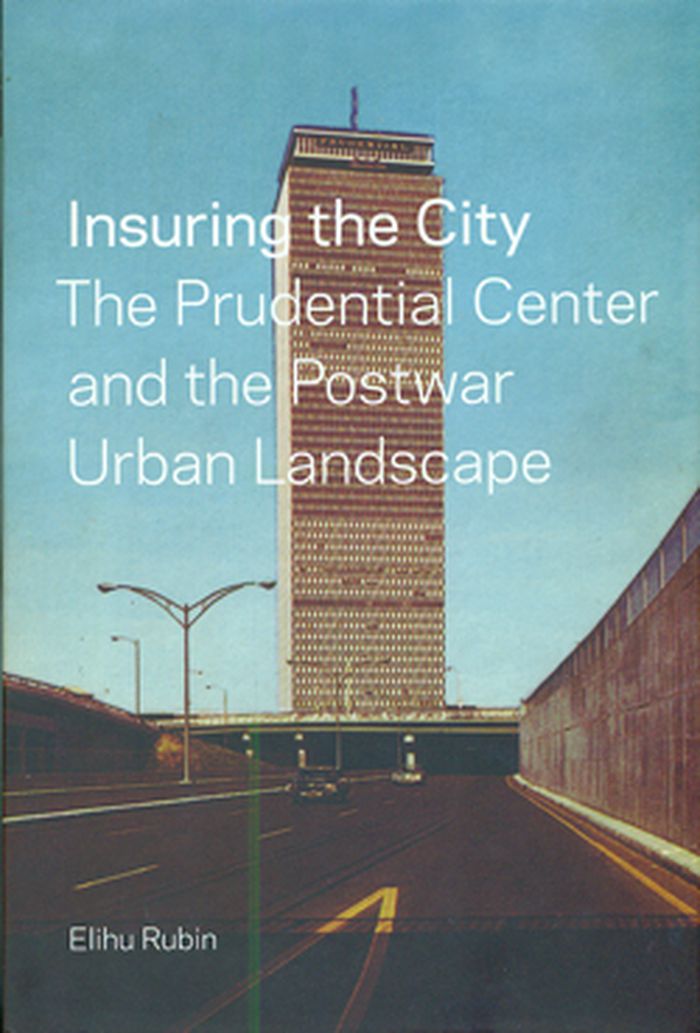
The Prudential Center anchors the Boston skyline with its tall, gray tower. Though unassuming architecturally, it is a historical beacon, representing a midcentury moment when insurance companies such as Prudential were particularly aware of how their physical presence and civic engagement reflected upon their intangible product: financial security. Looking to New York's(...)
Title:
Insuring the city: the Prudential Center and the Postwar urban landscape
Actions:
Price:
$51.95
(available to order)
Summary:
The Prudential Center anchors the Boston skyline with its tall, gray tower. Though unassuming architecturally, it is a historical beacon, representing a midcentury moment when insurance companies such as Prudential were particularly aware of how their physical presence and civic engagement reflected upon their intangible product: financial security. Looking to New York's Rockefeller Center, the creators of the Prudential Center aspired to use real estate development as a tool toward civic achievement, reinvigorating central Boston and integrating a large complex of buildings with new infrastructure for the automobile. Architectural historian Elihu Rubin tells the full story of "The Pru", placing it within the political, economic, and architectural contexts of the period. The Prudential Center played a pivotal role in the economic redevelopment of Boston and was arguably one of the most significant urban developments of the 1950s and '60s. It is an important story, and one that provides great insight into the evolution of the modern city in postwar America.
Form:
books
books
Publication:
May 2012
May 2012
Subject:
Urban Theory
Urban Theory
Form:
books
books
Actions:
Price:
$27.95
(available to order)
Summary:
With the invention of telecommunications technologies in the late nineteenth century, the radio-electric spectrum became a tool for rethinking the world in which we live. The emission of radio waves did away with physical distances, crossing borders and cultures and acting as a powerful catalyst for trade. Moreover, the radio spectrum is the invisible infrastructure on(...)
Title:
Invisible fields: geographies of radio waves
Actions:
Price:
$27.95
(available to order)
Summary:
With the invention of telecommunications technologies in the late nineteenth century, the radio-electric spectrum became a tool for rethinking the world in which we live. The emission of radio waves did away with physical distances, crossing borders and cultures and acting as a powerful catalyst for trade. Moreover, the radio spectrum is the invisible infrastructure on which our information and communication technologies have been built. The history of its scientific discovery and how it was gradually colonized by the media, the military complex, and activists and hackers is one of the most fascinating stories of the twentieth century. The future uses of the radio-electric spectrum in the twenty-first century and its new potential are being decided now, with the end of analogue TV broadcasting worldwide marking the most important transformation of uses in the radio-electric space in decades. This catalog sets out to examine these issues and shed a little light on intriguing stories about radio-electric spectrum.
Form:
books
books
Publication:
May 2012
May 2012
Subject:
Epistemology
Epistemology


