


26977 Results
Form:
photographs
photographs

Actions:
Reference number:
PH2018:0005:003
Description:
Photograph by Stefano Graziani of the following work: James Stirling, diagram of interior environment controls for the History Faculty Building, University of Cambridge, between 1963 -1967, ink on paper, 25.8 x 33.8 cm, AP140.S2.SS1.D26.P2.2, James Stirling / Michael Wilford fonds, Canadian Centre for Architecture, © CCA, Montréal Questioning Pictures is a 36 photograph project commissioned by Fondazione Prada, Milan. Artist Stefano Graziani investigates archival and conservation systems in a number of museums. Through photographing museum objects, Graziani, focusing on the relationship between photographs, the museum objects and the power structures at play within institutions. The museums include the Canadian Centre for Architecture (CCA) in Montréal, Canada; Sir John Soane’s Museum in London, UK; the Kunstmuseum Basel, Switzerland; Museum Insel Hombroich in Neuss, Germany; the Museo di Castelvecchio in Verona, Italy; and the Plaster Cast Gallery at Museo Canova in Possagno, Italy.
PH2018:0005:003
Description:
Photograph by Stefano Graziani of the following work: James Stirling, diagram of interior environment controls for the History Faculty Building, University of Cambridge, between 1963 -1967, ink on paper, 25.8 x 33.8 cm, AP140.S2.SS1.D26.P2.2, James Stirling / Michael Wilford fonds, Canadian Centre for Architecture, © CCA, Montréal Questioning Pictures is a 36 photograph project commissioned by Fondazione Prada, Milan. Artist Stefano Graziani investigates archival and conservation systems in a number of museums. Through photographing museum objects, Graziani, focusing on the relationship between photographs, the museum objects and the power structures at play within institutions. The museums include the Canadian Centre for Architecture (CCA) in Montréal, Canada; Sir John Soane’s Museum in London, UK; the Kunstmuseum Basel, Switzerland; Museum Insel Hombroich in Neuss, Germany; the Museo di Castelvecchio in Verona, Italy; and the Plaster Cast Gallery at Museo Canova in Possagno, Italy.
People:
Date:
2017
2017
Title:
Questioning Pictures: Photograph of diagram of interior environment controls for the History Faculty Building by James Stirling, 1963-1967
Actions:
PH2018:0005:003
Description:
Photograph by Stefano Graziani of the following work: James Stirling, diagram of interior environment controls for the History Faculty Building, University of Cambridge, between 1963 -1967, ink on paper, 25.8 x 33.8 cm, AP140.S2.SS1.D26.P2.2, James Stirling / Michael Wilford fonds, Canadian Centre for Architecture, © CCA, Montréal Questioning Pictures is a 36 photograph project commissioned by Fondazione Prada, Milan. Artist Stefano Graziani investigates archival and conservation systems in a number of museums. Through photographing museum objects, Graziani, focusing on the relationship between photographs, the museum objects and the power structures at play within institutions. The museums include the Canadian Centre for Architecture (CCA) in Montréal, Canada; Sir John Soane’s Museum in London, UK; the Kunstmuseum Basel, Switzerland; Museum Insel Hombroich in Neuss, Germany; the Museo di Castelvecchio in Verona, Italy; and the Plaster Cast Gallery at Museo Canova in Possagno, Italy.
Questioning Pictures: Photograph of diagram of interior environment controls for the History Faculty Building by James Stirling, 1963-1967
Actions:
PH2018:0005:003
Description:
Photograph by Stefano Graziani of the following work: James Stirling, diagram of interior environment controls for the History Faculty Building, University of Cambridge, between 1963 -1967, ink on paper, 25.8 x 33.8 cm, AP140.S2.SS1.D26.P2.2, James Stirling / Michael Wilford fonds, Canadian Centre for Architecture, © CCA, Montréal Questioning Pictures is a 36 photograph project commissioned by Fondazione Prada, Milan. Artist Stefano Graziani investigates archival and conservation systems in a number of museums. Through photographing museum objects, Graziani, focusing on the relationship between photographs, the museum objects and the power structures at play within institutions. The museums include the Canadian Centre for Architecture (CCA) in Montréal, Canada; Sir John Soane’s Museum in London, UK; the Kunstmuseum Basel, Switzerland; Museum Insel Hombroich in Neuss, Germany; the Museo di Castelvecchio in Verona, Italy; and the Plaster Cast Gallery at Museo Canova in Possagno, Italy.
Form:
photographs
photographs
Date:
2017
2017
People:
Form:
photographs
photographs
Actions:
Reference number:
PH2018:0005:031
Description:
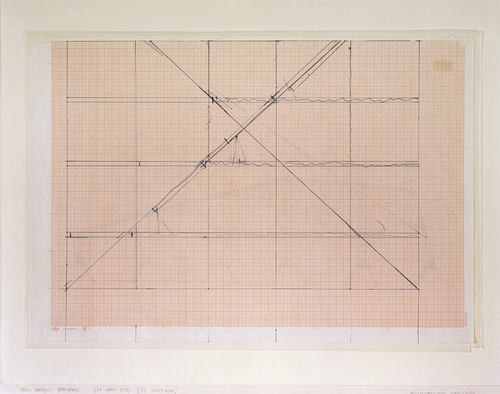
Photograph by Stefano Graziani of the following work: Gordon Matta-Clark, floor plan for Office Baroque, 1977, blue ballpoint pen on graph paper, 42 x 59.5 cm, PHCON2002:0016:059, Gordon Matta-Clark collection, Canadian Centre of Architecture, Gift of Estate of Gordon Matta-Clark, © Estate of Gordon Matta-Clark Questioning Pictures is a 36 photograph project commissioned by Fondazione Prada, Milan. Artist Stefano Graziani investigates archival and conservation systems in a number of museums. Through photographing museum objects, Graziani, focusing on the relationship between photographs, the museum objects and the power structures at play within institutions. The museums include the Canadian Centre for Architecture (CCA) in Montréal, Canada; Sir John Soane’s Museum in London, UK; the Kunstmuseum Basel, Switzerland; Museum Insel Hombroich in Neuss, Germany; the Museo di Castelvecchio in Verona, Italy; and the Plaster Cast Gallery at Museo Canova in Possagno, Italy.
PH2018:0005:031
Description:
Photograph by Stefano Graziani of the following work: Gordon Matta-Clark, floor plan for Office Baroque, 1977, blue ballpoint pen on graph paper, 42 x 59.5 cm, PHCON2002:0016:059, Gordon Matta-Clark collection, Canadian Centre of Architecture, Gift of Estate of Gordon Matta-Clark, © Estate of Gordon Matta-Clark Questioning Pictures is a 36 photograph project commissioned by Fondazione Prada, Milan. Artist Stefano Graziani investigates archival and conservation systems in a number of museums. Through photographing museum objects, Graziani, focusing on the relationship between photographs, the museum objects and the power structures at play within institutions. The museums include the Canadian Centre for Architecture (CCA) in Montréal, Canada; Sir John Soane’s Museum in London, UK; the Kunstmuseum Basel, Switzerland; Museum Insel Hombroich in Neuss, Germany; the Museo di Castelvecchio in Verona, Italy; and the Plaster Cast Gallery at Museo Canova in Possagno, Italy.
People:
Date:
2017
2017
Title:
Questioning Pictures: Photograph of floor plan for Office Baroque, blue pen on graph paper by Gordon Matta-Clark, 1977
Actions:
PH2018:0005:031
Description:
Photograph by Stefano Graziani of the following work: Gordon Matta-Clark, floor plan for Office Baroque, 1977, blue ballpoint pen on graph paper, 42 x 59.5 cm, PHCON2002:0016:059, Gordon Matta-Clark collection, Canadian Centre of Architecture, Gift of Estate of Gordon Matta-Clark, © Estate of Gordon Matta-Clark Questioning Pictures is a 36 photograph project commissioned by Fondazione Prada, Milan. Artist Stefano Graziani investigates archival and conservation systems in a number of museums. Through photographing museum objects, Graziani, focusing on the relationship between photographs, the museum objects and the power structures at play within institutions. The museums include the Canadian Centre for Architecture (CCA) in Montréal, Canada; Sir John Soane’s Museum in London, UK; the Kunstmuseum Basel, Switzerland; Museum Insel Hombroich in Neuss, Germany; the Museo di Castelvecchio in Verona, Italy; and the Plaster Cast Gallery at Museo Canova in Possagno, Italy.
Questioning Pictures: Photograph of floor plan for Office Baroque, blue pen on graph paper by Gordon Matta-Clark, 1977
Actions:
PH2018:0005:031
Description:
Photograph by Stefano Graziani of the following work: Gordon Matta-Clark, floor plan for Office Baroque, 1977, blue ballpoint pen on graph paper, 42 x 59.5 cm, PHCON2002:0016:059, Gordon Matta-Clark collection, Canadian Centre of Architecture, Gift of Estate of Gordon Matta-Clark, © Estate of Gordon Matta-Clark Questioning Pictures is a 36 photograph project commissioned by Fondazione Prada, Milan. Artist Stefano Graziani investigates archival and conservation systems in a number of museums. Through photographing museum objects, Graziani, focusing on the relationship between photographs, the museum objects and the power structures at play within institutions. The museums include the Canadian Centre for Architecture (CCA) in Montréal, Canada; Sir John Soane’s Museum in London, UK; the Kunstmuseum Basel, Switzerland; Museum Insel Hombroich in Neuss, Germany; the Museo di Castelvecchio in Verona, Italy; and the Plaster Cast Gallery at Museo Canova in Possagno, Italy.
Form:
photographs
photographs
Date:
2017
2017
People:
Form:
photographs
photographs
Actions:
Reference number:
PH2018:0005:033
Description:
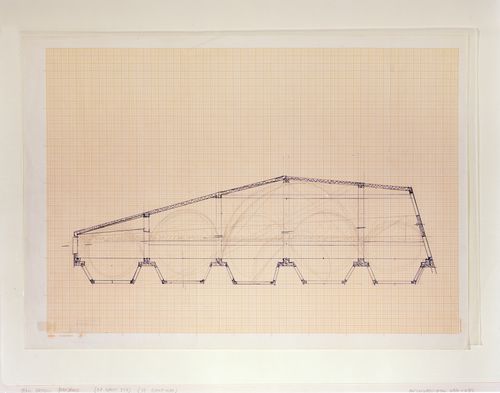
Photograph by Stefano Graziani of the following work: Gordon Matta-Clark, floor plan for Office Baroque, 1977, blue ballpoint pen on graph paper, 42 x 59.5 cm, PHCON2002:0016:058, Gordon Matta-Clark collection, Canadian Centre of Architecture, Gift of Estate of Gordon Matta-Clark, © Estate of Gordon Matta-Clark Questioning Pictures is a 36 photograph project commissioned by Fondazione Prada, Milan. Artist Stefano Graziani investigates archival and conservation systems in a number of museums. Through photographing museum objects, Graziani, focusing on the relationship between photographs, the museum objects and the power structures at play within institutions. The museums include the Canadian Centre for Architecture (CCA) in Montréal, Canada; Sir John Soane’s Museum in London, UK; the Kunstmuseum Basel, Switzerland; Museum Insel Hombroich in Neuss, Germany; the Museo di Castelvecchio in Verona, Italy; and the Plaster Cast Gallery at Museo Canova in Possagno, Italy.
PH2018:0005:033
Description:
Photograph by Stefano Graziani of the following work: Gordon Matta-Clark, floor plan for Office Baroque, 1977, blue ballpoint pen on graph paper, 42 x 59.5 cm, PHCON2002:0016:058, Gordon Matta-Clark collection, Canadian Centre of Architecture, Gift of Estate of Gordon Matta-Clark, © Estate of Gordon Matta-Clark Questioning Pictures is a 36 photograph project commissioned by Fondazione Prada, Milan. Artist Stefano Graziani investigates archival and conservation systems in a number of museums. Through photographing museum objects, Graziani, focusing on the relationship between photographs, the museum objects and the power structures at play within institutions. The museums include the Canadian Centre for Architecture (CCA) in Montréal, Canada; Sir John Soane’s Museum in London, UK; the Kunstmuseum Basel, Switzerland; Museum Insel Hombroich in Neuss, Germany; the Museo di Castelvecchio in Verona, Italy; and the Plaster Cast Gallery at Museo Canova in Possagno, Italy.
People:
Date:
2017
2017
Title:
Questioning Pictures: Photograph of floor plan for office Baroque, blue pen on graph paper by Gordon Matta-Clark, 1977
Actions:
PH2018:0005:033
Description:
Photograph by Stefano Graziani of the following work: Gordon Matta-Clark, floor plan for Office Baroque, 1977, blue ballpoint pen on graph paper, 42 x 59.5 cm, PHCON2002:0016:058, Gordon Matta-Clark collection, Canadian Centre of Architecture, Gift of Estate of Gordon Matta-Clark, © Estate of Gordon Matta-Clark Questioning Pictures is a 36 photograph project commissioned by Fondazione Prada, Milan. Artist Stefano Graziani investigates archival and conservation systems in a number of museums. Through photographing museum objects, Graziani, focusing on the relationship between photographs, the museum objects and the power structures at play within institutions. The museums include the Canadian Centre for Architecture (CCA) in Montréal, Canada; Sir John Soane’s Museum in London, UK; the Kunstmuseum Basel, Switzerland; Museum Insel Hombroich in Neuss, Germany; the Museo di Castelvecchio in Verona, Italy; and the Plaster Cast Gallery at Museo Canova in Possagno, Italy.
Questioning Pictures: Photograph of floor plan for office Baroque, blue pen on graph paper by Gordon Matta-Clark, 1977
Actions:
PH2018:0005:033
Description:
Photograph by Stefano Graziani of the following work: Gordon Matta-Clark, floor plan for Office Baroque, 1977, blue ballpoint pen on graph paper, 42 x 59.5 cm, PHCON2002:0016:058, Gordon Matta-Clark collection, Canadian Centre of Architecture, Gift of Estate of Gordon Matta-Clark, © Estate of Gordon Matta-Clark Questioning Pictures is a 36 photograph project commissioned by Fondazione Prada, Milan. Artist Stefano Graziani investigates archival and conservation systems in a number of museums. Through photographing museum objects, Graziani, focusing on the relationship between photographs, the museum objects and the power structures at play within institutions. The museums include the Canadian Centre for Architecture (CCA) in Montréal, Canada; Sir John Soane’s Museum in London, UK; the Kunstmuseum Basel, Switzerland; Museum Insel Hombroich in Neuss, Germany; the Museo di Castelvecchio in Verona, Italy; and the Plaster Cast Gallery at Museo Canova in Possagno, Italy.
Form:
photographs
photographs
Date:
2017
2017
People:
Form:
textual records
textual records
Reference number:
ARCH255581
Description:
20 publications including: Werner Sobek, The architecture of Peter and Mary Doyle 1970-1990; Representative projects of SOM March 1975; Nuove possibilita per le construzioni navali in cemento armato / Ing P.L. Nervi; Rassegna critica di architettura / Nervi 1954; World Trade CEnter: new headquarters for international business; Architecture Aug. 1962; Engineering News Record 10 Feb. 1972; The effect of steel and glass upon architectural design 1952; Dome structures, reprinted from Consulting Engineer Dec. 1959; Nuova Sede Pirelli in Milano; Technique and aesthetics in the design of tall buildings / Fazler Khan memorial session; L'architettura Aug. 1961; House Beautiful: your heritage from Frank Lloyd Wright Oct. 1959; Architectural Forum May 1958 and April 1965; Progressive Architecture Jan 1979; Kenchiku Bunka Oct. 1965; L'architettura Jan-Feb. 1956
ARCH255581
Description:
20 publications including: Werner Sobek, The architecture of Peter and Mary Doyle 1970-1990; Representative projects of SOM March 1975; Nuove possibilita per le construzioni navali in cemento armato / Ing P.L. Nervi; Rassegna critica di architettura / Nervi 1954; World Trade CEnter: new headquarters for international business; Architecture Aug. 1962; Engineering News Record 10 Feb. 1972; The effect of steel and glass upon architectural design 1952; Dome structures, reprinted from Consulting Engineer Dec. 1959; Nuova Sede Pirelli in Milano; Technique and aesthetics in the design of tall buildings / Fazler Khan memorial session; L'architettura Aug. 1961; House Beautiful: your heritage from Frank Lloyd Wright Oct. 1959; Architectural Forum May 1958 and April 1965; Progressive Architecture Jan 1979; Kenchiku Bunka Oct. 1965; L'architettura Jan-Feb. 1956
People:
Date:
1954-1979
1954-1979
Title:
Misc. publications and magazines of architecture
Actions:
ARCH255581
Description:
20 publications including: Werner Sobek, The architecture of Peter and Mary Doyle 1970-1990; Representative projects of SOM March 1975; Nuove possibilita per le construzioni navali in cemento armato / Ing P.L. Nervi; Rassegna critica di architettura / Nervi 1954; World Trade CEnter: new headquarters for international business; Architecture Aug. 1962; Engineering News Record 10 Feb. 1972; The effect of steel and glass upon architectural design 1952; Dome structures, reprinted from Consulting Engineer Dec. 1959; Nuova Sede Pirelli in Milano; Technique and aesthetics in the design of tall buildings / Fazler Khan memorial session; L'architettura Aug. 1961; House Beautiful: your heritage from Frank Lloyd Wright Oct. 1959; Architectural Forum May 1958 and April 1965; Progressive Architecture Jan 1979; Kenchiku Bunka Oct. 1965; L'architettura Jan-Feb. 1956
Misc. publications and magazines of architecture
Actions:
ARCH255581
Description:
20 publications including: Werner Sobek, The architecture of Peter and Mary Doyle 1970-1990; Representative projects of SOM March 1975; Nuove possibilita per le construzioni navali in cemento armato / Ing P.L. Nervi; Rassegna critica di architettura / Nervi 1954; World Trade CEnter: new headquarters for international business; Architecture Aug. 1962; Engineering News Record 10 Feb. 1972; The effect of steel and glass upon architectural design 1952; Dome structures, reprinted from Consulting Engineer Dec. 1959; Nuova Sede Pirelli in Milano; Technique and aesthetics in the design of tall buildings / Fazler Khan memorial session; L'architettura Aug. 1961; House Beautiful: your heritage from Frank Lloyd Wright Oct. 1959; Architectural Forum May 1958 and April 1965; Progressive Architecture Jan 1979; Kenchiku Bunka Oct. 1965; L'architettura Jan-Feb. 1956
Form:
textual records
textual records
Date:
1954-1979
1954-1979
People:
Level of archival description:
Project
Project
Reference number:
AP178.S1.1988.PR07
Description:
This project series documents the Reconstrução do Chiado in Lisbon, Portugal. The office's archives identified this project as 58/80. The office assigned the dates 1988-1998 for this project. Chiado is a historic district in the center of Lisbon, Portugal, and a linchpin between the Baixa Pombalina and the Bairro Alto Hill. After a devastating earthquake in 1755, the city was rebuilt and reorganized by military architects and engineers. The Pombaline style, specific to Lisbon, includes pre-fabricated anti-seismic structure and sober style. On August 25, 1988, a fire started in one of the oldest department stores of Lisbon, the Grandella building, damaging partially or totally seventeen buildings, between the Rua Do Carmo, Rua Nova do Almada and Rua Garret. Álvaro Siza was selected by the mayor of Lisbon, Nuno Krus Abecasis, to reorganize and rebuild the district. After public consultations, it was decided to maintain the historic image of the Chiado by restoring the façades and ornamentations. Adjustments by Siza include introducing residential and cultural functions to the district, with the exception of the Grandes Armazéns building and the Grandella building, which had their own program. As Siza said himself: "It’s not about drawing a new section of the city, but rather just introducing corrections and adjustments, reinforce the whole city." Siza started to work on the layout plan in January 1989 and presented it to the municipal authorities of Lisbon in April 1990. The reconstruction of the Chiado had several goals, but there were two general concepts behind his plan. The aesthetic aspect of the program included restorations of buildings to reinstitute the historical spirit of the district. The spatial reorganization, in a really Siza way, focused on finding architectural solutions that would bring more functionality to the city. The idea was to think of the reconstruction in relation with the urban revitalization of the Baixa Pombalina and to maintain as much as possible the patrimonial value of the district. Siza's intentions were to stimulate the commercial and residential functions of the district, which was on the decline over the last years prior to the fire. Some of the measures taken were: improving the traffic fluidity; creating parking spaces for the future residents and shopkeepers, improving the access to stores and others facilities, creating a staired passageway between Rua do Crucifixo and Rua Nova do Almada, and a pedestrian passageway between the rear of those buildings giving onto Rua Garret and Rua Do Carmo. They also studied the integration of a subway station to the district. Municipal authorities decided to rebuild or restore the original facades, reorganize the interior and improve the safety of the buildings. The biggest challenge was to convert the Grandes Armazéns do Chiado into a hotel and rebuild the Grandella with its original 20th century façade, while rethinking the interior division(s?) in order to add different functions to the building, including offices and leisure and cultural facilities. The reconstruction plan was divided into six distinct blocks: Bloco A, Bloco B, Bloco C, Bloco D, Bloco E, and Bloco F. Each Block includes several buildings and each was individually numbered. The first three blocks (A, B, C) were the most damaged, and required massive work, stonework, technical and mechanical work, replacing doors and windows, as well as repainting, repaving, and restoring decorative elements. Reconstruction for Blocks D, E, and F, which are less documented in the fonds, focused on making changes that complemented the neighboring building. Siza also worked specifically on the Edifício Castro e Melo, Câmara Chaves, Edifício Leonel, Edifício Grandella, and Recuperaçäo do Edifício dos Grandes Armazéns. The rest of the buildings were restored by other architects and firms. "Chiado" is often referring to two different things: the districts between the Baixa Pombalina and the Bairro Alto Hill, as well as a building, also known as the Hotel do Chiado. To avoid confusion, in this finding aid the term "Chiado" is always referring to the district, and the Chiado building will be referred to as the Grandes Armazéns do Chiado building. To fully understand the nature of the project, it is important to comprehend the reconstruction of the Chiado as a whole project, rather than as individual components. Siza himself saw the Chiado as one big building. Bloco A (plots 7,8,9,10,11 and 20) Bloco B (plots 12, 13, 14/15 and 16) Bloco C (plots 2, 3 and 6) Bloco D (plots 4 and 5) Bloco E (plots 1,17,18 and 19) This project series includes eleven subseries : Subseries 1) AP178.S1.1988.PR07.SS1 Master plans and exterior spaces, Reconstruction of Chiado, 2) AP178.S1.1988.PR07.SS2 Bloco A, 3) AP178.S1.1988.PR07.SS3 Edificio Camara Chaves building, 4) AP178.S1.1988.PR07.SS4 Edifício Castro e Melo, 5) AP178.S1.1988.PR07.SS5 Bloco B, 6) AP178.S1.1988.PR07.SS6– Bloco, B Chiado, Edifício Leonel, Lisboa, Portugal (1988-1998), 7) AP178.S1.1988.PR07.SS7 Bloco C, 8) AP178.S1.1988.PR07.SS8 - Bloco C, Chiado, Recuperaçäo do Edifício Grandella, 9) AP178.S1.1988.PR07.SS9 - Bloco C, Chiado, Recuperaçäo do Edifício dos Grandes Armazéns, 10) AP178.S1.1988.PR07.SS10 Ligacao Pedonal do Patio B, 11) AP178.S1.1988.PR07.SS11 Chiado, Estação de Metropolitano Baixa Chiado. It is important to note that the project AP178.S1.1994.PR08 Renovação do Elevador de Santa Justa, Chiado, 1994 is also related to the Reconstruction of the Chiado. All documentation for this project series, including the project subseries, has been kept together to maintain the office's arrangement.
AP178.S1.1988.PR07
Description:
This project series documents the Reconstrução do Chiado in Lisbon, Portugal. The office's archives identified this project as 58/80. The office assigned the dates 1988-1998 for this project. Chiado is a historic district in the center of Lisbon, Portugal, and a linchpin between the Baixa Pombalina and the Bairro Alto Hill. After a devastating earthquake in 1755, the city was rebuilt and reorganized by military architects and engineers. The Pombaline style, specific to Lisbon, includes pre-fabricated anti-seismic structure and sober style. On August 25, 1988, a fire started in one of the oldest department stores of Lisbon, the Grandella building, damaging partially or totally seventeen buildings, between the Rua Do Carmo, Rua Nova do Almada and Rua Garret. Álvaro Siza was selected by the mayor of Lisbon, Nuno Krus Abecasis, to reorganize and rebuild the district. After public consultations, it was decided to maintain the historic image of the Chiado by restoring the façades and ornamentations. Adjustments by Siza include introducing residential and cultural functions to the district, with the exception of the Grandes Armazéns building and the Grandella building, which had their own program. As Siza said himself: "It’s not about drawing a new section of the city, but rather just introducing corrections and adjustments, reinforce the whole city." Siza started to work on the layout plan in January 1989 and presented it to the municipal authorities of Lisbon in April 1990. The reconstruction of the Chiado had several goals, but there were two general concepts behind his plan. The aesthetic aspect of the program included restorations of buildings to reinstitute the historical spirit of the district. The spatial reorganization, in a really Siza way, focused on finding architectural solutions that would bring more functionality to the city. The idea was to think of the reconstruction in relation with the urban revitalization of the Baixa Pombalina and to maintain as much as possible the patrimonial value of the district. Siza's intentions were to stimulate the commercial and residential functions of the district, which was on the decline over the last years prior to the fire. Some of the measures taken were: improving the traffic fluidity; creating parking spaces for the future residents and shopkeepers, improving the access to stores and others facilities, creating a staired passageway between Rua do Crucifixo and Rua Nova do Almada, and a pedestrian passageway between the rear of those buildings giving onto Rua Garret and Rua Do Carmo. They also studied the integration of a subway station to the district. Municipal authorities decided to rebuild or restore the original facades, reorganize the interior and improve the safety of the buildings. The biggest challenge was to convert the Grandes Armazéns do Chiado into a hotel and rebuild the Grandella with its original 20th century façade, while rethinking the interior division(s?) in order to add different functions to the building, including offices and leisure and cultural facilities. The reconstruction plan was divided into six distinct blocks: Bloco A, Bloco B, Bloco C, Bloco D, Bloco E, and Bloco F. Each Block includes several buildings and each was individually numbered. The first three blocks (A, B, C) were the most damaged, and required massive work, stonework, technical and mechanical work, replacing doors and windows, as well as repainting, repaving, and restoring decorative elements. Reconstruction for Blocks D, E, and F, which are less documented in the fonds, focused on making changes that complemented the neighboring building. Siza also worked specifically on the Edifício Castro e Melo, Câmara Chaves, Edifício Leonel, Edifício Grandella, and Recuperaçäo do Edifício dos Grandes Armazéns. The rest of the buildings were restored by other architects and firms. "Chiado" is often referring to two different things: the districts between the Baixa Pombalina and the Bairro Alto Hill, as well as a building, also known as the Hotel do Chiado. To avoid confusion, in this finding aid the term "Chiado" is always referring to the district, and the Chiado building will be referred to as the Grandes Armazéns do Chiado building. To fully understand the nature of the project, it is important to comprehend the reconstruction of the Chiado as a whole project, rather than as individual components. Siza himself saw the Chiado as one big building. Bloco A (plots 7,8,9,10,11 and 20) Bloco B (plots 12, 13, 14/15 and 16) Bloco C (plots 2, 3 and 6) Bloco D (plots 4 and 5) Bloco E (plots 1,17,18 and 19) This project series includes eleven subseries : Subseries 1) AP178.S1.1988.PR07.SS1 Master plans and exterior spaces, Reconstruction of Chiado, 2) AP178.S1.1988.PR07.SS2 Bloco A, 3) AP178.S1.1988.PR07.SS3 Edificio Camara Chaves building, 4) AP178.S1.1988.PR07.SS4 Edifício Castro e Melo, 5) AP178.S1.1988.PR07.SS5 Bloco B, 6) AP178.S1.1988.PR07.SS6– Bloco, B Chiado, Edifício Leonel, Lisboa, Portugal (1988-1998), 7) AP178.S1.1988.PR07.SS7 Bloco C, 8) AP178.S1.1988.PR07.SS8 - Bloco C, Chiado, Recuperaçäo do Edifício Grandella, 9) AP178.S1.1988.PR07.SS9 - Bloco C, Chiado, Recuperaçäo do Edifício dos Grandes Armazéns, 10) AP178.S1.1988.PR07.SS10 Ligacao Pedonal do Patio B, 11) AP178.S1.1988.PR07.SS11 Chiado, Estação de Metropolitano Baixa Chiado. It is important to note that the project AP178.S1.1994.PR08 Renovação do Elevador de Santa Justa, Chiado, 1994 is also related to the Reconstruction of the Chiado. All documentation for this project series, including the project subseries, has been kept together to maintain the office's arrangement.
People:
Date:
1942-2012
1942-2012
Title:
Reconstrução do Chiado [Reconstruction of the Chiado area], Lisbon, Portugal (1988-1998)
Actions:
AP178.S1.1988.PR07
Description:
This project series documents the Reconstrução do Chiado in Lisbon, Portugal. The office's archives identified this project as 58/80. The office assigned the dates 1988-1998 for this project. Chiado is a historic district in the center of Lisbon, Portugal, and a linchpin between the Baixa Pombalina and the Bairro Alto Hill. After a devastating earthquake in 1755, the city was rebuilt and reorganized by military architects and engineers. The Pombaline style, specific to Lisbon, includes pre-fabricated anti-seismic structure and sober style. On August 25, 1988, a fire started in one of the oldest department stores of Lisbon, the Grandella building, damaging partially or totally seventeen buildings, between the Rua Do Carmo, Rua Nova do Almada and Rua Garret. Álvaro Siza was selected by the mayor of Lisbon, Nuno Krus Abecasis, to reorganize and rebuild the district. After public consultations, it was decided to maintain the historic image of the Chiado by restoring the façades and ornamentations. Adjustments by Siza include introducing residential and cultural functions to the district, with the exception of the Grandes Armazéns building and the Grandella building, which had their own program. As Siza said himself: "It’s not about drawing a new section of the city, but rather just introducing corrections and adjustments, reinforce the whole city." Siza started to work on the layout plan in January 1989 and presented it to the municipal authorities of Lisbon in April 1990. The reconstruction of the Chiado had several goals, but there were two general concepts behind his plan. The aesthetic aspect of the program included restorations of buildings to reinstitute the historical spirit of the district. The spatial reorganization, in a really Siza way, focused on finding architectural solutions that would bring more functionality to the city. The idea was to think of the reconstruction in relation with the urban revitalization of the Baixa Pombalina and to maintain as much as possible the patrimonial value of the district. Siza's intentions were to stimulate the commercial and residential functions of the district, which was on the decline over the last years prior to the fire. Some of the measures taken were: improving the traffic fluidity; creating parking spaces for the future residents and shopkeepers, improving the access to stores and others facilities, creating a staired passageway between Rua do Crucifixo and Rua Nova do Almada, and a pedestrian passageway between the rear of those buildings giving onto Rua Garret and Rua Do Carmo. They also studied the integration of a subway station to the district. Municipal authorities decided to rebuild or restore the original facades, reorganize the interior and improve the safety of the buildings. The biggest challenge was to convert the Grandes Armazéns do Chiado into a hotel and rebuild the Grandella with its original 20th century façade, while rethinking the interior division(s?) in order to add different functions to the building, including offices and leisure and cultural facilities. The reconstruction plan was divided into six distinct blocks: Bloco A, Bloco B, Bloco C, Bloco D, Bloco E, and Bloco F. Each Block includes several buildings and each was individually numbered. The first three blocks (A, B, C) were the most damaged, and required massive work, stonework, technical and mechanical work, replacing doors and windows, as well as repainting, repaving, and restoring decorative elements. Reconstruction for Blocks D, E, and F, which are less documented in the fonds, focused on making changes that complemented the neighboring building. Siza also worked specifically on the Edifício Castro e Melo, Câmara Chaves, Edifício Leonel, Edifício Grandella, and Recuperaçäo do Edifício dos Grandes Armazéns. The rest of the buildings were restored by other architects and firms. "Chiado" is often referring to two different things: the districts between the Baixa Pombalina and the Bairro Alto Hill, as well as a building, also known as the Hotel do Chiado. To avoid confusion, in this finding aid the term "Chiado" is always referring to the district, and the Chiado building will be referred to as the Grandes Armazéns do Chiado building. To fully understand the nature of the project, it is important to comprehend the reconstruction of the Chiado as a whole project, rather than as individual components. Siza himself saw the Chiado as one big building. Bloco A (plots 7,8,9,10,11 and 20) Bloco B (plots 12, 13, 14/15 and 16) Bloco C (plots 2, 3 and 6) Bloco D (plots 4 and 5) Bloco E (plots 1,17,18 and 19) This project series includes eleven subseries : Subseries 1) AP178.S1.1988.PR07.SS1 Master plans and exterior spaces, Reconstruction of Chiado, 2) AP178.S1.1988.PR07.SS2 Bloco A, 3) AP178.S1.1988.PR07.SS3 Edificio Camara Chaves building, 4) AP178.S1.1988.PR07.SS4 Edifício Castro e Melo, 5) AP178.S1.1988.PR07.SS5 Bloco B, 6) AP178.S1.1988.PR07.SS6– Bloco, B Chiado, Edifício Leonel, Lisboa, Portugal (1988-1998), 7) AP178.S1.1988.PR07.SS7 Bloco C, 8) AP178.S1.1988.PR07.SS8 - Bloco C, Chiado, Recuperaçäo do Edifício Grandella, 9) AP178.S1.1988.PR07.SS9 - Bloco C, Chiado, Recuperaçäo do Edifício dos Grandes Armazéns, 10) AP178.S1.1988.PR07.SS10 Ligacao Pedonal do Patio B, 11) AP178.S1.1988.PR07.SS11 Chiado, Estação de Metropolitano Baixa Chiado. It is important to note that the project AP178.S1.1994.PR08 Renovação do Elevador de Santa Justa, Chiado, 1994 is also related to the Reconstruction of the Chiado. All documentation for this project series, including the project subseries, has been kept together to maintain the office's arrangement.
Reconstrução do Chiado [Reconstruction of the Chiado area], Lisbon, Portugal (1988-1998)
Actions:
AP178.S1.1988.PR07
Description:
This project series documents the Reconstrução do Chiado in Lisbon, Portugal. The office's archives identified this project as 58/80. The office assigned the dates 1988-1998 for this project. Chiado is a historic district in the center of Lisbon, Portugal, and a linchpin between the Baixa Pombalina and the Bairro Alto Hill. After a devastating earthquake in 1755, the city was rebuilt and reorganized by military architects and engineers. The Pombaline style, specific to Lisbon, includes pre-fabricated anti-seismic structure and sober style. On August 25, 1988, a fire started in one of the oldest department stores of Lisbon, the Grandella building, damaging partially or totally seventeen buildings, between the Rua Do Carmo, Rua Nova do Almada and Rua Garret. Álvaro Siza was selected by the mayor of Lisbon, Nuno Krus Abecasis, to reorganize and rebuild the district. After public consultations, it was decided to maintain the historic image of the Chiado by restoring the façades and ornamentations. Adjustments by Siza include introducing residential and cultural functions to the district, with the exception of the Grandes Armazéns building and the Grandella building, which had their own program. As Siza said himself: "It’s not about drawing a new section of the city, but rather just introducing corrections and adjustments, reinforce the whole city." Siza started to work on the layout plan in January 1989 and presented it to the municipal authorities of Lisbon in April 1990. The reconstruction of the Chiado had several goals, but there were two general concepts behind his plan. The aesthetic aspect of the program included restorations of buildings to reinstitute the historical spirit of the district. The spatial reorganization, in a really Siza way, focused on finding architectural solutions that would bring more functionality to the city. The idea was to think of the reconstruction in relation with the urban revitalization of the Baixa Pombalina and to maintain as much as possible the patrimonial value of the district. Siza's intentions were to stimulate the commercial and residential functions of the district, which was on the decline over the last years prior to the fire. Some of the measures taken were: improving the traffic fluidity; creating parking spaces for the future residents and shopkeepers, improving the access to stores and others facilities, creating a staired passageway between Rua do Crucifixo and Rua Nova do Almada, and a pedestrian passageway between the rear of those buildings giving onto Rua Garret and Rua Do Carmo. They also studied the integration of a subway station to the district. Municipal authorities decided to rebuild or restore the original facades, reorganize the interior and improve the safety of the buildings. The biggest challenge was to convert the Grandes Armazéns do Chiado into a hotel and rebuild the Grandella with its original 20th century façade, while rethinking the interior division(s?) in order to add different functions to the building, including offices and leisure and cultural facilities. The reconstruction plan was divided into six distinct blocks: Bloco A, Bloco B, Bloco C, Bloco D, Bloco E, and Bloco F. Each Block includes several buildings and each was individually numbered. The first three blocks (A, B, C) were the most damaged, and required massive work, stonework, technical and mechanical work, replacing doors and windows, as well as repainting, repaving, and restoring decorative elements. Reconstruction for Blocks D, E, and F, which are less documented in the fonds, focused on making changes that complemented the neighboring building. Siza also worked specifically on the Edifício Castro e Melo, Câmara Chaves, Edifício Leonel, Edifício Grandella, and Recuperaçäo do Edifício dos Grandes Armazéns. The rest of the buildings were restored by other architects and firms. "Chiado" is often referring to two different things: the districts between the Baixa Pombalina and the Bairro Alto Hill, as well as a building, also known as the Hotel do Chiado. To avoid confusion, in this finding aid the term "Chiado" is always referring to the district, and the Chiado building will be referred to as the Grandes Armazéns do Chiado building. To fully understand the nature of the project, it is important to comprehend the reconstruction of the Chiado as a whole project, rather than as individual components. Siza himself saw the Chiado as one big building. Bloco A (plots 7,8,9,10,11 and 20) Bloco B (plots 12, 13, 14/15 and 16) Bloco C (plots 2, 3 and 6) Bloco D (plots 4 and 5) Bloco E (plots 1,17,18 and 19) This project series includes eleven subseries : Subseries 1) AP178.S1.1988.PR07.SS1 Master plans and exterior spaces, Reconstruction of Chiado, 2) AP178.S1.1988.PR07.SS2 Bloco A, 3) AP178.S1.1988.PR07.SS3 Edificio Camara Chaves building, 4) AP178.S1.1988.PR07.SS4 Edifício Castro e Melo, 5) AP178.S1.1988.PR07.SS5 Bloco B, 6) AP178.S1.1988.PR07.SS6– Bloco, B Chiado, Edifício Leonel, Lisboa, Portugal (1988-1998), 7) AP178.S1.1988.PR07.SS7 Bloco C, 8) AP178.S1.1988.PR07.SS8 - Bloco C, Chiado, Recuperaçäo do Edifício Grandella, 9) AP178.S1.1988.PR07.SS9 - Bloco C, Chiado, Recuperaçäo do Edifício dos Grandes Armazéns, 10) AP178.S1.1988.PR07.SS10 Ligacao Pedonal do Patio B, 11) AP178.S1.1988.PR07.SS11 Chiado, Estação de Metropolitano Baixa Chiado. It is important to note that the project AP178.S1.1994.PR08 Renovação do Elevador de Santa Justa, Chiado, 1994 is also related to the Reconstruction of the Chiado. All documentation for this project series, including the project subseries, has been kept together to maintain the office's arrangement.
Level of archival description:
Project
Project
Date:
1942-2012
1942-2012
People:
Form:
photographs
photographs
Actions:
Reference number:
PH2018:0005:028
Description:
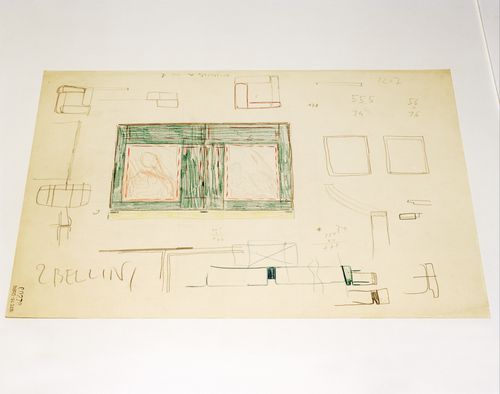
Photograph by Stefano Graziani of the following work: Carlo Scarpa, Castelvecchio Museum, Ala della Reggia, elevation and sketches for the frame of the Madonna with the Child by Giovanni Bellini on the second floor of the Palace, inventory Number: 31805, recto, pastel red, yellow, blue two shades and lilac on cardboard, 316 x 432 mm, 1958-1961, Carlo Scarpa archive, Castevecchio Museum, Verona Questioning Pictures is a 36 photograph project commissioned by Fondazione Prada, Milan. Artist Stefano Graziani investigates archival and conservation systems in a number of museums. Through photographing museum objects, Graziani, focusing on the relationship between photographs, the museum objects and the power structures at play within institutions. The museums include the Canadian Centre for Architecture (CCA) in Montréal, Canada; Sir John Soane’s Museum in London, UK; the Kunstmuseum Basel, Switzerland; Museum Insel Hombroich in Neuss, Germany; the Museo di Castelvecchio in Verona, Italy; and the Plaster Cast Gallery at Museo Canova in Possagno, Italy.
PH2018:0005:028
Description:
Photograph by Stefano Graziani of the following work: Carlo Scarpa, Castelvecchio Museum, Ala della Reggia, elevation and sketches for the frame of the Madonna with the Child by Giovanni Bellini on the second floor of the Palace, inventory Number: 31805, recto, pastel red, yellow, blue two shades and lilac on cardboard, 316 x 432 mm, 1958-1961, Carlo Scarpa archive, Castevecchio Museum, Verona Questioning Pictures is a 36 photograph project commissioned by Fondazione Prada, Milan. Artist Stefano Graziani investigates archival and conservation systems in a number of museums. Through photographing museum objects, Graziani, focusing on the relationship between photographs, the museum objects and the power structures at play within institutions. The museums include the Canadian Centre for Architecture (CCA) in Montréal, Canada; Sir John Soane’s Museum in London, UK; the Kunstmuseum Basel, Switzerland; Museum Insel Hombroich in Neuss, Germany; the Museo di Castelvecchio in Verona, Italy; and the Plaster Cast Gallery at Museo Canova in Possagno, Italy.
People:
Date:
2017
2017
Title:
Questioning Pictures: Photograph of elevation and sketches for the frame of the Madonna with the Child by Giovanni Bellini on the second floor of the Castelvecchio Museum by Carlo Scarpa
Actions:
PH2018:0005:028
Description:
Photograph by Stefano Graziani of the following work: Carlo Scarpa, Castelvecchio Museum, Ala della Reggia, elevation and sketches for the frame of the Madonna with the Child by Giovanni Bellini on the second floor of the Palace, inventory Number: 31805, recto, pastel red, yellow, blue two shades and lilac on cardboard, 316 x 432 mm, 1958-1961, Carlo Scarpa archive, Castevecchio Museum, Verona Questioning Pictures is a 36 photograph project commissioned by Fondazione Prada, Milan. Artist Stefano Graziani investigates archival and conservation systems in a number of museums. Through photographing museum objects, Graziani, focusing on the relationship between photographs, the museum objects and the power structures at play within institutions. The museums include the Canadian Centre for Architecture (CCA) in Montréal, Canada; Sir John Soane’s Museum in London, UK; the Kunstmuseum Basel, Switzerland; Museum Insel Hombroich in Neuss, Germany; the Museo di Castelvecchio in Verona, Italy; and the Plaster Cast Gallery at Museo Canova in Possagno, Italy.
Questioning Pictures: Photograph of elevation and sketches for the frame of the Madonna with the Child by Giovanni Bellini on the second floor of the Castelvecchio Museum by Carlo Scarpa
Actions:
PH2018:0005:028
Description:
Photograph by Stefano Graziani of the following work: Carlo Scarpa, Castelvecchio Museum, Ala della Reggia, elevation and sketches for the frame of the Madonna with the Child by Giovanni Bellini on the second floor of the Palace, inventory Number: 31805, recto, pastel red, yellow, blue two shades and lilac on cardboard, 316 x 432 mm, 1958-1961, Carlo Scarpa archive, Castevecchio Museum, Verona Questioning Pictures is a 36 photograph project commissioned by Fondazione Prada, Milan. Artist Stefano Graziani investigates archival and conservation systems in a number of museums. Through photographing museum objects, Graziani, focusing on the relationship between photographs, the museum objects and the power structures at play within institutions. The museums include the Canadian Centre for Architecture (CCA) in Montréal, Canada; Sir John Soane’s Museum in London, UK; the Kunstmuseum Basel, Switzerland; Museum Insel Hombroich in Neuss, Germany; the Museo di Castelvecchio in Verona, Italy; and the Plaster Cast Gallery at Museo Canova in Possagno, Italy.
Form:
photographs
photographs
Date:
2017
2017
People:
Form:
archives
Level of archival description:
Fonds
archives
Level of archival description:
Fonds
Actions:
Reference number:
AP198
Synopsis:
The Kivi Sotamaa OCEAN North project records, 1997-2000, consist of born-digital files, drawings, photographs, and physical models that document two projects by the OCEAN North collective: Jyväskylä Music and Arts Centre (competition, 1997) and Tölöö Football Stadium (competition, 1997). The archive also includes born-digital reference materials on 14 projects from the collective, including the two projects mentioned above.
AP198
Synopsis:
The Kivi Sotamaa OCEAN North project records, 1997-2000, consist of born-digital files, drawings, photographs, and physical models that document two projects by the OCEAN North collective: Jyväskylä Music and Arts Centre (competition, 1997) and Tölöö Football Stadium (competition, 1997). The archive also includes born-digital reference materials on 14 projects from the collective, including the two projects mentioned above.
People:
Date:
1997-2000
1997-2000
Title:
Kivi Sotamaa OCEAN North project records
Actions:
AP198
Synopsis:
The Kivi Sotamaa OCEAN North project records, 1997-2000, consist of born-digital files, drawings, photographs, and physical models that document two projects by the OCEAN North collective: Jyväskylä Music and Arts Centre (competition, 1997) and Tölöö Football Stadium (competition, 1997). The archive also includes born-digital reference materials on 14 projects from the collective, including the two projects mentioned above.
Kivi Sotamaa OCEAN North project records
Actions:
AP198
Synopsis:
The Kivi Sotamaa OCEAN North project records, 1997-2000, consist of born-digital files, drawings, photographs, and physical models that document two projects by the OCEAN North collective: Jyväskylä Music and Arts Centre (competition, 1997) and Tölöö Football Stadium (competition, 1997). The archive also includes born-digital reference materials on 14 projects from the collective, including the two projects mentioned above.
Form:
archives
Level of archival description:
Fonds
archives
Level of archival description:
Fonds
Date:
1997-2000
1997-2000
People:
Form:
drawings, textual records, born digital, photographs
drawings, textual records, born digital, photographs
Reference number:
AP181.S1.010
Description:
Original directory name: "10_Materialsammlung". File chiefly contains visual reference materials that were either created or gathered by COOP HIMMELB(L)AU, or provided to them by BMW. They are a few presentations compiling the drawings from COOP HIMMELB(L)AU and images from the reference material gathered in various sub-directories. These were part of the design process for BMW Welt. Some directories present the result of themed research ("020213_karosserien", "020326_landscape", etc.), and may include photographs, drawings or textual documentation. BMW seems to have provided the firm with a library of corporate images of their car models. The "Bibliothek" directory also contains various stock images under the “for_restaurant” directory. File also includes some 3D model studies of the building’s shape; photographs of the location before construction; visual examples of other buildings, restaurants, conference rooms, and structures. Most common file formats: JPEG File Interchange Format, Exchangeable Image File Format (Compressed), Truevision TGA Bitmap, Tagged Image File Format, Adobe Illustrator
AP181.S1.010
Description:
Original directory name: "10_Materialsammlung". File chiefly contains visual reference materials that were either created or gathered by COOP HIMMELB(L)AU, or provided to them by BMW. They are a few presentations compiling the drawings from COOP HIMMELB(L)AU and images from the reference material gathered in various sub-directories. These were part of the design process for BMW Welt. Some directories present the result of themed research ("020213_karosserien", "020326_landscape", etc.), and may include photographs, drawings or textual documentation. BMW seems to have provided the firm with a library of corporate images of their car models. The "Bibliothek" directory also contains various stock images under the “for_restaurant” directory. File also includes some 3D model studies of the building’s shape; photographs of the location before construction; visual examples of other buildings, restaurants, conference rooms, and structures. Most common file formats: JPEG File Interchange Format, Exchangeable Image File Format (Compressed), Truevision TGA Bitmap, Tagged Image File Format, Adobe Illustrator
People:
Date:
1995-2008
1995-2008
Title:
Visual reference material, BMW Welt, Munich
Actions:
AP181.S1.010
Description:
Original directory name: "10_Materialsammlung". File chiefly contains visual reference materials that were either created or gathered by COOP HIMMELB(L)AU, or provided to them by BMW. They are a few presentations compiling the drawings from COOP HIMMELB(L)AU and images from the reference material gathered in various sub-directories. These were part of the design process for BMW Welt. Some directories present the result of themed research ("020213_karosserien", "020326_landscape", etc.), and may include photographs, drawings or textual documentation. BMW seems to have provided the firm with a library of corporate images of their car models. The "Bibliothek" directory also contains various stock images under the “for_restaurant” directory. File also includes some 3D model studies of the building’s shape; photographs of the location before construction; visual examples of other buildings, restaurants, conference rooms, and structures. Most common file formats: JPEG File Interchange Format, Exchangeable Image File Format (Compressed), Truevision TGA Bitmap, Tagged Image File Format, Adobe Illustrator
Visual reference material, BMW Welt, Munich
Actions:
AP181.S1.010
Description:
Original directory name: "10_Materialsammlung". File chiefly contains visual reference materials that were either created or gathered by COOP HIMMELB(L)AU, or provided to them by BMW. They are a few presentations compiling the drawings from COOP HIMMELB(L)AU and images from the reference material gathered in various sub-directories. These were part of the design process for BMW Welt. Some directories present the result of themed research ("020213_karosserien", "020326_landscape", etc.), and may include photographs, drawings or textual documentation. BMW seems to have provided the firm with a library of corporate images of their car models. The "Bibliothek" directory also contains various stock images under the “for_restaurant” directory. File also includes some 3D model studies of the building’s shape; photographs of the location before construction; visual examples of other buildings, restaurants, conference rooms, and structures. Most common file formats: JPEG File Interchange Format, Exchangeable Image File Format (Compressed), Truevision TGA Bitmap, Tagged Image File Format, Adobe Illustrator
Form:
drawings, textual records, born digital, photographs
drawings, textual records, born digital, photographs
Date:
1995-2008
1995-2008
People:
Form:
archives
Level of archival description:
Fonds
archives
Level of archival description:
Fonds
Reference number:
CP138
Synopsis:
The Gordon Matta-Clark collection documents the personal and professional activities of Gordon Matta-Clark through his correspondence, texts, library, artwork and films, created predominantly between 1969 and 1978. Additionally the collection contains correspondence and photographs collected by Anne Alpert, Matta-Clark's mother, and documentation on his work collected by his widow Jane Crawford following his death.
CP138
Synopsis:
The Gordon Matta-Clark collection documents the personal and professional activities of Gordon Matta-Clark through his correspondence, texts, library, artwork and films, created predominantly between 1969 and 1978. Additionally the collection contains correspondence and photographs collected by Anne Alpert, Matta-Clark's mother, and documentation on his work collected by his widow Jane Crawford following his death.
People:
Date:
1914-2008
1914-2008
Title:
Gordon Matta-Clark collection
Actions:
CP138
Synopsis:
The Gordon Matta-Clark collection documents the personal and professional activities of Gordon Matta-Clark through his correspondence, texts, library, artwork and films, created predominantly between 1969 and 1978. Additionally the collection contains correspondence and photographs collected by Anne Alpert, Matta-Clark's mother, and documentation on his work collected by his widow Jane Crawford following his death.
Gordon Matta-Clark collection
Actions:
CP138
Synopsis:
The Gordon Matta-Clark collection documents the personal and professional activities of Gordon Matta-Clark through his correspondence, texts, library, artwork and films, created predominantly between 1969 and 1978. Additionally the collection contains correspondence and photographs collected by Anne Alpert, Matta-Clark's mother, and documentation on his work collected by his widow Jane Crawford following his death.
Form:
archives
Level of archival description:
Collection
archives
Level of archival description:
Collection
Date:
1914-2008
1914-2008
People:
Actions:
Reference number:
PH1981:1286:001-036
Description:
Album PH1981:1286:001-036 and its component photographs by Richard Broadbridge were taken after 1911 when the Canadian Pacific Railway Company (C.P.R.) decided to supplement the Vancouver terminus with a second terminus in Coquitlam. Eleven of the photographs are related to the Canadian Pacific Railroad Company, and many show structures under construction, including: five views of the freight yards, one of which also shows the Roundhouse; two views of the Roundhouse; two views of bridges; and one view each of the Terminal office and the construction camp. Also included are views of the district of Coquitlam's rapid development into the city of Port Coquitlam in 1913, including: four views of roads; three views of houses; two views of the First Division and one view of the Second Division; two views of a commerical building; two views of the Agricultural Hall; two views of the Provincial Government Farm (also known as the Colony Farm); two views of roads to housing developments; and one view each of the Old Business Center, the Provincial Asylum, the Pitt River Dyke, the Pitt River with Coquitlam in background, a hotel, a factory, and the original Indigenous village.
PH1981:1286:001-036
Description:
Album PH1981:1286:001-036 and its component photographs by Richard Broadbridge were taken after 1911 when the Canadian Pacific Railway Company (C.P.R.) decided to supplement the Vancouver terminus with a second terminus in Coquitlam. Eleven of the photographs are related to the Canadian Pacific Railroad Company, and many show structures under construction, including: five views of the freight yards, one of which also shows the Roundhouse; two views of the Roundhouse; two views of bridges; and one view each of the Terminal office and the construction camp. Also included are views of the district of Coquitlam's rapid development into the city of Port Coquitlam in 1913, including: four views of roads; three views of houses; two views of the First Division and one view of the Second Division; two views of a commerical building; two views of the Agricultural Hall; two views of the Provincial Government Farm (also known as the Colony Farm); two views of roads to housing developments; and one view each of the Old Business Center, the Provincial Asylum, the Pitt River Dyke, the Pitt River with Coquitlam in background, a hotel, a factory, and the original Indigenous village.
People:
Subject:
architecture, engineering, urban planning
architecture, engineering, urban planning
Date:
1912-1914
1912-1914
Title:
Album of views compiled by the Canadian Pacific Railroad Company (C.P.R.) showing the construction of the new Operating Terminus and the development of the district of Coquitlam (now Port Coquitlam), British Columbia, Canada
Actions:
PH1981:1286:001-036
Description:
Album PH1981:1286:001-036 and its component photographs by Richard Broadbridge were taken after 1911 when the Canadian Pacific Railway Company (C.P.R.) decided to supplement the Vancouver terminus with a second terminus in Coquitlam. Eleven of the photographs are related to the Canadian Pacific Railroad Company, and many show structures under construction, including: five views of the freight yards, one of which also shows the Roundhouse; two views of the Roundhouse; two views of bridges; and one view each of the Terminal office and the construction camp. Also included are views of the district of Coquitlam's rapid development into the city of Port Coquitlam in 1913, including: four views of roads; three views of houses; two views of the First Division and one view of the Second Division; two views of a commerical building; two views of the Agricultural Hall; two views of the Provincial Government Farm (also known as the Colony Farm); two views of roads to housing developments; and one view each of the Old Business Center, the Provincial Asylum, the Pitt River Dyke, the Pitt River with Coquitlam in background, a hotel, a factory, and the original Indigenous village.
Album of views compiled by the Canadian Pacific Railroad Company (C.P.R.) showing the construction of the new Operating Terminus and the development of the district of Coquitlam (now Port Coquitlam), British Columbia, Canada
Actions:
PH1981:1286:001-036
Description:
Album PH1981:1286:001-036 and its component photographs by Richard Broadbridge were taken after 1911 when the Canadian Pacific Railway Company (C.P.R.) decided to supplement the Vancouver terminus with a second terminus in Coquitlam. Eleven of the photographs are related to the Canadian Pacific Railroad Company, and many show structures under construction, including: five views of the freight yards, one of which also shows the Roundhouse; two views of the Roundhouse; two views of bridges; and one view each of the Terminal office and the construction camp. Also included are views of the district of Coquitlam's rapid development into the city of Port Coquitlam in 1913, including: four views of roads; three views of houses; two views of the First Division and one view of the Second Division; two views of a commerical building; two views of the Agricultural Hall; two views of the Provincial Government Farm (also known as the Colony Farm); two views of roads to housing developments; and one view each of the Old Business Center, the Provincial Asylum, the Pitt River Dyke, the Pitt River with Coquitlam in background, a hotel, a factory, and the original Indigenous village.
Date:
1912-1914
1912-1914
People:
Subject:
architecture, engineering, urban planning
architecture, engineering, urban planning


