


44145 Results
Form:
photographs
photographs
Actions:
Reference number:
PH2018:0005:007
Description:
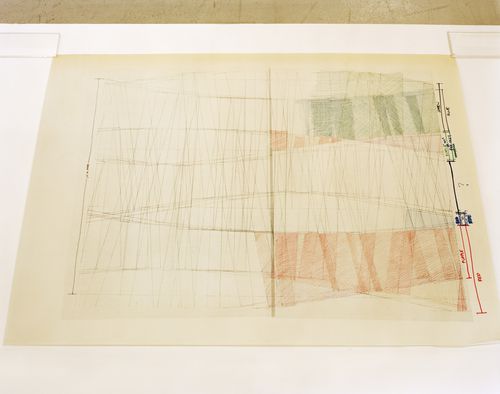
Photograph by Stefano Graziani of the following work: Peter Eisenman, drawing for the Wexner Centre for the Visual Arts, Columbus Ohio, 1977-1989, AP143.S4.D22, Peter Eisenman fonds, Canadian Centre for Architecture, © CCA, Montréal Questioning Pictures is a 36 photograph project commissioned by Fondazione Prada, Milan. Artist Stefano Graziani investigates archival and conservation systems in a number of museums. Through photographing museum objects, Graziani, focusing on the relationship between photographs, the museum objects and the power structures at play within institutions. The museums include the Canadian Centre for Architecture (CCA) in Montréal, Canada; Sir John Soane’s Museum in London, UK; the Kunstmuseum Basel, Switzerland; Museum Insel Hombroich in Neuss, Germany; the Museo di Castelvecchio in Verona, Italy; and the Plaster Cast Gallery at Museo Canova in Possagno, Italy.
PH2018:0005:007
Description:
Photograph by Stefano Graziani of the following work: Peter Eisenman, drawing for the Wexner Centre for the Visual Arts, Columbus Ohio, 1977-1989, AP143.S4.D22, Peter Eisenman fonds, Canadian Centre for Architecture, © CCA, Montréal Questioning Pictures is a 36 photograph project commissioned by Fondazione Prada, Milan. Artist Stefano Graziani investigates archival and conservation systems in a number of museums. Through photographing museum objects, Graziani, focusing on the relationship between photographs, the museum objects and the power structures at play within institutions. The museums include the Canadian Centre for Architecture (CCA) in Montréal, Canada; Sir John Soane’s Museum in London, UK; the Kunstmuseum Basel, Switzerland; Museum Insel Hombroich in Neuss, Germany; the Museo di Castelvecchio in Verona, Italy; and the Plaster Cast Gallery at Museo Canova in Possagno, Italy.
People:
Date:
2017
2017
Title:
Questioning Pictures: Photograph of drawing for the Wexner Center for the Visual Arts by Peter Eisenman, 1977-1989
Actions:
PH2018:0005:007
Description:
Photograph by Stefano Graziani of the following work: Peter Eisenman, drawing for the Wexner Centre for the Visual Arts, Columbus Ohio, 1977-1989, AP143.S4.D22, Peter Eisenman fonds, Canadian Centre for Architecture, © CCA, Montréal Questioning Pictures is a 36 photograph project commissioned by Fondazione Prada, Milan. Artist Stefano Graziani investigates archival and conservation systems in a number of museums. Through photographing museum objects, Graziani, focusing on the relationship between photographs, the museum objects and the power structures at play within institutions. The museums include the Canadian Centre for Architecture (CCA) in Montréal, Canada; Sir John Soane’s Museum in London, UK; the Kunstmuseum Basel, Switzerland; Museum Insel Hombroich in Neuss, Germany; the Museo di Castelvecchio in Verona, Italy; and the Plaster Cast Gallery at Museo Canova in Possagno, Italy.
Questioning Pictures: Photograph of drawing for the Wexner Center for the Visual Arts by Peter Eisenman, 1977-1989
Actions:
PH2018:0005:007
Description:
Photograph by Stefano Graziani of the following work: Peter Eisenman, drawing for the Wexner Centre for the Visual Arts, Columbus Ohio, 1977-1989, AP143.S4.D22, Peter Eisenman fonds, Canadian Centre for Architecture, © CCA, Montréal Questioning Pictures is a 36 photograph project commissioned by Fondazione Prada, Milan. Artist Stefano Graziani investigates archival and conservation systems in a number of museums. Through photographing museum objects, Graziani, focusing on the relationship between photographs, the museum objects and the power structures at play within institutions. The museums include the Canadian Centre for Architecture (CCA) in Montréal, Canada; Sir John Soane’s Museum in London, UK; the Kunstmuseum Basel, Switzerland; Museum Insel Hombroich in Neuss, Germany; the Museo di Castelvecchio in Verona, Italy; and the Plaster Cast Gallery at Museo Canova in Possagno, Italy.
Form:
photographs
photographs
Date:
2017
2017
People:
Form:
photographs
photographs
Title:
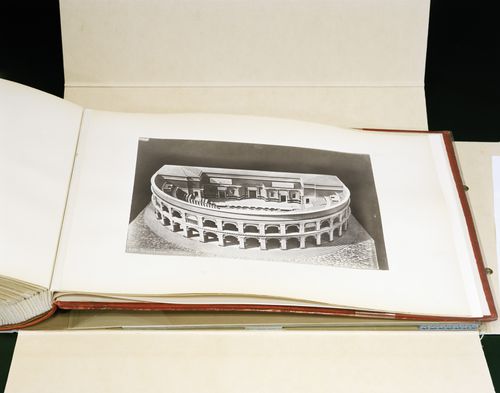
Questioning Pictures: Photograph of Model of the Amphitheater, Ercolano by Giorgio Sommer, ca.1870s
Questioning Pictures: Photograph of Model of the Amphitheater, Ercolano by Giorgio Sommer, ca.1870s
Actions:
Reference number:
PH2018:0005:009
Description:
Photograph by Stefano Graziani of the following work: Giorgio Sommer, Model of the amphitheater, Ercolano, ca. 1870s, from Album Souvenir de Pompei, albumen silver print, 19.3 x 19.3 cm, PH1980:0046:100, Canadian Centre for Architecture, Montréal Questioning Pictures is a 36 photograph project commissioned by Fondazione Prada, Milan. Artist Stefano Graziani investigates archival and conservation systems in a number of museums. Through photographing museum objects, Graziani, focusing on the relationship between photographs, the museum objects and the power structures at play within institutions. The museums include the Canadian Centre for Architecture (CCA) in Montréal, Canada; Sir John Soane’s Museum in London, UK; the Kunstmuseum Basel, Switzerland; Museum Insel Hombroich in Neuss, Germany; the Museo di Castelvecchio in Verona, Italy; and the Plaster Cast Gallery at Museo Canova in Possagno, Italy.
PH2018:0005:009
Description:
Photograph by Stefano Graziani of the following work: Giorgio Sommer, Model of the amphitheater, Ercolano, ca. 1870s, from Album Souvenir de Pompei, albumen silver print, 19.3 x 19.3 cm, PH1980:0046:100, Canadian Centre for Architecture, Montréal Questioning Pictures is a 36 photograph project commissioned by Fondazione Prada, Milan. Artist Stefano Graziani investigates archival and conservation systems in a number of museums. Through photographing museum objects, Graziani, focusing on the relationship between photographs, the museum objects and the power structures at play within institutions. The museums include the Canadian Centre for Architecture (CCA) in Montréal, Canada; Sir John Soane’s Museum in London, UK; the Kunstmuseum Basel, Switzerland; Museum Insel Hombroich in Neuss, Germany; the Museo di Castelvecchio in Verona, Italy; and the Plaster Cast Gallery at Museo Canova in Possagno, Italy.
People:
Date:
2017
2017
Title:
Questioning Pictures: Photograph of Model of the Amphitheater, Ercolano by Giorgio Sommer, ca.1870s
Actions:
PH2018:0005:009
Description:
Photograph by Stefano Graziani of the following work: Giorgio Sommer, Model of the amphitheater, Ercolano, ca. 1870s, from Album Souvenir de Pompei, albumen silver print, 19.3 x 19.3 cm, PH1980:0046:100, Canadian Centre for Architecture, Montréal Questioning Pictures is a 36 photograph project commissioned by Fondazione Prada, Milan. Artist Stefano Graziani investigates archival and conservation systems in a number of museums. Through photographing museum objects, Graziani, focusing on the relationship between photographs, the museum objects and the power structures at play within institutions. The museums include the Canadian Centre for Architecture (CCA) in Montréal, Canada; Sir John Soane’s Museum in London, UK; the Kunstmuseum Basel, Switzerland; Museum Insel Hombroich in Neuss, Germany; the Museo di Castelvecchio in Verona, Italy; and the Plaster Cast Gallery at Museo Canova in Possagno, Italy.
Questioning Pictures: Photograph of Model of the Amphitheater, Ercolano by Giorgio Sommer, ca.1870s
Actions:
PH2018:0005:009
Description:
Photograph by Stefano Graziani of the following work: Giorgio Sommer, Model of the amphitheater, Ercolano, ca. 1870s, from Album Souvenir de Pompei, albumen silver print, 19.3 x 19.3 cm, PH1980:0046:100, Canadian Centre for Architecture, Montréal Questioning Pictures is a 36 photograph project commissioned by Fondazione Prada, Milan. Artist Stefano Graziani investigates archival and conservation systems in a number of museums. Through photographing museum objects, Graziani, focusing on the relationship between photographs, the museum objects and the power structures at play within institutions. The museums include the Canadian Centre for Architecture (CCA) in Montréal, Canada; Sir John Soane’s Museum in London, UK; the Kunstmuseum Basel, Switzerland; Museum Insel Hombroich in Neuss, Germany; the Museo di Castelvecchio in Verona, Italy; and the Plaster Cast Gallery at Museo Canova in Possagno, Italy.
Form:
photographs
photographs
Date:
2017
2017
People:
Form:
photographs
photographs
Actions:
Reference number:
PH2018:0005:017
Description:
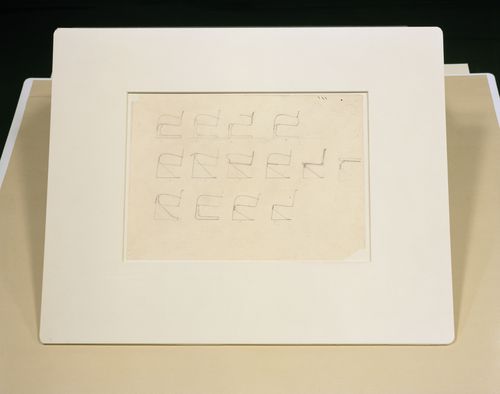
Photograph by Stefano Graziani of the following work: Ludwig Mies van der Rohe, twenty-one studies for a cantilevered chair (Brno chair variations), 1935, pencil on paper, 21.6 x 29.9 cm, DR1986:0119, Canadian Centre for Architecture Questioning Pictures is a 36 photograph project commissioned by Fondazione Prada, Milan. Artist Stefano Graziani investigates archival and conservation systems in a number of museums. Through photographing museum objects, Graziani, focusing on the relationship between photographs, the museum objects and the power structures at play within institutions. The museums include the Canadian Centre for Architecture (CCA) in Montréal, Canada; Sir John Soane’s Museum in London, UK; the Kunstmuseum Basel, Switzerland; Museum Insel Hombroich in Neuss, Germany; the Museo di Castelvecchio in Verona, Italy; and the Plaster Cast Gallery at Museo Canova in Possagno, Italy.
PH2018:0005:017
Description:
Photograph by Stefano Graziani of the following work: Ludwig Mies van der Rohe, twenty-one studies for a cantilevered chair (Brno chair variations), 1935, pencil on paper, 21.6 x 29.9 cm, DR1986:0119, Canadian Centre for Architecture Questioning Pictures is a 36 photograph project commissioned by Fondazione Prada, Milan. Artist Stefano Graziani investigates archival and conservation systems in a number of museums. Through photographing museum objects, Graziani, focusing on the relationship between photographs, the museum objects and the power structures at play within institutions. The museums include the Canadian Centre for Architecture (CCA) in Montréal, Canada; Sir John Soane’s Museum in London, UK; the Kunstmuseum Basel, Switzerland; Museum Insel Hombroich in Neuss, Germany; the Museo di Castelvecchio in Verona, Italy; and the Plaster Cast Gallery at Museo Canova in Possagno, Italy.
People:
Date:
2017
2017
Title:
Questioning Pictures: Photograph of twenty-one studies for a cantillevered chair (Brno Chair Variations) by Ludwig mies van der Rohe, 1935
Actions:
PH2018:0005:017
Description:
Photograph by Stefano Graziani of the following work: Ludwig Mies van der Rohe, twenty-one studies for a cantilevered chair (Brno chair variations), 1935, pencil on paper, 21.6 x 29.9 cm, DR1986:0119, Canadian Centre for Architecture Questioning Pictures is a 36 photograph project commissioned by Fondazione Prada, Milan. Artist Stefano Graziani investigates archival and conservation systems in a number of museums. Through photographing museum objects, Graziani, focusing on the relationship between photographs, the museum objects and the power structures at play within institutions. The museums include the Canadian Centre for Architecture (CCA) in Montréal, Canada; Sir John Soane’s Museum in London, UK; the Kunstmuseum Basel, Switzerland; Museum Insel Hombroich in Neuss, Germany; the Museo di Castelvecchio in Verona, Italy; and the Plaster Cast Gallery at Museo Canova in Possagno, Italy.
Questioning Pictures: Photograph of twenty-one studies for a cantillevered chair (Brno Chair Variations) by Ludwig mies van der Rohe, 1935
Actions:
PH2018:0005:017
Description:
Photograph by Stefano Graziani of the following work: Ludwig Mies van der Rohe, twenty-one studies for a cantilevered chair (Brno chair variations), 1935, pencil on paper, 21.6 x 29.9 cm, DR1986:0119, Canadian Centre for Architecture Questioning Pictures is a 36 photograph project commissioned by Fondazione Prada, Milan. Artist Stefano Graziani investigates archival and conservation systems in a number of museums. Through photographing museum objects, Graziani, focusing on the relationship between photographs, the museum objects and the power structures at play within institutions. The museums include the Canadian Centre for Architecture (CCA) in Montréal, Canada; Sir John Soane’s Museum in London, UK; the Kunstmuseum Basel, Switzerland; Museum Insel Hombroich in Neuss, Germany; the Museo di Castelvecchio in Verona, Italy; and the Plaster Cast Gallery at Museo Canova in Possagno, Italy.
Form:
photographs
photographs
Date:
2017
2017
People:
Form:
photographs
photographs
Actions:
Reference number:
PH2018:0005:018
Description:
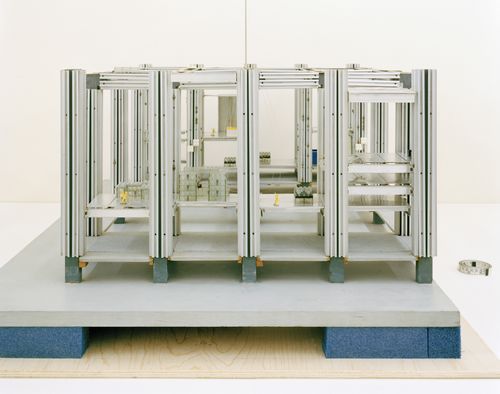
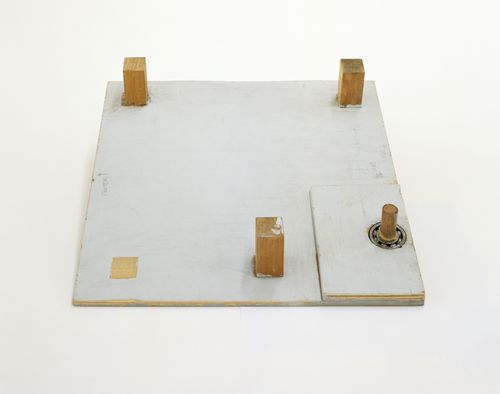
Photograph by Stefano Graziani of the following work: Cedric price, model for Fun Palace, ca. 1964, 53.4 x 123.3 x 79.1 cm, DR1995:0188:524, Cedric Price fonds, Canadian Centre for Architecture, © CCA, Montréal Questioning Pictures is a 36 photograph project commissioned by Fondazione Prada, Milan. Artist Stefano Graziani investigates archival and conservation systems in a number of museums. Through photographing museum objects, Graziani, focusing on the relationship between photographs, the museum objects and the power structures at play within institutions. The museums include the Canadian Centre for Architecture (CCA) in Montréal, Canada; Sir John Soane’s Museum in London, UK; the Kunstmuseum Basel, Switzerland; Museum Insel Hombroich in Neuss, Germany; the Museo di Castelvecchio in Verona, Italy; and the Plaster Cast Gallery at Museo Canova in Possagno, Italy.
PH2018:0005:018
Description:
Photograph by Stefano Graziani of the following work: Cedric price, model for Fun Palace, ca. 1964, 53.4 x 123.3 x 79.1 cm, DR1995:0188:524, Cedric Price fonds, Canadian Centre for Architecture, © CCA, Montréal Questioning Pictures is a 36 photograph project commissioned by Fondazione Prada, Milan. Artist Stefano Graziani investigates archival and conservation systems in a number of museums. Through photographing museum objects, Graziani, focusing on the relationship between photographs, the museum objects and the power structures at play within institutions. The museums include the Canadian Centre for Architecture (CCA) in Montréal, Canada; Sir John Soane’s Museum in London, UK; the Kunstmuseum Basel, Switzerland; Museum Insel Hombroich in Neuss, Germany; the Museo di Castelvecchio in Verona, Italy; and the Plaster Cast Gallery at Museo Canova in Possagno, Italy.
People:
Date:
2017
2017
Title:
Questioning Pictures: Photograph of model for Fun Palace by Cedric Price, ca. 1964
Actions:
PH2018:0005:018
Description:
Photograph by Stefano Graziani of the following work: Cedric price, model for Fun Palace, ca. 1964, 53.4 x 123.3 x 79.1 cm, DR1995:0188:524, Cedric Price fonds, Canadian Centre for Architecture, © CCA, Montréal Questioning Pictures is a 36 photograph project commissioned by Fondazione Prada, Milan. Artist Stefano Graziani investigates archival and conservation systems in a number of museums. Through photographing museum objects, Graziani, focusing on the relationship between photographs, the museum objects and the power structures at play within institutions. The museums include the Canadian Centre for Architecture (CCA) in Montréal, Canada; Sir John Soane’s Museum in London, UK; the Kunstmuseum Basel, Switzerland; Museum Insel Hombroich in Neuss, Germany; the Museo di Castelvecchio in Verona, Italy; and the Plaster Cast Gallery at Museo Canova in Possagno, Italy.
Questioning Pictures: Photograph of model for Fun Palace by Cedric Price, ca. 1964
Actions:
PH2018:0005:018
Description:
Photograph by Stefano Graziani of the following work: Cedric price, model for Fun Palace, ca. 1964, 53.4 x 123.3 x 79.1 cm, DR1995:0188:524, Cedric Price fonds, Canadian Centre for Architecture, © CCA, Montréal Questioning Pictures is a 36 photograph project commissioned by Fondazione Prada, Milan. Artist Stefano Graziani investigates archival and conservation systems in a number of museums. Through photographing museum objects, Graziani, focusing on the relationship between photographs, the museum objects and the power structures at play within institutions. The museums include the Canadian Centre for Architecture (CCA) in Montréal, Canada; Sir John Soane’s Museum in London, UK; the Kunstmuseum Basel, Switzerland; Museum Insel Hombroich in Neuss, Germany; the Museo di Castelvecchio in Verona, Italy; and the Plaster Cast Gallery at Museo Canova in Possagno, Italy.
Form:
photographs
photographs
Date:
2017
2017
People:
Form:
photographs
photographs
Actions:
Reference number:
PH2018:0005:019
Description:
Photograph by Stefano Graziani of the following work: Cedric Price, model for Fun Palace, ca. 1964, 53.4 x 123.3 x 79.1 cm, DR1995:0188:524, Cedric Price fonds, Canadian Centre for Architecture, © CCA, Montréal Questioning Pictures is a 36 photograph project commissioned by Fondazione Prada, Milan. Artist Stefano Graziani investigates archival and conservation systems in a number of museums. Through photographing museum objects, Graziani, focusing on the relationship between photographs, the museum objects and the power structures at play within institutions. The museums include the Canadian Centre for Architecture (CCA) in Montréal, Canada; Sir John Soane’s Museum in London, UK; the Kunstmuseum Basel, Switzerland; Museum Insel Hombroich in Neuss, Germany; the Museo di Castelvecchio in Verona, Italy; and the Plaster Cast Gallery at Museo Canova in Possagno, Italy.
PH2018:0005:019
Description:
Photograph by Stefano Graziani of the following work: Cedric Price, model for Fun Palace, ca. 1964, 53.4 x 123.3 x 79.1 cm, DR1995:0188:524, Cedric Price fonds, Canadian Centre for Architecture, © CCA, Montréal Questioning Pictures is a 36 photograph project commissioned by Fondazione Prada, Milan. Artist Stefano Graziani investigates archival and conservation systems in a number of museums. Through photographing museum objects, Graziani, focusing on the relationship between photographs, the museum objects and the power structures at play within institutions. The museums include the Canadian Centre for Architecture (CCA) in Montréal, Canada; Sir John Soane’s Museum in London, UK; the Kunstmuseum Basel, Switzerland; Museum Insel Hombroich in Neuss, Germany; the Museo di Castelvecchio in Verona, Italy; and the Plaster Cast Gallery at Museo Canova in Possagno, Italy.
People:
Date:
2012
2012
Title:
Questioning Pictures: Photograph of model for Fun Palace by Cedric Price, ca. 1964
Actions:
PH2018:0005:019
Description:
Photograph by Stefano Graziani of the following work: Cedric Price, model for Fun Palace, ca. 1964, 53.4 x 123.3 x 79.1 cm, DR1995:0188:524, Cedric Price fonds, Canadian Centre for Architecture, © CCA, Montréal Questioning Pictures is a 36 photograph project commissioned by Fondazione Prada, Milan. Artist Stefano Graziani investigates archival and conservation systems in a number of museums. Through photographing museum objects, Graziani, focusing on the relationship between photographs, the museum objects and the power structures at play within institutions. The museums include the Canadian Centre for Architecture (CCA) in Montréal, Canada; Sir John Soane’s Museum in London, UK; the Kunstmuseum Basel, Switzerland; Museum Insel Hombroich in Neuss, Germany; the Museo di Castelvecchio in Verona, Italy; and the Plaster Cast Gallery at Museo Canova in Possagno, Italy.
Questioning Pictures: Photograph of model for Fun Palace by Cedric Price, ca. 1964
Actions:
PH2018:0005:019
Description:
Photograph by Stefano Graziani of the following work: Cedric Price, model for Fun Palace, ca. 1964, 53.4 x 123.3 x 79.1 cm, DR1995:0188:524, Cedric Price fonds, Canadian Centre for Architecture, © CCA, Montréal Questioning Pictures is a 36 photograph project commissioned by Fondazione Prada, Milan. Artist Stefano Graziani investigates archival and conservation systems in a number of museums. Through photographing museum objects, Graziani, focusing on the relationship between photographs, the museum objects and the power structures at play within institutions. The museums include the Canadian Centre for Architecture (CCA) in Montréal, Canada; Sir John Soane’s Museum in London, UK; the Kunstmuseum Basel, Switzerland; Museum Insel Hombroich in Neuss, Germany; the Museo di Castelvecchio in Verona, Italy; and the Plaster Cast Gallery at Museo Canova in Possagno, Italy.
Form:
photographs
photographs
Date:
2012
2012
People:
Form:
photographs
photographs
Title:
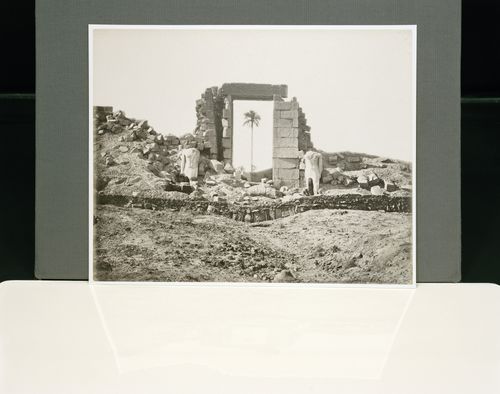
Questioning Pictures: Photograph of the Temple of Rameses, albumen print by Félix Bonfils, ca. 1970
Questioning Pictures: Photograph of the Temple of Rameses, albumen print by Félix Bonfils, ca. 1970
Actions:
Reference number:
PH2018:0005:023
Description:
Photograph by Stefano Graziani of the following work: Félix Bonfils, The Temple of Rameses, Karnak, Thebes, ca.1870's, albumen silver print, 22.9 x 28.8 cm, PH1980:0683.01:034, Canadian Centre for Architecture, Montréal Questioning Pictures is a 36 photograph project commissioned by Fondazione Prada, Milan. Artist Stefano Graziani investigates archival and conservation systems in a number of museums. Through photographing museum objects, Graziani, focusing on the relationship between photographs, the museum objects and the power structures at play within institutions. The museums include the Canadian Centre for Architecture (CCA) in Montréal, Canada; Sir John Soane’s Museum in London, UK; the Kunstmuseum Basel, Switzerland; Museum Insel Hombroich in Neuss, Germany; the Museo di Castelvecchio in Verona, Italy; and the Plaster Cast Gallery at Museo Canova in Possagno, Italy.
PH2018:0005:023
Description:
Photograph by Stefano Graziani of the following work: Félix Bonfils, The Temple of Rameses, Karnak, Thebes, ca.1870's, albumen silver print, 22.9 x 28.8 cm, PH1980:0683.01:034, Canadian Centre for Architecture, Montréal Questioning Pictures is a 36 photograph project commissioned by Fondazione Prada, Milan. Artist Stefano Graziani investigates archival and conservation systems in a number of museums. Through photographing museum objects, Graziani, focusing on the relationship between photographs, the museum objects and the power structures at play within institutions. The museums include the Canadian Centre for Architecture (CCA) in Montréal, Canada; Sir John Soane’s Museum in London, UK; the Kunstmuseum Basel, Switzerland; Museum Insel Hombroich in Neuss, Germany; the Museo di Castelvecchio in Verona, Italy; and the Plaster Cast Gallery at Museo Canova in Possagno, Italy.
People:
Date:
2017
2017
Title:
Questioning Pictures: Photograph of the Temple of Rameses, albumen print by Félix Bonfils, ca. 1970
Actions:
PH2018:0005:023
Description:
Photograph by Stefano Graziani of the following work: Félix Bonfils, The Temple of Rameses, Karnak, Thebes, ca.1870's, albumen silver print, 22.9 x 28.8 cm, PH1980:0683.01:034, Canadian Centre for Architecture, Montréal Questioning Pictures is a 36 photograph project commissioned by Fondazione Prada, Milan. Artist Stefano Graziani investigates archival and conservation systems in a number of museums. Through photographing museum objects, Graziani, focusing on the relationship between photographs, the museum objects and the power structures at play within institutions. The museums include the Canadian Centre for Architecture (CCA) in Montréal, Canada; Sir John Soane’s Museum in London, UK; the Kunstmuseum Basel, Switzerland; Museum Insel Hombroich in Neuss, Germany; the Museo di Castelvecchio in Verona, Italy; and the Plaster Cast Gallery at Museo Canova in Possagno, Italy.
Questioning Pictures: Photograph of the Temple of Rameses, albumen print by Félix Bonfils, ca. 1970
Actions:
PH2018:0005:023
Description:
Photograph by Stefano Graziani of the following work: Félix Bonfils, The Temple of Rameses, Karnak, Thebes, ca.1870's, albumen silver print, 22.9 x 28.8 cm, PH1980:0683.01:034, Canadian Centre for Architecture, Montréal Questioning Pictures is a 36 photograph project commissioned by Fondazione Prada, Milan. Artist Stefano Graziani investigates archival and conservation systems in a number of museums. Through photographing museum objects, Graziani, focusing on the relationship between photographs, the museum objects and the power structures at play within institutions. The museums include the Canadian Centre for Architecture (CCA) in Montréal, Canada; Sir John Soane’s Museum in London, UK; the Kunstmuseum Basel, Switzerland; Museum Insel Hombroich in Neuss, Germany; the Museo di Castelvecchio in Verona, Italy; and the Plaster Cast Gallery at Museo Canova in Possagno, Italy.
Form:
photographs
photographs
Date:
2017
2017
People:
Form:
photographs
photographs
Title:
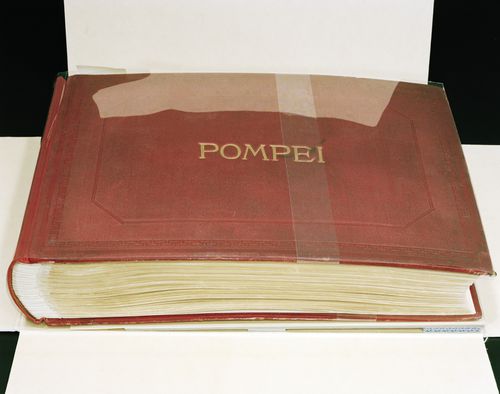
Questioning Pictures: Photograph of Souvenir de Pompei, albumen print by Giorgio Sommer, ca.1870
Questioning Pictures: Photograph of Souvenir de Pompei, albumen print by Giorgio Sommer, ca.1870
Actions:
Reference number:
PH2018:0005:030
Description:
Photograph by Stefano Graziani of the following work: Giorgio Sommer, Souvenir de Pompei, ca. 1870s, albumen silver print, 30.5 x 44.2 x 9.1 cm (Album), PH1980:0046:001-101, Canadian Centre for Architecture, Montréal Questioning Pictures is a 36 photograph project commissioned by Fondazione Prada, Milan. Artist Stefano Graziani investigates archival and conservation systems in a number of museums. Through photographing museum objects, Graziani, focusing on the relationship between photographs, the museum objects and the power structures at play within institutions. The museums include the Canadian Centre for Architecture (CCA) in Montréal, Canada; Sir John Soane’s Museum in London, UK; the Kunstmuseum Basel, Switzerland; Museum Insel Hombroich in Neuss, Germany; the Museo di Castelvecchio in Verona, Italy; and the Plaster Cast Gallery at Museo Canova in Possagno, Italy.
PH2018:0005:030
Description:
Photograph by Stefano Graziani of the following work: Giorgio Sommer, Souvenir de Pompei, ca. 1870s, albumen silver print, 30.5 x 44.2 x 9.1 cm (Album), PH1980:0046:001-101, Canadian Centre for Architecture, Montréal Questioning Pictures is a 36 photograph project commissioned by Fondazione Prada, Milan. Artist Stefano Graziani investigates archival and conservation systems in a number of museums. Through photographing museum objects, Graziani, focusing on the relationship between photographs, the museum objects and the power structures at play within institutions. The museums include the Canadian Centre for Architecture (CCA) in Montréal, Canada; Sir John Soane’s Museum in London, UK; the Kunstmuseum Basel, Switzerland; Museum Insel Hombroich in Neuss, Germany; the Museo di Castelvecchio in Verona, Italy; and the Plaster Cast Gallery at Museo Canova in Possagno, Italy.
People:
Date:
2017
2017
Title:
Questioning Pictures: Photograph of Souvenir de Pompei, albumen print by Giorgio Sommer, ca.1870
Actions:
PH2018:0005:030
Description:
Photograph by Stefano Graziani of the following work: Giorgio Sommer, Souvenir de Pompei, ca. 1870s, albumen silver print, 30.5 x 44.2 x 9.1 cm (Album), PH1980:0046:001-101, Canadian Centre for Architecture, Montréal Questioning Pictures is a 36 photograph project commissioned by Fondazione Prada, Milan. Artist Stefano Graziani investigates archival and conservation systems in a number of museums. Through photographing museum objects, Graziani, focusing on the relationship between photographs, the museum objects and the power structures at play within institutions. The museums include the Canadian Centre for Architecture (CCA) in Montréal, Canada; Sir John Soane’s Museum in London, UK; the Kunstmuseum Basel, Switzerland; Museum Insel Hombroich in Neuss, Germany; the Museo di Castelvecchio in Verona, Italy; and the Plaster Cast Gallery at Museo Canova in Possagno, Italy.
Questioning Pictures: Photograph of Souvenir de Pompei, albumen print by Giorgio Sommer, ca.1870
Actions:
PH2018:0005:030
Description:
Photograph by Stefano Graziani of the following work: Giorgio Sommer, Souvenir de Pompei, ca. 1870s, albumen silver print, 30.5 x 44.2 x 9.1 cm (Album), PH1980:0046:001-101, Canadian Centre for Architecture, Montréal Questioning Pictures is a 36 photograph project commissioned by Fondazione Prada, Milan. Artist Stefano Graziani investigates archival and conservation systems in a number of museums. Through photographing museum objects, Graziani, focusing on the relationship between photographs, the museum objects and the power structures at play within institutions. The museums include the Canadian Centre for Architecture (CCA) in Montréal, Canada; Sir John Soane’s Museum in London, UK; the Kunstmuseum Basel, Switzerland; Museum Insel Hombroich in Neuss, Germany; the Museo di Castelvecchio in Verona, Italy; and the Plaster Cast Gallery at Museo Canova in Possagno, Italy.
Form:
photographs
photographs
Date:
2017
2017
People:
Form:
photographs
photographs
Actions:
Reference number:
PH2018:0005:035
Description:
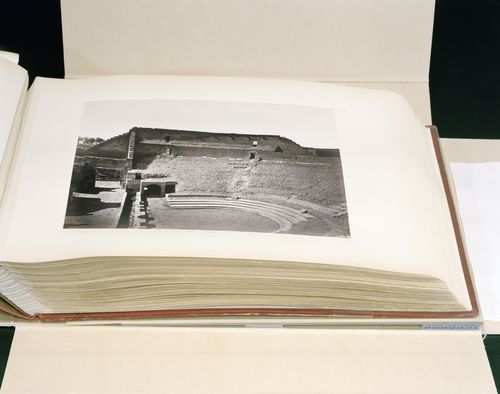
Photograph by Stefano Graziani of the following work: Giorgio Sommer, Teatro tragico Pompei, ca. 1870s, from Album Souvenir de Pompei, albumen silver print, 20.6 x 27.0, PH1980:0046:024, Canadian Centre for Architecture, Montréal Questioning Pictures is a 36 photograph project commissioned by Fondazione Prada, Milan. Artist Stefano Graziani investigates archival and conservation systems in a number of museums. Through photographing museum objects, Graziani, focusing on the relationship between photographs, the museum objects and the power structures at play within institutions. The museums include the Canadian Centre for Architecture (CCA) in Montréal, Canada; Sir John Soane’s Museum in London, UK; the Kunstmuseum Basel, Switzerland; Museum Insel Hombroich in Neuss, Germany; the Museo di Castelvecchio in Verona, Italy; and the Plaster Cast Gallery at Museo Canova in Possagno, Italy.
PH2018:0005:035
Description:
Photograph by Stefano Graziani of the following work: Giorgio Sommer, Teatro tragico Pompei, ca. 1870s, from Album Souvenir de Pompei, albumen silver print, 20.6 x 27.0, PH1980:0046:024, Canadian Centre for Architecture, Montréal Questioning Pictures is a 36 photograph project commissioned by Fondazione Prada, Milan. Artist Stefano Graziani investigates archival and conservation systems in a number of museums. Through photographing museum objects, Graziani, focusing on the relationship between photographs, the museum objects and the power structures at play within institutions. The museums include the Canadian Centre for Architecture (CCA) in Montréal, Canada; Sir John Soane’s Museum in London, UK; the Kunstmuseum Basel, Switzerland; Museum Insel Hombroich in Neuss, Germany; the Museo di Castelvecchio in Verona, Italy; and the Plaster Cast Gallery at Museo Canova in Possagno, Italy.
People:
Date:
2017
2017
Title:
Questioning Pictures: Photograph of Teatro tragico Pompei from Souvenir album by Giorgio Sommer, ca.1870
Actions:
PH2018:0005:035
Description:
Photograph by Stefano Graziani of the following work: Giorgio Sommer, Teatro tragico Pompei, ca. 1870s, from Album Souvenir de Pompei, albumen silver print, 20.6 x 27.0, PH1980:0046:024, Canadian Centre for Architecture, Montréal Questioning Pictures is a 36 photograph project commissioned by Fondazione Prada, Milan. Artist Stefano Graziani investigates archival and conservation systems in a number of museums. Through photographing museum objects, Graziani, focusing on the relationship between photographs, the museum objects and the power structures at play within institutions. The museums include the Canadian Centre for Architecture (CCA) in Montréal, Canada; Sir John Soane’s Museum in London, UK; the Kunstmuseum Basel, Switzerland; Museum Insel Hombroich in Neuss, Germany; the Museo di Castelvecchio in Verona, Italy; and the Plaster Cast Gallery at Museo Canova in Possagno, Italy.
Questioning Pictures: Photograph of Teatro tragico Pompei from Souvenir album by Giorgio Sommer, ca.1870
Actions:
PH2018:0005:035
Description:
Photograph by Stefano Graziani of the following work: Giorgio Sommer, Teatro tragico Pompei, ca. 1870s, from Album Souvenir de Pompei, albumen silver print, 20.6 x 27.0, PH1980:0046:024, Canadian Centre for Architecture, Montréal Questioning Pictures is a 36 photograph project commissioned by Fondazione Prada, Milan. Artist Stefano Graziani investigates archival and conservation systems in a number of museums. Through photographing museum objects, Graziani, focusing on the relationship between photographs, the museum objects and the power structures at play within institutions. The museums include the Canadian Centre for Architecture (CCA) in Montréal, Canada; Sir John Soane’s Museum in London, UK; the Kunstmuseum Basel, Switzerland; Museum Insel Hombroich in Neuss, Germany; the Museo di Castelvecchio in Verona, Italy; and the Plaster Cast Gallery at Museo Canova in Possagno, Italy.
Form:
photographs
photographs
Date:
2017
2017
People:
Form:
exhibitions
exhibitions
Actions:
Description:
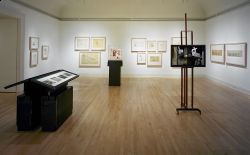
The exhibition addresses a central and timely aspect of the work of Carlo Scarpa: its distinctive approach to contending with the layers of history that mark the fabric of a city and a building. In addressing Scarpa’s ability to weave new work into, and often out of, the disparate fragments of the old, Carlo Scarpa, Architect: Intervening with History begins to unravel(...)
The exhibition addresses a central and timely aspect of the work of Carlo Scarpa: its distinctive approach to contending with the layers of history that mark the fabric of a city and a building. In addressing Scarpa’s ability to weave new work into, and often out of, the disparate fragments of the old, Carlo Scarpa, Architect: Intervening with History begins to unravel(...)
Location:
Main galleries
Main galleries
Date:
26 May 1999 to 31 October 1999
26 May 1999 to 31 October 1999
Title:
Carlo Scarpa, Architect: Intervening with History
Actions:
Description:
The exhibition addresses a central and timely aspect of the work of Carlo Scarpa: its distinctive approach to contending with the layers of history that mark the fabric of a city and a building. In addressing Scarpa’s ability to weave new work into, and often out of, the disparate fragments of the old, Carlo Scarpa, Architect: Intervening with History begins to unravel(...)
Carlo Scarpa, Architect: Intervening with History
Actions:
Description:
The exhibition addresses a central and timely aspect of the work of Carlo Scarpa: its distinctive approach to contending with the layers of history that mark the fabric of a city and a building. In addressing Scarpa’s ability to weave new work into, and often out of, the disparate fragments of the old, Carlo Scarpa, Architect: Intervening with History begins to unravel(...)
Form:
exhibitions
exhibitions
Date:
26 May 1999 to
31 October 1999
26 May 1999 to
31 October 1999
Location:
Main galleries
Main galleries
Level of archival description:
Series
Series
Title:
TopSolid development
TopSolid development
Actions:
Reference number:
AP169.S2
Description:
Series 2, TopSolid development, 1992 - 2011, documents Bernard Cache’s contribution to the development of the software TopSolid. This series includes born-digital material and chiefly dates from 1999 - 2008. Created in 1987 by Missler software, TopSolid was one of the first computer-aided design (CAD) software usable on portable computers. Bernard Cache was an early adopter of TopSolid and was later asked to contribute to the development of further versions of the software. It then became one of the first pieces of software to support both CAD and computer-aided manufacturing (CAM), which resulted from a radical proposition to link parametric design software seamlessly to robotic manufacturing. Bernard Cache’s contribution to this project underscores his interest for mathematics, geometry, and engineering reflected in his other areas of architectural and design work. Materials in this series portray Cache’s role in the development of the software. This includes programming records for the codes and configuration of the software which are primarily in plain text formats, still images and CAD formats (TopSolid). It also includes programming records for TopWood,an alternate software derived from TopSolid and developed to target the specificities of the wood industry. There are also a significant number of textual records, which constitutes training documents, bug reports, and correspondence (in Word and Excel formats).
AP169.S2
Description:
Series 2, TopSolid development, 1992 - 2011, documents Bernard Cache’s contribution to the development of the software TopSolid. This series includes born-digital material and chiefly dates from 1999 - 2008. Created in 1987 by Missler software, TopSolid was one of the first computer-aided design (CAD) software usable on portable computers. Bernard Cache was an early adopter of TopSolid and was later asked to contribute to the development of further versions of the software. It then became one of the first pieces of software to support both CAD and computer-aided manufacturing (CAM), which resulted from a radical proposition to link parametric design software seamlessly to robotic manufacturing. Bernard Cache’s contribution to this project underscores his interest for mathematics, geometry, and engineering reflected in his other areas of architectural and design work. Materials in this series portray Cache’s role in the development of the software. This includes programming records for the codes and configuration of the software which are primarily in plain text formats, still images and CAD formats (TopSolid). It also includes programming records for TopWood,an alternate software derived from TopSolid and developed to target the specificities of the wood industry. There are also a significant number of textual records, which constitutes training documents, bug reports, and correspondence (in Word and Excel formats).
People:
Date:
1992-2011
1992-2011
Title:
TopSolid development
Actions:
AP169.S2
Description:
Series 2, TopSolid development, 1992 - 2011, documents Bernard Cache’s contribution to the development of the software TopSolid. This series includes born-digital material and chiefly dates from 1999 - 2008. Created in 1987 by Missler software, TopSolid was one of the first computer-aided design (CAD) software usable on portable computers. Bernard Cache was an early adopter of TopSolid and was later asked to contribute to the development of further versions of the software. It then became one of the first pieces of software to support both CAD and computer-aided manufacturing (CAM), which resulted from a radical proposition to link parametric design software seamlessly to robotic manufacturing. Bernard Cache’s contribution to this project underscores his interest for mathematics, geometry, and engineering reflected in his other areas of architectural and design work. Materials in this series portray Cache’s role in the development of the software. This includes programming records for the codes and configuration of the software which are primarily in plain text formats, still images and CAD formats (TopSolid). It also includes programming records for TopWood,an alternate software derived from TopSolid and developed to target the specificities of the wood industry. There are also a significant number of textual records, which constitutes training documents, bug reports, and correspondence (in Word and Excel formats).
TopSolid development
Actions:
AP169.S2
Description:
Series 2, TopSolid development, 1992 - 2011, documents Bernard Cache’s contribution to the development of the software TopSolid. This series includes born-digital material and chiefly dates from 1999 - 2008. Created in 1987 by Missler software, TopSolid was one of the first computer-aided design (CAD) software usable on portable computers. Bernard Cache was an early adopter of TopSolid and was later asked to contribute to the development of further versions of the software. It then became one of the first pieces of software to support both CAD and computer-aided manufacturing (CAM), which resulted from a radical proposition to link parametric design software seamlessly to robotic manufacturing. Bernard Cache’s contribution to this project underscores his interest for mathematics, geometry, and engineering reflected in his other areas of architectural and design work. Materials in this series portray Cache’s role in the development of the software. This includes programming records for the codes and configuration of the software which are primarily in plain text formats, still images and CAD formats (TopSolid). It also includes programming records for TopWood,an alternate software derived from TopSolid and developed to target the specificities of the wood industry. There are also a significant number of textual records, which constitutes training documents, bug reports, and correspondence (in Word and Excel formats).
Level of archival description:
Series
Series
Date:
1992-2011
1992-2011
People:


