


183 Results
Form:
books
books

Title:
The German issue
The German issue
Actions:
Price:
$34.95
(available to order)
Summary:
Like a time capsule, The German Issue brings together all the major "issues" that were being debated on both sides of the Atlantic—which eventually found their abrupt resolution in 1989 with the fall of the Berlin Wall. It involved the most important voices of the period—from writers and filmmakers to anthropologists, activists and poets, terrorists and philosophers:(...)
$34.95
(available to order)
Summary:
Like a time capsule, The German Issue brings together all the major "issues" that were being debated on both sides of the Atlantic—which eventually found their abrupt resolution in 1989 with the fall of the Berlin Wall. It involved the most important voices of the period—from writers and filmmakers to anthropologists, activists and poets, terrorists and philosophers:(...)
Title:
The German issue
Actions:
Price:
$34.95
(available to order)
Summary:
Like a time capsule, The German Issue brings together all the major "issues" that were being debated on both sides of the Atlantic—which eventually found their abrupt resolution in 1989 with the fall of the Berlin Wall. It involved the most important voices of the period—from writers and filmmakers to anthropologists, activists and poets, terrorists and philosophers: Joseph Beuys, Michel Foucault, Christo, Christa Wolf, Walter Abish, Alexander Kluge, Paul Virilio, Ulrilke Meinhof, William Burroughs, Jean Baudrillard, Hans Magnus Enzenberger, Maurice Blanchot, Hans Jürgen Syberberg, Heidegger, André Gorz, Helke Sander. Opening with Christo's "Wrapping Up of Germany" and the celebrated dialogue between East German dramaturge Heiner Müller and Sylvère Lotringer on the Wall ("Mauer"), since published in many languages, The German Issue offers a first-hand account of the Western world on the threshold of a major global mutation. It also embodies at its best Semiotext(e)'s tenacious effort to establish a creative bridge between art and intellect, culture and politics, Europe and America.
The German issue
Actions:
Price:
$34.95
(available to order)
Summary:
Like a time capsule, The German Issue brings together all the major "issues" that were being debated on both sides of the Atlantic—which eventually found their abrupt resolution in 1989 with the fall of the Berlin Wall. It involved the most important voices of the period—from writers and filmmakers to anthropologists, activists and poets, terrorists and philosophers: Joseph Beuys, Michel Foucault, Christo, Christa Wolf, Walter Abish, Alexander Kluge, Paul Virilio, Ulrilke Meinhof, William Burroughs, Jean Baudrillard, Hans Magnus Enzenberger, Maurice Blanchot, Hans Jürgen Syberberg, Heidegger, André Gorz, Helke Sander. Opening with Christo's "Wrapping Up of Germany" and the celebrated dialogue between East German dramaturge Heiner Müller and Sylvère Lotringer on the Wall ("Mauer"), since published in many languages, The German Issue offers a first-hand account of the Western world on the threshold of a major global mutation. It also embodies at its best Semiotext(e)'s tenacious effort to establish a creative bridge between art and intellect, culture and politics, Europe and America.
Form:
books
books
Publication:
October 2009
October 2009
Subject:
Critical Theory
Critical Theory
Form:
books
books
Title:
The Panopticon writings
The Panopticon writings
Actions:
Price:
$23.95
(available to order)
Summary:
The Panopticon project for a model prison obsessed the English philosopher Jeremy Bentham for almost 20 years. In the end, the project came to nothing; the Panopticon was never built. But it is precisely this that makes the Panopticon project the best exemplification of Bentham's own theory of fictions, according to which non-existent fictitious entities can have all too(...)
$23.95
(available to order)
Summary:
The Panopticon project for a model prison obsessed the English philosopher Jeremy Bentham for almost 20 years. In the end, the project came to nothing; the Panopticon was never built. But it is precisely this that makes the Panopticon project the best exemplification of Bentham's own theory of fictions, according to which non-existent fictitious entities can have all too(...)
Title:
The Panopticon writings
Actions:
Price:
$23.95
(available to order)
Summary:
The Panopticon project for a model prison obsessed the English philosopher Jeremy Bentham for almost 20 years. In the end, the project came to nothing; the Panopticon was never built. But it is precisely this that makes the Panopticon project the best exemplification of Bentham's own theory of fictions, according to which non-existent fictitious entities can have all too real effects. There is probably no building that has stirred more philosophical controversy than Bentham's Panopticon. It is not merely, as Foucault thought, "a cruel, ingenious cage", in which subjects collaborate in their own subjection, but much more - constructing the Panopticon produces not only a prison, but also a god within it. It is a machine which on assembly is already inhabited by a ghost. It is through the Panopticon and the closely related theory of fictions that Bentham has made his greatest impact on modern thought; above all, on the theory of power.
The Panopticon writings
Actions:
Price:
$23.95
(available to order)
Summary:
The Panopticon project for a model prison obsessed the English philosopher Jeremy Bentham for almost 20 years. In the end, the project came to nothing; the Panopticon was never built. But it is precisely this that makes the Panopticon project the best exemplification of Bentham's own theory of fictions, according to which non-existent fictitious entities can have all too real effects. There is probably no building that has stirred more philosophical controversy than Bentham's Panopticon. It is not merely, as Foucault thought, "a cruel, ingenious cage", in which subjects collaborate in their own subjection, but much more - constructing the Panopticon produces not only a prison, but also a god within it. It is a machine which on assembly is already inhabited by a ghost. It is through the Panopticon and the closely related theory of fictions that Bentham has made his greatest impact on modern thought; above all, on the theory of power.
Form:
books
books
Publication:
January 2011
January 2011
Subject:
Critical Theory
Critical Theory
Form:
books
books
Actions:
Price:
$32.95
(available to order)
Summary:
Rational self-interest is often seen as being at the heart of liberal economic theory. In The Power at the End of the Economy Brian Massumi provides an alternative explanation, arguing that neoliberalism is grounded in complex interactions between the rational and the emotional. Offering a new theory of political economy that refuses the liberal prioritization of(...)
$32.95
(available to order)
Summary:
Rational self-interest is often seen as being at the heart of liberal economic theory. In The Power at the End of the Economy Brian Massumi provides an alternative explanation, arguing that neoliberalism is grounded in complex interactions between the rational and the emotional. Offering a new theory of political economy that refuses the liberal prioritization of(...)
Title:
The power at the end of the economy
Actions:
Price:
$32.95
(available to order)
Summary:
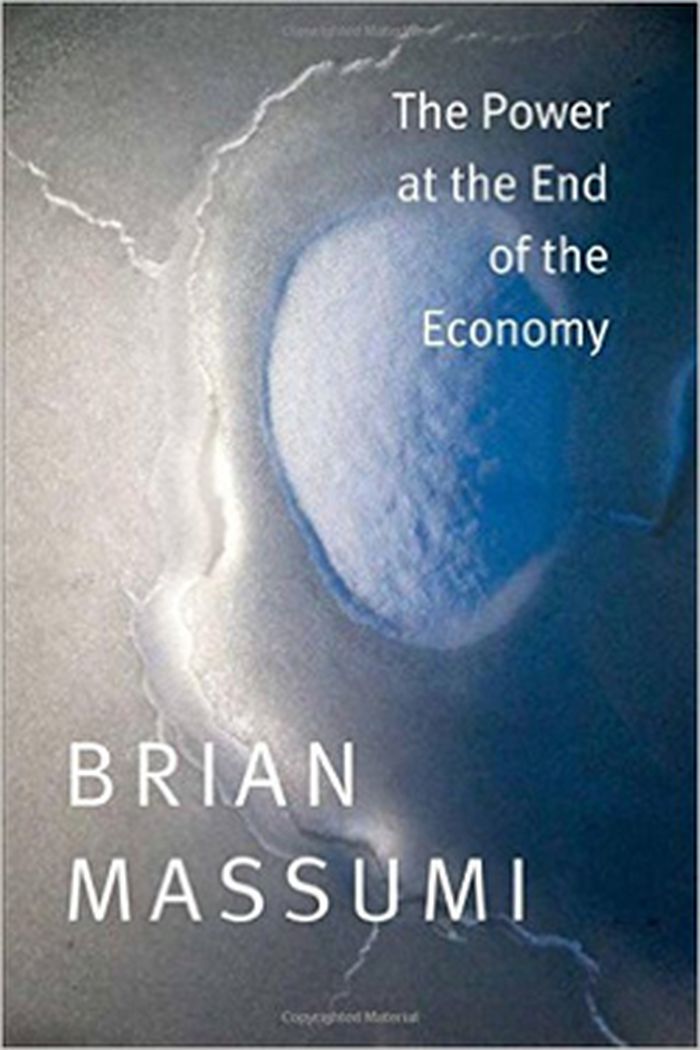
Rational self-interest is often seen as being at the heart of liberal economic theory. In The Power at the End of the Economy Brian Massumi provides an alternative explanation, arguing that neoliberalism is grounded in complex interactions between the rational and the emotional. Offering a new theory of political economy that refuses the liberal prioritization of individual choice, Massumi emphasizes the means through which an individual’s affective tendencies resonate with those of others on infra-individual and transindividual levels. This nonconscious dimension of social and political events plays out in ways that defy the traditional equation between affect and the irrational. Massumi uses the Arab Spring and the Occupy Movement as examples to show how transformative action that exceeds self-interest takes place. Drawing from David Hume, Michel Foucault, Gilles Deleuze, Niklas Luhmann and the field of nonconsciousness studies, Massumi urges a rethinking of the relationship between rational choice and affect, arguing for a reassessment of the role of sympathy in political and economic affairs.
The power at the end of the economy
Actions:
Price:
$32.95
(available to order)
Summary:
Rational self-interest is often seen as being at the heart of liberal economic theory. In The Power at the End of the Economy Brian Massumi provides an alternative explanation, arguing that neoliberalism is grounded in complex interactions between the rational and the emotional. Offering a new theory of political economy that refuses the liberal prioritization of individual choice, Massumi emphasizes the means through which an individual’s affective tendencies resonate with those of others on infra-individual and transindividual levels. This nonconscious dimension of social and political events plays out in ways that defy the traditional equation between affect and the irrational. Massumi uses the Arab Spring and the Occupy Movement as examples to show how transformative action that exceeds self-interest takes place. Drawing from David Hume, Michel Foucault, Gilles Deleuze, Niklas Luhmann and the field of nonconsciousness studies, Massumi urges a rethinking of the relationship between rational choice and affect, arguing for a reassessment of the role of sympathy in political and economic affairs.
Form:
books
books
Publication:
December 2014
December 2014
Subject:
Critical Theory
Critical Theory
Form:
books
books

Title:
Schizo culture
Schizo culture
Actions:
Price:
$42.00
(available to order)
Summary:
The legendary 1975 “Schizo-Culture” conference, conceived by the early Semiotext(e) collective, began as an attempt to introduce the then-unknown radical philosophies of post-’68 France to the American avant-garde. The conference was equally important on a political level, and brought together a diverse group of activists, thinkers, patients, and ex-cons in order to(...)
$42.00
(available to order)
Summary:
The legendary 1975 “Schizo-Culture” conference, conceived by the early Semiotext(e) collective, began as an attempt to introduce the then-unknown radical philosophies of post-’68 France to the American avant-garde. The conference was equally important on a political level, and brought together a diverse group of activists, thinkers, patients, and ex-cons in order to(...)
Title:
Schizo culture
Actions:
Price:
$42.00
(available to order)
Summary:
The legendary 1975 “Schizo-Culture” conference, conceived by the early Semiotext(e) collective, began as an attempt to introduce the then-unknown radical philosophies of post-’68 France to the American avant-garde. The conference was equally important on a political level, and brought together a diverse group of activists, thinkers, patients, and ex-cons in order to address the challenge of penal and psychiatric institutions. The “Schizo-Culture” issue of the Semiotext(e) journal came three years later. Designed by a group of artists and filmmakers, it documented the chaotic creativity of an emerging downtown New York scene, and offered interviews with artists, theorists, writers, and No Wave and pre-punk musicians together with new texts from Deleuze, Foucault, R. D. Laing, and other conference participants. This slip-cased edition includes The Book: 1978, a facsimile reproduction of the original Schizo-Culture publication; and The Event: 1975, a previously unpublished and comprehensive record of the conference that set it all off. It assembles many previously unpublished texts.
Schizo culture
Actions:
Price:
$42.00
(available to order)
Summary:
The legendary 1975 “Schizo-Culture” conference, conceived by the early Semiotext(e) collective, began as an attempt to introduce the then-unknown radical philosophies of post-’68 France to the American avant-garde. The conference was equally important on a political level, and brought together a diverse group of activists, thinkers, patients, and ex-cons in order to address the challenge of penal and psychiatric institutions. The “Schizo-Culture” issue of the Semiotext(e) journal came three years later. Designed by a group of artists and filmmakers, it documented the chaotic creativity of an emerging downtown New York scene, and offered interviews with artists, theorists, writers, and No Wave and pre-punk musicians together with new texts from Deleuze, Foucault, R. D. Laing, and other conference participants. This slip-cased edition includes The Book: 1978, a facsimile reproduction of the original Schizo-Culture publication; and The Event: 1975, a previously unpublished and comprehensive record of the conference that set it all off. It assembles many previously unpublished texts.
Form:
books
books
Publication:
November 2013
November 2013
Subject:
Critical Theory
Critical Theory
Form:
books
books

Title:
Anthropocene Feminism
Anthropocene Feminism
Actions:
Price:
$39.95
(available to order)
Summary:
What does feminism have to say to the Anthropocene? How does the concept of the Anthropocene impact feminism? This book is a daring and provocative response to the masculinist and techno-normative approach to the Anthropocene so often taken by technoscientists, artists, humanists, and social scientists. By coining and, for the first time, fully exploring the concept of(...)
$39.95
(available to order)
Summary:
What does feminism have to say to the Anthropocene? How does the concept of the Anthropocene impact feminism? This book is a daring and provocative response to the masculinist and techno-normative approach to the Anthropocene so often taken by technoscientists, artists, humanists, and social scientists. By coining and, for the first time, fully exploring the concept of(...)
Publication:
March 2017
March 2017
Title:
Anthropocene Feminism
Actions:
Price:
$39.95
(available to order)
Summary:
What does feminism have to say to the Anthropocene? How does the concept of the Anthropocene impact feminism? This book is a daring and provocative response to the masculinist and techno-normative approach to the Anthropocene so often taken by technoscientists, artists, humanists, and social scientists. By coining and, for the first time, fully exploring the concept of “anthropocene feminism,” it highlights the alternatives feminism and queer theory can offer for thinking about the Anthropocene. Feminist theory has long been concerned with the anthropogenic impact of humans, particularly men, on nature. Consequently, the contributors to this volume explore not only what current interest in the Anthropocene might mean for feminism but also what it is that feminist theory can contribute to technoscientific understandings of the Anthropocene. With essays from prominent environmental and feminist scholars on topics ranging from Hawaiian poetry to Foucault to shelled creatures to hypomodernity to posthuman feminism, this book highlights both why we need an anthropocene feminism and why thinking about the Anthropocene must come from feminism.
Anthropocene Feminism
Actions:
Price:
$39.95
(available to order)
Summary:
What does feminism have to say to the Anthropocene? How does the concept of the Anthropocene impact feminism? This book is a daring and provocative response to the masculinist and techno-normative approach to the Anthropocene so often taken by technoscientists, artists, humanists, and social scientists. By coining and, for the first time, fully exploring the concept of “anthropocene feminism,” it highlights the alternatives feminism and queer theory can offer for thinking about the Anthropocene. Feminist theory has long been concerned with the anthropogenic impact of humans, particularly men, on nature. Consequently, the contributors to this volume explore not only what current interest in the Anthropocene might mean for feminism but also what it is that feminist theory can contribute to technoscientific understandings of the Anthropocene. With essays from prominent environmental and feminist scholars on topics ranging from Hawaiian poetry to Foucault to shelled creatures to hypomodernity to posthuman feminism, this book highlights both why we need an anthropocene feminism and why thinking about the Anthropocene must come from feminism.
Form:
books
books
Publication:
March 2017
March 2017
Form:
books
books
Actions:
Price:
$49.95
(available to order)
Summary:
Few writers have had a greater impact on the methods of art-making in the twentieth century than Raymond Roussel (1877-1933). Marcel Duchamp acknowledged Roussel as the foremost influence on his "Large Glass"; André Breton described him as the "greatest magnetizer of modern times"; and at least two generations of conceptual artists, from Allen Ruppersberg and Guy de(...)
$49.95
(available to order)
Summary:
Few writers have had a greater impact on the methods of art-making in the twentieth century than Raymond Roussel (1877-1933). Marcel Duchamp acknowledged Roussel as the foremost influence on his "Large Glass"; André Breton described him as the "greatest magnetizer of modern times"; and at least two generations of conceptual artists, from Allen Ruppersberg and Guy de(...)
Title:
Locus Solus : impressions of Raymond Roussel
Actions:
Price:
$49.95
(available to order)
Summary:
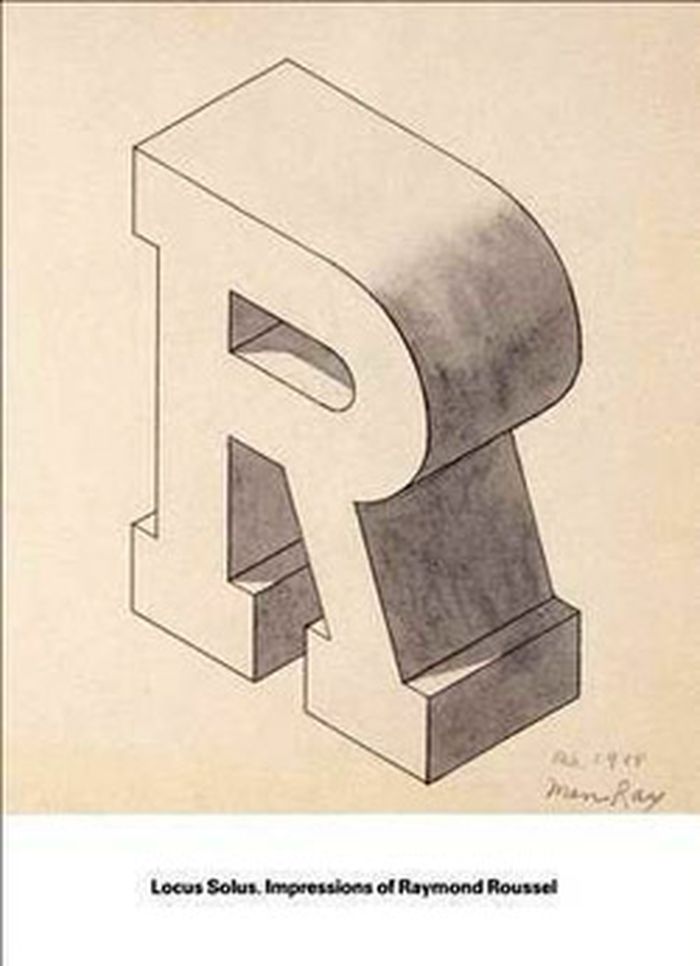
Few writers have had a greater impact on the methods of art-making in the twentieth century than Raymond Roussel (1877-1933). Marcel Duchamp acknowledged Roussel as the foremost influence on his "Large Glass"; André Breton described him as the "greatest magnetizer of modern times"; and at least two generations of conceptual artists, from Allen Ruppersberg and Guy de Cointet to Rodney Graham and Paul Etienne Lincoln have borrowed or adapted Roussel's "procédé" for writing, which involved selecting two similar-sounding words, elaborating them into two similar-sounding sentences and then "writing a tale which can start with the first and finish by the second." Reproducing a wealth of archival materials, artworks and writings, this volume - a kind of Roussel encyclopedia - assesses the writer's legacy in art for the first time. Alongside works by the above, it includes art by Max Ernst, Salvador Dalí, Joseph Cornell, Ree Morton and others; and writings on Roussel by Jean Cocteau, Paul Eluard, Michel Leiris, Duchamp, Dalí, Philippe Soupault, Ernst, Breton, Ruppersberg, Michel Foucault, Jacques Brunius and Michel Butor.
Locus Solus : impressions of Raymond Roussel
Actions:
Price:
$49.95
(available to order)
Summary:
Few writers have had a greater impact on the methods of art-making in the twentieth century than Raymond Roussel (1877-1933). Marcel Duchamp acknowledged Roussel as the foremost influence on his "Large Glass"; André Breton described him as the "greatest magnetizer of modern times"; and at least two generations of conceptual artists, from Allen Ruppersberg and Guy de Cointet to Rodney Graham and Paul Etienne Lincoln have borrowed or adapted Roussel's "procédé" for writing, which involved selecting two similar-sounding words, elaborating them into two similar-sounding sentences and then "writing a tale which can start with the first and finish by the second." Reproducing a wealth of archival materials, artworks and writings, this volume - a kind of Roussel encyclopedia - assesses the writer's legacy in art for the first time. Alongside works by the above, it includes art by Max Ernst, Salvador Dalí, Joseph Cornell, Ree Morton and others; and writings on Roussel by Jean Cocteau, Paul Eluard, Michel Leiris, Duchamp, Dalí, Philippe Soupault, Ernst, Breton, Ruppersberg, Michel Foucault, Jacques Brunius and Michel Butor.
Form:
books
books
Publication:
June 2012
June 2012
Subject:
Contemporary Art Monographs
Contemporary Art Monographs
Form:
books
books
Title:
The Agony of Eros
The Agony of Eros
Actions:
Price:
$19.95
(available in store)
Summary:
Byung-Chul Han is one of the most widely read philosophers in Europe today, a member of the new generation of German thinkers that includes Markus Gabriel and Armen Avanessian. In "The agony of Eros", a bestseller in Germany, Han considers the threat to love and desire in today’s society. For Han, love requires the courage to accept self-negation for the sake of(...)
$19.95
(available in store)
Summary:
Byung-Chul Han is one of the most widely read philosophers in Europe today, a member of the new generation of German thinkers that includes Markus Gabriel and Armen Avanessian. In "The agony of Eros", a bestseller in Germany, Han considers the threat to love and desire in today’s society. For Han, love requires the courage to accept self-negation for the sake of(...)
Title:
The Agony of Eros
Actions:
Price:
$19.95
(available in store)
Summary:
Byung-Chul Han is one of the most widely read philosophers in Europe today, a member of the new generation of German thinkers that includes Markus Gabriel and Armen Avanessian. In "The agony of Eros", a bestseller in Germany, Han considers the threat to love and desire in today’s society. For Han, love requires the courage to accept self-negation for the sake of discovering the Other. In a world of fetishized individualism and technologically mediated social interaction, it is the Other that is eradicated, not the self. In today’s increasingly narcissistic society, we have come to look for love and desire within the “inferno of the same.” Han offers a survey of the threats to Eros, drawing on a wide range of sources—Lars von Trier’s film Melancholia, Wagner’s Tristan und Isolde, Fifty Shades of Grey, Michel Foucault (providing a scathing critique of Foucault’s valorization of power), Martin Buber, Hegel, Baudrillard, Flaubert, Barthes, Plato, and others. Han considers the “pornographication” of society, and shows how pornography profanes eros; addresses capitalism’s leveling of essential differences; and discusses the politics of eros in today’s “burnout society.” To be dead to love, Han argues, is to be dead to thought itself.
The Agony of Eros
Actions:
Price:
$19.95
(available in store)
Summary:
Byung-Chul Han is one of the most widely read philosophers in Europe today, a member of the new generation of German thinkers that includes Markus Gabriel and Armen Avanessian. In "The agony of Eros", a bestseller in Germany, Han considers the threat to love and desire in today’s society. For Han, love requires the courage to accept self-negation for the sake of discovering the Other. In a world of fetishized individualism and technologically mediated social interaction, it is the Other that is eradicated, not the self. In today’s increasingly narcissistic society, we have come to look for love and desire within the “inferno of the same.” Han offers a survey of the threats to Eros, drawing on a wide range of sources—Lars von Trier’s film Melancholia, Wagner’s Tristan und Isolde, Fifty Shades of Grey, Michel Foucault (providing a scathing critique of Foucault’s valorization of power), Martin Buber, Hegel, Baudrillard, Flaubert, Barthes, Plato, and others. Han considers the “pornographication” of society, and shows how pornography profanes eros; addresses capitalism’s leveling of essential differences; and discusses the politics of eros in today’s “burnout society.” To be dead to love, Han argues, is to be dead to thought itself.
Form:
books
books
Publication:
March 2017
March 2017
Subject:
Critical Theory
Critical Theory
Form:
books
books
Actions:
Price:
$95.00
(available in store)
Summary:
“Contested Spaces, Counter-narratives, and Culture from Below in Canada and Québec” explores strategies for reading space and conflict in Canadian and Québécois literature and cultural performances, positing questions such as: how do these texts and performances produce and contest spatial practices? What are the roles of the nation, city, community, and individual(...)
$95.00
(available in store)
Summary:
“Contested Spaces, Counter-narratives, and Culture from Below in Canada and Québec” explores strategies for reading space and conflict in Canadian and Québécois literature and cultural performances, positing questions such as: how do these texts and performances produce and contest spatial practices? What are the roles of the nation, city, community, and individual(...)
Subject:
Architecture in Canada
Architecture in Canada
Publication:
February 2019
February 2019
Title:
Contested spaces, counter-narratives, and culture from below in Canada and Quebec
Actions:
Price:
$95.00
(available in store)
Summary:
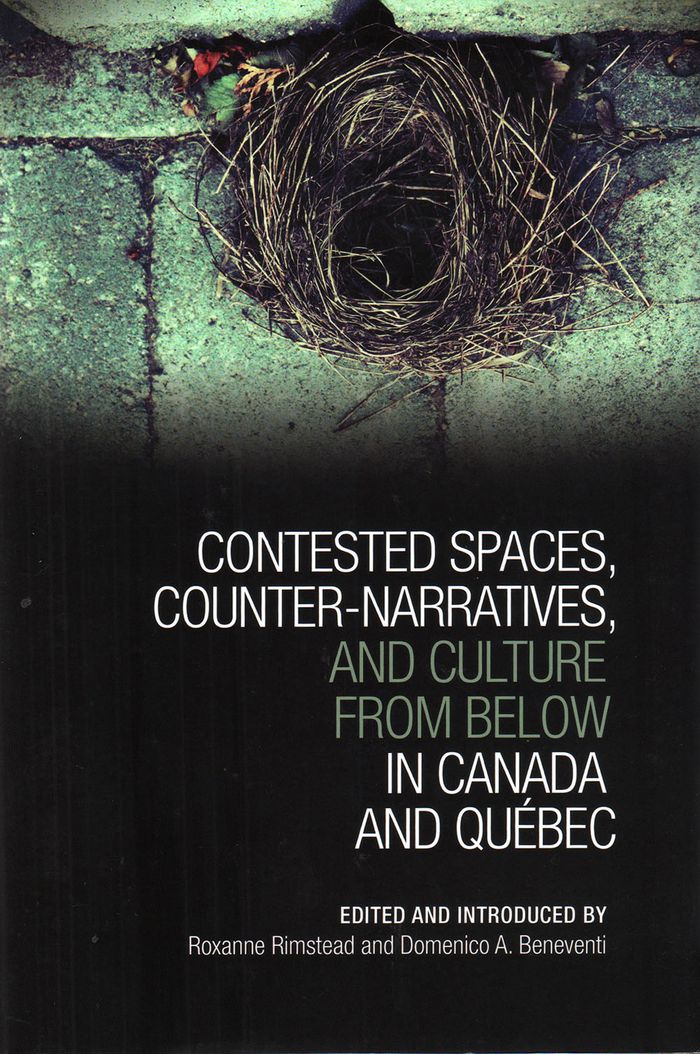
“Contested Spaces, Counter-narratives, and Culture from Below in Canada and Québec” explores strategies for reading space and conflict in Canadian and Québécois literature and cultural performances, positing questions such as: how do these texts and performances produce and contest spatial practices? What are the roles of the nation, city, community, and individual subject in reproducing space, particularly in times of global hegemony and neocolonialism? And in what ways do marginalized individuals and communities represent, contest, or appropriate spaces through counter-narratives and expressions of culture from below? Focusing on discord rather than harmony and consensus, this collection disturbs the idealized space of Canadian multicultural pluralism to carry literary analysis and cultural studies into spaces often undetected and unforeseen – including flophouses and "slums," shantytowns and urban alleyways, underground spaces and peep shows, and inner-city urban parks as they are experienced by minorities and other marginalized groups. These essays are the products of sustained, high-level collaboration across French and English academic communities in Canada to facilitate theoretical exchange on the topic of space and contestation, uncover geographies of exclusion, and generate new spaces of hope in the spirit of pioneering works by Henri Lefebvre, Michel Foucault, Michel de Certeau, Doreen Massey, David Harvey, and other prominent theorists of space.
Contested spaces, counter-narratives, and culture from below in Canada and Quebec
Actions:
Price:
$95.00
(available in store)
Summary:
“Contested Spaces, Counter-narratives, and Culture from Below in Canada and Québec” explores strategies for reading space and conflict in Canadian and Québécois literature and cultural performances, positing questions such as: how do these texts and performances produce and contest spatial practices? What are the roles of the nation, city, community, and individual subject in reproducing space, particularly in times of global hegemony and neocolonialism? And in what ways do marginalized individuals and communities represent, contest, or appropriate spaces through counter-narratives and expressions of culture from below? Focusing on discord rather than harmony and consensus, this collection disturbs the idealized space of Canadian multicultural pluralism to carry literary analysis and cultural studies into spaces often undetected and unforeseen – including flophouses and "slums," shantytowns and urban alleyways, underground spaces and peep shows, and inner-city urban parks as they are experienced by minorities and other marginalized groups. These essays are the products of sustained, high-level collaboration across French and English academic communities in Canada to facilitate theoretical exchange on the topic of space and contestation, uncover geographies of exclusion, and generate new spaces of hope in the spirit of pioneering works by Henri Lefebvre, Michel Foucault, Michel de Certeau, Doreen Massey, David Harvey, and other prominent theorists of space.
Form:
books
books
Publication:
February 2019
February 2019
Subject:
Architecture in Canada
Architecture in Canada
Form:
books
books
Actions:
Price:
$38.95
(available to order)
Summary:
Since its publication twenty years ago, Brian Massumi's pioneering ''Parables for the virtual'' has become an essential text for interdisciplinary scholars across the humanities. Massumi views the body and media such as television, film, and the internet as cultural formations that operate on multiple registers of sensation. Renewing and assessing William James's radical(...)
$38.95
(available to order)
Summary:
Since its publication twenty years ago, Brian Massumi's pioneering ''Parables for the virtual'' has become an essential text for interdisciplinary scholars across the humanities. Massumi views the body and media such as television, film, and the internet as cultural formations that operate on multiple registers of sensation. Renewing and assessing William James's radical(...)
Title:
Parables for the virtual: movement, affect, sensation
Actions:
Price:
$38.95
(available to order)
Summary:
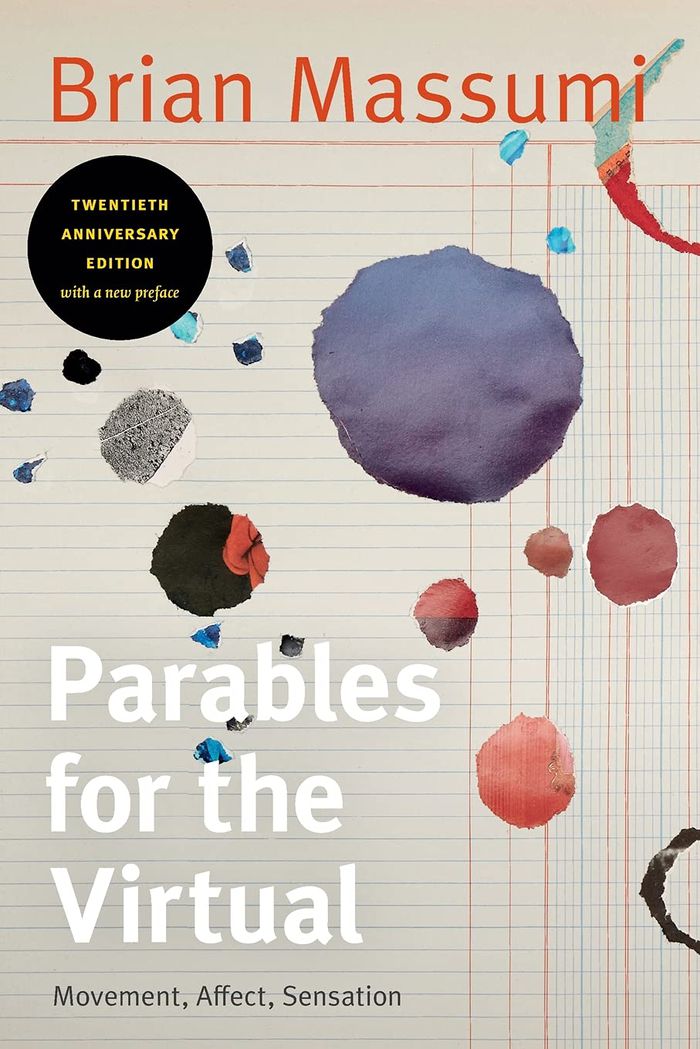
Since its publication twenty years ago, Brian Massumi's pioneering ''Parables for the virtual'' has become an essential text for interdisciplinary scholars across the humanities. Massumi views the body and media such as television, film, and the internet as cultural formations that operate on multiple registers of sensation. Renewing and assessing William James's radical empiricism and Henri Bergson's philosophy of perception through the filter of the postwar French philosophy of Deleuze, Guattari, and Foucault, Massumi links a cultural logic of variation to questions of movement, affect, and sensation. Replacing the traditional opposition of literal and figural with distinctions between stasis and motion and between actual and virtual, Massumi tackles related theoretical issues by applying them to cultural mediums as diverse as architecture, body art, the digital art of Stelarc, and Ronald Reagan's acting career. The result is an intriguing combination of cultural theory, science, and philosophy that asserts itself in a crystalline and multifaceted argument. This twentieth anniversary edition includes a new preface in which Massumi situates the book in relation to developments since its publication and outlines the evolution of its main concepts. It also includes two short texts, "Keywords for Affect" and "Missed Conceptions about Affect," in which Massumi explicates his approach to affect in ways that emphasize the book's political and philosophical stakes.
Parables for the virtual: movement, affect, sensation
Actions:
Price:
$38.95
(available to order)
Summary:
Since its publication twenty years ago, Brian Massumi's pioneering ''Parables for the virtual'' has become an essential text for interdisciplinary scholars across the humanities. Massumi views the body and media such as television, film, and the internet as cultural formations that operate on multiple registers of sensation. Renewing and assessing William James's radical empiricism and Henri Bergson's philosophy of perception through the filter of the postwar French philosophy of Deleuze, Guattari, and Foucault, Massumi links a cultural logic of variation to questions of movement, affect, and sensation. Replacing the traditional opposition of literal and figural with distinctions between stasis and motion and between actual and virtual, Massumi tackles related theoretical issues by applying them to cultural mediums as diverse as architecture, body art, the digital art of Stelarc, and Ronald Reagan's acting career. The result is an intriguing combination of cultural theory, science, and philosophy that asserts itself in a crystalline and multifaceted argument. This twentieth anniversary edition includes a new preface in which Massumi situates the book in relation to developments since its publication and outlines the evolution of its main concepts. It also includes two short texts, "Keywords for Affect" and "Missed Conceptions about Affect," in which Massumi explicates his approach to affect in ways that emphasize the book's political and philosophical stakes.
Form:
books
books
Publication:
September 2021
September 2021
Subject:
Critical Theory
Critical Theory
Form:
books
books

Actions:
Price:
$37.95
(available to order)
Summary:
Profoundly intimate yet immediately giving onto distant spaces, both an ‘organ of fear’ and an echo chamber of anticipated pleasures, an uncontrollable flow subject to unconscious selection and augmentation, the subtlety, complexity, and variety of modes of hearing has meant that sound has rarely received the same philosophical attention as the visual. In "The order of(...)
$37.95
(available to order)
Summary:
Profoundly intimate yet immediately giving onto distant spaces, both an ‘organ of fear’ and an echo chamber of anticipated pleasures, an uncontrollable flow subject to unconscious selection and augmentation, the subtlety, complexity, and variety of modes of hearing has meant that sound has rarely received the same philosophical attention as the visual. In "The order of(...)
Title:
The order of sounds: a sonorous archipelago
Actions:
Price:
$37.95
(available to order)
Summary:
Profoundly intimate yet immediately giving onto distant spaces, both an ‘organ of fear’ and an echo chamber of anticipated pleasures, an uncontrollable flow subject to unconscious selection and augmentation, the subtlety, complexity, and variety of modes of hearing has meant that sound has rarely received the same philosophical attention as the visual. In "The order of sounds", François J. Bonnet makes a compelling case for the irreducible heterogeneity of ‘sound’, navigating between the physical models constructed by psychophysics and refined through recording technologies, and the synthetic production of what is heard. From primitive vigilance and sonic mythologies to digital sampling and sound installations, he examines the ways in which we make sound speak to us, in an analysis of listening as a plurivocal phenomenon drawing on Foucault, Deleuze and Guattari, Barthes, Nancy, Adorno, and de Certeau, and experimental pioneers such as Tesla, Bell, and Raudive. Stringent critiques of the ‘soundscape’ and ‘reduced listening’ demonstrate that univocal ontologies of sound are always partial and politicized; for listening is always a selective fetishism, a hallucination of sound filtered by desire and convention, territorialized by discourse and its authorities. Bonnet proposes neither a disciplined listening that targets sound ‘itself’, nor an ‘ocean of sound’ in which we might lose ourselves, but instead maps out a sonorous archipelago—a heterogeneous set of shifting sonic territories shaped and aggregated by the vicissitudes of desire and discourse.
The order of sounds: a sonorous archipelago
Actions:
Price:
$37.95
(available to order)
Summary:
Profoundly intimate yet immediately giving onto distant spaces, both an ‘organ of fear’ and an echo chamber of anticipated pleasures, an uncontrollable flow subject to unconscious selection and augmentation, the subtlety, complexity, and variety of modes of hearing has meant that sound has rarely received the same philosophical attention as the visual. In "The order of sounds", François J. Bonnet makes a compelling case for the irreducible heterogeneity of ‘sound’, navigating between the physical models constructed by psychophysics and refined through recording technologies, and the synthetic production of what is heard. From primitive vigilance and sonic mythologies to digital sampling and sound installations, he examines the ways in which we make sound speak to us, in an analysis of listening as a plurivocal phenomenon drawing on Foucault, Deleuze and Guattari, Barthes, Nancy, Adorno, and de Certeau, and experimental pioneers such as Tesla, Bell, and Raudive. Stringent critiques of the ‘soundscape’ and ‘reduced listening’ demonstrate that univocal ontologies of sound are always partial and politicized; for listening is always a selective fetishism, a hallucination of sound filtered by desire and convention, territorialized by discourse and its authorities. Bonnet proposes neither a disciplined listening that targets sound ‘itself’, nor an ‘ocean of sound’ in which we might lose ourselves, but instead maps out a sonorous archipelago—a heterogeneous set of shifting sonic territories shaped and aggregated by the vicissitudes of desire and discourse.
Form:
books
books
Publication:
May 2016
May 2016
Subject:
Acoustics
Acoustics


