


435 Results
Form:
books
books
Actions:
Price:
$32.95
(available to order)
Summary:
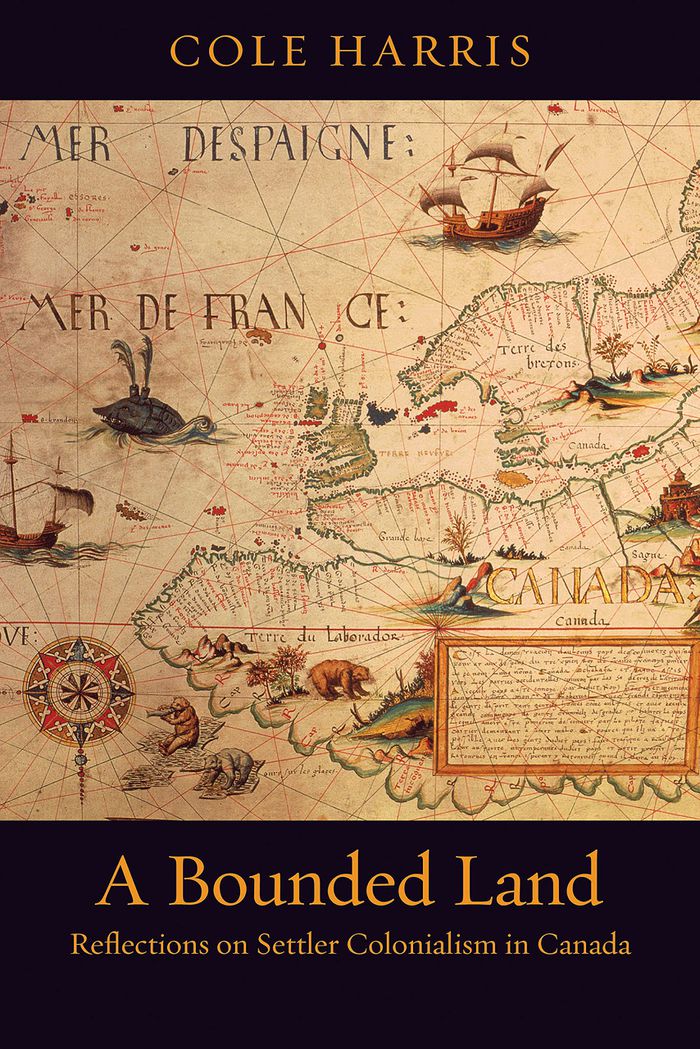
Canada is a bounded land – a nation situated between rock and cold to the north and a border to the south. Cole Harris traces how society was reorganized – for Indigenous and non-Indigenous people alike – when Europeans resettled this distinctive land. Through a series of vignettes that focus on people’s experiences on the ground, he exposes the underlying architecture of(...)
$32.95
(available to order)
Summary:
Canada is a bounded land – a nation situated between rock and cold to the north and a border to the south. Cole Harris traces how society was reorganized – for Indigenous and non-Indigenous people alike – when Europeans resettled this distinctive land. Through a series of vignettes that focus on people’s experiences on the ground, he exposes the underlying architecture of(...)
Title:
A bounded land: reflections on settler colonialism in Canada
Actions:
Price:
$32.95
(available to order)
Summary:
Canada is a bounded land – a nation situated between rock and cold to the north and a border to the south. Cole Harris traces how society was reorganized – for Indigenous and non-Indigenous people alike – when Europeans resettled this distinctive land. Through a series of vignettes that focus on people’s experiences on the ground, he exposes the underlying architecture of colonialism, from first contacts, to the immigrant experience in early Canada, to the dispossession of First Nations. In the process, he unearths fresh insights on the influence of Indigenous peoples and argues that Canada’s boundedness is ultimately drawing it toward its Indigenous roots.
A bounded land: reflections on settler colonialism in Canada
Actions:
Price:
$32.95
(available to order)
Summary:
Canada is a bounded land – a nation situated between rock and cold to the north and a border to the south. Cole Harris traces how society was reorganized – for Indigenous and non-Indigenous people alike – when Europeans resettled this distinctive land. Through a series of vignettes that focus on people’s experiences on the ground, he exposes the underlying architecture of colonialism, from first contacts, to the immigrant experience in early Canada, to the dispossession of First Nations. In the process, he unearths fresh insights on the influence of Indigenous peoples and argues that Canada’s boundedness is ultimately drawing it toward its Indigenous roots.
Form:
books
books
Publication:
October 2021
October 2021
Subject:
Social
Social
Form:
audio
audio
Title:
Nay Saysourinho.
Nay Saysourinho.
Actions:
Description:
1 online resource.
Author:
Subject:
Publication:
[Place of publication not identified] : The Funambulist, 2020.
[Place of publication not identified] : The Funambulist, 2020.
Form:
audio
audio
Publication:
[Place of publication not identified] : The Funambulist, 2020.
[Place of publication not identified] : The Funambulist, 2020.
Author:
Subject:
Form:
books
books
Price:
$32.95
(available to order)
Summary:
How does material culture become data? Why does this matter, and for whom? As the cultures of Indigenous peoples in North America were mined for scientific knowledge, years of organizing, classifying, and cataloguing hardened into accepted categories, naming conventions, and tribal affiliations – much of it wrong. 'Cataloguing Culture' examines how colonialism operates(...)
$32.95
(available to order)
Summary:
How does material culture become data? Why does this matter, and for whom? As the cultures of Indigenous peoples in North America were mined for scientific knowledge, years of organizing, classifying, and cataloguing hardened into accepted categories, naming conventions, and tribal affiliations – much of it wrong. 'Cataloguing Culture' examines how colonialism operates(...)
Title:
Cataloguing culture: legacies of colonialism in museum documentation
Actions:
Price:
$32.95
(available to order)
Summary:
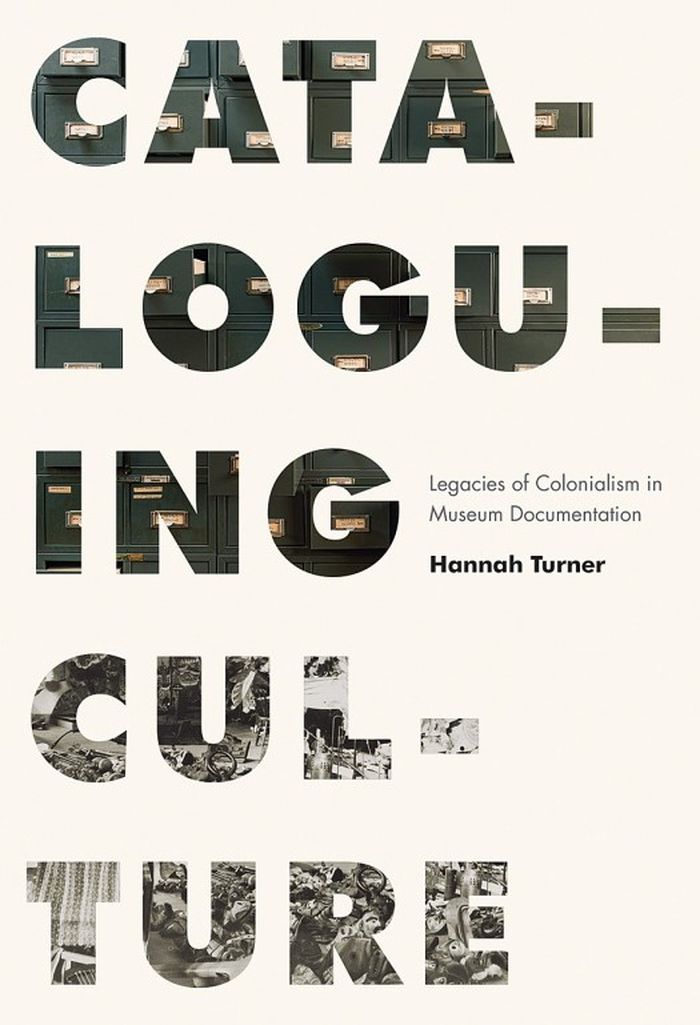
How does material culture become data? Why does this matter, and for whom? As the cultures of Indigenous peoples in North America were mined for scientific knowledge, years of organizing, classifying, and cataloguing hardened into accepted categories, naming conventions, and tribal affiliations – much of it wrong. 'Cataloguing Culture' examines how colonialism operates in museum bureaucracies. Using the Smithsonian’s National Museum of Natural History as her reference, Hannah Turner organizes her study by the technologies framing museum work over two hundred years: field records, the ledger, the card catalogue, the punch card, and eventually the database. She examines how categories were applied to ethnographic material culture and became routine throughout federal collecting institutions. As Indigenous communities encounter the documentary traces of imperialism while attempting to reclaim what is theirs, this publication shines a light on access to and return of cultural heritage.
Cataloguing culture: legacies of colonialism in museum documentation
Actions:
Price:
$32.95
(available to order)
Summary:
How does material culture become data? Why does this matter, and for whom? As the cultures of Indigenous peoples in North America were mined for scientific knowledge, years of organizing, classifying, and cataloguing hardened into accepted categories, naming conventions, and tribal affiliations – much of it wrong. 'Cataloguing Culture' examines how colonialism operates in museum bureaucracies. Using the Smithsonian’s National Museum of Natural History as her reference, Hannah Turner organizes her study by the technologies framing museum work over two hundred years: field records, the ledger, the card catalogue, the punch card, and eventually the database. She examines how categories were applied to ethnographic material culture and became routine throughout federal collecting institutions. As Indigenous communities encounter the documentary traces of imperialism while attempting to reclaim what is theirs, this publication shines a light on access to and return of cultural heritage.
Form:
books
books
Publication:
December 2020
December 2020
Subject:
Museology
Museology
Form:
books
books
Description:
1 online resource
Author:
Subject:
Publication:
[Place of publication not identified] : Meson Press, 2025.
[Place of publication not identified] : Meson Press, 2025.
Title:
Property: Colonial Histories and Messages to the Future.
Actions:
Description:
1 online resource
Property: Colonial Histories and Messages to the Future.
Actions:
Description:
1 online resource
Form:
books
books
Publication:
[Place of publication not identified] : Meson Press, 2025.
[Place of publication not identified] : Meson Press, 2025.
Author:
Subject:
Form:
books
books
Actions:
Holdings:
Description:
vi, 147 pages ; 20 cm
Description:
vi, 147 pages ; 20 cm
Author:
Subject:
Publication:
London : Pluto Press, 2023., ©2023
London : Pluto Press, 2023., ©2023
Title:
Anarcho-indigenism : conversations on land and freedom / Gord Hill, Roxanne Dunbar-Ortiz, Clifton Ariwakehte Nicholas, Véronique Hébert, Freda Huson and Toghestiy, J. Kēhaulan Kauanui ; edited by Francis Dupuis-Déri and Benjamin Pillet.
Actions:
Holdings:
Description:
vi, 147 pages ; 20 cm
Anarcho-indigenism : conversations on land and freedom / Gord Hill, Roxanne Dunbar-Ortiz, Clifton Ariwakehte Nicholas, Véronique Hébert, Freda Huson and Toghestiy, J. Kēhaulan Kauanui ; edited by Francis Dupuis-Déri and Benjamin Pillet.
Actions:
Holdings:
Description:
vi, 147 pages ; 20 cm
Form:
books
books
Publication:
London : Pluto Press, 2023., ©2023
London : Pluto Press, 2023., ©2023
Author:
Subject:
Form:
books
books
Price:
$47.95
(available in store)
Summary:
The question of what heritage is and how we deal with it is not a neutral one. Recent events such as the Black Lives Matter movement and the toppling of monuments have made evident how much the colonial past is inscribed in our built environment; at the same time, colonialism affects memorialization and historiography. Hence, those involved in architectural history are(...)
$47.95
(available in store)
Summary:
The question of what heritage is and how we deal with it is not a neutral one. Recent events such as the Black Lives Matter movement and the toppling of monuments have made evident how much the colonial past is inscribed in our built environment; at the same time, colonialism affects memorialization and historiography. Hence, those involved in architectural history are(...)
Subject:
Architectural Theory
Architectural Theory
Publication:
June 2024
June 2024
Title:
Architectures of colonialism: Constructed histories, conflicting memories
Actions:
Price:
$47.95
(available in store)
Summary:
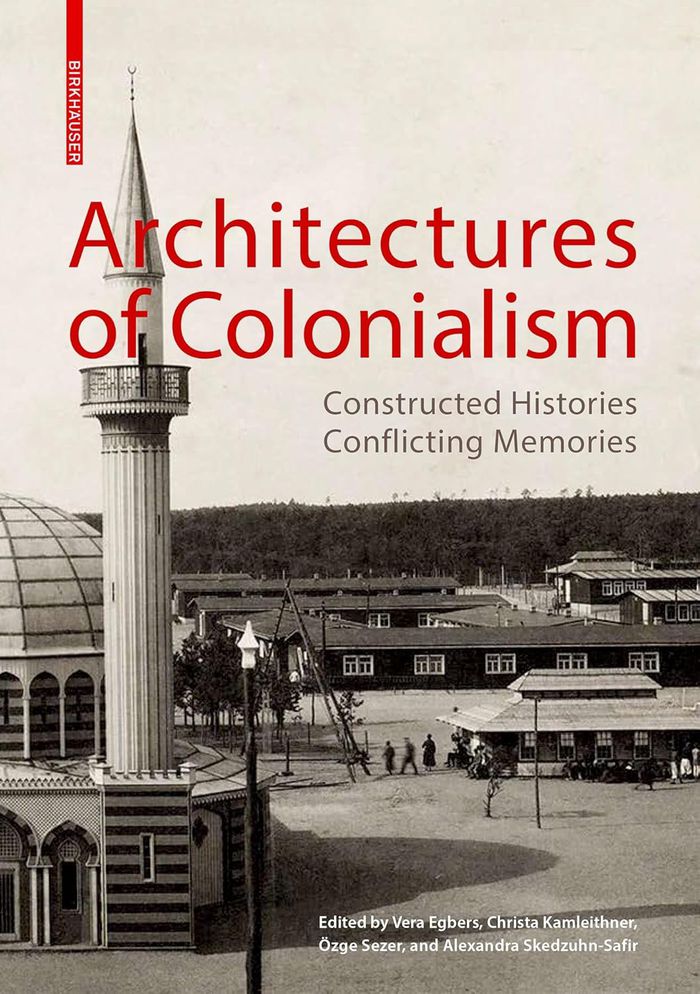
The question of what heritage is and how we deal with it is not a neutral one. Recent events such as the Black Lives Matter movement and the toppling of monuments have made evident how much the colonial past is inscribed in our built environment; at the same time, colonialism affects memorialization and historiography. Hence, those involved in architectural history are challenged to re-consider their positionality. Whose heritage are colonial sites? Which conflicting memories are attached to them? How are archives and material evidence reassessed to bring forward the stories of marginalized subjects? Following the call for decolonization, this volume explores historical methodologies and shows the entanglement of narratives at architectural sites, bringing together archaeology, architectural history, and heritage studies.
Architectures of colonialism: Constructed histories, conflicting memories
Actions:
Price:
$47.95
(available in store)
Summary:
The question of what heritage is and how we deal with it is not a neutral one. Recent events such as the Black Lives Matter movement and the toppling of monuments have made evident how much the colonial past is inscribed in our built environment; at the same time, colonialism affects memorialization and historiography. Hence, those involved in architectural history are challenged to re-consider their positionality. Whose heritage are colonial sites? Which conflicting memories are attached to them? How are archives and material evidence reassessed to bring forward the stories of marginalized subjects? Following the call for decolonization, this volume explores historical methodologies and shows the entanglement of narratives at architectural sites, bringing together archaeology, architectural history, and heritage studies.
Form:
books
books
Publication:
June 2024
June 2024
Subject:
Architectural Theory
Architectural Theory
Form:
books
books
Actions:
Description:
1 online resource (192 pages) : illustrations
Author:
Subject:
Publication:
[Place of publication not identified] : [Onomatopee Projects], 2022., [New Haven, Connecticut] : Library Stack, [2022]
[Place of publication not identified] : [Onomatopee Projects], 2022., [New Haven, Connecticut] : Library Stack, [2022]
Title:
Immutable : designing history / Chris Lee.
Actions:
Description:
1 online resource (192 pages) : illustrations
Immutable : designing history / Chris Lee.
Actions:
Description:
1 online resource (192 pages) : illustrations
Form:
books
books
Publication:
[Place of publication not identified] : [Onomatopee Projects], 2022., [New Haven, Connecticut] : Library Stack, [2022]
[Place of publication not identified] : [Onomatopee Projects], 2022., [New Haven, Connecticut] : Library Stack, [2022]
Author:
Subject:
Form:
audio
audio
Title:
The Big Society.
The Big Society.
Actions:
Description:
1 online resource.
Author:
Subject:
Publication:
[Place of publication not identified] : Triple Canopy, 2021.
[Place of publication not identified] : Triple Canopy, 2021.
Form:
audio
audio
Publication:
[Place of publication not identified] : Triple Canopy, 2021.
[Place of publication not identified] : Triple Canopy, 2021.
Author:
Subject:
Form:
books
books
Actions:
Holdings:
Description:
xiv, 115 pages : illustrations ; 18 cm
Description:
xiv, 115 pages : illustrations ; 18 cm
Author:
Subject:
Publication:
Minneapolis, MN : University of Minnesota Press, 2018
Minneapolis, MN : University of Minnesota Press, 2018
Title:
A billion black Anthropocenes or none / Kathryn Yusoff
Actions:
Holdings:
Description:
xiv, 115 pages : illustrations ; 18 cm
A billion black Anthropocenes or none / Kathryn Yusoff
Actions:
Holdings:
Description:
xiv, 115 pages : illustrations ; 18 cm
Form:
books
books
Publication:
Minneapolis, MN : University of Minnesota Press, 2018
Minneapolis, MN : University of Minnesota Press, 2018
Author:
Subject:
Form:
books
books
Actions:
Price:
$38.95
(available to order)
Summary:
During US colonial rule in the Philippines, reinforced concrete was used to the near exclusion of all other building materials. In Concrete Colonialism , Diana Jean S. Martinez examines the motivations for and lasting effects of this forgotten colonial policy. Arguing that the pervasive use of reinforced concrete technologies revolutionized techniques of imperial(...)
$38.95
(available to order)
Summary:
During US colonial rule in the Philippines, reinforced concrete was used to the near exclusion of all other building materials. In Concrete Colonialism , Diana Jean S. Martinez examines the motivations for and lasting effects of this forgotten colonial policy. Arguing that the pervasive use of reinforced concrete technologies revolutionized techniques of imperial(...)
Title:
Concrete colonialism: Architecture, urbanism, and the US imperial project in the Philippines
Actions:
Price:
$38.95
(available to order)
Summary:
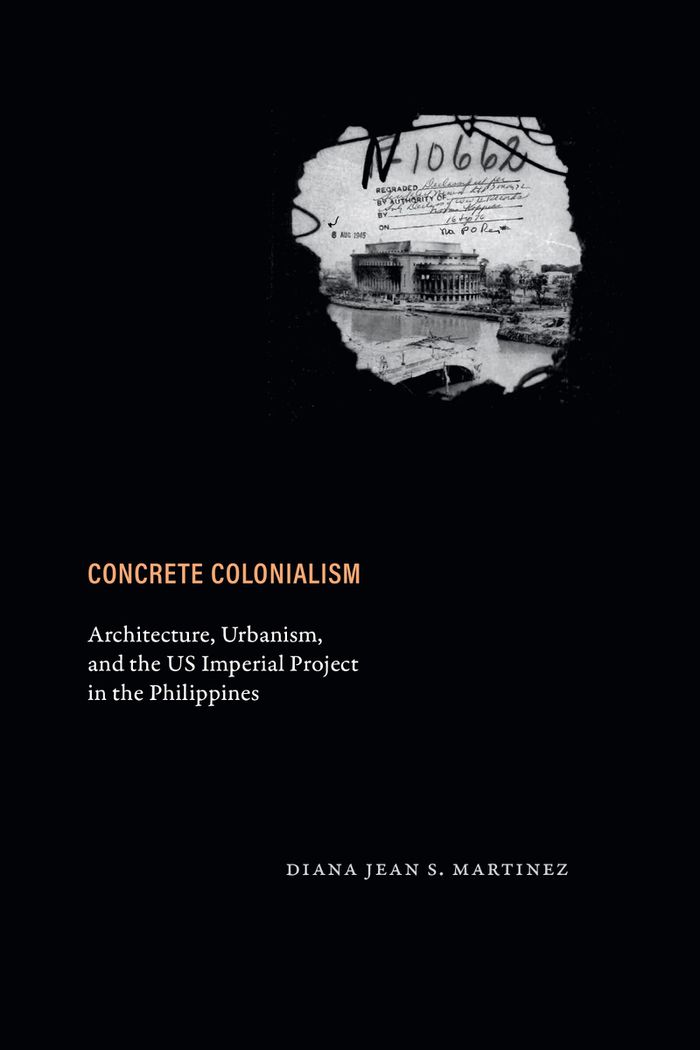
During US colonial rule in the Philippines, reinforced concrete was used to the near exclusion of all other building materials. In Concrete Colonialism , Diana Jean S. Martinez examines the motivations for and lasting effects of this forgotten colonial policy. Arguing that the pervasive use of reinforced concrete technologies revolutionized techniques of imperial conquest, Martinez shows how concrete reshaped colonialism as a project that sought durable change through the reformation of environments, colonial society, and racialized biologies. Martinez locates the origins of this material revolution in the development of Chicago, highlighting how building this urban center atop exceptionally challenging geology made it possible to transform diverse global ecologies. She details how the material's stability, plasticity, strength, and other qualities served the shifting imperatives of the US colonial regime, playing a central role in defending territory, controlling disease, and constructing monuments to nation and empire. By describing a world irreversibly remade, Martinez urges readers to consider how colonialism persists--in concrete forms--despite claims of its conclusion.
Concrete colonialism: Architecture, urbanism, and the US imperial project in the Philippines
Actions:
Price:
$38.95
(available to order)
Summary:
During US colonial rule in the Philippines, reinforced concrete was used to the near exclusion of all other building materials. In Concrete Colonialism , Diana Jean S. Martinez examines the motivations for and lasting effects of this forgotten colonial policy. Arguing that the pervasive use of reinforced concrete technologies revolutionized techniques of imperial conquest, Martinez shows how concrete reshaped colonialism as a project that sought durable change through the reformation of environments, colonial society, and racialized biologies. Martinez locates the origins of this material revolution in the development of Chicago, highlighting how building this urban center atop exceptionally challenging geology made it possible to transform diverse global ecologies. She details how the material's stability, plasticity, strength, and other qualities served the shifting imperatives of the US colonial regime, playing a central role in defending territory, controlling disease, and constructing monuments to nation and empire. By describing a world irreversibly remade, Martinez urges readers to consider how colonialism persists--in concrete forms--despite claims of its conclusion.
Form:
books
books
Publication:
October 2025
October 2025
Subject:
Architectural Theory
Architectural Theory


