


175 Results
Form:
books
books
Title:
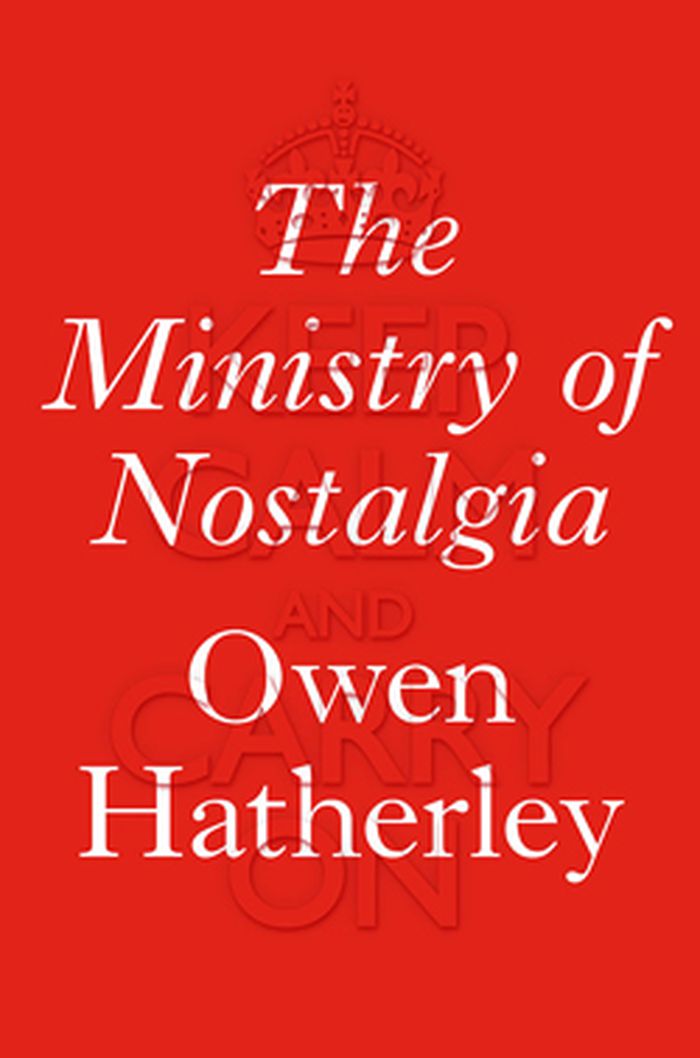
The ministry of nostalgia
The ministry of nostalgia
Actions:
Price:
$32.00
(available to order)
Summary:
Author Owen Hatherley shows how our past is being resold in order to defend the indefensible. From the marketing of a “make do and mend” aesthetic to the growing nostalgia for a utopian past that never existed, a cultural distraction scam prevents people grasping the truth of their condition. The Ministry of Nostalgia looks at the creation of a false history -(...)
$32.00
(available to order)
Summary:
Author Owen Hatherley shows how our past is being resold in order to defend the indefensible. From the marketing of a “make do and mend” aesthetic to the growing nostalgia for a utopian past that never existed, a cultural distraction scam prevents people grasping the truth of their condition. The Ministry of Nostalgia looks at the creation of a false history -(...)
Title:
The ministry of nostalgia
Actions:
Price:
$32.00
(available to order)
Summary:
Author Owen Hatherley shows how our past is being resold in order to defend the indefensible. From the marketing of a “make do and mend” aesthetic to the growing nostalgia for a utopian past that never existed, a cultural distraction scam prevents people grasping the truth of their condition. The Ministry of Nostalgia looks at the creation of a false history - examining the austerity of the 1940s and 1950s, which saw the development of a welfare state while the nation crawled recovered from the war. Hatherley examines how this period has been recast to offer consolation for the violence of neoliberalism, an ideology dedicated to the privatisation of common wealth.
The ministry of nostalgia
Actions:
Price:
$32.00
(available to order)
Summary:
Author Owen Hatherley shows how our past is being resold in order to defend the indefensible. From the marketing of a “make do and mend” aesthetic to the growing nostalgia for a utopian past that never existed, a cultural distraction scam prevents people grasping the truth of their condition. The Ministry of Nostalgia looks at the creation of a false history - examining the austerity of the 1940s and 1950s, which saw the development of a welfare state while the nation crawled recovered from the war. Hatherley examines how this period has been recast to offer consolation for the violence of neoliberalism, an ideology dedicated to the privatisation of common wealth.
Form:
books
books
Publication:
January 2016
January 2016
Subject:
Critical Theory
Critical Theory
Form:
books
books
Actions:
Price:
$73.50
(available to order)
Summary:
Between the early 1930s and 1950s, modernist architecture underwent a spectacular change of fortune in Britain – from a small-scale avant-garde movement, to the official, state-funded architectural idiom of the post-1945 Welfare State. FRS Yorke (1906–62) was an architect who completely followed that trajectory. His book "The modern house" (1934) placed his detailed(...)
$73.50
(available to order)
Summary:
Between the early 1930s and 1950s, modernist architecture underwent a spectacular change of fortune in Britain – from a small-scale avant-garde movement, to the official, state-funded architectural idiom of the post-1945 Welfare State. FRS Yorke (1906–62) was an architect who completely followed that trajectory. His book "The modern house" (1934) placed his detailed(...)
Title:
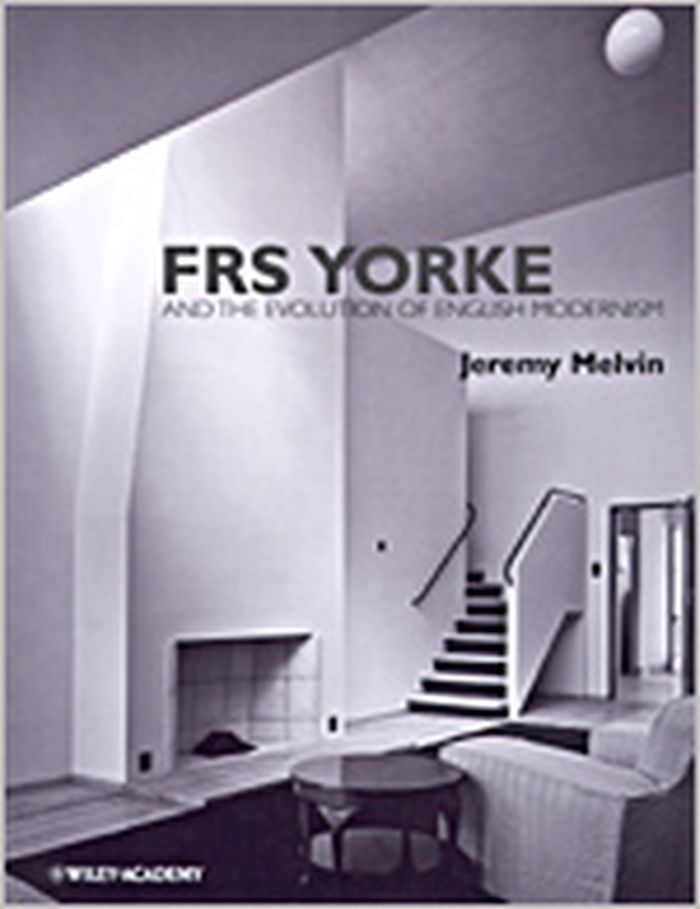
FRS Yorke and the evolution of English modernism
Actions:
Price:
$73.50
(available to order)
Summary:
Between the early 1930s and 1950s, modernist architecture underwent a spectacular change of fortune in Britain – from a small-scale avant-garde movement, to the official, state-funded architectural idiom of the post-1945 Welfare State. FRS Yorke (1906–62) was an architect who completely followed that trajectory. His book "The modern house" (1934) placed his detailed knowledge of European architecture as an introduction to modern architecture for generations of architects, and provided inspiration for his own designs. But it was only after World War II, and the social and political change which came in its wake, that Yorke was able to turn his reputation as a modernist into commercial success. As his pre-War contemporaries gave up architecture or moved abroad, his practice – Yorke, Rosenberg and Mardall – drew on his experience of working on large, state-funded construction projects during the War, and participated in the transformation of Britain’s social and physical fabric with its new housing, hospitals, schools, universities and airports. This book concludes with a memoir by David Allford, who worked with Yorke and Yorke, Rosenberg and Mardall from 1952 until 1989.
FRS Yorke and the evolution of English modernism
Actions:
Price:
$73.50
(available to order)
Summary:
Between the early 1930s and 1950s, modernist architecture underwent a spectacular change of fortune in Britain – from a small-scale avant-garde movement, to the official, state-funded architectural idiom of the post-1945 Welfare State. FRS Yorke (1906–62) was an architect who completely followed that trajectory. His book "The modern house" (1934) placed his detailed knowledge of European architecture as an introduction to modern architecture for generations of architects, and provided inspiration for his own designs. But it was only after World War II, and the social and political change which came in its wake, that Yorke was able to turn his reputation as a modernist into commercial success. As his pre-War contemporaries gave up architecture or moved abroad, his practice – Yorke, Rosenberg and Mardall – drew on his experience of working on large, state-funded construction projects during the War, and participated in the transformation of Britain’s social and physical fabric with its new housing, hospitals, schools, universities and airports. This book concludes with a memoir by David Allford, who worked with Yorke and Yorke, Rosenberg and Mardall from 1952 until 1989.
Form:
books
books
Publication:
May 2003, Chichester
May 2003, Chichester
Subject:
Architecture Monographs
Architecture Monographs
Form:
books
books
Title:
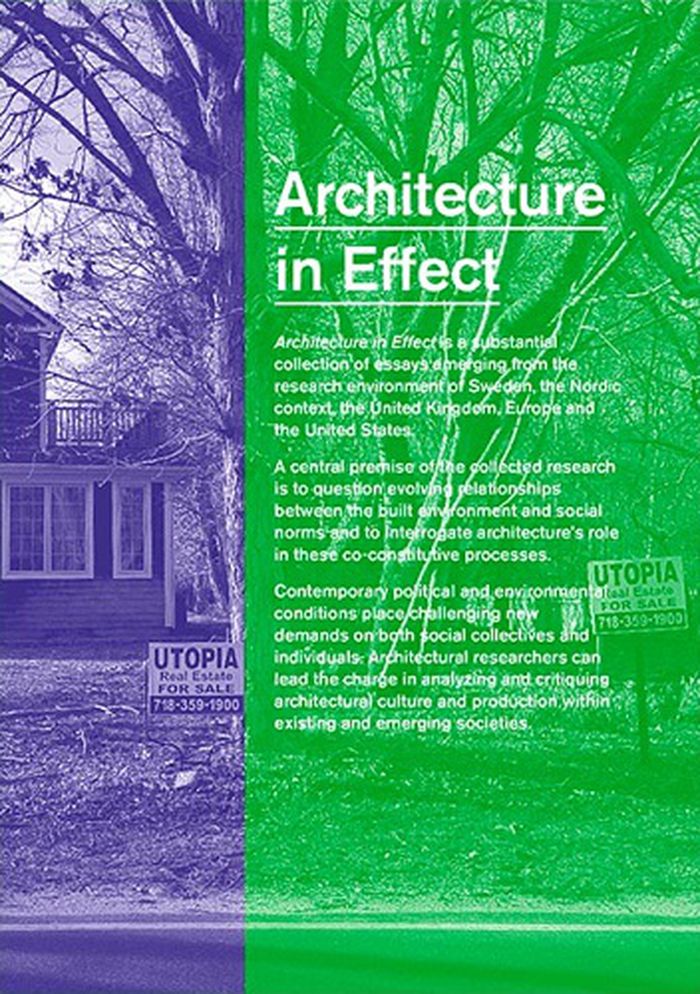
Architecture in effect. Vol.1: rethinking the social in architecture. Vol.2: After effects: theories
Architecture in effect. Vol.1: rethinking the social in architecture. Vol.2: After effects: theories
Actions:
Price:
$129.95
(available to order)
Summary:
The socially oriented perspective of Volume #1, 'Rethinking the Social', is complemented by discussions of architectural and transdisciplinary theories and methodologies in Volume #2, 'After Effects'. Together these twin volumes reflect on topics such as the utopian idea of a welfare state, the role of intersubjective and non-human points of view, and the impact of(...)
$129.95
(available to order)
Summary:
The socially oriented perspective of Volume #1, 'Rethinking the Social', is complemented by discussions of architectural and transdisciplinary theories and methodologies in Volume #2, 'After Effects'. Together these twin volumes reflect on topics such as the utopian idea of a welfare state, the role of intersubjective and non-human points of view, and the impact of(...)
Subject:
Architectural Theory
Architectural Theory
Publication:
November 2020
November 2020
Title:
Architecture in effect. Vol.1: rethinking the social in architecture. Vol.2: After effects: theories
Actions:
Price:
$129.95
(available to order)
Summary:
The socially oriented perspective of Volume #1, 'Rethinking the Social', is complemented by discussions of architectural and transdisciplinary theories and methodologies in Volume #2, 'After Effects'. Together these twin volumes reflect on topics such as the utopian idea of a welfare state, the role of intersubjective and non-human points of view, and the impact of historical and current images on the making of realities. The task of these books is to present a wide range of research topics that combine historical, material, and critical research approaches that respond to our current crises and challenges. Ultimately, this enables new modes of knowledge production within architecture to be advanced in its relation to societal transformation.
Architecture in effect. Vol.1: rethinking the social in architecture. Vol.2: After effects: theories
Actions:
Price:
$129.95
(available to order)
Summary:
The socially oriented perspective of Volume #1, 'Rethinking the Social', is complemented by discussions of architectural and transdisciplinary theories and methodologies in Volume #2, 'After Effects'. Together these twin volumes reflect on topics such as the utopian idea of a welfare state, the role of intersubjective and non-human points of view, and the impact of historical and current images on the making of realities. The task of these books is to present a wide range of research topics that combine historical, material, and critical research approaches that respond to our current crises and challenges. Ultimately, this enables new modes of knowledge production within architecture to be advanced in its relation to societal transformation.
Form:
books
books
Publication:
November 2020
November 2020
Subject:
Architectural Theory
Architectural Theory
Form:
books
books
Price:
$39.95
(available to order)
Summary:
"Art and its institutions" is a reader on current institutional conditions and the role of institutions within artistic processes. With essays by authors and academics such as Beatrice von Bismarck, Andrea Fraser, Simon Sheikh and Jan Verwoert, this book examines the interests of the various institutions involved in the creation of art, and explore the impact these(...)
$39.95
(available to order)
Summary:
"Art and its institutions" is a reader on current institutional conditions and the role of institutions within artistic processes. With essays by authors and academics such as Beatrice von Bismarck, Andrea Fraser, Simon Sheikh and Jan Verwoert, this book examines the interests of the various institutions involved in the creation of art, and explore the impact these(...)
Title:
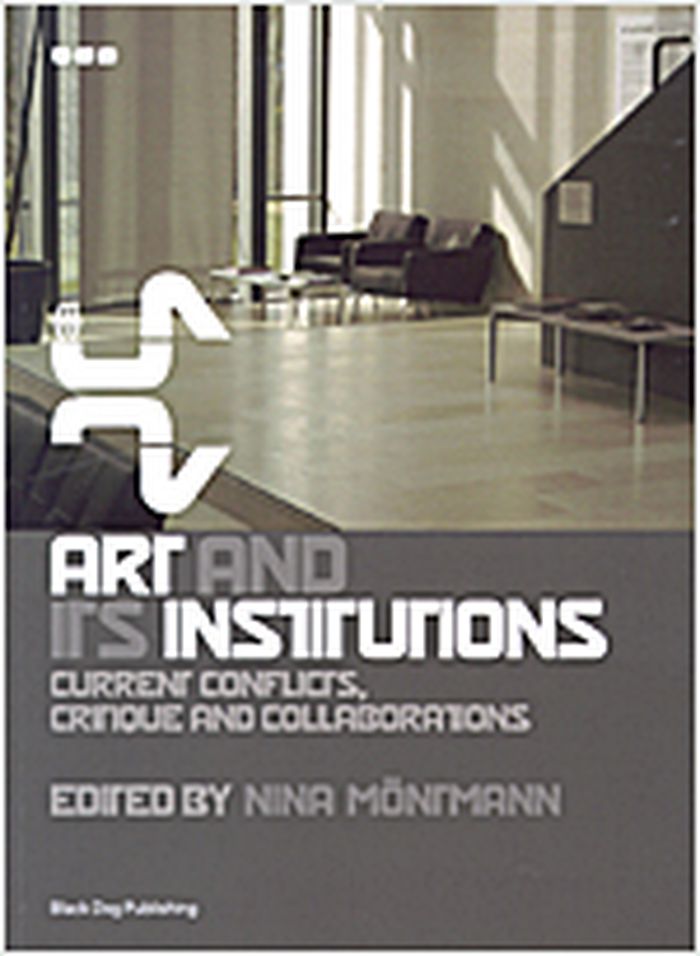
Art and its institutions : current conflicts, critique and collaborations
Actions:
Price:
$39.95
(available to order)
Summary:
"Art and its institutions" is a reader on current institutional conditions and the role of institutions within artistic processes. With essays by authors and academics such as Beatrice von Bismarck, Andrea Fraser, Simon Sheikh and Jan Verwoert, this book examines the interests of the various institutions involved in the creation of art, and explore the impact these institutions have on the contemporary art world. It covers topics including the impact of the decline of the welfare state on art institutions; the social and physical architecture of art institutions in Nordic states and Eastern Europe; a critical re-evaluation of the institutional critique of the 70s and 90s and the introduction of new models of critique in current artistic practice. The book also documents and discusses two exhibition projects, and examine their relationship to the conflicts and desires provoked by institutions.
Art and its institutions : current conflicts, critique and collaborations
Actions:
Price:
$39.95
(available to order)
Summary:
"Art and its institutions" is a reader on current institutional conditions and the role of institutions within artistic processes. With essays by authors and academics such as Beatrice von Bismarck, Andrea Fraser, Simon Sheikh and Jan Verwoert, this book examines the interests of the various institutions involved in the creation of art, and explore the impact these institutions have on the contemporary art world. It covers topics including the impact of the decline of the welfare state on art institutions; the social and physical architecture of art institutions in Nordic states and Eastern Europe; a critical re-evaluation of the institutional critique of the 70s and 90s and the introduction of new models of critique in current artistic practice. The book also documents and discusses two exhibition projects, and examine their relationship to the conflicts and desires provoked by institutions.
Form:
books
books
Publication:
February 2006, London
February 2006, London
Subject:
Museology
Museology
Form:
books
books
Actions:
Price:
$22.99
(available to order)
Summary:
In an era of increasing individualism, we have never been more isolated and dispirited. A paradox confronts us. While research and technology find new ways to measure contentment and popular culture encourages us to think of happiness as a human right, misery is abundant. Segal believes we have lost the art of “radical happiness”—the liberation that comes with(...)
$22.99
(available to order)
Summary:
In an era of increasing individualism, we have never been more isolated and dispirited. A paradox confronts us. While research and technology find new ways to measure contentment and popular culture encourages us to think of happiness as a human right, misery is abundant. Segal believes we have lost the art of “radical happiness”—the liberation that comes with(...)
Title:
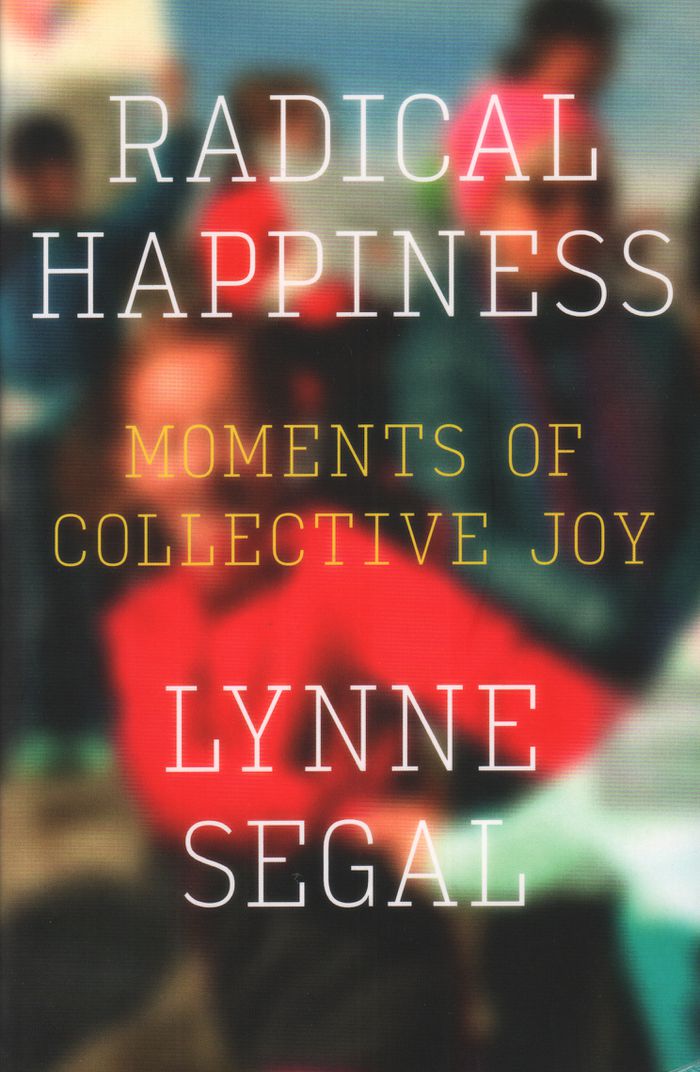
Radical happiness: moments of collective joy
Actions:
Price:
$22.99
(available to order)
Summary:
In an era of increasing individualism, we have never been more isolated and dispirited. A paradox confronts us. While research and technology find new ways to measure contentment and popular culture encourages us to think of happiness as a human right, misery is abundant. Segal believes we have lost the art of “radical happiness”—the liberation that comes with transformative, collective joy. She argues that instead of obsessing about our own well-being we should seek fulfilment in the lives of others. Examining her own experience in the women’s movement, Segal looks at the relationship between love and sex, and the scope for utopian thinking as a means to a better future. She also shows how the gaps in care that come from the diminishing role of the welfare state must be replaced by alternative ways of living together and looking after one another.
Radical happiness: moments of collective joy
Actions:
Price:
$22.99
(available to order)
Summary:
In an era of increasing individualism, we have never been more isolated and dispirited. A paradox confronts us. While research and technology find new ways to measure contentment and popular culture encourages us to think of happiness as a human right, misery is abundant. Segal believes we have lost the art of “radical happiness”—the liberation that comes with transformative, collective joy. She argues that instead of obsessing about our own well-being we should seek fulfilment in the lives of others. Examining her own experience in the women’s movement, Segal looks at the relationship between love and sex, and the scope for utopian thinking as a means to a better future. She also shows how the gaps in care that come from the diminishing role of the welfare state must be replaced by alternative ways of living together and looking after one another.
Form:
books
books
Publication:
November 2018
November 2018
Subject:
Social
Social


