


1734 Results
Form:
books
books
Actions:
Price:
$39.95
(available to order)
Summary:
Forming a comprehensive picture of the multiple processes, regulations, institutions, technologies, networks, and operations that we have come to understand as the distributed infrastructural arena in which we act, yield, and plot is a perennial challenge. Over the past decade, a growing number of artists, theorists, curators, and researchers have moved from(...)
$39.95
(available to order)
Summary:
Forming a comprehensive picture of the multiple processes, regulations, institutions, technologies, networks, and operations that we have come to understand as the distributed infrastructural arena in which we act, yield, and plot is a perennial challenge. Over the past decade, a growing number of artists, theorists, curators, and researchers have moved from(...)
Title:
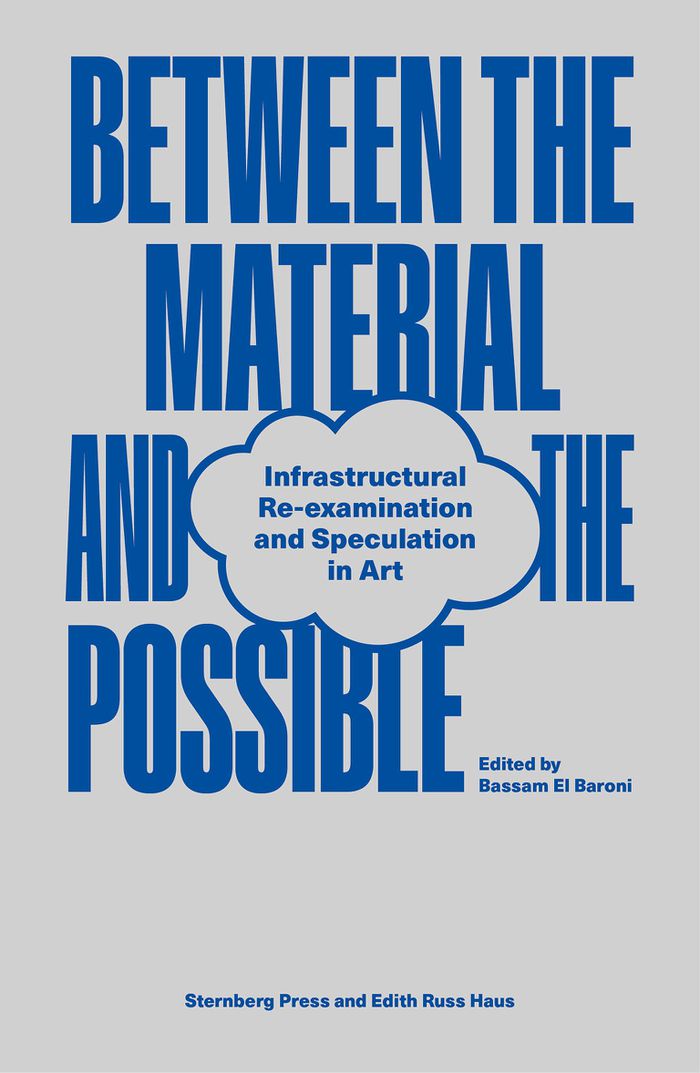
Between the material and the possible: Infrastructural re-examination and speculation in art
Actions:
Price:
$39.95
(available to order)
Summary:
Forming a comprehensive picture of the multiple processes, regulations, institutions, technologies, networks, and operations that we have come to understand as the distributed infrastructural arena in which we act, yield, and plot is a perennial challenge. Over the past decade, a growing number of artists, theorists, curators, and researchers have moved from ''institutional critique'' to ''infrastructural critique,'' or toward ''infrastructural speculation,'' in which they explore the potential of creative infrastructure-related visions and scenarios. In attempts to counter the impasse of ''the cancelled future,'' art has immersed itself in systemic critiques and propositional thinking, addressing major challenges, such as the rampant financialization of the economy and runaway climate change. From questions around space settlements to the possibility of repurposing blockchain infrastructures and financial instruments for redistributive purposes, and from the diagrammatic potential of infrastructural thinking in artistic practices to scenario planning and economic strategizing, this collection of new essays brings together critical analysis from a broad group of contributors engaged in the revisioning of our infrastructural futures. Their interrogations span local and global relationalities, historical and political legacies, as well as future-oriented infrastructural hypotheses.
Between the material and the possible: Infrastructural re-examination and speculation in art
Actions:
Price:
$39.95
(available to order)
Summary:
Forming a comprehensive picture of the multiple processes, regulations, institutions, technologies, networks, and operations that we have come to understand as the distributed infrastructural arena in which we act, yield, and plot is a perennial challenge. Over the past decade, a growing number of artists, theorists, curators, and researchers have moved from ''institutional critique'' to ''infrastructural critique,'' or toward ''infrastructural speculation,'' in which they explore the potential of creative infrastructure-related visions and scenarios. In attempts to counter the impasse of ''the cancelled future,'' art has immersed itself in systemic critiques and propositional thinking, addressing major challenges, such as the rampant financialization of the economy and runaway climate change. From questions around space settlements to the possibility of repurposing blockchain infrastructures and financial instruments for redistributive purposes, and from the diagrammatic potential of infrastructural thinking in artistic practices to scenario planning and economic strategizing, this collection of new essays brings together critical analysis from a broad group of contributors engaged in the revisioning of our infrastructural futures. Their interrogations span local and global relationalities, historical and political legacies, as well as future-oriented infrastructural hypotheses.
Form:
books
books
Publication:
August 2022
August 2022
Subject:
Art Theory
Art Theory
Form:
books
books
Price:
$85.00
(available to order)
Summary:
The city in the twenty-first century faces major challenges, including social and economic stratification, wasteful consumption of resources, transportation congestion, and environmental degradation. More than half of the world’s population lives in cities and major metropolitan areas, and in the next two decades the number of city dwellers is estimated to reach five(...)
$85.00
(available to order)
Summary:
The city in the twenty-first century faces major challenges, including social and economic stratification, wasteful consumption of resources, transportation congestion, and environmental degradation. More than half of the world’s population lives in cities and major metropolitan areas, and in the next two decades the number of city dwellers is estimated to reach five(...)
Title:
Sustainable urbanism and beyond: rethinking cities for the future
Actions:
Price:
$85.00
(available to order)
Summary:
The city in the twenty-first century faces major challenges, including social and economic stratification, wasteful consumption of resources, transportation congestion, and environmental degradation. More than half of the world’s population lives in cities and major metropolitan areas, and in the next two decades the number of city dwellers is estimated to reach five billion. This puts enormous pressures on transportation systems, housing stock, and infrastructure such as energy, waste, and water, which directly influences the emissions of greenhouse gases. As the long emergency awaits us, urgent questions remain: How will our cities survive? How can we combat and reconcile urban growth with sustainable use of resources for future generations to thrive? Where and how urbanism comes into the picture and what “sustainable” urban forms can do in light of these events are some of the issues Sustainable Urbanism and Beyond explores. With more than sixty essays, including contributions by Andrés Duany, Saskia Sassen, Peter Newman, Douglas Farr, Henry Cisneros, Peter Hall, Sharon Zukin, Peter Eisenman, and others, this book is a unique perspective on architecture, urban planning, environmental and urban design, exploring ways for raising quality of life and the standard of living in a new modern era by creating better and more viable places to live.
Sustainable urbanism and beyond: rethinking cities for the future
Actions:
Price:
$85.00
(available to order)
Summary:
The city in the twenty-first century faces major challenges, including social and economic stratification, wasteful consumption of resources, transportation congestion, and environmental degradation. More than half of the world’s population lives in cities and major metropolitan areas, and in the next two decades the number of city dwellers is estimated to reach five billion. This puts enormous pressures on transportation systems, housing stock, and infrastructure such as energy, waste, and water, which directly influences the emissions of greenhouse gases. As the long emergency awaits us, urgent questions remain: How will our cities survive? How can we combat and reconcile urban growth with sustainable use of resources for future generations to thrive? Where and how urbanism comes into the picture and what “sustainable” urban forms can do in light of these events are some of the issues Sustainable Urbanism and Beyond explores. With more than sixty essays, including contributions by Andrés Duany, Saskia Sassen, Peter Newman, Douglas Farr, Henry Cisneros, Peter Hall, Sharon Zukin, Peter Eisenman, and others, this book is a unique perspective on architecture, urban planning, environmental and urban design, exploring ways for raising quality of life and the standard of living in a new modern era by creating better and more viable places to live.
Form:
books
books
Publication:
April 2012
April 2012
Subject:
Urban Theory
Urban Theory
Form:
books
books

Actions:
Price:
$12.95
(available in store)
Summary:
Tout nouveau moyen de transport ou toute modification apportée à un système existant de mobilité urbaine – l’élargissement des tranchées permettant aux voies ferrées de se relier à un terminus ou à une jonction, l’extension des gares de triage desservant les systèmes de transport métropolitains et de banlieue, la multiplication des(...)
$12.95
(available in store)
Summary:
Tout nouveau moyen de transport ou toute modification apportée à un système existant de mobilité urbaine – l’élargissement des tranchées permettant aux voies ferrées de se relier à un terminus ou à une jonction, l’extension des gares de triage desservant les systèmes de transport métropolitains et de banlieue, la multiplication des(...)
Subject:
CCA Publications
CCA Publications
Publication:
November 2000, Montréal
November 2000, Montréal
Title:
Villes en mouvement : jouets et transports / Cities in motion : toys and transport
Actions:
Price:
$12.95
(available in store)
Summary:
Tout nouveau moyen de transport ou toute modification apportée à un système existant de mobilité urbaine – l’élargissement des tranchées permettant aux voies ferrées de se relier à un terminus ou à une jonction, l’extension des gares de triage desservant les systèmes de transport métropolitains et de banlieue, la multiplication des bretelles des ponts, des autoroutes surélevées, des rampes d’accès, des parcs de stationnement et même des petites stations-services disséminées sur le territoire – entraîne des mutations dans le paysage urbain. "Jouets et transports" puise, à même la collection du CCA, plus de 75 jouets anciens, livres illustrés, photographies anciennes et brochures pour illustrer deux siècles de transformations urbaines étroitement liées au développement des moyens de transport. // Every new transportation link and every change in systems of urban mobility introduces new infrastructure to the urban landscape: massive cuts enabling railway tracks to converge at a terminal or junction; wide railyards that service suburban and metropolitan transit systems; the proliferation of bridges, ramps, elevated highways, freeway cuts, parking lots, and even service stations. "Toys and Transport" draws from the CCA collection, presenting over 75 objects, among them historic toys, architectural photographs, illustrated books and pamphlets. It covers nearly 200 years of urban transformation brought about by the development of transportation systems.
Villes en mouvement : jouets et transports / Cities in motion : toys and transport
Actions:
Price:
$12.95
(available in store)
Summary:
Tout nouveau moyen de transport ou toute modification apportée à un système existant de mobilité urbaine – l’élargissement des tranchées permettant aux voies ferrées de se relier à un terminus ou à une jonction, l’extension des gares de triage desservant les systèmes de transport métropolitains et de banlieue, la multiplication des bretelles des ponts, des autoroutes surélevées, des rampes d’accès, des parcs de stationnement et même des petites stations-services disséminées sur le territoire – entraîne des mutations dans le paysage urbain. "Jouets et transports" puise, à même la collection du CCA, plus de 75 jouets anciens, livres illustrés, photographies anciennes et brochures pour illustrer deux siècles de transformations urbaines étroitement liées au développement des moyens de transport. // Every new transportation link and every change in systems of urban mobility introduces new infrastructure to the urban landscape: massive cuts enabling railway tracks to converge at a terminal or junction; wide railyards that service suburban and metropolitan transit systems; the proliferation of bridges, ramps, elevated highways, freeway cuts, parking lots, and even service stations. "Toys and Transport" draws from the CCA collection, presenting over 75 objects, among them historic toys, architectural photographs, illustrated books and pamphlets. It covers nearly 200 years of urban transformation brought about by the development of transportation systems.
Form:
books
books
Publication:
November 2000, Montréal
November 2000, Montréal
Subject:
CCA Publications
CCA Publications
Form:
books
books
Actions:
Price:
$45.00
(available in store)
Summary:
Mouna Andraos and Melissa Mongiat—together with their team at Daily tous les jours—have been creating celebrated interactive art and narrative experiences for public spaces around the world for over 15 years. Their groundbreaking work is part of an emergent practice that combines technology, storytelling, performance, and placemaking to build a new infrastructure for the(...)
$45.00
(available in store)
Summary:
Mouna Andraos and Melissa Mongiat—together with their team at Daily tous les jours—have been creating celebrated interactive art and narrative experiences for public spaces around the world for over 15 years. Their groundbreaking work is part of an emergent practice that combines technology, storytelling, performance, and placemaking to build a new infrastructure for the(...)
Publication:
August 2025
August 2025
Title:
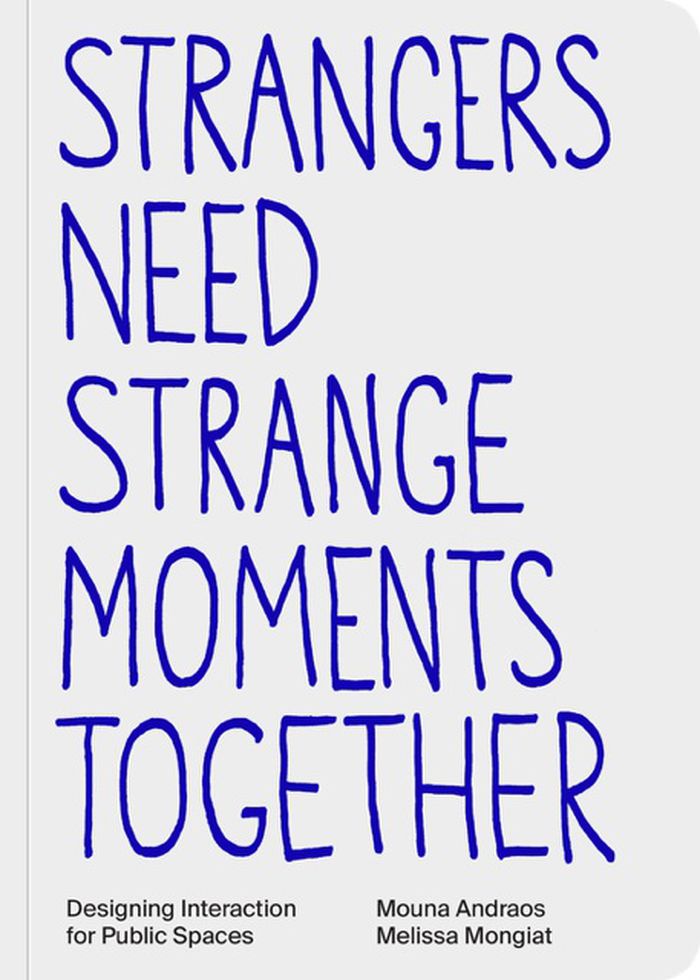
Strangers need strange moments together: Designing interaction for public spaces
Actions:
Price:
$45.00
(available in store)
Summary:
Mouna Andraos and Melissa Mongiat—together with their team at Daily tous les jours—have been creating celebrated interactive art and narrative experiences for public spaces around the world for over 15 years. Their groundbreaking work is part of an emergent practice that combines technology, storytelling, performance, and placemaking to build a new infrastructure for the human spirit. In ''Strangers Need Strange Moments Together'', Andraos and Mongiat invite a broad range of readers—fellow practitioners, urbanists, policy makers, educators, and engaged citizens—to take a joyful approach to building resilient urban communities and re-enchanting public space. In times of unprecedented pace of urban growth, with increasing loneliness and division, they shed light on the importance of moving beyond purely data-driven urban planning methodologies—which prioritize productivity, efficiency, and automation—and forging new modes of public interaction. Cities must be spaces for the whimsical, unexpected, and weird, and for the wasted time and strange moments of serendipitous encounter. Andraos and Mongiat use the raw material of the “daily everyday” to propose new models of living together in the 21st century, and to foreground the dimensions of life that characterize what it means to be human in the first place.
Strangers need strange moments together: Designing interaction for public spaces
Actions:
Price:
$45.00
(available in store)
Summary:
Mouna Andraos and Melissa Mongiat—together with their team at Daily tous les jours—have been creating celebrated interactive art and narrative experiences for public spaces around the world for over 15 years. Their groundbreaking work is part of an emergent practice that combines technology, storytelling, performance, and placemaking to build a new infrastructure for the human spirit. In ''Strangers Need Strange Moments Together'', Andraos and Mongiat invite a broad range of readers—fellow practitioners, urbanists, policy makers, educators, and engaged citizens—to take a joyful approach to building resilient urban communities and re-enchanting public space. In times of unprecedented pace of urban growth, with increasing loneliness and division, they shed light on the importance of moving beyond purely data-driven urban planning methodologies—which prioritize productivity, efficiency, and automation—and forging new modes of public interaction. Cities must be spaces for the whimsical, unexpected, and weird, and for the wasted time and strange moments of serendipitous encounter. Andraos and Mongiat use the raw material of the “daily everyday” to propose new models of living together in the 21st century, and to foreground the dimensions of life that characterize what it means to be human in the first place.
Form:
books
books
Publication:
August 2025
August 2025
Form:
books
books
Price:
$67.95
(available in store)
Summary:
Homelessness is one of the most pressing social challenges of our time, and is closely linked to issues of urban design and architecture. Homeless people are part of urban society and depend on accessible public spaces and urban infrastructure. Yet, in cities around the world, local governments use policies and urban planning to ward off street people, aiming at making(...)
$67.95
(available in store)
Summary:
Homelessness is one of the most pressing social challenges of our time, and is closely linked to issues of urban design and architecture. Homeless people are part of urban society and depend on accessible public spaces and urban infrastructure. Yet, in cities around the world, local governments use policies and urban planning to ward off street people, aiming at making(...)
Title:
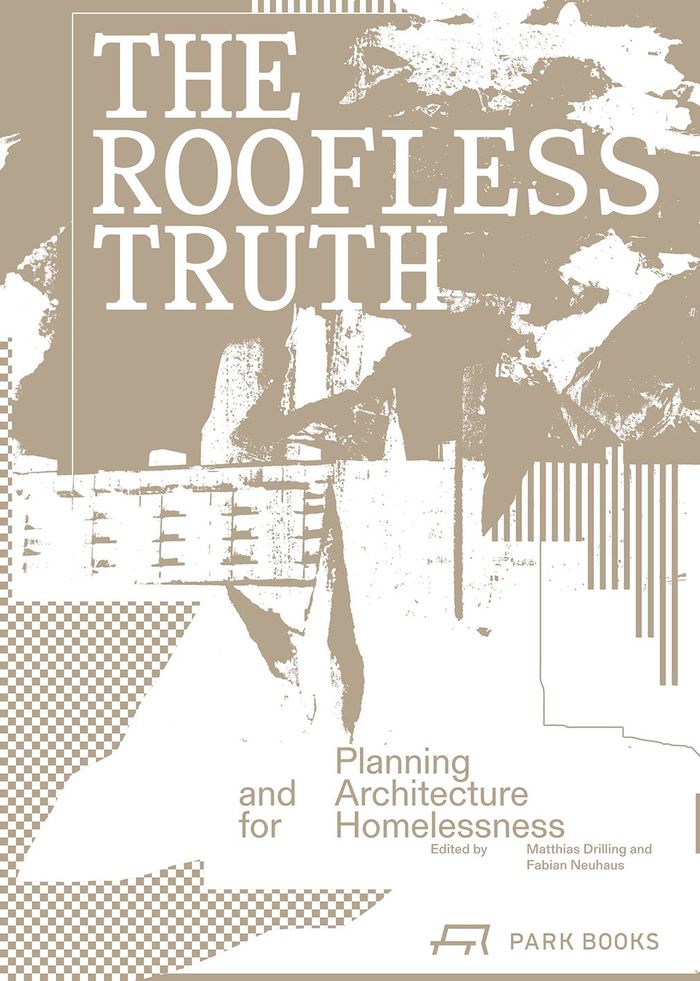
The roofless truth: planning and architecture for homelessness
Actions:
Price:
$67.95
(available in store)
Summary:
Homelessness is one of the most pressing social challenges of our time, and is closely linked to issues of urban design and architecture. Homeless people are part of urban society and depend on accessible public spaces and urban infrastructure. Yet, in cities around the world, local governments use policies and urban planning to ward off street people, aiming at making them invisible in the cityscape and deliberately impeding certain forms of stay. Urban design always reflects power structures—it can exclude or open up avenues for participation. ''The Roofless Truth'' brings together contributions by international researchers and practitioners from the fields of architecture, urban development and design, sociology, ethnology, social work, and education. It offers academic analyses and essays, field reports, and student proposals for interventions in public space, and features award-winning projects and initiatives in Canada, Germany, Iran, Switzerland, and the US. The book highlights how public spaces should be designed to offer protection, dignity, and opportunities for homeless people, and to facilitate encounters and interaction. The featured examples impressively demonstrate that even the smallest spatial decision can determine inclusion or exclusion. ''The Roofless Truth'' paints a multifaceted picture of planning and design as a social practice beyond representation and prestige.
The roofless truth: planning and architecture for homelessness
Actions:
Price:
$67.95
(available in store)
Summary:
Homelessness is one of the most pressing social challenges of our time, and is closely linked to issues of urban design and architecture. Homeless people are part of urban society and depend on accessible public spaces and urban infrastructure. Yet, in cities around the world, local governments use policies and urban planning to ward off street people, aiming at making them invisible in the cityscape and deliberately impeding certain forms of stay. Urban design always reflects power structures—it can exclude or open up avenues for participation. ''The Roofless Truth'' brings together contributions by international researchers and practitioners from the fields of architecture, urban development and design, sociology, ethnology, social work, and education. It offers academic analyses and essays, field reports, and student proposals for interventions in public space, and features award-winning projects and initiatives in Canada, Germany, Iran, Switzerland, and the US. The book highlights how public spaces should be designed to offer protection, dignity, and opportunities for homeless people, and to facilitate encounters and interaction. The featured examples impressively demonstrate that even the smallest spatial decision can determine inclusion or exclusion. ''The Roofless Truth'' paints a multifaceted picture of planning and design as a social practice beyond representation and prestige.
Form:
books
books
Publication:
July 2026
July 2026
Subject:
Humans and cities
Humans and cities
Form:
books
books
Price:
$84.95
(available to order)
Summary:
The all-out war in Ukraine, started by the Russian Federation in 2022 has disproportionally affected housing and residential infrastructure. The destruction is so targeted, and the damage so significant that it has disfigured entire neighborhoods and erased entire cities. With the scale of damage and loss in mind, and the future wide-ranging reconstruction that will(...)
$84.95
(available to order)
Summary:
The all-out war in Ukraine, started by the Russian Federation in 2022 has disproportionally affected housing and residential infrastructure. The destruction is so targeted, and the damage so significant that it has disfigured entire neighborhoods and erased entire cities. With the scale of damage and loss in mind, and the future wide-ranging reconstruction that will(...)
Title:
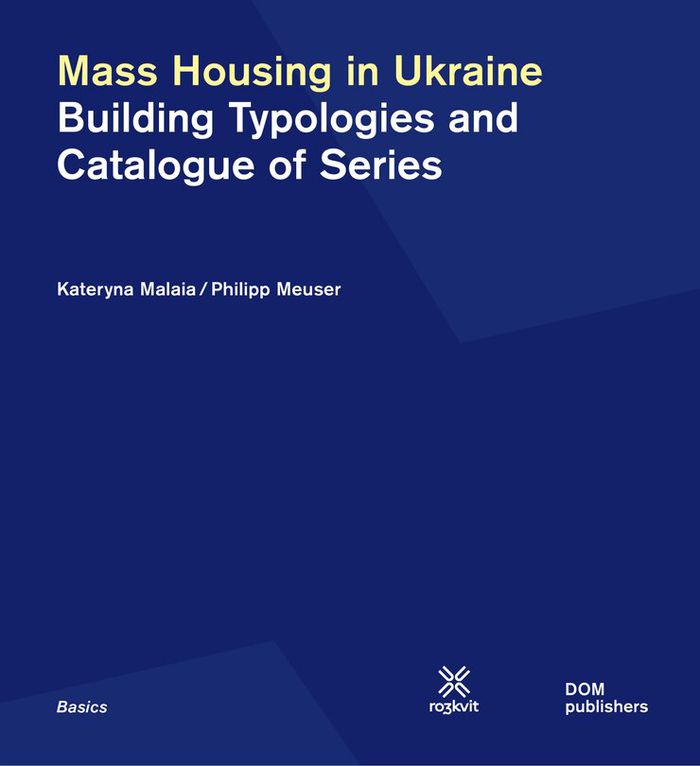
Mass Housing in Ukraine: Building Typologies and Catalogue of Series
Actions:
Price:
$84.95
(available to order)
Summary:
The all-out war in Ukraine, started by the Russian Federation in 2022 has disproportionally affected housing and residential infrastructure. The destruction is so targeted, and the damage so significant that it has disfigured entire neighborhoods and erased entire cities. With the scale of damage and loss in mind, and the future wide-ranging reconstruction that will inevitably take place after the war, this study examines the history and typologies of mass housing in Ukraine. It does so in order to evaluate what is lost, explain the diversity of modes of urban living that exist in Ukrainian cities, and finally, reconsider the narrative of how Ukrainian housing came about. The study covers the period of the last 100 years: the time of the most dramatic expansion and change in character of Ukrainian cities. It begins with the experimental buildings constructed in the Soviet Central and Eastern Ukraine and Polish Western Ukraine in the 1920s and 1930s, continues by looking at type projects from the Stalin era, as well as the serial apartment blocks built during the reigns of Khrushchev and Brezhnev and in the late USSR. Finally, it showcases individually designed, yet also typical residential buildings from the turbo-capitalist period of the 1990s and 2000s.
Mass Housing in Ukraine: Building Typologies and Catalogue of Series
Actions:
Price:
$84.95
(available to order)
Summary:
The all-out war in Ukraine, started by the Russian Federation in 2022 has disproportionally affected housing and residential infrastructure. The destruction is so targeted, and the damage so significant that it has disfigured entire neighborhoods and erased entire cities. With the scale of damage and loss in mind, and the future wide-ranging reconstruction that will inevitably take place after the war, this study examines the history and typologies of mass housing in Ukraine. It does so in order to evaluate what is lost, explain the diversity of modes of urban living that exist in Ukrainian cities, and finally, reconsider the narrative of how Ukrainian housing came about. The study covers the period of the last 100 years: the time of the most dramatic expansion and change in character of Ukrainian cities. It begins with the experimental buildings constructed in the Soviet Central and Eastern Ukraine and Polish Western Ukraine in the 1920s and 1930s, continues by looking at type projects from the Stalin era, as well as the serial apartment blocks built during the reigns of Khrushchev and Brezhnev and in the late USSR. Finally, it showcases individually designed, yet also typical residential buildings from the turbo-capitalist period of the 1990s and 2000s.
Form:
books
books
Publication:
November 2024
November 2024
Subject:
Collective Housing
Collective Housing
Form:
books
books
Title:
Dead cities and other tales
Dead cities and other tales
Actions:
Price:
$38.95
(available in store)
Summary:
For the late great Mike Davis, the ravaging of the climate by capital—and his prescient analysis of its consequences for those of us left to deal with the resulting crises—was always a central part of his urban geography. In these wide ranging, incisive, and hauntingly relevant essays, Davis asks us to consider what we would find if we put a microscope to the ruins of(...)
$38.95
(available in store)
Summary:
For the late great Mike Davis, the ravaging of the climate by capital—and his prescient analysis of its consequences for those of us left to deal with the resulting crises—was always a central part of his urban geography. In these wide ranging, incisive, and hauntingly relevant essays, Davis asks us to consider what we would find if we put a microscope to the ruins of(...)
Title:
Dead cities and other tales
Actions:
Price:
$38.95
(available in store)
Summary:
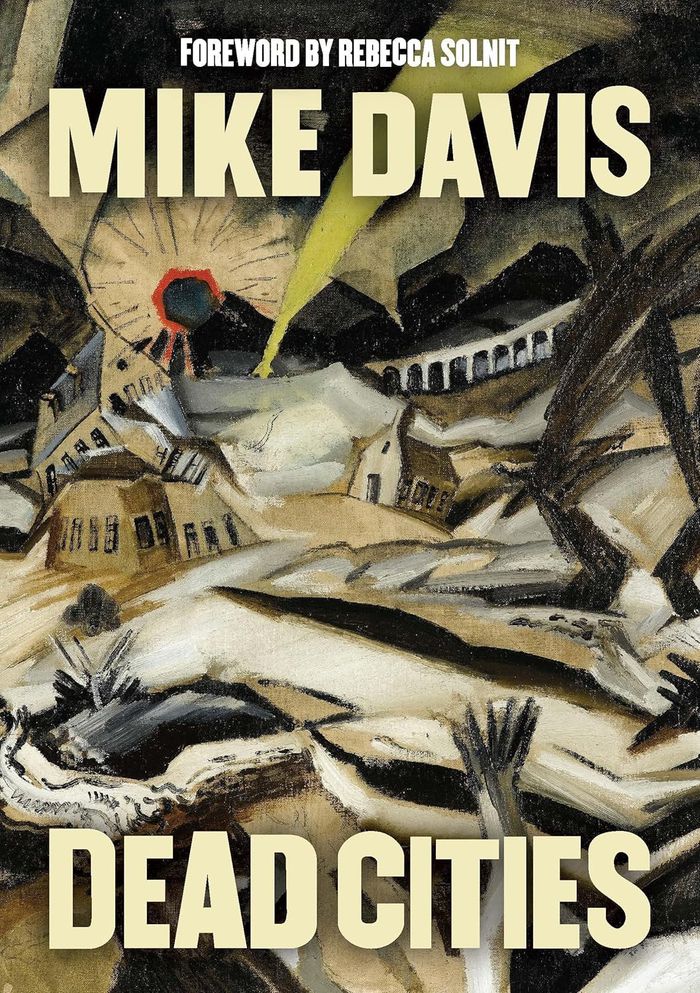
For the late great Mike Davis, the ravaging of the climate by capital—and his prescient analysis of its consequences for those of us left to deal with the resulting crises—was always a central part of his urban geography. In these wide ranging, incisive, and hauntingly relevant essays, Davis asks us to consider what we would find if we put a microscope to the ruins of Metropolis, and provides a riveting account of the disasters—natural, man-made, and those (as in the case of climate calamity) where the distinction is impossible to make—that he finds on the other end. He begins his examination by sifting through the rubble of the twin towers in the wake of 9/11, presciently identifying the seeds of war already germinating in the scorched soil of ground zero, and closes by considering how little prepared our hollowed out urban infrastructure is to deal with shocks of any kind, be they from car bombs or ice storms. In between we are treated to tours of blasted wastelands where American generals built and destroyed replicas of Berlin, glimpses of Las Vegas’s penchant for annihilating its own best-known landmarks, and other riveting tales of the dialectic between nature and the city.
Dead cities and other tales
Actions:
Price:
$38.95
(available in store)
Summary:
For the late great Mike Davis, the ravaging of the climate by capital—and his prescient analysis of its consequences for those of us left to deal with the resulting crises—was always a central part of his urban geography. In these wide ranging, incisive, and hauntingly relevant essays, Davis asks us to consider what we would find if we put a microscope to the ruins of Metropolis, and provides a riveting account of the disasters—natural, man-made, and those (as in the case of climate calamity) where the distinction is impossible to make—that he finds on the other end. He begins his examination by sifting through the rubble of the twin towers in the wake of 9/11, presciently identifying the seeds of war already germinating in the scorched soil of ground zero, and closes by considering how little prepared our hollowed out urban infrastructure is to deal with shocks of any kind, be they from car bombs or ice storms. In between we are treated to tours of blasted wastelands where American generals built and destroyed replicas of Berlin, glimpses of Las Vegas’s penchant for annihilating its own best-known landmarks, and other riveting tales of the dialectic between nature and the city.
Form:
books
books
Publication:
October 2024
October 2024
Subject:
Urban Theory
Urban Theory
Form:
books
books
Price:
$73.95
(available to order)
Summary:
Standing on Mont Ventoux near Avignon, the fourteenth-century poet Petrarch experienced an entirely new sensation that he described as 'stepping out of time and space'. On the mountain's summit he was as far as he could be from the 'world's stage all around'. The huge distance reduced reference points to insignificant specks down below, and everything in the panorama(...)
$73.95
(available to order)
Summary:
Standing on Mont Ventoux near Avignon, the fourteenth-century poet Petrarch experienced an entirely new sensation that he described as 'stepping out of time and space'. On the mountain's summit he was as far as he could be from the 'world's stage all around'. The huge distance reduced reference points to insignificant specks down below, and everything in the panorama(...)
Title:
The invented land : a bird's-eye view of Dutch landscape architecture
Actions:
Price:
$73.95
(available to order)
Summary:
Standing on Mont Ventoux near Avignon, the fourteenth-century poet Petrarch experienced an entirely new sensation that he described as 'stepping out of time and space'. On the mountain's summit he was as far as he could be from the 'world's stage all around'. The huge distance reduced reference points to insignificant specks down below, and everything in the panorama seemed motionless, dispelling any notion of time. Petrarch had placed himself outside reality. That is what makes aerial photography so fascinating, writes Clemens M. Steenbergen, professor of landscape architecture at Delft University of Technology, in his introduction. The higher the viewpoint the greater the visual control and the more abstract the image. We can see whether a landscape has been shaped by man or is pure nature, how space and mass form one composition. Aerial photographer and landscape architect Peter van Bolhuis captures on camera the Dutch landscape: areas devoted to agriculture, forestry, nature, infrastructure and urban development. The pictures show us the achievements of a half century of landscape architecture. We see a landscape in which everything is precisely measured and demarcated, everything is planned and calculated, with no space left unattended. We see, writes Tracy Metz in one of the essays, 'a landscape that is the sum of negotiations about ever smaller parts'.
The invented land : a bird's-eye view of Dutch landscape architecture
Actions:
Price:
$73.95
(available to order)
Summary:
Standing on Mont Ventoux near Avignon, the fourteenth-century poet Petrarch experienced an entirely new sensation that he described as 'stepping out of time and space'. On the mountain's summit he was as far as he could be from the 'world's stage all around'. The huge distance reduced reference points to insignificant specks down below, and everything in the panorama seemed motionless, dispelling any notion of time. Petrarch had placed himself outside reality. That is what makes aerial photography so fascinating, writes Clemens M. Steenbergen, professor of landscape architecture at Delft University of Technology, in his introduction. The higher the viewpoint the greater the visual control and the more abstract the image. We can see whether a landscape has been shaped by man or is pure nature, how space and mass form one composition. Aerial photographer and landscape architect Peter van Bolhuis captures on camera the Dutch landscape: areas devoted to agriculture, forestry, nature, infrastructure and urban development. The pictures show us the achievements of a half century of landscape architecture. We see a landscape in which everything is precisely measured and demarcated, everything is planned and calculated, with no space left unattended. We see, writes Tracy Metz in one of the essays, 'a landscape that is the sum of negotiations about ever smaller parts'.
Form:
books
books
Publication:
December 2004, Wageningen, Netherlands
December 2004, Wageningen, Netherlands
Subject:
Gardens
Gardens
Form:
books
books
Actions:
Price:
$54.00
(available to order)
Summary:
There is no other period in the history of the Netherlands which excites such emotion, resistance or aversion as the period between 1970 and 1980. There are also varying opinions about architecture in the 1970s. Architecture at that time headed off in pursuit of new definitions and forms. Though a number of architectural movements were driven by a devoted social(...)
$54.00
(available to order)
Summary:
There is no other period in the history of the Netherlands which excites such emotion, resistance or aversion as the period between 1970 and 1980. There are also varying opinions about architecture in the 1970s. Architecture at that time headed off in pursuit of new definitions and forms. Though a number of architectural movements were driven by a devoted social(...)
Subject:
Architecture since 1900, Europe
Architecture since 1900, Europe
Publication:
January 2004, Rotterdam
January 2004, Rotterdam
Title:
The critical seventies : architecture and urban planning in the Netherlands, 1968-1982
Actions:
Price:
$54.00
(available to order)
Summary:
There is no other period in the history of the Netherlands which excites such emotion, resistance or aversion as the period between 1970 and 1980. There are also varying opinions about architecture in the 1970s. Architecture at that time headed off in pursuit of new definitions and forms. Though a number of architectural movements were driven by a devoted social engagement and a profound belief in architecture as a means of moulding society, there was such a varied choice that it did not generate a single and unanimous alternative, resulting instead in polarization and pluriformity. This volume focuses on architecture, urban planning and spatial planning in the period 1968 - 1982. Remarkable and specific projects from this period are discussed and extensively documented on the basis of six themes. An introductory essay considers the context in which the architecture and urban planning changed so radically during this period. So far there has been little research into the architecture and planning of the 1970s in the Netherlands, even though it is a period when changes took on a definitive form. With the imminent demolition and renovation of much of the infrastructure and architecture of the 1970s, this book is a document that bears witness to the importance of this period for architecture in the Netherlands.
The critical seventies : architecture and urban planning in the Netherlands, 1968-1982
Actions:
Price:
$54.00
(available to order)
Summary:
There is no other period in the history of the Netherlands which excites such emotion, resistance or aversion as the period between 1970 and 1980. There are also varying opinions about architecture in the 1970s. Architecture at that time headed off in pursuit of new definitions and forms. Though a number of architectural movements were driven by a devoted social engagement and a profound belief in architecture as a means of moulding society, there was such a varied choice that it did not generate a single and unanimous alternative, resulting instead in polarization and pluriformity. This volume focuses on architecture, urban planning and spatial planning in the period 1968 - 1982. Remarkable and specific projects from this period are discussed and extensively documented on the basis of six themes. An introductory essay considers the context in which the architecture and urban planning changed so radically during this period. So far there has been little research into the architecture and planning of the 1970s in the Netherlands, even though it is a period when changes took on a definitive form. With the imminent demolition and renovation of much of the infrastructure and architecture of the 1970s, this book is a document that bears witness to the importance of this period for architecture in the Netherlands.
Form:
books
books
Publication:
January 2004, Rotterdam
January 2004, Rotterdam
Subject:
Architecture since 1900, Europe
Architecture since 1900, Europe
Form:
books
books
Actions:
Price:
$35.00
(available in store)
Summary:
The rural, remote, and wild territories we call "countryside", or the 98% of the earth's surface not occupied by cities, make up the front line where today's most powerful forces-climate and ecological devastation, migration, tech, demographic lurches-are playing out. Increasingly under a 'Cartesian' regime-gridded, mechanized, and optimized for maximal production-these(...)
$35.00
(available in store)
Summary:
The rural, remote, and wild territories we call "countryside", or the 98% of the earth's surface not occupied by cities, make up the front line where today's most powerful forces-climate and ecological devastation, migration, tech, demographic lurches-are playing out. Increasingly under a 'Cartesian' regime-gridded, mechanized, and optimized for maximal production-these(...)
Title:
Koolhaas. Countryside, A Report (US edition)
Actions:
Price:
$35.00
(available in store)
Summary:
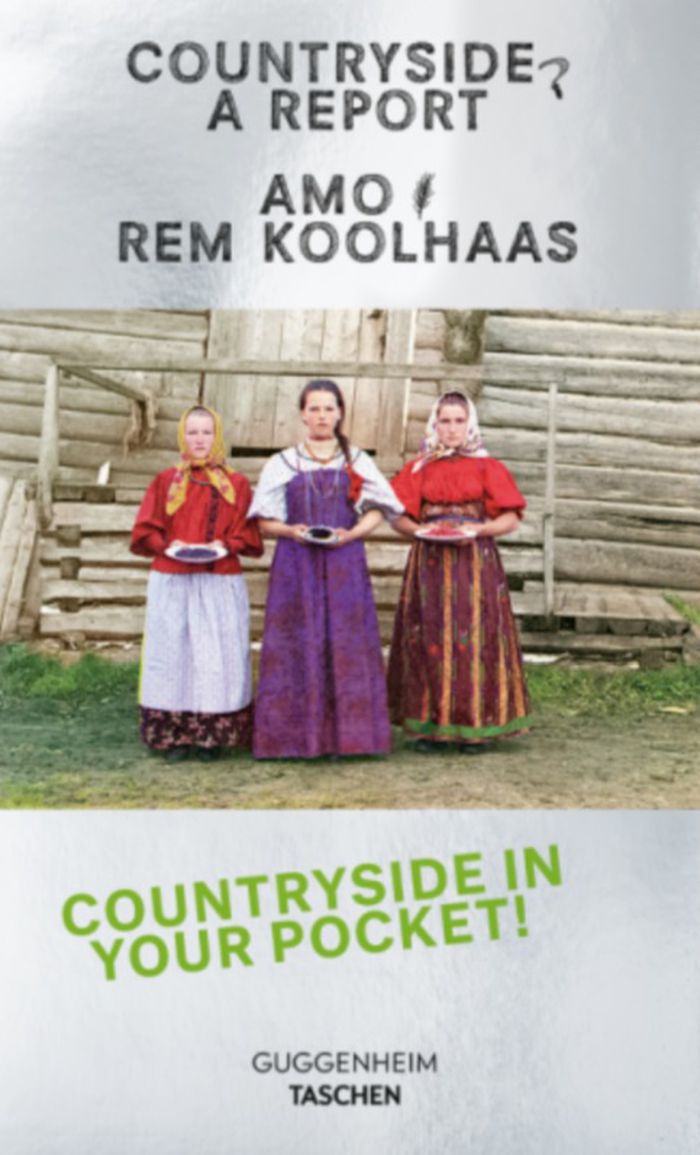
The rural, remote, and wild territories we call "countryside", or the 98% of the earth's surface not occupied by cities, make up the front line where today's most powerful forces-climate and ecological devastation, migration, tech, demographic lurches-are playing out. Increasingly under a 'Cartesian' regime-gridded, mechanized, and optimized for maximal production-these sites are changing beyond recognition. In his latest publication, Rem Koolhaas explores the rapid and often hidden transformations underway across the Earth's vast non-urban areas. This book gathers travelogue essays exploring territories marked by global forces and experimentation at the edge of our consciousness: a test site near Fukushima, where the robots that will maintain Japan's infrastructure and agriculture are tested; a greenhouse city in the Netherlands that may be the origin for the cosmology of today's countryside; the rapidly thawing permafrost of Central Siberia, a region wrestling with the possibility of relocation; refugees populating dying villages in the German countryside and intersecting with climate change activists; habituated mountain gorillas confronting humans on 'their' territory in Uganda; the American Midwest, where industrial-scale farming operations are coming to grips with regenerative agriculture; and Chinese villages transformed into all-in-one factory, e-commerce stores, and fulfillment centers.
Koolhaas. Countryside, A Report (US edition)
Actions:
Price:
$35.00
(available in store)
Summary:
The rural, remote, and wild territories we call "countryside", or the 98% of the earth's surface not occupied by cities, make up the front line where today's most powerful forces-climate and ecological devastation, migration, tech, demographic lurches-are playing out. Increasingly under a 'Cartesian' regime-gridded, mechanized, and optimized for maximal production-these sites are changing beyond recognition. In his latest publication, Rem Koolhaas explores the rapid and often hidden transformations underway across the Earth's vast non-urban areas. This book gathers travelogue essays exploring territories marked by global forces and experimentation at the edge of our consciousness: a test site near Fukushima, where the robots that will maintain Japan's infrastructure and agriculture are tested; a greenhouse city in the Netherlands that may be the origin for the cosmology of today's countryside; the rapidly thawing permafrost of Central Siberia, a region wrestling with the possibility of relocation; refugees populating dying villages in the German countryside and intersecting with climate change activists; habituated mountain gorillas confronting humans on 'their' territory in Uganda; the American Midwest, where industrial-scale farming operations are coming to grips with regenerative agriculture; and Chinese villages transformed into all-in-one factory, e-commerce stores, and fulfillment centers.
Form:
books
books
Publication:
April 2020
April 2020
Subject:
Architecture Monographs
Architecture Monographs


