


119212 Results
Form:
photographs
photographs
Actions:
Reference number:
PH2025:0002:007
Description:
PH2025:0002:007
Description:
People:
Date:
1984
1984
Title:
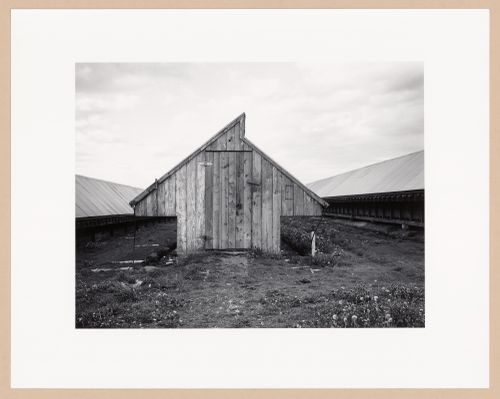
Mink shed, Louis J. Comeau Mink Ranch Ltd., Digby, Nova Scotia, from the series The Forms of Canadian Industrial Architecture
Actions:
PH2025:0002:007
Description:
Mink shed, Louis J. Comeau Mink Ranch Ltd., Digby, Nova Scotia, from the series The Forms of Canadian Industrial Architecture
Actions:
PH2025:0002:007
Description:
Form:
photographs
photographs
Date:
1984
1984
People:
Form:
photographs
photographs
Actions:
Reference number:
PH2025:0002:008
Description:
PH2025:0002:008
Description:
People:
Date:
1984
1984
Title:
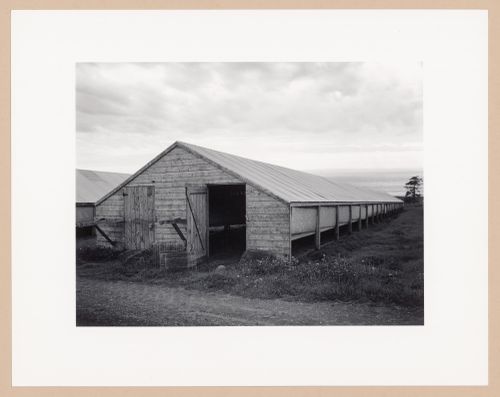
Mink shed, Louis J. Comeau Mink Ranch Ltd., Digby, Nova Scotia, from the series The Forms of Canadian Industrial Architecture
Actions:
PH2025:0002:008
Description:
Mink shed, Louis J. Comeau Mink Ranch Ltd., Digby, Nova Scotia, from the series The Forms of Canadian Industrial Architecture
Actions:
PH2025:0002:008
Description:
Form:
photographs
photographs
Date:
1984
1984
People:
Form:
photographs
photographs
Actions:
Reference number:
PH2025:0002:037
Description:
PH2025:0002:037
Description:
People:
Date:
1984
1984
Title:
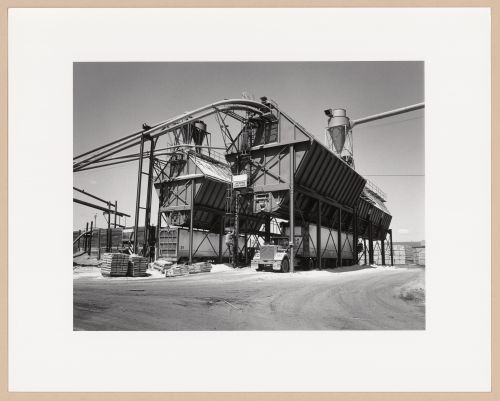
Jack pine chip bin, Great West Timber Ltd., Thunder Bay, Ontario, from the series The Forms of Canadian Industrial Architecture
Actions:
PH2025:0002:037
Description:
Jack pine chip bin, Great West Timber Ltd., Thunder Bay, Ontario, from the series The Forms of Canadian Industrial Architecture
Actions:
PH2025:0002:037
Description:
Form:
photographs
photographs
Date:
1984
1984
People:
Form:
photographs
photographs
Actions:
Reference number:
PH2025:0002:064
Description:
PH2025:0002:064
Description:
People:
Date:
1984
1984
Title:
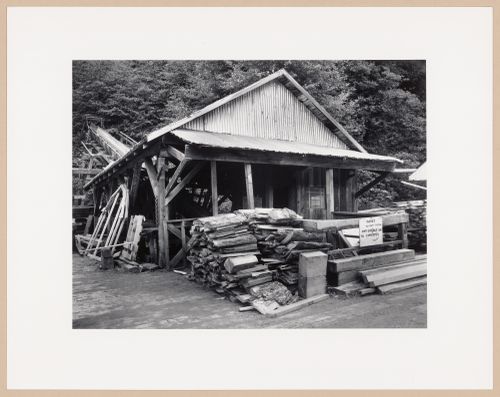
End cut waste conveyor, Cove Mills, 1920, Telegraph Cove, British Columbia, from the series The Forms of Canadian Industrial Architecture
Actions:
PH2025:0002:064
Description:
End cut waste conveyor, Cove Mills, 1920, Telegraph Cove, British Columbia, from the series The Forms of Canadian Industrial Architecture
Actions:
PH2025:0002:064
Description:
Form:
photographs
photographs
Date:
1984
1984
People:
Form:
textual records
textual records
![Pattern book for transparent self-adhesive raster foil for design work (from the project file Architecttura di carta [Paper architecture])](/img-collection/kRVPOrSpjRQfyXR1sqWhto70Pbo=/500x354/485715.jpg)
Actions:
Reference number:
ARCH400380
ARCH400380
People:
Date:
ca. 1974, 1977
ca. 1974, 1977
Form:
textual records
textual records
Date:
ca. 1974, 1977
ca. 1974, 1977
People:
Level of archival description:
Series
Series
Title:
Architectural projects
Architectural projects
Reference number:
AP154.S1
Description:
Series AP154.S1, Architectural projects, is chiefly composed of drawings related to architectural projects from the period 1966-2007. Most projects are located in the Northeastern United States, a notable exception being a study for resort development in Negril, Jamaica. The series includes published projects, such as the master plan for a new campus at Wykeham Rise School in Washington, Connecticut, housing projects at Twin Parks in the Bronx, N.Y. and at Little Italy in Manhattan, new and renovated buildings for the State University College at Potsdam, New York, and the George & Annette Murphy Center at Asphalt Green, New York. Small, lesser-known projects are also present, including two renovation projects in Brooklyn and a design for a Manhattan apartment. In general, the projects in this series are documented at a specific phase in their development, often at the stage of working drawings, although some project series are composed of design or presentation drawings. A substantial number of documents in this series are related to the Seagram Building at 375 Park Avenue, New York, N.Y., a landmark skyscraper designed by Ludwig Mies van der Rohe and Philip Johnson and completed in 1958. Beginning in 1971, Giovanni Pasanella and his partners were responsible for the interior design and space planning of national and regional administrative and sales offices of Joseph E. Seagram & Sons. The series documents three decades of activities related to the maintenance and renovation of the Seagram Building as well as some renovations for Seagram offices at 800 Third Avenue.
AP154.S1
Description:
Series AP154.S1, Architectural projects, is chiefly composed of drawings related to architectural projects from the period 1966-2007. Most projects are located in the Northeastern United States, a notable exception being a study for resort development in Negril, Jamaica. The series includes published projects, such as the master plan for a new campus at Wykeham Rise School in Washington, Connecticut, housing projects at Twin Parks in the Bronx, N.Y. and at Little Italy in Manhattan, new and renovated buildings for the State University College at Potsdam, New York, and the George & Annette Murphy Center at Asphalt Green, New York. Small, lesser-known projects are also present, including two renovation projects in Brooklyn and a design for a Manhattan apartment. In general, the projects in this series are documented at a specific phase in their development, often at the stage of working drawings, although some project series are composed of design or presentation drawings. A substantial number of documents in this series are related to the Seagram Building at 375 Park Avenue, New York, N.Y., a landmark skyscraper designed by Ludwig Mies van der Rohe and Philip Johnson and completed in 1958. Beginning in 1971, Giovanni Pasanella and his partners were responsible for the interior design and space planning of national and regional administrative and sales offices of Joseph E. Seagram & Sons. The series documents three decades of activities related to the maintenance and renovation of the Seagram Building as well as some renovations for Seagram offices at 800 Third Avenue.
People:
Date:
1955-2007
1955-2007
Title:
Architectural projects
Actions:
AP154.S1
Description:
Series AP154.S1, Architectural projects, is chiefly composed of drawings related to architectural projects from the period 1966-2007. Most projects are located in the Northeastern United States, a notable exception being a study for resort development in Negril, Jamaica. The series includes published projects, such as the master plan for a new campus at Wykeham Rise School in Washington, Connecticut, housing projects at Twin Parks in the Bronx, N.Y. and at Little Italy in Manhattan, new and renovated buildings for the State University College at Potsdam, New York, and the George & Annette Murphy Center at Asphalt Green, New York. Small, lesser-known projects are also present, including two renovation projects in Brooklyn and a design for a Manhattan apartment. In general, the projects in this series are documented at a specific phase in their development, often at the stage of working drawings, although some project series are composed of design or presentation drawings. A substantial number of documents in this series are related to the Seagram Building at 375 Park Avenue, New York, N.Y., a landmark skyscraper designed by Ludwig Mies van der Rohe and Philip Johnson and completed in 1958. Beginning in 1971, Giovanni Pasanella and his partners were responsible for the interior design and space planning of national and regional administrative and sales offices of Joseph E. Seagram & Sons. The series documents three decades of activities related to the maintenance and renovation of the Seagram Building as well as some renovations for Seagram offices at 800 Third Avenue.
Architectural projects
Actions:
AP154.S1
Description:
Series AP154.S1, Architectural projects, is chiefly composed of drawings related to architectural projects from the period 1966-2007. Most projects are located in the Northeastern United States, a notable exception being a study for resort development in Negril, Jamaica. The series includes published projects, such as the master plan for a new campus at Wykeham Rise School in Washington, Connecticut, housing projects at Twin Parks in the Bronx, N.Y. and at Little Italy in Manhattan, new and renovated buildings for the State University College at Potsdam, New York, and the George & Annette Murphy Center at Asphalt Green, New York. Small, lesser-known projects are also present, including two renovation projects in Brooklyn and a design for a Manhattan apartment. In general, the projects in this series are documented at a specific phase in their development, often at the stage of working drawings, although some project series are composed of design or presentation drawings. A substantial number of documents in this series are related to the Seagram Building at 375 Park Avenue, New York, N.Y., a landmark skyscraper designed by Ludwig Mies van der Rohe and Philip Johnson and completed in 1958. Beginning in 1971, Giovanni Pasanella and his partners were responsible for the interior design and space planning of national and regional administrative and sales offices of Joseph E. Seagram & Sons. The series documents three decades of activities related to the maintenance and renovation of the Seagram Building as well as some renovations for Seagram offices at 800 Third Avenue.
Level of archival description:
Series 1
Series 1
Date:
1955-2007
1955-2007
People:
Form:
drawings
drawings
Actions:
Reference number:
AP140.S2.SS1.D73.P295
AP140.S2.SS1.D73.P295
People:
Date:
circa 1982-2001
circa 1982-2001
Form:
drawings
drawings
Date:
circa 1982-2001
circa 1982-2001
People:
Form:
textual records, photographs
textual records, photographs
Actions:
Reference number:
AP197.S1.SS8.129
AP197.S1.SS8.129
People:
Date:
1994
1994
Form:
textual records, photographs
textual records, photographs
Date:
1994
1994
People:
Level of archival description:
Series
Series
Title:
Architectural projects
Architectural projects
Reference number:
AP022.S1
Description:
This series documents 400 architectural projects by Erickson / Massey Architects (1963-1972), Arthur Erickson Architects (1972-1991), and by Arthur Erickson as a design consultant for other firms (1991-2002), including Aitken Wreglesworth Associates, Architectura, and Nick Milkovich Architects. The series also contains early residential projects by Arthur Erickson completed before 1963. The projects are international in scope with locations in Canada, United States, Europe (England, France, Spain, Germany), the Middle East (Saudi Arabia, United Arab Emirates, Iraq, Kuwait, Lebanon, Iran, Jordan), and the Far East (Japan, China, Hong Kong, Brunei, Malaysia, Taiwan), and Australia.
AP022.S1
Description:
This series documents 400 architectural projects by Erickson / Massey Architects (1963-1972), Arthur Erickson Architects (1972-1991), and by Arthur Erickson as a design consultant for other firms (1991-2002), including Aitken Wreglesworth Associates, Architectura, and Nick Milkovich Architects. The series also contains early residential projects by Arthur Erickson completed before 1963. The projects are international in scope with locations in Canada, United States, Europe (England, France, Spain, Germany), the Middle East (Saudi Arabia, United Arab Emirates, Iraq, Kuwait, Lebanon, Iran, Jordan), and the Far East (Japan, China, Hong Kong, Brunei, Malaysia, Taiwan), and Australia.
People:
Date:
1963-2002
1963-2002
Title:
Architectural projects
Actions:
AP022.S1
Description:
This series documents 400 architectural projects by Erickson / Massey Architects (1963-1972), Arthur Erickson Architects (1972-1991), and by Arthur Erickson as a design consultant for other firms (1991-2002), including Aitken Wreglesworth Associates, Architectura, and Nick Milkovich Architects. The series also contains early residential projects by Arthur Erickson completed before 1963. The projects are international in scope with locations in Canada, United States, Europe (England, France, Spain, Germany), the Middle East (Saudi Arabia, United Arab Emirates, Iraq, Kuwait, Lebanon, Iran, Jordan), and the Far East (Japan, China, Hong Kong, Brunei, Malaysia, Taiwan), and Australia.
Architectural projects
Actions:
AP022.S1
Description:
This series documents 400 architectural projects by Erickson / Massey Architects (1963-1972), Arthur Erickson Architects (1972-1991), and by Arthur Erickson as a design consultant for other firms (1991-2002), including Aitken Wreglesworth Associates, Architectura, and Nick Milkovich Architects. The series also contains early residential projects by Arthur Erickson completed before 1963. The projects are international in scope with locations in Canada, United States, Europe (England, France, Spain, Germany), the Middle East (Saudi Arabia, United Arab Emirates, Iraq, Kuwait, Lebanon, Iran, Jordan), and the Far East (Japan, China, Hong Kong, Brunei, Malaysia, Taiwan), and Australia.
Level of archival description:
Series
Series
Date:
1963-2002
1963-2002
People:
Form:
textual records
textual records
Actions:
Reference number:
DR2012:0012:103:010
Description:
File containing documents in German, including multiple photocopies of Melvin Charney's excerpted article translated into German "Aus einem Wörterbuch der Architektur... über clients und models" [From A Dictionary of architecture: of clients and models].
DR2012:0012:103:010
Description:
File containing documents in German, including multiple photocopies of Melvin Charney's excerpted article translated into German "Aus einem Wörterbuch der Architektur... über clients und models" [From A Dictionary of architecture: of clients and models].
People:
Date:
circa 1980
circa 1980
Title:
Photocopies of article translated into German "Aus einem Wörterbuch der Architektur... über clients und models" [From A Dictionary of architecture: of clients and models]
Actions:
DR2012:0012:103:010
Description:
File containing documents in German, including multiple photocopies of Melvin Charney's excerpted article translated into German "Aus einem Wörterbuch der Architektur... über clients und models" [From A Dictionary of architecture: of clients and models].
Photocopies of article translated into German "Aus einem Wörterbuch der Architektur... über clients und models" [From A Dictionary of architecture: of clients and models]
Actions:
DR2012:0012:103:010
Description:
File containing documents in German, including multiple photocopies of Melvin Charney's excerpted article translated into German "Aus einem Wörterbuch der Architektur... über clients und models" [From A Dictionary of architecture: of clients and models].
Form:
textual records
textual records
Date:
circa 1980
circa 1980
People:


