


1732 Results
Form:
books
books
Title:
Warhol's dream
Warhol's dream
Actions:
Price:
$26.00
(available to order)
Summary:
"12 February 1972--I had slept badly. I decided to go out for breakfast, but when I got down to the street, there was no one there, and I thought, Andy, you must be still dreaming. It was like New York at eight in the morning on New Year's Day. Completely deserted. Everything shut. It's my favorite time to be out, actually. I decided to go to my favorite diner, the Star(...)
$26.00
(available to order)
Summary:
"12 February 1972--I had slept badly. I decided to go out for breakfast, but when I got down to the street, there was no one there, and I thought, Andy, you must be still dreaming. It was like New York at eight in the morning on New Year's Day. Completely deserted. Everything shut. It's my favorite time to be out, actually. I decided to go to my favorite diner, the Star(...)
Subject:
Art Theory
Art Theory
Publication:
January 1900, Paris Zurich
January 1900, Paris Zurich
Title:
Warhol's dream
Actions:
Price:
$26.00
(available to order)
Summary:
"12 February 1972--I had slept badly. I decided to go out for breakfast, but when I got down to the street, there was no one there, and I thought, Andy, you must be still dreaming. It was like New York at eight in the morning on New Year's Day. Completely deserted. Everything shut. It's my favorite time to be out, actually. I decided to go to my favorite diner, the Star Palace, on 37th and Madison. And there, sitting alone at the window was, believe it or not, Robert Smithson, who I've met a few times. They all think he's a genius. But I still can't get through the stuff he writes in Artforum. I get a headache almost right away." Saul Anton, an Editor-at-Large at Cabinet magazine who has written for Salon and Artforum, among other publications, describes an imaginary encounter between Robert Smithson and Andy Warhol, drifting together for a day through an empty New York City, talking about entropy, glamour, science fiction, cinema and the art of their times. Published in conjunction with les Presses du reel, this highly informative and witty essay on both artists' works in the form of a fiction could be considered a contemporary Platonic Symposium.
Warhol's dream
Actions:
Price:
$26.00
(available to order)
Summary:
"12 February 1972--I had slept badly. I decided to go out for breakfast, but when I got down to the street, there was no one there, and I thought, Andy, you must be still dreaming. It was like New York at eight in the morning on New Year's Day. Completely deserted. Everything shut. It's my favorite time to be out, actually. I decided to go to my favorite diner, the Star Palace, on 37th and Madison. And there, sitting alone at the window was, believe it or not, Robert Smithson, who I've met a few times. They all think he's a genius. But I still can't get through the stuff he writes in Artforum. I get a headache almost right away." Saul Anton, an Editor-at-Large at Cabinet magazine who has written for Salon and Artforum, among other publications, describes an imaginary encounter between Robert Smithson and Andy Warhol, drifting together for a day through an empty New York City, talking about entropy, glamour, science fiction, cinema and the art of their times. Published in conjunction with les Presses du reel, this highly informative and witty essay on both artists' works in the form of a fiction could be considered a contemporary Platonic Symposium.
Form:
books
books
Publication:
January 1900, Paris Zurich
January 1900, Paris Zurich
Subject:
Art Theory
Art Theory
Form:
books
books
Actions:
Price:
$37.95
(available to order)
Summary:
Accelerationism is the name of a contemporary political heresy: the insistence that the only radical political response to capitalism is not to protest, disrupt, critique, or détourne it, but to accelerate and exacerbate its uprooting, alienating, decoding, abstractive tendencies. "#Accelerate" presents a genealogy of accelerationism, tracking the impulse through 90s UK(...)
$37.95
(available to order)
Summary:
Accelerationism is the name of a contemporary political heresy: the insistence that the only radical political response to capitalism is not to protest, disrupt, critique, or détourne it, but to accelerate and exacerbate its uprooting, alienating, decoding, abstractive tendencies. "#Accelerate" presents a genealogy of accelerationism, tracking the impulse through 90s UK(...)
Title:
#Accelerate: the accelerationist reader
Actions:
Price:
$37.95
(available to order)
Summary:
Accelerationism is the name of a contemporary political heresy: the insistence that the only radical political response to capitalism is not to protest, disrupt, critique, or détourne it, but to accelerate and exacerbate its uprooting, alienating, decoding, abstractive tendencies. "#Accelerate" presents a genealogy of accelerationism, tracking the impulse through 90s UK darkside cyberculture and the theory-fictions of Nick Land, Sadie Plant, Iain Grant, and CCRU, across the cultural underground of the 80s (rave, acid house, SF cinema) and back to its sources in delirious post-68 ferment, in texts whose searing nihilistic jouissance would later be disavowed by their authors and the marxist and academic establishment alike. On either side of this central sequence, the book includes texts by Marx that call attention to his own ‘Prometheanism’, and key works from recent years document the recent extraordinary emergence of new accelerationisms steeled against the onslaughts of neoliberal capitalist realism, and retooled for the twenty-first century. At the forefront of the energetic contemporary debate around this disputed, problematic term, "#Accelerate" activates a historical conversation about futurality, technology, politics, enjoyment and capital. This is a legacy shot through with contradictions, yet urgently galvanized today by the poverty of ‘reasonable’ contemporary political alternatives.
#Accelerate: the accelerationist reader
Actions:
Price:
$37.95
(available to order)
Summary:
Accelerationism is the name of a contemporary political heresy: the insistence that the only radical political response to capitalism is not to protest, disrupt, critique, or détourne it, but to accelerate and exacerbate its uprooting, alienating, decoding, abstractive tendencies. "#Accelerate" presents a genealogy of accelerationism, tracking the impulse through 90s UK darkside cyberculture and the theory-fictions of Nick Land, Sadie Plant, Iain Grant, and CCRU, across the cultural underground of the 80s (rave, acid house, SF cinema) and back to its sources in delirious post-68 ferment, in texts whose searing nihilistic jouissance would later be disavowed by their authors and the marxist and academic establishment alike. On either side of this central sequence, the book includes texts by Marx that call attention to his own ‘Prometheanism’, and key works from recent years document the recent extraordinary emergence of new accelerationisms steeled against the onslaughts of neoliberal capitalist realism, and retooled for the twenty-first century. At the forefront of the energetic contemporary debate around this disputed, problematic term, "#Accelerate" activates a historical conversation about futurality, technology, politics, enjoyment and capital. This is a legacy shot through with contradictions, yet urgently galvanized today by the poverty of ‘reasonable’ contemporary political alternatives.
Form:
books
books
Publication:
May 2014
May 2014
Subject:
Critical Theory
Critical Theory
Form:
books
books
Price:
$60.95
(available to order)
Summary:
Eadweard Muybridge, one of the great pioneer-innovators of the 19th century, is a familiar figure to students of art history, photography, and cinema. Best known for the photographs of horses and other animals in motion that he made in the 1870s and '80s, Muybridge was the first person to use photography to freeze rapid action for analysis and study. He devised a method(...)
$60.95
(available to order)
Summary:
Eadweard Muybridge, one of the great pioneer-innovators of the 19th century, is a familiar figure to students of art history, photography, and cinema. Best known for the photographs of horses and other animals in motion that he made in the 1870s and '80s, Muybridge was the first person to use photography to freeze rapid action for analysis and study. He devised a method(...)
Title:
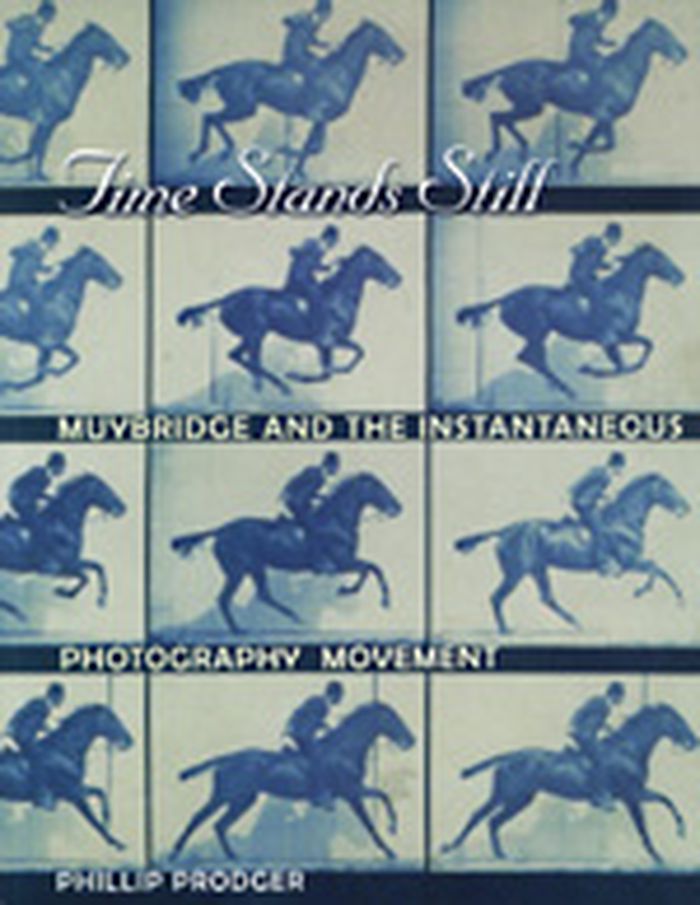
Time stands still : Muybridge and the instantaneous photography movement
Actions:
Price:
$60.95
(available to order)
Summary:
Eadweard Muybridge, one of the great pioneer-innovators of the 19th century, is a familiar figure to students of art history, photography, and cinema. Best known for the photographs of horses and other animals in motion that he made in the 1870s and '80s, Muybridge was the first person to use photography to freeze rapid action for analysis and study. He devised a method for photographing episodes of behavior using a series of cameras, producing some of the most famous sequential photographs ever made. These pictures, the first successful photographs of rapidly moving subjects, revolutionized expectations of what photography could reveal about the natural world, and ultimately led to the invention of the motion picture in the mid-1890s. "Time stands still" is the catalogue that accompanies an exhibition celebrating Muybridge's work. Though the instantaneous photography movement stands as a crucial event in the progression of photography to motion pictures, this exhibition represents the first major organized treatment of the subject. Opening in spring 2003 at the Iris and B. Gerald Cantor Center for Visual Arts at Stanford University and touring through 2004, it combines an examination of the artist's career in motion photography with a survey of early attempts to photograph moving subjects.
Time stands still : Muybridge and the instantaneous photography movement
Actions:
Price:
$60.95
(available to order)
Summary:
Eadweard Muybridge, one of the great pioneer-innovators of the 19th century, is a familiar figure to students of art history, photography, and cinema. Best known for the photographs of horses and other animals in motion that he made in the 1870s and '80s, Muybridge was the first person to use photography to freeze rapid action for analysis and study. He devised a method for photographing episodes of behavior using a series of cameras, producing some of the most famous sequential photographs ever made. These pictures, the first successful photographs of rapidly moving subjects, revolutionized expectations of what photography could reveal about the natural world, and ultimately led to the invention of the motion picture in the mid-1890s. "Time stands still" is the catalogue that accompanies an exhibition celebrating Muybridge's work. Though the instantaneous photography movement stands as a crucial event in the progression of photography to motion pictures, this exhibition represents the first major organized treatment of the subject. Opening in spring 2003 at the Iris and B. Gerald Cantor Center for Visual Arts at Stanford University and touring through 2004, it combines an examination of the artist's career in motion photography with a survey of early attempts to photograph moving subjects.
Form:
books
books
Publication:
April 2003, New York
April 2003, New York
Subject:
Photography monographs
Photography monographs
Form:
journals and magazines
journals and magazines
Title:
Cabinet 24 : shadows
Cabinet 24 : shadows
Actions:
Price:
$11.00
(available to order)
Summary:
The inherently contingent physics of shadows--never things in themselves but instead always "cast" signs of other things; tangible yet insubstantial--has long been a rich source of inspiration for thinkers and artists. From the Biblical valley where humanity is stalked by the "shadow of death" to the purported supernatural phenomenon of the shadow people, the idea has(...)
$11.00
(available to order)
Summary:
The inherently contingent physics of shadows--never things in themselves but instead always "cast" signs of other things; tangible yet insubstantial--has long been a rich source of inspiration for thinkers and artists. From the Biblical valley where humanity is stalked by the "shadow of death" to the purported supernatural phenomenon of the shadow people, the idea has(...)
Title:
Cabinet 24 : shadows
Actions:
Price:
$11.00
(available to order)
Summary:
The inherently contingent physics of shadows--never things in themselves but instead always "cast" signs of other things; tangible yet insubstantial--has long been a rich source of inspiration for thinkers and artists. From the Biblical valley where humanity is stalked by the "shadow of death" to the purported supernatural phenomenon of the shadow people, the idea has always suggested forces of the unseen, of the Other, its relational quality evoking a sense a duality that haunts our supposedly integral identities. Cabinet 24 includes interviews with Michael Baxandall on the Enlightenment's attitude toward shadows and with Victor Stoichita on the battle between light and dark, Kris Lee on Comte de Silhouette and the rise of phrenology, Julia Bryan-Wilson on the perpetually shaded Swiss town of Rattenberg, Trevor Paglen on the secret patches from clandestine divisions of the U.S. Armed Forces and George Pendle on Otto Neurath and his Everyman informational figures. Artist projects include a portfolio of shadow drawings and an unwitting contribution by a celebrated artist secretly trailed by a private detective hired by Cabinet. Plus, Jocko Weyland on the AP archive; Tony Wood on Konstantin Melnikov's proposal for a collectivized Soviet dormitory system; Amelie Hastie on eating at the cinema and Daniel Handler on the color violet.
Cabinet 24 : shadows
Actions:
Price:
$11.00
(available to order)
Summary:
The inherently contingent physics of shadows--never things in themselves but instead always "cast" signs of other things; tangible yet insubstantial--has long been a rich source of inspiration for thinkers and artists. From the Biblical valley where humanity is stalked by the "shadow of death" to the purported supernatural phenomenon of the shadow people, the idea has always suggested forces of the unseen, of the Other, its relational quality evoking a sense a duality that haunts our supposedly integral identities. Cabinet 24 includes interviews with Michael Baxandall on the Enlightenment's attitude toward shadows and with Victor Stoichita on the battle between light and dark, Kris Lee on Comte de Silhouette and the rise of phrenology, Julia Bryan-Wilson on the perpetually shaded Swiss town of Rattenberg, Trevor Paglen on the secret patches from clandestine divisions of the U.S. Armed Forces and George Pendle on Otto Neurath and his Everyman informational figures. Artist projects include a portfolio of shadow drawings and an unwitting contribution by a celebrated artist secretly trailed by a private detective hired by Cabinet. Plus, Jocko Weyland on the AP archive; Tony Wood on Konstantin Melnikov's proposal for a collectivized Soviet dormitory system; Amelie Hastie on eating at the cinema and Daniel Handler on the color violet.
Form:
journals and magazines
journals and magazines
Publication:
February 2007, New York
February 2007, New York
Subject:
Magazines
Magazines
Form:
books
books
Price:
$41.95
(available to order)
Summary:
The Urban Spectator is a lively and utterly fascinating exploration of the ways in which technologies have influenced our collective conception of the American city, as well as our relationship with urban space and architecture. Eric Gordon argues that the city, developing late and in conjunction with a range of modern media, produced a particular way of seeing--what he(...)
$41.95
(available to order)
Summary:
The Urban Spectator is a lively and utterly fascinating exploration of the ways in which technologies have influenced our collective conception of the American city, as well as our relationship with urban space and architecture. Eric Gordon argues that the city, developing late and in conjunction with a range of modern media, produced a particular way of seeing--what he(...)
Title:
The urban spectator: American concept-cities from Kodak to Google
Actions:
Price:
$41.95
(available to order)
Summary:
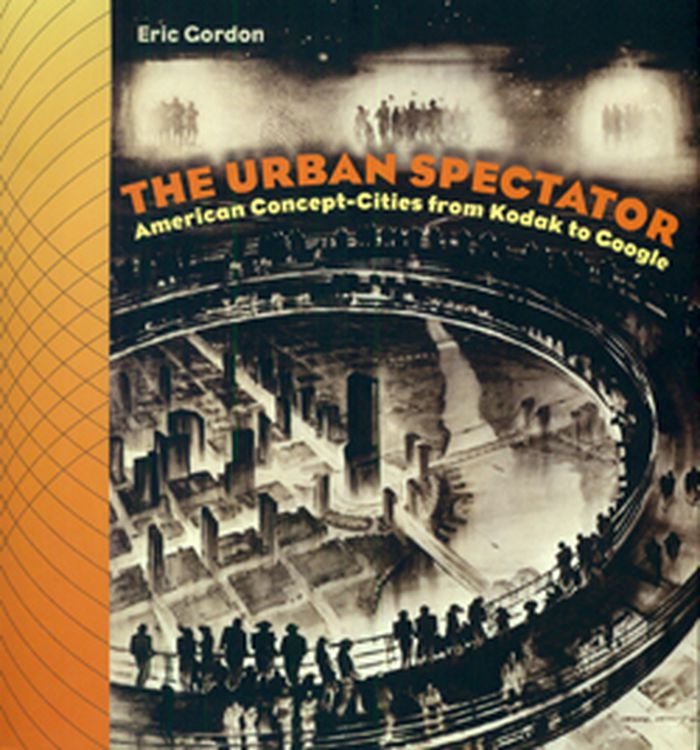
The Urban Spectator is a lively and utterly fascinating exploration of the ways in which technologies have influenced our collective conception of the American city, as well as our relationship with urban space and architecture. Eric Gordon argues that the city, developing late and in conjunction with a range of modern media, produced a particular way of seeing--what he labels "possessive spectatorship." Lacking the historical rootedness of European cities, the American city was open to individual interpretation, definition, and ownership. Beginning with the White City of the Chicago World's Fair of 1893 and the efforts to commodify the concept city through photography, Gordon shows how the American city has always been a product of the collision between the dominant conceptualization, shaped by contemporary media, and the spectator. From the viewfinder of the Kodak camera, to the public display of early cinema, to the speculative desire of network radio, all the way to machine-age utopianism, nostalgia, and America's "rerun" culture, the city is an amalgam of practice and concept. All of this comes to a head in the "database city" where urban spectatorship takes on the characteristics of a Google search. In new urban developments, the spectator searches, retrieves, and combines urban references to construct each experience of the city.
The urban spectator: American concept-cities from Kodak to Google
Actions:
Price:
$41.95
(available to order)
Summary:
The Urban Spectator is a lively and utterly fascinating exploration of the ways in which technologies have influenced our collective conception of the American city, as well as our relationship with urban space and architecture. Eric Gordon argues that the city, developing late and in conjunction with a range of modern media, produced a particular way of seeing--what he labels "possessive spectatorship." Lacking the historical rootedness of European cities, the American city was open to individual interpretation, definition, and ownership. Beginning with the White City of the Chicago World's Fair of 1893 and the efforts to commodify the concept city through photography, Gordon shows how the American city has always been a product of the collision between the dominant conceptualization, shaped by contemporary media, and the spectator. From the viewfinder of the Kodak camera, to the public display of early cinema, to the speculative desire of network radio, all the way to machine-age utopianism, nostalgia, and America's "rerun" culture, the city is an amalgam of practice and concept. All of this comes to a head in the "database city" where urban spectatorship takes on the characteristics of a Google search. In new urban developments, the spectator searches, retrieves, and combines urban references to construct each experience of the city.
Form:
books
books
Publication:
February 2010
February 2010
Subject:
Urban Theory
Urban Theory
Form:
books
books
Actions:
Price:
$54.95
(available to order)
Summary:
An early version of the slide projector and an immediate predecessor of narrative cinema, the magic lantern provided the lens through which late-nineteenth century Europe and America viewed and imagined the world. Magic lantern slide shows were a popular, entertaining and educational way for people to learn about the world beyond their own horizons, and from Cairo to(...)
$54.95
(available to order)
Summary:
An early version of the slide projector and an immediate predecessor of narrative cinema, the magic lantern provided the lens through which late-nineteenth century Europe and America viewed and imagined the world. Magic lantern slide shows were a popular, entertaining and educational way for people to learn about the world beyond their own horizons, and from Cairo to(...)
Title:
Memories of a lost world : travels through the magic lantern
Actions:
Price:
$54.95
(available to order)
Summary:
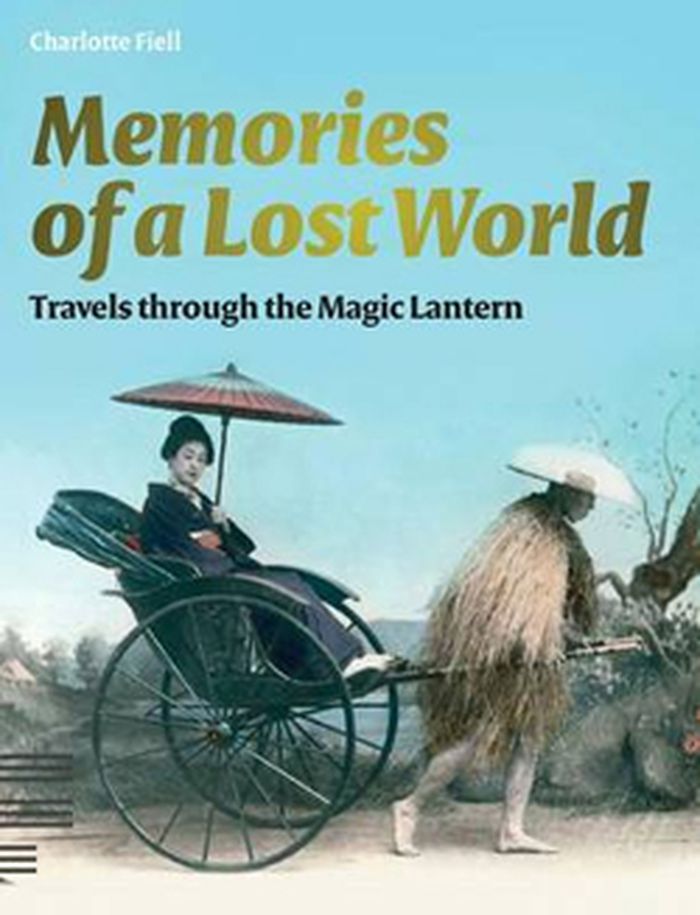
An early version of the slide projector and an immediate predecessor of narrative cinema, the magic lantern provided the lens through which late-nineteenth century Europe and America viewed and imagined the world. Magic lantern slide shows were a popular, entertaining and educational way for people to learn about the world beyond their own horizons, and from Cairo to Delhi to Adelaide and Cape Town, intrepid European and American photographers traveled to all corners of the world to document its peoples and customs. Now, for the first time, images of original magic lantern slides have been brought together in a single publication. Memories of a Lost World: Travels through the Magic Latern takes the reader back to a pre-globalised world in which regional customs and national cultures were as distinctive as they were diverse. From the bustling streets of Victorian London and the ruins of ancient Egypt to the temples of Japan and the tribesmen of New Guinea, Memories of a Lost World explores the world through a captivating collection of over 800 magic lantern slide images. This volume is not only an important source of primary historical information, but also conveys something of what the world was like before the advent of television and mass travel.
Memories of a lost world : travels through the magic lantern
Actions:
Price:
$54.95
(available to order)
Summary:
An early version of the slide projector and an immediate predecessor of narrative cinema, the magic lantern provided the lens through which late-nineteenth century Europe and America viewed and imagined the world. Magic lantern slide shows were a popular, entertaining and educational way for people to learn about the world beyond their own horizons, and from Cairo to Delhi to Adelaide and Cape Town, intrepid European and American photographers traveled to all corners of the world to document its peoples and customs. Now, for the first time, images of original magic lantern slides have been brought together in a single publication. Memories of a Lost World: Travels through the Magic Latern takes the reader back to a pre-globalised world in which regional customs and national cultures were as distinctive as they were diverse. From the bustling streets of Victorian London and the ruins of ancient Egypt to the temples of Japan and the tribesmen of New Guinea, Memories of a Lost World explores the world through a captivating collection of over 800 magic lantern slide images. This volume is not only an important source of primary historical information, but also conveys something of what the world was like before the advent of television and mass travel.
Form:
books
books
Publication:
November 2012
November 2012
Subject:
Transportation, Tourism, Migration
Transportation, Tourism, Migration
Form:
books
books
Price:
$63.95
(available to order)
Summary:
This book investigates the state of panoptic art at a time when issues of security and civil liberties are on many people’s minds. Traditional imaging and tracking systems have given way to infinitely more powerful “dataveillance” technologies, as an evolving arsenal of surrogate eyes and ears in our society shifts its focus from military to domestic space. Taking as its(...)
$63.95
(available to order)
Summary:
This book investigates the state of panoptic art at a time when issues of security and civil liberties are on many people’s minds. Traditional imaging and tracking systems have given way to infinitely more powerful “dataveillance” technologies, as an evolving arsenal of surrogate eyes and ears in our society shifts its focus from military to domestic space. Taking as its(...)
Subject:
Contemporary Art Monographs
Contemporary Art Monographs
Publication:
March 2002, Karlsruhe, Germany / Cambridge, Massachusett
March 2002, Karlsruhe, Germany / Cambridge, Massachusett
Title:
CTRL (space) : rhetorics of surveillance from Bentham to big brother
Actions:
Price:
$63.95
(available to order)
Summary:
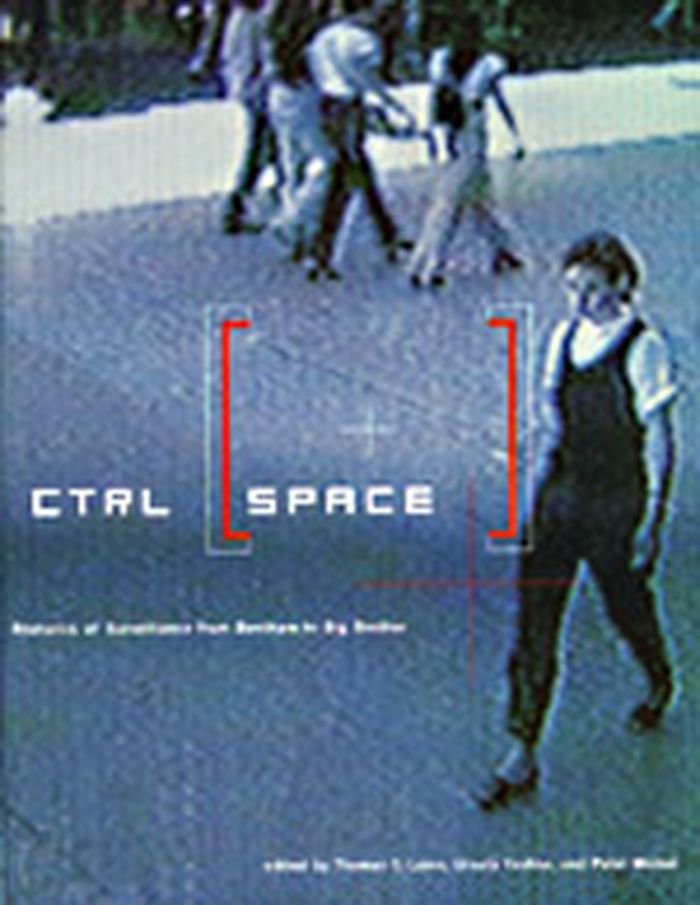
This book investigates the state of panoptic art at a time when issues of security and civil liberties are on many people’s minds. Traditional imaging and tracking systems have given way to infinitely more powerful “dataveillance” technologies, as an evolving arsenal of surrogate eyes and ears in our society shifts its focus from military to domestic space. Taking as its point of departure an architectural drawing by Jeremy Bentham that became the model for an entire social regime, CTRL [SPACE] looks at the shifting relationships between design and power, imaging and oppression, from the eighteenth to the twenty-first centuries. From the photographs taken with hidden cameras by Walker Evans and Paul Strand in the early twentieth century to the appropriation of military satellite technology by Marko Peljhan a hundred years later, the works of a wide range of artists have explored the dynamics of watching and being watched. The artists whose panoptical preoccupations are featured include, among others, Sophie Calle, Diller + Scofidio, Dan Graham, Pierre Huyghe, Michael Klier, Rem Koolhaas, Bruce Nauman, Yoko Ono, Thomas Ruff, Julia Scher, Andy Warhol, and Peter Weibel. This book, along with the exhibition it accompanies, is the first state-of-the-art survey of panopticism--in digital culture, architecture, television, video, cinema, painting, photography, conceptual art, installation work, robotics, and satellite imaging.
CTRL (space) : rhetorics of surveillance from Bentham to big brother
Actions:
Price:
$63.95
(available to order)
Summary:
This book investigates the state of panoptic art at a time when issues of security and civil liberties are on many people’s minds. Traditional imaging and tracking systems have given way to infinitely more powerful “dataveillance” technologies, as an evolving arsenal of surrogate eyes and ears in our society shifts its focus from military to domestic space. Taking as its point of departure an architectural drawing by Jeremy Bentham that became the model for an entire social regime, CTRL [SPACE] looks at the shifting relationships between design and power, imaging and oppression, from the eighteenth to the twenty-first centuries. From the photographs taken with hidden cameras by Walker Evans and Paul Strand in the early twentieth century to the appropriation of military satellite technology by Marko Peljhan a hundred years later, the works of a wide range of artists have explored the dynamics of watching and being watched. The artists whose panoptical preoccupations are featured include, among others, Sophie Calle, Diller + Scofidio, Dan Graham, Pierre Huyghe, Michael Klier, Rem Koolhaas, Bruce Nauman, Yoko Ono, Thomas Ruff, Julia Scher, Andy Warhol, and Peter Weibel. This book, along with the exhibition it accompanies, is the first state-of-the-art survey of panopticism--in digital culture, architecture, television, video, cinema, painting, photography, conceptual art, installation work, robotics, and satellite imaging.
Form:
books
books
Publication:
March 2002, Karlsruhe, Germany / Cambridge, Massachusett
March 2002, Karlsruhe, Germany / Cambridge, Massachusett
Subject:
Contemporary Art Monographs
Contemporary Art Monographs
Form:
books
books
Title:
Walking between slums and skycrapers: illusions of open space in Hong Kong, Tokyo, and Shanghai
Walking between slums and skycrapers: illusions of open space in Hong Kong, Tokyo, and Shanghai
Actions:
Price:
$24.95
(available to order)
Summary:
The book is concerned with the effects of globalization on living space focusing specifically on East Asian metropolises, such as Hong Kong, Tokyo, and Shanghai. Globalization has given rise to accessible catch-phrases such as the 'global village' and 'this is a small world.' In each part of the book the author juxtaposes a 'social' account of the city's urban space as it(...)
$24.95
(available to order)
Summary:
The book is concerned with the effects of globalization on living space focusing specifically on East Asian metropolises, such as Hong Kong, Tokyo, and Shanghai. Globalization has given rise to accessible catch-phrases such as the 'global village' and 'this is a small world.' In each part of the book the author juxtaposes a 'social' account of the city's urban space as it(...)
Publication:
April 2004, Hong Kong
April 2004, Hong Kong
Title:
Walking between slums and skycrapers: illusions of open space in Hong Kong, Tokyo, and Shanghai
Actions:
Price:
$24.95
(available to order)
Summary:
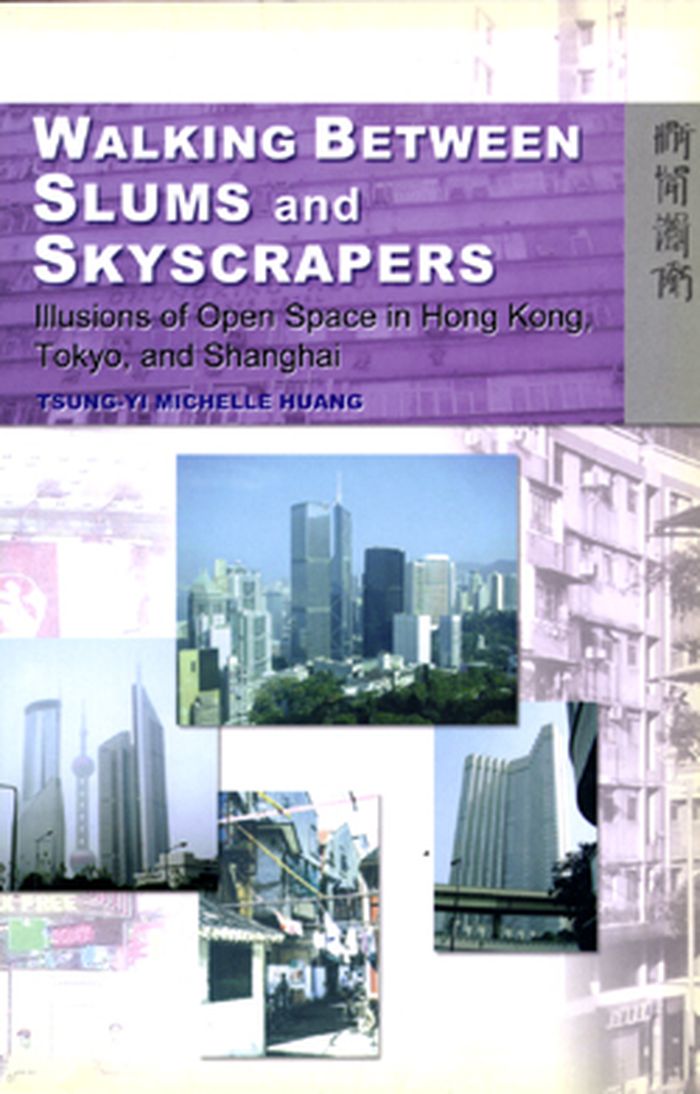
The book is concerned with the effects of globalization on living space focusing specifically on East Asian metropolises, such as Hong Kong, Tokyo, and Shanghai. Globalization has given rise to accessible catch-phrases such as the 'global village' and 'this is a small world.' In each part of the book the author juxtaposes a 'social' account of the city's urban space as it has been reshaped by the process of globalization with a 'private' account of the urban landscape as experienced by its walkers. Rather than rest here, the author wishes to show that for many of the inhabitants of the new global city, the 'shrinking world' phenomenon is deeply literal: the 'lived' space of everyday life is shrinking to make room for rezoning, construction of new infrastructure, and space modification - all in the name of urban development. Tsung-yi Michelle Huang received her Ph.D. in Comparative Literature from State University of New York at Stony Brook. Her works on cinema, literature, cultural studies, global cities, and Hong Kong culture have been published in the Quarterly Review of Film and Video, Journal of Narrative Theory, among others. Recently she has been working in a project that defines and examines specific East Asian metropolises as both 'linked' cities and distinctive global centers, mapping the tension within these domains. She is currently an Assistant Professor of English Literature at National Taiwan Normal University.
Walking between slums and skycrapers: illusions of open space in Hong Kong, Tokyo, and Shanghai
Actions:
Price:
$24.95
(available to order)
Summary:
The book is concerned with the effects of globalization on living space focusing specifically on East Asian metropolises, such as Hong Kong, Tokyo, and Shanghai. Globalization has given rise to accessible catch-phrases such as the 'global village' and 'this is a small world.' In each part of the book the author juxtaposes a 'social' account of the city's urban space as it has been reshaped by the process of globalization with a 'private' account of the urban landscape as experienced by its walkers. Rather than rest here, the author wishes to show that for many of the inhabitants of the new global city, the 'shrinking world' phenomenon is deeply literal: the 'lived' space of everyday life is shrinking to make room for rezoning, construction of new infrastructure, and space modification - all in the name of urban development. Tsung-yi Michelle Huang received her Ph.D. in Comparative Literature from State University of New York at Stony Brook. Her works on cinema, literature, cultural studies, global cities, and Hong Kong culture have been published in the Quarterly Review of Film and Video, Journal of Narrative Theory, among others. Recently she has been working in a project that defines and examines specific East Asian metropolises as both 'linked' cities and distinctive global centers, mapping the tension within these domains. She is currently an Assistant Professor of English Literature at National Taiwan Normal University.
Form:
books
books
Publication:
April 2004, Hong Kong
April 2004, Hong Kong
Form:
books
books
Price:
$36.95
(available to order)
Summary:
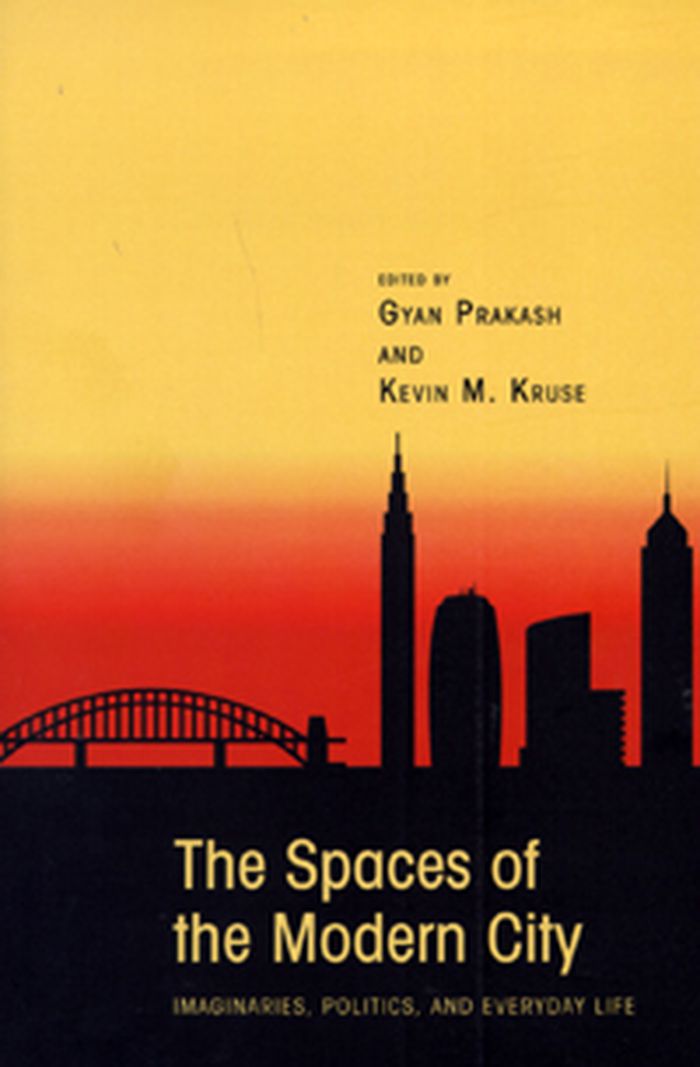
By United Nations estimates, 60 percent of the world's population will be urban by 2030. With the increasing speed of urbanization, especially in the developing world, scholars are now rethinking standard concepts and histories of modern cities. "The Spaces of the Modern City" historicizes the contemporary discussion of urbanism, highlighting the local and global breadth(...)
$36.95
(available to order)
Summary:
By United Nations estimates, 60 percent of the world's population will be urban by 2030. With the increasing speed of urbanization, especially in the developing world, scholars are now rethinking standard concepts and histories of modern cities. "The Spaces of the Modern City" historicizes the contemporary discussion of urbanism, highlighting the local and global breadth(...)
Subject:
Urban Theory
Urban Theory
Publication:
February 2008, Princeton, Oxford
February 2008, Princeton, Oxford
Title:
The Spaces of the Modern city : imaginaries, politics, and everyday life
Actions:
Price:
$36.95
(available to order)
Summary:
By United Nations estimates, 60 percent of the world's population will be urban by 2030. With the increasing speed of urbanization, especially in the developing world, scholars are now rethinking standard concepts and histories of modern cities. "The Spaces of the Modern City" historicizes the contemporary discussion of urbanism, highlighting the local and global breadth of the city landscape. This interdisciplinary collection examines how the city develops in the interactions of space and imagination. The essays focus on issues such as street design in Vienna, the motion picture industry in Los Angeles, architecture in Marseilles and Algiers, and the kaleidoscopic paradox of post-apartheid Johannesburg. They explore the nature of spatial politics, examining the disparate worlds of eighteenth-century Baghdad, nineteenth-century Morelia, Cold War-era West Berlin, and postwar Los Angeles. They also show the meaning of everyday spaces to urban life, illuminating issues such as crime in metropolitan London, youth culture in Dakar, "memory projects" in Tokyo, and Bombay cinema. Informed by a range of theoretical writings, this collection offers a fresh and truly global perspective on the nature of the modern city. The contributors are Sheila Crane, Belinda Davis, Mamadou Diouf, Philip J. Ethington, David Frisby, Christina M. Jiménez, Dina Rizk Khoury, Ranjani Mazumdar, Frank Mort, Martin Murray, Jordan Sand, and Sarah Schrank.
The Spaces of the Modern city : imaginaries, politics, and everyday life
Actions:
Price:
$36.95
(available to order)
Summary:
By United Nations estimates, 60 percent of the world's population will be urban by 2030. With the increasing speed of urbanization, especially in the developing world, scholars are now rethinking standard concepts and histories of modern cities. "The Spaces of the Modern City" historicizes the contemporary discussion of urbanism, highlighting the local and global breadth of the city landscape. This interdisciplinary collection examines how the city develops in the interactions of space and imagination. The essays focus on issues such as street design in Vienna, the motion picture industry in Los Angeles, architecture in Marseilles and Algiers, and the kaleidoscopic paradox of post-apartheid Johannesburg. They explore the nature of spatial politics, examining the disparate worlds of eighteenth-century Baghdad, nineteenth-century Morelia, Cold War-era West Berlin, and postwar Los Angeles. They also show the meaning of everyday spaces to urban life, illuminating issues such as crime in metropolitan London, youth culture in Dakar, "memory projects" in Tokyo, and Bombay cinema. Informed by a range of theoretical writings, this collection offers a fresh and truly global perspective on the nature of the modern city. The contributors are Sheila Crane, Belinda Davis, Mamadou Diouf, Philip J. Ethington, David Frisby, Christina M. Jiménez, Dina Rizk Khoury, Ranjani Mazumdar, Frank Mort, Martin Murray, Jordan Sand, and Sarah Schrank.
Form:
books
books
Publication:
February 2008, Princeton, Oxford
February 2008, Princeton, Oxford
Subject:
Urban Theory
Urban Theory
Form:
books
books
Price:
$63.00
(available to order)
Summary:
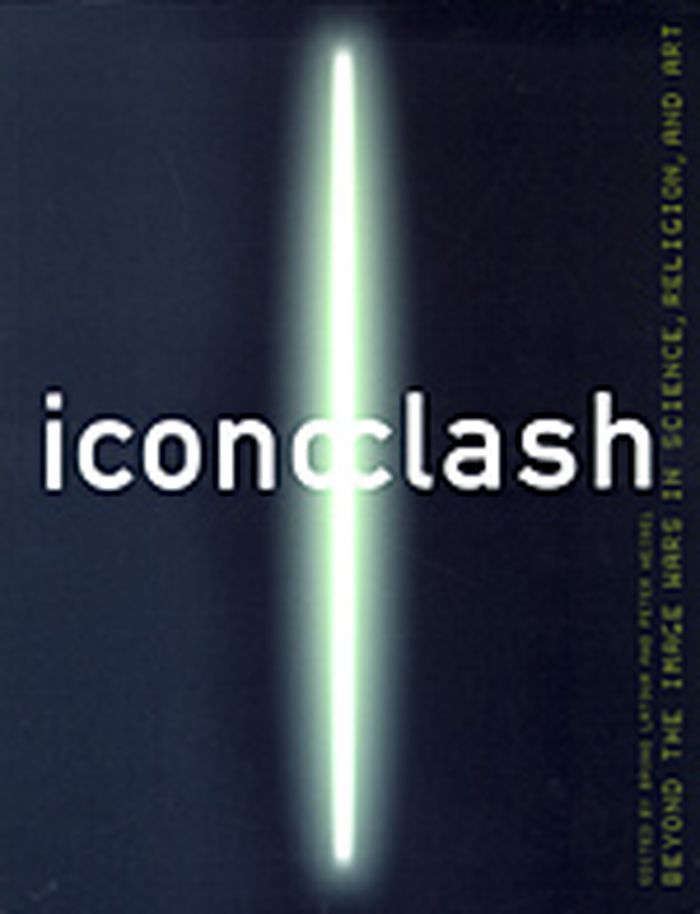
This book, which accompanies a major exhibition at the Center for New Art and Media (ZKM) in Karlsruhe, Germany, invokes three disparate realms in which images have assumed the role of cultural weapons. Monotheistic religions, scientific theories, and contemporary arts have struggled with the contradictory urge to produce and also destroy images and emblems. Moving(...)
$63.00
(available to order)
Summary:
This book, which accompanies a major exhibition at the Center for New Art and Media (ZKM) in Karlsruhe, Germany, invokes three disparate realms in which images have assumed the role of cultural weapons. Monotheistic religions, scientific theories, and contemporary arts have struggled with the contradictory urge to produce and also destroy images and emblems. Moving(...)
Subject:
Architectural Theory
Architectural Theory
Publication:
July 2002, Cambridge, Mass.
July 2002, Cambridge, Mass.
Title:
Iconoclash : beyond the image wars in science, religion, and art
Actions:
Price:
$63.00
(available to order)
Summary:
This book, which accompanies a major exhibition at the Center for New Art and Media (ZKM) in Karlsruhe, Germany, invokes three disparate realms in which images have assumed the role of cultural weapons. Monotheistic religions, scientific theories, and contemporary arts have struggled with the contradictory urge to produce and also destroy images and emblems. Moving beyond the image wars, ICONOCLASH shows that image destruction has always coexisted with a cascade of image production, visible in traditional Christian images as well as in scientific laboratories and the various experiments of contemporary art, music, cinema, and architecture. While iconoclasts have struggled against icon worshippers, another history of iconophily has always been at work. Investigating this alternative to the Western obsession with image worship and destruction allows useful comparisons with other cultures, in which images play a very different role. ICONOCLASH offers a variety of experiments on how to suspend the iconoclastic gesture and to renew the movement of images against any freeze-framing. The book includes major works by Art & Language, Willi Baumeister, Christian Boltanski, Daniel Buren, Lucas Cranach, Max Dean, Marcel Duchamp, Albrecht Dürer, Lucio Fontana, Francisco Goya, Hans Haacke, Richard Hamilton, Young Hay, Arata Isozaki, Asger Jorn, Martin Kippenberger, Imi Knoebel, Komar & Melamid, Joseph Kosuth, Gordon Matta-Clark, Tracey Moffat, Nam June Paik, Sigmar Polke, Stephen Prina, Man Ray, Sophie Ristelhueber, Hiroshi Sugimoto, and many others.
Iconoclash : beyond the image wars in science, religion, and art
Actions:
Price:
$63.00
(available to order)
Summary:
This book, which accompanies a major exhibition at the Center for New Art and Media (ZKM) in Karlsruhe, Germany, invokes three disparate realms in which images have assumed the role of cultural weapons. Monotheistic religions, scientific theories, and contemporary arts have struggled with the contradictory urge to produce and also destroy images and emblems. Moving beyond the image wars, ICONOCLASH shows that image destruction has always coexisted with a cascade of image production, visible in traditional Christian images as well as in scientific laboratories and the various experiments of contemporary art, music, cinema, and architecture. While iconoclasts have struggled against icon worshippers, another history of iconophily has always been at work. Investigating this alternative to the Western obsession with image worship and destruction allows useful comparisons with other cultures, in which images play a very different role. ICONOCLASH offers a variety of experiments on how to suspend the iconoclastic gesture and to renew the movement of images against any freeze-framing. The book includes major works by Art & Language, Willi Baumeister, Christian Boltanski, Daniel Buren, Lucas Cranach, Max Dean, Marcel Duchamp, Albrecht Dürer, Lucio Fontana, Francisco Goya, Hans Haacke, Richard Hamilton, Young Hay, Arata Isozaki, Asger Jorn, Martin Kippenberger, Imi Knoebel, Komar & Melamid, Joseph Kosuth, Gordon Matta-Clark, Tracey Moffat, Nam June Paik, Sigmar Polke, Stephen Prina, Man Ray, Sophie Ristelhueber, Hiroshi Sugimoto, and many others.
Form:
books
books
Publication:
July 2002, Cambridge, Mass.
July 2002, Cambridge, Mass.
Subject:
Architectural Theory
Architectural Theory


