


1735 Results
Form:
books
books
Price:
$63.00
(available to order)
Summary:
This book, which accompanies a major exhibition at the Center for New Art and Media (ZKM) in Karlsruhe, Germany, invokes three disparate realms in which images have assumed the role of cultural weapons. Monotheistic religions, scientific theories, and contemporary arts have struggled with the contradictory urge to produce and also destroy images and emblems. Moving(...)
Subject:
Architectural Theory
Architectural Theory
Publication:
July 2002, Cambridge, Mass.
July 2002, Cambridge, Mass.
Title:
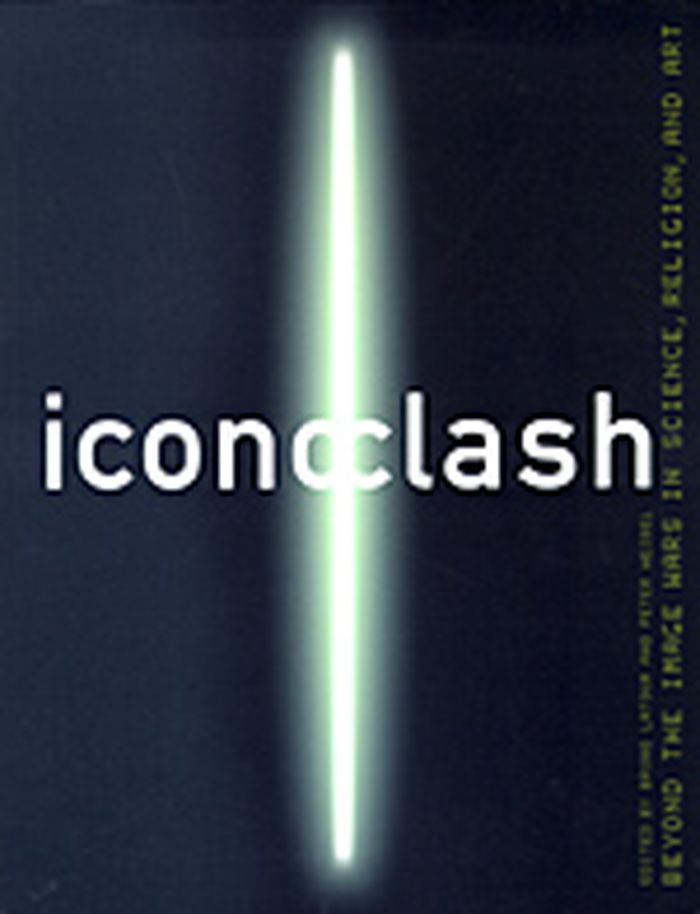
Iconoclash : beyond the image wars in science, religion, and art
Actions:
Price:
$63.00
(available to order)
Summary:
This book, which accompanies a major exhibition at the Center for New Art and Media (ZKM) in Karlsruhe, Germany, invokes three disparate realms in which images have assumed the role of cultural weapons. Monotheistic religions, scientific theories, and contemporary arts have struggled with the contradictory urge to produce and also destroy images and emblems. Moving beyond the image wars, ICONOCLASH shows that image destruction has always coexisted with a cascade of image production, visible in traditional Christian images as well as in scientific laboratories and the various experiments of contemporary art, music, cinema, and architecture. While iconoclasts have struggled against icon worshippers, another history of iconophily has always been at work. Investigating this alternative to the Western obsession with image worship and destruction allows useful comparisons with other cultures, in which images play a very different role. ICONOCLASH offers a variety of experiments on how to suspend the iconoclastic gesture and to renew the movement of images against any freeze-framing. The book includes major works by Art & Language, Willi Baumeister, Christian Boltanski, Daniel Buren, Lucas Cranach, Max Dean, Marcel Duchamp, Albrecht Dürer, Lucio Fontana, Francisco Goya, Hans Haacke, Richard Hamilton, Young Hay, Arata Isozaki, Asger Jorn, Martin Kippenberger, Imi Knoebel, Komar & Melamid, Joseph Kosuth, Gordon Matta-Clark, Tracey Moffat, Nam June Paik, Sigmar Polke, Stephen Prina, Man Ray, Sophie Ristelhueber, Hiroshi Sugimoto, and many others.
Form:
books
books
Publication:
July 2002, Cambridge, Mass.
July 2002, Cambridge, Mass.
Subject:
Architectural Theory
Architectural Theory
Form:
books
books
Price:
$63.95
(available to order)
Summary:
This book investigates the state of panoptic art at a time when issues of security and civil liberties are on many people’s minds. Traditional imaging and tracking systems have given way to infinitely more powerful “dataveillance” technologies, as an evolving arsenal of surrogate eyes and ears in our society shifts its focus from military to domestic space. Taking as its(...)
Subject:
Contemporary Art Monographs
Contemporary Art Monographs
Publication:
March 2002, Karlsruhe, Germany / Cambridge, Massachusett
March 2002, Karlsruhe, Germany / Cambridge, Massachusett
Title:
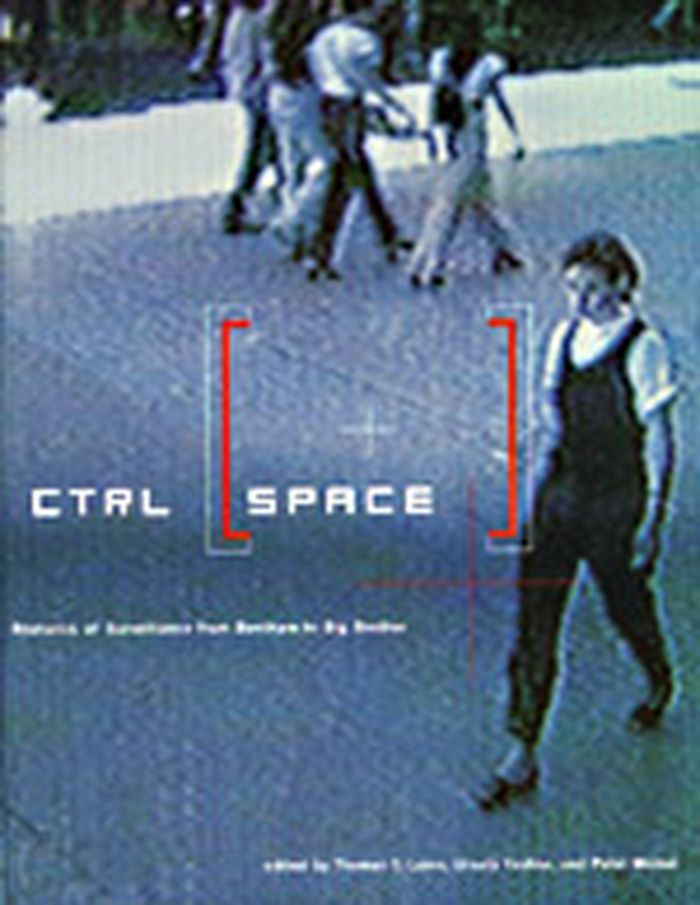
CTRL (space) : rhetorics of surveillance from Bentham to big brother
Actions:
Price:
$63.95
(available to order)
Summary:
This book investigates the state of panoptic art at a time when issues of security and civil liberties are on many people’s minds. Traditional imaging and tracking systems have given way to infinitely more powerful “dataveillance” technologies, as an evolving arsenal of surrogate eyes and ears in our society shifts its focus from military to domestic space. Taking as its point of departure an architectural drawing by Jeremy Bentham that became the model for an entire social regime, CTRL [SPACE] looks at the shifting relationships between design and power, imaging and oppression, from the eighteenth to the twenty-first centuries. From the photographs taken with hidden cameras by Walker Evans and Paul Strand in the early twentieth century to the appropriation of military satellite technology by Marko Peljhan a hundred years later, the works of a wide range of artists have explored the dynamics of watching and being watched. The artists whose panoptical preoccupations are featured include, among others, Sophie Calle, Diller + Scofidio, Dan Graham, Pierre Huyghe, Michael Klier, Rem Koolhaas, Bruce Nauman, Yoko Ono, Thomas Ruff, Julia Scher, Andy Warhol, and Peter Weibel. This book, along with the exhibition it accompanies, is the first state-of-the-art survey of panopticism--in digital culture, architecture, television, video, cinema, painting, photography, conceptual art, installation work, robotics, and satellite imaging.
Form:
books
books
Publication:
March 2002, Karlsruhe, Germany / Cambridge, Massachusett
March 2002, Karlsruhe, Germany / Cambridge, Massachusett
Subject:
Contemporary Art Monographs
Contemporary Art Monographs
Form:
books
books
Title:
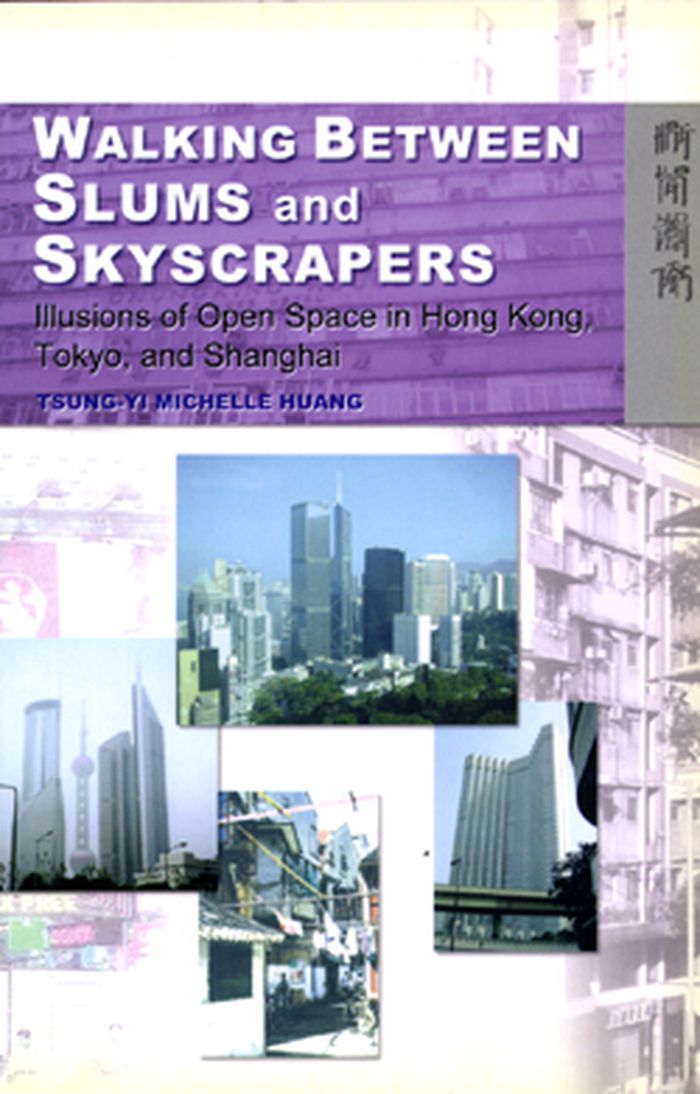
Walking between slums and skycrapers: illusions of open space in Hong Kong, Tokyo, and Shanghai
Walking between slums and skycrapers: illusions of open space in Hong Kong, Tokyo, and Shanghai
Actions:
Price:
$24.95
(available to order)
Summary:
The book is concerned with the effects of globalization on living space focusing specifically on East Asian metropolises, such as Hong Kong, Tokyo, and Shanghai. Globalization has given rise to accessible catch-phrases such as the 'global village' and 'this is a small world.' In each part of the book the author juxtaposes a 'social' account of the city's urban space as it(...)
Publication:
April 2004, Hong Kong
April 2004, Hong Kong
Title:
Walking between slums and skycrapers: illusions of open space in Hong Kong, Tokyo, and Shanghai
Actions:
Price:
$24.95
(available to order)
Summary:
The book is concerned with the effects of globalization on living space focusing specifically on East Asian metropolises, such as Hong Kong, Tokyo, and Shanghai. Globalization has given rise to accessible catch-phrases such as the 'global village' and 'this is a small world.' In each part of the book the author juxtaposes a 'social' account of the city's urban space as it has been reshaped by the process of globalization with a 'private' account of the urban landscape as experienced by its walkers. Rather than rest here, the author wishes to show that for many of the inhabitants of the new global city, the 'shrinking world' phenomenon is deeply literal: the 'lived' space of everyday life is shrinking to make room for rezoning, construction of new infrastructure, and space modification - all in the name of urban development. Tsung-yi Michelle Huang received her Ph.D. in Comparative Literature from State University of New York at Stony Brook. Her works on cinema, literature, cultural studies, global cities, and Hong Kong culture have been published in the Quarterly Review of Film and Video, Journal of Narrative Theory, among others. Recently she has been working in a project that defines and examines specific East Asian metropolises as both 'linked' cities and distinctive global centers, mapping the tension within these domains. She is currently an Assistant Professor of English Literature at National Taiwan Normal University.
Form:
books
books
Publication:
April 2004, Hong Kong
April 2004, Hong Kong
Form:
books
books
Price:
$36.95
(available to order)
Summary:
By United Nations estimates, 60 percent of the world's population will be urban by 2030. With the increasing speed of urbanization, especially in the developing world, scholars are now rethinking standard concepts and histories of modern cities. "The Spaces of the Modern City" historicizes the contemporary discussion of urbanism, highlighting the local and global breadth(...)
Subject:
Urban Theory
Urban Theory
Publication:
February 2008, Princeton, Oxford
February 2008, Princeton, Oxford
Title:
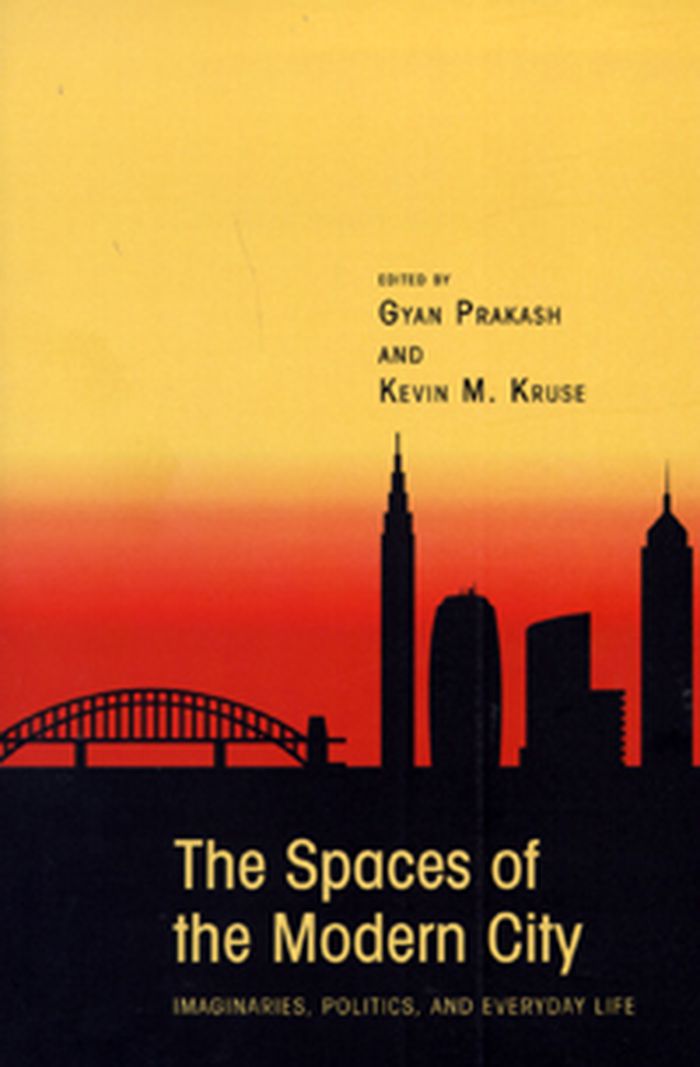
The Spaces of the Modern city : imaginaries, politics, and everyday life
Actions:
Price:
$36.95
(available to order)
Summary:
By United Nations estimates, 60 percent of the world's population will be urban by 2030. With the increasing speed of urbanization, especially in the developing world, scholars are now rethinking standard concepts and histories of modern cities. "The Spaces of the Modern City" historicizes the contemporary discussion of urbanism, highlighting the local and global breadth of the city landscape. This interdisciplinary collection examines how the city develops in the interactions of space and imagination. The essays focus on issues such as street design in Vienna, the motion picture industry in Los Angeles, architecture in Marseilles and Algiers, and the kaleidoscopic paradox of post-apartheid Johannesburg. They explore the nature of spatial politics, examining the disparate worlds of eighteenth-century Baghdad, nineteenth-century Morelia, Cold War-era West Berlin, and postwar Los Angeles. They also show the meaning of everyday spaces to urban life, illuminating issues such as crime in metropolitan London, youth culture in Dakar, "memory projects" in Tokyo, and Bombay cinema. Informed by a range of theoretical writings, this collection offers a fresh and truly global perspective on the nature of the modern city. The contributors are Sheila Crane, Belinda Davis, Mamadou Diouf, Philip J. Ethington, David Frisby, Christina M. Jiménez, Dina Rizk Khoury, Ranjani Mazumdar, Frank Mort, Martin Murray, Jordan Sand, and Sarah Schrank.
Form:
books
books
Publication:
February 2008, Princeton, Oxford
February 2008, Princeton, Oxford
Subject:
Urban Theory
Urban Theory
Form:
books
books
Actions:
Price:
$34.95
(available to order)
Summary:
In this second volume in the Chora series, contributing authors take an interdisciplinary approach to architecture and other cultural concerns, challenging readers to consider alternatives to conventional aesthetic and technological reductions. Karsten Harris provides a new and long-overdue reading of Martin Heidegger's well-known(...)
Subject:
Architectural Theory
Architectural Theory
Publication:
September 1996, Montréal
September 1996, Montréal
Title:
Chora 2 : intervals in the philosophy of architecture
Actions:
Price:
$34.95
(available to order)
Summary:
In this second volume in the Chora series, contributing authors take an interdisciplinary approach to architecture and other cultural concerns, challenging readers to consider alternatives to conventional aesthetic and technological reductions. Karsten Harris provides a new and long-overdue reading of Martin Heidegger's well-known essay "Building Dwelling Thinking." Donald Kunze and Stephen Parcell consider possibilities of meaningful architectural space for a visual culture, continuing themes they addressed in Chora 1. Further reflections on the spaces of literature, cinema, and architecture include an interview with French writer and film maker Alain Robbe-Grillet and articles by Dagmar Motycka Weston on the surrealist city, Tracey Eve Winton on the museum as a paradigmatic modern building, and Terrance Galvin on spiritual space in the works of Jean Cocteau. Jean-Pierre Chupin and Bram Ratner explore historical themes in their essays on French Renaissance architect Philibert de l'Orme and the Jewish myth of the Golem. Gregory Caicco addresses ethical questions in his essay on the Greek agora and the death of Socrates, as does Lily Chi in her meditation on the critical issue of use in architectural works. A concern with architectural representation and generative strategies for the making of architecture is present throughout, especially in the essay by Joanna Merwood on the provocative House by British artist Rachel Whiteread.
Form:
books
books
Publication:
September 1996, Montréal
September 1996, Montréal
Subject:
Architectural Theory
Architectural Theory
Form:
books
books
Price:
$60.00
(available in store)
Summary:
The new volume in the series “from the Collection”, by André Tavares and Susanne Cotter, presents the documentary spectrum that makes up the Álvaro Siza Archive, recently integrated into the Serralves Collection. Taken as raw material to build knowledge and generate a new understanding of Siza's work, the Archive reveals the incessant use of drawing as a working tool,(...)
Publication:
January 2018
January 2018
Title:
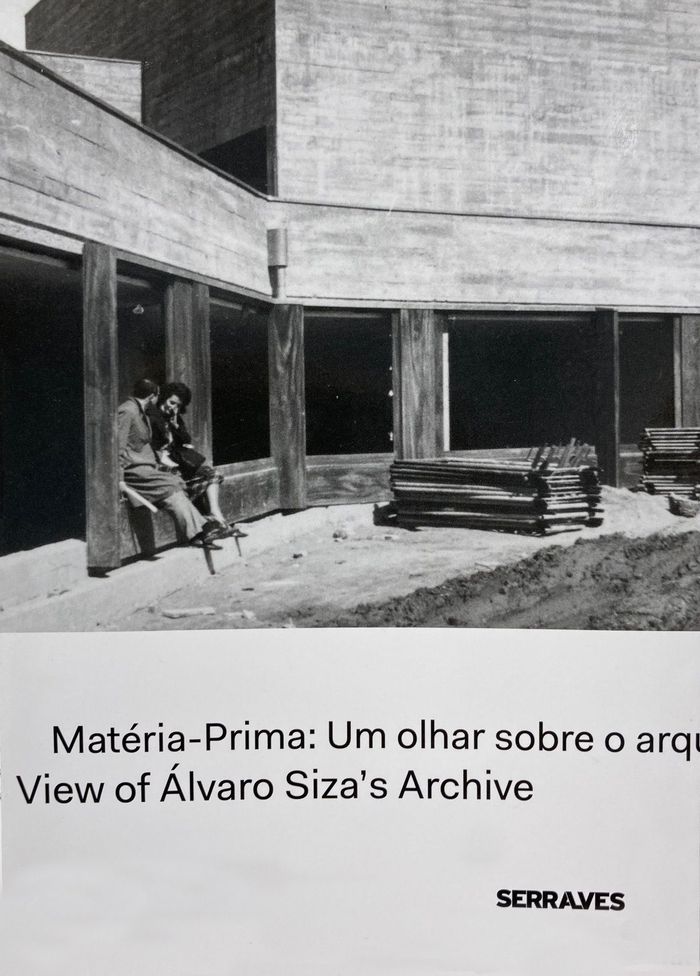
Materia-prima / Raw material : a view of Álvaro Siza's archive
Actions:
Price:
$60.00
(available in store)
Summary:
The new volume in the series “from the Collection”, by André Tavares and Susanne Cotter, presents the documentary spectrum that makes up the Álvaro Siza Archive, recently integrated into the Serralves Collection. Taken as raw material to build knowledge and generate a new understanding of Siza's work, the Archive reveals the incessant use of drawing as a working tool, the prefiguration of forms and spaces through sketch and technical drawing in a process of successive approximation to the desired result. But it also reveals various documentation — correspondence with clients, photographic records of places waiting for the works, opinions of the multiple actors involved in the construction processes, minutes of meetings and reports of tensions in the construction sites — which testify to an infinity of episodes that, despite invisible in the constructed work, contribute to the definition of a unique practice. Álvaro Siza is one of the most emblematic architects of the 20th century, and one of the names with which Portugal is associated in any part of the world, winner of the Pritzker Prize in 1992. It was in 1991 that Álvaro Siza was invited to design the Museum of Art Contemporary by Serralves, which opened in 1999. In 2019, he completed the architectural project for the Casa do Cinema Manoel de Oliveira and in 2021 the restoration and adaptation of the Casa de Serralves. Maintaining, until today, a collaborative relationship with the institution and its programming.
Form:
books
books
Publication:
January 2018
January 2018
Form:
books
books
Actions:
Price:
$72.00
(available to order)
Summary:
Transforming words into icons and images into wide-screen epics, Ed Ruscha has wholly reconceived the terms of painting for our era. Tagged variously as a Conceptualist, Pop artist or latter-day Surrealist, Ruscha flouts category, or rather incorporates all categories, always surprising and experimenting with both subject and method. His paintings are steeped in our(...)
Subject:
Contemporary Art Monographs
Contemporary Art Monographs
Publication:
February 2010
February 2010
Title:
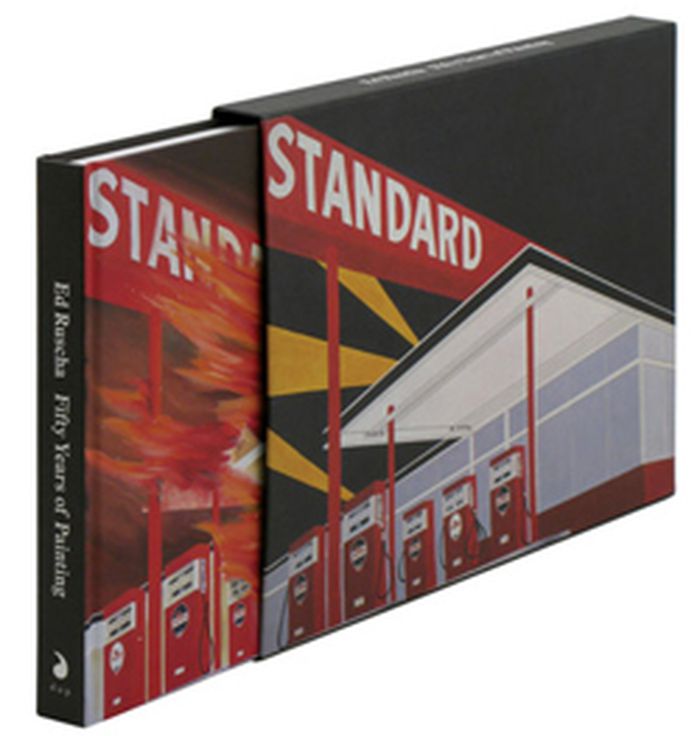
Ed Ruscha: fifty years of painting
Actions:
Price:
$72.00
(available to order)
Summary:
Transforming words into icons and images into wide-screen epics, Ed Ruscha has wholly reconceived the terms of painting for our era. Tagged variously as a Conceptualist, Pop artist or latter-day Surrealist, Ruscha flouts category, or rather incorporates all categories, always surprising and experimenting with both subject and method. His paintings are steeped in our times: cinema, advertising, logos, late capitalism and the twists and turns of postwar art have all informed his iconography since the early 1960s, arriving on the cool surfaces of his canvases with magnetic detachment. Ruscha eschews process and focuses exclusively on the final product: “the means to the end has always been secondary in my art,” he has said. Ruscha has also reinvented the use of words in art, finding disquieting ways to invest language with a weird, throbbing, ambient static, never aspiring to what he calls “word gestures,” since “each word is an excursion unto itself.” Fifty Years of Painting focuses on Ruscha's majestic oeuvre of paintings. A magnificent publication, it comes housed in a slipcase that sports the artist's classic painting “Standard Station” (1966), and, alongside fantastic reproductions, it contains a preface by novelist James Ellroy, essays by Ralph Rugoff, Alexandra Schwartz and Ulrich Wilmes, a text by novelist Bruce Wagner, an interview with the artist by Kristine McKenna, an illustrated chronology and an exhibition history. Ed Ruscha (born 1937) has made pioneering work in the media of painting, printmaking, drawing, bookmaking, photography and film since 1958.
Form:
books
books
Publication:
February 2010
February 2010
Subject:
Contemporary Art Monographs
Contemporary Art Monographs
Form:
books
books
Actions:
Price:
$40.00
(available to order)
Summary:
Wim Wenders (born 1945) started taking photographs at the age of 7. By the age of 12 he had equipped himself with his own darkroom, and by 17 he had acquired his first Leica. A few years later he was to emerge as a leading light in the New German Cinema movement of the late 1960s, making his feature-length directorial debut with Summer in the City (1970). Throughout his(...)
Title:
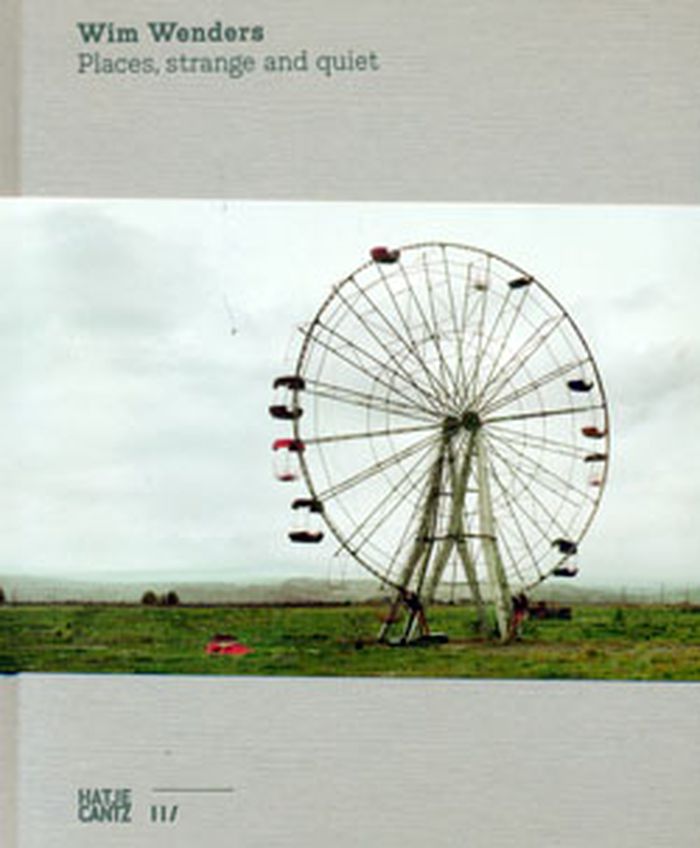
Wim Wenders : places, strange and quiet
Actions:
Price:
$40.00
(available to order)
Summary:
Wim Wenders (born 1945) started taking photographs at the age of 7. By the age of 12 he had equipped himself with his own darkroom, and by 17 he had acquired his first Leica. A few years later he was to emerge as a leading light in the New German Cinema movement of the late 1960s, making his feature-length directorial debut with Summer in the City (1970). Throughout his subsequent global acclaim as a director, Wenders has doggedly maintained his life as a photographer. In fact, the two careers have served each other well, as many of his photographs are created while location-scouting for films. His image repertoire of neglected industrial buildings, vacant lots, cemeteries, dilapidated urban niches and courtyards express a mixture of bemusement, melancholy and dislocation. “When you travel a lot, and when you love to just wander around and get lost, you can end up in the strangest spots,” Wenders says. “It must be some sort of built-in radar that often directs me to places that are strangely quiet, or quietly strange.” These strange and quiet color photographs are accompanied by poetical captions, some of which elucidate what is depicted, others of which lightly supplement with an anecdote (one characteristically deadpan caption accompanies an image of a cowboy clown standing at a rodeo: “It is amazing how many different ideas of 'fun' co-exist in this world” ). This publication gathers photographs from 1983 to 2011 in a full panorama of Wenders' photography to date.
Form:
books
books
Publication:
July 2011
July 2011
Subject:
Photography monographs
Photography monographs
Form:
books
books
Price:
$59.95
(available to order)
Summary:
"Suspensions of Perception" is a major historical study of human attention and its volatile role in modern Western culture. It argues that the ways in which we intently look at or listen to anything result from crucial changes in the nature of perception that can be traced back to(...)
Title:
Suspensions of perception : attention, spectacle, and modern culture
Actions:
Price:
$59.95
(available to order)
Summary:
"Suspensions of Perception" is a major historical study of human attention and its volatile role in modern Western culture. It argues that the ways in which we intently look at or listen to anything result from crucial changes in the nature of perception that can be traced back to the second half of the nineteenth century. Focusing on the period from about 1880 to 1905, Jonathan Crary examines the connections between the modernization of subjectivity and the dramatic expansion and industrialization of visual/auditory culture. At the core of his project is the paradoxical nature of modern attention, which was both a fundamental condition of individual freedom, creativity, and experience and a central element in the efficient functioning of economic and disciplinary institutions as well as the emerging spaces of mass consumption and spectacle. Crary approaches these issues through multiple analyses of single works by three key modernist painters--Manet, Seurat, and Cézanne--who each engaged in a singular confrontation with the disruptions, vacancies, and rifts within a perceptual field. Each in his own way discovered that sustained attentiveness, rather than fixing or securing the world, led to perceptual disintegration and loss of presence, and each used this discovery as the basis for a reinvention of representational practices. Suspensions of Perception decisively relocates the problem of aesthetic contemplation within a broader collective encounter with the unstable nature of perception--in psychology, philosophy, neurology, early cinema, and photography. In doing so, it provides a historical framework for understanding the current social crisis of attention amid the accelerating metamorphoses of our contemporary technological culture.
Form:
books
books
Publication:
October 1999, Cambridge
October 1999, Cambridge
Subject:
Architectural Theory
Architectural Theory
Form:
books
books
Price:
$49.95
(available to order)
Summary:
"Suspensions of Perception" is a major historical study of human attention and its volatile role in modern Western culture. It argues that the ways in which we intently look at or listen to anything result from crucial changes in the nature of perception that can be traced back to(...)
Title:
Suspensions of perception: attention, spectacle, and modern culture
Actions:
Price:
$49.95
(available to order)
Summary:
"Suspensions of Perception" is a major historical study of human attention and its volatile role in modern Western culture. It argues that the ways in which we intently look at or listen to anything result from crucial changes in the nature of perception that can be traced back to the second half of the nineteenth century. Focusing on the period from about 1880 to 1905, Jonathan Crary examines the connections between the modernization of subjectivity and the dramatic expansion and industrialization of visual/auditory culture. At the core of his project is the paradoxical nature of modern attention, which was both a fundamental condition of individual freedom, creativity, and experience and a central element in the efficient functioning of economic and disciplinary institutions as well as the emerging spaces of mass consumption and spectacle. Crary approaches these issues through multiple analyses of single works by three key modernist painters--Manet, Seurat, and Cézanne--who each engaged in a singular confrontation with the disruptions, vacancies, and rifts within a perceptual field. Each in his own way discovered that sustained attentiveness, rather than fixing or securing the world, led to perceptual disintegration and loss of presence, and each used this discovery as the basis for a reinvention of representational practices. Suspensions of Perception decisively relocates the problem of aesthetic contemplation within a broader collective encounter with the unstable nature of perception--in psychology, philosophy, neurology, early cinema, and photography. In doing so, it provides a historical framework for understanding the current social crisis of attention amid the accelerating metamorphoses of our contemporary technological culture.
Form:
books
books
Publication:
August 2001, Cambridge
August 2001, Cambridge
Subject:
Architectural Theory
Architectural Theory


