


1735 Results
Form:
books
books
Actions:
Price:
$65.99
(available to order)
Summary:
Today, the physical scale model is a centrepiece for design education, celebrated practices and architecture’s public relations. The development of digital fabrication devices has made model manufacture even more pervasive. The physical model is the most accessible form of architectural communication. Clients and the general public seem to immediately respond to and(...)
Title:
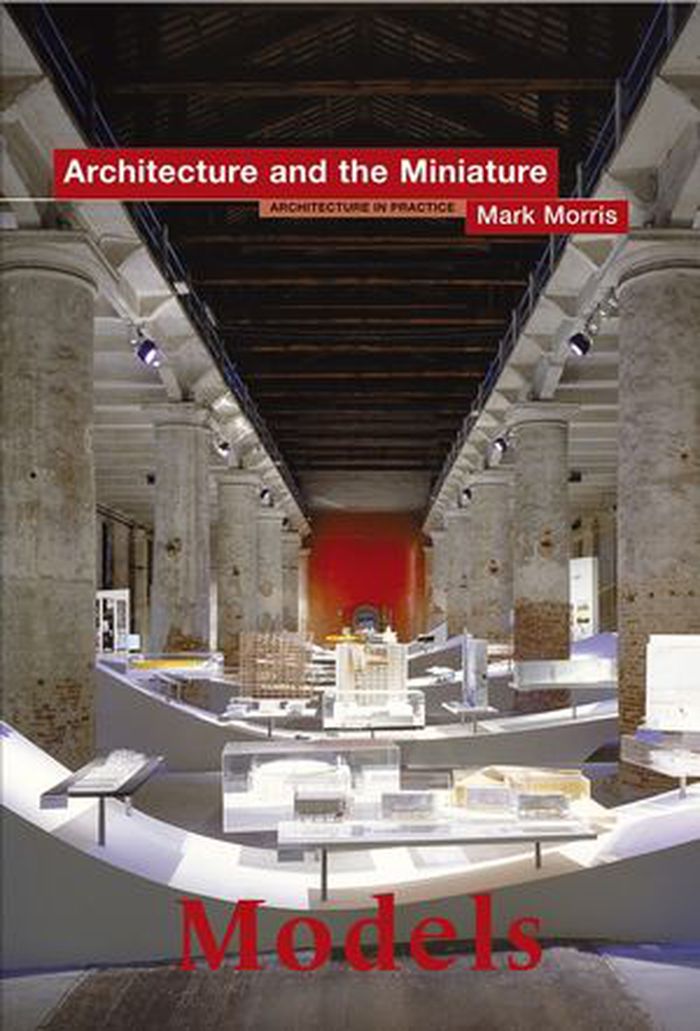
Architecture and the miniature : models
Actions:
Price:
$65.99
(available to order)
Summary:
Today, the physical scale model is a centrepiece for design education, celebrated practices and architecture’s public relations. The development of digital fabrication devices has made model manufacture even more pervasive. The physical model is the most accessible form of architectural communication. Clients and the general public seem to immediately respond to and understand the model, over blueprints and computer simulations. Many architects use finished models for presentations, competitions and exhibitions. Others also embrace sketch models as quick, economic and flexible generative tools. It is only with the rise of the virtual that the advantages and disadvantages of more traditional models can be fully evaluated. As attested by this book, we are now at an important watershed for the model in architecture. Practitioners and educators alike are seeking to fully understand the multiplicity of model types and how they might be strategically deployed at appropriate stages in the design process. The historic role that the model has played is outlined with attention paid to Alberti, John Soane, the Bauhaus and education reforms. A cultural history is offered by examining models in the guise of toys, food, cinema, product design, souvenirs, narrative and art. Model theories are considered and tied to specific examples in the field. New technologies and creative combinations of traditional model-making techniques are evaluated. Kinetic, multi-media, nightscape and interdisciplinary models reveal the broad scope and exceptional versatility offered by this important tool. Models: Architecture and the Miniature focuses on current model use and experimentation by architects across the globe including David Chipperfield, Peter Eisenman, Frank Gehry, Zaha Hadid, Coop Himmelb(l)au, Daniel Libeskind, Greg Lynn and UN Studio.
Form:
books
books
Publication:
October 2005, Chichester
October 2005, Chichester
Subject:
Models
Models
Form:
books
books
Title:
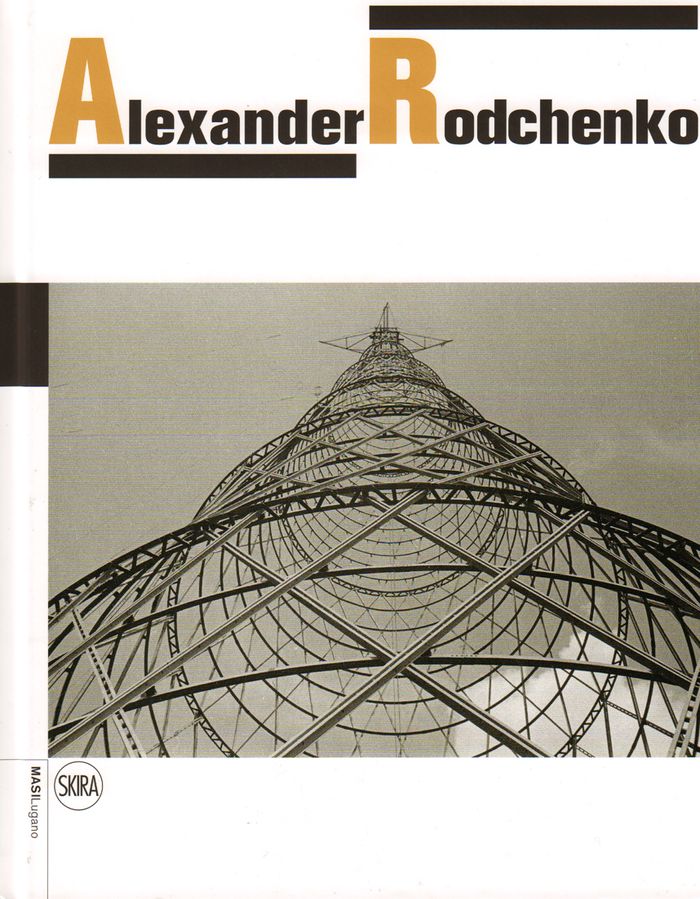
Aleksandr Rodchenko
Aleksandr Rodchenko
Actions:
Price:
$55.00
(available to order)
Summary:
A leading representative of the Russian avant-garde, Alexander Rodchenko (1891- 1956) revolutionized the world of graphic art, design and photography. The over 250 illustrations featured in this volume allow the reader to grasp the full force of this innovator and to appreciate the charisma he exerted on fellow artists as much as on the men of letters, directors and(...)
Title:
Aleksandr Rodchenko
Actions:
Price:
$55.00
(available to order)
Summary:
A leading representative of the Russian avant-garde, Alexander Rodchenko (1891- 1956) revolutionized the world of graphic art, design and photography. The over 250 illustrations featured in this volume allow the reader to grasp the full force of this innovator and to appreciate the charisma he exerted on fellow artists as much as on the men of letters, directors and intellectuals who shared his path. Whether it is the photomontages he created for Vladimir Mayakovsky's poem Pro Eto (About That), the covers designed for the magazine Novy LEF (New LEF) - a veritable point of reference for the revolutionary intelligentsia - or cinema posters and book illustrations, Rodchenko's works bear witness to his many collaborations and friendships, evoking not just the image of a brilliantly creative personality but a unique phase in twentieth-century history. The remarkable photographic portraits by the artist, his pictures of urban landscapes and architectures, as well as his photo-reportages in factories and building sites bring back both the faces and spirit of an age of great hopes and equally great contradictions. To this day, the style of Rodchenko the photographer, marked by unusual perspectives, sharp angles and diagonals, stands as the purest witness not just to the talent of an artist but to his eagerness to modernise art and the world at large. Complementing the volume are contributions by Olga Sviblova, the director of the House of Photography / Multimedia Art Museum of Moscow, by the grandson of the artist and leading scholar of his work Alexander Lavrentiev, in addition to writings and testimonies by Rodchenko himself and his daughter Varvara.
Form:
books
books
Publication:
November 2016
November 2016
Subject:
Photography monographs
Photography monographs
Form:
books
books

Actions:
Price:
$39.95
(available to order)
Summary:
As we spend more and more of our time staring at the screens of movies, televisions, computers, and handheld devices--"windows" full of moving images, texts, and icons--how the world is framed has become as important as what is in the frame. In The Virtual Window, Anne Friedberg examines the window as metaphor, as architectural component, and as an opening to the(...)
Title:
The virtual window : from Alberti to Microsoft
Actions:
Price:
$39.95
(available to order)
Summary:
As we spend more and more of our time staring at the screens of movies, televisions, computers, and handheld devices--"windows" full of moving images, texts, and icons--how the world is framed has become as important as what is in the frame. In The Virtual Window, Anne Friedberg examines the window as metaphor, as architectural component, and as an opening to the dematerialized reality we see on the screen. In De pictura (1435), Leon Battista Alberti famously instructed painters to consider the frame of the painting as an open window. Taking Alberti's metaphor as her starting point, Friedberg tracks shifts in the perspectival paradigm as she gives us histories of the architectural window, developments in glass and transparency, and the emerging apparatuses of photography, cinema, television, and digital imaging. Single-point perspective--Alberti's metaphorical window--has long been challenged by modern painting, modern architecture, and moving-image technologies. And yet, notes Friedberg, for most of the twentieth century the dominant form of the moving image was a single image in a single frame. The fractured modernism exemplified by cubist painting, for example, remained largely confined to experimental, avant-garde work. On the computer screen, however, where multiple "windows" coexist and overlap, perspective may have met its end. In this wide-ranging book, Friedberg considers such topics as the framed view of the camera obscura, Le Corbusier's mandates for the architectural window, Eisenstein's opinions on the shape of the movie screen, and the multiple images and nested windows commonly displayed on screens today. The Virtual Window proposes a new logic of visuality, framed and virtual: an architecture not only of space but of time.
Form:
books
books
Publication:
January 2006, Cambridge
January 2006, Cambridge
Subject:
Architectural Theory
Architectural Theory
Form:
books
books
Actions:
Price:
$22.95
(available to order)
Summary:
For Siegfried Kracauer, the urban ornament was not just an aspect of design; it was the medium through which city dwellers interpreted the metropolis itself. In "Ornaments of the metropolis", Henrik Reeh traces variations on the theme of the ornament in Kracauer's writings on urbanism, from his early journalism in Germany between the wars to his "sociobiography" of(...)
Title:
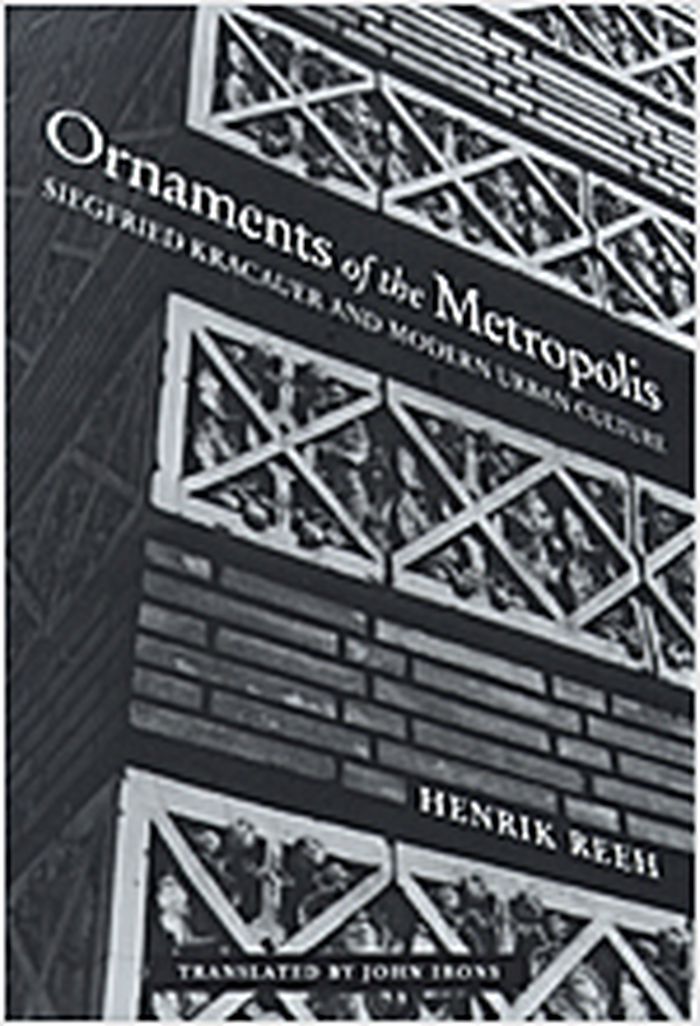
Ornaments of the metropolis : Siegfried Kracuaer and the Modern urban culture
Actions:
Price:
$22.95
(available to order)
Summary:
For Siegfried Kracauer, the urban ornament was not just an aspect of design; it was the medium through which city dwellers interpreted the metropolis itself. In "Ornaments of the metropolis", Henrik Reeh traces variations on the theme of the ornament in Kracauer's writings on urbanism, from his early journalism in Germany between the wars to his "sociobiography" of Jacques Offenbach in Paris. Kracauer (1889-1966), often associated with the Frankfurt School and the intellectual milieu of Walter Benjamin, is best known for his writings on cinema and the philosophy of history. Reeh examines Kracauer's lesser-known early work, much of it written for the trendsetting newspaper Frankfurter Zeitung in the 1920s and early 1930s, and analyzes Kracauer's continuing reflections on modern urban life, through the pivotal idea of ornament. Kracauer deciphers the subjective experience of the city by viewing fragments of the city as dynamic ornaments; an employment exchange, a day shelter for the homeless, a movie theater, and an amusement park become urban microcosms. Reeh focuses on three substantial works written by Kracauer before his emigration to the United States in 1940. In the early autobiographical novel "Ginster, written by himself", a young architect finds aesthetic pleasure in the ornamental forms that are largely unused in the profession of the time. The collection "Streets of Berlin and elsewhere", with many essays from Kracauer's years in Berlin, documents the subjectiveness of urban life. Finally, "Jacques Offenbach and the Paris of his time" shows how the superficial - in a sense, ornamental - milieu of the operetta evolved into a critical force during the Second Empire. Reeh argues that Kracauer's novel, essays, and historiography all suggest ways in which the subjective can reappropriate urban life. The book also includes a series of photographs by the author that reflect the ornamental experience of the metropolis in Paris, Frankfurt, and other cities.
Form:
books
books
Publication:
October 2006, Cambridge (MA), London
October 2006, Cambridge (MA), London
Subject:
Urban Theory
Urban Theory
Form:
books
books
Price:
$52.00
(available in store)
Summary:
For Siegfried Kracauer, the urban ornament was not just an aspect of design; it was the medium through which city dwellers interpreted the metropolis itself. In “Ornaments of the Metropolis”, Henrik Reeh traces variations on the theme of the ornament in Kracauer's writings on urbanism, from his early journalism in Germany between the wars to his "sociobiography" of(...)
Title:
Ornaments of the metropolis : Siegfried Kracauer and modern urban culture
Actions:
Price:
$52.00
(available in store)
Summary:
For Siegfried Kracauer, the urban ornament was not just an aspect of design; it was the medium through which city dwellers interpreted the metropolis itself. In “Ornaments of the Metropolis”, Henrik Reeh traces variations on the theme of the ornament in Kracauer's writings on urbanism, from his early journalism in Germany between the wars to his "sociobiography" of Jacques Offenbach in Paris. Kracauer (1889-1966), often associated with the Frankfurt School and the intellectual milieu of Walter Benjamin, is best known for his writings on cinema and the philosophy of history. Reeh examines Kracauer's lesser-known early work, much of it written for the trendsetting newspaper Frankfurter Zeitung in the 1920s and early 1930s, and analyzes Kracauer's continuing reflections on modern urban life, through the pivotal idea of ornament. Kracauer deciphers the subjective experience of the city by viewing fragments of the city as dynamic ornaments; an employment exchange, a day shelter for the homeless, a movie theatre, and an amusement park become urban microcosms. Reeh focuses on three substantial works written by Kracauer before his emigration to the United States in 1940. In the early autobiographical novel “Ginster, Written by Himself”, a young architect finds aesthetic pleasure in the ornamental forms that are largely unused in the profession of the time. The collection “Streets of Berlin and Elsewhere”, with many essays from Kracauer's years in Berlin, documents the subjectiveness of urban life. Finally, “Jacques Offenbach and the Paris of His Time” shows how the superficial -- in a sense, ornamental -- milieu of the operetta evolved into a critical force during the Second Empire. Reeh argues that Kracauer's novel, essays, and historiography all suggest ways in which the subjective can reappropriate urban life. The book also includes a series of photographs by the author that reflect the ornamental experience of the metropolis in Paris, Frankfurt, and other cities.
Form:
books
books
Publication:
March 2005, Cambridge, Massachusetts
March 2005, Cambridge, Massachusetts
Subject:
Urban Theory
Urban Theory


