


1734 Results
Form:
books
books
Actions:
Holdings:
Description:
288 pages : illustrations (chiefly color), map ; 32 cm
Description:
288 pages : illustrations (chiefly color), map ; 32 cm
Author:
- Christophe Cherix -- Jodi Hauptman -- Adrian Sudhalter -- Masha Chlenova -- Maria Gough -- Juliet Koss -- Martino Stierli -- Katie Farris and Ilya Kaminsky -- Maria Gough -- Kristin Romberg -- Devin Fore -- Laura Neufeld -- Olivia Crough -- Lee Ann Daffner -- Christina Kiaer -- Jean-Louis Cohen -- William Kentridge -- Jenny Anger -- Jennifer Tobias -- Juliet Kinchin -- Barbora Bartunkova -- Iva Knobloch -- Adrian Sudhalter -- Jodi Hauptman -- Benjamin H. D. Buchloh -- Noam M. Elcott -- Elizabeth Otto -- Barry Bergdoll -- Megan R. Luke -- Robert Wiesenberger -- Andrés Mario Zervigón -- Erika Mosier -- Ellen Lupton -- Juliet Kinchin -- Jeffrey Schnapp -- Juliet Kinchin -- compiled by Jane Cavalier and Sewon Kang --,
- Hauptman, Jodi,,
- Sudhalter, Adrian,,
- Anger, Jenny, 1965-,
- Cherix, Christophe,,
- Museum of Modern Art (New York, N.Y.),
(See more)
Subject:
- Berman, Merrill C. Poster collections Exhibitions.,
- Berman, Merrill C. Poster collections.,
- Berman, Merrill C.,
- Berman, Merrill C. 1938-,
- Museum of Modern Art (New York, N.Y.) Exhibitions 21st century.,
- Museum of Modern Art (New York, N.Y.),
- Posters Private collections Exhibitions.,
- Political posters, Russian Exhibitions.,
- Political posters 20th century Exhibitions.,
- Commercial art 20th century Exhibitions.,
- Graphic arts 20th century Exhibitions.,
- Posters, European 20th century Exhibitions.,
- Graphic arts History 20th century Exhibitions.,
- Modernism (Art) History 20th century Exhibitions.,
- Avant-garde (Aesthetics) History 20th century Exhibitions.,
- Affiches Collections privées Expositions.,
- Affiches politiques russes Expositions.,
- Affiches politiques 20e siècle Expositions.,
- Art publicitaire 20e siècle Expositions.,
- Arts graphiques 20e siècle Expositions.,
- Affiches européennes 20e siècle Expositions.,
- Arts graphiques Histoire 20e siècle Expositions.,
- Modernisme (Art) Histoire 20e siècle Expositions.,
- Political posters Exhibitions. 20th century.,
- Commercial art Exhibitions. 20th century.,
- Graphic arts Exhibitions. 20th century.,
- Posters, European Exhibitions. 20th century.,
- Modernism (Art) History Exhibitions. 20th century.,
- Avant-garde (Aesthetics) History Exhibitions. 20th century.,
- Avant-garde (Aesthetics),
- Commercial art,
- Graphic arts,
- Modernism (Art),
- Political posters,
- Political posters, Russian,
- Posters, European,
- Posters Private collections,
- Plakat,
- Politisches Plakat,
- Essay,
- Exhibition,
- Exhibition catalogs.,
- exhibition catalogs.,
- essays.,
- illustrated books.,
- Illustrated works,
- Essays,
- History,
- Catalogues d'exposition.,
- Essais.,
- Ouvrages illustrés.
(See more)
Publication:
New York : The Museum of Modern Art, [2020], New York, NY : Artbook/D.A.P., ©2020
New York : The Museum of Modern Art, [2020], New York, NY : Artbook/D.A.P., ©2020
Title:
Engineer, agitator, constructor : the artist reinvented, 1918-1939 : the Merrill C. Berman Collection / organized by Jodi Hauptman and Adrian Sudhalter.
Actions:
Holdings:
Description:
288 pages : illustrations (chiefly color), map ; 32 cm
Engineer, agitator, constructor : the artist reinvented, 1918-1939 : the Merrill C. Berman Collection / organized by Jodi Hauptman and Adrian Sudhalter.
Actions:
Holdings:
Description:
288 pages : illustrations (chiefly color), map ; 32 cm
Form:
books
books
Publication:
New York : The Museum of Modern Art, [2020], New York, NY : Artbook/D.A.P., ©2020
New York : The Museum of Modern Art, [2020], New York, NY : Artbook/D.A.P., ©2020
Author:
- Christophe Cherix -- Jodi Hauptman -- Adrian Sudhalter -- Masha Chlenova -- Maria Gough -- Juliet Koss -- Martino Stierli -- Katie Farris and Ilya Kaminsky -- Maria Gough -- Kristin Romberg -- Devin Fore -- Laura Neufeld -- Olivia Crough -- Lee Ann Daffner -- Christina Kiaer -- Jean-Louis Cohen -- William Kentridge -- Jenny Anger -- Jennifer Tobias -- Juliet Kinchin -- Barbora Bartunkova -- Iva Knobloch -- Adrian Sudhalter -- Jodi Hauptman -- Benjamin H. D. Buchloh -- Noam M. Elcott -- Elizabeth Otto -- Barry Bergdoll -- Megan R. Luke -- Robert Wiesenberger -- Andrés Mario Zervigón -- Erika Mosier -- Ellen Lupton -- Juliet Kinchin -- Jeffrey Schnapp -- Juliet Kinchin -- compiled by Jane Cavalier and Sewon Kang --,
- Hauptman, Jodi,,
- Sudhalter, Adrian,,
- Anger, Jenny, 1965-,
- Cherix, Christophe,,
- Museum of Modern Art (New York, N.Y.),
(See more)
Subject:
- Berman, Merrill C. Poster collections Exhibitions.,
- Berman, Merrill C. Poster collections.,
- Berman, Merrill C.,
- Berman, Merrill C. 1938-,
- Museum of Modern Art (New York, N.Y.) Exhibitions 21st century.,
- Museum of Modern Art (New York, N.Y.),
- Posters Private collections Exhibitions.,
- Political posters, Russian Exhibitions.,
- Political posters 20th century Exhibitions.,
- Commercial art 20th century Exhibitions.,
- Graphic arts 20th century Exhibitions.,
- Posters, European 20th century Exhibitions.,
- Graphic arts History 20th century Exhibitions.,
- Modernism (Art) History 20th century Exhibitions.,
- Avant-garde (Aesthetics) History 20th century Exhibitions.,
- Affiches Collections privées Expositions.,
- Affiches politiques russes Expositions.,
- Affiches politiques 20e siècle Expositions.,
- Art publicitaire 20e siècle Expositions.,
- Arts graphiques 20e siècle Expositions.,
- Affiches européennes 20e siècle Expositions.,
- Arts graphiques Histoire 20e siècle Expositions.,
- Modernisme (Art) Histoire 20e siècle Expositions.,
- Political posters Exhibitions. 20th century.,
- Commercial art Exhibitions. 20th century.,
- Graphic arts Exhibitions. 20th century.,
- Posters, European Exhibitions. 20th century.,
- Modernism (Art) History Exhibitions. 20th century.,
- Avant-garde (Aesthetics) History Exhibitions. 20th century.,
- Avant-garde (Aesthetics),
- Commercial art,
- Graphic arts,
- Modernism (Art),
- Political posters,
- Political posters, Russian,
- Posters, European,
- Posters Private collections,
- Plakat,
- Politisches Plakat,
- Essay,
- Exhibition,
- Exhibition catalogs.,
- exhibition catalogs.,
- essays.,
- illustrated books.,
- Illustrated works,
- Essays,
- History,
- Catalogues d'exposition.,
- Essais.,
- Ouvrages illustrés.
(See more)
Form:
books
books
Price:
$37.50
(available to order)
Summary:
Although the seemingly apocalyptic scale of the World Trade Center disaster continues to haunt people across the globe, it is only the most recent example of a city tragically wounded. Cities are, in fact, perpetually caught up in cycles of degeneration and renewal. As with the WTC, from time to time these cycles are severely ruptured by a sudden, unpredictable event.(...)
$37.50
(available to order)
Summary:
Although the seemingly apocalyptic scale of the World Trade Center disaster continues to haunt people across the globe, it is only the most recent example of a city tragically wounded. Cities are, in fact, perpetually caught up in cycles of degeneration and renewal. As with the WTC, from time to time these cycles are severely ruptured by a sudden, unpredictable event.(...)
Title:
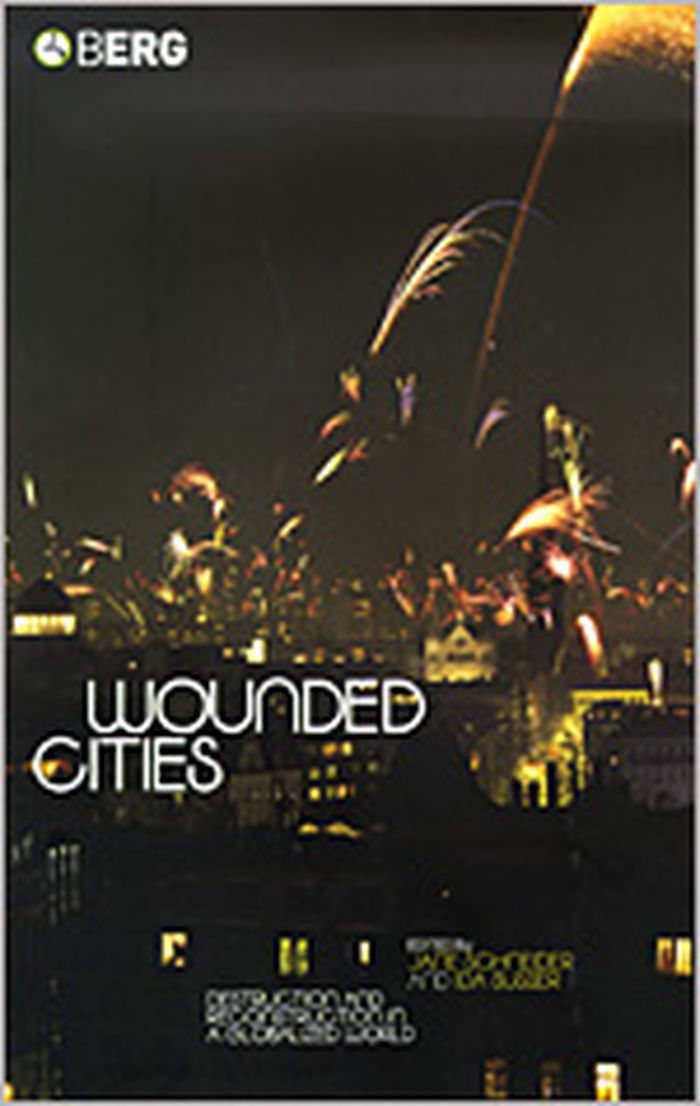
Wounded cities : destruction and reconstruction in a globalized world
Actions:
Price:
$37.50
(available to order)
Summary:
Although the seemingly apocalyptic scale of the World Trade Center disaster continues to haunt people across the globe, it is only the most recent example of a city tragically wounded. Cities are, in fact, perpetually caught up in cycles of degeneration and renewal. As with the WTC, from time to time these cycles are severely ruptured by a sudden, unpredictable event. In the wake of recent terrorist activities, this timely book explores how urban populations are affected by "wounds" inflicted through violence, civil wars, overbuilding, drug trafficking, and the collapse of infrastructures, as well as "natural" disasters such as earthquakes. Mexico City, New York, Beirut, Belfast, Bangkok and Baghdad are just a few examples of cities riddled with problems that undermine, on a daily basis, the quality of urban life. What does it mean for urban dwellers when the infrastructure of a city collapses – transport, communication grids, heat, light, roads, water, and sanitation? What are the effects of foreign investment and huge construction projects on urban populations and how does this change the "look" and character of a city? How does drug trafficking intersect with class, race, and gender, and what impact does it have on vulnerable urban communities? How do political corruption and mafia networks distort the built environment? Drawing on in-depth case studies from across the globe, this book answers these intriguing questions through its rigorous consideration of changing global and national contexts, social movements, and corrosive urban events. Adopting a "grass roots up" approach, it places emphasis on people’s experiences of uneven development and inequality, their engagement with memory in the face of continual change, and the relevance of political activism to bettering their lives. It is especially attentive to the historical interaction of particular cities with wider political and economic forces, as these interactions have shaped local governance over time. Imagining each city as a "body politic", the authors consider its capacity both to mediate local conflict and to broach the healing of wounds.
Wounded cities : destruction and reconstruction in a globalized world
Actions:
Price:
$37.50
(available to order)
Summary:
Although the seemingly apocalyptic scale of the World Trade Center disaster continues to haunt people across the globe, it is only the most recent example of a city tragically wounded. Cities are, in fact, perpetually caught up in cycles of degeneration and renewal. As with the WTC, from time to time these cycles are severely ruptured by a sudden, unpredictable event. In the wake of recent terrorist activities, this timely book explores how urban populations are affected by "wounds" inflicted through violence, civil wars, overbuilding, drug trafficking, and the collapse of infrastructures, as well as "natural" disasters such as earthquakes. Mexico City, New York, Beirut, Belfast, Bangkok and Baghdad are just a few examples of cities riddled with problems that undermine, on a daily basis, the quality of urban life. What does it mean for urban dwellers when the infrastructure of a city collapses – transport, communication grids, heat, light, roads, water, and sanitation? What are the effects of foreign investment and huge construction projects on urban populations and how does this change the "look" and character of a city? How does drug trafficking intersect with class, race, and gender, and what impact does it have on vulnerable urban communities? How do political corruption and mafia networks distort the built environment? Drawing on in-depth case studies from across the globe, this book answers these intriguing questions through its rigorous consideration of changing global and national contexts, social movements, and corrosive urban events. Adopting a "grass roots up" approach, it places emphasis on people’s experiences of uneven development and inequality, their engagement with memory in the face of continual change, and the relevance of political activism to bettering their lives. It is especially attentive to the historical interaction of particular cities with wider political and economic forces, as these interactions have shaped local governance over time. Imagining each city as a "body politic", the authors consider its capacity both to mediate local conflict and to broach the healing of wounds.
Form:
books
books
Publication:
August 2003, Oxford
August 2003, Oxford
Subject:
Urban Theory
Urban Theory
Form:
books
books
Title:
Loving the High Line
Loving the High Line
Actions:
Price:
$20.00
(available to order)
Summary:
As an elevated rail line, designed to lift freight trains serving the Hudson River docks above street level circulation, The High Line was originally constructed as material infrastructure for an industrial city. It was closed in 1960s and stood abandoned for the next forty years. In this time organic debris accumulated and decayed, and seeds landed on the newly forming(...)
$20.00
(available to order)
Summary:
As an elevated rail line, designed to lift freight trains serving the Hudson River docks above street level circulation, The High Line was originally constructed as material infrastructure for an industrial city. It was closed in 1960s and stood abandoned for the next forty years. In this time organic debris accumulated and decayed, and seeds landed on the newly forming(...)
Title:
Loving the High Line
Actions:
Price:
$20.00
(available to order)
Summary:
As an elevated rail line, designed to lift freight trains serving the Hudson River docks above street level circulation, The High Line was originally constructed as material infrastructure for an industrial city. It was closed in 1960s and stood abandoned for the next forty years. In this time organic debris accumulated and decayed, and seeds landed on the newly forming soil creating a meadow on the derelict railbed. This microcosmic biome then also became a heterotopic, other space, in the social ecology of the city as an efflorescence of new art forms and underground subcultures flourished in the evacuated post-industrial spaces of Chelsea. These processes would unfold as New York City was being transformed into a global center in an emerging political-economy defined by the integration of finance capital with media and information industries. In this, marginal spaces of the kind that developed in Chelsea, and the cultures that create them, became important sources of new aesthetic and cultural innovation, that offer an exploitable social ground from which to extract semiotic value. As the Bloomberg administration gave shape to this new regime, a project was initiated to convert the High Line into a publicly accessible, linear park. This would be realized through a convoluted process in which the manifold tensions and contradictions of the postmodern city would be dramatically played out and the disjunctions between ideal image regimes and the reality of the material substrates that support them would be brought to light, if only to be newly obscured. The High Line urban park has been both heralded as a definitive model for new urban development, and denounced as a driver, or at least a morbid symptom, of devastating gentrification, and the destructive financialization of urban space. This text, originally published in 2015 as part of the Deconstructing the High Line anthology, edited by Mark Linder and Brian Rosa, tracks a collection of interconnected historical treads that converge in the reconstruction of the High Line, and situates the project within architectural discourse and practice, and social and material conditions with which it struggles to engage.
Loving the High Line
Actions:
Price:
$20.00
(available to order)
Summary:
As an elevated rail line, designed to lift freight trains serving the Hudson River docks above street level circulation, The High Line was originally constructed as material infrastructure for an industrial city. It was closed in 1960s and stood abandoned for the next forty years. In this time organic debris accumulated and decayed, and seeds landed on the newly forming soil creating a meadow on the derelict railbed. This microcosmic biome then also became a heterotopic, other space, in the social ecology of the city as an efflorescence of new art forms and underground subcultures flourished in the evacuated post-industrial spaces of Chelsea. These processes would unfold as New York City was being transformed into a global center in an emerging political-economy defined by the integration of finance capital with media and information industries. In this, marginal spaces of the kind that developed in Chelsea, and the cultures that create them, became important sources of new aesthetic and cultural innovation, that offer an exploitable social ground from which to extract semiotic value. As the Bloomberg administration gave shape to this new regime, a project was initiated to convert the High Line into a publicly accessible, linear park. This would be realized through a convoluted process in which the manifold tensions and contradictions of the postmodern city would be dramatically played out and the disjunctions between ideal image regimes and the reality of the material substrates that support them would be brought to light, if only to be newly obscured. The High Line urban park has been both heralded as a definitive model for new urban development, and denounced as a driver, or at least a morbid symptom, of devastating gentrification, and the destructive financialization of urban space. This text, originally published in 2015 as part of the Deconstructing the High Line anthology, edited by Mark Linder and Brian Rosa, tracks a collection of interconnected historical treads that converge in the reconstruction of the High Line, and situates the project within architectural discourse and practice, and social and material conditions with which it struggles to engage.
Form:
books
books
Publication:
November 2022
November 2022
Subject:
Urban Landscapes
Urban Landscapes
Form:
books
books
Price:
$29.95
(available to order)
Summary:
Van Alen Institute mounted the exhibition "Renewing, Rebuilding, Remembering" to demonstrate how cities, after incomparable loss of people and places, find ways to plan, design, and reconstruct the life of the city. The book is both a catalogue and a special edition of our series of "Van Alen Reports," the publication both documents the exhibit and expands on it with(...)
$29.95
(available to order)
Summary:
Van Alen Institute mounted the exhibition "Renewing, Rebuilding, Remembering" to demonstrate how cities, after incomparable loss of people and places, find ways to plan, design, and reconstruct the life of the city. The book is both a catalogue and a special edition of our series of "Van Alen Reports," the publication both documents the exhibit and expands on it with(...)
Title:
Information exchange : how cities renew, rebuild, and remember
Actions:
Price:
$29.95
(available to order)
Summary:
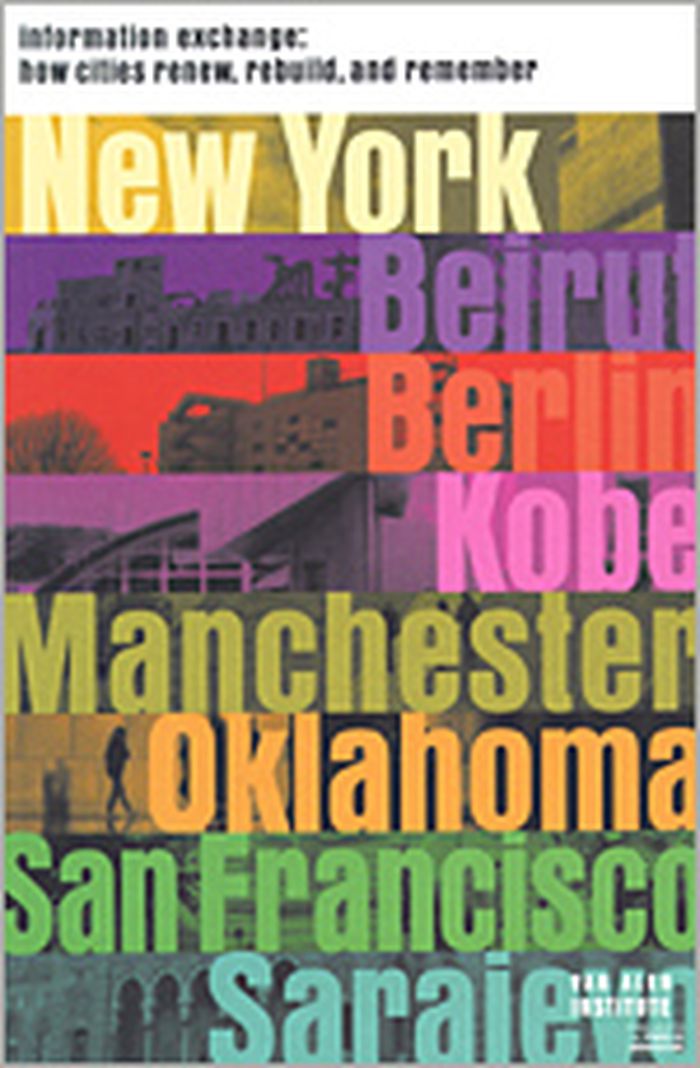
Van Alen Institute mounted the exhibition "Renewing, Rebuilding, Remembering" to demonstrate how cities, after incomparable loss of people and places, find ways to plan, design, and reconstruct the life of the city. The book is both a catalogue and a special edition of our series of "Van Alen Reports," the publication both documents the exhibit and expands on it with personal essays, articles and interviews. The point of the exhibition was not to compare catastrophes, but to compare, contrast, and try to explicate and understand initiatives, projects, plans, and actions that took place after the bomb, the earthquake, the war. After that, what worked, what would they do differently, what mattered right away, what mattered for the long-term? In October, the Institute put out a call for ideas for the exhibit. Students, designers, planners, artists, professors, photographers, public officials and a wide range of respondents from around the world were generous in suggesting places, projects, issues, and designs that were telling for the future of New York. From this response and ongoing research, the Institute chose to focus on specific processes and projects in seven cities. In Beirut, a public art installation that progressed through the city was a first step in reclaiming its war-torn districts, and the Lebanese capital has continued not only with master plans and major new developments, but also with works such as the Garden of Forgiveness, grappling with a hard history to contemplate. In Berlin, a center for information about the city and its reconstruction rose above the ruins of the Berlin Wall, half a century after the city had been devastated and divided. In San Francisco, an earthquake left the elevated highway downtown in such precarious decision that the city decided to tear it down-and implement a long-held dream of reopening the city to the waterfront. In Kobe, where an earthquake resulted not only in billions of dollars of damage to infrastructure, but also in a terrible loss of life, architects responded with an outpouring of energy to survey the damage and construct innovative emergency housing, proving the old adage that necessity is the mother of invention. In addition, they strove to understand the disaster, building a museum about, and at, the geological fault that brought down so much of their city. Manchester had a terrorist attack in the mid-1990s, and rebuilt its center city better than before, as well as setting up an institute for the study of cities around the world, to better understand that the life of the city and its public realm can not be taken for granted. So, too, did Oklahoma City, where a public process led to an international design competition for a memorial, and the city has rebuilt itself around it. Sarajevo, after years of civil war, pulled together its citizens through restoring the landmarks of their public life.
Information exchange : how cities renew, rebuild, and remember
Actions:
Price:
$29.95
(available to order)
Summary:
Van Alen Institute mounted the exhibition "Renewing, Rebuilding, Remembering" to demonstrate how cities, after incomparable loss of people and places, find ways to plan, design, and reconstruct the life of the city. The book is both a catalogue and a special edition of our series of "Van Alen Reports," the publication both documents the exhibit and expands on it with personal essays, articles and interviews. The point of the exhibition was not to compare catastrophes, but to compare, contrast, and try to explicate and understand initiatives, projects, plans, and actions that took place after the bomb, the earthquake, the war. After that, what worked, what would they do differently, what mattered right away, what mattered for the long-term? In October, the Institute put out a call for ideas for the exhibit. Students, designers, planners, artists, professors, photographers, public officials and a wide range of respondents from around the world were generous in suggesting places, projects, issues, and designs that were telling for the future of New York. From this response and ongoing research, the Institute chose to focus on specific processes and projects in seven cities. In Beirut, a public art installation that progressed through the city was a first step in reclaiming its war-torn districts, and the Lebanese capital has continued not only with master plans and major new developments, but also with works such as the Garden of Forgiveness, grappling with a hard history to contemplate. In Berlin, a center for information about the city and its reconstruction rose above the ruins of the Berlin Wall, half a century after the city had been devastated and divided. In San Francisco, an earthquake left the elevated highway downtown in such precarious decision that the city decided to tear it down-and implement a long-held dream of reopening the city to the waterfront. In Kobe, where an earthquake resulted not only in billions of dollars of damage to infrastructure, but also in a terrible loss of life, architects responded with an outpouring of energy to survey the damage and construct innovative emergency housing, proving the old adage that necessity is the mother of invention. In addition, they strove to understand the disaster, building a museum about, and at, the geological fault that brought down so much of their city. Manchester had a terrorist attack in the mid-1990s, and rebuilt its center city better than before, as well as setting up an institute for the study of cities around the world, to better understand that the life of the city and its public realm can not be taken for granted. So, too, did Oklahoma City, where a public process led to an international design competition for a memorial, and the city has rebuilt itself around it. Sarajevo, after years of civil war, pulled together its citizens through restoring the landmarks of their public life.
Form:
books
books
Publication:
March 2003, New York
March 2003, New York
Subject:
Urban Theory
Urban Theory


