


9148 Results
Form:
textual records
textual records
Reference number:
ARCH257679
Description:
pages for promotional book: Baldwin Residence, Bayles Residence, B.C Government Complex and Court House, Berlitz Alteration, Begg Building, Boultbee Residence, Chess Residence, Canadian Pavilion Tokyo, Camberra, Danto Residence, Dyde Residence, Erickson Residence, Expo '67, Grauer Cabana, Kitsilano Museum Complex, Laxton residence, Lindenfield Garden, Massey Residence, Townhouse Development, SFU, Smith Residence, University of Victoria, Weston Residence, W-H Pudifoot
ARCH257679
Description:
pages for promotional book: Baldwin Residence, Bayles Residence, B.C Government Complex and Court House, Berlitz Alteration, Begg Building, Boultbee Residence, Chess Residence, Canadian Pavilion Tokyo, Camberra, Danto Residence, Dyde Residence, Erickson Residence, Expo '67, Grauer Cabana, Kitsilano Museum Complex, Laxton residence, Lindenfield Garden, Massey Residence, Townhouse Development, SFU, Smith Residence, University of Victoria, Weston Residence, W-H Pudifoot
People:
Title:
Pages a promotional book showing various projects
Actions:
ARCH257679
Description:
pages for promotional book: Baldwin Residence, Bayles Residence, B.C Government Complex and Court House, Berlitz Alteration, Begg Building, Boultbee Residence, Chess Residence, Canadian Pavilion Tokyo, Camberra, Danto Residence, Dyde Residence, Erickson Residence, Expo '67, Grauer Cabana, Kitsilano Museum Complex, Laxton residence, Lindenfield Garden, Massey Residence, Townhouse Development, SFU, Smith Residence, University of Victoria, Weston Residence, W-H Pudifoot
Pages a promotional book showing various projects
Actions:
ARCH257679
Description:
pages for promotional book: Baldwin Residence, Bayles Residence, B.C Government Complex and Court House, Berlitz Alteration, Begg Building, Boultbee Residence, Chess Residence, Canadian Pavilion Tokyo, Camberra, Danto Residence, Dyde Residence, Erickson Residence, Expo '67, Grauer Cabana, Kitsilano Museum Complex, Laxton residence, Lindenfield Garden, Massey Residence, Townhouse Development, SFU, Smith Residence, University of Victoria, Weston Residence, W-H Pudifoot
Form:
textual records
textual records
People:
Actions:
Reference number:
DR2013:0002:004
Description:
Box containing awards and honours granted to Melvin Charney, including the following: - Commandeur de l'ordre des arts et des lettres, 2005; - Le Prix Orange, Urbanisme et design urbaine, for the CCA garden, 1989; - Admittance to the Royal Architectural Institute of Canada, 2000; - Diploma di collaborazione, Triennale di Milano, 1973; - Chevalier de l'Ordre national du Québec, 2003; - Prix Paul-Emile-Borduas, 1996.
DR2013:0002:004
Description:
Box containing awards and honours granted to Melvin Charney, including the following: - Commandeur de l'ordre des arts et des lettres, 2005; - Le Prix Orange, Urbanisme et design urbaine, for the CCA garden, 1989; - Admittance to the Royal Architectural Institute of Canada, 2000; - Diploma di collaborazione, Triennale di Milano, 1973; - Chevalier de l'Ordre national du Québec, 2003; - Prix Paul-Emile-Borduas, 1996.
People:
Date:
between 1973 and 2005
between 1973 and 2005
Title:
Various awards and honours granted to Melvin Charney
Actions:
DR2013:0002:004
Description:
Box containing awards and honours granted to Melvin Charney, including the following: - Commandeur de l'ordre des arts et des lettres, 2005; - Le Prix Orange, Urbanisme et design urbaine, for the CCA garden, 1989; - Admittance to the Royal Architectural Institute of Canada, 2000; - Diploma di collaborazione, Triennale di Milano, 1973; - Chevalier de l'Ordre national du Québec, 2003; - Prix Paul-Emile-Borduas, 1996.
Various awards and honours granted to Melvin Charney
Actions:
DR2013:0002:004
Description:
Box containing awards and honours granted to Melvin Charney, including the following: - Commandeur de l'ordre des arts et des lettres, 2005; - Le Prix Orange, Urbanisme et design urbaine, for the CCA garden, 1989; - Admittance to the Royal Architectural Institute of Canada, 2000; - Diploma di collaborazione, Triennale di Milano, 1973; - Chevalier de l'Ordre national du Québec, 2003; - Prix Paul-Emile-Borduas, 1996.
Date:
between 1973 and 2005
between 1973 and 2005
People:
Level of archival description:
Project
Project
Reference number:
AP075.S1.1957.PR01
Description:
This project series documents Cornelie Hahn Oberlander's landscape project for the University of British Columbia's Faculty Club, a social club providing accomodation and recreation for members of the Society, in Vancouver. The Faculty Club is located on the northern edge of the University of British Columbia's campus and overlook the Burrard Inlet and the North Shore Mountains. Oberlander worked on this project from 1956-1959 with architect Fred Lasserre and later architect Arthur Erickson in 1963. During the first phase of the construction in 1956, Oberlander designed the parking area, the upper terrace, and garden with a water feature of water cascading into a series of square basins. For the second phase of the design, Oberlander worked with architect Arthur Erickson, who connected the water feature to a larger pool situated next to a new pavilion. In 2008, the Faculty Club was converted into classrooms and Oberlander was hired to revitalise the planting areas around the club. The project series contains sketches for the upper terrace, design development drawings, including landscape plans, grading plans and planting plans, presentation drawings and working drawings, including building plans used for reference. The project series also includes photographs.
AP075.S1.1957.PR01
Description:
This project series documents Cornelie Hahn Oberlander's landscape project for the University of British Columbia's Faculty Club, a social club providing accomodation and recreation for members of the Society, in Vancouver. The Faculty Club is located on the northern edge of the University of British Columbia's campus and overlook the Burrard Inlet and the North Shore Mountains. Oberlander worked on this project from 1956-1959 with architect Fred Lasserre and later architect Arthur Erickson in 1963. During the first phase of the construction in 1956, Oberlander designed the parking area, the upper terrace, and garden with a water feature of water cascading into a series of square basins. For the second phase of the design, Oberlander worked with architect Arthur Erickson, who connected the water feature to a larger pool situated next to a new pavilion. In 2008, the Faculty Club was converted into classrooms and Oberlander was hired to revitalise the planting areas around the club. The project series contains sketches for the upper terrace, design development drawings, including landscape plans, grading plans and planting plans, presentation drawings and working drawings, including building plans used for reference. The project series also includes photographs.
People:
Date:
1957-1959
1957-1959
Title:
University Faculty Club, University of British Columbia, Vancouver, British Columbia (1957-1959)
Actions:
AP075.S1.1957.PR01
Description:
This project series documents Cornelie Hahn Oberlander's landscape project for the University of British Columbia's Faculty Club, a social club providing accomodation and recreation for members of the Society, in Vancouver. The Faculty Club is located on the northern edge of the University of British Columbia's campus and overlook the Burrard Inlet and the North Shore Mountains. Oberlander worked on this project from 1956-1959 with architect Fred Lasserre and later architect Arthur Erickson in 1963. During the first phase of the construction in 1956, Oberlander designed the parking area, the upper terrace, and garden with a water feature of water cascading into a series of square basins. For the second phase of the design, Oberlander worked with architect Arthur Erickson, who connected the water feature to a larger pool situated next to a new pavilion. In 2008, the Faculty Club was converted into classrooms and Oberlander was hired to revitalise the planting areas around the club. The project series contains sketches for the upper terrace, design development drawings, including landscape plans, grading plans and planting plans, presentation drawings and working drawings, including building plans used for reference. The project series also includes photographs.
University Faculty Club, University of British Columbia, Vancouver, British Columbia (1957-1959)
Actions:
AP075.S1.1957.PR01
Description:
This project series documents Cornelie Hahn Oberlander's landscape project for the University of British Columbia's Faculty Club, a social club providing accomodation and recreation for members of the Society, in Vancouver. The Faculty Club is located on the northern edge of the University of British Columbia's campus and overlook the Burrard Inlet and the North Shore Mountains. Oberlander worked on this project from 1956-1959 with architect Fred Lasserre and later architect Arthur Erickson in 1963. During the first phase of the construction in 1956, Oberlander designed the parking area, the upper terrace, and garden with a water feature of water cascading into a series of square basins. For the second phase of the design, Oberlander worked with architect Arthur Erickson, who connected the water feature to a larger pool situated next to a new pavilion. In 2008, the Faculty Club was converted into classrooms and Oberlander was hired to revitalise the planting areas around the club. The project series contains sketches for the upper terrace, design development drawings, including landscape plans, grading plans and planting plans, presentation drawings and working drawings, including building plans used for reference. The project series also includes photographs.
Level of archival description:
Project
Project
Date:
1957-1959
1957-1959
People:
Form:
exhibitions
exhibitions
Title:
Mel Ziegler: Growing Concern
Mel Ziegler: Growing Concern
Actions:
Description:
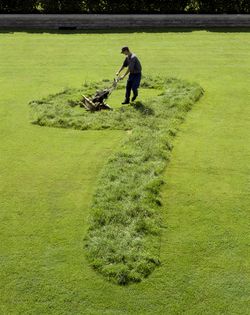
The front garden is a sign, a place both public and private, conveying the convictions and values of the households they frame. Growing Concern, a grass relief in Baile Park by American artist Mel Ziegler (b.1956), represents the North American obsession with the lawn. The artist considers the cultural obsession with the growth of our lawns to be symbolic of the taming(...)
The front garden is a sign, a place both public and private, conveying the convictions and values of the households they frame. Growing Concern, a grass relief in Baile Park by American artist Mel Ziegler (b.1956), represents the North American obsession with the lawn. The artist considers the cultural obsession with the growth of our lawns to be symbolic of the taming(...)
Location:
Baile Park
Baile Park
Date:
16 June 1998 to 8 November 1998
16 June 1998 to 8 November 1998
Title:
Mel Ziegler: Growing Concern
Actions:
Description:
The front garden is a sign, a place both public and private, conveying the convictions and values of the households they frame. Growing Concern, a grass relief in Baile Park by American artist Mel Ziegler (b.1956), represents the North American obsession with the lawn. The artist considers the cultural obsession with the growth of our lawns to be symbolic of the taming(...)
Mel Ziegler: Growing Concern
Actions:
Description:
The front garden is a sign, a place both public and private, conveying the convictions and values of the households they frame. Growing Concern, a grass relief in Baile Park by American artist Mel Ziegler (b.1956), represents the North American obsession with the lawn. The artist considers the cultural obsession with the growth of our lawns to be symbolic of the taming(...)
Form:
exhibitions
exhibitions
Date:
16 June 1998 to
8 November 1998
16 June 1998 to
8 November 1998
Location:
Baile Park
Baile Park
Level of archival description:
Project
Project
Actions:
Reference number:
AP056.S1.1995.PR01
Description:
This project series documents a competition entry for the Korean American Museum of Art and Cultural Centre in Los Angeles in 1995. The office identified the project number as 9501. Headed by Bruce Kuwabara, this project proposed a three-storey building with a tall rotunda as its focal point at the corner of Olympic Boulevard and Irolo Street. The design included spaces for galleries, offices, studios, a library, an outdoor terrace that wrapped the rotunda's exterior, and a large theatre that spanned the three-storey height. Traditional Korean gardens were to make up a large part of the museum's outdoor space. This project was never built. The project is recorded through original drawings dating from on or around 1995 that consist of sketches, presentation drawings, plans, elevations, sections, perspectives and axonometric drawings.
AP056.S1.1995.PR01
Description:
This project series documents a competition entry for the Korean American Museum of Art and Cultural Centre in Los Angeles in 1995. The office identified the project number as 9501. Headed by Bruce Kuwabara, this project proposed a three-storey building with a tall rotunda as its focal point at the corner of Olympic Boulevard and Irolo Street. The design included spaces for galleries, offices, studios, a library, an outdoor terrace that wrapped the rotunda's exterior, and a large theatre that spanned the three-storey height. Traditional Korean gardens were to make up a large part of the museum's outdoor space. This project was never built. The project is recorded through original drawings dating from on or around 1995 that consist of sketches, presentation drawings, plans, elevations, sections, perspectives and axonometric drawings.
People:
Date:
1995
1995
Title:
Korean American Museum of Art and Cultural Center Competition, Los Angeles (1995)
Actions:
AP056.S1.1995.PR01
Description:
This project series documents a competition entry for the Korean American Museum of Art and Cultural Centre in Los Angeles in 1995. The office identified the project number as 9501. Headed by Bruce Kuwabara, this project proposed a three-storey building with a tall rotunda as its focal point at the corner of Olympic Boulevard and Irolo Street. The design included spaces for galleries, offices, studios, a library, an outdoor terrace that wrapped the rotunda's exterior, and a large theatre that spanned the three-storey height. Traditional Korean gardens were to make up a large part of the museum's outdoor space. This project was never built. The project is recorded through original drawings dating from on or around 1995 that consist of sketches, presentation drawings, plans, elevations, sections, perspectives and axonometric drawings.
Korean American Museum of Art and Cultural Center Competition, Los Angeles (1995)
Actions:
AP056.S1.1995.PR01
Description:
This project series documents a competition entry for the Korean American Museum of Art and Cultural Centre in Los Angeles in 1995. The office identified the project number as 9501. Headed by Bruce Kuwabara, this project proposed a three-storey building with a tall rotunda as its focal point at the corner of Olympic Boulevard and Irolo Street. The design included spaces for galleries, offices, studios, a library, an outdoor terrace that wrapped the rotunda's exterior, and a large theatre that spanned the three-storey height. Traditional Korean gardens were to make up a large part of the museum's outdoor space. This project was never built. The project is recorded through original drawings dating from on or around 1995 that consist of sketches, presentation drawings, plans, elevations, sections, perspectives and axonometric drawings.
Level of archival description:
Project
Project
Date:
1995
1995
People:
Level of archival description:
Project
Project
Reference number:
CI005.S1.1931.PR2
Description:
In 1929, the north Rotterdam neighbourhood of Blijodorp became the site of a municipal housing plan. Previous plans had been formulated in the early 1920s by architects Kromhout and Heijkoop but foundered due to lack of funding. Oud was brought into the project in the early 1930s and combined a perimeter block with row housing in his design of 306 dwellings for workers and eighteen buildings for seniors. The nine housing blocks faced the gardens and feature a living room, kitchen and three bedrooms with storage space situated below the elevated living level. His plans were not realized because the national government withdrew its investment in the housing market (Taverne et al. 2001, 304-310). Project series includes drawings of plans for Blijdorp Municipal Housing and a photograph of a perspective drawing.
CI005.S1.1931.PR2
Description:
In 1929, the north Rotterdam neighbourhood of Blijodorp became the site of a municipal housing plan. Previous plans had been formulated in the early 1920s by architects Kromhout and Heijkoop but foundered due to lack of funding. Oud was brought into the project in the early 1930s and combined a perimeter block with row housing in his design of 306 dwellings for workers and eighteen buildings for seniors. The nine housing blocks faced the gardens and feature a living room, kitchen and three bedrooms with storage space situated below the elevated living level. His plans were not realized because the national government withdrew its investment in the housing market (Taverne et al. 2001, 304-310). Project series includes drawings of plans for Blijdorp Municipal Housing and a photograph of a perspective drawing.
People:
Date:
1931-1932
1931-1932
Title:
Blijdorp Municipal Housing, Rotterdam, Netherlands (1931-1932)
Actions:
CI005.S1.1931.PR2
Description:
In 1929, the north Rotterdam neighbourhood of Blijodorp became the site of a municipal housing plan. Previous plans had been formulated in the early 1920s by architects Kromhout and Heijkoop but foundered due to lack of funding. Oud was brought into the project in the early 1930s and combined a perimeter block with row housing in his design of 306 dwellings for workers and eighteen buildings for seniors. The nine housing blocks faced the gardens and feature a living room, kitchen and three bedrooms with storage space situated below the elevated living level. His plans were not realized because the national government withdrew its investment in the housing market (Taverne et al. 2001, 304-310). Project series includes drawings of plans for Blijdorp Municipal Housing and a photograph of a perspective drawing.
Blijdorp Municipal Housing, Rotterdam, Netherlands (1931-1932)
Actions:
CI005.S1.1931.PR2
Description:
In 1929, the north Rotterdam neighbourhood of Blijodorp became the site of a municipal housing plan. Previous plans had been formulated in the early 1920s by architects Kromhout and Heijkoop but foundered due to lack of funding. Oud was brought into the project in the early 1930s and combined a perimeter block with row housing in his design of 306 dwellings for workers and eighteen buildings for seniors. The nine housing blocks faced the gardens and feature a living room, kitchen and three bedrooms with storage space situated below the elevated living level. His plans were not realized because the national government withdrew its investment in the housing market (Taverne et al. 2001, 304-310). Project series includes drawings of plans for Blijdorp Municipal Housing and a photograph of a perspective drawing.
Level of archival description:
project
project
Date:
1931-1932
1931-1932
People:
Form:
articles
articles
Issue:
Let us assure you
Let us assure you
Level of archival description:
Project
Project
Title:
Donmar
Donmar
Reference number:
AP144.S2.D53
Description:
File documents the unexecuted conversion of the Donmar rehearsal studio in Covent Garden, London, England, United Kingdom into an experimental theatre and late night meeting place. The client was the Fun Palace Trust ("Cedric Price Supplement", 'Architectural Design', vol. 40, (October 1970), 515) and negotiations for the conversion were undertaken with Donald Albery of New Theatre and Donmar Productions Limited. Movable platforms, furniture, and fittings were designed so that various seating and performance areas of different sizes could be created to accommodate a wide range of activities and entertainment of an impromptu nature. Survey drawings show the Donmar rehearsal studio and environs. Drawings for the conversion include plans, sections, axonometric projections, cutaway axonometric drawings showing the interior layout from two points of view, and conceptual sketches and perspectives of interior spaces in use. Axonometric drawings for fittings and furniture show platforms, a small stage, a chair/table, and a "conversation box". A drawing examines the sightlines of the converted interior by showing human figures in relationship with the movable units. Amended floor plans and sections show variations for the interior layout. Material in this file was produced between 1963 and 1964. File contains design development drawings and textual records.
AP144.S2.D53
Description:
File documents the unexecuted conversion of the Donmar rehearsal studio in Covent Garden, London, England, United Kingdom into an experimental theatre and late night meeting place. The client was the Fun Palace Trust ("Cedric Price Supplement", 'Architectural Design', vol. 40, (October 1970), 515) and negotiations for the conversion were undertaken with Donald Albery of New Theatre and Donmar Productions Limited. Movable platforms, furniture, and fittings were designed so that various seating and performance areas of different sizes could be created to accommodate a wide range of activities and entertainment of an impromptu nature. Survey drawings show the Donmar rehearsal studio and environs. Drawings for the conversion include plans, sections, axonometric projections, cutaway axonometric drawings showing the interior layout from two points of view, and conceptual sketches and perspectives of interior spaces in use. Axonometric drawings for fittings and furniture show platforms, a small stage, a chair/table, and a "conversation box". A drawing examines the sightlines of the converted interior by showing human figures in relationship with the movable units. Amended floor plans and sections show variations for the interior layout. Material in this file was produced between 1963 and 1964. File contains design development drawings and textual records.
People:
Date:
1963-1964
1963-1964
Title:
Donmar
Actions:
AP144.S2.D53
Description:
File documents the unexecuted conversion of the Donmar rehearsal studio in Covent Garden, London, England, United Kingdom into an experimental theatre and late night meeting place. The client was the Fun Palace Trust ("Cedric Price Supplement", 'Architectural Design', vol. 40, (October 1970), 515) and negotiations for the conversion were undertaken with Donald Albery of New Theatre and Donmar Productions Limited. Movable platforms, furniture, and fittings were designed so that various seating and performance areas of different sizes could be created to accommodate a wide range of activities and entertainment of an impromptu nature. Survey drawings show the Donmar rehearsal studio and environs. Drawings for the conversion include plans, sections, axonometric projections, cutaway axonometric drawings showing the interior layout from two points of view, and conceptual sketches and perspectives of interior spaces in use. Axonometric drawings for fittings and furniture show platforms, a small stage, a chair/table, and a "conversation box". A drawing examines the sightlines of the converted interior by showing human figures in relationship with the movable units. Amended floor plans and sections show variations for the interior layout. Material in this file was produced between 1963 and 1964. File contains design development drawings and textual records.
Donmar
Actions:
AP144.S2.D53
Description:
File documents the unexecuted conversion of the Donmar rehearsal studio in Covent Garden, London, England, United Kingdom into an experimental theatre and late night meeting place. The client was the Fun Palace Trust ("Cedric Price Supplement", 'Architectural Design', vol. 40, (October 1970), 515) and negotiations for the conversion were undertaken with Donald Albery of New Theatre and Donmar Productions Limited. Movable platforms, furniture, and fittings were designed so that various seating and performance areas of different sizes could be created to accommodate a wide range of activities and entertainment of an impromptu nature. Survey drawings show the Donmar rehearsal studio and environs. Drawings for the conversion include plans, sections, axonometric projections, cutaway axonometric drawings showing the interior layout from two points of view, and conceptual sketches and perspectives of interior spaces in use. Axonometric drawings for fittings and furniture show platforms, a small stage, a chair/table, and a "conversation box". A drawing examines the sightlines of the converted interior by showing human figures in relationship with the movable units. Amended floor plans and sections show variations for the interior layout. Material in this file was produced between 1963 and 1964. File contains design development drawings and textual records.
Level of archival description:
File 53
File 53
Date:
1963-1964
1963-1964
People:
Level of archival description:
Project
Project
Actions:
Reference number:
AP075.S1.1995.PR02
Description:
Project series documents Cornelia Hahn Oberlander's project for landscape master plan of Smith College campus, Northampton, Massachusetts. Oberlander worked on this project from 1995-1997 in collaboration with Shavaun Towers from landscape architectural firm Rolland/Towers. The project required to preserve the historic landscaping, initially design by Frederick Law Olsmsted, while also taking into account future growth of the campus. In this idea Oberlander and Towers bases their landscape master plan on six key concepts: to preserve the sacred spaces of the campus, to restore Olmsted vision, to develope open spaces in an hierarchical fashion, to limite vehicular traffic and separate it from pedestrian circulation, to provide stronger pedestrian connexions and commun spaces for social interactions, and to expande and enhance the Botanic Garden on the campus. The project series contains concept notes by Oberlander, research and reference material, proposal, meetings notes, contract, correspondence, mostly with landscape architects, clients and consultants, and financial documents. The project is also documented through landscape master plans for Oberlander and Towers proposal and campus landscape plans and previous landscape working drawings used as reference.The project series also contains photographic materials, such as slides and photographs, of the college landscaping, and postcards of Smith College.
AP075.S1.1995.PR02
Description:
Project series documents Cornelia Hahn Oberlander's project for landscape master plan of Smith College campus, Northampton, Massachusetts. Oberlander worked on this project from 1995-1997 in collaboration with Shavaun Towers from landscape architectural firm Rolland/Towers. The project required to preserve the historic landscaping, initially design by Frederick Law Olsmsted, while also taking into account future growth of the campus. In this idea Oberlander and Towers bases their landscape master plan on six key concepts: to preserve the sacred spaces of the campus, to restore Olmsted vision, to develope open spaces in an hierarchical fashion, to limite vehicular traffic and separate it from pedestrian circulation, to provide stronger pedestrian connexions and commun spaces for social interactions, and to expande and enhance the Botanic Garden on the campus. The project series contains concept notes by Oberlander, research and reference material, proposal, meetings notes, contract, correspondence, mostly with landscape architects, clients and consultants, and financial documents. The project is also documented through landscape master plans for Oberlander and Towers proposal and campus landscape plans and previous landscape working drawings used as reference.The project series also contains photographic materials, such as slides and photographs, of the college landscaping, and postcards of Smith College.
People:
Date:
1974-2012
1974-2012
Title:
Smith College, Northampton, Massachusetts (1995-1997)
Actions:
AP075.S1.1995.PR02
Description:
Project series documents Cornelia Hahn Oberlander's project for landscape master plan of Smith College campus, Northampton, Massachusetts. Oberlander worked on this project from 1995-1997 in collaboration with Shavaun Towers from landscape architectural firm Rolland/Towers. The project required to preserve the historic landscaping, initially design by Frederick Law Olsmsted, while also taking into account future growth of the campus. In this idea Oberlander and Towers bases their landscape master plan on six key concepts: to preserve the sacred spaces of the campus, to restore Olmsted vision, to develope open spaces in an hierarchical fashion, to limite vehicular traffic and separate it from pedestrian circulation, to provide stronger pedestrian connexions and commun spaces for social interactions, and to expande and enhance the Botanic Garden on the campus. The project series contains concept notes by Oberlander, research and reference material, proposal, meetings notes, contract, correspondence, mostly with landscape architects, clients and consultants, and financial documents. The project is also documented through landscape master plans for Oberlander and Towers proposal and campus landscape plans and previous landscape working drawings used as reference.The project series also contains photographic materials, such as slides and photographs, of the college landscaping, and postcards of Smith College.
Smith College, Northampton, Massachusetts (1995-1997)
Actions:
AP075.S1.1995.PR02
Description:
Project series documents Cornelia Hahn Oberlander's project for landscape master plan of Smith College campus, Northampton, Massachusetts. Oberlander worked on this project from 1995-1997 in collaboration with Shavaun Towers from landscape architectural firm Rolland/Towers. The project required to preserve the historic landscaping, initially design by Frederick Law Olsmsted, while also taking into account future growth of the campus. In this idea Oberlander and Towers bases their landscape master plan on six key concepts: to preserve the sacred spaces of the campus, to restore Olmsted vision, to develope open spaces in an hierarchical fashion, to limite vehicular traffic and separate it from pedestrian circulation, to provide stronger pedestrian connexions and commun spaces for social interactions, and to expande and enhance the Botanic Garden on the campus. The project series contains concept notes by Oberlander, research and reference material, proposal, meetings notes, contract, correspondence, mostly with landscape architects, clients and consultants, and financial documents. The project is also documented through landscape master plans for Oberlander and Towers proposal and campus landscape plans and previous landscape working drawings used as reference.The project series also contains photographic materials, such as slides and photographs, of the college landscaping, and postcards of Smith College.
Level of archival description:
Project
Project
Date:
1974-2012
1974-2012
People:
Level of archival description:
Project
Project
Actions:
Reference number:
AP164.S1.2005.D9
Description:
The project series documents the competition entry for the planning of the Orange County Suuokita Memorial Park in California, United States. The project site was previously a military base. The firm identified this project as number 212b “The first action will be to excavate the existing E-W runways and construct in their place a great water channel. The second action will be to plant a large grid of indigenous trees over the entire site in tandem with the installation of irrigation systems. The third main gesture will be to transform the surfaces of the remaining runways into smaller gardens […] Following upon these initial gestures, [Abalos & Herreros] propose a series of vertical structures that will serve to punctuate the great horizontal expanse of the park, providing another scale to the park.” (ARCH270975) Documenting the project are presentation drawings, correspondence, reference materials, notes, project descriptions, presentation documents, publications and a dummy.
AP164.S1.2005.D9
Description:
The project series documents the competition entry for the planning of the Orange County Suuokita Memorial Park in California, United States. The project site was previously a military base. The firm identified this project as number 212b “The first action will be to excavate the existing E-W runways and construct in their place a great water channel. The second action will be to plant a large grid of indigenous trees over the entire site in tandem with the installation of irrigation systems. The third main gesture will be to transform the surfaces of the remaining runways into smaller gardens […] Following upon these initial gestures, [Abalos & Herreros] propose a series of vertical structures that will serve to punctuate the great horizontal expanse of the park, providing another scale to the park.” (ARCH270975) Documenting the project are presentation drawings, correspondence, reference materials, notes, project descriptions, presentation documents, publications and a dummy.
People:
Date:
2003-2005, predominant 2005
2003-2005, predominant 2005
Title:
Orange County Great Park, California, United States (2005)
Actions:
AP164.S1.2005.D9
Description:
The project series documents the competition entry for the planning of the Orange County Suuokita Memorial Park in California, United States. The project site was previously a military base. The firm identified this project as number 212b “The first action will be to excavate the existing E-W runways and construct in their place a great water channel. The second action will be to plant a large grid of indigenous trees over the entire site in tandem with the installation of irrigation systems. The third main gesture will be to transform the surfaces of the remaining runways into smaller gardens […] Following upon these initial gestures, [Abalos & Herreros] propose a series of vertical structures that will serve to punctuate the great horizontal expanse of the park, providing another scale to the park.” (ARCH270975) Documenting the project are presentation drawings, correspondence, reference materials, notes, project descriptions, presentation documents, publications and a dummy.
Orange County Great Park, California, United States (2005)
Actions:
AP164.S1.2005.D9
Description:
The project series documents the competition entry for the planning of the Orange County Suuokita Memorial Park in California, United States. The project site was previously a military base. The firm identified this project as number 212b “The first action will be to excavate the existing E-W runways and construct in their place a great water channel. The second action will be to plant a large grid of indigenous trees over the entire site in tandem with the installation of irrigation systems. The third main gesture will be to transform the surfaces of the remaining runways into smaller gardens […] Following upon these initial gestures, [Abalos & Herreros] propose a series of vertical structures that will serve to punctuate the great horizontal expanse of the park, providing another scale to the park.” (ARCH270975) Documenting the project are presentation drawings, correspondence, reference materials, notes, project descriptions, presentation documents, publications and a dummy.
Level of archival description:
Project
Project
Date:
2003-2005, predominant 2005
2003-2005, predominant 2005
People:


