


186 Results
Form:
books
books

Actions:
Price:
$32.00
(available to order)
Summary:
Take Rem Koolhaas’s lauded new Seattle Public Library, and remove it from its context. Would it be as beautiful? Would it lose something of its meaning (not to mention the books off the shelves), if you picked it up and placed it elsewhere? Is it even possible for a building to have no relation whatsoever to the place where it is erected? Is it pointless to talk about(...)
$32.00
(available to order)
Summary:
Take Rem Koolhaas’s lauded new Seattle Public Library, and remove it from its context. Would it be as beautiful? Would it lose something of its meaning (not to mention the books off the shelves), if you picked it up and placed it elsewhere? Is it even possible for a building to have no relation whatsoever to the place where it is erected? Is it pointless to talk about(...)
Title:
Open house : towards a new architecture
Actions:
Price:
$32.00
(available to order)
Summary:
Take Rem Koolhaas’s lauded new Seattle Public Library, and remove it from its context. Would it be as beautiful? Would it lose something of its meaning (not to mention the books off the shelves), if you picked it up and placed it elsewhere? Is it even possible for a building to have no relation whatsoever to the place where it is erected? Is it pointless to talk about architecture as a pure intellectual enterprise, without grounding it in its surroundings? These are among the important questions raised by the German architecture scholar Florentine Sack in this exploration of the philosophical, aesthetic, and subjective links between a building and its environment. Drawing upon traditions as old as that of the Japanese house through models of classical Western modernism, she brings the notion of unity to bear on contemporary architecture, referring to exemplary buildings by Koolhaas, Herzog & de Meuron, Peter Zumthor, Kazuyo Sejima, Ryue Nishizawa, and many others.
Open house : towards a new architecture
Actions:
Price:
$32.00
(available to order)
Summary:
Take Rem Koolhaas’s lauded new Seattle Public Library, and remove it from its context. Would it be as beautiful? Would it lose something of its meaning (not to mention the books off the shelves), if you picked it up and placed it elsewhere? Is it even possible for a building to have no relation whatsoever to the place where it is erected? Is it pointless to talk about architecture as a pure intellectual enterprise, without grounding it in its surroundings? These are among the important questions raised by the German architecture scholar Florentine Sack in this exploration of the philosophical, aesthetic, and subjective links between a building and its environment. Drawing upon traditions as old as that of the Japanese house through models of classical Western modernism, she brings the notion of unity to bear on contemporary architecture, referring to exemplary buildings by Koolhaas, Herzog & de Meuron, Peter Zumthor, Kazuyo Sejima, Ryue Nishizawa, and many others.
Form:
books
books
Publication:
October 2005, Berlin
October 2005, Berlin
Subject:
Residential Architecture
Residential Architecture
Form:
books
books
Actions:
Price:
$108.00
(available to order)
Summary:
Japan is becoming a popular travel destination for more and more architects today. With its wide variety of architecture, it is both a source of fascination and inspiration. Over a number of years, the review Detail has been consistently documenting the construction activities which have taken place in Japan, and this book draws on the best of their experience and(...)
$108.00
(available to order)
Summary:
Japan is becoming a popular travel destination for more and more architects today. With its wide variety of architecture, it is both a source of fascination and inspiration. Over a number of years, the review Detail has been consistently documenting the construction activities which have taken place in Japan, and this book draws on the best of their experience and(...)
Subject:
Contemporary Asian Architecture
Contemporary Asian Architecture
Publication:
October 2002, München
October 2002, München
Title:
In detail : Japan - architecture, constructions, ambiances
Actions:
Price:
$108.00
(available to order)
Summary:
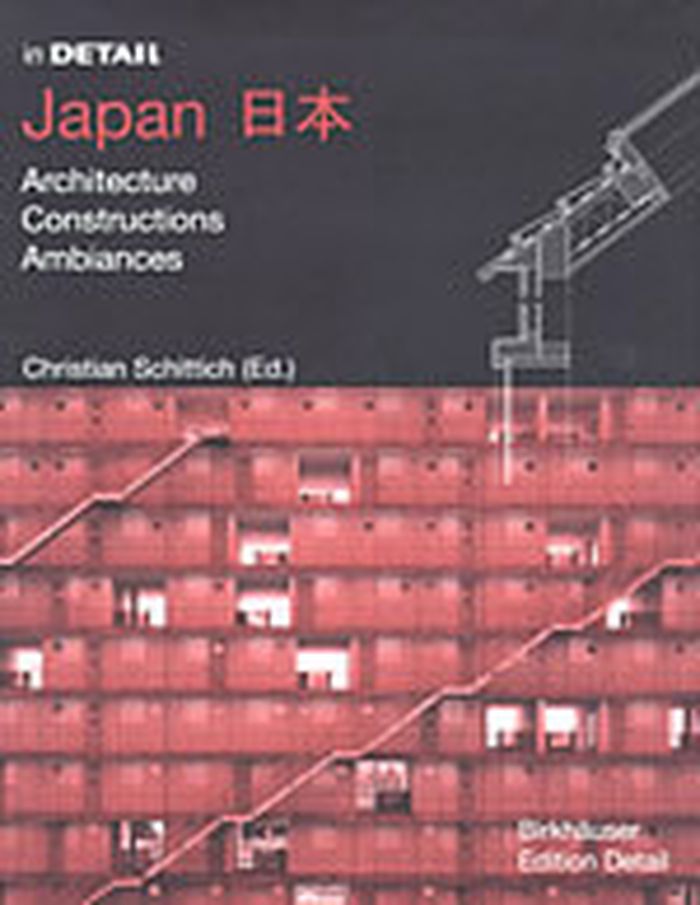
Japan is becoming a popular travel destination for more and more architects today. With its wide variety of architecture, it is both a source of fascination and inspiration. Over a number of years, the review Detail has been consistently documenting the construction activities which have taken place in Japan, and this book draws on the best of their experience and connections to present and analyse with plans and details the most interesting buildings from various architectural trends in contemporary Japan, including Ando's Museum for Contemporary Art in Naoshima, Toyo Ito's Mediathek, a residential building by Kazuyo Sejima, and a temple gallery in Kyoto by Takashi Yamaguchi. Introductory essays discuss the developments in Japanese architecture, and together with portraits of not only well-known Japanese architects and offices, but also young offices such as Atelier Bow Wow, this volume provides a stimulating discussion of current Japanese building in the context of traditional architecture.
In detail : Japan - architecture, constructions, ambiances
Actions:
Price:
$108.00
(available to order)
Summary:
Japan is becoming a popular travel destination for more and more architects today. With its wide variety of architecture, it is both a source of fascination and inspiration. Over a number of years, the review Detail has been consistently documenting the construction activities which have taken place in Japan, and this book draws on the best of their experience and connections to present and analyse with plans and details the most interesting buildings from various architectural trends in contemporary Japan, including Ando's Museum for Contemporary Art in Naoshima, Toyo Ito's Mediathek, a residential building by Kazuyo Sejima, and a temple gallery in Kyoto by Takashi Yamaguchi. Introductory essays discuss the developments in Japanese architecture, and together with portraits of not only well-known Japanese architects and offices, but also young offices such as Atelier Bow Wow, this volume provides a stimulating discussion of current Japanese building in the context of traditional architecture.
Form:
books
books
Publication:
October 2002, München
October 2002, München
Subject:
Contemporary Asian Architecture
Contemporary Asian Architecture
Form:
books
books
Title:
What is co-dividuality?: post-individual architecture, shared houses and other stories of openness
What is co-dividuality?: post-individual architecture, shared houses and other stories of openness
Actions:
Price:
$48.95
(available to order)
Summary:
This book explores the concept of co-dividuality, an architecture that expresses a new response to joint living in the age of postindividualism, social media, and the sharing economy. The focus lies on current experimentation in Japanese architecture and presents thematic homes with shared spaces designed as a result of warm, simple, fun and contemporary design(...)
$48.95
(available to order)
Summary:
This book explores the concept of co-dividuality, an architecture that expresses a new response to joint living in the age of postindividualism, social media, and the sharing economy. The focus lies on current experimentation in Japanese architecture and presents thematic homes with shared spaces designed as a result of warm, simple, fun and contemporary design(...)
Publication:
June 2020
June 2020
Title:
What is co-dividuality?: post-individual architecture, shared houses and other stories of openness
Actions:
Price:
$48.95
(available to order)
Summary:
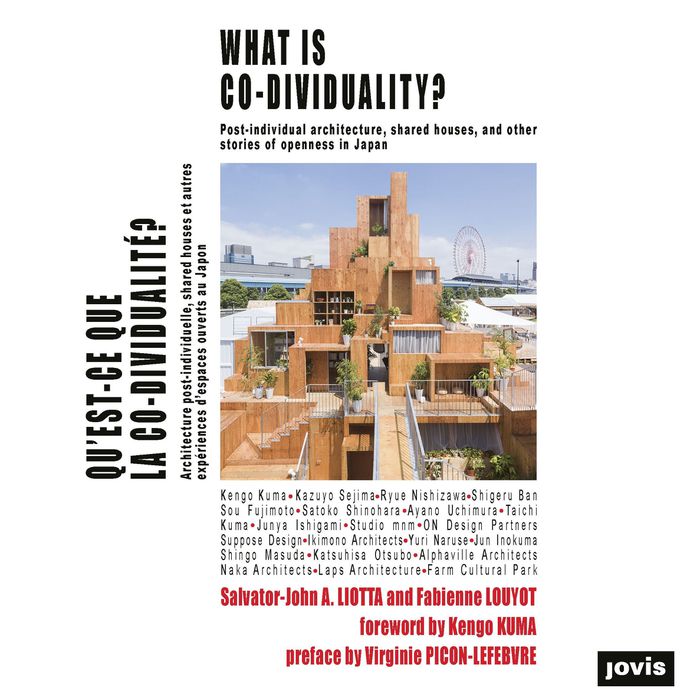
This book explores the concept of co-dividuality, an architecture that expresses a new response to joint living in the age of postindividualism, social media, and the sharing economy. The focus lies on current experimentation in Japanese architecture and presents thematic homes with shared spaces designed as a result of warm, simple, fun and contemporary design reflections. In addition to their private room, the co-tenants have large common areas where they can practice urban farming, create a start-up, cook together, or experience new spatial ergonomics. The book offers an overview not only on domestic space but also on projects characterized by a multifarious mix between public and private spheres. 'What Is Co-dividuality?' reflects on how we might want to live tomorrow. The book includes projects by Kengo Kuma, Kazuyo Sejima, Ryue Nishizawa, Shigeru Ban, Sou Fujimoto, Satoko Shinohara, Ayano Uchimura, Taichi Kuma, Junya Ishigami, Suppose Design, Naruse Inokuma, and Masuda + Otsubo, among others.
What is co-dividuality?: post-individual architecture, shared houses and other stories of openness
Actions:
Price:
$48.95
(available to order)
Summary:
This book explores the concept of co-dividuality, an architecture that expresses a new response to joint living in the age of postindividualism, social media, and the sharing economy. The focus lies on current experimentation in Japanese architecture and presents thematic homes with shared spaces designed as a result of warm, simple, fun and contemporary design reflections. In addition to their private room, the co-tenants have large common areas where they can practice urban farming, create a start-up, cook together, or experience new spatial ergonomics. The book offers an overview not only on domestic space but also on projects characterized by a multifarious mix between public and private spheres. 'What Is Co-dividuality?' reflects on how we might want to live tomorrow. The book includes projects by Kengo Kuma, Kazuyo Sejima, Ryue Nishizawa, Shigeru Ban, Sou Fujimoto, Satoko Shinohara, Ayano Uchimura, Taichi Kuma, Junya Ishigami, Suppose Design, Naruse Inokuma, and Masuda + Otsubo, among others.
Form:
books
books
Publication:
June 2020
June 2020
Form:
books
books
Actions:
Price:
$94.00
(available to order)
Summary:
On the occasion of the exhibition "Archilab 2006" dedicated to the Japenese architecture and entitled "Nested in the city", Hyx publish the catalog of the exhibition in french and english version. They present all the projects of thirty invited architects and a set of critical texts which put in perspective the stakes and the subjects of the exhibition. More than any(...)
$94.00
(available to order)
Summary:
On the occasion of the exhibition "Archilab 2006" dedicated to the Japenese architecture and entitled "Nested in the city", Hyx publish the catalog of the exhibition in french and english version. They present all the projects of thirty invited architects and a set of critical texts which put in perspective the stakes and the subjects of the exhibition. More than any(...)
Publication:
October 2006, Orléans
October 2006, Orléans
Title:
Archilab Japan, Orléans 2006 : nested in the city
Actions:
Price:
$94.00
(available to order)
Summary:
On the occasion of the exhibition "Archilab 2006" dedicated to the Japenese architecture and entitled "Nested in the city", Hyx publish the catalog of the exhibition in french and english version. They present all the projects of thirty invited architects and a set of critical texts which put in perspective the stakes and the subjects of the exhibition. More than any other country, Japan was interested at home, the space domesticates being perceived as a space privileging the thought. Hundred of projects presented in the catalog are built for the greater part. Selected by both curators (Akira Suzuki and Mariko Terada), they offer us a panorama of this architects' new generation which began in the 1990s. The most famous in France are doubtless Shigeru Ban presented to Archilab in 1999 and which was the first one to make approve tubes cardboard as support of his houses and also Kasujo Sejima who saw confiding with Ryue Nishizawa the construction of the Museum of the Louvre to Lens. Symbolic Bow Wow workshop is the Leader of this new generation. After the economic crisis of the end of the 90s, the construction of public establishments of average dimension and the competitions of architecture rarefied. The house thus becomes the space of creation privileged for these architects. That's why, in Tokyo, Jun Aoki, Kazuyo Sejima, Ryue Nishizawa, Takaharu and Yui Tezuka, Mitsuhiko Sato, Taira Nishizawa, Masao Koizumi, Yasuhiro Yamashita, Mikio Tai, Yuki Ishiguro, conceive small houses which embody the way of life of their inhabitants and maybe our future today.
Archilab Japan, Orléans 2006 : nested in the city
Actions:
Price:
$94.00
(available to order)
Summary:
On the occasion of the exhibition "Archilab 2006" dedicated to the Japenese architecture and entitled "Nested in the city", Hyx publish the catalog of the exhibition in french and english version. They present all the projects of thirty invited architects and a set of critical texts which put in perspective the stakes and the subjects of the exhibition. More than any other country, Japan was interested at home, the space domesticates being perceived as a space privileging the thought. Hundred of projects presented in the catalog are built for the greater part. Selected by both curators (Akira Suzuki and Mariko Terada), they offer us a panorama of this architects' new generation which began in the 1990s. The most famous in France are doubtless Shigeru Ban presented to Archilab in 1999 and which was the first one to make approve tubes cardboard as support of his houses and also Kasujo Sejima who saw confiding with Ryue Nishizawa the construction of the Museum of the Louvre to Lens. Symbolic Bow Wow workshop is the Leader of this new generation. After the economic crisis of the end of the 90s, the construction of public establishments of average dimension and the competitions of architecture rarefied. The house thus becomes the space of creation privileged for these architects. That's why, in Tokyo, Jun Aoki, Kazuyo Sejima, Ryue Nishizawa, Takaharu and Yui Tezuka, Mitsuhiko Sato, Taira Nishizawa, Masao Koizumi, Yasuhiro Yamashita, Mikio Tai, Yuki Ishiguro, conceive small houses which embody the way of life of their inhabitants and maybe our future today.
Form:
books
books
Publication:
October 2006, Orléans
October 2006, Orléans
Form:
books
books
Title:
Kengo Kuma: Topography
Kengo Kuma: Topography
Actions:
Price:
$100.00
(available in store)
Summary:
Kengo Kuma is a globally acclaimed Japanese architect whose prodigious output possesses an inherent respect and value of materials and environment, often creating a harmonious balance between building and landscape. He masterfully engages both architectural experimentation and traditional Japanese design with twenty-first-century technology, resulting in highly advanced(...)
$100.00
(available in store)
Summary:
Kengo Kuma is a globally acclaimed Japanese architect whose prodigious output possesses an inherent respect and value of materials and environment, often creating a harmonious balance between building and landscape. He masterfully engages both architectural experimentation and traditional Japanese design with twenty-first-century technology, resulting in highly advanced(...)
Title:
Kengo Kuma: Topography
Actions:
Price:
$100.00
(available in store)
Summary:
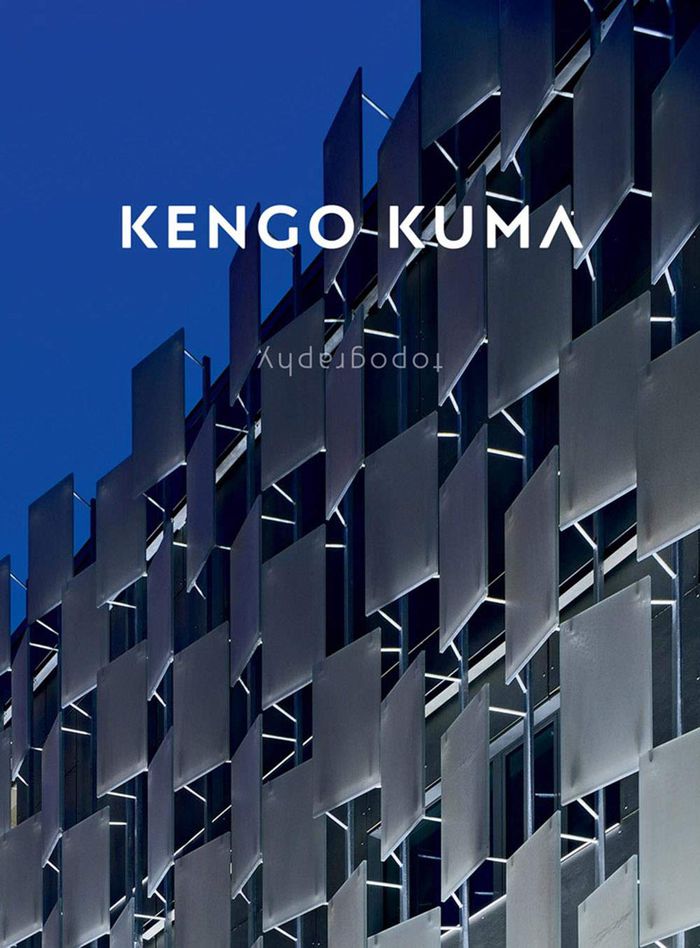
Kengo Kuma is a globally acclaimed Japanese architect whose prodigious output possesses an inherent respect and value of materials and environment, often creating a harmonious balance between building and landscape. He masterfully engages both architectural experimentation and traditional Japanese design with twenty-first-century technology, resulting in highly advanced yet beautifully simple, gentle, human-scaled buildings. Often ranked among other esteemed architects, such as Shigeru Ban, Tadao Ando, Kazuyo Sejima, or Kenzo Tange, Kuma is always in search of new materials to replace concrete and steel, and seeks a new approach for architecture in a post-industrial society, fusing interior and exterior realms to make spaces that create a calming and tranquil atmosphere. Known for his prolific writing, Kuma is constantly re-engaging with different aspects of the architectural discipline, whether it be construction or representation in order to give further progress to his ideas. This volume showcases close to forty high-profile works by Kengo Kuma & Associates (based in Tokyo and Paris), focusing on some of his most recognised works, including the Asakusa Culture and Tourism Center in Tokyo, the Mont Blanc Base Camp project, the Great Bamboo Wall, as well as progress for the design for Tokyo's main stadium for the 2020 Olympic Games.
Kengo Kuma: Topography
Actions:
Price:
$100.00
(available in store)
Summary:
Kengo Kuma is a globally acclaimed Japanese architect whose prodigious output possesses an inherent respect and value of materials and environment, often creating a harmonious balance between building and landscape. He masterfully engages both architectural experimentation and traditional Japanese design with twenty-first-century technology, resulting in highly advanced yet beautifully simple, gentle, human-scaled buildings. Often ranked among other esteemed architects, such as Shigeru Ban, Tadao Ando, Kazuyo Sejima, or Kenzo Tange, Kuma is always in search of new materials to replace concrete and steel, and seeks a new approach for architecture in a post-industrial society, fusing interior and exterior realms to make spaces that create a calming and tranquil atmosphere. Known for his prolific writing, Kuma is constantly re-engaging with different aspects of the architectural discipline, whether it be construction or representation in order to give further progress to his ideas. This volume showcases close to forty high-profile works by Kengo Kuma & Associates (based in Tokyo and Paris), focusing on some of his most recognised works, including the Asakusa Culture and Tourism Center in Tokyo, the Mont Blanc Base Camp project, the Great Bamboo Wall, as well as progress for the design for Tokyo's main stadium for the 2020 Olympic Games.
Form:
books
books
Publication:
March 2021
March 2021
Subject:
Architecture Monographs
Architecture Monographs
Form:
books
books
Title:
Maisons contemporaines deux
Maisons contemporaines deux
Actions:
Price:
$89.95
(available to order)
Summary:
L'univers domestique contemporain suscite depuis quelques années un intérêt grandissant. Des expositions, des magazines et des émissions télévisées rendent compte des dernières innovations en matière d'architecture résidentielle. «Maisons contemporaines 2» dresse un panorama des maisons récentes les plus novatrices construites à travers le monde. Les trente-trois maisons(...)
$89.95
(available to order)
Summary:
L'univers domestique contemporain suscite depuis quelques années un intérêt grandissant. Des expositions, des magazines et des émissions télévisées rendent compte des dernières innovations en matière d'architecture résidentielle. «Maisons contemporaines 2» dresse un panorama des maisons récentes les plus novatrices construites à travers le monde. Les trente-trois maisons(...)
Subject:
Residential Architecture
Residential Architecture
Publication:
December 2005, London, New York
December 2005, London, New York
Title:
Maisons contemporaines deux
Actions:
Price:
$89.95
(available to order)
Summary:
L'univers domestique contemporain suscite depuis quelques années un intérêt grandissant. Des expositions, des magazines et des émissions télévisées rendent compte des dernières innovations en matière d'architecture résidentielle. «Maisons contemporaines 2» dresse un panorama des maisons récentes les plus novatrices construites à travers le monde. Les trente-trois maisons présentées ici ont été réalisées dans quinze pays différents, par des architectes consacrés ou prometteurs parmi lesquels David Adjaye (Londres), Tadao Ando (Japon), Carlos Ferrater (Espagne), Sean Godsell (Australie), Kengo Kuma (Chine), Richard Meler (Etats-Unis), Julie Snow (Canada) ou Werner Sobek (Allemagne). Les maisons sont réparties en trois chapitres thématiques: le premier examine la relation entre architecture et paysage ; le second regroupe des projets répondant à des demandes de clients inhabituelles; le troisième présente des résidences où sont mis en œuvre de nouveaux matériaux et des techniques d'économie d'énergie. Chaque maison est l'illustration d'un regard original sur les modes de vie et l'esthétique actuels : la " petite maison " (Kazuyo Sejima/SAANA, Tokyo) permet ainsi de loger une famille de trois personnes sur une parcelle réduite de 60 m² ; la maison Carter Tucker (Sean Godsell, Australie) et la maison Nenning (Cukrowicz.Nachbaur, Autriche) sont des interprétations modernes de la construction en bois traditionnelle ; la maison Koehler (Julie Snow, Canada) et la maison Weiss (Steven Harris, Mexique) offrent toutes deux un havre de repos dans des sites à la beauté sauvage.
Maisons contemporaines deux
Actions:
Price:
$89.95
(available to order)
Summary:
L'univers domestique contemporain suscite depuis quelques années un intérêt grandissant. Des expositions, des magazines et des émissions télévisées rendent compte des dernières innovations en matière d'architecture résidentielle. «Maisons contemporaines 2» dresse un panorama des maisons récentes les plus novatrices construites à travers le monde. Les trente-trois maisons présentées ici ont été réalisées dans quinze pays différents, par des architectes consacrés ou prometteurs parmi lesquels David Adjaye (Londres), Tadao Ando (Japon), Carlos Ferrater (Espagne), Sean Godsell (Australie), Kengo Kuma (Chine), Richard Meler (Etats-Unis), Julie Snow (Canada) ou Werner Sobek (Allemagne). Les maisons sont réparties en trois chapitres thématiques: le premier examine la relation entre architecture et paysage ; le second regroupe des projets répondant à des demandes de clients inhabituelles; le troisième présente des résidences où sont mis en œuvre de nouveaux matériaux et des techniques d'économie d'énergie. Chaque maison est l'illustration d'un regard original sur les modes de vie et l'esthétique actuels : la " petite maison " (Kazuyo Sejima/SAANA, Tokyo) permet ainsi de loger une famille de trois personnes sur une parcelle réduite de 60 m² ; la maison Carter Tucker (Sean Godsell, Australie) et la maison Nenning (Cukrowicz.Nachbaur, Autriche) sont des interprétations modernes de la construction en bois traditionnelle ; la maison Koehler (Julie Snow, Canada) et la maison Weiss (Steven Harris, Mexique) offrent toutes deux un havre de repos dans des sites à la beauté sauvage.
Form:
books
books
Publication:
December 2005, London, New York
December 2005, London, New York
Subject:
Residential Architecture
Residential Architecture


