


2700 Results
Form:
books
books
Title:
Shigeru Ban
Shigeru Ban
Actions:
Price:
$99.95
(available to order)
Summary:
Based in Japan and one of an emerging generation of young, world-class architects, Shigeru Ban designs and builds graceful, serene structures using modest materials such as cardboard, paper tubes, bamboo, and prefabricated wood. His buildings are sometimes soaring and birdlike, sometimes simple, grounded, and evocative of the Japanese aesthetic, but always they are(...)
$99.95
(available to order)
Summary:
Based in Japan and one of an emerging generation of young, world-class architects, Shigeru Ban designs and builds graceful, serene structures using modest materials such as cardboard, paper tubes, bamboo, and prefabricated wood. His buildings are sometimes soaring and birdlike, sometimes simple, grounded, and evocative of the Japanese aesthetic, but always they are(...)
Subject:
Architecture Monographs
Architecture Monographs
Publication:
October 2003, London / New York
October 2003, London / New York
Title:
Shigeru Ban
Actions:
Price:
$99.95
(available to order)
Summary:
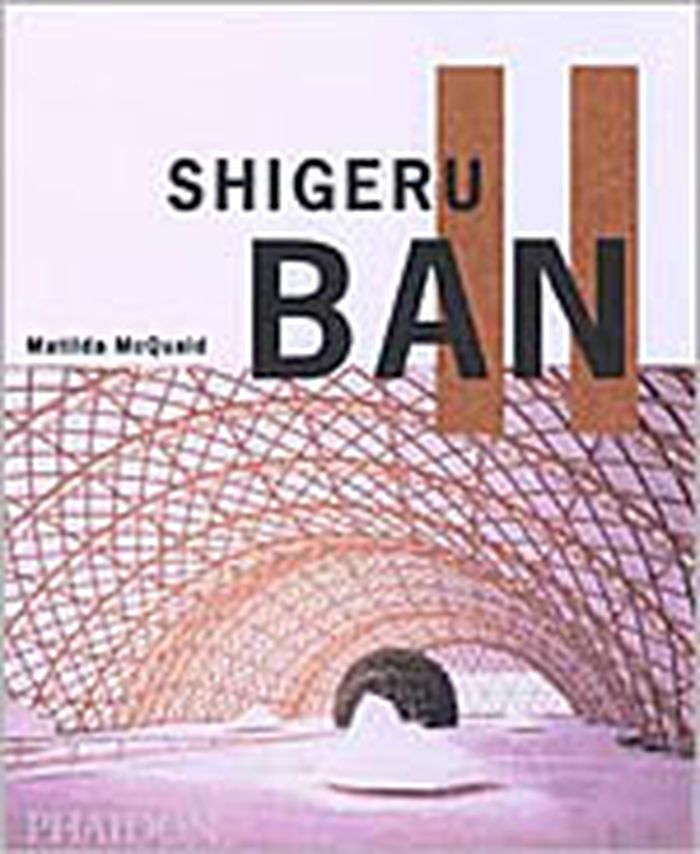
Based in Japan and one of an emerging generation of young, world-class architects, Shigeru Ban designs and builds graceful, serene structures using modest materials such as cardboard, paper tubes, bamboo, and prefabricated wood. His buildings are sometimes soaring and birdlike, sometimes simple, grounded, and evocative of the Japanese aesthetic, but always they are integrated with and respectful of their surrounding environment. Ban has designed projects at both ends of the client spectrum: from one-room temporary houses of paper tubes for earthquake refugees worldwide to a 14,000 square-foot country house in Sharon, Connecticut – his first U.S. commission. His humanitarian efforts and his interest in recyclable, affordable, natural materials have won praise and attention from museums and critics in America and Europe. Ban’s Curtain Wall House was a favorite entry in the Museum of Modern Art’s “Un-Private House” exhibition in 1999; he has gone on to design a museum for children in Japan, a canal museum in France, and a private art museum in Belgium; he was included in the 2000 and 2002 Venice Biennale, and created the Japan Pavilion for the Expo 2000 in Hannover, Germany. He was a member of the Think team of architects selected in February 2003 as one of two finalist teams to compete for the commission to design the new World Trade Center site in New York.
Shigeru Ban
Actions:
Price:
$99.95
(available to order)
Summary:
Based in Japan and one of an emerging generation of young, world-class architects, Shigeru Ban designs and builds graceful, serene structures using modest materials such as cardboard, paper tubes, bamboo, and prefabricated wood. His buildings are sometimes soaring and birdlike, sometimes simple, grounded, and evocative of the Japanese aesthetic, but always they are integrated with and respectful of their surrounding environment. Ban has designed projects at both ends of the client spectrum: from one-room temporary houses of paper tubes for earthquake refugees worldwide to a 14,000 square-foot country house in Sharon, Connecticut – his first U.S. commission. His humanitarian efforts and his interest in recyclable, affordable, natural materials have won praise and attention from museums and critics in America and Europe. Ban’s Curtain Wall House was a favorite entry in the Museum of Modern Art’s “Un-Private House” exhibition in 1999; he has gone on to design a museum for children in Japan, a canal museum in France, and a private art museum in Belgium; he was included in the 2000 and 2002 Venice Biennale, and created the Japan Pavilion for the Expo 2000 in Hannover, Germany. He was a member of the Think team of architects selected in February 2003 as one of two finalist teams to compete for the commission to design the new World Trade Center site in New York.
Form:
books
books
Publication:
October 2003, London / New York
October 2003, London / New York
Subject:
Architecture Monographs
Architecture Monographs
Form:
books
books
Actions:
Price:
$41.95
(available to order)
Summary:
Is it possible for the economy to grow without the environment being destroyed? Will our lifestyles impoverish the planet for our children and grandchildren? Is the world sick? Can it be healed? Less than a lifetime ago, these questions would have made no sense. This was not because our ancestors had no impact on nature—nor because they were unaware of the serious damage(...)
$41.95
(available to order)
Summary:
Is it possible for the economy to grow without the environment being destroyed? Will our lifestyles impoverish the planet for our children and grandchildren? Is the world sick? Can it be healed? Less than a lifetime ago, these questions would have made no sense. This was not because our ancestors had no impact on nature—nor because they were unaware of the serious damage(...)
Subject:
Environment and environmental theory
Environment and environmental theory
Publication:
November 2018
November 2018
Title:
The environment: a history of an idea
Actions:
Price:
$41.95
(available to order)
Summary:
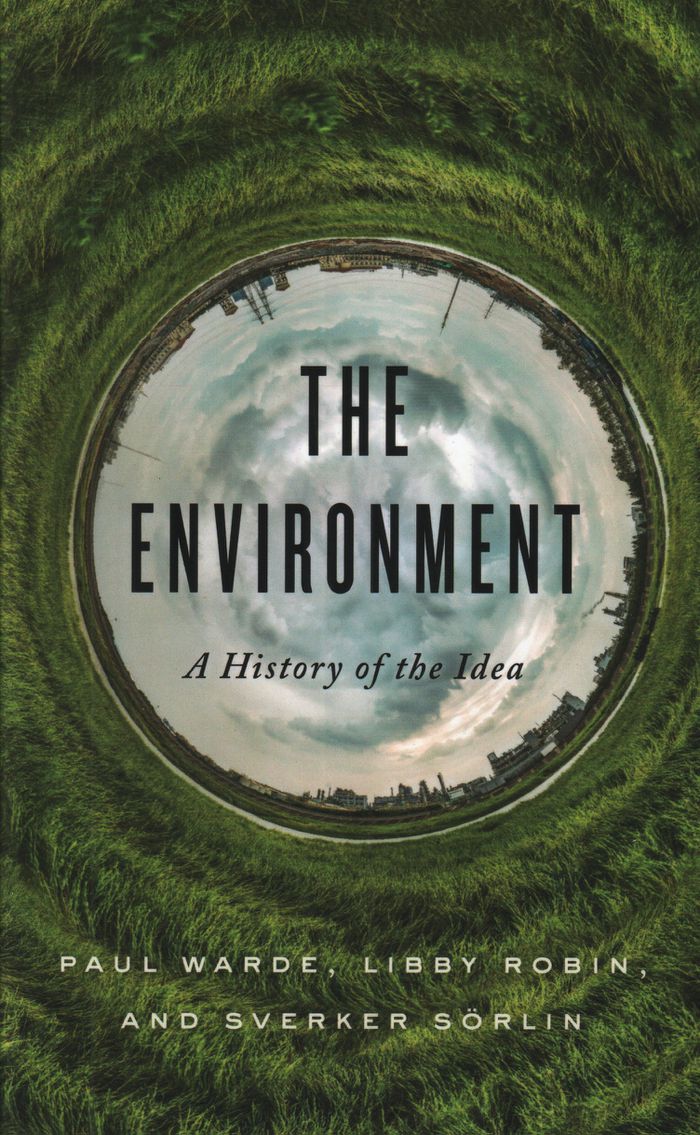
Is it possible for the economy to grow without the environment being destroyed? Will our lifestyles impoverish the planet for our children and grandchildren? Is the world sick? Can it be healed? Less than a lifetime ago, these questions would have made no sense. This was not because our ancestors had no impact on nature—nor because they were unaware of the serious damage they had done. What people lacked was an idea: a way of imagining the web of interconnection and consequence of which the natural world is made. Without this notion, we didn’t have a way to describe the scale and scope of human impact upon nature. This idea was "the environment." Paul Warde, Libby Robin, and Sverker Sörlin trace the emergence of the concept of the environment following World War II, a period characterized by both hope for a new global order and fear of humans’ capacity for almost limitless destruction. It was at this moment that a new idea and a new narrative about the planet-wide impact of people's behavior emerged, closely allied to anxieties for the future. Now we had a vocabulary for talking about how we were changing nature: resource exhaustion and energy, biodiversity, pollution, and—eventually—climate change. With the rise of "the environment," the authors argue, came new expertise, making certain kinds of knowledge crucial to understanding the future of our planet.
The environment: a history of an idea
Actions:
Price:
$41.95
(available to order)
Summary:
Is it possible for the economy to grow without the environment being destroyed? Will our lifestyles impoverish the planet for our children and grandchildren? Is the world sick? Can it be healed? Less than a lifetime ago, these questions would have made no sense. This was not because our ancestors had no impact on nature—nor because they were unaware of the serious damage they had done. What people lacked was an idea: a way of imagining the web of interconnection and consequence of which the natural world is made. Without this notion, we didn’t have a way to describe the scale and scope of human impact upon nature. This idea was "the environment." Paul Warde, Libby Robin, and Sverker Sörlin trace the emergence of the concept of the environment following World War II, a period characterized by both hope for a new global order and fear of humans’ capacity for almost limitless destruction. It was at this moment that a new idea and a new narrative about the planet-wide impact of people's behavior emerged, closely allied to anxieties for the future. Now we had a vocabulary for talking about how we were changing nature: resource exhaustion and energy, biodiversity, pollution, and—eventually—climate change. With the rise of "the environment," the authors argue, came new expertise, making certain kinds of knowledge crucial to understanding the future of our planet.
Form:
books
books
Publication:
November 2018
November 2018
Subject:
Environment and environmental theory
Environment and environmental theory
Form:
books
books
Actions:
Price:
$47.95
(available to order)
Summary:
For thousands of years, architects have used models to invent, experiment and communicate. A world in miniature, such models are even more varied in their purposes and materials than their full-scale counterparts. This elegant book explores the fascinating nature of the architectural model through 26 illustrated essays, one for each letter of the alphabet. Unbound by the(...)
$47.95
(available to order)
Summary:
For thousands of years, architects have used models to invent, experiment and communicate. A world in miniature, such models are even more varied in their purposes and materials than their full-scale counterparts. This elegant book explores the fascinating nature of the architectural model through 26 illustrated essays, one for each letter of the alphabet. Unbound by the(...)
Title:
An alphabet of architectural models
Actions:
Price:
$47.95
(available to order)
Summary:
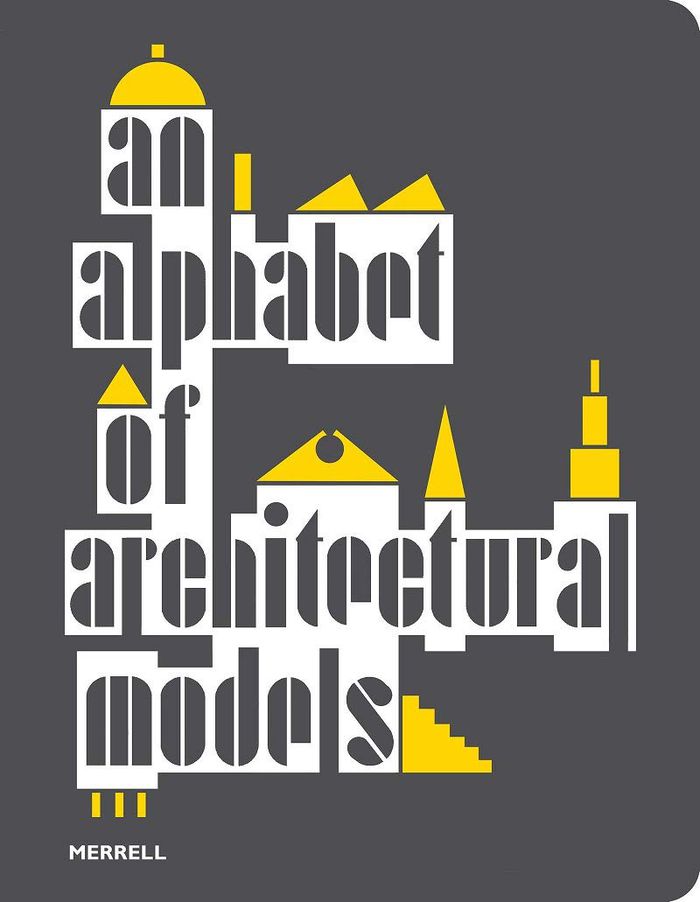
For thousands of years, architects have used models to invent, experiment and communicate. A world in miniature, such models are even more varied in their purposes and materials than their full-scale counterparts. This elegant book explores the fascinating nature of the architectural model through 26 illustrated essays, one for each letter of the alphabet. Unbound by the practicalities of life-size construction, models allow architects the flexibility and freedom to think in three dimensions. Whether made for purely speculative exercises or to solve a specific problem, they are aids to the imagination. Equally, they can be used as detailed representations of particular places, either built or as yet unrealized, in order to convey information to patrons or the public. Models also have a vibrant life outside the architect’s office, including as souvenirs, architectural fragments displayed in museums, and toys for children and adults alike. Written by architects, model-makers, curators, conservators and scholars, the texts in this absorbing ''Alphabet'' explore such fundamental issues as modelling materials and techniques, scale, and the role of the model in the design process. They also go beyond conventional accounts to look at models under the X-ray machine, their use in film, and edible models. The result is a wide-ranging, original account of the multiple lives of the architectural model.
An alphabet of architectural models
Actions:
Price:
$47.95
(available to order)
Summary:
For thousands of years, architects have used models to invent, experiment and communicate. A world in miniature, such models are even more varied in their purposes and materials than their full-scale counterparts. This elegant book explores the fascinating nature of the architectural model through 26 illustrated essays, one for each letter of the alphabet. Unbound by the practicalities of life-size construction, models allow architects the flexibility and freedom to think in three dimensions. Whether made for purely speculative exercises or to solve a specific problem, they are aids to the imagination. Equally, they can be used as detailed representations of particular places, either built or as yet unrealized, in order to convey information to patrons or the public. Models also have a vibrant life outside the architect’s office, including as souvenirs, architectural fragments displayed in museums, and toys for children and adults alike. Written by architects, model-makers, curators, conservators and scholars, the texts in this absorbing ''Alphabet'' explore such fundamental issues as modelling materials and techniques, scale, and the role of the model in the design process. They also go beyond conventional accounts to look at models under the X-ray machine, their use in film, and edible models. The result is a wide-ranging, original account of the multiple lives of the architectural model.
Form:
books
books
Publication:
October 2019
October 2019
Subject:
Models
Models
Form:
books
books
Actions:
Price:
$38.95
(available to order)
Summary:
In the middle of the night they quickly build houses and seize land before the police destroy their fragile homes. They're squatters, families that risk the wrath of governments and property owners by building dwellings on land they don't own, and they represent one out of every ten people on the planet. Investigative journalist Robert Neuwirth lived among squatter(...)
$38.95
(available to order)
Summary:
In the middle of the night they quickly build houses and seize land before the police destroy their fragile homes. They're squatters, families that risk the wrath of governments and property owners by building dwellings on land they don't own, and they represent one out of every ten people on the planet. Investigative journalist Robert Neuwirth lived among squatter(...)
Title:
Shadow cities: a billion squatters, a new urban world
Actions:
Price:
$38.95
(available to order)
Summary:
In the middle of the night they quickly build houses and seize land before the police destroy their fragile homes. They're squatters, families that risk the wrath of governments and property owners by building dwellings on land they don't own, and they represent one out of every ten people on the planet. Investigative journalist Robert Neuwirth lived among squatter communities from Rio to Bombay to Nairobi to Istanbul to give us an impassioned, inside view of squatter life and a glimpse into the urban future. He met people in Nairobi who built homes with their bare hands, Turkish families who plot land invasions, and children in Rio whose parents justify outfoxing the authorities as the only path to a better life. And he shows us that in cities like Rio, squatter settlements have become decent places to live for formerly landless people. Tracing the notion of private property from the enclosure movement in Europe to the settlement of the U.S., Neuwirth shows how squatting rights may actually be seen as more "natural" than the current laws practiced in the U.S. In almost every country of the developing world, the most active builders are squatters, creating complex local economies with high rises, shopping strips, banks, and self-government. As they invent new social structures, Neuwirth argues, squatters are at the forefront of the worldwide movement to develop new visions of what constitutes property and community.
Shadow cities: a billion squatters, a new urban world
Actions:
Price:
$38.95
(available to order)
Summary:
In the middle of the night they quickly build houses and seize land before the police destroy their fragile homes. They're squatters, families that risk the wrath of governments and property owners by building dwellings on land they don't own, and they represent one out of every ten people on the planet. Investigative journalist Robert Neuwirth lived among squatter communities from Rio to Bombay to Nairobi to Istanbul to give us an impassioned, inside view of squatter life and a glimpse into the urban future. He met people in Nairobi who built homes with their bare hands, Turkish families who plot land invasions, and children in Rio whose parents justify outfoxing the authorities as the only path to a better life. And he shows us that in cities like Rio, squatter settlements have become decent places to live for formerly landless people. Tracing the notion of private property from the enclosure movement in Europe to the settlement of the U.S., Neuwirth shows how squatting rights may actually be seen as more "natural" than the current laws practiced in the U.S. In almost every country of the developing world, the most active builders are squatters, creating complex local economies with high rises, shopping strips, banks, and self-government. As they invent new social structures, Neuwirth argues, squatters are at the forefront of the worldwide movement to develop new visions of what constitutes property and community.
Form:
books
books
Publication:
December 2004, New York
December 2004, New York
Subject:
Urban Theory
Urban Theory
Form:
books
books
Price:
$39.00
(available to order)
Summary:
Since they were first established in the 1880s, children’s summer camps have touched the lives of millions of people. Although the camping experience has a special place in the popular imagination, few scholars have given serious thought to this peculiarly American phenomenon. Why were summer camps created? What concerns and ideals motivated their founders? Whom did they(...)
$39.00
(available to order)
Summary:
Since they were first established in the 1880s, children’s summer camps have touched the lives of millions of people. Although the camping experience has a special place in the popular imagination, few scholars have given serious thought to this peculiarly American phenomenon. Why were summer camps created? What concerns and ideals motivated their founders? Whom did they(...)
Title:
A manufactured wilderness: summer camps and the shaping of american youth
Actions:
Price:
$39.00
(available to order)
Summary:
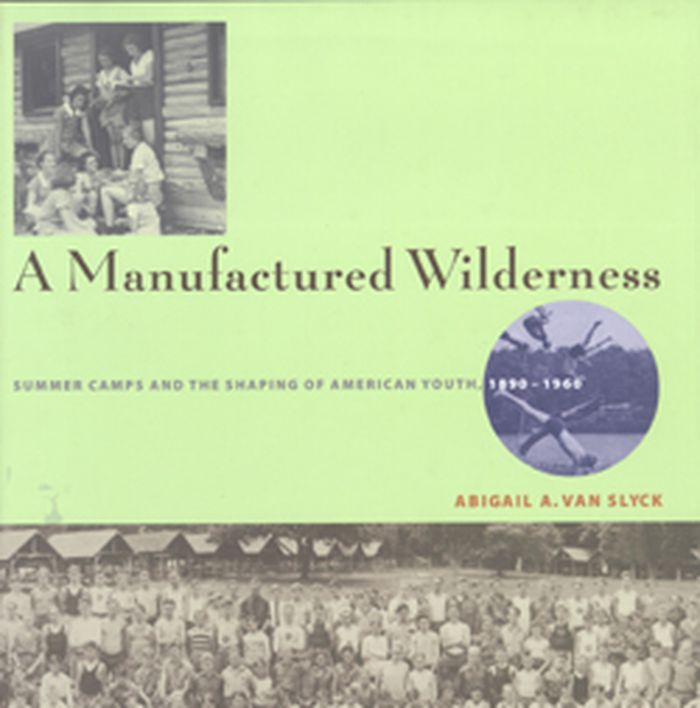
Since they were first established in the 1880s, children’s summer camps have touched the lives of millions of people. Although the camping experience has a special place in the popular imagination, few scholars have given serious thought to this peculiarly American phenomenon. Why were summer camps created? What concerns and ideals motivated their founders? Whom did they serve? How did they change over time? What factors influenced their design? To answer these and many other questions, Abigail A. Van Slyck trains an informed eye on the most visible and evocative aspect of camp life: its landscape and architecture. She argues that summer camps delivered much more than a simple encounter with the natural world. Instead, she suggests, camps provided a man-made version of wilderness, shaped by middle-class anxieties about gender roles, class tensions, race relations, and modernity and its impact on the lives of children. Following a fascinating history of summer camps and a wide-ranging overview of the factors that led to their creation, Van Slyck examines the intersections of the natural landscape with human-built forms and social activities. In particular, she addresses changing attitudes toward such subjects as children’s health, sanitation, play, relationships between the sexes, Native American culture, and evolving ideas about childhood. Generously illustrated with period photographs, maps, plans, and promotional images of camps throughout North America, A Manufactured Wilderness is the first book to offer a thorough consideration of the summer camp environment.
A manufactured wilderness: summer camps and the shaping of american youth
Actions:
Price:
$39.00
(available to order)
Summary:
Since they were first established in the 1880s, children’s summer camps have touched the lives of millions of people. Although the camping experience has a special place in the popular imagination, few scholars have given serious thought to this peculiarly American phenomenon. Why were summer camps created? What concerns and ideals motivated their founders? Whom did they serve? How did they change over time? What factors influenced their design? To answer these and many other questions, Abigail A. Van Slyck trains an informed eye on the most visible and evocative aspect of camp life: its landscape and architecture. She argues that summer camps delivered much more than a simple encounter with the natural world. Instead, she suggests, camps provided a man-made version of wilderness, shaped by middle-class anxieties about gender roles, class tensions, race relations, and modernity and its impact on the lives of children. Following a fascinating history of summer camps and a wide-ranging overview of the factors that led to their creation, Van Slyck examines the intersections of the natural landscape with human-built forms and social activities. In particular, she addresses changing attitudes toward such subjects as children’s health, sanitation, play, relationships between the sexes, Native American culture, and evolving ideas about childhood. Generously illustrated with period photographs, maps, plans, and promotional images of camps throughout North America, A Manufactured Wilderness is the first book to offer a thorough consideration of the summer camp environment.
Form:
books
books
Publication:
October 2006, Minnesota
October 2006, Minnesota
Subject:
Architectural Theory
Architectural Theory
Form:
books
books
Title:
Agnes Martin: On beauty
Agnes Martin: On beauty
Actions:
Price:
$54.00
(available in store)
Summary:
"When I think of art I think of beauty. Beauty is the mystery of life," wrote Agnes Martin in 1989. Edited by Milly Glimcher, this handsomely produced volume collects writings by the artist centered around the theme of beauty, as well as a range of subjects related to her life and work, from the workings of nature and politics to the inspiration to be found in solitude(...)
$54.00
(available in store)
Summary:
"When I think of art I think of beauty. Beauty is the mystery of life," wrote Agnes Martin in 1989. Edited by Milly Glimcher, this handsomely produced volume collects writings by the artist centered around the theme of beauty, as well as a range of subjects related to her life and work, from the workings of nature and politics to the inspiration to be found in solitude(...)
Title:
Agnes Martin: On beauty
Actions:
Price:
$54.00
(available in store)
Summary:
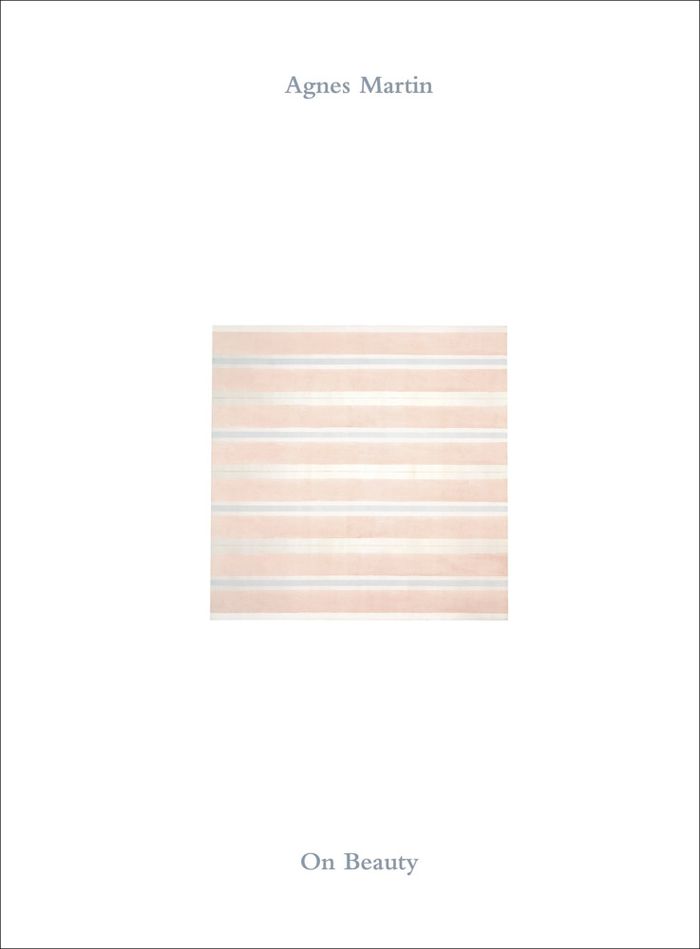
"When I think of art I think of beauty. Beauty is the mystery of life," wrote Agnes Martin in 1989. Edited by Milly Glimcher, this handsomely produced volume collects writings by the artist centered around the theme of beauty, as well as a range of subjects related to her life and work, from the workings of nature and politics to the inspiration to be found in solitude and silence. Poetic and reflective, these texts range from compact insights, as with "Underside of the Leaf" and "Awareness of Perfection," to longer meditations, such as "The Current of the River of Life Moves Us" and "The Untroubled Mind." ''On Beauty'' also includes reproductions of paintings such as Blessings (2000) and Tranquillity (2001), among others, while the front and back covers are debossed with reproductions of Affection (2001) and Little Children Playing with Love (2001). By providing a window into the thoughts and feelings that moved her, this title is the perfect companion for anyone who admires Martin's intuitive approach to art. Canadian American artist Agnes Martin (1912–2004) was one of the most influential painters of her generation and left an enduring mark on the history of modern and contemporary art. Characterized by austere lines and grids superimposed upon grounds of muted color, her paintings elegantly negotiate the confines of structure, space, draftsmanship and the metaphysical. Their underlying ideologies can be found in the writings she composed over the course of her career.
Agnes Martin: On beauty
Actions:
Price:
$54.00
(available in store)
Summary:
"When I think of art I think of beauty. Beauty is the mystery of life," wrote Agnes Martin in 1989. Edited by Milly Glimcher, this handsomely produced volume collects writings by the artist centered around the theme of beauty, as well as a range of subjects related to her life and work, from the workings of nature and politics to the inspiration to be found in solitude and silence. Poetic and reflective, these texts range from compact insights, as with "Underside of the Leaf" and "Awareness of Perfection," to longer meditations, such as "The Current of the River of Life Moves Us" and "The Untroubled Mind." ''On Beauty'' also includes reproductions of paintings such as Blessings (2000) and Tranquillity (2001), among others, while the front and back covers are debossed with reproductions of Affection (2001) and Little Children Playing with Love (2001). By providing a window into the thoughts and feelings that moved her, this title is the perfect companion for anyone who admires Martin's intuitive approach to art. Canadian American artist Agnes Martin (1912–2004) was one of the most influential painters of her generation and left an enduring mark on the history of modern and contemporary art. Characterized by austere lines and grids superimposed upon grounds of muted color, her paintings elegantly negotiate the confines of structure, space, draftsmanship and the metaphysical. Their underlying ideologies can be found in the writings she composed over the course of her career.
Form:
books
books
Publication:
March 2026
March 2026
Subject:
Contemporary Art Monographs
Contemporary Art Monographs
Form:
books
books
Actions:
Price:
$13.95
(available in store)
Summary:
Sellafield, Europe's largest nuclear site, began being decommissioned in 2022. Its primary purpose was to produce weapons-grade plutonium for the UK's nuclear weapons programme, but they also generated electrical power for the National Grid from 1956-2003 and reprocessed nuclear fuel from 1952 to 2022. In 1985, Barry Lewis photographed part of the plant for The Sunday(...)
$13.95
(available in store)
Summary:
Sellafield, Europe's largest nuclear site, began being decommissioned in 2022. Its primary purpose was to produce weapons-grade plutonium for the UK's nuclear weapons programme, but they also generated electrical power for the National Grid from 1956-2003 and reprocessed nuclear fuel from 1952 to 2022. In 1985, Barry Lewis photographed part of the plant for The Sunday(...)
Title:
Barry Lewis: Sellafield Nuclear Site 1985
Actions:
Price:
$13.95
(available in store)
Summary:
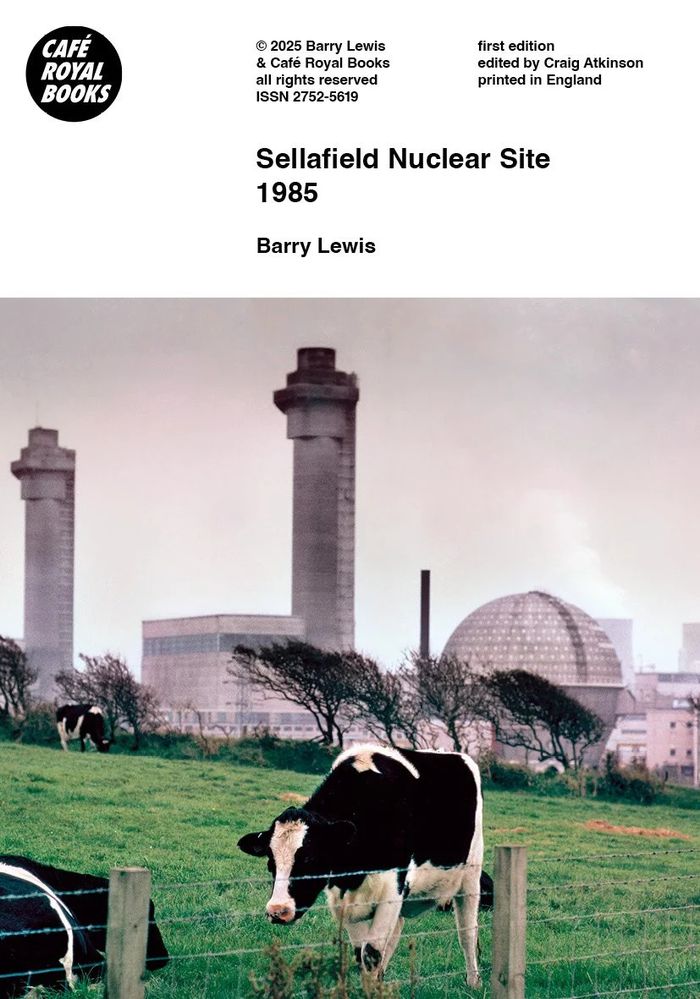
Sellafield, Europe's largest nuclear site, began being decommissioned in 2022. Its primary purpose was to produce weapons-grade plutonium for the UK's nuclear weapons programme, but they also generated electrical power for the National Grid from 1956-2003 and reprocessed nuclear fuel from 1952 to 2022. In 1985, Barry Lewis photographed part of the plant for The Sunday Times Magazine after reports found an increased incidence of leukaemia and non-Hodgkin lymphoma in children and young adults under 25 years of age living in Seascale, a village near Sellafield on the west coast of Cumbria. A government report suggested that these spikes were unlikely to have been caused by radiation exposure though the causes of these clusters of leukaemia around Sellafield was still not clear. 100Kg of plutonium had been pumped out of Sellafield into the Irish sea during the previous 40 years and 60Kg was unaccounted for. Any plutonium dust that is washed inshore, and when the tide goes out, could dry and blow inland. A single speck of plutonium inhaled is enough to trigger cancer. Sellafield is now a sprawling rubbish dump on the Cumbrian coast, with the world's largest store of plutonium that stores and treats decades of nuclear waste from atomic power generation and weapons programmes.The buildings are expected to be finally torn down by 2125 at a cost of approaching £100 billion and have its nuclear waste buried deep underground at a location still undecided.
Barry Lewis: Sellafield Nuclear Site 1985
Actions:
Price:
$13.95
(available in store)
Summary:
Sellafield, Europe's largest nuclear site, began being decommissioned in 2022. Its primary purpose was to produce weapons-grade plutonium for the UK's nuclear weapons programme, but they also generated electrical power for the National Grid from 1956-2003 and reprocessed nuclear fuel from 1952 to 2022. In 1985, Barry Lewis photographed part of the plant for The Sunday Times Magazine after reports found an increased incidence of leukaemia and non-Hodgkin lymphoma in children and young adults under 25 years of age living in Seascale, a village near Sellafield on the west coast of Cumbria. A government report suggested that these spikes were unlikely to have been caused by radiation exposure though the causes of these clusters of leukaemia around Sellafield was still not clear. 100Kg of plutonium had been pumped out of Sellafield into the Irish sea during the previous 40 years and 60Kg was unaccounted for. Any plutonium dust that is washed inshore, and when the tide goes out, could dry and blow inland. A single speck of plutonium inhaled is enough to trigger cancer. Sellafield is now a sprawling rubbish dump on the Cumbrian coast, with the world's largest store of plutonium that stores and treats decades of nuclear waste from atomic power generation and weapons programmes.The buildings are expected to be finally torn down by 2125 at a cost of approaching £100 billion and have its nuclear waste buried deep underground at a location still undecided.
Form:
books
books
Publication:
April 2026
April 2026
Subject:
Photography monographs
Photography monographs
Form:
books
books
Price:
$55.00
(available to order)
Summary:
People in trouble laughing pushed to the ground. Soldiers leaning, pointing, reaching. Woman sweeping. Balloons escaping. Coffin descending. Boys standing. Grieving. Chair balancing. Children smoking. Embracing. Creatures barking. Cars burning. Helicopters hovering. Faces. Human figures. Shapes. Birds. Structures left standing and falling... The Belfast Exposed Archive(...)
$55.00
(available to order)
Summary:
People in trouble laughing pushed to the ground. Soldiers leaning, pointing, reaching. Woman sweeping. Balloons escaping. Coffin descending. Boys standing. Grieving. Chair balancing. Children smoking. Embracing. Creatures barking. Cars burning. Helicopters hovering. Faces. Human figures. Shapes. Birds. Structures left standing and falling... The Belfast Exposed Archive(...)
Title:
Adam Broomberg & Oliver Chanarin : people in trouble pushed to the ground
Actions:
Price:
$55.00
(available to order)
Summary:
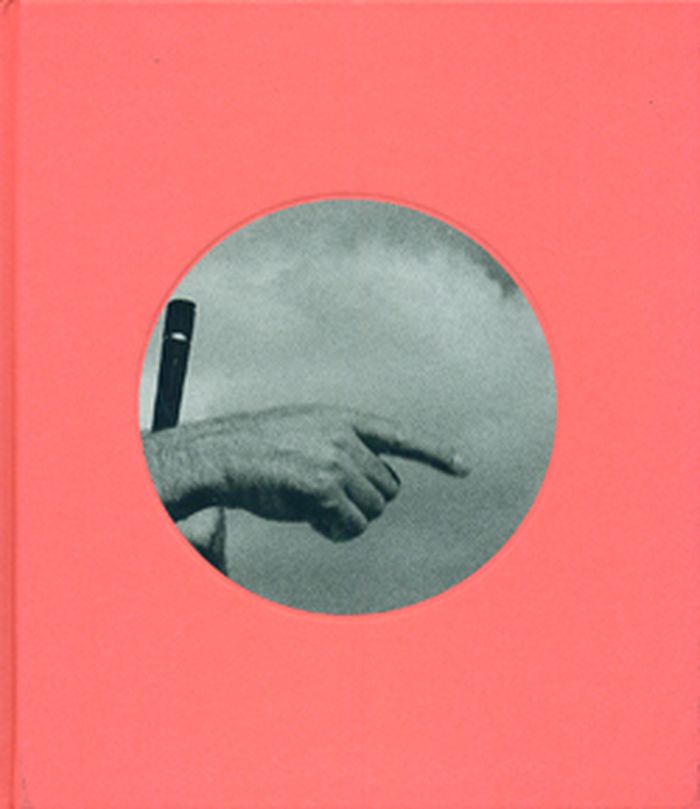
People in trouble laughing pushed to the ground. Soldiers leaning, pointing, reaching. Woman sweeping. Balloons escaping. Coffin descending. Boys standing. Grieving. Chair balancing. Children smoking. Embracing. Creatures barking. Cars burning. Helicopters hovering. Faces. Human figures. Shapes. Birds. Structures left standing and falling... The Belfast Exposed Archive occupies a small room on the first floor at 23 Donegal Street and contains over 14,000 black-and-white contact sheets, documenting the Troubles in Northern Ireland. These are photographs taken by professional photo-journalists and 'civilian' photographers, chronicling protests, funerals and acts of terrorism as well as the more ordinary stuff of life: drinking tea; kissing girls; watching trains. Belfast Exposed was founded in 1983 as a response to concern over the careful control of images depicting British military activity during the Troubles. The marks on the surface of the contact strips – across the image itself – allude to the presence of many visitors. These include successive archivists, who have ordered, catalogued and re-catalogued this jumble of images. For many years the archive was also made available to members of the public, and sometimes they would deface their own image with a marker pen, ink or scissors. So, in addition to the marks made by generations of archivists, photo editors, legal aides and activists, the traces of these very personal obliterations are also visible. They are the gestures of those who wished to remain anonymous.
Adam Broomberg & Oliver Chanarin : people in trouble pushed to the ground
Actions:
Price:
$55.00
(available to order)
Summary:
People in trouble laughing pushed to the ground. Soldiers leaning, pointing, reaching. Woman sweeping. Balloons escaping. Coffin descending. Boys standing. Grieving. Chair balancing. Children smoking. Embracing. Creatures barking. Cars burning. Helicopters hovering. Faces. Human figures. Shapes. Birds. Structures left standing and falling... The Belfast Exposed Archive occupies a small room on the first floor at 23 Donegal Street and contains over 14,000 black-and-white contact sheets, documenting the Troubles in Northern Ireland. These are photographs taken by professional photo-journalists and 'civilian' photographers, chronicling protests, funerals and acts of terrorism as well as the more ordinary stuff of life: drinking tea; kissing girls; watching trains. Belfast Exposed was founded in 1983 as a response to concern over the careful control of images depicting British military activity during the Troubles. The marks on the surface of the contact strips – across the image itself – allude to the presence of many visitors. These include successive archivists, who have ordered, catalogued and re-catalogued this jumble of images. For many years the archive was also made available to members of the public, and sometimes they would deface their own image with a marker pen, ink or scissors. So, in addition to the marks made by generations of archivists, photo editors, legal aides and activists, the traces of these very personal obliterations are also visible. They are the gestures of those who wished to remain anonymous.
Form:
books
books
Publication:
June 2012
June 2012
Subject:
Photography Collections
Photography Collections
Form:
books
books
Actions:
Price:
$85.00
(available in store)
Summary:
Published for a major exhibition at The Museum of Modern Art, this catalog reveals new perspectives on the work of Frank Lloyd Wright, a designer so prolific and familiar as to nearly preclude critical reexamination. Structured as a series of inquiries into the Frank Lloyd Wright Foundation Archives at Taliesin West, Arizona (recently acquired by MoMA and Avery(...)
$85.00
(available in store)
Summary:
Published for a major exhibition at The Museum of Modern Art, this catalog reveals new perspectives on the work of Frank Lloyd Wright, a designer so prolific and familiar as to nearly preclude critical reexamination. Structured as a series of inquiries into the Frank Lloyd Wright Foundation Archives at Taliesin West, Arizona (recently acquired by MoMA and Avery(...)
Title:
Frank Lloyd Wright: unpacking the archive
Actions:
Price:
$85.00
(available in store)
Summary:
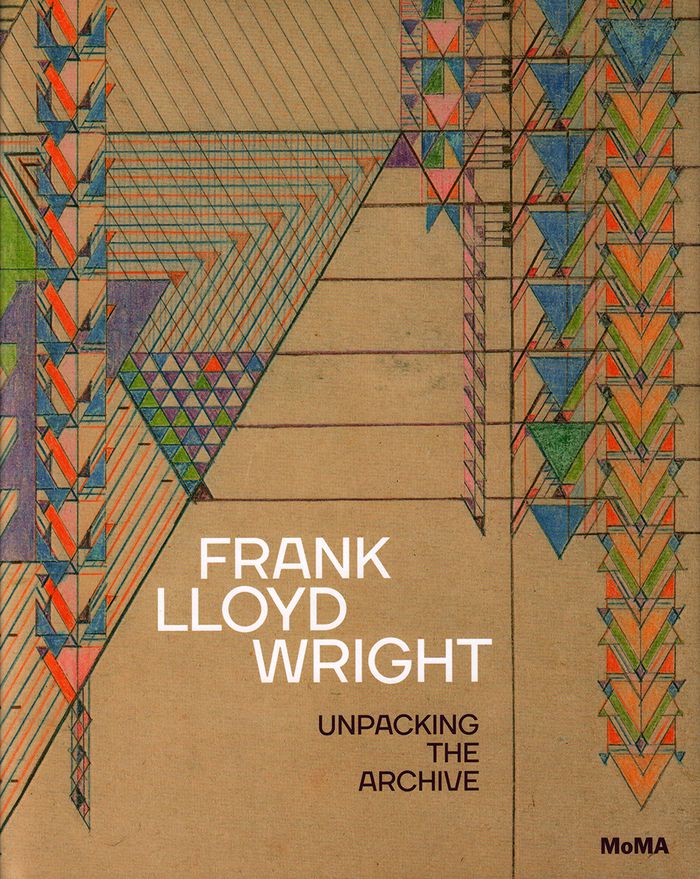
Published for a major exhibition at The Museum of Modern Art, this catalog reveals new perspectives on the work of Frank Lloyd Wright, a designer so prolific and familiar as to nearly preclude critical reexamination. Structured as a series of inquiries into the Frank Lloyd Wright Foundation Archives at Taliesin West, Arizona (recently acquired by MoMA and Avery Architectural & Fine Arts Library, Columbia University), the book is a collection of scholarly explorations rather than an attempt to construct a master narrative. Each chapter centers on a key object from the archive that an invited author has “unpacked”— tracing its meanings and connections, and juxtaposing it with other works from the archive, from MoMA, or from outside collections. Wright’s quest to build a mile-high skyscraper reveals him to be one of the earliest celebrity architects, using television, press relations and other forms of mass media to advance his own self-crafted image. A little-known project for a Rosenwald School for African-American children, together with other projects that engage Japanese and Native American culture, ask provocative questions about Wright’s positions on race and cultural identity. Still other investigations engage the architect’s lifelong dedication to affordable and do-it-yourself housing, as well as the ecological systems, both social and environmental, that informed his approach to cities, landscapes and even ornament. The publication aims to open up Wright’s work to questions, interrogations and debates, and to highlight interpretations by contemporary scholars, both established Wright experts and others considering this iconic figure from new and illuminating perspectives.
Frank Lloyd Wright: unpacking the archive
Actions:
Price:
$85.00
(available in store)
Summary:
Published for a major exhibition at The Museum of Modern Art, this catalog reveals new perspectives on the work of Frank Lloyd Wright, a designer so prolific and familiar as to nearly preclude critical reexamination. Structured as a series of inquiries into the Frank Lloyd Wright Foundation Archives at Taliesin West, Arizona (recently acquired by MoMA and Avery Architectural & Fine Arts Library, Columbia University), the book is a collection of scholarly explorations rather than an attempt to construct a master narrative. Each chapter centers on a key object from the archive that an invited author has “unpacked”— tracing its meanings and connections, and juxtaposing it with other works from the archive, from MoMA, or from outside collections. Wright’s quest to build a mile-high skyscraper reveals him to be one of the earliest celebrity architects, using television, press relations and other forms of mass media to advance his own self-crafted image. A little-known project for a Rosenwald School for African-American children, together with other projects that engage Japanese and Native American culture, ask provocative questions about Wright’s positions on race and cultural identity. Still other investigations engage the architect’s lifelong dedication to affordable and do-it-yourself housing, as well as the ecological systems, both social and environmental, that informed his approach to cities, landscapes and even ornament. The publication aims to open up Wright’s work to questions, interrogations and debates, and to highlight interpretations by contemporary scholars, both established Wright experts and others considering this iconic figure from new and illuminating perspectives.
Form:
books
books
Publication:
June 2017
June 2017
Subject:
Architecture Monographs
Architecture Monographs
Form:
books
books
Actions:
Price:
$63.00
(available to order)
Summary:
366 cartograms cover a vast array of subjects, providing a definitive reference on how regions and countries compare in resources, production, consumption, and more. Advances in technology have made widespread and detailed data gathering easier, resulting in a deluge of statistics on subjects as diverse as literacy rates, military spending, overweight children,(...)
$63.00
(available to order)
Summary:
366 cartograms cover a vast array of subjects, providing a definitive reference on how regions and countries compare in resources, production, consumption, and more. Advances in technology have made widespread and detailed data gathering easier, resulting in a deluge of statistics on subjects as diverse as literacy rates, military spending, overweight children,(...)
Subject:
Architectural Drawing
Architectural Drawing
Publication:
October 2008, New York
October 2008, New York
Title:
The atlas of the real world: mapping the way we live
Actions:
Price:
$63.00
(available to order)
Summary:
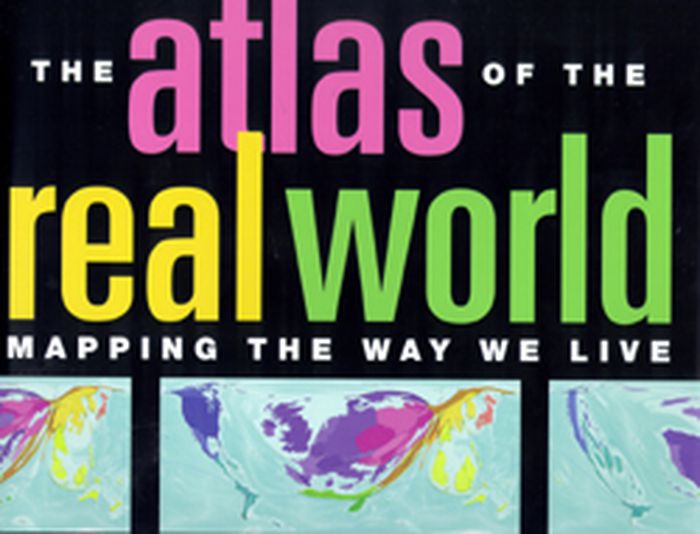
366 cartograms cover a vast array of subjects, providing a definitive reference on how regions and countries compare in resources, production, consumption, and more. Advances in technology have made widespread and detailed data gathering easier, resulting in a deluge of statistics on subjects as diverse as literacy rates, military spending, overweight children, television viewing figures, and endangered species. But how do we represent and compare data from one part of the world to another in a useful way? Here, sophisticated software combined with comprehensive analysis of every aspect of life represents the world as it really is. Digitally modified maps depict the areas and countries of the world not by their physical size but by their demographic importance on a vast range of topics. The rainforests of South America, with thirty percent of the world's fresh water, make the continent balloon in an analysis of water resources, whereas Kuwait, dependent on desalinated seawater, disappears from the map. Fuel use, alcohol consumption, population, malaria: here are hundreds of key indicators to the way we live. This innovative and exceptionally accessible reference work will be an indispensable tool for journalists, economists, marketers, politicians, financiers, environmentalists, and scholars. Its cartograms are augmented by graphs, tables, and full commentaries. 366 color maps. About the Author Daniel Dorling is Professor of Human Geography at the University of Sheffield, England. Mark Newman is Assistant Professor of Physics and Complex Systems at the University of Michigan. Anna Barford is a Research Associate at the University of Sheffield.
The atlas of the real world: mapping the way we live
Actions:
Price:
$63.00
(available to order)
Summary:
366 cartograms cover a vast array of subjects, providing a definitive reference on how regions and countries compare in resources, production, consumption, and more. Advances in technology have made widespread and detailed data gathering easier, resulting in a deluge of statistics on subjects as diverse as literacy rates, military spending, overweight children, television viewing figures, and endangered species. But how do we represent and compare data from one part of the world to another in a useful way? Here, sophisticated software combined with comprehensive analysis of every aspect of life represents the world as it really is. Digitally modified maps depict the areas and countries of the world not by their physical size but by their demographic importance on a vast range of topics. The rainforests of South America, with thirty percent of the world's fresh water, make the continent balloon in an analysis of water resources, whereas Kuwait, dependent on desalinated seawater, disappears from the map. Fuel use, alcohol consumption, population, malaria: here are hundreds of key indicators to the way we live. This innovative and exceptionally accessible reference work will be an indispensable tool for journalists, economists, marketers, politicians, financiers, environmentalists, and scholars. Its cartograms are augmented by graphs, tables, and full commentaries. 366 color maps. About the Author Daniel Dorling is Professor of Human Geography at the University of Sheffield, England. Mark Newman is Assistant Professor of Physics and Complex Systems at the University of Michigan. Anna Barford is a Research Associate at the University of Sheffield.
Form:
books
books
Publication:
October 2008, New York
October 2008, New York
Subject:
Architectural Drawing
Architectural Drawing


