


33582 Results
Level of archival description:
Project
Project
Title:
Campus Commons and Amphitheatre, University of the Cariboo, Kamloops, British Columbia (1991-1994)
Campus Commons and Amphitheatre, University of the Cariboo, Kamloops, British Columbia (1991-1994)
Actions:
Reference number:
AP075.S1.1991.PR02
Description:
Project series documents Cornelia Hahn Oberlander’s landscape project for Campus Commons and Amphitheatre, University of the Cariboo on McGill Road in Kamloops, British Columbia. Oberlander worked on this project in 1991-1993 with architectural firm Downs Archambault & Partners. The landscape design included tree planting for the stairs leading to the amphitheatre and planting around plaza and paved pathways connecting the new campus buildings. The university is now known as the Thompson Rivers University after a merging with the BC Open University in 2005. The project series contains design development drawings, including landscape concept plans, details and planting plans, presentation drawings, including elevations and sections, and working drawings, such as irrigation plans, site plans, planting plans and details. The project is also documented through concept notes by Oberlander, proposals, correspondence with architects and clients, specifications, including landscape specifications, and also photographs of the landscaping.
AP075.S1.1991.PR02
Description:
Project series documents Cornelia Hahn Oberlander’s landscape project for Campus Commons and Amphitheatre, University of the Cariboo on McGill Road in Kamloops, British Columbia. Oberlander worked on this project in 1991-1993 with architectural firm Downs Archambault & Partners. The landscape design included tree planting for the stairs leading to the amphitheatre and planting around plaza and paved pathways connecting the new campus buildings. The university is now known as the Thompson Rivers University after a merging with the BC Open University in 2005. The project series contains design development drawings, including landscape concept plans, details and planting plans, presentation drawings, including elevations and sections, and working drawings, such as irrigation plans, site plans, planting plans and details. The project is also documented through concept notes by Oberlander, proposals, correspondence with architects and clients, specifications, including landscape specifications, and also photographs of the landscaping.
People:
Date:
1990-1994
1990-1994
Title:
Campus Commons and Amphitheatre, University of the Cariboo, Kamloops, British Columbia (1991-1994)
Actions:
AP075.S1.1991.PR02
Description:
Project series documents Cornelia Hahn Oberlander’s landscape project for Campus Commons and Amphitheatre, University of the Cariboo on McGill Road in Kamloops, British Columbia. Oberlander worked on this project in 1991-1993 with architectural firm Downs Archambault & Partners. The landscape design included tree planting for the stairs leading to the amphitheatre and planting around plaza and paved pathways connecting the new campus buildings. The university is now known as the Thompson Rivers University after a merging with the BC Open University in 2005. The project series contains design development drawings, including landscape concept plans, details and planting plans, presentation drawings, including elevations and sections, and working drawings, such as irrigation plans, site plans, planting plans and details. The project is also documented through concept notes by Oberlander, proposals, correspondence with architects and clients, specifications, including landscape specifications, and also photographs of the landscaping.
Campus Commons and Amphitheatre, University of the Cariboo, Kamloops, British Columbia (1991-1994)
Actions:
AP075.S1.1991.PR02
Description:
Project series documents Cornelia Hahn Oberlander’s landscape project for Campus Commons and Amphitheatre, University of the Cariboo on McGill Road in Kamloops, British Columbia. Oberlander worked on this project in 1991-1993 with architectural firm Downs Archambault & Partners. The landscape design included tree planting for the stairs leading to the amphitheatre and planting around plaza and paved pathways connecting the new campus buildings. The university is now known as the Thompson Rivers University after a merging with the BC Open University in 2005. The project series contains design development drawings, including landscape concept plans, details and planting plans, presentation drawings, including elevations and sections, and working drawings, such as irrigation plans, site plans, planting plans and details. The project is also documented through concept notes by Oberlander, proposals, correspondence with architects and clients, specifications, including landscape specifications, and also photographs of the landscaping.
Level of archival description:
Project
Project
Date:
1990-1994
1990-1994
People:
Level of archival description:
Project
Project
Actions:
Reference number:
AP075.S1.1982.PR03
Description:
Project series documents Cornelia Hahn Oberlander's landscape project for Hwang Residence in Vancouver. Oberlander starts working on this project in 1980 with architect Arthur Erickson. The project consists in the design of a two-storey residence and a garden inspired by asian gardens. The house itself is situated "at the far end of the site to maximize the size of the main garden and its southern exposure." [1] The garden includes a water basin floating under one side of the building, so that the family room, kitchen and dining room windows and decks give directly over the water basin. The project series contains correspondence, concept notes, specifications. promotional material on the project, a planting plan and photographs of the garden and the residence. Source: [1] Herrington, Susan. Cornelia Hahn Oberlander: Making the Modern Landscape, University of Virginia Press, 2014, 304 pages, p. 90.
AP075.S1.1982.PR03
Description:
Project series documents Cornelia Hahn Oberlander's landscape project for Hwang Residence in Vancouver. Oberlander starts working on this project in 1980 with architect Arthur Erickson. The project consists in the design of a two-storey residence and a garden inspired by asian gardens. The house itself is situated "at the far end of the site to maximize the size of the main garden and its southern exposure." [1] The garden includes a water basin floating under one side of the building, so that the family room, kitchen and dining room windows and decks give directly over the water basin. The project series contains correspondence, concept notes, specifications. promotional material on the project, a planting plan and photographs of the garden and the residence. Source: [1] Herrington, Susan. Cornelia Hahn Oberlander: Making the Modern Landscape, University of Virginia Press, 2014, 304 pages, p. 90.
People:
Date:
1980-1984
1980-1984
Title:
Hwang Residence, Vancouver, British Columbia (1882)
Actions:
AP075.S1.1982.PR03
Description:
Project series documents Cornelia Hahn Oberlander's landscape project for Hwang Residence in Vancouver. Oberlander starts working on this project in 1980 with architect Arthur Erickson. The project consists in the design of a two-storey residence and a garden inspired by asian gardens. The house itself is situated "at the far end of the site to maximize the size of the main garden and its southern exposure." [1] The garden includes a water basin floating under one side of the building, so that the family room, kitchen and dining room windows and decks give directly over the water basin. The project series contains correspondence, concept notes, specifications. promotional material on the project, a planting plan and photographs of the garden and the residence. Source: [1] Herrington, Susan. Cornelia Hahn Oberlander: Making the Modern Landscape, University of Virginia Press, 2014, 304 pages, p. 90.
Hwang Residence, Vancouver, British Columbia (1882)
Actions:
AP075.S1.1982.PR03
Description:
Project series documents Cornelia Hahn Oberlander's landscape project for Hwang Residence in Vancouver. Oberlander starts working on this project in 1980 with architect Arthur Erickson. The project consists in the design of a two-storey residence and a garden inspired by asian gardens. The house itself is situated "at the far end of the site to maximize the size of the main garden and its southern exposure." [1] The garden includes a water basin floating under one side of the building, so that the family room, kitchen and dining room windows and decks give directly over the water basin. The project series contains correspondence, concept notes, specifications. promotional material on the project, a planting plan and photographs of the garden and the residence. Source: [1] Herrington, Susan. Cornelia Hahn Oberlander: Making the Modern Landscape, University of Virginia Press, 2014, 304 pages, p. 90.
Level of archival description:
Project
Project
Date:
1980-1984
1980-1984
People:
Form:
works of art
works of art
Actions:
Reference number:
DR1974:0002:029:001-044
Description:
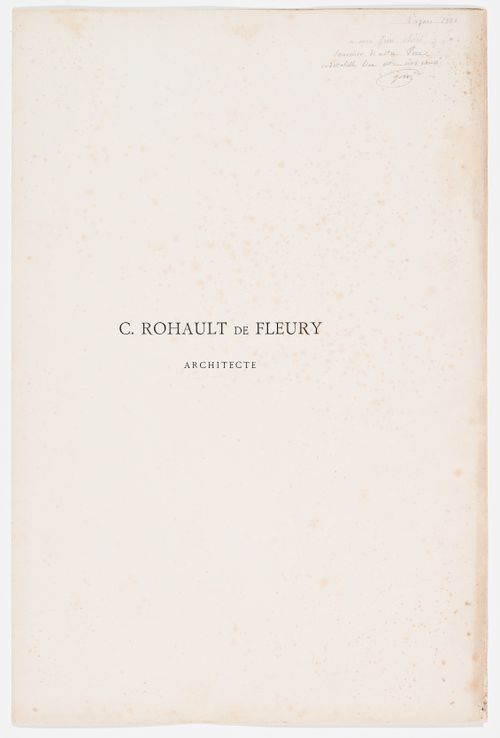
- This published portfolio contains 42 prints of Charles Rohault de Fleury's architectural works - mostly plans, elevations, sections and detail drawings, but also some perspective views, and a biographical note on the architect. Prints for domestic architecture in Paris include: Hôtel Soltykoff, Hôtel Sauvage, Hôtels Fontenilliat, and an hôtel on avenue Montaigne. There are two photogravures by P. Dujardin of the interior of Hôtel Sauvage. Prints for public buildings in Paris include: the Muséum national d'histoire naturelle, the Théâtre-Italien, the Hippodrome national, the façade of Pavillon de Rohan, a plan for the opera house for the Théâtre impérial de l'opéra, and the Chambre des Notaires. The album contains a print of two tombs and a mausoleum, a print for the Hôtel de Prefecture, Poitiers, a plan for Saint-Augustin, Paris, and a photogravure of Charles Rohault de Fleury in profile.
DR1974:0002:029:001-044
Description:
- This published portfolio contains 42 prints of Charles Rohault de Fleury's architectural works - mostly plans, elevations, sections and detail drawings, but also some perspective views, and a biographical note on the architect. Prints for domestic architecture in Paris include: Hôtel Soltykoff, Hôtel Sauvage, Hôtels Fontenilliat, and an hôtel on avenue Montaigne. There are two photogravures by P. Dujardin of the interior of Hôtel Sauvage. Prints for public buildings in Paris include: the Muséum national d'histoire naturelle, the Théâtre-Italien, the Hippodrome national, the façade of Pavillon de Rohan, a plan for the opera house for the Théâtre impérial de l'opéra, and the Chambre des Notaires. The album contains a print of two tombs and a mausoleum, a print for the Hôtel de Prefecture, Poitiers, a plan for Saint-Augustin, Paris, and a photogravure of Charles Rohault de Fleury in profile.
People:
Subject:
architecture, landscape architecture, engineering
architecture, landscape architecture, engineering
Date:
published 1884
published 1884
Title:
OEUVRE / DE / C. ROHAULT DE FLEURY / ARCHITECTE
Actions:
DR1974:0002:029:001-044
Description:
- This published portfolio contains 42 prints of Charles Rohault de Fleury's architectural works - mostly plans, elevations, sections and detail drawings, but also some perspective views, and a biographical note on the architect. Prints for domestic architecture in Paris include: Hôtel Soltykoff, Hôtel Sauvage, Hôtels Fontenilliat, and an hôtel on avenue Montaigne. There are two photogravures by P. Dujardin of the interior of Hôtel Sauvage. Prints for public buildings in Paris include: the Muséum national d'histoire naturelle, the Théâtre-Italien, the Hippodrome national, the façade of Pavillon de Rohan, a plan for the opera house for the Théâtre impérial de l'opéra, and the Chambre des Notaires. The album contains a print of two tombs and a mausoleum, a print for the Hôtel de Prefecture, Poitiers, a plan for Saint-Augustin, Paris, and a photogravure of Charles Rohault de Fleury in profile.
OEUVRE / DE / C. ROHAULT DE FLEURY / ARCHITECTE
Actions:
DR1974:0002:029:001-044
Description:
- This published portfolio contains 42 prints of Charles Rohault de Fleury's architectural works - mostly plans, elevations, sections and detail drawings, but also some perspective views, and a biographical note on the architect. Prints for domestic architecture in Paris include: Hôtel Soltykoff, Hôtel Sauvage, Hôtels Fontenilliat, and an hôtel on avenue Montaigne. There are two photogravures by P. Dujardin of the interior of Hôtel Sauvage. Prints for public buildings in Paris include: the Muséum national d'histoire naturelle, the Théâtre-Italien, the Hippodrome national, the façade of Pavillon de Rohan, a plan for the opera house for the Théâtre impérial de l'opéra, and the Chambre des Notaires. The album contains a print of two tombs and a mausoleum, a print for the Hôtel de Prefecture, Poitiers, a plan for Saint-Augustin, Paris, and a photogravure of Charles Rohault de Fleury in profile.
Form:
works of art
works of art
Date:
published 1884
published 1884
People:
Subject:
architecture, landscape architecture, engineering
architecture, landscape architecture, engineering
Form:
exhibitions
exhibitions
Title:
1973: Sorry, Out of Gas
1973: Sorry, Out of Gas
Actions:
Description:
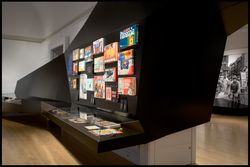
1973: Sorry, Out of Gas captures the architectural innovation spurred by the 1973 oil crisis, when the value of oil increased exponentially and triggered economic, political, and social upheaval across the world. Featuring over 350 objects including architectural drawings, photographs, books and pamphlets, archival television footage, and historical artefacts, it maps the(...)
1973: Sorry, Out of Gas captures the architectural innovation spurred by the 1973 oil crisis, when the value of oil increased exponentially and triggered economic, political, and social upheaval across the world. Featuring over 350 objects including architectural drawings, photographs, books and pamphlets, archival television footage, and historical artefacts, it maps the(...)
Date:
7 November 2007 to 20 April 2008
7 November 2007 to 20 April 2008
Title:
1973: Sorry, Out of Gas
Actions:
Description:
1973: Sorry, Out of Gas captures the architectural innovation spurred by the 1973 oil crisis, when the value of oil increased exponentially and triggered economic, political, and social upheaval across the world. Featuring over 350 objects including architectural drawings, photographs, books and pamphlets, archival television footage, and historical artefacts, it maps the(...)
1973: Sorry, Out of Gas
Actions:
Description:
1973: Sorry, Out of Gas captures the architectural innovation spurred by the 1973 oil crisis, when the value of oil increased exponentially and triggered economic, political, and social upheaval across the world. Featuring over 350 objects including architectural drawings, photographs, books and pamphlets, archival television footage, and historical artefacts, it maps the(...)
Form:
exhibitions
exhibitions
Date:
7 November 2007 to
20 April 2008
7 November 2007 to
20 April 2008
Form:
archives
Level of archival description:
Fonds
archives
Level of archival description:
Fonds
Reference number:
AP170
Synopsis:
The Mark Goulthorpe HypoSurface project records, 1990-2014, document the design development, technical implementation, exhibition, and marketing of various iterations of the HypoSurface wall. The wall has a “skin” divided up into pixel-like metallic facets manipulated by a network of actuating pistons in order to create images, texts and patterns in dynamic relief. Sensors allow people near the wall to influence its movement. The records include approximately 62,700 digital files, 3 folders of textual documents, and 44 prototype pieces, and a working HypoSurface wall module.
AP170
Synopsis:
The Mark Goulthorpe HypoSurface project records, 1990-2014, document the design development, technical implementation, exhibition, and marketing of various iterations of the HypoSurface wall. The wall has a “skin” divided up into pixel-like metallic facets manipulated by a network of actuating pistons in order to create images, texts and patterns in dynamic relief. Sensors allow people near the wall to influence its movement. The records include approximately 62,700 digital files, 3 folders of textual documents, and 44 prototype pieces, and a working HypoSurface wall module.
People:
Date:
1990 - 2014
1990 - 2014
Title:
Mark Goulthorpe Hyposurface project records
Actions:
AP170
Synopsis:
The Mark Goulthorpe HypoSurface project records, 1990-2014, document the design development, technical implementation, exhibition, and marketing of various iterations of the HypoSurface wall. The wall has a “skin” divided up into pixel-like metallic facets manipulated by a network of actuating pistons in order to create images, texts and patterns in dynamic relief. Sensors allow people near the wall to influence its movement. The records include approximately 62,700 digital files, 3 folders of textual documents, and 44 prototype pieces, and a working HypoSurface wall module.
Mark Goulthorpe Hyposurface project records
Actions:
AP170
Synopsis:
The Mark Goulthorpe HypoSurface project records, 1990-2014, document the design development, technical implementation, exhibition, and marketing of various iterations of the HypoSurface wall. The wall has a “skin” divided up into pixel-like metallic facets manipulated by a network of actuating pistons in order to create images, texts and patterns in dynamic relief. Sensors allow people near the wall to influence its movement. The records include approximately 62,700 digital files, 3 folders of textual documents, and 44 prototype pieces, and a working HypoSurface wall module.
Form:
archives
Level of archival description:
Fonds
archives
Level of archival description:
Fonds
Date:
1990 - 2014
1990 - 2014
People:
Level of archival description:
Project
Project
Actions:
Reference number:
CI005.S1.1949.PR3
Description:
The Netherlands Congress Centre owed its genesis to architect-town planner, W.M. Dudok, who suggested creating a cultural centre for international conferences. In 1956 an ad hoc committee proposed the creation of a congress centre and invited Oud, in 1956, to design a centre that would incorporate a 3000 seat conference hall as well as other rooms for functions and events. Oud created a detailed design in 1958 that featured a seventeen-storey tower with hotel rooms. Oud amended his plans somewhat, creating an oval-shaped conference hall. In 1960 Oud further revised his design to reduce the main hall seating to 1500, and also designated it for use of theatrical events. Oud died in 1963 before the completion of construction. He was replaced by his son, Hans Oud, until the congress centre was erected in 1969 (Taverne et al. 2001, 544-546). Project series includes plans for the Congress Hall Complex.
CI005.S1.1949.PR3
Description:
The Netherlands Congress Centre owed its genesis to architect-town planner, W.M. Dudok, who suggested creating a cultural centre for international conferences. In 1956 an ad hoc committee proposed the creation of a congress centre and invited Oud, in 1956, to design a centre that would incorporate a 3000 seat conference hall as well as other rooms for functions and events. Oud created a detailed design in 1958 that featured a seventeen-storey tower with hotel rooms. Oud amended his plans somewhat, creating an oval-shaped conference hall. In 1960 Oud further revised his design to reduce the main hall seating to 1500, and also designated it for use of theatrical events. Oud died in 1963 before the completion of construction. He was replaced by his son, Hans Oud, until the congress centre was erected in 1969 (Taverne et al. 2001, 544-546). Project series includes plans for the Congress Hall Complex.
People:
Date:
1949-1959
1949-1959
Title:
Main and Service Buildings for the Dutch Reformed Church, The Hague, Netherlands (1949-1959)
Actions:
CI005.S1.1949.PR3
Description:
The Netherlands Congress Centre owed its genesis to architect-town planner, W.M. Dudok, who suggested creating a cultural centre for international conferences. In 1956 an ad hoc committee proposed the creation of a congress centre and invited Oud, in 1956, to design a centre that would incorporate a 3000 seat conference hall as well as other rooms for functions and events. Oud created a detailed design in 1958 that featured a seventeen-storey tower with hotel rooms. Oud amended his plans somewhat, creating an oval-shaped conference hall. In 1960 Oud further revised his design to reduce the main hall seating to 1500, and also designated it for use of theatrical events. Oud died in 1963 before the completion of construction. He was replaced by his son, Hans Oud, until the congress centre was erected in 1969 (Taverne et al. 2001, 544-546). Project series includes plans for the Congress Hall Complex.
Main and Service Buildings for the Dutch Reformed Church, The Hague, Netherlands (1949-1959)
Actions:
CI005.S1.1949.PR3
Description:
The Netherlands Congress Centre owed its genesis to architect-town planner, W.M. Dudok, who suggested creating a cultural centre for international conferences. In 1956 an ad hoc committee proposed the creation of a congress centre and invited Oud, in 1956, to design a centre that would incorporate a 3000 seat conference hall as well as other rooms for functions and events. Oud created a detailed design in 1958 that featured a seventeen-storey tower with hotel rooms. Oud amended his plans somewhat, creating an oval-shaped conference hall. In 1960 Oud further revised his design to reduce the main hall seating to 1500, and also designated it for use of theatrical events. Oud died in 1963 before the completion of construction. He was replaced by his son, Hans Oud, until the congress centre was erected in 1969 (Taverne et al. 2001, 544-546). Project series includes plans for the Congress Hall Complex.
Level of archival description:
project
project
Date:
1949-1959
1949-1959
People:
Level of archival description:
Project
Project
Actions:
Reference number:
CI005.S1.1956.PR1
Description:
The Netherlands Congress Centre owed its genesis to architect-town planner, W.M. Dudok, who suggested creating a cultural centre for international conferences. In 1956 an ad hoc committee proposed the creation of a congress centre and invited Oud, in 1956, to design a centre that would incorporate a 3000 seat conference hall as well as other rooms for functions and events. Oud created a detailed design in 1958 that featured a seventeen-storey tower with hotel rooms. Oud amended his plans somewhat, creating an oval-shaped conference hall. In 1960 Oud further revised his design to reduce the main hall seating to 1500, and also designated it for use of theatrical events. Oud died in 1963 before the completion of construction. He was replaced by his son, Hans Oud, until the congress centre was erected in 1969 (Taverne et al. 2001, 544-546). Project series includes plans for the Congress Hall Complex.
CI005.S1.1956.PR1
Description:
The Netherlands Congress Centre owed its genesis to architect-town planner, W.M. Dudok, who suggested creating a cultural centre for international conferences. In 1956 an ad hoc committee proposed the creation of a congress centre and invited Oud, in 1956, to design a centre that would incorporate a 3000 seat conference hall as well as other rooms for functions and events. Oud created a detailed design in 1958 that featured a seventeen-storey tower with hotel rooms. Oud amended his plans somewhat, creating an oval-shaped conference hall. In 1960 Oud further revised his design to reduce the main hall seating to 1500, and also designated it for use of theatrical events. Oud died in 1963 before the completion of construction. He was replaced by his son, Hans Oud, until the congress centre was erected in 1969 (Taverne et al. 2001, 544-546). Project series includes plans for the Congress Hall Complex.
People:
Date:
1956-1963
1956-1963
Title:
Netherlands Congress Centre Complex, The Hague, Netherlands (1956-1963)
Actions:
CI005.S1.1956.PR1
Description:
The Netherlands Congress Centre owed its genesis to architect-town planner, W.M. Dudok, who suggested creating a cultural centre for international conferences. In 1956 an ad hoc committee proposed the creation of a congress centre and invited Oud, in 1956, to design a centre that would incorporate a 3000 seat conference hall as well as other rooms for functions and events. Oud created a detailed design in 1958 that featured a seventeen-storey tower with hotel rooms. Oud amended his plans somewhat, creating an oval-shaped conference hall. In 1960 Oud further revised his design to reduce the main hall seating to 1500, and also designated it for use of theatrical events. Oud died in 1963 before the completion of construction. He was replaced by his son, Hans Oud, until the congress centre was erected in 1969 (Taverne et al. 2001, 544-546). Project series includes plans for the Congress Hall Complex.
Netherlands Congress Centre Complex, The Hague, Netherlands (1956-1963)
Actions:
CI005.S1.1956.PR1
Description:
The Netherlands Congress Centre owed its genesis to architect-town planner, W.M. Dudok, who suggested creating a cultural centre for international conferences. In 1956 an ad hoc committee proposed the creation of a congress centre and invited Oud, in 1956, to design a centre that would incorporate a 3000 seat conference hall as well as other rooms for functions and events. Oud created a detailed design in 1958 that featured a seventeen-storey tower with hotel rooms. Oud amended his plans somewhat, creating an oval-shaped conference hall. In 1960 Oud further revised his design to reduce the main hall seating to 1500, and also designated it for use of theatrical events. Oud died in 1963 before the completion of construction. He was replaced by his son, Hans Oud, until the congress centre was erected in 1969 (Taverne et al. 2001, 544-546). Project series includes plans for the Congress Hall Complex.
Level of archival description:
project
project
Date:
1956-1963
1956-1963
People:
Level of archival description:
Project
Project
Actions:
Reference number:
AP164.S1.2003.D5
Description:
The project series documents the competition entry a plan of the Sagüés promenade, located at gates of Ulía park in San Sebastián, Spain. Abalos & Herreros and Renata Sentkiewicz drafted a study and proposal for the plan of the Sagüés promenade, located at gates of Ulía park in San Sebastián, Spain. The firm identified the project as number 165. The architects described their project as “[…] a place where […] [the urban and the natural] landscapes […] meet. Under a green roof a winter beach, thermal installations and the groundfloor [sic] of a hotel are combined. Five towers rise through this roof with different uses: hotel, social housing, and the ‘Gallery of Wonders’ […]. A passageway curls up around them, connecting the towers by an impactant [sic] skywalk […]” (ARCH270975). Documenting the project are conceptual, presentation and design development drawings, correspondence, project descriptions, notes, reports, resumes, and reference, photographic and digital materials.
AP164.S1.2003.D5
Description:
The project series documents the competition entry a plan of the Sagüés promenade, located at gates of Ulía park in San Sebastián, Spain. Abalos & Herreros and Renata Sentkiewicz drafted a study and proposal for the plan of the Sagüés promenade, located at gates of Ulía park in San Sebastián, Spain. The firm identified the project as number 165. The architects described their project as “[…] a place where […] [the urban and the natural] landscapes […] meet. Under a green roof a winter beach, thermal installations and the groundfloor [sic] of a hotel are combined. Five towers rise through this roof with different uses: hotel, social housing, and the ‘Gallery of Wonders’ […]. A passageway curls up around them, connecting the towers by an impactant [sic] skywalk […]” (ARCH270975). Documenting the project are conceptual, presentation and design development drawings, correspondence, project descriptions, notes, reports, resumes, and reference, photographic and digital materials.
People:
Date:
circa 2001-2005
circa 2001-2005
Title:
Sagüés, San Sebastián, Spain (2003)
Actions:
AP164.S1.2003.D5
Description:
The project series documents the competition entry a plan of the Sagüés promenade, located at gates of Ulía park in San Sebastián, Spain. Abalos & Herreros and Renata Sentkiewicz drafted a study and proposal for the plan of the Sagüés promenade, located at gates of Ulía park in San Sebastián, Spain. The firm identified the project as number 165. The architects described their project as “[…] a place where […] [the urban and the natural] landscapes […] meet. Under a green roof a winter beach, thermal installations and the groundfloor [sic] of a hotel are combined. Five towers rise through this roof with different uses: hotel, social housing, and the ‘Gallery of Wonders’ […]. A passageway curls up around them, connecting the towers by an impactant [sic] skywalk […]” (ARCH270975). Documenting the project are conceptual, presentation and design development drawings, correspondence, project descriptions, notes, reports, resumes, and reference, photographic and digital materials.
Sagüés, San Sebastián, Spain (2003)
Actions:
AP164.S1.2003.D5
Description:
The project series documents the competition entry a plan of the Sagüés promenade, located at gates of Ulía park in San Sebastián, Spain. Abalos & Herreros and Renata Sentkiewicz drafted a study and proposal for the plan of the Sagüés promenade, located at gates of Ulía park in San Sebastián, Spain. The firm identified the project as number 165. The architects described their project as “[…] a place where […] [the urban and the natural] landscapes […] meet. Under a green roof a winter beach, thermal installations and the groundfloor [sic] of a hotel are combined. Five towers rise through this roof with different uses: hotel, social housing, and the ‘Gallery of Wonders’ […]. A passageway curls up around them, connecting the towers by an impactant [sic] skywalk […]” (ARCH270975). Documenting the project are conceptual, presentation and design development drawings, correspondence, project descriptions, notes, reports, resumes, and reference, photographic and digital materials.
Level of archival description:
Project
Project
Date:
circa 2001-2005
circa 2001-2005
People:
Level of archival description:
Series
Series
Reference number:
AP119.S1
Description:
The series contains drawings for Peter Yeadon's architectural narrative for the Prix de Rome entitled "Karl: An Architerctural Narrative." In total eleven sets of digital prints were made, each set contains eighteen sheets. Canadian Centre for Architecture received the third of these eleven sets, which is included in this series. The narrative depicts the experience of a Canadian emigrant becoming a Roman citizen. The drawings represent the following titles: City; Fabric House; Columbarium; Horizon House; House City; Depth House; Colosseum for Vanishing Curiosities; City Gate; Teatro de Tevere; Neptune House; Bath; and Bricolage House. Each drawing is signed by the architect. Also included, are four sketchbooks for 'Karl: An Architerctural Narrative', two print proofs for Bricolage House, and project documentation. The documentation explains each of the titles in the narrative, Yeadon's curriculum vitae, and leaflets for the exhibition "Karl: an architectural narrative" held at the Art Gallery of Windsor, Ontario from August 2001 to January 2002.
AP119.S1
Description:
The series contains drawings for Peter Yeadon's architectural narrative for the Prix de Rome entitled "Karl: An Architerctural Narrative." In total eleven sets of digital prints were made, each set contains eighteen sheets. Canadian Centre for Architecture received the third of these eleven sets, which is included in this series. The narrative depicts the experience of a Canadian emigrant becoming a Roman citizen. The drawings represent the following titles: City; Fabric House; Columbarium; Horizon House; House City; Depth House; Colosseum for Vanishing Curiosities; City Gate; Teatro de Tevere; Neptune House; Bath; and Bricolage House. Each drawing is signed by the architect. Also included, are four sketchbooks for 'Karl: An Architerctural Narrative', two print proofs for Bricolage House, and project documentation. The documentation explains each of the titles in the narrative, Yeadon's curriculum vitae, and leaflets for the exhibition "Karl: an architectural narrative" held at the Art Gallery of Windsor, Ontario from August 2001 to January 2002.
People:
Date:
1998-2002
1998-2002
Title:
Karl: An Architectural Narrative (2000-2002)
Actions:
AP119.S1
Description:
The series contains drawings for Peter Yeadon's architectural narrative for the Prix de Rome entitled "Karl: An Architerctural Narrative." In total eleven sets of digital prints were made, each set contains eighteen sheets. Canadian Centre for Architecture received the third of these eleven sets, which is included in this series. The narrative depicts the experience of a Canadian emigrant becoming a Roman citizen. The drawings represent the following titles: City; Fabric House; Columbarium; Horizon House; House City; Depth House; Colosseum for Vanishing Curiosities; City Gate; Teatro de Tevere; Neptune House; Bath; and Bricolage House. Each drawing is signed by the architect. Also included, are four sketchbooks for 'Karl: An Architerctural Narrative', two print proofs for Bricolage House, and project documentation. The documentation explains each of the titles in the narrative, Yeadon's curriculum vitae, and leaflets for the exhibition "Karl: an architectural narrative" held at the Art Gallery of Windsor, Ontario from August 2001 to January 2002.
Karl: An Architectural Narrative (2000-2002)
Actions:
AP119.S1
Description:
The series contains drawings for Peter Yeadon's architectural narrative for the Prix de Rome entitled "Karl: An Architerctural Narrative." In total eleven sets of digital prints were made, each set contains eighteen sheets. Canadian Centre for Architecture received the third of these eleven sets, which is included in this series. The narrative depicts the experience of a Canadian emigrant becoming a Roman citizen. The drawings represent the following titles: City; Fabric House; Columbarium; Horizon House; House City; Depth House; Colosseum for Vanishing Curiosities; City Gate; Teatro de Tevere; Neptune House; Bath; and Bricolage House. Each drawing is signed by the architect. Also included, are four sketchbooks for 'Karl: An Architerctural Narrative', two print proofs for Bricolage House, and project documentation. The documentation explains each of the titles in the narrative, Yeadon's curriculum vitae, and leaflets for the exhibition "Karl: an architectural narrative" held at the Art Gallery of Windsor, Ontario from August 2001 to January 2002.
Level of archival description:
Series
Series
Date:
1998-2002
1998-2002
People:
Level of archival description:
Project
Project
Reference number:
AP149.S1.1984.PR01
Description:
This project series documents Minimum Cost Housing Group's post-occupancy study for Aranya Township, India, which was a newly development township completed in 1988 near Indore. Minimum Cost Housing Group initially work on the design of a plot of the township, which was the first one to be built and served as an alternative model to the whole township. The masterplan for the township was created by architect Balkrishna Doshi and the Vastu-Shilpa Foundation in 1981. The other plots started to be planned by and built in 1989. The Minimum Cost Housing Group then returned to Aranya to undertake the post-occupancy survey of the whole site and students from the group kept studying the site up to 2018. The material for this file was produced between 1984 and 2012. The project series contains slides, study drawings of the township and a publication on the post-occupancy study by the McGill group.
AP149.S1.1984.PR01
Description:
This project series documents Minimum Cost Housing Group's post-occupancy study for Aranya Township, India, which was a newly development township completed in 1988 near Indore. Minimum Cost Housing Group initially work on the design of a plot of the township, which was the first one to be built and served as an alternative model to the whole township. The masterplan for the township was created by architect Balkrishna Doshi and the Vastu-Shilpa Foundation in 1981. The other plots started to be planned by and built in 1989. The Minimum Cost Housing Group then returned to Aranya to undertake the post-occupancy survey of the whole site and students from the group kept studying the site up to 2018. The material for this file was produced between 1984 and 2012. The project series contains slides, study drawings of the township and a publication on the post-occupancy study by the McGill group.
People:
Date:
1984-2002
1984-2002
Title:
Aranya township post-occupancy study
Actions:
AP149.S1.1984.PR01
Description:
This project series documents Minimum Cost Housing Group's post-occupancy study for Aranya Township, India, which was a newly development township completed in 1988 near Indore. Minimum Cost Housing Group initially work on the design of a plot of the township, which was the first one to be built and served as an alternative model to the whole township. The masterplan for the township was created by architect Balkrishna Doshi and the Vastu-Shilpa Foundation in 1981. The other plots started to be planned by and built in 1989. The Minimum Cost Housing Group then returned to Aranya to undertake the post-occupancy survey of the whole site and students from the group kept studying the site up to 2018. The material for this file was produced between 1984 and 2012. The project series contains slides, study drawings of the township and a publication on the post-occupancy study by the McGill group.
Aranya township post-occupancy study
Actions:
AP149.S1.1984.PR01
Description:
This project series documents Minimum Cost Housing Group's post-occupancy study for Aranya Township, India, which was a newly development township completed in 1988 near Indore. Minimum Cost Housing Group initially work on the design of a plot of the township, which was the first one to be built and served as an alternative model to the whole township. The masterplan for the township was created by architect Balkrishna Doshi and the Vastu-Shilpa Foundation in 1981. The other plots started to be planned by and built in 1989. The Minimum Cost Housing Group then returned to Aranya to undertake the post-occupancy survey of the whole site and students from the group kept studying the site up to 2018. The material for this file was produced between 1984 and 2012. The project series contains slides, study drawings of the township and a publication on the post-occupancy study by the McGill group.
Level of archival description:
Project
Project
Date:
1984-2002
1984-2002
People:


