


1998 Results
Form:
books
books
Actions:
Price:
$77.95
(available to order)
Summary:
Gyorgy Kepes (1906–2001) was the last disciple of Bauhaus modernism, an acolyte of László Moholy-Nagy and a self-styled revolutionary artist. But by midcentury, transplanted to America, Kepes found he was trapped in the military-industrial-aesthetic complex. In this first book-length study of Kepes, John Blakinger argues that Kepes, by opening the research laboratory to(...)
Publication:
June 2019
June 2019
Title:
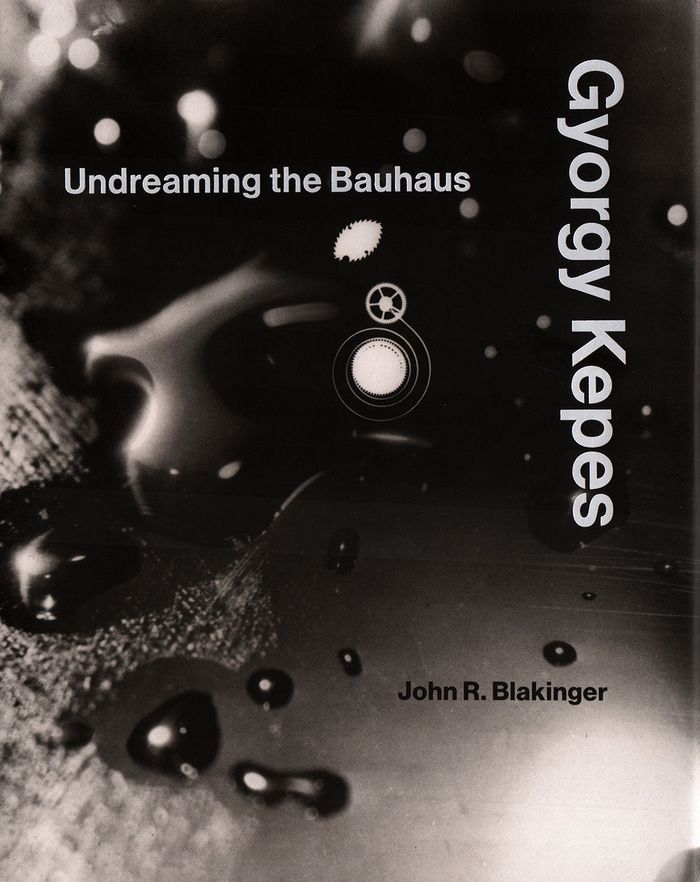
Gyorgy Kepes: undreaming the Bauhaus
Actions:
Price:
$77.95
(available to order)
Summary:
Gyorgy Kepes (1906–2001) was the last disciple of Bauhaus modernism, an acolyte of László Moholy-Nagy and a self-styled revolutionary artist. But by midcentury, transplanted to America, Kepes found he was trapped in the military-industrial-aesthetic complex. In this first book-length study of Kepes, John Blakinger argues that Kepes, by opening the research laboratory to the arts, established a new paradigm for creative practice: the artist as technocrat. First at Chicago's New Bauhaus and then for many years at MIT, Kepes pioneered interdisciplinary collaboration between the arts and sciences- what he termed “interthinking” and “interseeing.” Kepes and his colleagues, ranging from metallurgists to mathematicians, became part of an important but little-explored constellation: the Cold War avant-garde.
Form:
books
books
Publication:
June 2019
June 2019
Form:
books
books

Title:
A city across time
A city across time
Actions:
Price:
$22.50
(available in store)
Summary:
An look at the archaeology of an imaginary city, from ancient to modern times, featuring fascinating cross-sections Peter Kent's cross-sections show how an early settlement changes into a bustling, modern-day city. The illustrations are packed with absorbing and eye-opening details, and clearly show how new buildings are constructed on the rubble of the old. Eagle-eyed(...)
Title:
A city across time
Actions:
Price:
$22.50
(available in store)
Summary:
An look at the archaeology of an imaginary city, from ancient to modern times, featuring fascinating cross-sections Peter Kent's cross-sections show how an early settlement changes into a bustling, modern-day city. The illustrations are packed with absorbing and eye-opening details, and clearly show how new buildings are constructed on the rubble of the old. Eagle-eyed readers will have hours of fun spotting the descendants of one particular family though the centuries, and seeing how once-grand building become buried and how some structures remain through the centuries. The book reveals the prehistoric origins of the settlement, its 21st-century development and even give a glimpse into the far future, when ice sheets threaten to overwhelm the city.
Form:
books
books
Publication:
September 2019
September 2019
Subject:
Children's Books
Children's Books
Form:
books
books
Actions:
Price:
$30.00
(available to order)
Summary:
The Neue Nationalgalerie in Berlin is not only a museum but also an architectural milestone. The last building of the great German architect Ludwig Mies van der Rohe (1886-1969 is widely considered one of the most perfect statements of his aesthetic, with its monumental steel columns and cantilevered roof with glass enclosure. The Neue Nationalgalerie is especially famous(...)
Title:
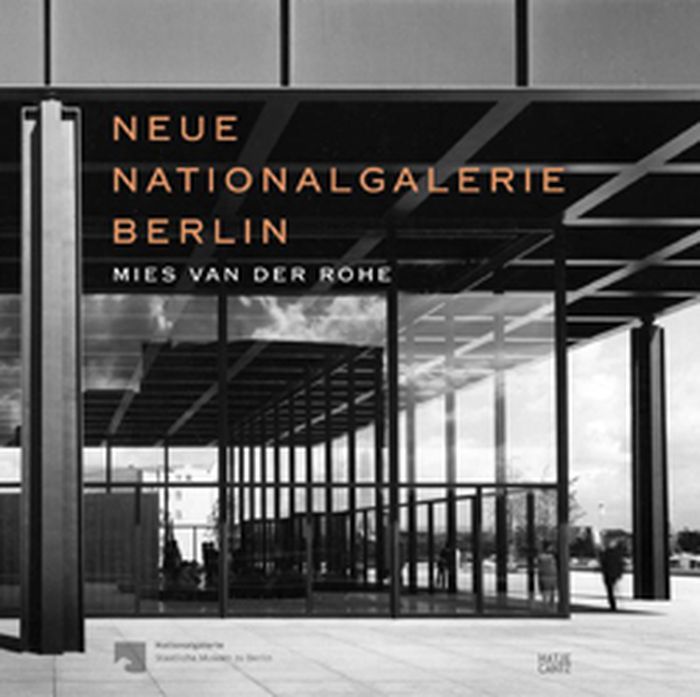
Mies van der Rohe: Neue Nationalgalerie Berlin
Actions:
Price:
$30.00
(available to order)
Summary:
The Neue Nationalgalerie in Berlin is not only a museum but also an architectural milestone. The last building of the great German architect Ludwig Mies van der Rohe (1886-1969 is widely considered one of the most perfect statements of his aesthetic, with its monumental steel columns and cantilevered roof with glass enclosure. The Neue Nationalgalerie is especially famous for its 50 x 50-meter hall. There is no other van der Rohe structure in which the boundary between inside and outside is as porous as in this famous hall. This publication presents the building from today's perspectives, but also features historical photographs taken during the construction period, the building's opening in 1968 and the spectacular early exhibitions that took place there.
Form:
books
books
Publication:
June 2011
June 2011
Subject:
Architecture Monographs
Architecture Monographs
Form:
books
books

Actions:
Price:
$45.95
(available to order)
Summary:
After following strangers on the streets in Paris for months, photographing them and notating their movements, Sophie Calle ran into a man at an opening whom she had followed earlier that day. "During the course of our conversation, he told me he was planning an imminent trip to Venice. I decided to follow him," she writes at the beginning of Suite Vénitienne, her first(...)
Title:
Sophie Calle: suite vénitienne
Actions:
Price:
$45.95
(available to order)
Summary:
After following strangers on the streets in Paris for months, photographing them and notating their movements, Sophie Calle ran into a man at an opening whom she had followed earlier that day. "During the course of our conversation, he told me he was planning an imminent trip to Venice. I decided to follow him," she writes at the beginning of Suite Vénitienne, her first artist's book and the crucible of her inimitable fusion of investigatory methods, fictional constructs, the plundering of real life and the composition of self. This Siglio reissue is a completely new iteration of Suite Vénitienne (first published in 1988 and long out of print), designed in collaboration with Calle to be the definitive English-language edition.
Form:
books
books
Publication:
February 2015
February 2015
Subject:
Contemporary Art Monographs
Contemporary Art Monographs
Form:
books
books
Actions:
Price:
$54.95
(available to order)
Summary:
Now available in paperback, renowned writer and thinker David Leatherbarrow's groundbreaking Architecture Oriented Otherwise argues for a more profound, yet simpler, way of thinking about architecture, namely on the basis of how it performs. It's not only about how a building functions but also how it acts, including its effects on observers and inhabitants as well as on(...)
Title:
Architecture oriented otherwise
Actions:
Price:
$54.95
(available to order)
Summary:
Now available in paperback, renowned writer and thinker David Leatherbarrow's groundbreaking Architecture Oriented Otherwise argues for a more profound, yet simpler, way of thinking about architecture, namely on the basis of how it performs. It's not only about how a building functions but also how it acts, including its effects on observers and inhabitants as well as on the landscape that situates it. Drawing on an encyclopedic reading of contemporary philosophy, as well as from the work of architects whose work he admires, including Peter Zumthor, Renzo Piano, Le Corbusier, and Frank Lloyd Wright, Leatherbarrow challenges architects to think about their buildings in a vastly wider context, opening up the possibility of creating works that are richer in meaning, quality, and life.
Form:
books
books
Publication:
March 2015
March 2015
Subject:
Architectural Theory
Architectural Theory
Form:
books
books
Title:
Le Corbusier's hands
Le Corbusier's hands
Actions:
Price:
$18.95
(available to order)
Summary:
"Le Corbusier's Hands" offers a poetic and personal portrait of Le Corbusier-a nuanced portrayal that is in contrast to the popular image of Le Corbusier the aloof modernist. The author knew Le Corbusier intimately for thirty years, first as his draftsman and main assistant, later as his colleague and personal friend. In this book, written in the mid-1980s, Wogenscky(...)
Subject:
Architecture Monographs
Architecture Monographs
Publication:
January 1900, Cambridge, Mass.
January 1900, Cambridge, Mass.
Title:
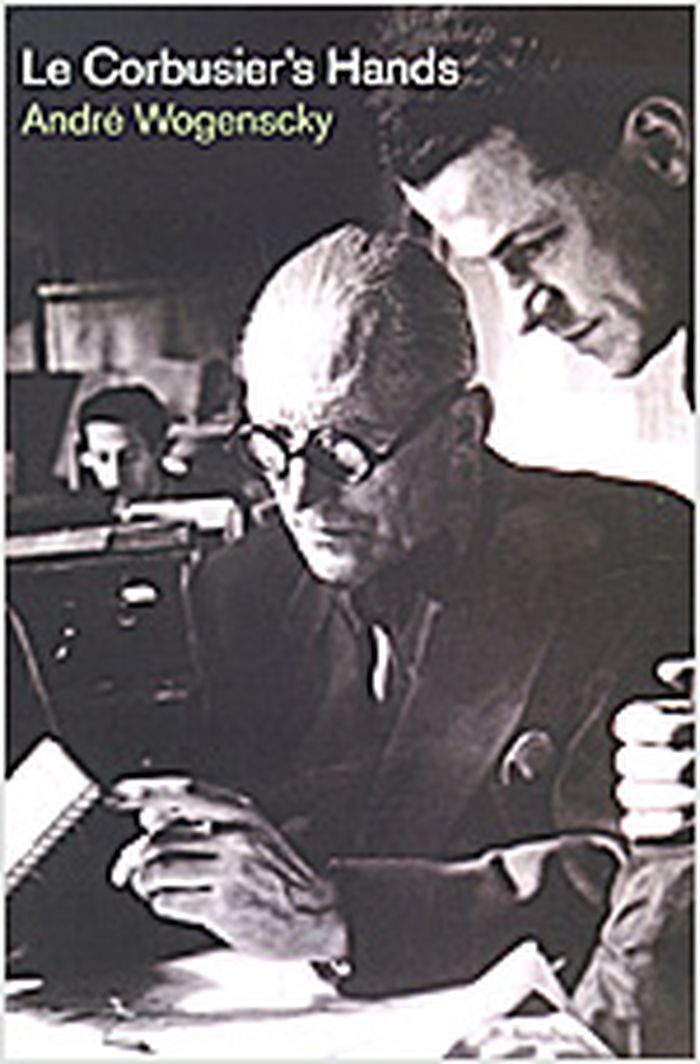
Le Corbusier's hands
Actions:
Price:
$18.95
(available to order)
Summary:
"Le Corbusier's Hands" offers a poetic and personal portrait of Le Corbusier-a nuanced portrayal that is in contrast to the popular image of Le Corbusier the aloof modernist. The author knew Le Corbusier intimately for thirty years, first as his draftsman and main assistant, later as his colleague and personal friend. In this book, written in the mid-1980s, Wogenscky remembers his mentor in a series of revealing personal statements and evocative reflections unlike anything that exists in the vast literature on Le Corbusier. Wogenscky draws a portrait in swift, deft strokes-50 short chapters, one leading to the next, one memory of Le Corbusier opening into another. Appearing and reappearing like a leitmotif are Le Corbusier's hands-touching, taking, drawing, offering, closing, opening, grasping, releasing: "It was his hands that revealed him. . . . They spoke all his feelings, all the vibrations of his inner life that his face tried to conceal." Wogenscky writes about Le Corbusier's work, including the famous design of the chapel at Ronchamp, his ideas for high-density Unités d'Habitation linked to the center of a "Radiant City," and his "Modulor" system for defining proportions-which Wogenscky compares to a piano tuner's finding the exact relation between sounds. He remembers the day Picasso spent with Le Corbusier at the Marseilles building site-"All day long they outdid one another in a show of modesty," he observes in amazement. He adds, speaking for himself and the others present, "We were inside a double energy field." And Wogenscky writes about Le Corbusier more personally. "I have spent years trying to understand what went on in his mind and in his hand," he tells us. With "Le Corbusier's hands", Wogenscky gives us a unique record of an enigmatic genius.
Form:
books
books
Publication:
January 1900, Cambridge, Mass.
January 1900, Cambridge, Mass.
Subject:
Architecture Monographs
Architecture Monographs
Form:
books
books

Title:
Gordon Matta-Clark
Gordon Matta-Clark
Actions:
Price:
$49.95
(available to order)
Summary:
Born in New York and trained in architecture, Gordon Matta-Clark is most famous for his slicing through façades, walls and floors of derelict buildings. This 'deconstructing' gesture, provocative and extreme, turns architecture into astonishing sculptures, where the mass of the building is entwined with the light and air that penetrate it. Matta-Clark's interventions are(...)
Publication:
January 2006, New York / London
January 2006, New York / London
Title:
Gordon Matta-Clark
Actions:
Price:
$49.95
(available to order)
Summary:
Born in New York and trained in architecture, Gordon Matta-Clark is most famous for his slicing through façades, walls and floors of derelict buildings. This 'deconstructing' gesture, provocative and extreme, turns architecture into astonishing sculptures, where the mass of the building is entwined with the light and air that penetrate it. Matta-Clark's interventions are always grounded in social or political convictions. Some of his projects include opening a restaurant (Food, 1971)in the SoHo in New York, purchasing at auction fractions of unusable urban land in New York (Reality Properties: Fake Estates, 1973), dispensing oxygen to passersby in the streets of New York from a self-made cart (Fresh Air Cart, 1972), and other visionary urban projects that he conceived as a founding member of the New York-based Anarchitecture group.
Form:
books
books
Publication:
January 2006, New York / London
January 2006, New York / London
Form:
books
books

Actions:
Price:
$46.95
(available to order)
Summary:
"Flying Lightness" paints a heroic picture of a century of aircraft development against the background of steadily increasing travel speeds. Yet since the Wright brothers made their first brief flight over 100 years ago, aircraft construction seems to have become strangely stuck in a rut. Today, rapid advances in the field of composites are opening up new possibilities(...)
Subject:
Miniature Architecture
Miniature Architecture
Publication:
April 2005, Rotterdam
April 2005, Rotterdam
Title:
Flying lightness : promises for structural elegance
Actions:
Price:
$46.95
(available to order)
Summary:
"Flying Lightness" paints a heroic picture of a century of aircraft development against the background of steadily increasing travel speeds. Yet since the Wright brothers made their first brief flight over 100 years ago, aircraft construction seems to have become strangely stuck in a rut. Today, rapid advances in the field of composites are opening up new possibilities for optimizing aircraft con-figurations and revising structural principles. Composites are combinations of two or more physically distinct materials that enhance each other's properties. The new modes of system integration and improved structural quality they offer may even manage to produce a 30 per cent more efficient 'blended wing' passenger plane. Flying wings, once just a footnote in the history of air transport, could well become the aircraft of the 21st century.
Form:
books
books
Publication:
April 2005, Rotterdam
April 2005, Rotterdam
Subject:
Miniature Architecture
Miniature Architecture
Form:
books
books

Price:
$42.00
(available to order)
Summary:
Since the opening in 1997 of the Guggenheim Bilbao, designed by Frank Gehry, museum architecture has enjoyed worldwide attention on an unprecedented scale. That single watershed project demonstrated to municipalities that architecture has the power to transform the image of an entire city, thus making the turn of the twenty-first century the unofficial age of the museum(...)
Subject:
Commercial interiors, Building types
Commercial interiors, Building types
Publication:
August 2005, New York
August 2005, New York
Title:
New museums : contemporary museum architecture around the world
Actions:
Price:
$42.00
(available to order)
Summary:
Since the opening in 1997 of the Guggenheim Bilbao, designed by Frank Gehry, museum architecture has enjoyed worldwide attention on an unprecedented scale. That single watershed project demonstrated to municipalities that architecture has the power to transform the image of an entire city, thus making the turn of the twenty-first century the unofficial age of the museum building. New Museums examines the boom in high-design museum projects in detail, beginning with the Guggenheim Bilbao’s groundbreaking role in the development of contemporary museum architecture. It continues with a beautifully illustrated tour of 30 examples of the most innovative and exciting museum architecture around the world, including Tadao Ando’s Museum of Modern Art in Fort Worth, Zaha Hadid’s Contemporary Arts Center in Cincinnati, Renzo Piano’s Nasher Sculpture Center in Dallas, and many others.
Form:
books
books
Publication:
August 2005, New York
August 2005, New York
Subject:
Commercial interiors, Building types
Commercial interiors, Building types
Form:
books
books
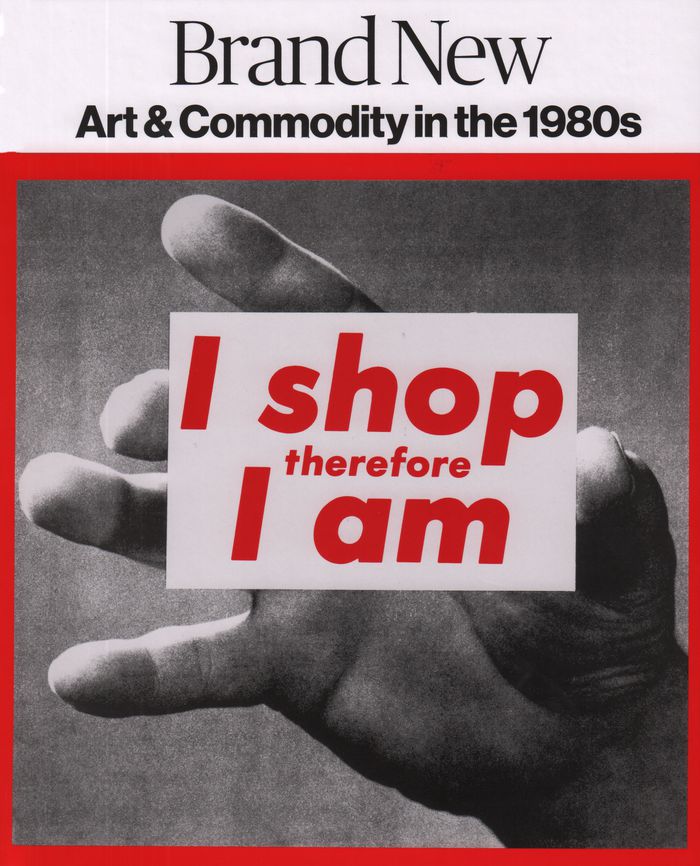
Actions:
Price:
$75.00
(available to order)
Summary:
An eye-opening book about the 1980s New York art scene, its far-reaching effects on contemporary art, and the rise of some of the biggest names in the art world today. This groundbreaking book, accompanying a major exhibition at the Hirshhorn, tells the story of the evolution of New York’s downtown art scene in the 1980s—from a DIY counterculture in the East Village to a(...)
Publication:
February 2018
February 2018
Title:
Brand new: art and commodity in the 1980s
Actions:
Price:
$75.00
(available to order)
Summary:
An eye-opening book about the 1980s New York art scene, its far-reaching effects on contemporary art, and the rise of some of the biggest names in the art world today. This groundbreaking book, accompanying a major exhibition at the Hirshhorn, tells the story of the evolution of New York’s downtown art scene in the 1980s—from a DIY counterculture in the East Village to a legitimate gallery business in SoHo. Coinciding with the rise of modern branding and the onset of the information age, artists’ focus on commodities and consumerism began as satire but came to be much more complex: commodities and associated phenomena, such as advertising, now served as vessels for ideas, politics, and personal relationships in “brand-new” types of painting, sculpture, photography, installation, and performance.
Form:
books
books
Publication:
February 2018
February 2018


