


44160 Results
Form:
archives
Level of archival description:
Fonds
archives
Level of archival description:
Fonds
Title:
Kenneth Frampton fonds
Kenneth Frampton fonds
Reference number:
AP197
Synopsis:
The Kenneth Frampton fonds, 1958-2016, documents the professional career of Kenneth Frampton – British architect, historian, theorist, and Ware professor of Architecture at the Graduate School of Architecture, Planning and Preservation (GSAPP) at Columbia University. Materials in the fonds consist of approximately 28.37 l.m. of textual records, 3966 photographs and prints, 3168 postcards, 2733 slides, 824 drawings (including reprographic copies), 470 negatives, 151 35 mm negatives, 105 posters, 30 objects, 23 audio cassettes, 18 VHS tapes, 15 transparencies, 3 tape reels, 2 microfilms, and 2 vinyl records.
AP197
Synopsis:
The Kenneth Frampton fonds, 1958-2016, documents the professional career of Kenneth Frampton – British architect, historian, theorist, and Ware professor of Architecture at the Graduate School of Architecture, Planning and Preservation (GSAPP) at Columbia University. Materials in the fonds consist of approximately 28.37 l.m. of textual records, 3966 photographs and prints, 3168 postcards, 2733 slides, 824 drawings (including reprographic copies), 470 negatives, 151 35 mm negatives, 105 posters, 30 objects, 23 audio cassettes, 18 VHS tapes, 15 transparencies, 3 tape reels, 2 microfilms, and 2 vinyl records.
People:
Date:
1958-2016
1958-2016
Title:
Kenneth Frampton fonds
Actions:
AP197
Synopsis:
The Kenneth Frampton fonds, 1958-2016, documents the professional career of Kenneth Frampton – British architect, historian, theorist, and Ware professor of Architecture at the Graduate School of Architecture, Planning and Preservation (GSAPP) at Columbia University. Materials in the fonds consist of approximately 28.37 l.m. of textual records, 3966 photographs and prints, 3168 postcards, 2733 slides, 824 drawings (including reprographic copies), 470 negatives, 151 35 mm negatives, 105 posters, 30 objects, 23 audio cassettes, 18 VHS tapes, 15 transparencies, 3 tape reels, 2 microfilms, and 2 vinyl records.
Kenneth Frampton fonds
Actions:
AP197
Synopsis:
The Kenneth Frampton fonds, 1958-2016, documents the professional career of Kenneth Frampton – British architect, historian, theorist, and Ware professor of Architecture at the Graduate School of Architecture, Planning and Preservation (GSAPP) at Columbia University. Materials in the fonds consist of approximately 28.37 l.m. of textual records, 3966 photographs and prints, 3168 postcards, 2733 slides, 824 drawings (including reprographic copies), 470 negatives, 151 35 mm negatives, 105 posters, 30 objects, 23 audio cassettes, 18 VHS tapes, 15 transparencies, 3 tape reels, 2 microfilms, and 2 vinyl records.
Form:
archives
Level of archival description:
Fonds
archives
Level of archival description:
Fonds
Date:
1958-2016
1958-2016
People:
Level of archival description:
Project
Project
Title:
Miragaia, Porto
Miragaia, Porto
Actions:
Reference number:
CD034.S1.1975.PR01
Description:
This project series contains reproductions of drawings and panels displayed in the exhibit to document the neighbourhood Miragaia, in Porto Portugal. The exhibit text explained that: ... although the Miragaia project was never built, its seminal and programmatic character contributed significantly to the development of the SAAL Process. The project architect Fernando Távora first worked on the Barredo Neighbourhood ― a very poor area in the Porto's historic centre ― as an architect and teacher at the city's School of Fine Arts, and the Miragaia project built on this research, demonstrating a knowledge of and sensitivity to both the physical terrain and the social landscape of Porto, presenting a nuanced view of life in an urban space. Despite the strengths of the plan, the city council's policy on Porto's historic centre subsequently did not include Távora's project for Miragaia. Nonetheless, in the seriousness of its design and the depth of knowledge that it displayed, the project was a significant attempt to recover and rationalize Miragaia's vacant riverside zone. The highly developed nature of the proposal, its level of surgical precision, and Fernando Távora's thoughtful notes reveal a great deal about SAAL, its structure, its relationship with residents, and the overall model for urban intervention. (The SAAL Process, Housing in Portugal 1974–76) Fernando Távora worked for SAAL/North with Antónia Nolo, Bernardo Ferrão, Gil Carneiro, Joaquim Jordão, Jorge Barros, Manuel Campos, Pedro Paredes and the residents' association Miragaia, that was founded on March 30th, 1976. The project was for 900 dwellings, but none were built. The operation began in June 1975. This project series contains reproductions of design development drawings, presentation panels, site plans and a study of a logo. The original drawings and panels were produced from 1975 to 1977 and were reproduced in 2015 for the exhibit.
CD034.S1.1975.PR01
Description:
This project series contains reproductions of drawings and panels displayed in the exhibit to document the neighbourhood Miragaia, in Porto Portugal. The exhibit text explained that: ... although the Miragaia project was never built, its seminal and programmatic character contributed significantly to the development of the SAAL Process. The project architect Fernando Távora first worked on the Barredo Neighbourhood ― a very poor area in the Porto's historic centre ― as an architect and teacher at the city's School of Fine Arts, and the Miragaia project built on this research, demonstrating a knowledge of and sensitivity to both the physical terrain and the social landscape of Porto, presenting a nuanced view of life in an urban space. Despite the strengths of the plan, the city council's policy on Porto's historic centre subsequently did not include Távora's project for Miragaia. Nonetheless, in the seriousness of its design and the depth of knowledge that it displayed, the project was a significant attempt to recover and rationalize Miragaia's vacant riverside zone. The highly developed nature of the proposal, its level of surgical precision, and Fernando Távora's thoughtful notes reveal a great deal about SAAL, its structure, its relationship with residents, and the overall model for urban intervention. (The SAAL Process, Housing in Portugal 1974–76) Fernando Távora worked for SAAL/North with Antónia Nolo, Bernardo Ferrão, Gil Carneiro, Joaquim Jordão, Jorge Barros, Manuel Campos, Pedro Paredes and the residents' association Miragaia, that was founded on March 30th, 1976. The project was for 900 dwellings, but none were built. The operation began in June 1975. This project series contains reproductions of design development drawings, presentation panels, site plans and a study of a logo. The original drawings and panels were produced from 1975 to 1977 and were reproduced in 2015 for the exhibit.
People:
Date:
1975-1977
1975-1977
Title:
Miragaia, Porto
Actions:
CD034.S1.1975.PR01
Description:
This project series contains reproductions of drawings and panels displayed in the exhibit to document the neighbourhood Miragaia, in Porto Portugal. The exhibit text explained that: ... although the Miragaia project was never built, its seminal and programmatic character contributed significantly to the development of the SAAL Process. The project architect Fernando Távora first worked on the Barredo Neighbourhood ― a very poor area in the Porto's historic centre ― as an architect and teacher at the city's School of Fine Arts, and the Miragaia project built on this research, demonstrating a knowledge of and sensitivity to both the physical terrain and the social landscape of Porto, presenting a nuanced view of life in an urban space. Despite the strengths of the plan, the city council's policy on Porto's historic centre subsequently did not include Távora's project for Miragaia. Nonetheless, in the seriousness of its design and the depth of knowledge that it displayed, the project was a significant attempt to recover and rationalize Miragaia's vacant riverside zone. The highly developed nature of the proposal, its level of surgical precision, and Fernando Távora's thoughtful notes reveal a great deal about SAAL, its structure, its relationship with residents, and the overall model for urban intervention. (The SAAL Process, Housing in Portugal 1974–76) Fernando Távora worked for SAAL/North with Antónia Nolo, Bernardo Ferrão, Gil Carneiro, Joaquim Jordão, Jorge Barros, Manuel Campos, Pedro Paredes and the residents' association Miragaia, that was founded on March 30th, 1976. The project was for 900 dwellings, but none were built. The operation began in June 1975. This project series contains reproductions of design development drawings, presentation panels, site plans and a study of a logo. The original drawings and panels were produced from 1975 to 1977 and were reproduced in 2015 for the exhibit.
Miragaia, Porto
Actions:
CD034.S1.1975.PR01
Description:
This project series contains reproductions of drawings and panels displayed in the exhibit to document the neighbourhood Miragaia, in Porto Portugal. The exhibit text explained that: ... although the Miragaia project was never built, its seminal and programmatic character contributed significantly to the development of the SAAL Process. The project architect Fernando Távora first worked on the Barredo Neighbourhood ― a very poor area in the Porto's historic centre ― as an architect and teacher at the city's School of Fine Arts, and the Miragaia project built on this research, demonstrating a knowledge of and sensitivity to both the physical terrain and the social landscape of Porto, presenting a nuanced view of life in an urban space. Despite the strengths of the plan, the city council's policy on Porto's historic centre subsequently did not include Távora's project for Miragaia. Nonetheless, in the seriousness of its design and the depth of knowledge that it displayed, the project was a significant attempt to recover and rationalize Miragaia's vacant riverside zone. The highly developed nature of the proposal, its level of surgical precision, and Fernando Távora's thoughtful notes reveal a great deal about SAAL, its structure, its relationship with residents, and the overall model for urban intervention. (The SAAL Process, Housing in Portugal 1974–76) Fernando Távora worked for SAAL/North with Antónia Nolo, Bernardo Ferrão, Gil Carneiro, Joaquim Jordão, Jorge Barros, Manuel Campos, Pedro Paredes and the residents' association Miragaia, that was founded on March 30th, 1976. The project was for 900 dwellings, but none were built. The operation began in June 1975. This project series contains reproductions of design development drawings, presentation panels, site plans and a study of a logo. The original drawings and panels were produced from 1975 to 1977 and were reproduced in 2015 for the exhibit.
Level of archival description:
Project
Project
Date:
1975-1977
1975-1977
People:
Level of archival description:
Series
Series
Actions:
Reference number:
CD041.S1
Description:
This series documents eight projects that Eva Hollo Vecsei worked on while at the firm Affleck, Desbarats, Dimakopoulos, Lebensold & Sise Architect (Arcop). Vecsei worked for the firm from 1959 to 1971 and was made an associate in 1964. She was the designer in charge of several Massey Award winning projects such as: Saint Gerard Magella Church, Saint-Jean-sur-Richelieu, Québec (1960-1963); Place Bonaventure, Montréal, Québec (circa 1963-1969); Student Union building, McGill University, Montréal, Québec (1965); and the Life science building, Dalhousie University, Halifax, Nova Scotia (1971). This series includes documents related to the following projects: Tifereth Jerusalem Synagogue, Côte-Saint-Luc, Québec (circa 1959-1971); Saint Gerard Magella Church, Saint-Jean-sur-Richelieu, Québec (1960-1963); Centre civique Chomedey, Chomedey [now Laval], Québec (1962-1965); Place des Arts, Montréal, Québec (1963); Place Bonaventure, Montréal, Québec (circa 1963-1969); Student Union building, McGill University, Montréal, Québec (1965); and the Life science building, Dalhousie University, Halifax, Nova Scotia (1971). Collection material in this series was produced between 1959 and 2017. Documenting the series are photographs, presentation drawings, slides, publications, clippings, correspondence, and digital material (mainly photographs and versions of a filmed interview). Records are predominantly related to Place Bonaventure, a large multi-functional complex comprised of exhibition and convention halls, an international trade centre, shopping concourses, offices, and a 400-room hotel with rooftop gardens. Mostly constructed of concrete, the building is connected to an underground pedestrian network and the Place Bonaventure metro station.
CD041.S1
Description:
This series documents eight projects that Eva Hollo Vecsei worked on while at the firm Affleck, Desbarats, Dimakopoulos, Lebensold & Sise Architect (Arcop). Vecsei worked for the firm from 1959 to 1971 and was made an associate in 1964. She was the designer in charge of several Massey Award winning projects such as: Saint Gerard Magella Church, Saint-Jean-sur-Richelieu, Québec (1960-1963); Place Bonaventure, Montréal, Québec (circa 1963-1969); Student Union building, McGill University, Montréal, Québec (1965); and the Life science building, Dalhousie University, Halifax, Nova Scotia (1971). This series includes documents related to the following projects: Tifereth Jerusalem Synagogue, Côte-Saint-Luc, Québec (circa 1959-1971); Saint Gerard Magella Church, Saint-Jean-sur-Richelieu, Québec (1960-1963); Centre civique Chomedey, Chomedey [now Laval], Québec (1962-1965); Place des Arts, Montréal, Québec (1963); Place Bonaventure, Montréal, Québec (circa 1963-1969); Student Union building, McGill University, Montréal, Québec (1965); and the Life science building, Dalhousie University, Halifax, Nova Scotia (1971). Collection material in this series was produced between 1959 and 2017. Documenting the series are photographs, presentation drawings, slides, publications, clippings, correspondence, and digital material (mainly photographs and versions of a filmed interview). Records are predominantly related to Place Bonaventure, a large multi-functional complex comprised of exhibition and convention halls, an international trade centre, shopping concourses, offices, and a 400-room hotel with rooftop gardens. Mostly constructed of concrete, the building is connected to an underground pedestrian network and the Place Bonaventure metro station.
People:
Date:
1959-2017
1959-2017
Title:
Affleck, Desbarats, Dimakopoulos, Lebensold & Sise Architect (1959-1971)
Actions:
CD041.S1
Description:
This series documents eight projects that Eva Hollo Vecsei worked on while at the firm Affleck, Desbarats, Dimakopoulos, Lebensold & Sise Architect (Arcop). Vecsei worked for the firm from 1959 to 1971 and was made an associate in 1964. She was the designer in charge of several Massey Award winning projects such as: Saint Gerard Magella Church, Saint-Jean-sur-Richelieu, Québec (1960-1963); Place Bonaventure, Montréal, Québec (circa 1963-1969); Student Union building, McGill University, Montréal, Québec (1965); and the Life science building, Dalhousie University, Halifax, Nova Scotia (1971). This series includes documents related to the following projects: Tifereth Jerusalem Synagogue, Côte-Saint-Luc, Québec (circa 1959-1971); Saint Gerard Magella Church, Saint-Jean-sur-Richelieu, Québec (1960-1963); Centre civique Chomedey, Chomedey [now Laval], Québec (1962-1965); Place des Arts, Montréal, Québec (1963); Place Bonaventure, Montréal, Québec (circa 1963-1969); Student Union building, McGill University, Montréal, Québec (1965); and the Life science building, Dalhousie University, Halifax, Nova Scotia (1971). Collection material in this series was produced between 1959 and 2017. Documenting the series are photographs, presentation drawings, slides, publications, clippings, correspondence, and digital material (mainly photographs and versions of a filmed interview). Records are predominantly related to Place Bonaventure, a large multi-functional complex comprised of exhibition and convention halls, an international trade centre, shopping concourses, offices, and a 400-room hotel with rooftop gardens. Mostly constructed of concrete, the building is connected to an underground pedestrian network and the Place Bonaventure metro station.
Affleck, Desbarats, Dimakopoulos, Lebensold & Sise Architect (1959-1971)
Actions:
CD041.S1
Description:
This series documents eight projects that Eva Hollo Vecsei worked on while at the firm Affleck, Desbarats, Dimakopoulos, Lebensold & Sise Architect (Arcop). Vecsei worked for the firm from 1959 to 1971 and was made an associate in 1964. She was the designer in charge of several Massey Award winning projects such as: Saint Gerard Magella Church, Saint-Jean-sur-Richelieu, Québec (1960-1963); Place Bonaventure, Montréal, Québec (circa 1963-1969); Student Union building, McGill University, Montréal, Québec (1965); and the Life science building, Dalhousie University, Halifax, Nova Scotia (1971). This series includes documents related to the following projects: Tifereth Jerusalem Synagogue, Côte-Saint-Luc, Québec (circa 1959-1971); Saint Gerard Magella Church, Saint-Jean-sur-Richelieu, Québec (1960-1963); Centre civique Chomedey, Chomedey [now Laval], Québec (1962-1965); Place des Arts, Montréal, Québec (1963); Place Bonaventure, Montréal, Québec (circa 1963-1969); Student Union building, McGill University, Montréal, Québec (1965); and the Life science building, Dalhousie University, Halifax, Nova Scotia (1971). Collection material in this series was produced between 1959 and 2017. Documenting the series are photographs, presentation drawings, slides, publications, clippings, correspondence, and digital material (mainly photographs and versions of a filmed interview). Records are predominantly related to Place Bonaventure, a large multi-functional complex comprised of exhibition and convention halls, an international trade centre, shopping concourses, offices, and a 400-room hotel with rooftop gardens. Mostly constructed of concrete, the building is connected to an underground pedestrian network and the Place Bonaventure metro station.
Level of archival description:
Series
Series
Date:
1959-2017
1959-2017
People:
Form:
exhibitions
exhibitions
Actions:
Description:
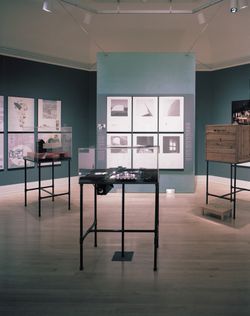
The exhibition presents the work of a generation of Japanese architects that reached architectural maturity at a time of unprecedented wealth in Japan. The six young architects included—Kiyoshi Sey Takeyama/AMORPHE; Norihiko Dan; Hiroyuki Wakabayashi; WORKSHOP; Hisashi Hara; and Atsushi Kitagawara—freely incorporate Western and Japanese architectural traditions. For this(...)
The exhibition presents the work of a generation of Japanese architects that reached architectural maturity at a time of unprecedented wealth in Japan. The six young architects included—Kiyoshi Sey Takeyama/AMORPHE; Norihiko Dan; Hiroyuki Wakabayashi; WORKSHOP; Hisashi Hara; and Atsushi Kitagawara—freely incorporate Western and Japanese architectural traditions. For this(...)
Location:
Octagonal gallery
Octagonal gallery
Date:
17 April 1991 to 30 June 1991
17 April 1991 to 30 June 1991
Title:
Emerging Japanese Architects of the 1990s
Actions:
Description:
The exhibition presents the work of a generation of Japanese architects that reached architectural maturity at a time of unprecedented wealth in Japan. The six young architects included—Kiyoshi Sey Takeyama/AMORPHE; Norihiko Dan; Hiroyuki Wakabayashi; WORKSHOP; Hisashi Hara; and Atsushi Kitagawara—freely incorporate Western and Japanese architectural traditions. For this(...)
Emerging Japanese Architects of the 1990s
Actions:
Description:
The exhibition presents the work of a generation of Japanese architects that reached architectural maturity at a time of unprecedented wealth in Japan. The six young architects included—Kiyoshi Sey Takeyama/AMORPHE; Norihiko Dan; Hiroyuki Wakabayashi; WORKSHOP; Hisashi Hara; and Atsushi Kitagawara—freely incorporate Western and Japanese architectural traditions. For this(...)
Form:
exhibitions
exhibitions
Date:
17 April 1991 to
30 June 1991
17 April 1991 to
30 June 1991
Location:
Octagonal gallery
Octagonal gallery
Level of archival description:
Project
Project
Actions:
Reference number:
AP164.S1.1998.D1
Description:
The project series documents the design and constuction of the environmental complex for the treatment of municipal solid waste from the island of Tenerife, in Arico. The project was also named “PIRS building” and includes an environmental education center and offices. Abalos & Herreros was invited to enter the competition and won first prize for their entry. The firm identified this project as number 111. The firm worked with Ángel Jaramillo, Obiol y Moya and Luís Jesús Tomás Martínez. In 2001, the project received a mention at the tenth Premio Regional de Arquitectura Manuel de Oraá y Arcocha 2000-2001. Documenting the project are conceptual, design development and working drawings, correspondence, reports, project descriptions, budgets, specifications, invoices, minutes, postcards and reference and photographic materials.
AP164.S1.1998.D1
Description:
The project series documents the design and constuction of the environmental complex for the treatment of municipal solid waste from the island of Tenerife, in Arico. The project was also named “PIRS building” and includes an environmental education center and offices. Abalos & Herreros was invited to enter the competition and won first prize for their entry. The firm identified this project as number 111. The firm worked with Ángel Jaramillo, Obiol y Moya and Luís Jesús Tomás Martínez. In 2001, the project received a mention at the tenth Premio Regional de Arquitectura Manuel de Oraá y Arcocha 2000-2001. Documenting the project are conceptual, design development and working drawings, correspondence, reports, project descriptions, budgets, specifications, invoices, minutes, postcards and reference and photographic materials.
People:
Date:
1995-2002
1995-2002
Title:
Centro de control y aula medioambiental de Arico, Tenerife, Spain (1998-2001)
Actions:
AP164.S1.1998.D1
Description:
The project series documents the design and constuction of the environmental complex for the treatment of municipal solid waste from the island of Tenerife, in Arico. The project was also named “PIRS building” and includes an environmental education center and offices. Abalos & Herreros was invited to enter the competition and won first prize for their entry. The firm identified this project as number 111. The firm worked with Ángel Jaramillo, Obiol y Moya and Luís Jesús Tomás Martínez. In 2001, the project received a mention at the tenth Premio Regional de Arquitectura Manuel de Oraá y Arcocha 2000-2001. Documenting the project are conceptual, design development and working drawings, correspondence, reports, project descriptions, budgets, specifications, invoices, minutes, postcards and reference and photographic materials.
Centro de control y aula medioambiental de Arico, Tenerife, Spain (1998-2001)
Actions:
AP164.S1.1998.D1
Description:
The project series documents the design and constuction of the environmental complex for the treatment of municipal solid waste from the island of Tenerife, in Arico. The project was also named “PIRS building” and includes an environmental education center and offices. Abalos & Herreros was invited to enter the competition and won first prize for their entry. The firm identified this project as number 111. The firm worked with Ángel Jaramillo, Obiol y Moya and Luís Jesús Tomás Martínez. In 2001, the project received a mention at the tenth Premio Regional de Arquitectura Manuel de Oraá y Arcocha 2000-2001. Documenting the project are conceptual, design development and working drawings, correspondence, reports, project descriptions, budgets, specifications, invoices, minutes, postcards and reference and photographic materials.
Level of archival description:
Project
Project
Date:
1995-2002
1995-2002
People:
Level of archival description:
Project
Project
Reference number:
AP164.S1.2000.D5
Description:
The project series documents the design of social and elderly housing complexes, office equipment, gardening and landscaping, in the village Es Pil·lari, Palma de Mallorca, Spain. The firm gave iterations of this project the following identification numbers: 129, 157, 166, 167, and 168. Each of these iterations is found within this project series. Abalos & Herreros were invited to participate in a competition organised by the Institut Balear de la Vivienda. They won the first prize. The firm worked with Ángel Jaramillo, Uriel Fogué, Fermina Garrído, Renata Sentkiewicz and Jacob Hense. Documenting this project are conceptual, design development, presentation and working drawings, digital, photographic and reference materials, notes, minutes, correspondence, specifications, presentation documents, reports, studies, and a postcard.
AP164.S1.2000.D5
Description:
The project series documents the design of social and elderly housing complexes, office equipment, gardening and landscaping, in the village Es Pil·lari, Palma de Mallorca, Spain. The firm gave iterations of this project the following identification numbers: 129, 157, 166, 167, and 168. Each of these iterations is found within this project series. Abalos & Herreros were invited to participate in a competition organised by the Institut Balear de la Vivienda. They won the first prize. The firm worked with Ángel Jaramillo, Uriel Fogué, Fermina Garrído, Renata Sentkiewicz and Jacob Hense. Documenting this project are conceptual, design development, presentation and working drawings, digital, photographic and reference materials, notes, minutes, correspondence, specifications, presentation documents, reports, studies, and a postcard.
People:
Date:
1998-2004
1998-2004
Title:
Es Pil·lari, Palma de Mallorca, Spain (2000)
Actions:
AP164.S1.2000.D5
Description:
The project series documents the design of social and elderly housing complexes, office equipment, gardening and landscaping, in the village Es Pil·lari, Palma de Mallorca, Spain. The firm gave iterations of this project the following identification numbers: 129, 157, 166, 167, and 168. Each of these iterations is found within this project series. Abalos & Herreros were invited to participate in a competition organised by the Institut Balear de la Vivienda. They won the first prize. The firm worked with Ángel Jaramillo, Uriel Fogué, Fermina Garrído, Renata Sentkiewicz and Jacob Hense. Documenting this project are conceptual, design development, presentation and working drawings, digital, photographic and reference materials, notes, minutes, correspondence, specifications, presentation documents, reports, studies, and a postcard.
Es Pil·lari, Palma de Mallorca, Spain (2000)
Actions:
AP164.S1.2000.D5
Description:
The project series documents the design of social and elderly housing complexes, office equipment, gardening and landscaping, in the village Es Pil·lari, Palma de Mallorca, Spain. The firm gave iterations of this project the following identification numbers: 129, 157, 166, 167, and 168. Each of these iterations is found within this project series. Abalos & Herreros were invited to participate in a competition organised by the Institut Balear de la Vivienda. They won the first prize. The firm worked with Ángel Jaramillo, Uriel Fogué, Fermina Garrído, Renata Sentkiewicz and Jacob Hense. Documenting this project are conceptual, design development, presentation and working drawings, digital, photographic and reference materials, notes, minutes, correspondence, specifications, presentation documents, reports, studies, and a postcard.
Level of archival description:
Project
Project
Date:
1998-2004
1998-2004
People:
Level of archival description:
Series
Series
Title:
Hans Hansen
Hans Hansen
Actions:
Reference number:
AP162.S4
Description:
Series documents the contribution of architect Hans Hansen to the correspondence circle of Die gläserne Kette, with Hansen writing under the pseudonym Antischmitz. Born in Roetgen, Germany, in 1886, Hansen studied architecture in Cologne. After the war, Hansen joined the circle Cologne Dadaists, contributed to the magazine "Der Ventilor", and published "Das Erlebnis der Architektur". From 1922, he worked on commissions for the Catholic Church in Germany, including his most known project for the St. Bruno Church in Cologne-Kletteberg (1924-1926). He died in Cologne in 1966. (Source: Ian Boyd Whyte, Bruno Taut and the Architecture of Activism. Cambridge: Cambridge University Press, 1982) The series comprises part of the correspondence of Hans Hansen to the Die gläserne Kette circle.
AP162.S4
Description:
Series documents the contribution of architect Hans Hansen to the correspondence circle of Die gläserne Kette, with Hansen writing under the pseudonym Antischmitz. Born in Roetgen, Germany, in 1886, Hansen studied architecture in Cologne. After the war, Hansen joined the circle Cologne Dadaists, contributed to the magazine "Der Ventilor", and published "Das Erlebnis der Architektur". From 1922, he worked on commissions for the Catholic Church in Germany, including his most known project for the St. Bruno Church in Cologne-Kletteberg (1924-1926). He died in Cologne in 1966. (Source: Ian Boyd Whyte, Bruno Taut and the Architecture of Activism. Cambridge: Cambridge University Press, 1982) The series comprises part of the correspondence of Hans Hansen to the Die gläserne Kette circle.
People:
Date:
1920
1920
Title:
Hans Hansen
Actions:
AP162.S4
Description:
Series documents the contribution of architect Hans Hansen to the correspondence circle of Die gläserne Kette, with Hansen writing under the pseudonym Antischmitz. Born in Roetgen, Germany, in 1886, Hansen studied architecture in Cologne. After the war, Hansen joined the circle Cologne Dadaists, contributed to the magazine "Der Ventilor", and published "Das Erlebnis der Architektur". From 1922, he worked on commissions for the Catholic Church in Germany, including his most known project for the St. Bruno Church in Cologne-Kletteberg (1924-1926). He died in Cologne in 1966. (Source: Ian Boyd Whyte, Bruno Taut and the Architecture of Activism. Cambridge: Cambridge University Press, 1982) The series comprises part of the correspondence of Hans Hansen to the Die gläserne Kette circle.
Hans Hansen
Actions:
AP162.S4
Description:
Series documents the contribution of architect Hans Hansen to the correspondence circle of Die gläserne Kette, with Hansen writing under the pseudonym Antischmitz. Born in Roetgen, Germany, in 1886, Hansen studied architecture in Cologne. After the war, Hansen joined the circle Cologne Dadaists, contributed to the magazine "Der Ventilor", and published "Das Erlebnis der Architektur". From 1922, he worked on commissions for the Catholic Church in Germany, including his most known project for the St. Bruno Church in Cologne-Kletteberg (1924-1926). He died in Cologne in 1966. (Source: Ian Boyd Whyte, Bruno Taut and the Architecture of Activism. Cambridge: Cambridge University Press, 1982) The series comprises part of the correspondence of Hans Hansen to the Die gläserne Kette circle.
Level of archival description:
series
series
Date:
1920
1920
People:
Level of archival description:
Project
Project
Actions:
Reference number:
AP018.S1.1972.PR17
Description:
This project series documents a proposal for a People Mover System for the Metropolitan Toronto Zoo in 1972. The office identified the project number as 7224. The project was a transportation system for the zoo, which required a guideway be built without disrupting the zoo's terrain as well as ensuring that the fences were out of passenger view. Parkin Architects Planners' worked with the engineering firm M.M. Dillion Limited and were in conversation with Boeing to build the vehicle for the system. The project is recorded through several topographic drawings showing the proposed design for the tracks, also included is a file of correspondence, mostly with M.M. Dillion Limited and Boeing, as well a file of notes and photocopies of drawings for the passenger vehicle. A letter in the correspondance file suggests that Parkin Architects Planners where not choosen to build this project.
AP018.S1.1972.PR17
Description:
This project series documents a proposal for a People Mover System for the Metropolitan Toronto Zoo in 1972. The office identified the project number as 7224. The project was a transportation system for the zoo, which required a guideway be built without disrupting the zoo's terrain as well as ensuring that the fences were out of passenger view. Parkin Architects Planners' worked with the engineering firm M.M. Dillion Limited and were in conversation with Boeing to build the vehicle for the system. The project is recorded through several topographic drawings showing the proposed design for the tracks, also included is a file of correspondence, mostly with M.M. Dillion Limited and Boeing, as well a file of notes and photocopies of drawings for the passenger vehicle. A letter in the correspondance file suggests that Parkin Architects Planners where not choosen to build this project.
People:
Date:
1972 - 1973
1972 - 1973
Title:
Metropolitan Toronto Zoo, People Mover System, Scarborough, Ontario (1972)
Actions:
AP018.S1.1972.PR17
Description:
This project series documents a proposal for a People Mover System for the Metropolitan Toronto Zoo in 1972. The office identified the project number as 7224. The project was a transportation system for the zoo, which required a guideway be built without disrupting the zoo's terrain as well as ensuring that the fences were out of passenger view. Parkin Architects Planners' worked with the engineering firm M.M. Dillion Limited and were in conversation with Boeing to build the vehicle for the system. The project is recorded through several topographic drawings showing the proposed design for the tracks, also included is a file of correspondence, mostly with M.M. Dillion Limited and Boeing, as well a file of notes and photocopies of drawings for the passenger vehicle. A letter in the correspondance file suggests that Parkin Architects Planners where not choosen to build this project.
Metropolitan Toronto Zoo, People Mover System, Scarborough, Ontario (1972)
Actions:
AP018.S1.1972.PR17
Description:
This project series documents a proposal for a People Mover System for the Metropolitan Toronto Zoo in 1972. The office identified the project number as 7224. The project was a transportation system for the zoo, which required a guideway be built without disrupting the zoo's terrain as well as ensuring that the fences were out of passenger view. Parkin Architects Planners' worked with the engineering firm M.M. Dillion Limited and were in conversation with Boeing to build the vehicle for the system. The project is recorded through several topographic drawings showing the proposed design for the tracks, also included is a file of correspondence, mostly with M.M. Dillion Limited and Boeing, as well a file of notes and photocopies of drawings for the passenger vehicle. A letter in the correspondance file suggests that Parkin Architects Planners where not choosen to build this project.
Level of archival description:
Project
Project
Date:
1972 - 1973
1972 - 1973
People:
Level of archival description:
Project
Project
Reference number:
AP180.S1.1965.PR01
Description:
This project series documents the Cooperativa di abitazione, a built eight-storey low-income housing cooperative of friends and acquaintances on Via Paravia in the San Siro district of Milan, Italy. Riva worked on this housing complex from 1965-1967. The project is considered his first major project and was the first residential complex that he designed. This project is also known as 37 Via Paravia and was realized in collaboration with Bianco Bottero. The project is recorded through studies and design development drawings, including elevations, axonometric drawings, sections, floor plans, furnishing details, structural details, and electrical plans. The project series also includes drawings for a later alteration to the living room bookcase design, around the mid-1970s.
AP180.S1.1965.PR01
Description:
This project series documents the Cooperativa di abitazione, a built eight-storey low-income housing cooperative of friends and acquaintances on Via Paravia in the San Siro district of Milan, Italy. Riva worked on this housing complex from 1965-1967. The project is considered his first major project and was the first residential complex that he designed. This project is also known as 37 Via Paravia and was realized in collaboration with Bianco Bottero. The project is recorded through studies and design development drawings, including elevations, axonometric drawings, sections, floor plans, furnishing details, structural details, and electrical plans. The project series also includes drawings for a later alteration to the living room bookcase design, around the mid-1970s.
People:
Date:
1967-1969
1967-1969
Title:
Cooperativa di abitazione in via Paravia [Housing cooperative on via Paravia], Milan, Italy (1965-1966)
Actions:
AP180.S1.1965.PR01
Description:
This project series documents the Cooperativa di abitazione, a built eight-storey low-income housing cooperative of friends and acquaintances on Via Paravia in the San Siro district of Milan, Italy. Riva worked on this housing complex from 1965-1967. The project is considered his first major project and was the first residential complex that he designed. This project is also known as 37 Via Paravia and was realized in collaboration with Bianco Bottero. The project is recorded through studies and design development drawings, including elevations, axonometric drawings, sections, floor plans, furnishing details, structural details, and electrical plans. The project series also includes drawings for a later alteration to the living room bookcase design, around the mid-1970s.
Cooperativa di abitazione in via Paravia [Housing cooperative on via Paravia], Milan, Italy (1965-1966)
Actions:
AP180.S1.1965.PR01
Description:
This project series documents the Cooperativa di abitazione, a built eight-storey low-income housing cooperative of friends and acquaintances on Via Paravia in the San Siro district of Milan, Italy. Riva worked on this housing complex from 1965-1967. The project is considered his first major project and was the first residential complex that he designed. This project is also known as 37 Via Paravia and was realized in collaboration with Bianco Bottero. The project is recorded through studies and design development drawings, including elevations, axonometric drawings, sections, floor plans, furnishing details, structural details, and electrical plans. The project series also includes drawings for a later alteration to the living room bookcase design, around the mid-1970s.
Level of archival description:
Project
Project
Date:
1967-1969
1967-1969
People:
Level of archival description:
Project
Project
Reference number:
AP075.S1.1994.PR02
Description:
Project series documents Cornelia Hahn Oberlander's project of a playground for the Talmud Torah School on West 26th Avenue, in Vancouver, in British Columbia. Oberlander worked on this project in 1994. The playground included a garden with apple trees at the north side of the site, a central play area with sand pits and play installation, small canal with a wooden bridge and two grass mounds with trees. The project series contains sketches, design development drawings, including a proposed landscape plan, landscape plans, landscape details, and site plans. The project is also documented through photographs of the playground once completed, specifications, plant lists, correspondence, including correspondence with client, meeting notes and site reports, financial documents and press clippings on the project.
AP075.S1.1994.PR02
Description:
Project series documents Cornelia Hahn Oberlander's project of a playground for the Talmud Torah School on West 26th Avenue, in Vancouver, in British Columbia. Oberlander worked on this project in 1994. The playground included a garden with apple trees at the north side of the site, a central play area with sand pits and play installation, small canal with a wooden bridge and two grass mounds with trees. The project series contains sketches, design development drawings, including a proposed landscape plan, landscape plans, landscape details, and site plans. The project is also documented through photographs of the playground once completed, specifications, plant lists, correspondence, including correspondence with client, meeting notes and site reports, financial documents and press clippings on the project.
People:
Date:
1970-1996
1970-1996
Title:
Talmud Torah School Playground, Vancouver, British Columbia (1994-1996)
Actions:
AP075.S1.1994.PR02
Description:
Project series documents Cornelia Hahn Oberlander's project of a playground for the Talmud Torah School on West 26th Avenue, in Vancouver, in British Columbia. Oberlander worked on this project in 1994. The playground included a garden with apple trees at the north side of the site, a central play area with sand pits and play installation, small canal with a wooden bridge and two grass mounds with trees. The project series contains sketches, design development drawings, including a proposed landscape plan, landscape plans, landscape details, and site plans. The project is also documented through photographs of the playground once completed, specifications, plant lists, correspondence, including correspondence with client, meeting notes and site reports, financial documents and press clippings on the project.
Talmud Torah School Playground, Vancouver, British Columbia (1994-1996)
Actions:
AP075.S1.1994.PR02
Description:
Project series documents Cornelia Hahn Oberlander's project of a playground for the Talmud Torah School on West 26th Avenue, in Vancouver, in British Columbia. Oberlander worked on this project in 1994. The playground included a garden with apple trees at the north side of the site, a central play area with sand pits and play installation, small canal with a wooden bridge and two grass mounds with trees. The project series contains sketches, design development drawings, including a proposed landscape plan, landscape plans, landscape details, and site plans. The project is also documented through photographs of the playground once completed, specifications, plant lists, correspondence, including correspondence with client, meeting notes and site reports, financial documents and press clippings on the project.
Level of archival description:
Project
Project
Date:
1970-1996
1970-1996
People:


