


198 Results
Form:
books
books
Actions:
Price:
$59.95
(available to order)
Summary:
C'est la République de Weimar au cours des années 1918 à 1933 qui propulsa Berlin au zénith. Ainsi, le Berlin des années vingt a donné naissance à une culture qui a totalement vécu de la politisation. Il y germait des utopies qui, en cette époque de crise, traçaient des perspectives de progrès. La communication prenait son essor dans les sphères populaires par le biais(...)
$59.95
(available to order)
Summary:
C'est la République de Weimar au cours des années 1918 à 1933 qui propulsa Berlin au zénith. Ainsi, le Berlin des années vingt a donné naissance à une culture qui a totalement vécu de la politisation. Il y germait des utopies qui, en cette époque de crise, traçaient des perspectives de progrès. La communication prenait son essor dans les sphères populaires par le biais(...)
Title:
Berlin, les années vingt: art et culture 1918-1933
Actions:
Price:
$59.95
(available to order)
Summary:
C'est la République de Weimar au cours des années 1918 à 1933 qui propulsa Berlin au zénith. Ainsi, le Berlin des années vingt a donné naissance à une culture qui a totalement vécu de la politisation. Il y germait des utopies qui, en cette époque de crise, traçaient des perspectives de progrès. La communication prenait son essor dans les sphères populaires par le biais de la photo, du cinéma, des affiches, de l'agit-prop, du cabaret et des variétés. Grâce à ces techniques, ces millions de Berlinois ne formaient plus une masse mais des citoyens : ils acquéraient à la fois un accès et une dignité à la culture. Ces évolutions venaient de la masse, mais il y avait une avant-garde pour les faire entrer dans les pratiques et les prémices des beaux-arts. Il suffit d'aligner quelques noms, George Grosz, Otto Dix, Raoul Hausmann, John Heartfield, Hannah Höch pour l'aventure Dada ; Fritz Lang, Ernst Lubitsch pour le cinéma et la photographie ; Mies van der Rohe, Moholy-Nagy, Lissitzky pour les grandes conquêtes utopistes ou fonctionnelles de l'architecture, du design et de l'oeuvre d'art totale, pour prendre la mesure de ces années de révolutions et de créations tous azimuts.
Berlin, les années vingt: art et culture 1918-1933
Actions:
Price:
$59.95
(available to order)
Summary:
C'est la République de Weimar au cours des années 1918 à 1933 qui propulsa Berlin au zénith. Ainsi, le Berlin des années vingt a donné naissance à une culture qui a totalement vécu de la politisation. Il y germait des utopies qui, en cette époque de crise, traçaient des perspectives de progrès. La communication prenait son essor dans les sphères populaires par le biais de la photo, du cinéma, des affiches, de l'agit-prop, du cabaret et des variétés. Grâce à ces techniques, ces millions de Berlinois ne formaient plus une masse mais des citoyens : ils acquéraient à la fois un accès et une dignité à la culture. Ces évolutions venaient de la masse, mais il y avait une avant-garde pour les faire entrer dans les pratiques et les prémices des beaux-arts. Il suffit d'aligner quelques noms, George Grosz, Otto Dix, Raoul Hausmann, John Heartfield, Hannah Höch pour l'aventure Dada ; Fritz Lang, Ernst Lubitsch pour le cinéma et la photographie ; Mies van der Rohe, Moholy-Nagy, Lissitzky pour les grandes conquêtes utopistes ou fonctionnelles de l'architecture, du design et de l'oeuvre d'art totale, pour prendre la mesure de ces années de révolutions et de créations tous azimuts.
Form:
books
books
Publication:
August 2006
August 2006
Subject:
History since 1900, Reference Books
History since 1900, Reference Books
Form:
books
books
Actions:
Price:
$79.95
(available to order)
Summary:
ABZ présente, en couleurs, une multitude d’alphabets complets, une myriade d’emblèmes et de logos, de pages élégantes et d’exemples étonnants de l’avant-garde graphique du début du XXe siècle. Issus de collections, privées pour la plupart, disséminées à travers le monde, de Londres à Mexico en passant par Prague, Amsterdam et New York, la plupart de ces splendides(...)
$79.95
(available to order)
Summary:
ABZ présente, en couleurs, une multitude d’alphabets complets, une myriade d’emblèmes et de logos, de pages élégantes et d’exemples étonnants de l’avant-garde graphique du début du XXe siècle. Issus de collections, privées pour la plupart, disséminées à travers le monde, de Londres à Mexico en passant par Prague, Amsterdam et New York, la plupart de ces splendides(...)
Subject:
Graphic Design and Typography
Graphic Design and Typography
Publication:
May 2003, Paris
May 2003, Paris
Title:
ABZ : alphabets, graphismes, typos et autres signes
Actions:
Price:
$79.95
(available to order)
Summary:
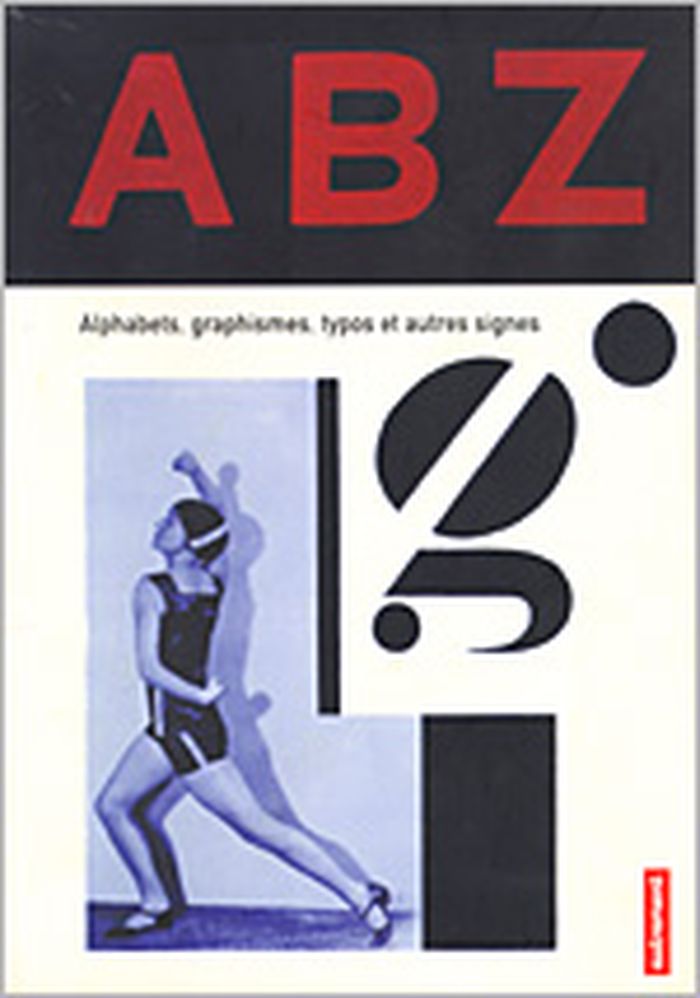
ABZ présente, en couleurs, une multitude d’alphabets complets, une myriade d’emblèmes et de logos, de pages élégantes et d’exemples étonnants de l’avant-garde graphique du début du XXe siècle. Issus de collections, privées pour la plupart, disséminées à travers le monde, de Londres à Mexico en passant par Prague, Amsterdam et New York, la plupart de ces splendides documents sont reproduits ici pour la première fois. Dans ce voyage au pays des lettres et des signes, on pourra rencontrer l’alphabet photo-poétique de Karel Teige, l’un des leaders de l’avant-garde de l’entre-deux-guerres ; les pages émouvantes issues d’un manuel espagnol pour les soldats analphabètes ; les typographies avant-gardistes de Lajos Kassak ; les caractères créés par Snellen pour les tableaux des opticiens, et l’impertinence élégante de journaux français, allemands, italiens et tchèques. On pourra aussi croiser les designers les plus célèbres, tels El Lissitzky, Aleksandr Rodchenko, Ladislav Sutnar et A.M. Cassandre. Les textes d’accompagnement apprennent au lecteur l’histoire de chaque alphabet, l’usage pour lequel il a été créé, le succès qu’il a connu par la suite. Un merveilleux texte de Georges Pérec intitulé « L’alphabet » introduit le lecteur dans le monde magique des lettres .
ABZ : alphabets, graphismes, typos et autres signes
Actions:
Price:
$79.95
(available to order)
Summary:
ABZ présente, en couleurs, une multitude d’alphabets complets, une myriade d’emblèmes et de logos, de pages élégantes et d’exemples étonnants de l’avant-garde graphique du début du XXe siècle. Issus de collections, privées pour la plupart, disséminées à travers le monde, de Londres à Mexico en passant par Prague, Amsterdam et New York, la plupart de ces splendides documents sont reproduits ici pour la première fois. Dans ce voyage au pays des lettres et des signes, on pourra rencontrer l’alphabet photo-poétique de Karel Teige, l’un des leaders de l’avant-garde de l’entre-deux-guerres ; les pages émouvantes issues d’un manuel espagnol pour les soldats analphabètes ; les typographies avant-gardistes de Lajos Kassak ; les caractères créés par Snellen pour les tableaux des opticiens, et l’impertinence élégante de journaux français, allemands, italiens et tchèques. On pourra aussi croiser les designers les plus célèbres, tels El Lissitzky, Aleksandr Rodchenko, Ladislav Sutnar et A.M. Cassandre. Les textes d’accompagnement apprennent au lecteur l’histoire de chaque alphabet, l’usage pour lequel il a été créé, le succès qu’il a connu par la suite. Un merveilleux texte de Georges Pérec intitulé « L’alphabet » introduit le lecteur dans le monde magique des lettres .
Form:
books
books
Publication:
May 2003, Paris
May 2003, Paris
Subject:
Graphic Design and Typography
Graphic Design and Typography
Form:
books
books
Actions:
Price:
$95.00
(available in store)
Summary:
"The anatomy of the architectural book" examines approaches to structuring, constructing and designing architectural books and traces how they have changed over time. The discipline has been exposed to debates, just as building construction has been exposed to the charms of book making. Examining the crossovers between book culture and building culture makes the axes(...)
$95.00
(available in store)
Summary:
"The anatomy of the architectural book" examines approaches to structuring, constructing and designing architectural books and traces how they have changed over time. The discipline has been exposed to debates, just as building construction has been exposed to the charms of book making. Examining the crossovers between book culture and building culture makes the axes(...)
Title:
The anatomy of the architectural book, 2nd edition
Actions:
Price:
$95.00
(available in store)
Summary:
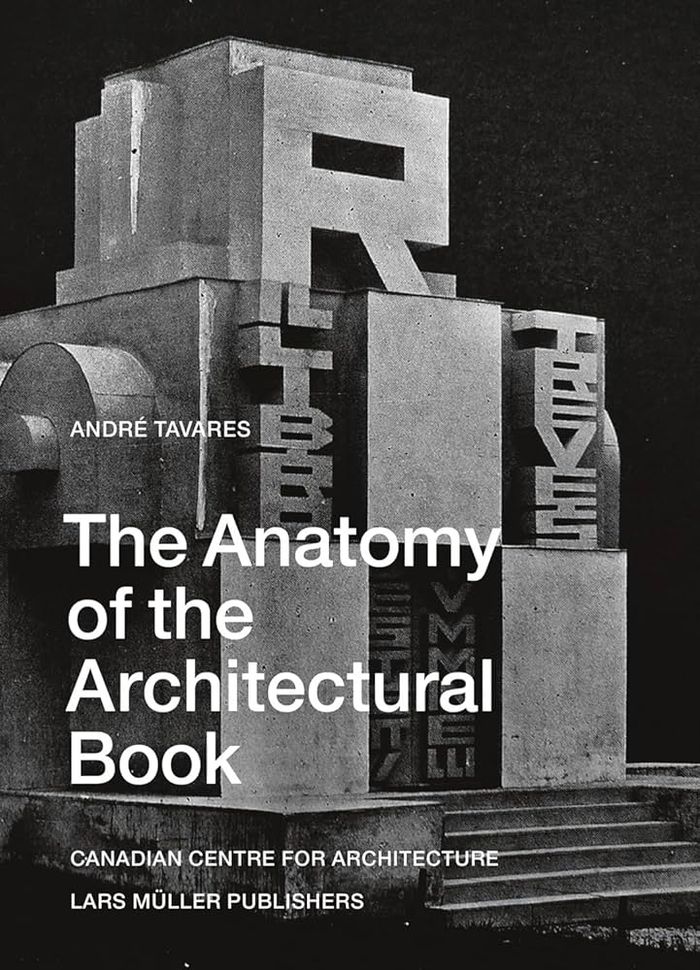
"The anatomy of the architectural book" examines approaches to structuring, constructing and designing architectural books and traces how they have changed over time. The discipline has been exposed to debates, just as building construction has been exposed to the charms of book making. Examining the crossovers between book culture and building culture makes the axes visible along which architectural knowledge circulates through books into buildings and back – from the celebration of specific architectural practices to the production of unique books, using pages and print to convey architectural ideas. Dissecting a wealth of books through five conceptual tools – texture, surface, rhythm, structure and scale – André Tavares analyzes the material qualities of books in order to assess their crossovers with architectural knowledge. The detailed history of Sigfried Giedion’s Befreites Wohnen and the two incarnations of the Crystal Palace in Hyde Park and Sydenham provide a background that confront us not only with the rise of the industrialized book but also with the configuration of the book as a unique visual device. Richly illustrated with samples from the library of the Canadian Centre for Architecture, the volume discusses a wide range of authors, including Vitruvius, William Morris, Gottfried Semper, El Lissitzky and Le Corbusier.
The anatomy of the architectural book, 2nd edition
Actions:
Price:
$95.00
(available in store)
Summary:
"The anatomy of the architectural book" examines approaches to structuring, constructing and designing architectural books and traces how they have changed over time. The discipline has been exposed to debates, just as building construction has been exposed to the charms of book making. Examining the crossovers between book culture and building culture makes the axes visible along which architectural knowledge circulates through books into buildings and back – from the celebration of specific architectural practices to the production of unique books, using pages and print to convey architectural ideas. Dissecting a wealth of books through five conceptual tools – texture, surface, rhythm, structure and scale – André Tavares analyzes the material qualities of books in order to assess their crossovers with architectural knowledge. The detailed history of Sigfried Giedion’s Befreites Wohnen and the two incarnations of the Crystal Palace in Hyde Park and Sydenham provide a background that confront us not only with the rise of the industrialized book but also with the configuration of the book as a unique visual device. Richly illustrated with samples from the library of the Canadian Centre for Architecture, the volume discusses a wide range of authors, including Vitruvius, William Morris, Gottfried Semper, El Lissitzky and Le Corbusier.
Form:
books
books
Publication:
November 2024
November 2024
Subject:
Architectural Theory
Architectural Theory
Form:
books
books
Price:
$48.00
(available in store)
Summary:
Idealized representations of America, as both an aspiration and a menace, played an important role in shaping Russian architecture and urban design from the American Revolution until the fall of the Soviet Union. In Building a new New World, Jean-Louis Cohen traces the concept of “Amerikanizm” and its impact on Russia’s built environment from early czarist interest in(...)
$48.00
(available in store)
Summary:
Idealized representations of America, as both an aspiration and a menace, played an important role in shaping Russian architecture and urban design from the American Revolution until the fall of the Soviet Union. In Building a new New World, Jean-Louis Cohen traces the concept of “Amerikanizm” and its impact on Russia’s built environment from early czarist interest in(...)
Title:
Building a new New World: Amerikanizm in Russian Architecture
Actions:
Price:
$48.00
(available in store)
Summary:
Idealized representations of America, as both an aspiration and a menace, played an important role in shaping Russian architecture and urban design from the American Revolution until the fall of the Soviet Union. In Building a new New World, Jean-Louis Cohen traces the concept of “Amerikanizm” and its impact on Russia’s built environment from early czarist interest in Revolutionary America, through the spectacular World’s Fairs of the nineteenth century, to department stores, skyscrapers, and factories built in Russia using American methods during the twentieth century. Visions of America also captivated the Russian avant-garde, from El Lissitzky to Moisei Ginzburg, and Cohen explores the ongoing artistic dialogue maintained between the two countries at the mid-century and in the late Soviet era, when the Cold War induced a strategic competition. Tracing the many journeys of Russian writers, politicians, and planners through the American territory, foregrounding the constant streams of cultural and technological transfer from the U.S.A. to Russia, and revealing the parallel fascination among Russian and American intellectuals with the ongoing pursuit of land occupation and development within their respective borders, this study of Amerikanizm in the architecture and urban design of Russia makes a timely contribution to our understanding of modern architecture and its broader geopolitics.
Building a new New World: Amerikanizm in Russian Architecture
Actions:
Price:
$48.00
(available in store)
Summary:
Idealized representations of America, as both an aspiration and a menace, played an important role in shaping Russian architecture and urban design from the American Revolution until the fall of the Soviet Union. In Building a new New World, Jean-Louis Cohen traces the concept of “Amerikanizm” and its impact on Russia’s built environment from early czarist interest in Revolutionary America, through the spectacular World’s Fairs of the nineteenth century, to department stores, skyscrapers, and factories built in Russia using American methods during the twentieth century. Visions of America also captivated the Russian avant-garde, from El Lissitzky to Moisei Ginzburg, and Cohen explores the ongoing artistic dialogue maintained between the two countries at the mid-century and in the late Soviet era, when the Cold War induced a strategic competition. Tracing the many journeys of Russian writers, politicians, and planners through the American territory, foregrounding the constant streams of cultural and technological transfer from the U.S.A. to Russia, and revealing the parallel fascination among Russian and American intellectuals with the ongoing pursuit of land occupation and development within their respective borders, this study of Amerikanizm in the architecture and urban design of Russia makes a timely contribution to our understanding of modern architecture and its broader geopolitics.
Form:
books
books
Publication:
December 2019
December 2019
Subject:
CCA Publications
CCA Publications
Form:
books
books
Price:
$48.99
(available to order)
Summary:
During the 1920s and 1930s, proponents of Soviet architecture looked to various principles within the human sciences in their efforts to formulate a methodological and theoretical basis for their modernist project. ''Architecture of life'' delves into the foundations of this transdisciplinary and transnational endeavor, analyzing many facets of their radical approach and(...)
$48.99
(available to order)
Summary:
During the 1920s and 1930s, proponents of Soviet architecture looked to various principles within the human sciences in their efforts to formulate a methodological and theoretical basis for their modernist project. ''Architecture of life'' delves into the foundations of this transdisciplinary and transnational endeavor, analyzing many facets of their radical approach and(...)
Title:
Architecture of life: Soviet modernism and the human sciences
Actions:
Price:
$48.99
(available to order)
Summary:
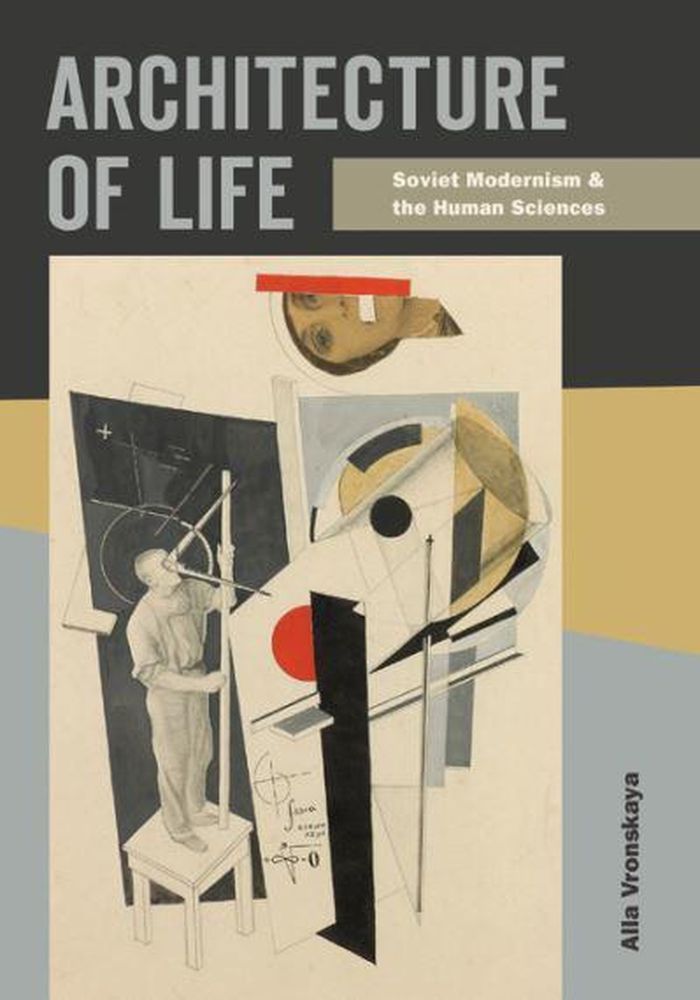
During the 1920s and 1930s, proponents of Soviet architecture looked to various principles within the human sciences in their efforts to formulate a methodological and theoretical basis for their modernist project. ''Architecture of life'' delves into the foundations of this transdisciplinary and transnational endeavor, analyzing many facets of their radical approach and situating it within the context of other modernist movements that were developing concurrently across the globe. Examining the theories advanced by El Lissitzky, Moisei Ginzburg, and Nikolay Ladovsky, as well as those of their lesser-known colleagues, this illuminating study demonstrates how Soviet architects of the interwar period sought to mitigate Fordist production methods with other, ostensibly more human-oriented approaches that drew on the biological and psychological sciences. Envisioning the built environment as innately connected to social evolution, their methods incorporated aspects of psychoanalysis, personality theory, and studies in spatial perception, all of which were integrated into an ideology that grounded functional design firmly within the attributes of the individual. A comprehensive overview of the ideals that permeated its expanded project, ''Architecture of life'' explicates the underlying impulses that motivated Soviet modernism, highlighting the deep interconnections among the ways in which it viewed all aspects of life, both natural and manufactured.
Architecture of life: Soviet modernism and the human sciences
Actions:
Price:
$48.99
(available to order)
Summary:
During the 1920s and 1930s, proponents of Soviet architecture looked to various principles within the human sciences in their efforts to formulate a methodological and theoretical basis for their modernist project. ''Architecture of life'' delves into the foundations of this transdisciplinary and transnational endeavor, analyzing many facets of their radical approach and situating it within the context of other modernist movements that were developing concurrently across the globe. Examining the theories advanced by El Lissitzky, Moisei Ginzburg, and Nikolay Ladovsky, as well as those of their lesser-known colleagues, this illuminating study demonstrates how Soviet architects of the interwar period sought to mitigate Fordist production methods with other, ostensibly more human-oriented approaches that drew on the biological and psychological sciences. Envisioning the built environment as innately connected to social evolution, their methods incorporated aspects of psychoanalysis, personality theory, and studies in spatial perception, all of which were integrated into an ideology that grounded functional design firmly within the attributes of the individual. A comprehensive overview of the ideals that permeated its expanded project, ''Architecture of life'' explicates the underlying impulses that motivated Soviet modernism, highlighting the deep interconnections among the ways in which it viewed all aspects of life, both natural and manufactured.
Form:
books
books
Publication:
August 2022
August 2022
Subject:
Architectural Theory
Architectural Theory
Form:
books
books
Title:
Photography at MoMA / edited by Quentin Bajac, Lucy Gallun, Roxana Marcoci, Sarah Hermanson Meister.
Photography at MoMA / edited by Quentin Bajac, Lucy Gallun, Roxana Marcoci, Sarah Hermanson Meister.
Actions:
Holdings:
Description:
3 volumes : illustrations (some color), portraits ; 32 cm
Description:
3 volumes : illustrations (some color), portraits ; 32 cm
Author:
Subject:
Publication:
New York : Museum of Modern Art, 2015-2017.
New York : Museum of Modern Art, 2015-2017.
Title:
Photography at MoMA / edited by Quentin Bajac, Lucy Gallun, Roxana Marcoci, Sarah Hermanson Meister.
Actions:
Holdings:
Description:
3 volumes : illustrations (some color), portraits ; 32 cm
Photography at MoMA / edited by Quentin Bajac, Lucy Gallun, Roxana Marcoci, Sarah Hermanson Meister.
Actions:
Holdings:
Description:
3 volumes : illustrations (some color), portraits ; 32 cm
Form:
books
books
Publication:
New York : Museum of Modern Art, 2015-2017.
New York : Museum of Modern Art, 2015-2017.
Author:
Subject:
Form:
books
books
Actions:
Price:
$48.00
(available in store)
Summary:
Les représentations idéales de l’Amérique, à la fois comme horizon prometteur et comme menace, ont joué un rôle déterminant dans la formation de l’architecture et de l’urbanisme russes de la Révolution américaine à la dissolution de l’Union soviétique. Jean-Louis Cohen retrace l’origine du concept d’"amerikanizm" et son impact sur l’environnement bâti de la Russie de(...)
$48.00
(available in store)
Summary:
Les représentations idéales de l’Amérique, à la fois comme horizon prometteur et comme menace, ont joué un rôle déterminant dans la formation de l’architecture et de l’urbanisme russes de la Révolution américaine à la dissolution de l’Union soviétique. Jean-Louis Cohen retrace l’origine du concept d’"amerikanizm" et son impact sur l’environnement bâti de la Russie de(...)
Title:
Construire un nouveau Nouveau Monde : L’amerikanizm dans l’architecture russe
Actions:
Price:
$48.00
(available in store)
Summary:
Les représentations idéales de l’Amérique, à la fois comme horizon prometteur et comme menace, ont joué un rôle déterminant dans la formation de l’architecture et de l’urbanisme russes de la Révolution américaine à la dissolution de l’Union soviétique. Jean-Louis Cohen retrace l’origine du concept d’"amerikanizm" et son impact sur l’environnement bâti de la Russie de l’intérêt précoce de l’intelligentsia pour l’Amérique révolutionnaire et la découverte des expositions universelles du XIXe siècle jusqu’aux grands magasins, aux gratte-ciel et aux usines construits en Russie selon les méthodes américaines au cours du XXe siècle. Les images de l’Amérique ont également captivé l’avant-garde russe, d’El Lissitzky à Moïsseï Guinzbourg, et Cohen explore la relation spéculaire entretenue entre les deux pays au milieu du siècle dernier et à la fin de l’ère soviétique, dans une concurrence stratégique aiguisée par la Guerre Froide. Dans cette première grande étude de l’américanisme dans l’architecture russe, la trame tissée par Jean-Louis Cohen entrecroise les trajectoires d’écrivains, d’hommes politiques et d’urbanistes russes à travers le sol américain, met en avant le flux constant de transferts culturels et technologiques des États-Unis vers la Russie, et révèle la fascination parallèle des intellectuels russes et américains face à la poursuite inexorable de l’occupation et l’exploitation du territoire au sein de leurs frontières respectives. Construire un nouveau Nouveau Monde : L’amerikanizm dans l’architecture russe apporte une contribution opportune à notre compréhension de la géopolitique des édifices et des formes urbaines.
Construire un nouveau Nouveau Monde : L’amerikanizm dans l’architecture russe
Actions:
Price:
$48.00
(available in store)
Summary:
Les représentations idéales de l’Amérique, à la fois comme horizon prometteur et comme menace, ont joué un rôle déterminant dans la formation de l’architecture et de l’urbanisme russes de la Révolution américaine à la dissolution de l’Union soviétique. Jean-Louis Cohen retrace l’origine du concept d’"amerikanizm" et son impact sur l’environnement bâti de la Russie de l’intérêt précoce de l’intelligentsia pour l’Amérique révolutionnaire et la découverte des expositions universelles du XIXe siècle jusqu’aux grands magasins, aux gratte-ciel et aux usines construits en Russie selon les méthodes américaines au cours du XXe siècle. Les images de l’Amérique ont également captivé l’avant-garde russe, d’El Lissitzky à Moïsseï Guinzbourg, et Cohen explore la relation spéculaire entretenue entre les deux pays au milieu du siècle dernier et à la fin de l’ère soviétique, dans une concurrence stratégique aiguisée par la Guerre Froide. Dans cette première grande étude de l’américanisme dans l’architecture russe, la trame tissée par Jean-Louis Cohen entrecroise les trajectoires d’écrivains, d’hommes politiques et d’urbanistes russes à travers le sol américain, met en avant le flux constant de transferts culturels et technologiques des États-Unis vers la Russie, et révèle la fascination parallèle des intellectuels russes et américains face à la poursuite inexorable de l’occupation et l’exploitation du territoire au sein de leurs frontières respectives. Construire un nouveau Nouveau Monde : L’amerikanizm dans l’architecture russe apporte une contribution opportune à notre compréhension de la géopolitique des édifices et des formes urbaines.
Form:
books
books
Publication:
December 2019
December 2019
Subject:
CCA Publications
CCA Publications
Form:
books
books
Actions:
Price:
$39.00
(available to order)
Summary:
The present volume offers eloquent testimony that many of the master builders of this century have held passionate convictions regarding the philosophic and social basis of their art. Nearly every important development in the modern architectural movement began with the proclamation of these convictions in the form of a program or manifesto. The most influential of these(...)
$39.00
(available to order)
Summary:
The present volume offers eloquent testimony that many of the master builders of this century have held passionate convictions regarding the philosophic and social basis of their art. Nearly every important development in the modern architectural movement began with the proclamation of these convictions in the form of a program or manifesto. The most influential of these(...)
Subject:
Architectural Theory
Architectural Theory
Publication:
January 1975, Cambridge, Massachusetts
January 1975, Cambridge, Massachusetts
Title:
Programs and manifestos of 20th-century architecture
Actions:
Price:
$39.00
(available to order)
Summary:
The present volume offers eloquent testimony that many of the master builders of this century have held passionate convictions regarding the philosophic and social basis of their art. Nearly every important development in the modern architectural movement began with the proclamation of these convictions in the form of a program or manifesto. The most influential of these are collected here in chronological order from 1903 to 1963. Taken together, they constitute a subjective history of modern architecture; compared with one another, their great diversity of style reveals in many cases the basic differences of attitude and temperament that produced a corresponding divergence in architectural style. The documents, placed in context by the editor, are also international in their range: among them are the seminal and prophetic statements of Henry van de Velde, Adolf Loos, and Bruno Taut from the early years of the century; Frank Lloyd Wright's 1910 annunciation of Organic Architecture; Gropius's original program for the Bauhaus, founded in Weimar in 1919; "Towards a New Architecture, Guiding Principles" by Le Corbusier; the formulation by Naum Gabo and Antoine Pevsner of the basic principles of Constructivism; and articles by R. Buckminster Fuller on universal architecture and the architect as world planner. Other pronouncements, some in flamboyant style, including those of Erich Mendelsohn, Hannes Meyer, Theo van Doesburg, Oskar Schlemmer, Ludwig Mies van der Rohe, El Lissitzky, and Louis I. Kahn. There are also a number of collective or group statements, issued in the name of movements such as CIAM, De Stijl, ABC, the Situationists, and GEAM.Since the dramatic effectiveness of the manifesto form is usually heightened by brevity and conciseness, it has been possible to reproduce most of the documents in their entirety; only a few have been excerpted.
Programs and manifestos of 20th-century architecture
Actions:
Price:
$39.00
(available to order)
Summary:
The present volume offers eloquent testimony that many of the master builders of this century have held passionate convictions regarding the philosophic and social basis of their art. Nearly every important development in the modern architectural movement began with the proclamation of these convictions in the form of a program or manifesto. The most influential of these are collected here in chronological order from 1903 to 1963. Taken together, they constitute a subjective history of modern architecture; compared with one another, their great diversity of style reveals in many cases the basic differences of attitude and temperament that produced a corresponding divergence in architectural style. The documents, placed in context by the editor, are also international in their range: among them are the seminal and prophetic statements of Henry van de Velde, Adolf Loos, and Bruno Taut from the early years of the century; Frank Lloyd Wright's 1910 annunciation of Organic Architecture; Gropius's original program for the Bauhaus, founded in Weimar in 1919; "Towards a New Architecture, Guiding Principles" by Le Corbusier; the formulation by Naum Gabo and Antoine Pevsner of the basic principles of Constructivism; and articles by R. Buckminster Fuller on universal architecture and the architect as world planner. Other pronouncements, some in flamboyant style, including those of Erich Mendelsohn, Hannes Meyer, Theo van Doesburg, Oskar Schlemmer, Ludwig Mies van der Rohe, El Lissitzky, and Louis I. Kahn. There are also a number of collective or group statements, issued in the name of movements such as CIAM, De Stijl, ABC, the Situationists, and GEAM.Since the dramatic effectiveness of the manifesto form is usually heightened by brevity and conciseness, it has been possible to reproduce most of the documents in their entirety; only a few have been excerpted.
Form:
books
books
Publication:
January 1975, Cambridge, Massachusetts
January 1975, Cambridge, Massachusetts
Subject:
Architectural Theory
Architectural Theory


