


4052 Results
Level of archival description:
Series
Series
Reference number:
AP185.S2
Description:
This project, 1994-2001, contains material related to the Ost/Kuttner Apartment, a built residential project in New York City. Described by its clients as “Cleopatra’s submarine,” the O/K Apartment converts two adjacent units in a pre-World War II building in New York into a single but divisible space. The Apartment is organized into areas defined less by their programmatic identity—bathroom, bedroom, living room—than by a series of undulating landscapes made up of custom, function-bridging forms, which KOL/MAC developed by digitally compositing cross-sections of everyday domestic objects. To produce the pieces, the architects worked intensively with contractors in a process directly informed by computer-aided fabrication in a variety of fields including ship-building, bobsled design, and stage design. The digital project records are largely in word processing formats, namely Microsoft Word for Mac and ClarisWorks, as well as images in TIF, JPEG, and Mac Pict image formats. There are also a large number of Microstation CAD drawings. There are two major groupings within the digital material: First, there is a body of video and still images. These consist of screen captures of renderings and other digital models. There are also images and HTML for a related website, a photograph viewer showing pictures of a built, physical model of the apartment. Of note, there are two videos which document the early construction of the Apartment, as well as the construction of the shower/bed. The second grouping consists of construction and design documentation. This consists of correspondence, invoices, and other word processing documents which show KOL/MAC’s work with the client, contractor, engineer, and other stakeholders. They also contain a large number of design files and images which document the evolving design of the Apartment. KOL/MAC versioned their working files at certain intervals, and each version represents a snapshot of the working files at a particular time. There is a substantial amount of duplication across these files. There is also a physical component to the records, including three material samples from the apartment, as well as 28 floorplans for the bid set, 6 floorplans, and 2 blueprints. There is also .3 linear meters of textual records which document KOL/MAC’s work with the client, contractor, and sub-contractor during construction.
AP185.S2
Description:
This project, 1994-2001, contains material related to the Ost/Kuttner Apartment, a built residential project in New York City. Described by its clients as “Cleopatra’s submarine,” the O/K Apartment converts two adjacent units in a pre-World War II building in New York into a single but divisible space. The Apartment is organized into areas defined less by their programmatic identity—bathroom, bedroom, living room—than by a series of undulating landscapes made up of custom, function-bridging forms, which KOL/MAC developed by digitally compositing cross-sections of everyday domestic objects. To produce the pieces, the architects worked intensively with contractors in a process directly informed by computer-aided fabrication in a variety of fields including ship-building, bobsled design, and stage design. The digital project records are largely in word processing formats, namely Microsoft Word for Mac and ClarisWorks, as well as images in TIF, JPEG, and Mac Pict image formats. There are also a large number of Microstation CAD drawings. There are two major groupings within the digital material: First, there is a body of video and still images. These consist of screen captures of renderings and other digital models. There are also images and HTML for a related website, a photograph viewer showing pictures of a built, physical model of the apartment. Of note, there are two videos which document the early construction of the Apartment, as well as the construction of the shower/bed. The second grouping consists of construction and design documentation. This consists of correspondence, invoices, and other word processing documents which show KOL/MAC’s work with the client, contractor, engineer, and other stakeholders. They also contain a large number of design files and images which document the evolving design of the Apartment. KOL/MAC versioned their working files at certain intervals, and each version represents a snapshot of the working files at a particular time. There is a substantial amount of duplication across these files. There is also a physical component to the records, including three material samples from the apartment, as well as 28 floorplans for the bid set, 6 floorplans, and 2 blueprints. There is also .3 linear meters of textual records which document KOL/MAC’s work with the client, contractor, and sub-contractor during construction.
People:
Date:
1994-2001
1994-2001
Title:
O/K Apartment (New York, N.Y.)
Actions:
AP185.S2
Description:
This project, 1994-2001, contains material related to the Ost/Kuttner Apartment, a built residential project in New York City. Described by its clients as “Cleopatra’s submarine,” the O/K Apartment converts two adjacent units in a pre-World War II building in New York into a single but divisible space. The Apartment is organized into areas defined less by their programmatic identity—bathroom, bedroom, living room—than by a series of undulating landscapes made up of custom, function-bridging forms, which KOL/MAC developed by digitally compositing cross-sections of everyday domestic objects. To produce the pieces, the architects worked intensively with contractors in a process directly informed by computer-aided fabrication in a variety of fields including ship-building, bobsled design, and stage design. The digital project records are largely in word processing formats, namely Microsoft Word for Mac and ClarisWorks, as well as images in TIF, JPEG, and Mac Pict image formats. There are also a large number of Microstation CAD drawings. There are two major groupings within the digital material: First, there is a body of video and still images. These consist of screen captures of renderings and other digital models. There are also images and HTML for a related website, a photograph viewer showing pictures of a built, physical model of the apartment. Of note, there are two videos which document the early construction of the Apartment, as well as the construction of the shower/bed. The second grouping consists of construction and design documentation. This consists of correspondence, invoices, and other word processing documents which show KOL/MAC’s work with the client, contractor, engineer, and other stakeholders. They also contain a large number of design files and images which document the evolving design of the Apartment. KOL/MAC versioned their working files at certain intervals, and each version represents a snapshot of the working files at a particular time. There is a substantial amount of duplication across these files. There is also a physical component to the records, including three material samples from the apartment, as well as 28 floorplans for the bid set, 6 floorplans, and 2 blueprints. There is also .3 linear meters of textual records which document KOL/MAC’s work with the client, contractor, and sub-contractor during construction.
O/K Apartment (New York, N.Y.)
Actions:
AP185.S2
Description:
This project, 1994-2001, contains material related to the Ost/Kuttner Apartment, a built residential project in New York City. Described by its clients as “Cleopatra’s submarine,” the O/K Apartment converts two adjacent units in a pre-World War II building in New York into a single but divisible space. The Apartment is organized into areas defined less by their programmatic identity—bathroom, bedroom, living room—than by a series of undulating landscapes made up of custom, function-bridging forms, which KOL/MAC developed by digitally compositing cross-sections of everyday domestic objects. To produce the pieces, the architects worked intensively with contractors in a process directly informed by computer-aided fabrication in a variety of fields including ship-building, bobsled design, and stage design. The digital project records are largely in word processing formats, namely Microsoft Word for Mac and ClarisWorks, as well as images in TIF, JPEG, and Mac Pict image formats. There are also a large number of Microstation CAD drawings. There are two major groupings within the digital material: First, there is a body of video and still images. These consist of screen captures of renderings and other digital models. There are also images and HTML for a related website, a photograph viewer showing pictures of a built, physical model of the apartment. Of note, there are two videos which document the early construction of the Apartment, as well as the construction of the shower/bed. The second grouping consists of construction and design documentation. This consists of correspondence, invoices, and other word processing documents which show KOL/MAC’s work with the client, contractor, engineer, and other stakeholders. They also contain a large number of design files and images which document the evolving design of the Apartment. KOL/MAC versioned their working files at certain intervals, and each version represents a snapshot of the working files at a particular time. There is a substantial amount of duplication across these files. There is also a physical component to the records, including three material samples from the apartment, as well as 28 floorplans for the bid set, 6 floorplans, and 2 blueprints. There is also .3 linear meters of textual records which document KOL/MAC’s work with the client, contractor, and sub-contractor during construction.
Level of archival description:
Series
Series
Date:
1994-2001
1994-2001
People:
Level of archival description:
Project
Project
Actions:
Reference number:
AP018.S1.1976.PR07
Description:
This project series documents alterations done to the Safeco Insurance Company of America office building in Mississauga, Ontario from 1976-1977. The office identified the project number as 7611. Beginning in 1973, Parkin Architects Planners began work on the construction of the Safeco office building. This project consists of alterations made to the original building. Alterations include mechanical and electrical work and changes to the computer room and conference room. The project is recorded through textual records dating from 1976-1977 including correspondence, conference reports and certificates of payment. Arranged with these records is an index, which was created by the office.
AP018.S1.1976.PR07
Description:
This project series documents alterations done to the Safeco Insurance Company of America office building in Mississauga, Ontario from 1976-1977. The office identified the project number as 7611. Beginning in 1973, Parkin Architects Planners began work on the construction of the Safeco office building. This project consists of alterations made to the original building. Alterations include mechanical and electrical work and changes to the computer room and conference room. The project is recorded through textual records dating from 1976-1977 including correspondence, conference reports and certificates of payment. Arranged with these records is an index, which was created by the office.
People:
Date:
1976-1977
1976-1977
Title:
Safeco Insurance Company of Ontario, Toronto Office Building, Alterations, Mississauga, Ontario (1976-1977)
Actions:
AP018.S1.1976.PR07
Description:
This project series documents alterations done to the Safeco Insurance Company of America office building in Mississauga, Ontario from 1976-1977. The office identified the project number as 7611. Beginning in 1973, Parkin Architects Planners began work on the construction of the Safeco office building. This project consists of alterations made to the original building. Alterations include mechanical and electrical work and changes to the computer room and conference room. The project is recorded through textual records dating from 1976-1977 including correspondence, conference reports and certificates of payment. Arranged with these records is an index, which was created by the office.
Safeco Insurance Company of Ontario, Toronto Office Building, Alterations, Mississauga, Ontario (1976-1977)
Actions:
AP018.S1.1976.PR07
Description:
This project series documents alterations done to the Safeco Insurance Company of America office building in Mississauga, Ontario from 1976-1977. The office identified the project number as 7611. Beginning in 1973, Parkin Architects Planners began work on the construction of the Safeco office building. This project consists of alterations made to the original building. Alterations include mechanical and electrical work and changes to the computer room and conference room. The project is recorded through textual records dating from 1976-1977 including correspondence, conference reports and certificates of payment. Arranged with these records is an index, which was created by the office.
Level of archival description:
Project
Project
Date:
1976-1977
1976-1977
People:
Form:
photographs
Quantity:
21 photograph(s)
photographs
Quantity:
21 photograph(s)
Actions:
Reference number:
ARCH269770
Description:
This group is composed of interior and exterior views of the Uchino Community Center for Seniors and Children. Some of the views show interior construction work in progress. All of the photos have a label of Shoei Yoh + Architects affixed to the verso.
ARCH269770
Description:
This group is composed of interior and exterior views of the Uchino Community Center for Seniors and Children. Some of the views show interior construction work in progress. All of the photos have a label of Shoei Yoh + Architects affixed to the verso.
People:
Date:
1995
1995
Title:
Uchino for Seniors and Children 1994 1995 (photographs)
Actions:
ARCH269770
Description:
This group is composed of interior and exterior views of the Uchino Community Center for Seniors and Children. Some of the views show interior construction work in progress. All of the photos have a label of Shoei Yoh + Architects affixed to the verso.
Uchino for Seniors and Children 1994 1995 (photographs)
Actions:
ARCH269770
Description:
This group is composed of interior and exterior views of the Uchino Community Center for Seniors and Children. Some of the views show interior construction work in progress. All of the photos have a label of Shoei Yoh + Architects affixed to the verso.
Form:
photographs
Quantity:
21 photograph(s)
photographs
Quantity:
21 photograph(s)
Date:
1995
1995
People:
Level of archival description:
Project
Project
Actions:
Reference number:
AP018.S1.1985.PR09
Description:
This project series documents renovations made to the Safeco Insurance Company of America office building in Mississauga, Ontario in 1985. The office identified the project number as 85002. Beginning in 1973, Parkin Architects Planners began work on the construction of the Safeco office building. This project consisted of renovations to personnel and servery areas of the office building. The project is recorded through drawings and textual records from 1985. The drawings, arranged within the textual materials, are all reprographic copies. The textual records consist of change orders, supplementary instructions, and specifications.
AP018.S1.1985.PR09
Description:
This project series documents renovations made to the Safeco Insurance Company of America office building in Mississauga, Ontario in 1985. The office identified the project number as 85002. Beginning in 1973, Parkin Architects Planners began work on the construction of the Safeco office building. This project consisted of renovations to personnel and servery areas of the office building. The project is recorded through drawings and textual records from 1985. The drawings, arranged within the textual materials, are all reprographic copies. The textual records consist of change orders, supplementary instructions, and specifications.
People:
Date:
1985
1985
Title:
Safeco Insurance Company of Ontario, Toronto Office Building, Renovations to Lobby and Servery, Mississauga, Ontario (1985)
Actions:
AP018.S1.1985.PR09
Description:
This project series documents renovations made to the Safeco Insurance Company of America office building in Mississauga, Ontario in 1985. The office identified the project number as 85002. Beginning in 1973, Parkin Architects Planners began work on the construction of the Safeco office building. This project consisted of renovations to personnel and servery areas of the office building. The project is recorded through drawings and textual records from 1985. The drawings, arranged within the textual materials, are all reprographic copies. The textual records consist of change orders, supplementary instructions, and specifications.
Safeco Insurance Company of Ontario, Toronto Office Building, Renovations to Lobby and Servery, Mississauga, Ontario (1985)
Actions:
AP018.S1.1985.PR09
Description:
This project series documents renovations made to the Safeco Insurance Company of America office building in Mississauga, Ontario in 1985. The office identified the project number as 85002. Beginning in 1973, Parkin Architects Planners began work on the construction of the Safeco office building. This project consisted of renovations to personnel and servery areas of the office building. The project is recorded through drawings and textual records from 1985. The drawings, arranged within the textual materials, are all reprographic copies. The textual records consist of change orders, supplementary instructions, and specifications.
Level of archival description:
Project
Project
Date:
1985
1985
People:
Level of archival description:
Series
Series
Reference number:
AP175.S1
Description:
Series 1, Erasmus Bridge, Rotterdam, Netherlands, 1990-1996, documents the design, conception and construction of a third bridge for Rotterdam over the Nieuwe Maas River. The bridge connects the Kop van Zuid neighborhood, located on the south side of the river, to Willemsplein, located on the north side. The bridge is considered as a landmark in Rotterdam’s landscape. The Erasmus Bridge was a formative project in the thinking of UNStudio. It was originally supposed to be designed by architect Maarten Struijs who was the city of Rotterdam principal architect and who is responsible for the concept of the neighboring Willem Bridge. Ben van Berkel came later into the project and was hired as a designing consultant along with architect Wim Quist. Ben van Berkel proposed design was selected allowing him and his firm, which was called Van Berkel & Bos Architectuurbureau at that time, to supervise the conception and construction of the project, from the original concept to piers design to the selection of every item of bridge furniture such as traffic lights, bridge camera and handrails. The bridge was designed to fit the distinct character and industrial past of Rotterdam. The construction of this landmark was one component of a larger redevelopment project, coinciding with other major developments in the city of Rotterdam. The goal was to develop a dense urban intervention on the southern shore of the Nieuwe Maas, in the Kop van Zuid neighborhood. This explains the implication of UNStudio in the planning of urban configuration of the neighborhoods on both sides of the river and their work for Spido, a ferry company operating on the Nieuwe Maas, work spaces and parking garage. This commercial building was designed by the firm and also hosts The Grand Café and Jazz Café. This commercial building is integrated to one of the bridge pillar on the north shore of the river. For the design the firm used AutoCAD to work along with engineers and to conceptualize 3D models. They also used the software to evaluate the circulation flow of drivers, pedestrians and streetcars, measuring its impact on the structure and the urban configuration of the neighborhoods on both sides of the river. The records contain sketches for bridge and pier design, plans and sections for pier, Spido and bridge, architectural and construction details created by engineering companies for every component of the bridge, from drawbridge, to cable car system, to bridge furnitures such as traffic light, handrails and cameras and photographs documenting the research for precedent and the original configuration of the neighborhoods on both sides of the river. The record contains AutoCAD plans, details and sections for both the bridge and Spido parking garage. The records also contain one physical model: a small scale plastic, glass and metal model of the bridge.
AP175.S1
Description:
Series 1, Erasmus Bridge, Rotterdam, Netherlands, 1990-1996, documents the design, conception and construction of a third bridge for Rotterdam over the Nieuwe Maas River. The bridge connects the Kop van Zuid neighborhood, located on the south side of the river, to Willemsplein, located on the north side. The bridge is considered as a landmark in Rotterdam’s landscape. The Erasmus Bridge was a formative project in the thinking of UNStudio. It was originally supposed to be designed by architect Maarten Struijs who was the city of Rotterdam principal architect and who is responsible for the concept of the neighboring Willem Bridge. Ben van Berkel came later into the project and was hired as a designing consultant along with architect Wim Quist. Ben van Berkel proposed design was selected allowing him and his firm, which was called Van Berkel & Bos Architectuurbureau at that time, to supervise the conception and construction of the project, from the original concept to piers design to the selection of every item of bridge furniture such as traffic lights, bridge camera and handrails. The bridge was designed to fit the distinct character and industrial past of Rotterdam. The construction of this landmark was one component of a larger redevelopment project, coinciding with other major developments in the city of Rotterdam. The goal was to develop a dense urban intervention on the southern shore of the Nieuwe Maas, in the Kop van Zuid neighborhood. This explains the implication of UNStudio in the planning of urban configuration of the neighborhoods on both sides of the river and their work for Spido, a ferry company operating on the Nieuwe Maas, work spaces and parking garage. This commercial building was designed by the firm and also hosts The Grand Café and Jazz Café. This commercial building is integrated to one of the bridge pillar on the north shore of the river. For the design the firm used AutoCAD to work along with engineers and to conceptualize 3D models. They also used the software to evaluate the circulation flow of drivers, pedestrians and streetcars, measuring its impact on the structure and the urban configuration of the neighborhoods on both sides of the river. The records contain sketches for bridge and pier design, plans and sections for pier, Spido and bridge, architectural and construction details created by engineering companies for every component of the bridge, from drawbridge, to cable car system, to bridge furnitures such as traffic light, handrails and cameras and photographs documenting the research for precedent and the original configuration of the neighborhoods on both sides of the river. The record contains AutoCAD plans, details and sections for both the bridge and Spido parking garage. The records also contain one physical model: a small scale plastic, glass and metal model of the bridge.
People:
Date:
1990-1996
1990-1996
Title:
Erasmus Bridge, Rotterdam, Netherlands, 1990-1996
Actions:
AP175.S1
Description:
Series 1, Erasmus Bridge, Rotterdam, Netherlands, 1990-1996, documents the design, conception and construction of a third bridge for Rotterdam over the Nieuwe Maas River. The bridge connects the Kop van Zuid neighborhood, located on the south side of the river, to Willemsplein, located on the north side. The bridge is considered as a landmark in Rotterdam’s landscape. The Erasmus Bridge was a formative project in the thinking of UNStudio. It was originally supposed to be designed by architect Maarten Struijs who was the city of Rotterdam principal architect and who is responsible for the concept of the neighboring Willem Bridge. Ben van Berkel came later into the project and was hired as a designing consultant along with architect Wim Quist. Ben van Berkel proposed design was selected allowing him and his firm, which was called Van Berkel & Bos Architectuurbureau at that time, to supervise the conception and construction of the project, from the original concept to piers design to the selection of every item of bridge furniture such as traffic lights, bridge camera and handrails. The bridge was designed to fit the distinct character and industrial past of Rotterdam. The construction of this landmark was one component of a larger redevelopment project, coinciding with other major developments in the city of Rotterdam. The goal was to develop a dense urban intervention on the southern shore of the Nieuwe Maas, in the Kop van Zuid neighborhood. This explains the implication of UNStudio in the planning of urban configuration of the neighborhoods on both sides of the river and their work for Spido, a ferry company operating on the Nieuwe Maas, work spaces and parking garage. This commercial building was designed by the firm and also hosts The Grand Café and Jazz Café. This commercial building is integrated to one of the bridge pillar on the north shore of the river. For the design the firm used AutoCAD to work along with engineers and to conceptualize 3D models. They also used the software to evaluate the circulation flow of drivers, pedestrians and streetcars, measuring its impact on the structure and the urban configuration of the neighborhoods on both sides of the river. The records contain sketches for bridge and pier design, plans and sections for pier, Spido and bridge, architectural and construction details created by engineering companies for every component of the bridge, from drawbridge, to cable car system, to bridge furnitures such as traffic light, handrails and cameras and photographs documenting the research for precedent and the original configuration of the neighborhoods on both sides of the river. The record contains AutoCAD plans, details and sections for both the bridge and Spido parking garage. The records also contain one physical model: a small scale plastic, glass and metal model of the bridge.
Erasmus Bridge, Rotterdam, Netherlands, 1990-1996
Actions:
AP175.S1
Description:
Series 1, Erasmus Bridge, Rotterdam, Netherlands, 1990-1996, documents the design, conception and construction of a third bridge for Rotterdam over the Nieuwe Maas River. The bridge connects the Kop van Zuid neighborhood, located on the south side of the river, to Willemsplein, located on the north side. The bridge is considered as a landmark in Rotterdam’s landscape. The Erasmus Bridge was a formative project in the thinking of UNStudio. It was originally supposed to be designed by architect Maarten Struijs who was the city of Rotterdam principal architect and who is responsible for the concept of the neighboring Willem Bridge. Ben van Berkel came later into the project and was hired as a designing consultant along with architect Wim Quist. Ben van Berkel proposed design was selected allowing him and his firm, which was called Van Berkel & Bos Architectuurbureau at that time, to supervise the conception and construction of the project, from the original concept to piers design to the selection of every item of bridge furniture such as traffic lights, bridge camera and handrails. The bridge was designed to fit the distinct character and industrial past of Rotterdam. The construction of this landmark was one component of a larger redevelopment project, coinciding with other major developments in the city of Rotterdam. The goal was to develop a dense urban intervention on the southern shore of the Nieuwe Maas, in the Kop van Zuid neighborhood. This explains the implication of UNStudio in the planning of urban configuration of the neighborhoods on both sides of the river and their work for Spido, a ferry company operating on the Nieuwe Maas, work spaces and parking garage. This commercial building was designed by the firm and also hosts The Grand Café and Jazz Café. This commercial building is integrated to one of the bridge pillar on the north shore of the river. For the design the firm used AutoCAD to work along with engineers and to conceptualize 3D models. They also used the software to evaluate the circulation flow of drivers, pedestrians and streetcars, measuring its impact on the structure and the urban configuration of the neighborhoods on both sides of the river. The records contain sketches for bridge and pier design, plans and sections for pier, Spido and bridge, architectural and construction details created by engineering companies for every component of the bridge, from drawbridge, to cable car system, to bridge furnitures such as traffic light, handrails and cameras and photographs documenting the research for precedent and the original configuration of the neighborhoods on both sides of the river. The record contains AutoCAD plans, details and sections for both the bridge and Spido parking garage. The records also contain one physical model: a small scale plastic, glass and metal model of the bridge.
Level of archival description:
Series
Series
Date:
1990-1996
1990-1996
People:
Level of archival description:
Project
Project
Reference number:
AP178.S1.1972.PR03
Description:
This project series documents the Banco Pinto & Sotto Mayor in Régua, Portugal. While the records were held in the office’s archives this project was assigned the number 9/70. In the past the office identified the project as number 130-B. The office assigned the dates 1972-1973 to this project. The project files document renovations to the Pinto & Sotto Mayor bank in Régua. Construction work included the demolition and reconstruction of the façade and the staircase. It also included important modifications to the structure of the building. Documenting this project are sketches, studies, project documentation and correspondence.
AP178.S1.1972.PR03
Description:
This project series documents the Banco Pinto & Sotto Mayor in Régua, Portugal. While the records were held in the office’s archives this project was assigned the number 9/70. In the past the office identified the project as number 130-B. The office assigned the dates 1972-1973 to this project. The project files document renovations to the Pinto & Sotto Mayor bank in Régua. Construction work included the demolition and reconstruction of the façade and the staircase. It also included important modifications to the structure of the building. Documenting this project are sketches, studies, project documentation and correspondence.
People:
Date:
1972-1974
1972-1974
Title:
Banco Pinto & Sotto Mayor [Pinto & Sotto Mayor bank agency], Régua, Portugal (1972-1973)
Actions:
AP178.S1.1972.PR03
Description:
This project series documents the Banco Pinto & Sotto Mayor in Régua, Portugal. While the records were held in the office’s archives this project was assigned the number 9/70. In the past the office identified the project as number 130-B. The office assigned the dates 1972-1973 to this project. The project files document renovations to the Pinto & Sotto Mayor bank in Régua. Construction work included the demolition and reconstruction of the façade and the staircase. It also included important modifications to the structure of the building. Documenting this project are sketches, studies, project documentation and correspondence.
Banco Pinto & Sotto Mayor [Pinto & Sotto Mayor bank agency], Régua, Portugal (1972-1973)
Actions:
AP178.S1.1972.PR03
Description:
This project series documents the Banco Pinto & Sotto Mayor in Régua, Portugal. While the records were held in the office’s archives this project was assigned the number 9/70. In the past the office identified the project as number 130-B. The office assigned the dates 1972-1973 to this project. The project files document renovations to the Pinto & Sotto Mayor bank in Régua. Construction work included the demolition and reconstruction of the façade and the staircase. It also included important modifications to the structure of the building. Documenting this project are sketches, studies, project documentation and correspondence.
Level of archival description:
Project
Project
Date:
1972-1974
1972-1974
People:
Level of archival description:
Project
Project
Actions:
Reference number:
AP056.S1.1987.PR02
Description:
This project series documents a competition entry for the design of Ottawa City Hall in Ottawa, Ontario from 1987-1988. The office identified the project number as 8711. This competition for Ottawa's new city hall called for a contemporary building that would integrate the old city hall, originally built in the 1950s and located on Green Island in the Rideau Canal. Set between Sussex Drive and Union Street, this project consisted of 1 building with 6 distinct parts: the old office building, the new office building, the City Room, the Council Chamber, the podium, and the daycare centre. The old office building was the original modernist-style city hall that would now serve as office spaces for civic workers. It would be renovated to create better circulation with the new extension. The new office building, serving a similar function, would sit behind the old one to create an L-shape on half of the perimeter. It had a large civic tower on one end that would serve as an observation deck. The City Room, a three-storey element in the centre of the structure, had a distinctive roof made up of more than a dozen small pyramids. Whitton Hall would be used as a ceremonial space, the building's lobby, a major central assembly hall, and meeting rooms. The council chambers were located in a self-contained rotunda, which also had press offices on the ground floor. The daycare centre consisted of a rectangular pavilion, set on a diagonal axis from the rest of City Hall. All of these elements sat on a raised podium that had landscaped terraces and gardens around the building's exterior. The terrace offered stunning views of the Ottawa cityscape across the canal. The podium contained one level of parking, with two additional levels below ground. This project was conceptualized to have two distinct fronts, one with its formal address on Sussex Drive that had a ceremonial entrance called the Plaza of Nations, and one off Union Street beneath the podium and underneath the Peace Bell. KPMB's entry proposed a building that would integrate with the existing system of green parks and walkways already present on the island. However, this was not the winning design for the competition and the project was eventually realized by architect Moshe Safdie. This project is recorded through drawings, photographs, a model and watercolour paintings dating from 1987-1988. The drawings are mostly originals and include sketches, surveys and site plans, floor plans, elevations, sections, perspectives and axonometrics of the design. There are also a number of presentation panels that show the final competition submission with short texts about the design intention and construction phasing. The watercolours present the building's exterior and photographs show different views of the project model.
AP056.S1.1987.PR02
Description:
This project series documents a competition entry for the design of Ottawa City Hall in Ottawa, Ontario from 1987-1988. The office identified the project number as 8711. This competition for Ottawa's new city hall called for a contemporary building that would integrate the old city hall, originally built in the 1950s and located on Green Island in the Rideau Canal. Set between Sussex Drive and Union Street, this project consisted of 1 building with 6 distinct parts: the old office building, the new office building, the City Room, the Council Chamber, the podium, and the daycare centre. The old office building was the original modernist-style city hall that would now serve as office spaces for civic workers. It would be renovated to create better circulation with the new extension. The new office building, serving a similar function, would sit behind the old one to create an L-shape on half of the perimeter. It had a large civic tower on one end that would serve as an observation deck. The City Room, a three-storey element in the centre of the structure, had a distinctive roof made up of more than a dozen small pyramids. Whitton Hall would be used as a ceremonial space, the building's lobby, a major central assembly hall, and meeting rooms. The council chambers were located in a self-contained rotunda, which also had press offices on the ground floor. The daycare centre consisted of a rectangular pavilion, set on a diagonal axis from the rest of City Hall. All of these elements sat on a raised podium that had landscaped terraces and gardens around the building's exterior. The terrace offered stunning views of the Ottawa cityscape across the canal. The podium contained one level of parking, with two additional levels below ground. This project was conceptualized to have two distinct fronts, one with its formal address on Sussex Drive that had a ceremonial entrance called the Plaza of Nations, and one off Union Street beneath the podium and underneath the Peace Bell. KPMB's entry proposed a building that would integrate with the existing system of green parks and walkways already present on the island. However, this was not the winning design for the competition and the project was eventually realized by architect Moshe Safdie. This project is recorded through drawings, photographs, a model and watercolour paintings dating from 1987-1988. The drawings are mostly originals and include sketches, surveys and site plans, floor plans, elevations, sections, perspectives and axonometrics of the design. There are also a number of presentation panels that show the final competition submission with short texts about the design intention and construction phasing. The watercolours present the building's exterior and photographs show different views of the project model.
People:
Date:
1987-1988
1987-1988
Title:
Ottawa City Hall Competition, Ontario (1987-1988)
Actions:
AP056.S1.1987.PR02
Description:
This project series documents a competition entry for the design of Ottawa City Hall in Ottawa, Ontario from 1987-1988. The office identified the project number as 8711. This competition for Ottawa's new city hall called for a contemporary building that would integrate the old city hall, originally built in the 1950s and located on Green Island in the Rideau Canal. Set between Sussex Drive and Union Street, this project consisted of 1 building with 6 distinct parts: the old office building, the new office building, the City Room, the Council Chamber, the podium, and the daycare centre. The old office building was the original modernist-style city hall that would now serve as office spaces for civic workers. It would be renovated to create better circulation with the new extension. The new office building, serving a similar function, would sit behind the old one to create an L-shape on half of the perimeter. It had a large civic tower on one end that would serve as an observation deck. The City Room, a three-storey element in the centre of the structure, had a distinctive roof made up of more than a dozen small pyramids. Whitton Hall would be used as a ceremonial space, the building's lobby, a major central assembly hall, and meeting rooms. The council chambers were located in a self-contained rotunda, which also had press offices on the ground floor. The daycare centre consisted of a rectangular pavilion, set on a diagonal axis from the rest of City Hall. All of these elements sat on a raised podium that had landscaped terraces and gardens around the building's exterior. The terrace offered stunning views of the Ottawa cityscape across the canal. The podium contained one level of parking, with two additional levels below ground. This project was conceptualized to have two distinct fronts, one with its formal address on Sussex Drive that had a ceremonial entrance called the Plaza of Nations, and one off Union Street beneath the podium and underneath the Peace Bell. KPMB's entry proposed a building that would integrate with the existing system of green parks and walkways already present on the island. However, this was not the winning design for the competition and the project was eventually realized by architect Moshe Safdie. This project is recorded through drawings, photographs, a model and watercolour paintings dating from 1987-1988. The drawings are mostly originals and include sketches, surveys and site plans, floor plans, elevations, sections, perspectives and axonometrics of the design. There are also a number of presentation panels that show the final competition submission with short texts about the design intention and construction phasing. The watercolours present the building's exterior and photographs show different views of the project model.
Ottawa City Hall Competition, Ontario (1987-1988)
Actions:
AP056.S1.1987.PR02
Description:
This project series documents a competition entry for the design of Ottawa City Hall in Ottawa, Ontario from 1987-1988. The office identified the project number as 8711. This competition for Ottawa's new city hall called for a contemporary building that would integrate the old city hall, originally built in the 1950s and located on Green Island in the Rideau Canal. Set between Sussex Drive and Union Street, this project consisted of 1 building with 6 distinct parts: the old office building, the new office building, the City Room, the Council Chamber, the podium, and the daycare centre. The old office building was the original modernist-style city hall that would now serve as office spaces for civic workers. It would be renovated to create better circulation with the new extension. The new office building, serving a similar function, would sit behind the old one to create an L-shape on half of the perimeter. It had a large civic tower on one end that would serve as an observation deck. The City Room, a three-storey element in the centre of the structure, had a distinctive roof made up of more than a dozen small pyramids. Whitton Hall would be used as a ceremonial space, the building's lobby, a major central assembly hall, and meeting rooms. The council chambers were located in a self-contained rotunda, which also had press offices on the ground floor. The daycare centre consisted of a rectangular pavilion, set on a diagonal axis from the rest of City Hall. All of these elements sat on a raised podium that had landscaped terraces and gardens around the building's exterior. The terrace offered stunning views of the Ottawa cityscape across the canal. The podium contained one level of parking, with two additional levels below ground. This project was conceptualized to have two distinct fronts, one with its formal address on Sussex Drive that had a ceremonial entrance called the Plaza of Nations, and one off Union Street beneath the podium and underneath the Peace Bell. KPMB's entry proposed a building that would integrate with the existing system of green parks and walkways already present on the island. However, this was not the winning design for the competition and the project was eventually realized by architect Moshe Safdie. This project is recorded through drawings, photographs, a model and watercolour paintings dating from 1987-1988. The drawings are mostly originals and include sketches, surveys and site plans, floor plans, elevations, sections, perspectives and axonometrics of the design. There are also a number of presentation panels that show the final competition submission with short texts about the design intention and construction phasing. The watercolours present the building's exterior and photographs show different views of the project model.
Level of archival description:
Project
Project
Date:
1987-1988
1987-1988
People:
Level of archival description:
Project
Project
Actions:
Reference number:
AP075.S1.2015.PR01
Description:
Project series documents Cornelia Hahn Oberlander's work as consulting landscape architect for the landscape design of Villa Maris, a 101-unit apartment building on Bellevue Avenue in West Vancouver, British Columbia. Oberlander worked on this project from 2014-2016 with Enns Gauthier Landscape Architects. It was completed in 2016. The residential tower is also know as the Pink Palace because of its predominant colour. The project consists in designing a roof-top garden with a view on the Burrard Inlet. The project series contains green roof plans, schematic design, development and construction permit drawings, scope of work, correspondence with landscape architects, client and suppliers, and documentation from suppliers.
AP075.S1.2015.PR01
Description:
Project series documents Cornelia Hahn Oberlander's work as consulting landscape architect for the landscape design of Villa Maris, a 101-unit apartment building on Bellevue Avenue in West Vancouver, British Columbia. Oberlander worked on this project from 2014-2016 with Enns Gauthier Landscape Architects. It was completed in 2016. The residential tower is also know as the Pink Palace because of its predominant colour. The project consists in designing a roof-top garden with a view on the Burrard Inlet. The project series contains green roof plans, schematic design, development and construction permit drawings, scope of work, correspondence with landscape architects, client and suppliers, and documentation from suppliers.
People:
Date:
2014-2016
2014-2016
Title:
Villa Maris, West Vancouver, British Columbia (2015)
Actions:
AP075.S1.2015.PR01
Description:
Project series documents Cornelia Hahn Oberlander's work as consulting landscape architect for the landscape design of Villa Maris, a 101-unit apartment building on Bellevue Avenue in West Vancouver, British Columbia. Oberlander worked on this project from 2014-2016 with Enns Gauthier Landscape Architects. It was completed in 2016. The residential tower is also know as the Pink Palace because of its predominant colour. The project consists in designing a roof-top garden with a view on the Burrard Inlet. The project series contains green roof plans, schematic design, development and construction permit drawings, scope of work, correspondence with landscape architects, client and suppliers, and documentation from suppliers.
Villa Maris, West Vancouver, British Columbia (2015)
Actions:
AP075.S1.2015.PR01
Description:
Project series documents Cornelia Hahn Oberlander's work as consulting landscape architect for the landscape design of Villa Maris, a 101-unit apartment building on Bellevue Avenue in West Vancouver, British Columbia. Oberlander worked on this project from 2014-2016 with Enns Gauthier Landscape Architects. It was completed in 2016. The residential tower is also know as the Pink Palace because of its predominant colour. The project consists in designing a roof-top garden with a view on the Burrard Inlet. The project series contains green roof plans, schematic design, development and construction permit drawings, scope of work, correspondence with landscape architects, client and suppliers, and documentation from suppliers.
Level of archival description:
Project
Project
Date:
2014-2016
2014-2016
People:
Form:
photographs
photographs
Actions:
Reference number:
PH1980:0817:024
Description:
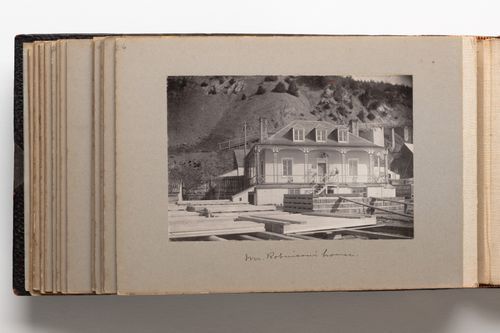
Photograph depicts a house clad in siding with a covered front porch, and hip-style roof and 3 dormer windows. Lumber and planking are visible in the foreground suggetsing ongoing construction work. A steep hill is directly behind the builidng, filling the background of the image.
PH1980:0817:024
Description:
Photograph depicts a house clad in siding with a covered front porch, and hip-style roof and 3 dormer windows. Lumber and planking are visible in the foreground suggetsing ongoing construction work. A steep hill is directly behind the builidng, filling the background of the image.
People:
Date:
1889-1896
1889-1896
Title:
View of a house, possibly Quebec City, Quebec, Canada
Actions:
PH1980:0817:024
Description:
Photograph depicts a house clad in siding with a covered front porch, and hip-style roof and 3 dormer windows. Lumber and planking are visible in the foreground suggetsing ongoing construction work. A steep hill is directly behind the builidng, filling the background of the image.
View of a house, possibly Quebec City, Quebec, Canada
Actions:
PH1980:0817:024
Description:
Photograph depicts a house clad in siding with a covered front porch, and hip-style roof and 3 dormer windows. Lumber and planking are visible in the foreground suggetsing ongoing construction work. A steep hill is directly behind the builidng, filling the background of the image.
Form:
photographs
photographs
Date:
1889-1896
1889-1896
People:
Form:
archives
Level of archival description:
Collection
archives
Level of archival description:
Collection
Title:
Rohault de Fleury collection
Rohault de Fleury collection
Reference number:
CI001
Synopsis:
The Rohault de Fleury collection documents the work of three generations of French architects, Hubert, his son Charles, and his grandson Georges, spanning from the early 18th to late 19th century. The collection is extremely varied encompassing both private and government commissions and including domestic work, institutional buildings, commercial buildings, urban planning, and student work from both the École des beaux-arts and the École polytechnique, and archaeological studies. Stylistically, the projects incorporate the two dominant contemporary directions in French architecture - functionalism as advocated by Jean-Nicolas-Louis Durand and the classicism of the École des beaux-arts.
CI001
Synopsis:
The Rohault de Fleury collection documents the work of three generations of French architects, Hubert, his son Charles, and his grandson Georges, spanning from the early 18th to late 19th century. The collection is extremely varied encompassing both private and government commissions and including domestic work, institutional buildings, commercial buildings, urban planning, and student work from both the École des beaux-arts and the École polytechnique, and archaeological studies. Stylistically, the projects incorporate the two dominant contemporary directions in French architecture - functionalism as advocated by Jean-Nicolas-Louis Durand and the classicism of the École des beaux-arts.
People:
Date:
1717-[1884]
1717-[1884]
Title:
Rohault de Fleury collection
CI001
Synopsis:
The Rohault de Fleury collection documents the work of three generations of French architects, Hubert, his son Charles, and his grandson Georges, spanning from the early 18th to late 19th century. The collection is extremely varied encompassing both private and government commissions and including domestic work, institutional buildings, commercial buildings, urban planning, and student work from both the École des beaux-arts and the École polytechnique, and archaeological studies. Stylistically, the projects incorporate the two dominant contemporary directions in French architecture - functionalism as advocated by Jean-Nicolas-Louis Durand and the classicism of the École des beaux-arts.
Rohault de Fleury collection
CI001
Synopsis:
The Rohault de Fleury collection documents the work of three generations of French architects, Hubert, his son Charles, and his grandson Georges, spanning from the early 18th to late 19th century. The collection is extremely varied encompassing both private and government commissions and including domestic work, institutional buildings, commercial buildings, urban planning, and student work from both the École des beaux-arts and the École polytechnique, and archaeological studies. Stylistically, the projects incorporate the two dominant contemporary directions in French architecture - functionalism as advocated by Jean-Nicolas-Louis Durand and the classicism of the École des beaux-arts.
Form:
archives
Level of archival description:
Collection 1
archives
Level of archival description:
Collection 1
Date:
1717-[1884]
1717-[1884]
People:


