


1981 Results
Form:
journals and magazines
journals and magazines
Actions:
Price:
$52.00
(available in store)
Summary:
We humans long for daylight, a view of greenery, and a sense of connection. Yet today, transparent building envelopes seem less in demand. Instead of granting views in and out, we create retreats. What forms of transparency remain desirable amid social uncertainty and urban densification? And do transparent or translucent envelopes still make sense when contemporary(...)
$52.00
(available in store)
Summary:
We humans long for daylight, a view of greenery, and a sense of connection. Yet today, transparent building envelopes seem less in demand. Instead of granting views in and out, we create retreats. What forms of transparency remain desirable amid social uncertainty and urban densification? And do transparent or translucent envelopes still make sense when contemporary(...)
Title:
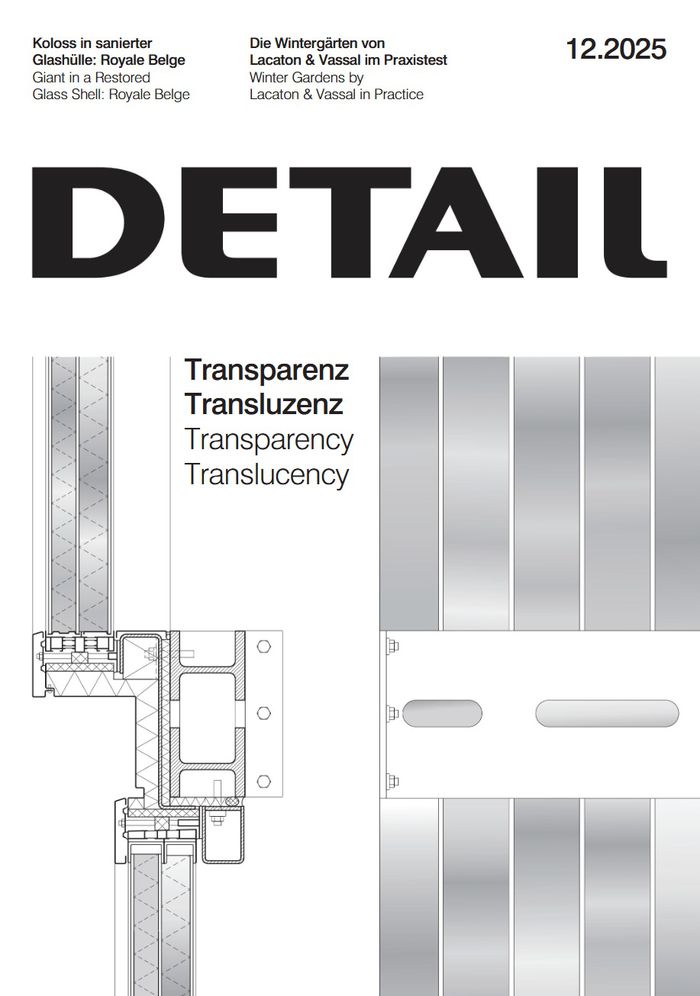
Detail 12 2025 : Transparency translucency
Actions:
Price:
$52.00
(available in store)
Summary:
We humans long for daylight, a view of greenery, and a sense of connection. Yet today, transparent building envelopes seem less in demand. Instead of granting views in and out, we create retreats. What forms of transparency remain desirable amid social uncertainty and urban densification? And do transparent or translucent envelopes still make sense when contemporary energy concepts are applied? Light, air, and sun are no longer universally welcome. The spaces behind the climate envelope must be protected from solar gains and heat loss. Limited opening ratios, smart building technology, and algorithm-driven facade design have become the norm. In such scenarios, people are treated as disruptive elements, better kept passive. Anne Lacaton and Jean-Philippe Vassal show that another way is possible. Working with 51N4E in Brussels, Lacaton & Vassal recently extended a residential block in the Peterbos district using their familiar approach: adding new winter gardens. Transparent and translucent sliding panels alternate, while curtains provide shade or privacy when needed. The result is adaptable space that responds to changing conditions – yet always leaves the final decision to the human user. A drawn curtain can create a sense of withdrawal, but it can just as easily be opened again
Detail 12 2025 : Transparency translucency
Actions:
Price:
$52.00
(available in store)
Summary:
We humans long for daylight, a view of greenery, and a sense of connection. Yet today, transparent building envelopes seem less in demand. Instead of granting views in and out, we create retreats. What forms of transparency remain desirable amid social uncertainty and urban densification? And do transparent or translucent envelopes still make sense when contemporary energy concepts are applied? Light, air, and sun are no longer universally welcome. The spaces behind the climate envelope must be protected from solar gains and heat loss. Limited opening ratios, smart building technology, and algorithm-driven facade design have become the norm. In such scenarios, people are treated as disruptive elements, better kept passive. Anne Lacaton and Jean-Philippe Vassal show that another way is possible. Working with 51N4E in Brussels, Lacaton & Vassal recently extended a residential block in the Peterbos district using their familiar approach: adding new winter gardens. Transparent and translucent sliding panels alternate, while curtains provide shade or privacy when needed. The result is adaptable space that responds to changing conditions – yet always leaves the final decision to the human user. A drawn curtain can create a sense of withdrawal, but it can just as easily be opened again
Form:
journals and magazines
journals and magazines
Publication:
December 2025
December 2025
Subject:
Magazines
Magazines
Form:
books
books
Title:
Gordon Matta-Clark
Gordon Matta-Clark
Actions:
Price:
$99.95
(available to order)
Summary:
Born in New York and trained in architecture, Gordon Matta-Clark is most famous for his slicing through façades, walls and floors of derelict buildings. This ‘deconstructing’ gesture, provocative and extreme, turns architecture into astonishing sculptures, where the mass of the building is entwined with the light and air that penetrate it. Matta-Clark’s interventions are(...)
$99.95
(available to order)
Summary:
Born in New York and trained in architecture, Gordon Matta-Clark is most famous for his slicing through façades, walls and floors of derelict buildings. This ‘deconstructing’ gesture, provocative and extreme, turns architecture into astonishing sculptures, where the mass of the building is entwined with the light and air that penetrate it. Matta-Clark’s interventions are(...)
Subject:
Contemporary Art Monographs
Contemporary Art Monographs
Publication:
April 2003, London
April 2003, London
Title:
Gordon Matta-Clark
Actions:
Price:
$99.95
(available to order)
Summary:
Born in New York and trained in architecture, Gordon Matta-Clark is most famous for his slicing through façades, walls and floors of derelict buildings. This ‘deconstructing’ gesture, provocative and extreme, turns architecture into astonishing sculptures, where the mass of the building is entwined with the light and air that penetrate it. Matta-Clark’s interventions are always grounded in social or political convictions. Some of his projects include opening a restaurant (Food, 1971)in the then-neglected district of SoHo in New York, purchasing at auction fractions of unusable urban land in New York (Reality Properties: Fake Estates, 1973), dispensing oxygen to passersby in the streets of New York from a self-made cart (Fresh Air Cart, 1972), and other visionary urban projects that he conceived as a founding member of the New York-based Anarchitecture group. His practice remains one of the most unique, unequalled, and hugely influential of the past decades. A richly documented essay by Professor Thomas Crow presents new perspectives on the work of the artist. Also included are original essays by Judith Russi Kirshner and Christian Kravagna, as well as a ‘Documents’ section composed of key unpublished and hard-to-find essays and interviews, compiled by editor Corinne Diserens.
Gordon Matta-Clark
Actions:
Price:
$99.95
(available to order)
Summary:
Born in New York and trained in architecture, Gordon Matta-Clark is most famous for his slicing through façades, walls and floors of derelict buildings. This ‘deconstructing’ gesture, provocative and extreme, turns architecture into astonishing sculptures, where the mass of the building is entwined with the light and air that penetrate it. Matta-Clark’s interventions are always grounded in social or political convictions. Some of his projects include opening a restaurant (Food, 1971)in the then-neglected district of SoHo in New York, purchasing at auction fractions of unusable urban land in New York (Reality Properties: Fake Estates, 1973), dispensing oxygen to passersby in the streets of New York from a self-made cart (Fresh Air Cart, 1972), and other visionary urban projects that he conceived as a founding member of the New York-based Anarchitecture group. His practice remains one of the most unique, unequalled, and hugely influential of the past decades. A richly documented essay by Professor Thomas Crow presents new perspectives on the work of the artist. Also included are original essays by Judith Russi Kirshner and Christian Kravagna, as well as a ‘Documents’ section composed of key unpublished and hard-to-find essays and interviews, compiled by editor Corinne Diserens.
Form:
books
books
Publication:
April 2003, London
April 2003, London
Subject:
Contemporary Art Monographs
Contemporary Art Monographs
Form:
books
books
Price:
$39.95
(available to order)
Summary:
How human behavior brought our world to the brink, and how human behavior can save us. The world is a mess. Our dire predicament, from collapsing social structures to the climate crisis, has been millennia in the making and can be traced back to the erroneous belief that the earth's resources are infinite. The key to change, says Don Norman, is human behavior, covered(...)
$39.95
(available to order)
Summary:
How human behavior brought our world to the brink, and how human behavior can save us. The world is a mess. Our dire predicament, from collapsing social structures to the climate crisis, has been millennia in the making and can be traced back to the erroneous belief that the earth's resources are infinite. The key to change, says Don Norman, is human behavior, covered(...)
Title:
Design for a better world: meaningful, sustainable, humanity centered
Actions:
Price:
$39.95
(available to order)
Summary:
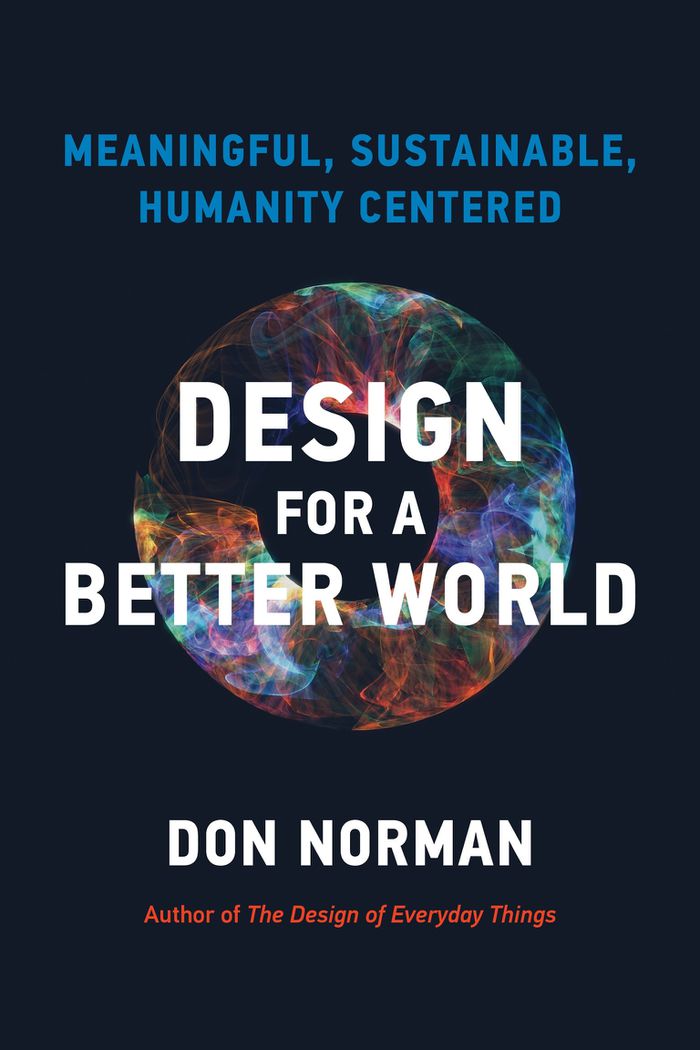
How human behavior brought our world to the brink, and how human behavior can save us. The world is a mess. Our dire predicament, from collapsing social structures to the climate crisis, has been millennia in the making and can be traced back to the erroneous belief that the earth's resources are infinite. The key to change, says Don Norman, is human behavior, covered in the book's three major themes: meaning, sustainability, and humanity-centeredness. Emphasize quality of life, not monetary rewards; restructure how we live to better protect the environment; and focus on all of humanity. ''Design for a better world'' presents an eye-opening diagnosis of where we've gone wrong and a clear prescription for making things better. Norman proposes a new way of thinking, one that recognizes our place in a complex global system where even simple behaviors affect the entire world. He identifies the economic metrics that contribute to the harmful effects of commerce and manufacturing and proposes a recalibration of what we consider important in life. His experience as both a scientist and business executive gives him the perspective to show how to make these changes while maintaining a thriving economy. Let the change begin with this book before it's too late.
Design for a better world: meaningful, sustainable, humanity centered
Actions:
Price:
$39.95
(available to order)
Summary:
How human behavior brought our world to the brink, and how human behavior can save us. The world is a mess. Our dire predicament, from collapsing social structures to the climate crisis, has been millennia in the making and can be traced back to the erroneous belief that the earth's resources are infinite. The key to change, says Don Norman, is human behavior, covered in the book's three major themes: meaning, sustainability, and humanity-centeredness. Emphasize quality of life, not monetary rewards; restructure how we live to better protect the environment; and focus on all of humanity. ''Design for a better world'' presents an eye-opening diagnosis of where we've gone wrong and a clear prescription for making things better. Norman proposes a new way of thinking, one that recognizes our place in a complex global system where even simple behaviors affect the entire world. He identifies the economic metrics that contribute to the harmful effects of commerce and manufacturing and proposes a recalibration of what we consider important in life. His experience as both a scientist and business executive gives him the perspective to show how to make these changes while maintaining a thriving economy. Let the change begin with this book before it's too late.
Form:
books
books
Publication:
March 2023
March 2023
Subject:
Design Theory
Design Theory
Form:
books
books
Title:
Peter Zumthor Therme Vals
Peter Zumthor Therme Vals
Actions:
Price:
$145.00
(available to order)
Summary:
Therme Vals, the spa complex built in the Swiss Alps by celebrated architect Peter Zumthor, became an icon of contemporary architecture soon after its opening in 1996. Inspired by the spa’s majestic surroundings, Zumthor built the structure on the sharp grade of an Alpine mountain slope with grass-topped roofs to mimic Swiss meadows, captured here in a series of sumptuous(...)
$145.00
(available to order)
Summary:
Therme Vals, the spa complex built in the Swiss Alps by celebrated architect Peter Zumthor, became an icon of contemporary architecture soon after its opening in 1996. Inspired by the spa’s majestic surroundings, Zumthor built the structure on the sharp grade of an Alpine mountain slope with grass-topped roofs to mimic Swiss meadows, captured here in a series of sumptuous(...)
Title:
Peter Zumthor Therme Vals
Actions:
Price:
$145.00
(available to order)
Summary:
Therme Vals, the spa complex built in the Swiss Alps by celebrated architect Peter Zumthor, became an icon of contemporary architecture soon after its opening in 1996. Inspired by the spa’s majestic surroundings, Zumthor built the structure on the sharp grade of an Alpine mountain slope with grass-topped roofs to mimic Swiss meadows, captured here in a series of sumptuous images. Peter Zumthor Therme Vals, the only book-length study of this singular building, features the architect’s own original sketches and plans for its design as well as Hélène Binet’s striking photographs of the structure. Architectural scholar Sigrid Hauser contributes an essay on such topics as “Artemis/Diana,” “Baptism,” “Mikvah,” and “Spring”—drawing out the connections between the elemental nature of the spa and mythology, bathing, and purity. Annotations by Peter Zumthor on his design concept and the building process elucidate the structure’s symbiotic relationship to its natural surroundings, revealing, for example, why he insisted on using locally quarried stone. Therme Vals’s scenic design elements, and Zumthor’s contributions to this book, reflect the architect’s commitment to the essential and his disdain for needless architectural flourishes. This lavishly illustrated volume about the spa that catapulted a remote Swiss village onto the international architecture scene will entrance all enthusiasts of contemporary design.
Peter Zumthor Therme Vals
Actions:
Price:
$145.00
(available to order)
Summary:
Therme Vals, the spa complex built in the Swiss Alps by celebrated architect Peter Zumthor, became an icon of contemporary architecture soon after its opening in 1996. Inspired by the spa’s majestic surroundings, Zumthor built the structure on the sharp grade of an Alpine mountain slope with grass-topped roofs to mimic Swiss meadows, captured here in a series of sumptuous images. Peter Zumthor Therme Vals, the only book-length study of this singular building, features the architect’s own original sketches and plans for its design as well as Hélène Binet’s striking photographs of the structure. Architectural scholar Sigrid Hauser contributes an essay on such topics as “Artemis/Diana,” “Baptism,” “Mikvah,” and “Spring”—drawing out the connections between the elemental nature of the spa and mythology, bathing, and purity. Annotations by Peter Zumthor on his design concept and the building process elucidate the structure’s symbiotic relationship to its natural surroundings, revealing, for example, why he insisted on using locally quarried stone. Therme Vals’s scenic design elements, and Zumthor’s contributions to this book, reflect the architect’s commitment to the essential and his disdain for needless architectural flourishes. This lavishly illustrated volume about the spa that catapulted a remote Swiss village onto the international architecture scene will entrance all enthusiasts of contemporary design.
Form:
books
books
Publication:
February 2007
February 2007
Subject:
Architecture Monographs
Architecture Monographs
Form:
books
books
Actions:
Price:
$134.95
(available to order)
Summary:
The Austrian architect-artist Hans Hollein was appointed in 1972 to design a new museum for the post-industrial city of Mönchengladbach in West Germany which transformed it into a centre for contemporary art. This book reveals the full story of this innovative masterpiece. Opening in 1982, Museum Abteiberg was instantly lauded by international critics and Hollein was duly(...)
$134.95
(available to order)
Summary:
The Austrian architect-artist Hans Hollein was appointed in 1972 to design a new museum for the post-industrial city of Mönchengladbach in West Germany which transformed it into a centre for contemporary art. This book reveals the full story of this innovative masterpiece. Opening in 1982, Museum Abteiberg was instantly lauded by international critics and Hollein was duly(...)
Title:
Hans Hollein's Masterpiece: Art, architecture and the city
Actions:
Price:
$134.95
(available to order)
Summary:
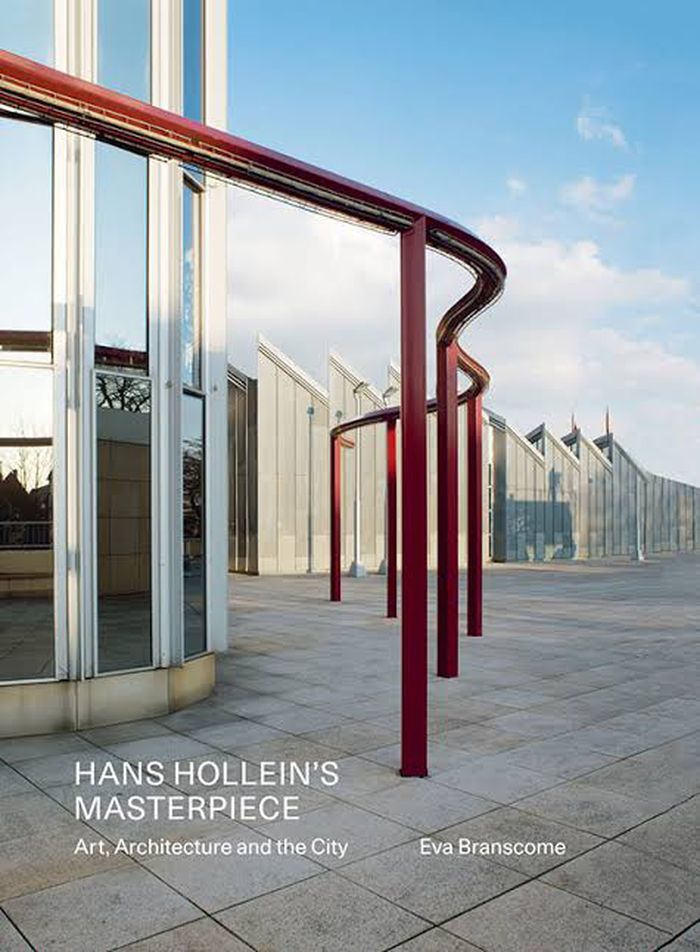
The Austrian architect-artist Hans Hollein was appointed in 1972 to design a new museum for the post-industrial city of Mönchengladbach in West Germany which transformed it into a centre for contemporary art. This book reveals the full story of this innovative masterpiece. Opening in 1982, Museum Abteiberg was instantly lauded by international critics and Hollein was duly awarded the 1985 Pritzker Prize. The book provides a timely and comprehensive reappraisal of the museum from concept, through the design process to its completion. It explains that Hollein was at his core a conceptual artist, perceiving the museum as provocative land art, with an architectural collage as exterior and a labyrinthine, ‘'democratic'’ interior, designed around the collection. It features a triptych of characters - Hollein, director Johannes Cladders and artist Joseph Beuys – whose close collaboration resulted in a museum which transformed thinking about how art, architecture and context – historical, cultural and geographical - should all relate. Radical at the time, many of the ideas that they first realised in this building have now become the norm in museum practice. Broader than a simple building study, this is a story which not only connects art with architecture and with the city, but with finance, corporate power and capital investment.
Hans Hollein's Masterpiece: Art, architecture and the city
Actions:
Price:
$134.95
(available to order)
Summary:
The Austrian architect-artist Hans Hollein was appointed in 1972 to design a new museum for the post-industrial city of Mönchengladbach in West Germany which transformed it into a centre for contemporary art. This book reveals the full story of this innovative masterpiece. Opening in 1982, Museum Abteiberg was instantly lauded by international critics and Hollein was duly awarded the 1985 Pritzker Prize. The book provides a timely and comprehensive reappraisal of the museum from concept, through the design process to its completion. It explains that Hollein was at his core a conceptual artist, perceiving the museum as provocative land art, with an architectural collage as exterior and a labyrinthine, ‘'democratic'’ interior, designed around the collection. It features a triptych of characters - Hollein, director Johannes Cladders and artist Joseph Beuys – whose close collaboration resulted in a museum which transformed thinking about how art, architecture and context – historical, cultural and geographical - should all relate. Radical at the time, many of the ideas that they first realised in this building have now become the norm in museum practice. Broader than a simple building study, this is a story which not only connects art with architecture and with the city, but with finance, corporate power and capital investment.
Form:
books
books
Publication:
November 2025
November 2025
Subject:
Architecture Monographs
Architecture Monographs
Form:
books
books
Title:
Magasin 1986-2006
Magasin 1986-2006
Actions:
Price:
$78.00
(available to order)
Summary:
L'ouvrage réunit une documentation exhaustive sur la programmation des trois directeurs successifs du centre d'art contemporain Le Magasin, avec la participation des interventions de V.Acconci, R. Barry, J. Beuys, S. Fleury, L. Gillick & P. Parreno, M. Kelley, S. Lewitt, R. Prince, J. Shaw, X. Veilhan, ... Recapitulative publication about Le Magasin, Centre National(...)
$78.00
(available to order)
Summary:
L'ouvrage réunit une documentation exhaustive sur la programmation des trois directeurs successifs du centre d'art contemporain Le Magasin, avec la participation des interventions de V.Acconci, R. Barry, J. Beuys, S. Fleury, L. Gillick & P. Parreno, M. Kelley, S. Lewitt, R. Prince, J. Shaw, X. Veilhan, ... Recapitulative publication about Le Magasin, Centre National(...)
Subject:
Contemporary Art Monographs
Contemporary Art Monographs
Publication:
April 2006, Zürich / Grenoble
April 2006, Zürich / Grenoble
Title:
Magasin 1986-2006
Actions:
Price:
$78.00
(available to order)
Summary:
L'ouvrage réunit une documentation exhaustive sur la programmation des trois directeurs successifs du centre d'art contemporain Le Magasin, avec la participation des interventions de V.Acconci, R. Barry, J. Beuys, S. Fleury, L. Gillick & P. Parreno, M. Kelley, S. Lewitt, R. Prince, J. Shaw, X. Veilhan, ... Recapitulative publication about Le Magasin, Centre National d’Art Contemporain de Grenoble. Considered, since its opening in 1986, a model rehabilitation of an abandoned industrial site for contemporary art, Le Magasin of Grenoble is emerging from a period of renovation. For its reopening, the center wished to publish an assessment of its activity. The book reunites exhaustive documentation on the programming of the three successive directors, and chose to highlight certain projects, for the most part never published, of artists such as Vito Acconci, John Baldessari, Robert Barry, Joseph Beuys, Alighiero Boetti, Monica Bonvicini, Daniel Buren, Chen Zhen, Sylvie Fleury, Liam Gillick & Philippe Parreno, Jack Goldstein, Dominique Gonzalez-Foerster, the GRAV, Jim Isermann, Ilya Kabakov, Mike Kelley, Barbara Kruger, Sol LeWitt, Richard Long, Matt Mullican, Richard Prince, Thomas Ruff, Allen Ruppersberg, Jim Shaw, Philippe Thomas, Xavier Veilhan, Lawrence Weiner, etc. Auteurs / authors : Paul Ardenne, Lionel Bovier, Laura Cottingham, Paul McCarthy, Stéphanie Moisdon Trembley, Frank Perrin, Eric Troncy.
Magasin 1986-2006
Actions:
Price:
$78.00
(available to order)
Summary:
L'ouvrage réunit une documentation exhaustive sur la programmation des trois directeurs successifs du centre d'art contemporain Le Magasin, avec la participation des interventions de V.Acconci, R. Barry, J. Beuys, S. Fleury, L. Gillick & P. Parreno, M. Kelley, S. Lewitt, R. Prince, J. Shaw, X. Veilhan, ... Recapitulative publication about Le Magasin, Centre National d’Art Contemporain de Grenoble. Considered, since its opening in 1986, a model rehabilitation of an abandoned industrial site for contemporary art, Le Magasin of Grenoble is emerging from a period of renovation. For its reopening, the center wished to publish an assessment of its activity. The book reunites exhaustive documentation on the programming of the three successive directors, and chose to highlight certain projects, for the most part never published, of artists such as Vito Acconci, John Baldessari, Robert Barry, Joseph Beuys, Alighiero Boetti, Monica Bonvicini, Daniel Buren, Chen Zhen, Sylvie Fleury, Liam Gillick & Philippe Parreno, Jack Goldstein, Dominique Gonzalez-Foerster, the GRAV, Jim Isermann, Ilya Kabakov, Mike Kelley, Barbara Kruger, Sol LeWitt, Richard Long, Matt Mullican, Richard Prince, Thomas Ruff, Allen Ruppersberg, Jim Shaw, Philippe Thomas, Xavier Veilhan, Lawrence Weiner, etc. Auteurs / authors : Paul Ardenne, Lionel Bovier, Laura Cottingham, Paul McCarthy, Stéphanie Moisdon Trembley, Frank Perrin, Eric Troncy.
Form:
books
books
Publication:
April 2006, Zürich / Grenoble
April 2006, Zürich / Grenoble
Subject:
Contemporary Art Monographs
Contemporary Art Monographs
Form:
books
books
Price:
$60.95
(available to order)
Summary:
Eadweard Muybridge, one of the great pioneer-innovators of the 19th century, is a familiar figure to students of art history, photography, and cinema. Best known for the photographs of horses and other animals in motion that he made in the 1870s and '80s, Muybridge was the first person to use photography to freeze rapid action for analysis and study. He devised a method(...)
$60.95
(available to order)
Summary:
Eadweard Muybridge, one of the great pioneer-innovators of the 19th century, is a familiar figure to students of art history, photography, and cinema. Best known for the photographs of horses and other animals in motion that he made in the 1870s and '80s, Muybridge was the first person to use photography to freeze rapid action for analysis and study. He devised a method(...)
Title:
Time stands still : Muybridge and the instantaneous photography movement
Actions:
Price:
$60.95
(available to order)
Summary:
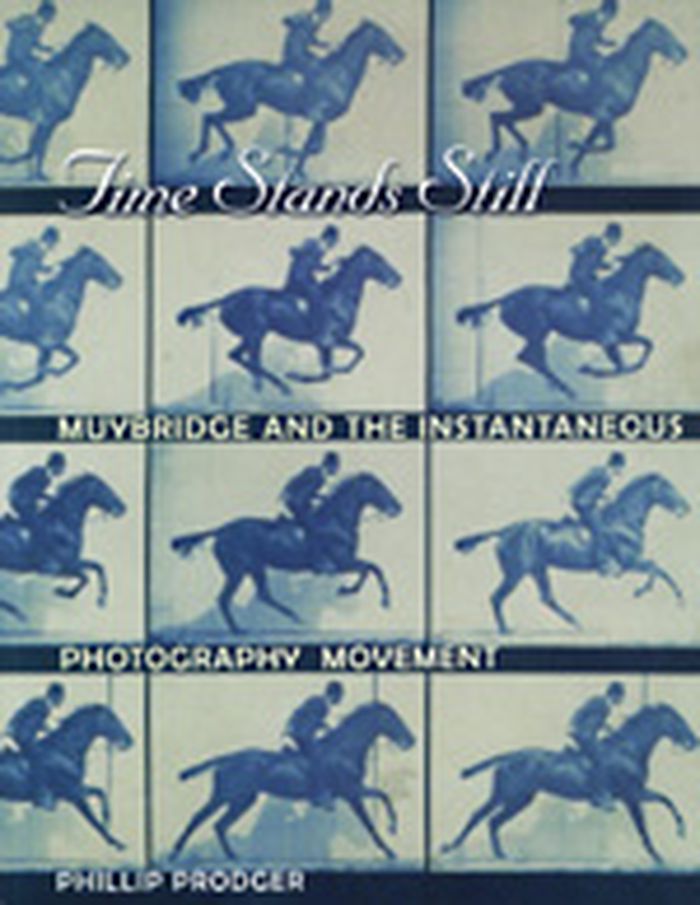
Eadweard Muybridge, one of the great pioneer-innovators of the 19th century, is a familiar figure to students of art history, photography, and cinema. Best known for the photographs of horses and other animals in motion that he made in the 1870s and '80s, Muybridge was the first person to use photography to freeze rapid action for analysis and study. He devised a method for photographing episodes of behavior using a series of cameras, producing some of the most famous sequential photographs ever made. These pictures, the first successful photographs of rapidly moving subjects, revolutionized expectations of what photography could reveal about the natural world, and ultimately led to the invention of the motion picture in the mid-1890s. "Time stands still" is the catalogue that accompanies an exhibition celebrating Muybridge's work. Though the instantaneous photography movement stands as a crucial event in the progression of photography to motion pictures, this exhibition represents the first major organized treatment of the subject. Opening in spring 2003 at the Iris and B. Gerald Cantor Center for Visual Arts at Stanford University and touring through 2004, it combines an examination of the artist's career in motion photography with a survey of early attempts to photograph moving subjects.
Time stands still : Muybridge and the instantaneous photography movement
Actions:
Price:
$60.95
(available to order)
Summary:
Eadweard Muybridge, one of the great pioneer-innovators of the 19th century, is a familiar figure to students of art history, photography, and cinema. Best known for the photographs of horses and other animals in motion that he made in the 1870s and '80s, Muybridge was the first person to use photography to freeze rapid action for analysis and study. He devised a method for photographing episodes of behavior using a series of cameras, producing some of the most famous sequential photographs ever made. These pictures, the first successful photographs of rapidly moving subjects, revolutionized expectations of what photography could reveal about the natural world, and ultimately led to the invention of the motion picture in the mid-1890s. "Time stands still" is the catalogue that accompanies an exhibition celebrating Muybridge's work. Though the instantaneous photography movement stands as a crucial event in the progression of photography to motion pictures, this exhibition represents the first major organized treatment of the subject. Opening in spring 2003 at the Iris and B. Gerald Cantor Center for Visual Arts at Stanford University and touring through 2004, it combines an examination of the artist's career in motion photography with a survey of early attempts to photograph moving subjects.
Form:
books
books
Publication:
April 2003, New York
April 2003, New York
Subject:
Photography monographs
Photography monographs
Form:
books
books
Actions:
Price:
$46.95
(available to order)
Summary:
The author, Gerhard Mack, explores the architecture of each individual museum in detail, and highlights current tendencies in museum building in his seminal essay "Time Rediscovered". This is complemented by an introduction by Harald Szeemann, who(...)
$46.95
(available to order)
Summary:
The author, Gerhard Mack, explores the architecture of each individual museum in detail, and highlights current tendencies in museum building in his seminal essay "Time Rediscovered". This is complemented by an introduction by Harald Szeemann, who(...)
Title:
Art museums into the 21st century
Actions:
Price:
$46.95
(available to order)
Summary:
The author, Gerhard Mack, explores the architecture of each individual museum in detail, and highlights current tendencies in museum building in his seminal essay "Time Rediscovered". This is complemented by an introduction by Harald Szeemann, who as curator of the Kunsthaus in Zürich, was appointed director for Fine Arts at the Biennale in Venice this year. The museums examined in this book are Kunsthaus in Bregenz, the Museum of the Beyeler Fondation near Basel, the Guggenheim Museum in Bilbao, the Getty Center in Los Angeles and the Moderna und Arkitektur Museet in Stockholm all opening within a year of one another. The Tate Gallery of Modern Art which is being built by Herzog & de Meuron in a former power station on the Thames in London is to be completed in May 1999. Conversations with the architects Frank O. Gehry, Jacques Herzog, Richard Meier, Rafael Moneo, Jean Nouvel, Renzo Piano and Peter Zumthor reveal the wide spectrum of design concerns in contemporary museum design and building. In the Pavilion at the Beyeler Fondation, the interaction of nature, light and the presentation of art is an impressive experience. Jean Nouvel perceives the museum as a public place, bringing the various areas of 'urban chaos' into contact with each other. A total of eight projects are presented.
Art museums into the 21st century
Actions:
Price:
$46.95
(available to order)
Summary:
The author, Gerhard Mack, explores the architecture of each individual museum in detail, and highlights current tendencies in museum building in his seminal essay "Time Rediscovered". This is complemented by an introduction by Harald Szeemann, who as curator of the Kunsthaus in Zürich, was appointed director for Fine Arts at the Biennale in Venice this year. The museums examined in this book are Kunsthaus in Bregenz, the Museum of the Beyeler Fondation near Basel, the Guggenheim Museum in Bilbao, the Getty Center in Los Angeles and the Moderna und Arkitektur Museet in Stockholm all opening within a year of one another. The Tate Gallery of Modern Art which is being built by Herzog & de Meuron in a former power station on the Thames in London is to be completed in May 1999. Conversations with the architects Frank O. Gehry, Jacques Herzog, Richard Meier, Rafael Moneo, Jean Nouvel, Renzo Piano and Peter Zumthor reveal the wide spectrum of design concerns in contemporary museum design and building. In the Pavilion at the Beyeler Fondation, the interaction of nature, light and the presentation of art is an impressive experience. Jean Nouvel perceives the museum as a public place, bringing the various areas of 'urban chaos' into contact with each other. A total of eight projects are presented.
Form:
books
books
Publication:
January 1900, Basel
January 1900, Basel
Subject:
Museums and Universal Exhibitions
Museums and Universal Exhibitions
Form:
books
books
Actions:
Price:
$32.00
(available to order)
Summary:
DVD Release Date: June 21, 2009. Kamecke's film could be placed in a time capsule and removed some time in the distant future as an exact record of our feelings at the time." So said Kathleen Carroll of the New York Daily News in 1972. NASA commissioned director Theo Kamecke to make the documentary only six weeks before Apollo 11 s flight to the Moon in July 1969. But(...)
$32.00
(available to order)
Summary:
DVD Release Date: June 21, 2009. Kamecke's film could be placed in a time capsule and removed some time in the distant future as an exact record of our feelings at the time." So said Kathleen Carroll of the New York Daily News in 1972. NASA commissioned director Theo Kamecke to make the documentary only six weeks before Apollo 11 s flight to the Moon in July 1969. But(...)
Title:
Moonwalk one, the director's cut
Actions:
Price:
$32.00
(available to order)
Summary:
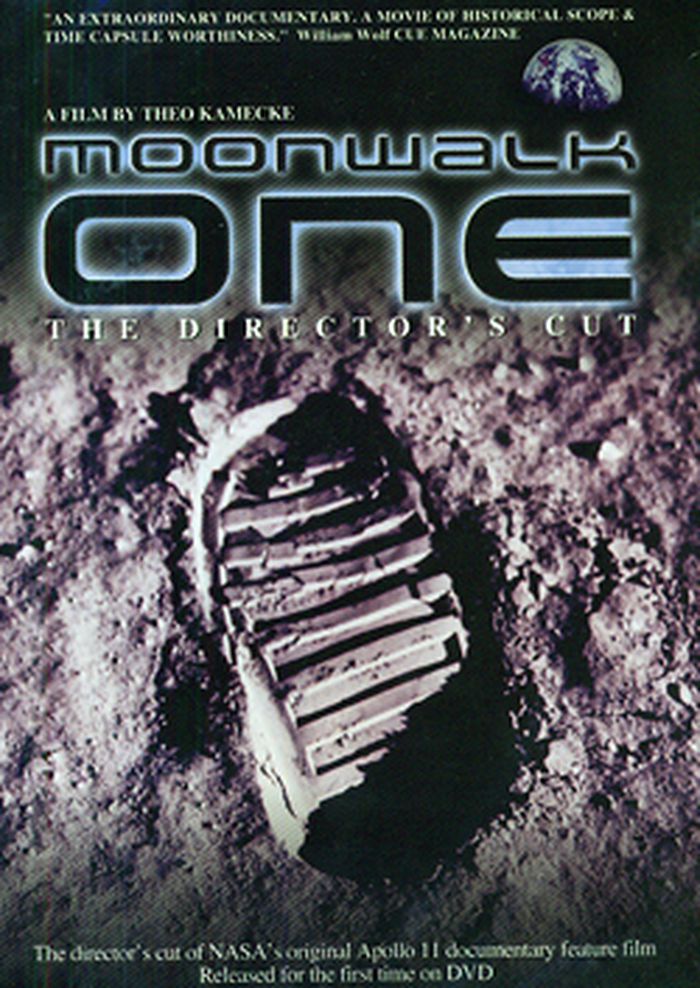
DVD Release Date: June 21, 2009. Kamecke's film could be placed in a time capsule and removed some time in the distant future as an exact record of our feelings at the time." So said Kathleen Carroll of the New York Daily News in 1972. NASA commissioned director Theo Kamecke to make the documentary only six weeks before Apollo 11 s flight to the Moon in July 1969. But instead of a simple documentary film, what transpired was a philosophical and poetic record of Man s first attempt to walk on another world. Opening dramatically with another of mankind s great achievements Stonehenge the film puts the triumph of the Moon shot into its proper historical context. Filmed across the World as the mission unfolded, Moonwalk One uniquely captured the essence of Apollo 11 in a way that subsequent documentaries could only mimic. Combined with Charles Morrow s breathtaking, avant-garde score and Laurence Luckinbill s inspiring narration this is a classic film for all time and makes for fascinating viewing today from the perspective of the early 21st Century. As Joseph Gelmis of the New York daily Newsday declared in 1969; Moonwalk One deserves to be a companion piece to Stanley Kubrik s masterwork 2001: A Space Odyssey .
Moonwalk one, the director's cut
Actions:
Price:
$32.00
(available to order)
Summary:
DVD Release Date: June 21, 2009. Kamecke's film could be placed in a time capsule and removed some time in the distant future as an exact record of our feelings at the time." So said Kathleen Carroll of the New York Daily News in 1972. NASA commissioned director Theo Kamecke to make the documentary only six weeks before Apollo 11 s flight to the Moon in July 1969. But instead of a simple documentary film, what transpired was a philosophical and poetic record of Man s first attempt to walk on another world. Opening dramatically with another of mankind s great achievements Stonehenge the film puts the triumph of the Moon shot into its proper historical context. Filmed across the World as the mission unfolded, Moonwalk One uniquely captured the essence of Apollo 11 in a way that subsequent documentaries could only mimic. Combined with Charles Morrow s breathtaking, avant-garde score and Laurence Luckinbill s inspiring narration this is a classic film for all time and makes for fascinating viewing today from the perspective of the early 21st Century. As Joseph Gelmis of the New York daily Newsday declared in 1969; Moonwalk One deserves to be a companion piece to Stanley Kubrik s masterwork 2001: A Space Odyssey .
Form:
books
books
Publication:
October 2009
October 2009
Subject:
DVDs
DVDs
Form:
books
books
Actions:
Price:
$56.95
(available to order)
Summary:
How do we live well? The first sentence of ''Grace and gravity'' raises the fundamental question that constantly occupies our minds-and of all those who lived before us. Paradoxically, the impossibility of answering this question opens up the very room needed to find ways of living well. It is the gap where all disciplines fall short, where architecture does not fit its(...)
$56.95
(available to order)
Summary:
How do we live well? The first sentence of ''Grace and gravity'' raises the fundamental question that constantly occupies our minds-and of all those who lived before us. Paradoxically, the impossibility of answering this question opens up the very room needed to find ways of living well. It is the gap where all disciplines fall short, where architecture does not fit its(...)
Title:
Grace and gravity: Architectures of the figure
Actions:
Price:
$56.95
(available to order)
Summary:
How do we live well? The first sentence of ''Grace and gravity'' raises the fundamental question that constantly occupies our minds-and of all those who lived before us. Paradoxically, the impossibility of answering this question opens up the very room needed to find ways of living well. It is the gap where all disciplines fall short, where architecture does not fit its inhabitants, where economy is not based on shortage, where religion cannot be explained by its followers, and where technology works far beyond its own principles. According to Lars Spuybroek, the prize-winning former architect, this marks the point where the “paradoxical machine” of grace reveals its powers, a point where we “cannot say if we are moving or being moved”. Following the trail of grace leads him to a new form of analysis that transcends the age-old opposition between appearances and technology. Linking up a dazzling and often delightful variety of sources-monkeys, paintings, lamp posts, octopuses, tattoos, bleeding fingers, rose windows, robots, smart phones, spirits, saints, and fossils-with profound meditations on living, death, consciousness, and existence, ''Grace and gravity'' offers an eye-opening provocation to a wide range of art historians, architects, theologians, anthropologists, artists, media theorists and philosophers.
Grace and gravity: Architectures of the figure
Actions:
Price:
$56.95
(available to order)
Summary:
How do we live well? The first sentence of ''Grace and gravity'' raises the fundamental question that constantly occupies our minds-and of all those who lived before us. Paradoxically, the impossibility of answering this question opens up the very room needed to find ways of living well. It is the gap where all disciplines fall short, where architecture does not fit its inhabitants, where economy is not based on shortage, where religion cannot be explained by its followers, and where technology works far beyond its own principles. According to Lars Spuybroek, the prize-winning former architect, this marks the point where the “paradoxical machine” of grace reveals its powers, a point where we “cannot say if we are moving or being moved”. Following the trail of grace leads him to a new form of analysis that transcends the age-old opposition between appearances and technology. Linking up a dazzling and often delightful variety of sources-monkeys, paintings, lamp posts, octopuses, tattoos, bleeding fingers, rose windows, robots, smart phones, spirits, saints, and fossils-with profound meditations on living, death, consciousness, and existence, ''Grace and gravity'' offers an eye-opening provocation to a wide range of art historians, architects, theologians, anthropologists, artists, media theorists and philosophers.
Form:
books
books
Publication:
November 2020
November 2020
Subject:
Architectural Theory
Architectural Theory


